Opening doors to the legal profession: meet Birkbeck’s newest Bar scholars 

This year, several Birkbeck Law School students have been awarded prestigious scholarships to support their journey towards becoming barristers. These scholarships, awarded by the Inns of Court, help aspiring barristers undertake the vocational training required before they can practice at the Bar. For many students, receiving a scholarship is not only valuable financial support but also recognition of their hard work, commitment and potential. We spoke to this year’s recipients about their route into law, what the award means to them, and their hopes for the future 

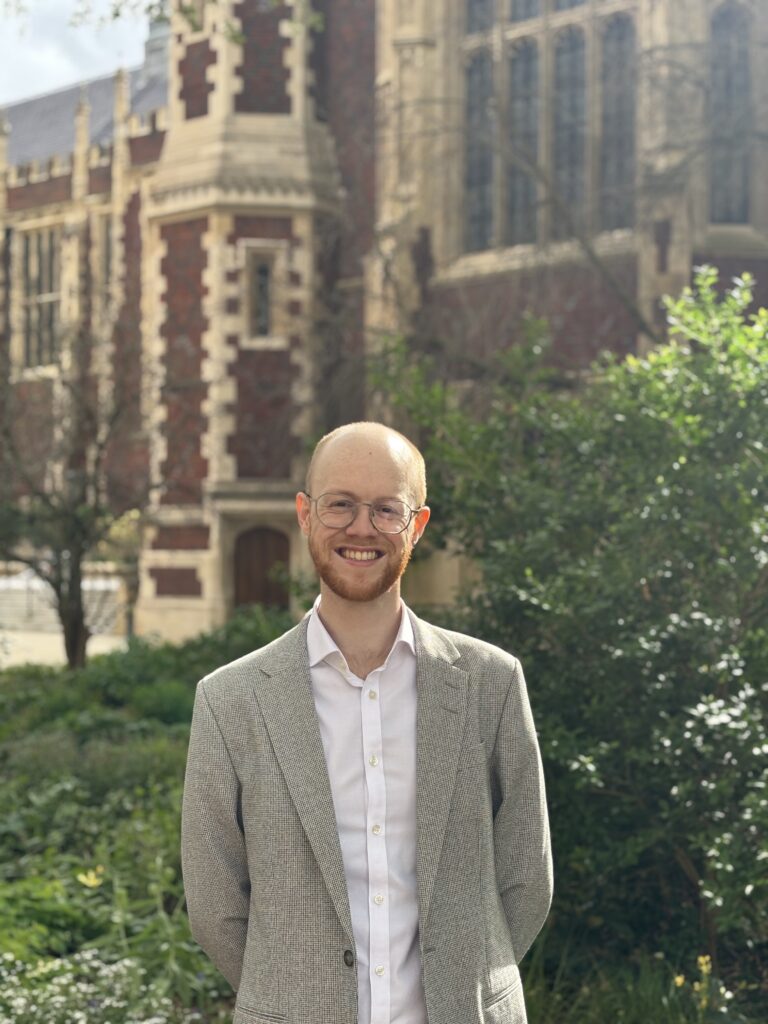
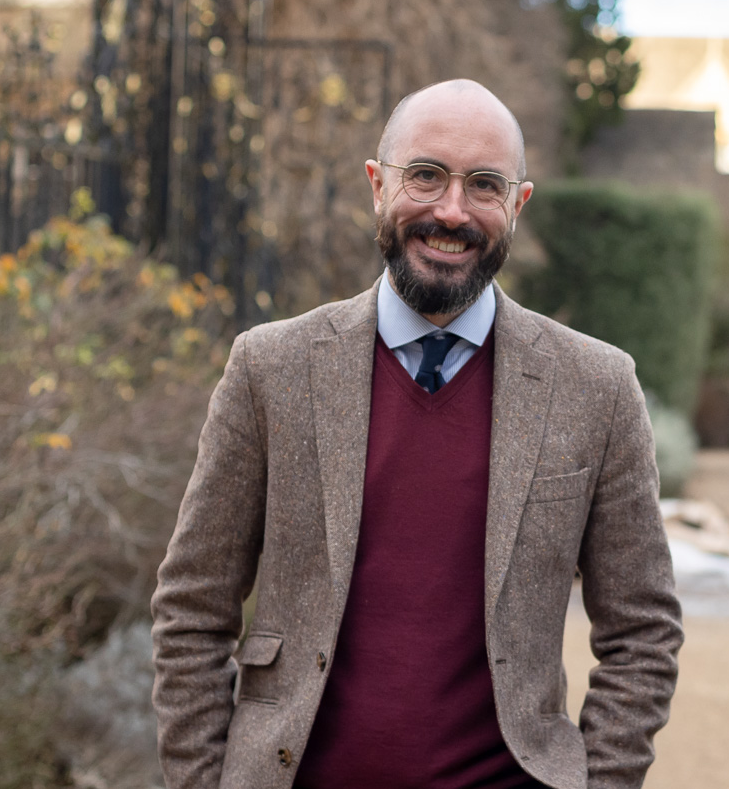
André Buller 

Scholarship: Lord Denning Scholarship and Daniel Lett Scholarship 

Congratulations on receiving your scholarship. How did you feel when you found out you’d been successful? 

I was honestly very surprised. The application process includes an intense interview with a panel of practising barristers who are very poker-faced, so I had no idea how well I’d done. Getting notification of my success blew me away (and I was in the library, so had to try to respond calmly)! After the initial surprise, I mostly felt really encouraged. It meant that a panel of impartial experts all believed I was worth investing in for this exciting journey. 

What first inspired you to study law? 

Personal circumstances led to real engagement with law from a young age, which I found incredibly fascinating. My first proper inspiration to pursue law began later through my work. As a copyright specialist for a major academic publisher, I negotiate, draft and advise on contracts and complicated intellectual property rules. It was this exposure to legal processes and language that captivated me. 

What area of law have you been most interested to learn about during your studies at Birkbeck and why? 

I have a real fascination with intellectual property (IP) law. My prior academic background in literature focused on critical theory and narratology, which engages quite heavily with the abstract. As IP law aims to provide protection and rights around intangible property, much of the complex methods of its construction and application reflect these literary concepts. 

The opportunity to study this, and to explore beyond my professional familiarity with copyright into patents and trade marks, was really exciting. 

Many Birkbeck students balance study with work, family or other commitments. How have you managed your own journey? 

I decided to study the GDL full-time because I was eager to prioritise the conversion and devote most of my attention to learning the law. I was fortunate enough to receive scholarship funding and to be able to keep working throughout my course. 

By scheduling all my classes for the evening, there was minimal impact on work, though I did reduce my hours to balance my workload and extra-curricular commitments. It can be intense, but it’s very rewarding, and much easier when you can study in hours outside the ordinary 9–5 schedule. 

What advice would you give to someone considering studying law or pursuing a career at the Bar, especially if they are coming to it through a non-traditional route? 

Go for it! The law is incredibly interesting, engaging and widely applicable. I would definitely advise someone to take advantage of, and emphasise, any non-traditional route. The Bar responds positively to those who can demonstrate experience and a background outside a direct academic path, and some of the best skills for a barrister’s day-to-day life are developed in non-traditional areas: timekeeping, balancing multiple workloads and adaptable thinking, for example. 

Finally, especially at Birkbeck, I recommend connecting with your fellow students. Most of my peers are also coming to law from varied backgrounds, and their wisdom and support are equally encouraging and essential. Good luck! 

Daniel Cloney 

Scholarship: Cassel Scholarship (Bar Course), The Honourable Society of Lincoln’s Inn 

How did you feel when you found out you’d been successful? 

Honestly: huge relief, for a few reasons. On the one hand, the Inn’s financial support was fundamental to my ability to take the GDL in the first place, and the Bar Course would not have been feasible without it. But beyond that, the vote of confidence from the profession makes a huge difference. 

What first inspired you to study law? 

I came to the study of law late, aged 35, when I took a master’s degree in International Human Rights Law. It was then that my academic interest in law more broadly blossomed, and I realised I wanted to make it the centre of my career. The choice to do a GDL was an easy one after that. 

What area of law have you been most interested to learn about during your studies at Birkbeck and why? 

Given my background, I already had a fairly good handle on aspects of public and human rights law. So, what I really enjoyed at Birkbeck was the ability to deepen my engagement with criminal law and aspects of private law, especially contract and company law. They provided refreshing new puzzles to consider, and fascinating insights into the historical development of law in England and Wales. 

Many Birkbeck students balance study with work, family or other commitments. How have you managed your own journey? 

I couldn’t give up work completely, so I switched to 0.5 FTE, which was just about feasible alongside full-time study. That allowed me time during the afternoons to study and to take my classes in the evenings. I also really enjoyed attending classes in person, which helped me to make some good friends here. 

What advice would you give to someone considering studying law or pursuing a career at the Bar, especially if they are coming to it through a non-traditional route? 

On the one hand, you have to put your ego to one side and be patient. It’s a very competitive profession with a tight bottleneck at the entry point. At the same time, it’s a hugely supportive community. There is a wealth of help and advice on offer, whether from Birkbeck, the Inns of Court, certain sets of chambers or individual barristers. It’s vital to take advantage of that: it will be there for you when the process gets tough. 

Alfie Hansen

Scholarship: BPP Bridge Programme Scholarship 

How did you feel when you found out you were successful? 

I was lost for words. It’s quite literally life-changing. I work and want a career in the human rights and charity sector, but due to the area’s limited training opportunities and an inability to privately fund the SQE, I’d been emotionally preparing to pivot into a corporate firm just to get qualified. Now I’ll be able to keep working in the sector I’m passionate about, helping vulnerable people, with half of my qualification funded. 

What first inspired you to study law? 

I don’t come from a privileged background and have witnessed a lot of injustice in my life. One particular example occurred during the Covid pandemic. I spearheaded a union action against a coffee chain about unsafe business practices that put workers’ and public health at risk for corporate profits. 

I wrote a petition that received 40,000 signatures, was interviewed on BBC Radio and in the Financial Times, which led to several meetings with corporate executives. Despite this, once the coverage faded, so did the executives’ sincerity and any prospect of change. This exploitation of power resonated with me for a long time and directly informed my decision to study law. For me, it was a decision to equip myself with the tools to help others in a similar position and be the difference that makes real change. 

What area of law have you been most interested to learn about during your studies at Birkbeck and why? 

I’ve really taken to modules with a critical approach to law, particularly State Crime, Housing Justice, and Law, History and Political Violence. What really struck me is just how much philosophical and sociological perspectives are implicitly embedded in the law. This has helped me understand the true structure of the law and how it embeds itself into every aspect of our social lives. 

How have you managed multiple commitments? 

I won’t pretend it hasn’t been difficult. I’ve been studying full-time, working part-time, volunteering to get legal experience, taking on side projects to make my CV stand out and trying to have a personal life at the same time. 

I found planning and prioritising helped the most. When studying multiple modules, I’d break down my weeks, dedicating several days at a time to solely studying one module. Mapping out assessment deadlines was also a must. Knowing when I had to begin work on essays and exams meant I never felt I handed in work I was unhappy with or felt underprepared for. 

What advice would you give to someone considering studying law, especially from a non-traditional route? 

The idea of “traditional” is just a ceiling put on your potential by someone who doesn’t know you. Forget what they think and give it 110 per cent! I was lucky enough to benefit from having a big support network, which was really important when things got tough. So I’d also say to leave your ego at the door if you want to succeed and don’t be afraid to ask for help, whether that’s asking someone to check over your essay or simply having a shoulder to cry on. 

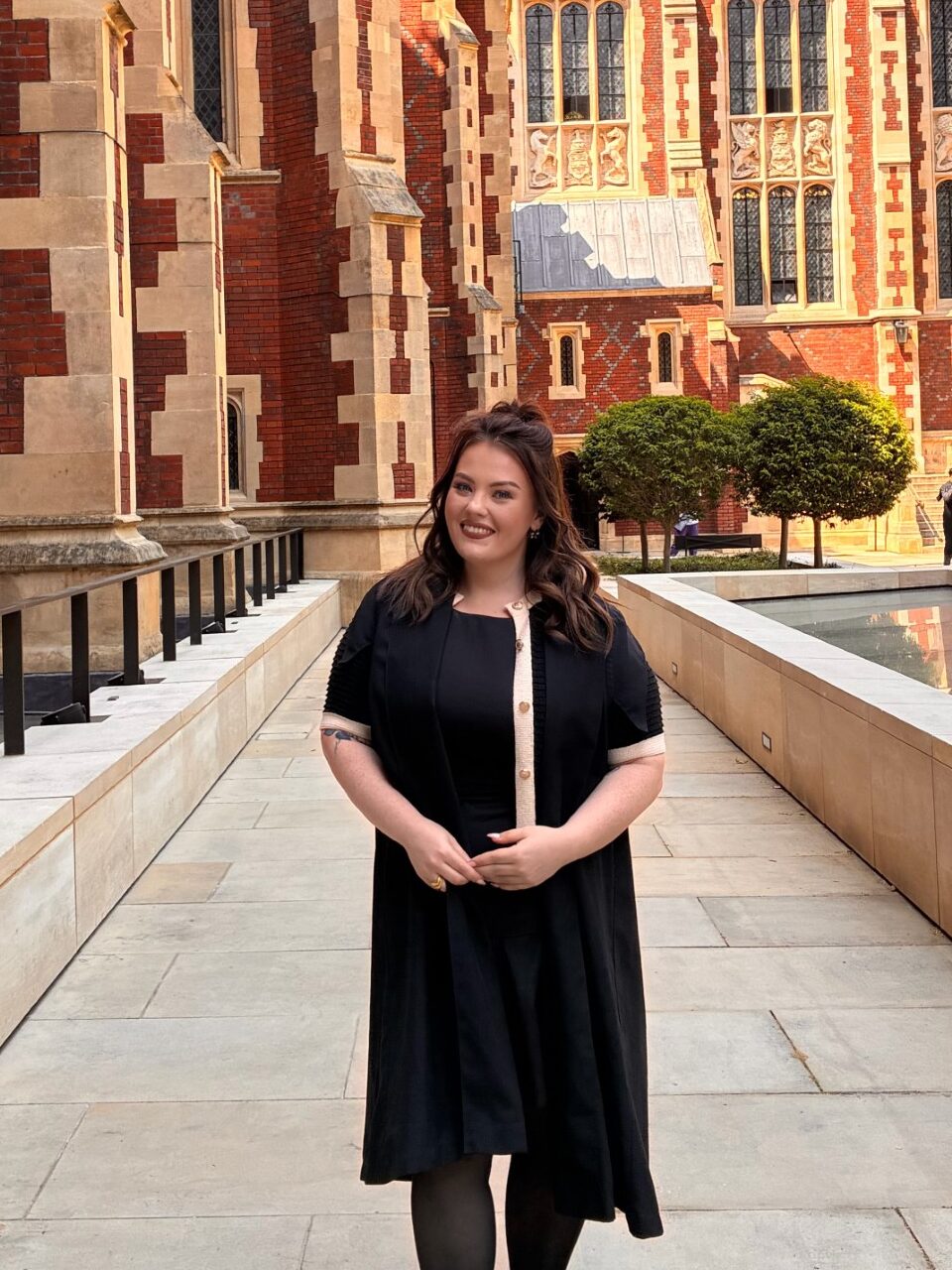
Chloe Hennigar

Scholarship: Helen Grindrod Social Mobility Prize from Lincoln’s Inn 

How did you feel when you found out you’d been successful? 

I was delighted. The prize gives me the opportunity to attend a summer school hosted at Lincoln’s Inn, where we’ll develop our advocacy and case analysis skills and also have the opportunity to undertake a mini-pupillage. It also provides invaluable opportunities to meet and learn from barristers, making it a really significant step towards my goal of becoming a barrister. It feels both like recognition of the work I’ve put in so far, and also opens opportunities to gain practical experience, build my network and continue developing as an aspiring advocate. 

What first inspired you to study law? 

Growing up in a relatively disadvantaged area, I saw first-hand how much difference access to knowledge, resources and representation can make. I became increasingly aware that people often struggle not because they lack ability or determination, but because they don’t know where to turn or don’t have access to the right support. That has motivated me to pursue a career where I could help people navigate those challenges. Law appealed to me because it combines intellectual challenge with the opportunity to make a meaningful difference in people’s lives. 

What area of law have you been most interested to learn about during your studies at Birkbeck and why? 

I’m most excited to study criminal law, as I’m drawn to its complexity and the way it balances protecting individual rights with serving the public interest. I’m also really looking forward to studying banking and finance law and immigration law, as I’m interested in the wider economic and international dimensions of legal practice. 

Many Birkbeck students balance study with work, family or other commitments. How have you managed your own journey? 

I’ve found that being organised and prioritising my commitments allows me to perform well academically while also making the most of the opportunities available to me.  

Alongside my studies, I work at Birkbeck and I’m actively involved in a number of extracurricular activities, including the Birkbeck Law Review, the Birkbeck Law Forum, which I founded, BIUCAC and other initiatives. These commitments are important to me because they allow me to contribute to the student community while developing skills that will support my future career. At the same time, I make a conscious effort to maintain a healthy balance by making time for friends and family. 

What advice would you give to someone considering studying law or pursuing a career at the Bar, especially if they are coming from a non-traditional route? 

There isn’t one ‘right’ pathway into the profession, and the experiences you bring with you can become one of your greatest strengths. I’d also encourage people to be proactive. Attend networking events, apply for opportunities even if you don’t think you’ll get them, and don’t be afraid to ask questions. Every application, conversation, and experience helps you build confidence and develop your understanding of the profession. Finally, remember that it’s a marathon rather than a sprint. Progress doesn’t have to happen all at once, and consistency will take you much further than comparing yourself to other people. 

Samuel James Barley 

Scholarship: Lowry Calvert Scholarship from Middle Temple 

How did you feel when you found out you’d been successful? 

I was at work when the email came through, and I had to take a moment out to just sit in the feeling. I recall a warmth spreading through me as I thought, “You know what, I could actually do this.” Ultimately, it was the feeling of being positively viewed by practising barristers that mattered to me most. 

It’s been such a busy year that I’m not sure I’ve celebrated it properly or let it sink in just yet! There’s still a long way to go, but it really is such a confidence boost at this stage, and I’m determined to keep going. 

What first inspired you to study law? 

I’d actually fallen for law during my original undergraduate degree, albeit it’s taken me about a decade to get around to pursuing it again. I’d been put in a module on “Legal Cultures in Late Antiquity” in my third year and ended up doing a master’s degree on the same theme. I’ve worked in criminal justice since leaving my studies, so coming back to complete a GDL was always a possibility. Last summer, I took the leap and applied. 

What area of law have you been most interested to learn about during your studies at Birkbeck and why? 

I was surprised by just how much I enjoyed Equity & Trusts. There can be a tendency from people outside the legal world to think of law as this rigid and soulless set of rules to be applied, which simply isn’t accurate. The Common Law is continually growing and shifting, and my class quickly identified which judges we enjoyed reading most. In Equity, that movement is even more obvious, and the near-obsession with fairness over procedure is something I hope to take with me into my career. 

Many Birkbeck students balance study with work, family or other commitments. How have you managed your own journey? 

I’ve balanced studying full-time with working full-time this year, and if I could easily explain how I’d managed that, I would. Ultimately, organisation and commitment are key. I’ve studied tired, on my commute, on holiday, in groups and on my own. There’s been impeccable support from my partner, ensuring that I look after myself and eat enough vegetables, and a fantastic group of people in classes to talk issues through with. Birkbeck’s format has been really useful for managing my time too. Knowing that my classes are in the evening, or online if need be, and that I can watch and rewatch lectures as and when allows me to be flexible. It’s been a hectic year but an enjoyable one. 

What advice would you give to someone considering studying law or pursuing a career at the Bar, especially if they are coming from a non-traditional route? 

Know why you want to do it. You’ll read online and in books about how competitive it is and that the odds are against you, which is all true. That doesn’t mean you shouldn’t do it, though; it means you have to really want it to try. This year has taught me just how much I want this.  

Take all the opportunities you can to get experience, whether that be mini-pupillages or marshalling, and definitely participate in mooting. I was fortunate enough to compete at the Jessup International Law Moot and the Birkbeck Law Forum Mooting Competition this year, and I’ve received some incredible feedback to bolster pupillage applications in the future. There’s plenty of challenges still ahead for me, but knowing how much I’ve enjoyed this year fuels my ambition to continue. 

Aravindi Rubasinghe

Scholarship: Dame Juliet Wheldon Scholarship 

How did you feel when you found out you’d been successful? 

Complete shock and disbelief. I wasn’t sure how my interview went. I’d spent a lot of time ruminating on what I could have done better, so I hadn’t given myself any credit for what I’d probably done well (great life lesson, I think!). I’d kept my expectations intentionally low because of this. When I got that email, I genuinely had to read it multiple times. I took a big leap of faith in choosing to pursue the Bar, and this encouragement from the Inn means a great deal. Above all, I feel incredibly grateful to the Inn and blessed to have their support. 

What first inspired you to study law? 

Before deciding to pursue law, I had another career:  studied medicine and currently work as a doctor while completing my postgraduate law conversion. Law has always been something I found myself drawn to, even during medical school. Once I began practising medicine, although I enjoyed the work, I became increasingly aware of how deeply the law shapes healthcare and provides the framework within which so many professions and systems operate. That only strengthened my interest. Over the past few years, I’ve also grown personally and gained a much clearer understanding of the kind of career I want for my life. 

What area of law have you been most interested to learn about during your studies at Birkbeck and why? 

I’m particularly interested in public law, so I was especially looking forward to studying constitutional and administrative law. I find the way public bodies make decisions that directly affect individuals compelling and deeply important. I’ve been able to witness this within medicine, where wider systemic decisions impact the care we deliver day to day. 

That said, one of the biggest surprises has been how much I’ve enjoyed modules I wasn’t initially drawn to. One of the best parts of my first year at Birkbeck has been being exposed to such a wide range of legal disciplines and discovering something interesting in all of them. It’s made me even more excited to explore new areas of law in the coming year. 

Many Birkbeck students balance study with work, family or other commitments. How have you managed your own journey? 

I currently work full-time as a doctor while undertaking my Master’s, and continuing to work has been essential as I self-funded the first year of my degree. That’s why I’m so grateful for the opportunity Birkbeck offers to fit education around the realities of everyday life. I genuinely don’t think I would have been able to pursue law at this stage in my career without that flexibility. 

I’m also continually inspired by my classmates, who come from all walks of life, bringing with them a wide range of experiences and perspectives. Balancing study alongside work, family and other commitments means that everyone has made a conscious decision to be there, and that creates a learning environment where people are genuinely engaged and motivated. That’s been one of the most rewarding parts of my experience so far. 

What advice would you give to someone considering studying law or pursuing a career at the Bar, especially if they are coming from a non-traditional route? 

I’m very early in my journey towards the Bar, so I tread carefully! However, I do know a thing or two about scary decisions. When I first started thinking seriously about pursuing law, it felt overwhelming knowing I had devoted many years to another profession. My advice would be to listen to your intuition (it’s telling you something for a reason!) and then really critically think to find your why.  

I would say don’t ever think it’s too late. There are so many things in this world to learn, and if something has made you stop and think, “I could do that”, and you have the opportunity to pursue it, don’t let the critical voices inside your head or the voices of what others might say stop you. 

More Information

Using immersive technologies to explore archaeological remains on the Thames foreshore

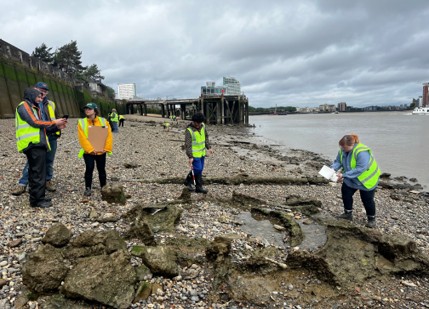
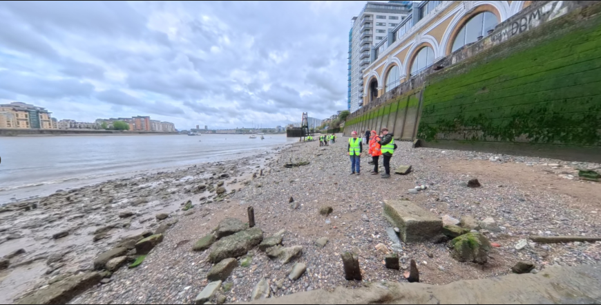
Members of Birkbeck’s Immersive Learning Centre (ILC) visited the Thames foreshore with Birkbeck Archaeology staff and students to investigate maritime artefacts at low tide. What followed was an unforgettable hands-on experience that combined history, technology, and creativity. Birkbeck work placement student, Jorge Bau I Munguira, shares how it went in this blog, after interviewing ILC staff member Luca Battiston.

A race against the tide

Luca Battiston and Dr Claire Harris using the Leo Artec Scanner

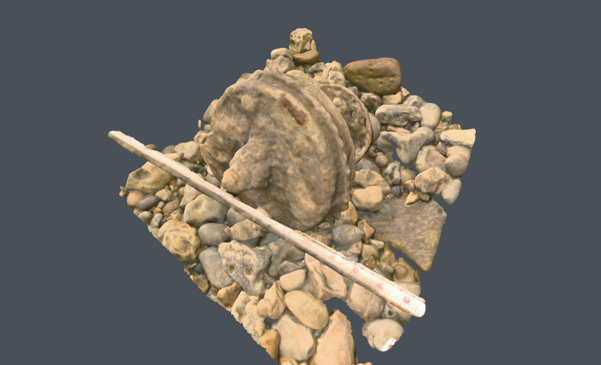
Since the Thames foreshore is only fully exposed at low-tide, we had an early start and a time-limited opportunity to explore archaeological remains between the high and low tide marks. We carried ILC 360° cameras & 3D scanning equipment to create interactive models for students, enabling them to learn and practice the techniques and methodologies used to create 3D models and immersive media in the field.

These models will be made available upon our return to campus. Due to the incoming tide, we had approximately 1.5 hours total time, including carrying the equipment to the shoreline, scanning the items, and collecting images for processing. Even under these tight time restrictions, we still produced some incredible results.

Scanning history

Luca Battiston with one of the student groups of the ‘Thames Through Time’ Birkbeck field school

We used Artec professional scanners and showed alternative scanning techniques to produce highly detailed 3D digital models from a series of photographs. The 3D models taken during the session can be viewed on phones, computers, and even VR headsets. Since much of London’s history lies beneath the water line at high tide, and it is not permitted to remove finds from the beach without a licence, we could capture and preserve these artifacts digitally and later create interactive models of objects found along the riverbank that students would otherwise never get to see.

Some of the greatest finds of the day included a large dock structure, measuring over four metres in length, made from reused ship timbers including part of a rudder, which dated back centuries to the days when large ships would dock along the Thames. Archaeologist Dr Lesley McFadyen provided expert knowledge and historical context about the discoveries, and ensured the correct archaeological procedures were followed. Witnessing something so historically important, and often invisible, added another level of excitement to the session.

A screen capture of one of the 3D models created during the Birkbeck Archeology Field School

Throughout the session, the ILC team taught student groups how to properly position themselves while scanning, ensure they captured enough images to make a complete model, and described how to recognise potential issues when scanning irregular surfaces. Meanwhile, they also worked with the 360° cameras, providing panoramic views of the area and capturing the energy of the day, generating a complete immersive record of the event. Given the short amount of time, it was amazing to see the outcomes.

A screen capture from one of the 360° images shot during the Birkbeck Archaeology Field School

Students were ‘hooked’

The response from the ‘Thames Through Time’ field school students was incredibly positive. Many students stated they were ‘hooked’ not only because of the technology they were using but due to the unique location where they were utilising it. For many students, this was their first exposure to 3D scanning equipment and experiencing it outside in the open air on the shores of the Thames while discovering pieces of maritime history dating back hundreds of years is an experience they’ll never forget.

For many students, viewing a portion of London’s riverbed in detail as an interactive 3D model on a computer screen represented a whole new way for them to engage with history and their surroundings. This fusion of physical exploration and digital design created a dynamic that cannot be replicated inside a typical classroom and, as cultural institutions continue to embrace this technology, these skills could provide important employability opportunities.

The ILC and archaeology teams are already planning a second session for students to review and build upon their 3D models and learn more about the photogrammetry process.

A screen capture of one of the 3D models captured by the Birkbeck Archaeology Field School students

Immersive learning beyond campus walls

This trip shows exactly what Immersive Learning Centre’s are all about – immersing your learning beyond the limits of a lecture hall and into the real world. In addition to using cutting edge technologies designed for immersive experiences, we incorporated outdoor exploration and real discoveries from London’s rich history, allowing students to discover their own history rather than only studying it from a book.

In addition, it highlights how easy it is for anyone to take advantage of this type of experience. Immersive technologies (including 360° cameras and digital audio recorders) are available to checkout for free from Birkbeck’s library – all you need is your student or staff ID card. If you’re currently working on a project (research or creative), or if you’d like to try out immersive technologies and what can be achieved with them, then now is the time!

Trips like this Thames Foreshore trip demonstrate that, with some creativity and proper equipment, learning can occur anywhere, even along one of the world’s oldest rivers with tidal waters rising!

Further information

When a profound sense of nihilism strikes, how can we regain meaning?

International Excellence Scholar, Guyang Lin, is studying the LLM Qualifying Law at Birkbeck. Prior to this, he studied a BSc in Philosophy and Economics and a Master’s in Philosophy and Public Policy. Here he shares a philosophical anecdote about what inspired him to study law.

A Crisis of Meaning

In my criminal law seminar this term, we discussed a real case. In 2010, a 67-year-old man smothered his terminally ill wife, unable to bear watching her suffer day after day. He was convicted, though the court accepted his mental illness as grounds for diminished responsibility.

Mental illness is more common, and more destructive, than we tend to assume. In China, the lifetime prevalence of the six major categories of mental illness is 16.6%. A growing number of young people are dropping out of school and isolating themselves at home under the weight of academic pressure and bullying.

When nihilism strikes, how do we regain meaning?

A Friend Who Vanished

I thought of a friend who spent years paralysed by nihilism and self-sabotage before he broke free of it. He had been a brilliantly talented student, but the shift began after he won a place on his dream course at a university in London. He started saying he had studied enough and needed to “enjoy life while young.” His writing from that time was polished but lacking in enthusiasm, except for one poem about a young man who goes into the mountains seeking the meaning of life, and finds he’s too afraid to stray from the path everyone expects of him. That poem moved me, I played guitar over it, and we became friends.

After graduation he faced a grim job market with disdain, insisting he could succeed easily if he tried, but that he needed to focus on “what matters” first. As rejections mounted, he retreated and locked himself away, refusing our invitations, calling his isolation a virtuous “low-desire” life. He called himself a freelance writer but produced nothing beyond a pile of unfinished drafts.

He wasn’t happy in his comfort, zone he was afraid. Each rejection had worn down the confidence he’d built as a top student, until he stopped trying altogether. He later admitted that during those stress-free days, his life felt as if it were turning pale: he had mistaken the avoidance of pain for happiness.

The Return to the World

Then his family told him they would no longer support his drifting. Frightened for his future, he went out one December afternoon and, by nightfall, had found a job starting the next day.

A few days later, we were on a train together and he suddenly got a nosebleed. His body, he said, simply hadn’t adjusted to the exertion. He stepped off at his stop and hurried away, unbothered. I knew then that he had changed. He later told me that rubbing hand cream into his cracked skin at night, he found himself wondering what kind of person he used to be.

I asked if he was still writing. He said he’d found inspiration in a piece of history, and told me a fable: pilgrims to the Potala Palace spend months prostrating themselves every three steps along mountain roads, and weep when they finally arrive. His past self, he said, had been like a tourist who simply flew in. He could see the palace and felt nothing, too exhausted by the flight to feel any awe. Without the effort of the journey, there’s no real wonder at the end of it.

Small Acts, Real Meaning

Last year, when his grandfather needed minor surgery, he sent money home without hesitation, relieved that, unlike his old self, he now had the means to actually help. That sense of being useful became the foundation of his rebuilt confidence. He told me he still wasn’t living the life he wanted, but that once his feet had touched rough reality, his anxiety had actually lessened. Comfort, he said, makes it hard to step outward; it was exhaustion and competition that brought back his drive.

He’d started reading Viktor Frankl, the psychologist who survived a Nazi concentration camp and concluded that people constantly search for meaning, and that among all values, the meaning found in how we face unavoidable suffering is the highest.

I think the meaning of life isn’t something fixed and pre-existing; it’s forged through the struggle against reality. What we think we love may fade once we actually have it, and the future may hold expectations we can’t yet see. In his recent drafts for a story about two soldiers who flee battle, then choose to return, there was a vividness I hadn’t seen in his writing before. It felt real, and I loved it.

Finding My Own Meaning

His change made me look at my own routine life. My guitar had gathered dust; my old philosophy notes and dissertation files sat untouched, along with a regret I’d written down once about not choosing jurisprudence sooner. So I stopped settling. Notebook in hand, I started heading to Birkbeck’s Law School after work, finally being honest about what I wanted. Life has felt more vivid ever since.

There’s a well-known story about Frankl treating a patient’s insomnia: his remedy was to stop trying to sleep, and instead force himself to stay awake as long as possible. When a problem is pushed to its extreme, we can’t solve it by fighting our own thoughts, we have to act, and confront the thing we fear directly. Through action, the way we face our problems changes. Believing in our own capacity to act may be a stronger antidote than a mind simply free of pressure. Perhaps that’s the truest antidote to nihilism.

More information

An afternoon of insight with Professor Nicola Spence CBE

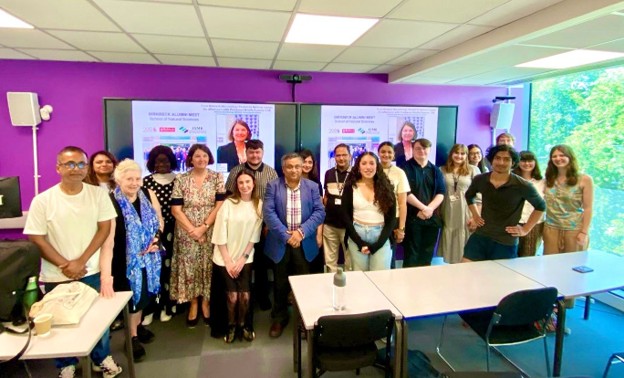
On 29 June 2026, the Birkbeck School of Natural Sciences hosted Birkbeck alumna Professor Nicola Spence CBE, Chief Plant Health Officer and Deputy Director for Plant and Bee Health at the Department for Environment, Food and Rural Affairs (Defra). In this blog, Birkbeck alumni, Sudipto Das and Michael McGrath reflect on her visit to Birkbeck.

Some visits stay with you long after the room has emptied. Professor Nicola Spence CBE’s return to the School of Natural Sciences was one of those occasions.

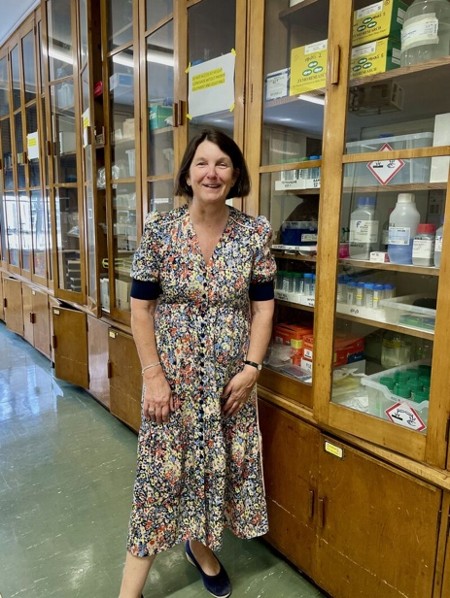
It was a genuine pleasure to welcome Nicola back to Birkbeck, and especially moving to see her revisit the laboratory where she had carried out part of her MSc Microbiology research project. The afternoon brought together current students, PhD researchers, postdoctoral scientists, alumni and academic colleagues, all eager to hear from a scientist whose career has been shaped by curiosity, integrity and an unwavering commitment to public service.

Welcoming Professor Spence, Professor Sanjib Bhakta reflected on his 20 years at Birkbeck and the enduring dedication, resilience and ambition of its students. He described the event as an important opportunity to bring together current students, alumni and colleagues to reconnect, exchange experiences and strengthen the institution’s growing home and international community. Acknowledging the students and alumni who had helped organise the event, he expressed his hope that it would become the first of many occasions celebrating the lifelong connections fostered at Birkbeck.

Professor Spence spoke with warmth and honesty about the journey that led her to one of the UK’s most influential scientific leadership roles. She reflected on her early ambition to study marine biology and how her interests gradually evolved towards plant virology, plant pathology and horticulture. Her career has taken her through leading scientific organisations, including Horticulture Research International and the Food and Environment Research Agency, where she later served as Chief Scientist. She also shared experiences from international projects in Kenya, working on viral diseases affecting vegetable crops, reminding us that plant health is a global challenge requiring international collaboration.

For many in the audience, one of the most inspiring moments came as she reflected on her time at Birkbeck. She spoke with genuine affection about her MSc in Microbiology and the research project that deepened her interest in plant pathology and laid the foundations for her future career. She went on to complete her doctoral research on Common Bean Mosaic Virus at the University of Birmingham before taking on leadership at Science City York, where she championed collaboration between universities, industry and government to drive innovation and strengthen the regional bioeconomy.

One of the most compelling parts of the afternoon was Professor Spence’s account of Britain’s ash dieback outbreak. Her reflections offered a powerful example of how rigorous scientific evidence can shape national policy and legislation when responding to major environmental challenges. Throughout her talk, she emphasised that protecting plant health is fundamental to biodiversity, food security, environmental sustainability and climate resilience. She also highlighted that science delivers its greatest impact when supported by strong partnerships across academia, industry and government, and when scientific evidence is communicated clearly and openly to society.

Professor Nicola Spence

For students and early-career researchers, her reflections on leadership were particularly inspiring. She spoke about the importance of integrity, collaboration, clear communication and the confidence to make evidence-informed decisions in complex and uncertain situations. Professor Bhakta echoed these messages, emphasising that these qualities are essential for the next generation of scientific leaders. Together, their reflections offered a timely reminder that leadership is defined not simply by expertise, but by responsibility, generosity and a commitment to helping others succeed.

Looking to the future, Professor Spence shared an optimistic vision for plant health in Great Britain. From strengthening national biosecurity and building more sustainable supply chains to investing in scientific capability and increasing public appreciation of healthy plants, her outlook was both ambitious and practical. Her vision demonstrated how science, innovation and partnership will continue to play a vital role in addressing future environmental challenges.

The afternoon concluded with an engaging question-and-answer session followed by a reception, where conversations continued well beyond the formal programme. Yet it was the spirit of the event that left the greatest impression. Professor Spence’s achievements are exceptional, but it was her warmth, humility and generosity in sharing her experiences that made the occasion truly memorable. She reminded us that scientific excellence, collaborative leadership and evidence-based policymaking are not simply aspirations; they are essential foundations for creating a healthier, more sustainable and more resilient future.

Organised by the students and alumni of the School of Natural Sciences, this inspiring event celebrated the enduring strength of the Birkbeck community. It demonstrated how reconnecting with distinguished alumni can inspire current students, strengthen professional networks and encourage the next generation of scientists to pursue careers that make a meaningful difference to society.

Further information
Study MSc Microbiology at Birkbeck

Tackling antimicrobial resistance: how collaboration, co-development, knowledge exchange and shared purpose can help

Professor Sanjib Bhakta reflects on a recent early-career researcher-led workshop hosted by Birkbeck, University of London and UCL, exploring how collaboration, innovation and shared purpose can accelerate progress in tackling antimicrobial resistance in mycobacterial infections.

Antimicrobial resistance (AMR) is one of the defining global health challenges of our time that cannot be solved in isolation. In bringing together researchers, clinicians, and industry partners this week, I was struck by how much progress becomes possible when we create space not just for expertise, but for genuine exchange.

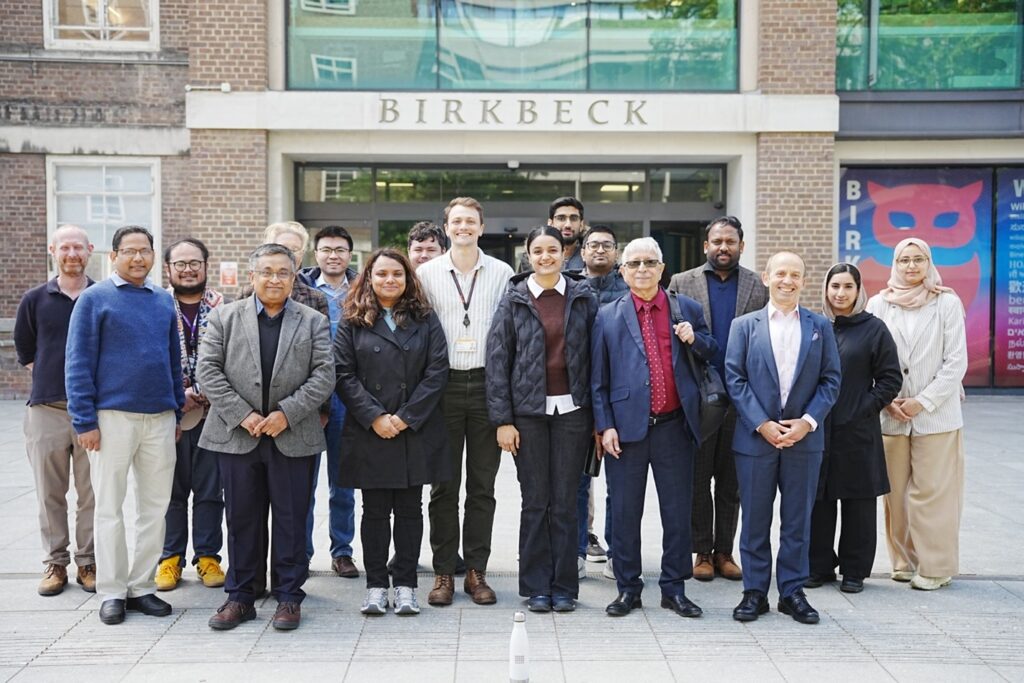
At the Mycobacteria Research Laboratory in the School of Natural Sciences of Birkbeck, University of London, in collaboration with University College London Chemistry, we hosted a dynamic, early-career researcher (ECR)-led capacity-building workshop under the umbrella of the Institute of Structural and Molecular Biology. Held at Birkbeck Central in Bloomsbury, the event brought together an inspiring mix of scientists, clinicians, industry partners, and international collaborators, all united by a common purpose: tackling the growing challenge of AMR in mycobacterial infections.

Workshop attendees outside Birkbeck, University of London.

From the outset, we set a tone of ambition and inclusivity, anchored in scientific excellence while remaining deeply committed to collaboration, translation, and impact. The day opened with a warm welcome from Professor Katherine Thompson, Head of the School of Natural Sciences, who offered an overview of the School and highlighted the importance of interdisciplinary thinking in addressing complex global health challenges. Her remarks framed our central mission: to integrate expertise across computational biology, chemistry, microbiology, clinical sciences, and biotechnology.

Director of UCL-TB and clinician, Professor Marc Lipman, highlighting the importance of interdisciplinary collaboration in the fight against AMR-resistance, tackling the problem at all levels.

Session 1, co-chaired by Dr Nupur Angrish and Dr Manoj Saxena, explored how human and machine intelligence can be harnessed to accelerate drug discovery. Talks ranged from interpretable omics and antibody discovery to generative AI-driven antimicrobial development. Contributions from researchers such as Dr Joseph Ng and Dr Ziaurrehman Tanoli illustrated how cutting-edge computational tools are reshaping the drug discovery pipeline, enhancing both speed and precision.

Crucially, these discussions were not confined to theory. They highlighted real-world applications, including novel therapeutic strategies targeting essential and vulnerable endogenous metabolisms in infectious bacteria a and innovative approaches to tackling drug-resistant infections inside the host environment.

Session 2 focused on one of the most pressing challenges in AMR research: translating laboratory discoveries into clinical and societal impact. Chaired by Professor Alethea Tabor, the session showcased pioneering work spanning nanoparticle-based drug delivery, repurposing of existing drugs, and rapid protein production technologies.

Speakers emphasised the importance of understanding pathogen diversity and leveraging it to improve early-stage screening of compounds in in vivo-like in vitro environments. Industry perspectives, including contributions from Birkbeck partner Nuclera, highlighted how collaboration with biotech can accelerate protein target characterisation by reducing the time and complexity associated with difficult-to-express membrane proteins.

For me, this session reinforced a key message: overcoming AMR requires not only scientific discovery, but also strategic alignment across academia, healthcare, and industry.

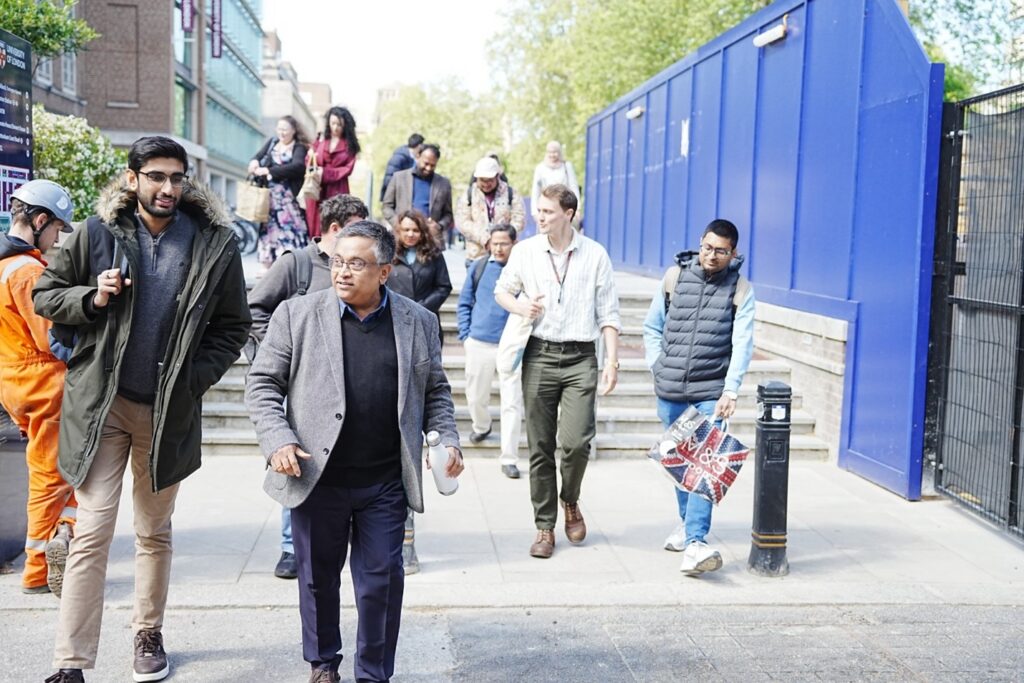
In a refreshing departure from conventional academic formats, we also introduced a post-lunch walking session through Bloomsbury, an area steeped in scientific heritage. Led by Dr William Thompson, this “Talk the Talk and Walk the Walk” session transformed the campus into an open classroom. As we passed landmark institutions such as the London School of Hygiene & Tropical Medicine and UCL’s Schools of Pharmacy and Chemistry, participants engaged in informal discussions that fostered openness, reflection, and interdisciplinary exchange.

It was a powerful reminder that some of the most meaningful collaborations begin outside formal settings.

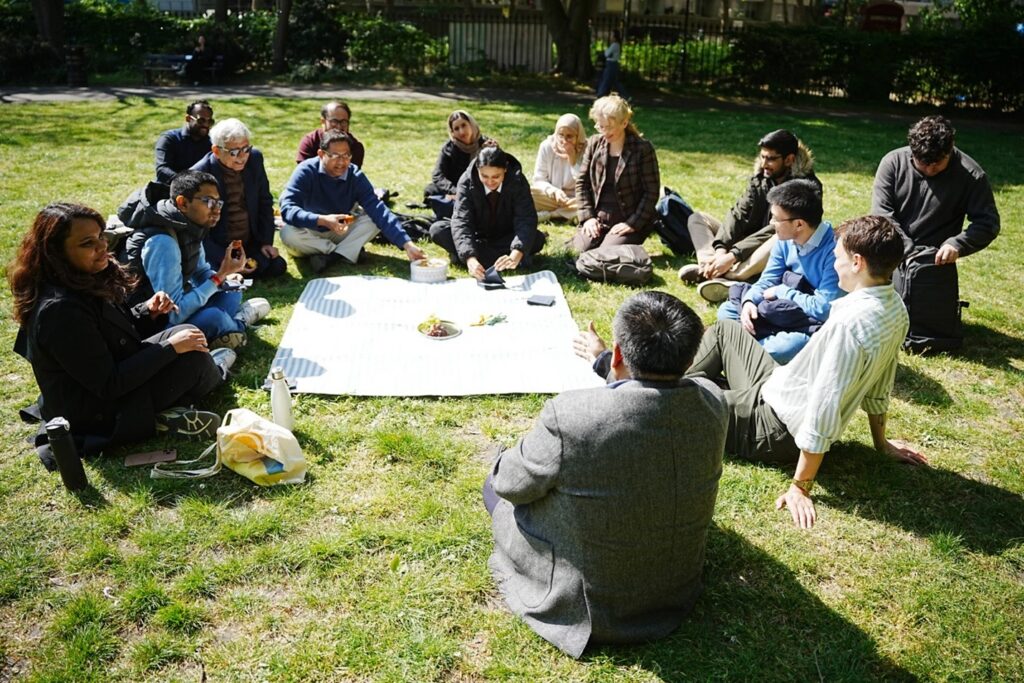
Attendees take a stroll around the central London campus, enjoying a walking tour then taking a break to enjoy a cake baked by Professor Sanjib Bhakta whilst sharing their research journeys and insights gained along the way

Global perspectives on tuberculosis and AMR

The workshop culminated in a keynote lecture by Professor Seyed E. Hasnain, chaired by Dr Ankita Nag, addressing a critical question: is the global elimination of tuberculosis possible?

Drawing on decades of research, he explored the remarkable adaptability of tuberculosis and its causative agent, Mycobacterium tuberculosis. His talk highlighted how the pathogen’s evolutionary strategies enable persistence despite genomic reduction, presenting both challenges and opportunities for therapeutic innovation.

Importantly, he emphasised the need for integrated approaches that combine computational biology, genomics, clinical research, and drug repurposing. His message resonated strongly with the workshop’s overarching theme: that only through collaboration can we outpace the evolving threat of AMR.

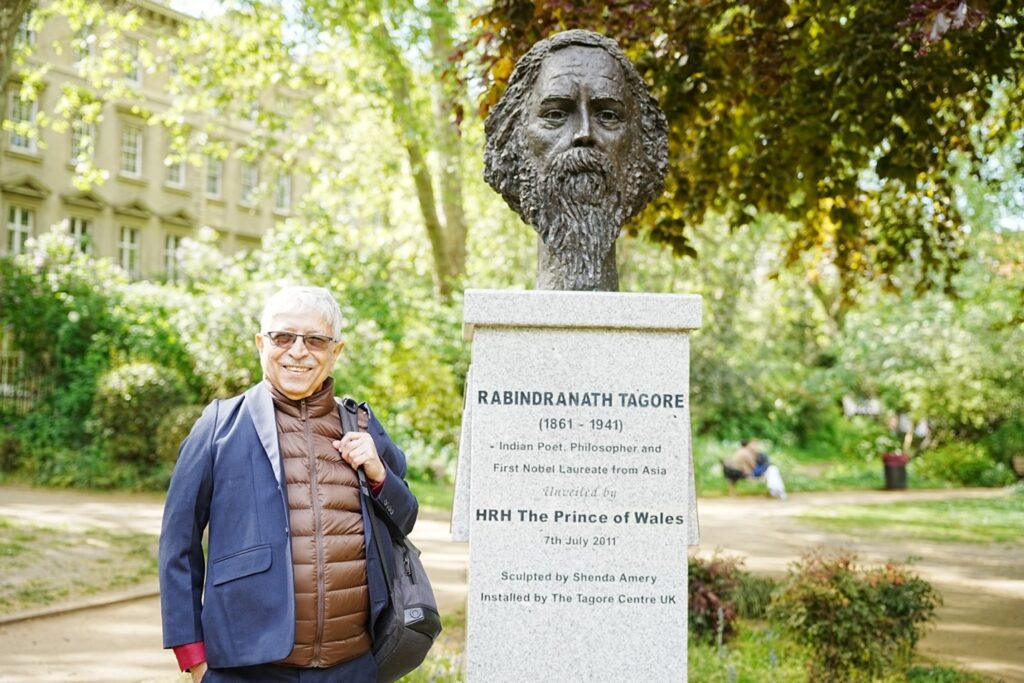
 Professor Seyed Hasnain, National Science Chair of the Indian Institute of Technology, smiling next to a statue of Rabindranath Tagore, the winner of the 1913 Literature Nobel Prize.

The closing reflections, led by Professor Franca Fraternali, brought the day full circle, focusing on the importance of building sustainable research capacity, fostering early-career leadership, and strengthening global partnerships.

One of the key outcomes of the workshop was a shared recognition that tackling AMR demands a truly networked approach – connecting local expertise in London with global collaborators across Europe, Asia, and beyond. The active participation of academic institutions, industry partners, and funding bodies signals a growing momentum towards translational, impact-driven science.

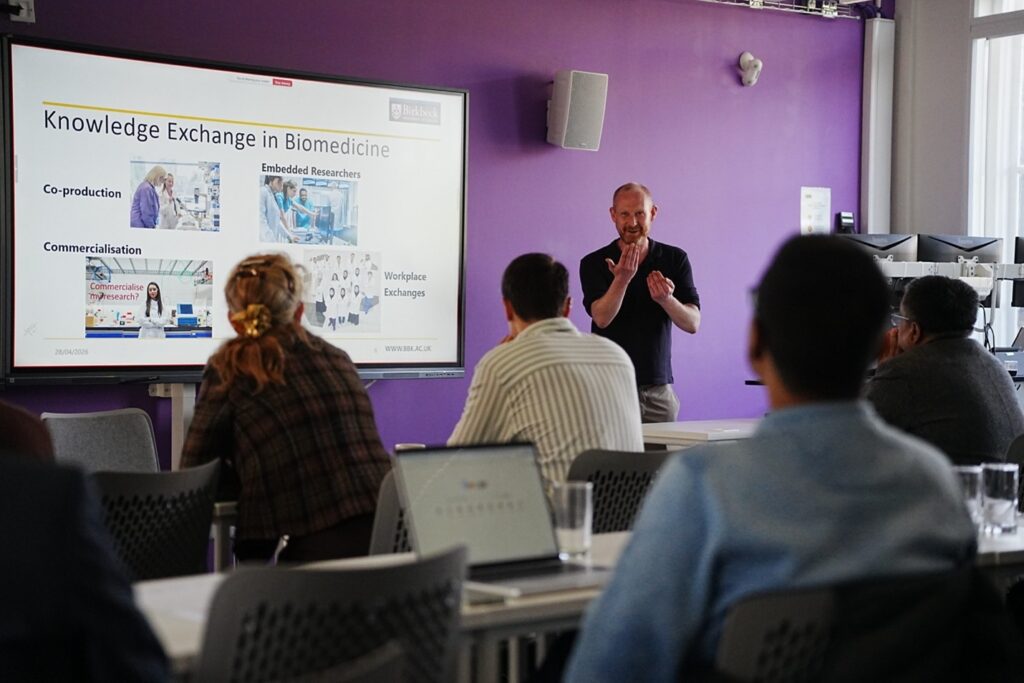
Matt Kimberly, impact officer at Birkbeck, discussing how to translate research into real world impact through engaging with the public.

Looking ahead, this workshop was more than a meeting, it was a catalyst. It demonstrated how ECR-led initiatives can drive meaningful change by creating platforms for innovation, mentorship, and collaboration. By bringing together diverse perspectives and expertise, we have laid a strong foundation for future partnerships across academia, healthcare, and biotechnology. These collaborations will be critical in accelerating the development of new diagnostics, therapeutics, and strategies to combat AMR.

As the global community continues to grapple with drug-resistant infections, initiatives like this serve as a powerful reminder: progress is possible when we work together across disciplines, sectors, and borders. The journey to overcome antimicrobial resistance is complex, but with shared vision, scientific rigour, and collaborative strength, it is one we are well-equipped to pursue. I would like to thank the UKRI and MOHE for their support of this international collaborative project.

Photo credits: Dr Pranab K. Paul

More information

Plantations in film: witnessing violence, memory and repair 

Dr Izabela Delabre, Senior Lecturer in Birkbeck’s School of Social Sciences, draws on her research in political ecology, plantations and futures to reflect on a recent film screening exploring how these histories are remembered and reimagined today. 

Last month the Birkbeck Plantations Working Group, in collaboration with the Birkbeck Centre for Environment and Sustainability, held a screening at the Birkbeck Institute for the Moving Image, titled Plantation Economies and Liberation Ecologies. After watching four short films, we were joined for a discussion with two of the directors: Ayesha Hameed in person, and Jona Alexander dialing in from the US; with the discussion chaired by Lisa Tilley 

Watched together, the films highlighted the way that film is not just a tool to document plantation histories, but to also make space for memory, emotion, and reflection—and, importantly, to begin imagining forms of repair. 

Witnessing plantation violence, past and present 

Black Atlantis: the Plantationocene by Ayesha Hameed examines the relationship between plantations and climate change. It draws upon conversations Ayesha had with people in a former plantation in St George’s Parish in Barbados, and the port city of Port of Spain in Trinidad, which revealed the devastating impacts of the plantation on societies and ecologies. Ayesha commented how now, a decade after some of those initial discussions, it is so clear to see the climate devastation being experienced in the Caribbean. 

Morgan Senior’s The Skin of the Earth explores the human and ecological traumas of British Colonial rule in Barbados. As Ayesha Hameed commented, the recorded discussions between the generations, as they explored Barbados, describing how plantations looked, and how they had changed, speaks to the scale of violence of the plantation, and the film witnesses what people experienced just a few generations ago. The film effectively connects the plantation world back with London – where so much of the wealth from these very violent plantation economies ended up.  

Memory, land, and the layered meaning of “plot” 

JT Roane’s Plot was inspired by ongoing pilgrimages by his family to a site in Desha, Virginia, where St. Johns Baptist Church was lost during a 2015 tornado. Here, JT Roane’s family, visit this space to mourn and gather together. The film considers how people were about to reconnect with land and water following Emancipation, though small scale collective cultivation. This visually stunning film is deeply personal.  

As observed by Lisa, “Plot” has two meanings in relation to the plantation: plots of land used by enslaved peoples to grow life-giving diverse crops in complete contradiction to the monocropped land of the plantation; but also burying grounds, contrasting with the plot as a life-giving space; thus also being sites of mourning, grief, and memory. 

Reorienting space and ecology 

Jona Alexander’s Black Ecologies: The Durham Field School Documentary, documents a three-day gathering in Durham/Orange County, North Carolina, led by descendants and stewards focused on Black and Indigenous stories of the Eno River watershed. It is part of an ongoing collaboration with the Black Ecologies Lab at Rutgers University.  

Jona described how “Black Ecologies examines the ‘whens and wheres’ of Blackness and how this happens through social formations and plantations” and it takes feminism, Black studies, history – all different disciplines – to think through time and space. At the field school, the group visited different historical sites, including one of the largest plantations in North Carolina and spoke with descendants from that plantation. 

For Jona, “it’s a retelling of a time and our reorientation to space and land, and reckoning with violence, colonialism, and looking at ways in which we can repair our relationship to the land.”  What was striking in this film was connecting Black and Indigenous ecologies in an intertwined way, and the field school was a meditation to reckon with the violence of the illusion of separation that communities and ecologies face and the importance of solidarity across different spaces and times. 

Intimacy and the act of witnessing 

As discussed with the audience, intimacy plays out in several ways across the films. Ayesha discussed the importance of reflecting on the act of witnessing, writing herself into the work, thinking about the environment as well as people and not showing explicit depictions of violence.  

Jona considered how the camera can also be considered surveillance and described the importance of being mindful of that when people are building and organising. Some parts of the field school were too sacred to film. As an audience we felt we were being ‘let in’ to an intimate and sacred space – a feeling also evoked profoundly and beautifully in JT Roane’s Plot and in Morgan Senior’s The Skin of the Earth as these directly relate to the experiences as directors’ own families. 

Water and knowledge 

Water is an important theme across the films. Black Ecologies: The Durham Field School Documentary included a line read by poet Destiny Hephill “the water is the water is the water” which echoes throughout the film: even when water is not visible, you can feel its impact.  

For Jona, this was a way of communicating with water in ways that feel like home, or a calling.  Ayesha described how enslaved people had different knowledges of water including Mami Wata (“Mother Water”), so from Africa to the Caribbean “across water came cosmologies informed by practice of what to do with the water.” Such beliefs were frequently erased in processes of enslavement. As Jona commented, sharing these films together was a way of witnessing though film – involving performance, storytelling and mysticism.  

As well as the drawing attention to the scale of the violence of the plantation in Black Atlantis and The Skin of the Earth, we were able to witness the possibilities of reorientation and repair – laughter, being grounded on Earth, reclaiming land and waterscapes, gathering spirituality, sharing intentions, mobilising and sharing. 

Birkbeck natural sciences researchers continue to drive the fight against drug-resistant tuberculosis 

This World TB Day (24 March), Professor Sanjib Bhakta from Birkbeck’s School of Natural Sciences reflects on the ongoing global challenge of tuberculosis and how Birkbeck researchers are contributing to the fight against drug-resistant infections. 

On 24 March each year, World TB Day serves as a powerful reminder that tuberculosis (TB), a disease many consider a relic of the past, remains one of the deadliest infectious diseases worldwide. Caused by Mycobacterium tuberculosis, TB continues to claim nearly 1.5 million lives annually, disproportionately affecting communities in low- and middle-income groups locally in London and globally. 

The story of TB research began in 1882, when Dr Robert Koch announced his discovery of the TB bacillus, transforming scientific understanding of the disease. More than a century later, the challenge has evolved. Today, the rise of antimicrobial resistance (AMR) and the burden of prolonged, complex treatment regimens demand new and innovative solutions. 

At Birkbeck, University of London, the Mycobacteria Research Laboratory is at the forefront of this global effort. Through cutting-edge research in molecular microbiology and biochemistry, the team is working to develop new therapeutic strategies to combat drug-resistant mycobacterial infections. 

A key milestone in this journey is a new collaboration with the Ineos Oxford Institute, as part of the Oxford Consortium on Drugs for Drug-resistant TB (OxCoD4TB). This partnership brings together leading researchers, clinicians, and industry experts to accelerate the discovery of next-generation TB treatments. This spirit of collaboration and innovation was on full display at the Ineos Oxford Institute’s annual Early Career Researcher Conference 2026 this month, hosted at Saïd Business School, University of Oxford. Bringing together more than 200 participants from across disciplines, including microbiology, drug discovery, genomics, clinical science, and social science, the conference provided a vibrant platform for sharing ideas and forging new partnerships. 

Birkbeck’s School of Natural Sciences team of early career researchers made a strong impact at the event. Among them, Dr Nupur Angrish, a postdoctoral scientist, was awarded the Best Poster Prize. Reflecting on the experience, she described the conference as “incredibly inspiring,” highlighting the breadth of approaches being taken to tackle AMR. She added: “It means a great deal to have our work recognised by such an engaged and knowledgeable audience.” 

Dr Ankita Nag (left) and Dr Nupur Angrish (right) presenting their research posters at the IOI Oxford Early Career Researchers Conference 2026. 

Beyond the conference, Birkbeck’s contribution to World TB Day also extends to global policy and public engagement. This week, I am co-chairing a session at the UCL–LSHTM World TB Day event at Great Ormond Street Hospital, exploring how artificial intelligence could help accelerate progress towards ending TB – an area of growing importance in infectious disease research. 

Tackling TB, particularly drug-resistant forms of the disease, requires coordinated, global action. We must use antimicrobials responsibly while strengthening effective prevention, quicker detection and shortening, and simplifying TB treatment to deliver a faster, more efficient cure. 

Echoing the World Health Organization’s World TB Day call, “Yes! We can End TB!”, progress will depend on country-led action, people-powered change, and a united One Health effort. 

More information 

Planning, practice and storytelling: preparing for Chevening Interviews

At a recent Q&A organised by the Birkbeck International team, Current Chevening Scholars shared their experiences of preparing for the all-important interview step in the selection process for the prestigious UK Foreign and Commonwealth Office scholarship.  

Maria Annaliza Fraser, Guyana, MSc International Relations 

When did you learn you had been selected for a Chevening interview? 

I got my notice on Valentine’s Day last year! There were several dates across March to select from. I remember selecting the 20 or the 21 of March, so I could have a month to prepare. 

How did you choose your time-slot?  

When I found out I had an interview, I called a previous Chevener who is a friend – he was more excited than I was at that point – and he advised I took a few days to decide on an interview slot that worked with my schedule.  

I took a slot at 8am, as if you know Georgetown, you know how miserable parking is! 

What tips you can share with future applicants?  

Practice with mock interviews with friends. I reached out to a previous scholar, who supported me throughout the journey. 

Go back to your essays, as the panel will refer to your answers about leadership, networking, education and career plans.  

This next tip might seem overwhelming, but I decided “I’m going to answer very confidently, very boldly, and be truthful and honest”. And I did that. It’s worth doing!  

Don’t hold back from talking about your motivation. For example, I was a bit nervous because my background is Marine Sciences and this is my second Master’s, so I explained this path isn’t about making a complete switch, it’s just about merging a gap. 

When it came to providing examples of facing resistance or difficulties, draw on both personal and professional examples. I drew on my experience working on the gas energy project in Guyana, and bringing stakeholders from opposite sides together – which also covered networking!  

I would also say, make sure you have a question you can ask at the end, when the panel invite you to. I asked about the Chevening alumni community and how I could get involved with it after the scholarship. 

Fabiola Andrea Leon, El Salvador, MSc Public Policy and Management 

When did you learn you had been selected for a Chevening interview? 

I think it was three weeks before the interview, I booked it right away and got a place on the second day of interviews. I prioritised booking at the beginning of the day, as I feared the panel can be tired after seeing many people. But I think, even if you are interviewed at the end of the day, you can also make an impact. If you come in with a good story, I think the panel is going to be captivated anyway. 

How did you prepare for the interview?   

Based on my application essays I prepared to tell my story and structured this as a pyramid. I wrote down what I have done at the bottom and what I want to achieve at the top. I was genuinely proud of different projects that I was working so I wanted to incorporate it into this story.  

I practiced a lot. I had mock interviews with people that I knew. I got feedback about things like speaking too fast,  

I joined applicant groups on Facebook and LinkedIn, watched videos on YouTube. I also connected with a previous Birkbeck scholar, Marko, and gained a lot from his experience and advice. 

I also prepared for general questions, such as challenges I have faced. My answer was divided into two; projects led at work, and my experience studying in China at 18 and how I adapted to living in a different country and learning a new language. I highly suggest for applicants to think about the challenges that they have faced in life, as well as professionally.  

Sekulu Nyekha, India, MSc Social Research 

When did you learn you had been selected for the interview? 

I got the e-mail in the night. It was on Valentine’s Day too, like Maria. I remember being really excited, but I didn’t want to rush booking the slot. However, when I went to book an interview from the selection available, the earlier dates were the only dates which were left. I picked March 4, which was one of the earliest dates of interviews! 

Was your interview online or in person?  

It was online for me. I think it’s because India is so diverse and big, so it made sense for it to be done online. 

How did you prepare?   

I’d always been confident about interviews, but right before the Chevening interview, I messed one up really badly and that taught me a lesson. I decided I was not going to be overconfident this time – I would seriously prepare. I had mock interviews with as many people were willing to help.  

I also practiced timing my responses, speaking for two, three or five minutes. This came very handy during the interview as I was told I had two minutes to answer each question. At that point I knew exactly how to structure my answers within the time allocated. 

What tips you can share with future applicants?  

Focus on what you wrote in your application essay, but don’t let that be your only focus! I saw my interview as a continuation of my essay. I referred to it, but I added more details, mentioned additional leadership positions and new projects I’d worked on since I originally applying. 

I also wanted both my essay and interview to come under one theme, seeing all my answers as part of one trajectory. Something like this can help a lot with memorability and coherency!  

For the networking question I mentioned how many people I worked directly with. I also mentioned my relation with Sishu, a previous Birkbeck Chevening scholar and friend, who I had been in touch with for insight. I think it also showed that I am excited to be part of the Chevening community. 

Tholang Mathopa, South Africa, MA AI, Ethics and Society 

How many times did you apply to Chevening before you got selected?  

I actually applied twice. In 2024, I had admission to a university I hadn’t listed on my application. This time around I made sure my listed universities matched and I gave it another shot. And it shows you shouldn’t ever give up on yourself. You must always try and try and try and try again until you get it right. 

Was your interview online or in person?  

It was online. At the beginning of the interview I was told I had about two minutes per question. The allocated interview slot was forty-five minutes, but we didn’t use it all.  

What tips you can share with future applicants?  

You should already be building on your trajectory, start working on the goals you actually want to achieve. It makes applying for the Chevening and answering interview questions so much easier.  

Make sure you document what you work on, your achievements, no matter how small you think this is. Don’t hesitate to share these on social media. It doesn’t have to be perfect, in fact the grittier it is, the better. We get to see the humanity behind what you’re doing. 

You need to be able to elaborate on your career plan after Chevening, mid and long term. This is where your real story comes to play. For example, you may have been working on a plan for some time- and Chevening is going to enable you to achieve this. You should be able to say this is what I’m going to do from year one after finishing, all the way up to year ten. The panel wants to know your vision and how the scholarship is going to help you reach your objectives. 

Finding my rhythm in London

Guyang Lin is studying LLM Qualifying Law Degrees, and is the recipient of the International Excellence Award. In this blog, they reflect on settling in to life in London and evening classes at Birkbeck.

It was drizzling the day I decided to cycle to a seminar for the first time. The streets of London shimmered with rain, and I was being pushed – by time, by cars, by the city itself – to keep moving.

I didn’t even know which way to go. When you’re new to London, the smallest tasks can feel monumental. Figuring out which side of the road to ride on, how to use a Forest e-bike, which traffic points to use, everything felt like a test.

I got bumped once, and my anxiety peaked, but I kept pedalling. Finally, I reached my destination, a little shaken but glad to have made it. That, I suppose, was a lesson London wanted to teach me: persistence often comes before confidence. But I already knew that. After all, persistence is what pushes me out of the comfort of home and the weariness of work, towards campus.

Two days later, I tried cycling again. I waited at a traffic light near Westminster, nervous but determined. Big Ben struck quarter to five, and I started moving: hesitant at first, then faster as the e-bike’s motor kicked in. The city rushed past me, and I began to feel more at ease.

Soon, cycling became my weekly ritual: my transition between work, study, and self. Between four and six p.m., London bursts into motion as waves of people hurry towards buses and Underground stations. This is the time I ride towards Birkbeck, joining the rush of people in my own way.

Most people use this time to head home, to rest. My destination, though, is not a place of rest but of energy: the lights of Birkbeck campus, the hum of conversation during evening seminars as people gather to learn. People with grey hair in windbreakers, bright pink hair in hoodies, or short hair in business suits. Some come straight from their offices, others from homes and families. Everyone brings a story, a day already lived, and a determination to keep learning. In this environment, I find something both grounding and inspiring, a sense that education is not separate from life but a part of it.

When I cycle home later at night, the city has changed. The roads are calmer, the people less rushed. It feels as though London and I share a secret, the knowledge that between dusk and midnight, the city belongs to those still chasing their dreams.

Studying at Birkbeck has taught me that “settling in” isn’t about becoming entirely comfortable. It’s about finding your rhythm in a city that never stops moving, learning when to push forward, when to pause, and how to keep going even when the rain falls.

London doesn’t slow down for anyone, but it leaves just enough room for people to grow at their own pace. And somewhere between the crowded evenings and the quiet rides home, between the ambition and the exhaustion, I’ve realised I’m no longer just passing through. I’ve become part of the city.

More information

Celebrating the Lunar/Chinese New Year

Birkbeck student Jingyi He, attended a New Year event organized by the Chinese Students and Scholars Association UK and, in this blog, speaks to the symbolic meaning of the ‘Year of the Horse’ and the importance of cultural events.

Birkbeck student Jingyi standing in front of a Chinese New Year banner
Birkbeck student, Jingyi He

In traditional Chinese culture, 2026 is the “Year of the Horse.” In Chinese culture, the horse is not merely an animal but also represents a set of symbolic meanings: speed, journey, action, pioneering spirit, endurance, and the relationship with the road. Idioms such as “urging the horse on with the whip” and “spurring the horse forward” metaphorically express the pursuit of enterprising spirit and seizing opportunities, as well as symbolizing the aspiration for a smooth and progressive life.

As a student of Birkbeck, I am fortunate to have attended the 2026 Spring Festival Gala organized by the Chinese Students and Scholars Association UK. Before the gala officially began, I was captivated by the various small activities at the entrance. As soon as I stepped into the corridor of the auditorium, a student smiled and handed me a large Fu (blessing) sticker, wishing me a “Happy Spring Festival.” In Chinese tradition, placing the Fu character upside down on the doorstep symbolizes “blessings have arrived”, representing the simplest yet most sincere New Year’s wish. Holding the red paper, I felt a warmth in my heart. Continuing down the corridor, I saw a table surrounded by people participating in a raffle. Upon closer inspection, the prize was a specially designed commemorative fridge magnet for the All-UK Chinese Students and Scholars Union Spring Festival Gala, featuring a horse-year theme. The magnet combined the image of a ‘child riding a wooden horse in a New Year painting’ with iconic London landmarks such as Big Ben, the London Eye, and Tower Bridge. As a cultural extension beyond the gala stage, it allowed Spring Festival culture to be seen, preserved, and remembered overseas. Unfortunately, my luck wasn’t in, and I missed out on it. However, that disappointment was quickly overshadowed by another emotion: from the Fu stickers to the fridge magnet design, these thoughtful touches, big and small, made me truly feel the care and concern of the All-UK Chinese Students and Scholars Union and Birkbeck for international students. Before even taking my seat, the festive atmosphere was already palpable.

The gala officially started at eight o’clock. I sat together with my classmates from Birkbeck and my teacher, Sammie to watch the entire event. The event was designed into three chapters, corresponding to the temporal progression of ‘Past Spring Festival, Present Spring Festival, Future Spring Festival’ from the historical memories of earlier generations of international students, to the current lives of contemporary youth in London, and then to a shared vision for the future. Zheng Zeguang, the Chinese Ambassador to the UK, took the stage to deliver a speech, marking the opening of the gala. The program lineup balanced tradition with modernity, showcasing the profound heritage of Chinese culture while also presenting the innovative expressions of the youth. There were traditional Chinese performances such as the opera ‘Mu Guiying Takes Command’, the folk song ‘Jasmine Flower’, and the physical theater ‘The Legend of the White Snake’, as well as modern acts like K-pop, rock music, and a cappella. I could really feel how much effort the staff put into this gala, Everywhere in the main venue, there were ‘Year of the Horse’ elements — horse projections on the walls, cute horse dolls on the tables, and more. All the on-screen captions were bilingual, thoughtfully designed for an international audience.

The program that left the deepest impression on me was when the Oxford University a cappella choir sang ‘Finding Myself’. Several foreign students stood in front of the microphones, and their clear enunciation surprised me. The dozen or so members stood in an arc, and the moment the British male lead singer opened his mouth, he demonstrated unexpectedly proficient Chinese—each word’s ending was handled cleanly and crisply, with even particles like “了” (le) and “着” (zhe) enunciated distinctly. Another Chinese member was particularly immersed in the bass part, gently tapping his feet to the rhythm, his light brown shoes tapping out a lively beat on the wooden floor. When singing the line “After making so many changes”, he suddenly raised his right hand to touch his chest, as if truly telling his own story through the song. Later, the host introduced that they had prepared for this program for nearly two months, and I was once again moved by the thoughtfulness of this gala.

For the grand finale, soprano singer Wan Dan performed a solo of ‘Cheers to the Motherland’, concluding the event with a powerful and infectious voice that pushed the atmosphere to its climax. The song evoked a sense of national pride, and many in the audience sang along, filling the entire auditorium with their voices.

After the gala ended, many people were reluctant to leave, staying behind to take photos together. Although many international students had not known each other before, under the festive atmosphere of the Spring Festival Gala, everyone was chatting freely. I also made many new friends through this event, who, like me, had come to the UK from China last September and had already spent nearly half a year studying abroad here.

This overseas Spring Festival Gala deeply touched me. I had never imagined experiencing a Spring Festival feast that transcended time zones and cultures in a solemn and exquisite British-style auditorium, feeling the most familiar festive atmosphere in the cold winter of a foreign land. The familiar melodies and traditional art forms on stage made me feel as if I had returned home for the New Year, regaining the sense of ritual and belonging that the Spring Festival should have, and feeling that the New Year was right beside me and ‘home’ had never been far away.

The inside of an auditorium for chinese new year event

Thanks to Siyuan Zhou, the Chair of the Birkbeck Chinese Society, for bringing this event to the Birkbeck Chinese community, and others celebrating, and giving us the opportunity to participate. For me, tonight’s event was absolutely wonderful and truly memorable. Finally, I wish everyone good luck and all the best in the new year!