Category Archives: Humanities and Social Sciences

Bells of Hope: Birkbeck UKRI Future Leaders Fellowship collaboration rings out at international convention on cluster munitions

Esther Breithoff is a Senior Lecturer in Contemporary Archaeology and Heritage, and UKRI Future Leaders Fellow based in Birkbeck’s School of Historical Studies. In this blog, her collaborator, Danae Hendrickson shares the story of ‘Bells of Hope’, a creative collaboration that brings attention to the continuing impacts of unexploded ordnance.

In September 2026, Bells of Hope travelled to Vientiane, Laos, for the Third Review Conference of the Convention on Cluster Munitions. The project comprises a film and a collection of bells made from metal war debris left by the US Secret War in Laos. Together, they brought the ongoing realities of living amidst unexploded ordnance to an international gathering of more than 800 delegates.

Bells of Hope is part of Dr Esther Breithoff’s UKRI Future Leaders Fellowship project, Ecologies of Violence. It was created in collaboration with artisans in Ban Naphia, Xieng Khouang Province, ARTICLE22, Legacies of War, Humanitarian Media Agency, and Birkbeck’s Carena Institute of Sustainable Archaeologies, with creative input from ecological and social artist Antony Lyons. Watch the Bells of Hope film trailer here.

Bells of Hope forms part of Dr Breithoff’s project’s wider exploration of “red zones” – places where violence lingers in landscapes, materials and everyday human and more-than-human lives long after the fighting has stopped.

In France, Dr Breithoff and postdoctoral researcher Dr Matthew Leonard collaborated with the Durand Group, Veterans Affairs Canada and artist Antony Lyons to explore the cordoned-off red zone at the Canadian National Vimy Memorial. The resulting Ecologies of Violence exhibition brought together information panels, a 3D scan of the restricted woodland and the artistic film Zone Rouge / Red Zone: Back Forest Reflections. Together, these offered different ways of encountering a landscape that remains inaccessible to the public because of unexploded ordnance and unstable wartime tunnels.

You can read more about the Vimy exhibition, its later showing at Birkbeck’s Peltz Gallery, and watch the film trailer.

Below, Danae Hendrickson, Chief of Mission Advancement and Communications for Legacies of War, reflects on how Bells of Hope came into being, where the bells and film have already travelled, and where they are going next. All photos by Danae, unless indicated otherwise.

The two films, Zone Rouge / Red Zone: Back Forest Reflections and Bells of Hope, will be shown in full together at Birkbeck Cinema in Spring 2027 for a screening and conversation in collaboration with the Birkbeck Institute for the Moving Image and The Derek Jarman Lab.

A New Future Forged

A connection to the country of Laos gifts you access to a small world of people who understand travel, culture, and war differently than most. It was in this group that we, Legacies of War, connected with Dr Esther Breithoff in 2023, but her journey to Laos began many years before. A Senior Lecturer in Contemporary Archaeology and Heritage, UKRI Future Leaders Fellow, Deputy Director – Carena Institute of Sustainable Archaeologies at the School of Historical Studies Birkbeck, University of London, Dr. Breithoff had long been researching Red Zones and particularly, as she so aptly writes, “how conflict lingers, shaping landscapes and lives as an unwanted inheritance.” This led her to a small village in Northeastern Laos, Ban Naphia, Xieng Khouang, and to the social enterprise, ARTICLE22.
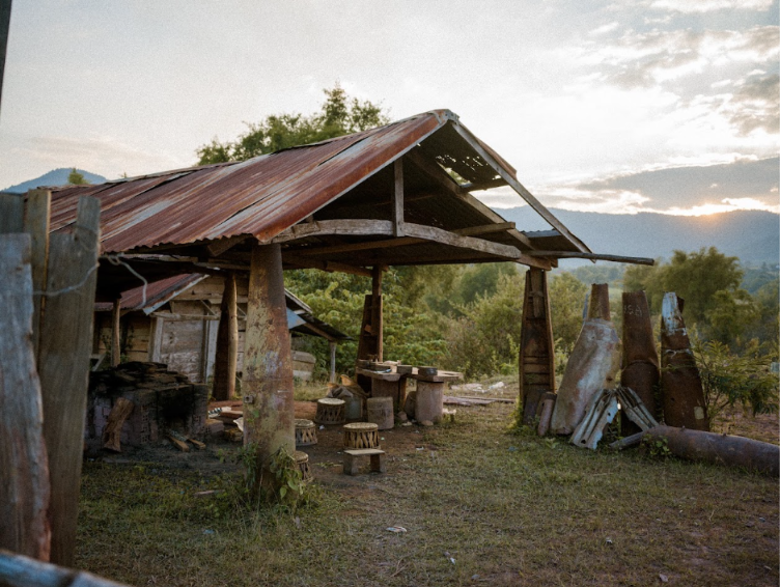
Photo: Artist studio, Ban Naphia, Xieng Khouang, Laos, Kayleb Lee, Legacies of War

Dr. Breithoff and ARTICLE22’s Founder, Elizabeth Suda, began to explore a new collaboration inspired by both resilience and urgency. Artisans in Ban Naphia have long been creating everyday use items and jewelry made from recycled metals left behind by the U.S. bombings on Laos, which ended more than 50 years ago. What they hoped to create in partnership with these artisans was a collection that invited renewed interest from the global community toward addressing the work of clearing bomb-filled land in Laos. In 2024, Dr. Breithoff returned to Laos, this time with Legacies of War. Her time spent traveling with Lao diaspora and peace activists in Laos, provided deeper insight into how international communities engage on the issue of mine action. Legacies of War were invited to join this collaboration, to ensure that those still impacted by this war are centered.
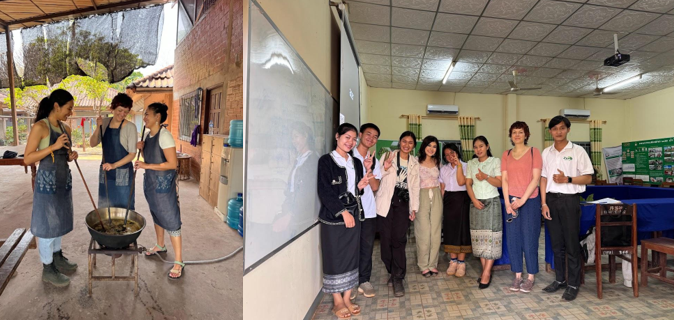
One year later, the collaborative project, The Bells of Hope became a reality in 2025 through Dr. Breithoff’s Ecologies of Violence, Birkbeck and funded through its Carena Institute of Sustainable Archaeologies and UK Research and Innovation (UKRI) Future Leaders Fellowship. Production of The Bells of Hope began – new molds were 3D printed, shipped from the U.S. to Laos, and hand delivered to the remote village in Xieng Khouang Province. Ban Naphia artisans methodically crafted this new collection and after many trials the prototypes were perfected. Dr. Breithoff returned to Ban Naphia together with ARTICLE22 and a local film crew, Humanitarian Media Agency, to capture the process of making the bells and of daily village life – the feeding of the chickens, chopping firewood, steaming sticky rice, and gathering around the fire to eat and also to create. The clappers of these ombré polished bells are designed to pay homage to the very first pieces that these artisans crafted decades ago – spoons.
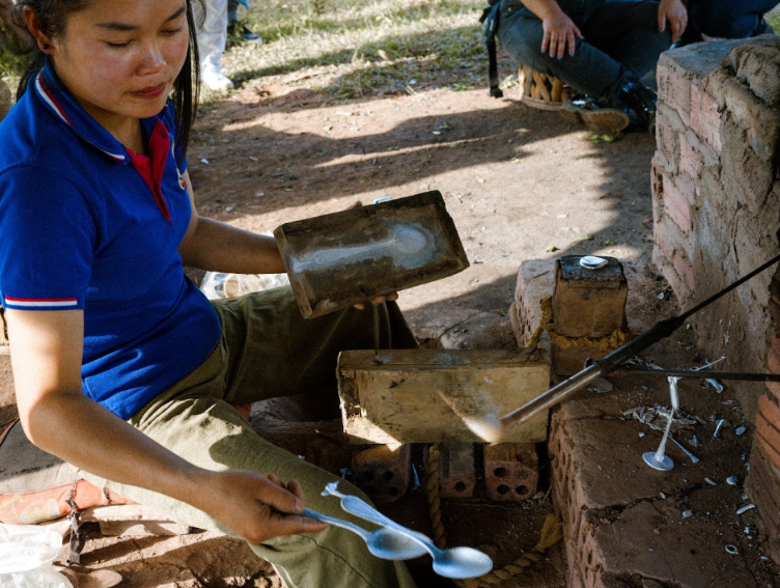
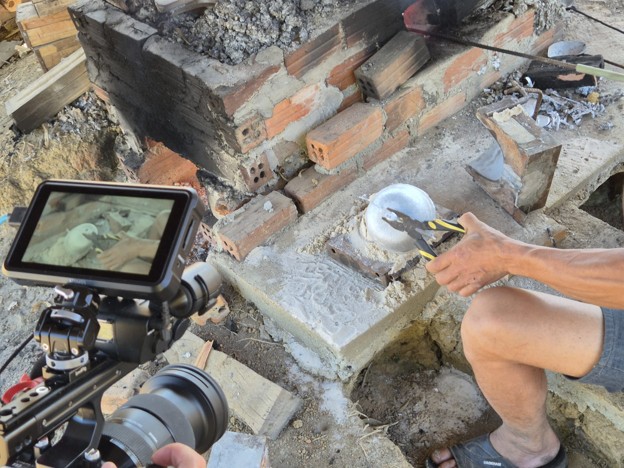
Photo: Spoon making in Ban Naphia, Xieng Khouang, Laos, Kayleb Lee, Legacies of War
Photo: Filming of Bells of Hope, Ban Naphia, Xieng Khouang, Laos, Esther Breithoff

Both The Bells of Hope physical bells and the film were nearing the finish line, with ecological social artist Antony Lyons bringing his creative eye to the fine cut during the film’s post-production. It was time now for this collective to share them with the world.

Ringing The Bells of Hope

The Third Review Conference of the Convention on Cluster Munition as hosted in Vientiane, Lao PDR this September 2026. As Laos hosted the world for this historic event, they called it a homecoming for the CCM as the First Meeting of States Parties was in Laos in 2010. For Legacies of War, attending this convention felt like a homecoming, too. As a Lao American and women led organization, the duality and weight of sharing this history with the world is ever present. We were the only representation from the U.S. at this conference, and we took on the role with honor. We had the opportunity to show representatives from more than 100 countries that this is an issue that the American public cares deeply about. Despite what they may be experiencing directly with the U.S. in their own countries or what they witness in the media, Legacies had the opportunity to share our unique framework of how we have grown American support and attention toward this issue over the last 22 years.
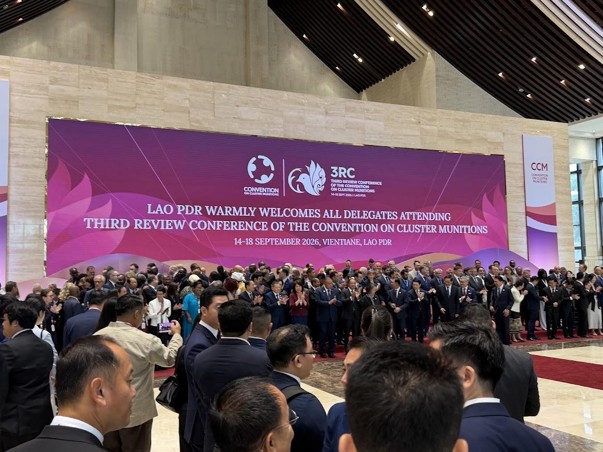
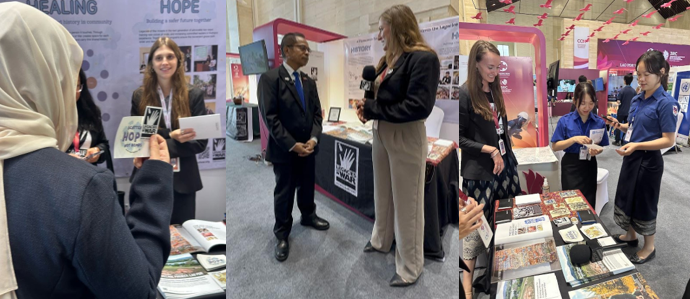
Photo: Cyrus Kanga

Our exhibit highlighted our three pillars: history, healing, and hope. Our goal was to inspire other countries impacted by war and cluster munitions that healing and change is possible by engaging those with lived experience and centering our stories. For the history of the U.S. bombings on Laos, raising awareness more than 50 years after the war ended is no easy task. It requires constant renewed investment from artists, writers, researchers, diplomats, veterans, youth, and diaspora communities. The collaboration with Dr. Breithoff’s Ecologies of Violence, Birkbeck, Carena Institute of Sustainable Archaeologies, UKRI Future Leaders Fellowship, and ARTICLE22 provides new ways for the public to learn and engage with this history – ways that Legacies of War is not able to access with storytelling alone.
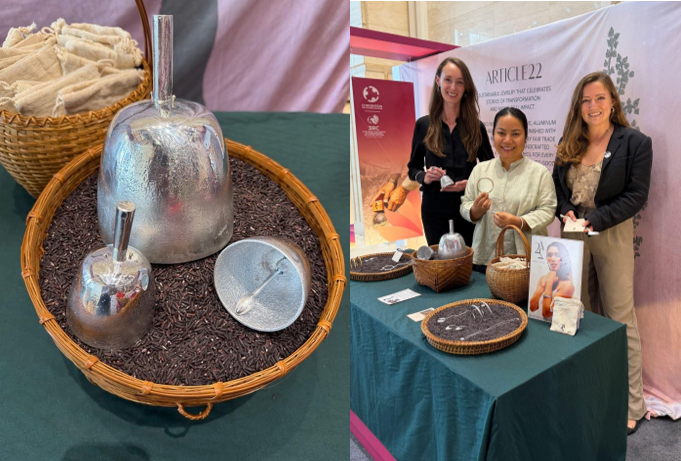
Expanding the conversation through art

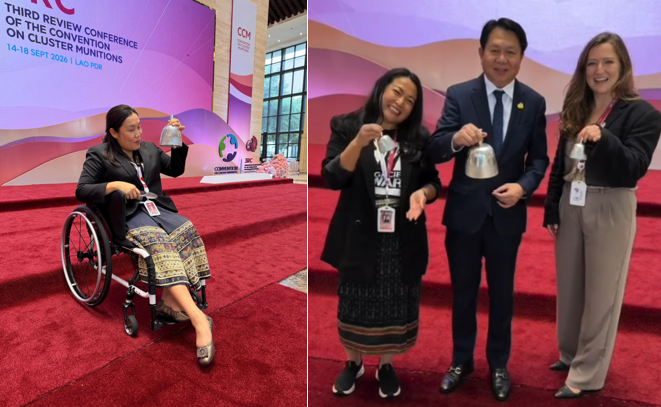
Legacies and ARTICLE22 exhibited directly next to each other at the conference, alongside just 8 other international organizations. Ready to engage with the more than 800 attendees, we centered The Bells of Hope bells and film. From the day before the conference began, you could hear the bells ring throughout the massive corridors of the convention center. During the week as attendees visited our exhibits, the bells seemed to be the first item that would draw people in and as soon as someone playfully rang it, it brought joy and curiosity – “Why a bell?” “What is it made out of” “Where can I buy one?” As soon as we responded with our intent to ring these bells in the halls of Congress, you could immediately see the understanding land so clearly. When our voices are not loud enough or welcomed, when our appearance is itself political, the sound of the bells enter the rooms ahead of us and create common ground.

If attendees were familiar with the concept of the recycled metal jewelry, they would still approach with curiosity about the bell – allowing the opportunity for us to share our story in full and get to know theirs. Sera Koulabdara, CEO Legacies of War, would share her experience of growing up in Laos and bomb shells that would be used as school bells. Her childhood memory was very important to The Bells of Hope project as it helped inspire what object would share the story of the daily impact of UXO in Laos.
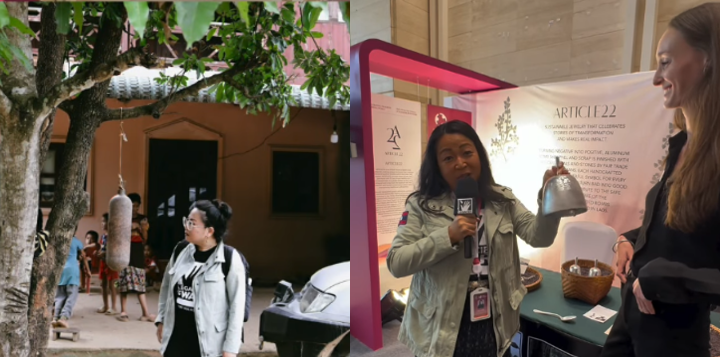
A couple of very special moments with the bell was Metta Thippawong, Director of COPE ringing the bell and Legacies, ARTICLE22, and H.E. Mr. Anouparb Vongnorkeo, Deputy Minister of Foreign Affairs of Laos, and Chair for the Third Review Conference of the Convention on Cluster Munitions (3RC-CCM) ringing the bell at the center of the conference just before the closing ceremony.
The Bells of Hope film did not always match the pace of many of the attendees who were walking around the exhibits, but for those that stopped to watch we noticed that they watched it in full – not just a few seconds but the entire 20 minutes and sometimes even longer if they missed the beginning as we had it looping. This film meets a critical need as the last films and documentaries made on the American Secret War in Laos were released a decade or more ago. This new film will continue to invite greater attention and support to address the legacies of war in Laos.

This conference was a much different audience than we normally reach. Here, each person is well acquainted with what a cluster munition is and yet few knew the details of the immense bombing campaigns on Laos and the risk that remains across all 18 provinces. As viewers watched the slow and seemingly uneventful day of the artisans of Ban Naphia making the bells, it provided a unique opportunity for foreigners to have a real look at village life in Laos; enjoying uneventful and average days while also surrounded by bomb identification posters and repurposed bomb casings into boats, spoons, and tools. The film showcases the haunting reality of the normalization of war in the most bombed country per capita in history.

Legacies of War looks forward to showing this film in more dedicated settings, and sharing The Bells of Hope with The U.S., in the halls of Congress, schools, diaspora community centers, The United Nations, and around the world for decades to come.

Thank you to Dr. Breithoff, Ecologies of Violence, Birkbeck, Carena Institute of Sustainable Archaeologies, UKRI Future Leaders Fellowship, and ARTICLE22, for the generous support and partnership that made this project possible. It is our hope that all Red Zones of the world have access to such beautiful opportunity for collaboration to share their stories and heal their land.

Find out more

Replacing Charlie Kirk: Can conservative politics hold on to Gen Z?

In this post, Professor Emerita of Social and Cultural Geography, Melissa Butcher, draws on writings from her book, The Trouble with Freedom: Love, Hate and America’s Future, to examine how current conservative politics is attempting to reach and engage Gen Z audiences.

It’s been just over a year since the murder of Charlie Kirk, founder of Turning Point USA (TPUSA), an activist network primarily organising conservative youth. In 2024, Kirk was lauded in MAGA circles for persuading a significant number of young people, especially young men, to vote for Trump. Today, as with other segments in Trump’s coalition, that Gen Z support is dissipating and there is no clear successor who can bring them back to bolster Trump’s flagging administration in the upcoming November mid-term elections.

Kirk was undoubtedly smart, charismatic and driven. He was able to communicate the real challenges facing young people (affordability, housing, student debt, the threat of AI to future job prospects), even if his solutions (more free market, conversion to Christianity and expulsion of migrants) were untenable.

His loss leaves a vacuum in the conservative universe, and a question of whether Kirk’s replacement will tilt towards even more violent rhetoric as a thin solution to intergenerational injustice. With the uptick in subscribers to commentators such as Nick Fuentes, the answer is possibly yes, but the one thing Kirk was able to do that others have not is build a movement.

The TPUSA ecosystem now supports over 1500 college chapters and 1200 high school Club Americas.1 They have created several organising platforms that train activists, mobilise young people to vote, and extend outreach to community networks. There is a stream of media content to support their work, including the eponymous podcast, the Charlie Kirk Show, now hosted by his former producers and some-time co-presenters, Andrew Kolvet and Blake Neff. It has almost 2 million subscribers.

The messaging is much the same as when Kirk was alive: their version of American culture, ‘patriotism, [Christian] faith, family and freedom’, must be restored and defended from those regarded as attacking those values. The latter includes immigrants, Islam, the ‘radical left’, and ‘western, liberal feminists’.

However, with the mid-terms likely to see the loss of the House of Representatives and possibly the Senate, this messaging has become sharper, with dire predictions for the future if the Democrats win back control. Railing against a ‘mass demoralising campaign’ on a recent podcast, Kolvet warns young conservatives that if they don’t vote they will ‘hand power over to the people that want you dead, that mocked Charlie’s death, that want to take wealth from white people to give it to not-white people’. They criticise ‘Republicans In Name Only’ (RINOs) who stand in the way of freedom. But their condemnation of the establishment is followed by a plea to young people not to burn it all down by allowing Democrats to get back into power.

There is good reason for young people to feel dissatisfied at the state of politics and the corrosion of democracy more broadly. Even those who organise for TPUSA at times express discontent. At a Chapter Leaders panel in July, broadcast on the Charlie Kirk Show, students’ frustration focused on the Iran war and questions of trust in the administration. Trump’s inability to tackle affordability, particularly housing and the cost of petrol, was a key driver of disappointment. Promises to fix things have yet again been broken. Some spoke of giving Trump his two more years, but then figuring out who they will support after that.

In a swirl of conspiracy theories following Kirk’s death, including that TPUSA may have been involved, the organisation has also had to respond to questions of trust. Even more mortally wounding to his legacy, Kirk has become a little cringe according to some reports, and once that happens his influence with all but the most devoted will slip further away.

Despite the disillusionment, no black-pilling is allowed on the Charlie Kirk Show. There can only be optimism and action. Negative polling is rigged, like elections, and part of a ‘mass psy-op’. Kolvet and Neff embrace their underdog status and hope to defy the odds, calling on listeners to show up and play their part; chase ballots, get people registered, vote.

But it sounds hollow without the force of Kirk’s personality, and the contradictions have become all too evident. For example, just how do you address the precarity young people face without critiquing the economic system that got us here in the first place. There is heresy from a student on the Chapter Leaders panel when she makes a suggestion that the administration could raise the minimum wage (it’s presently just $7.25 per hour in her state) to help manage the cost of living. The idea is quickly shut down. It is a core mission of TPUSA to promote free market capitalism.

Yet for all the disagreement I have with many of Kirk’s views, he was able to see a void in young people’s lives and create something that would fill it. Rather than nihilism or apathy, he offered a sense of belonging and structures of support. He created an organisation that offered meaning, purpose and validation for conservative life choices.

For a politics that builds an alternative to our current tilt towards authoritarianism, there is a need to also address that void, creating support for young people that rebalances the scales of intergenerational justice without blaming immigrants and minorities. Maybe all it would take to start is just for political leaders to do what they say they will do and in so doing rebuild trust between younger generations and the decision making that will impact their future.

For more on why people may vote for authoritarianism, see Melissa’s new book,  The Trouble with Freedom: Love, Hate and America’s Future, Manchester University Press, 2026.

More information

Bringing the people of Dura-Europos back into the picture 

Birkbeck’s Carena Institute of Sustainable Archaeologies recently began a new heritage cooperation with Syria’s Directorate General of Antiquities and Museums (DGAM). Hiba Alkhalaf, Carena Research Fellow in Sustainable Archaeologies, shares how a community event in Salihya, Syria, brought historic photographs of the Dura-Europos excavations back to the communities connected to the site. 


Dura-Europos is an ancient city on the Euphrates in eastern Syria. Excavations there in the 1920s and 1930s produced an extensive photographic record, but many of the local people who worked on the excavations were never named in the archive. 

The Faces of Dura-Europos project is helping to change this. By bringing historic photographs back to local communities, the project invites people to identify individuals, share memories and contribute local knowledge that can help build a fuller picture of the site’s history. 

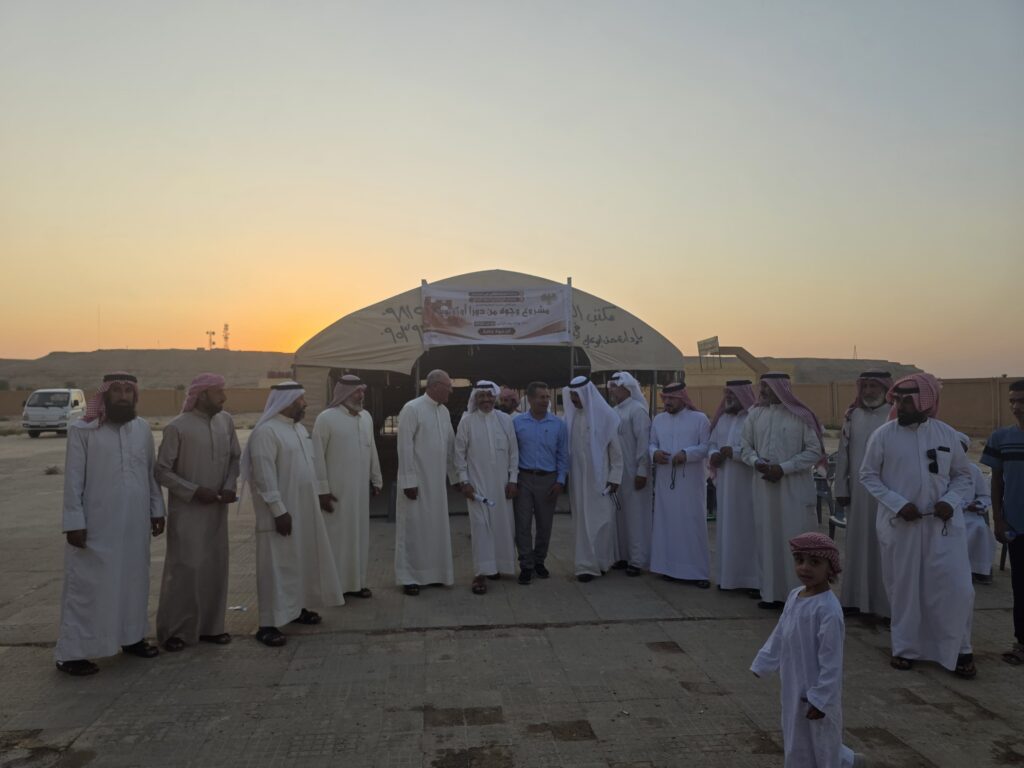
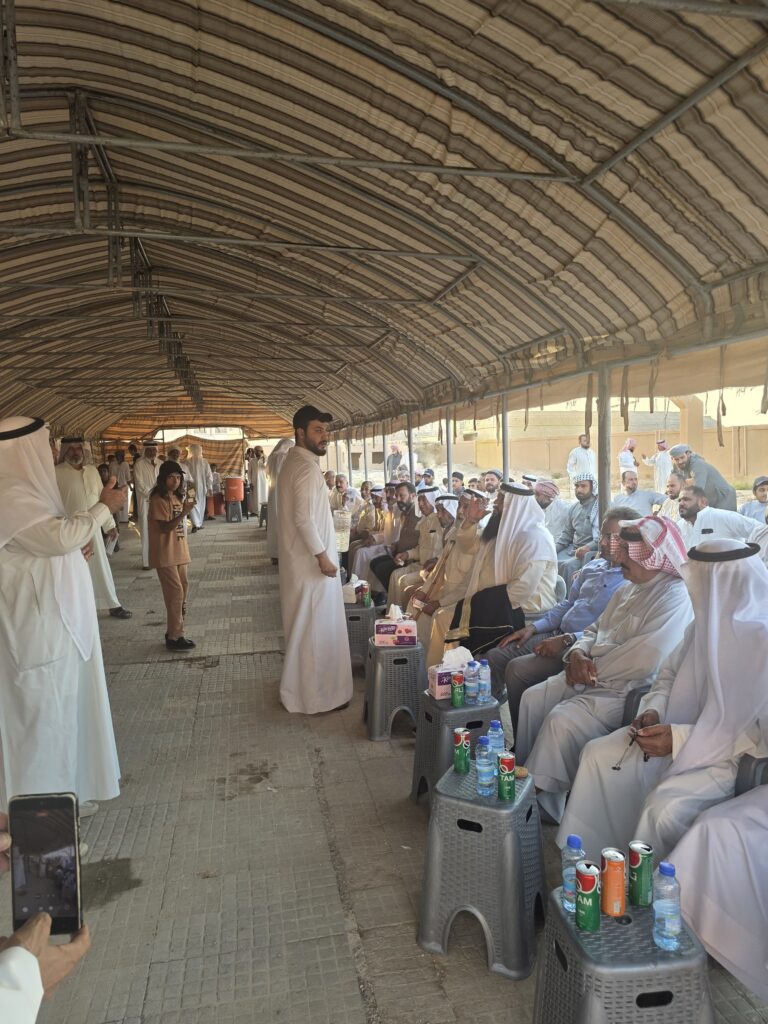
In August 2026, the Carena Institute for Sustainable Archaeologies, working with Syrian scholars and community representatives and with the support of Syria’s Directorate General of Antiquities and Museums (DGAM), held its first community engagement and exhibition event in Salihya, near Dura-Europos. 

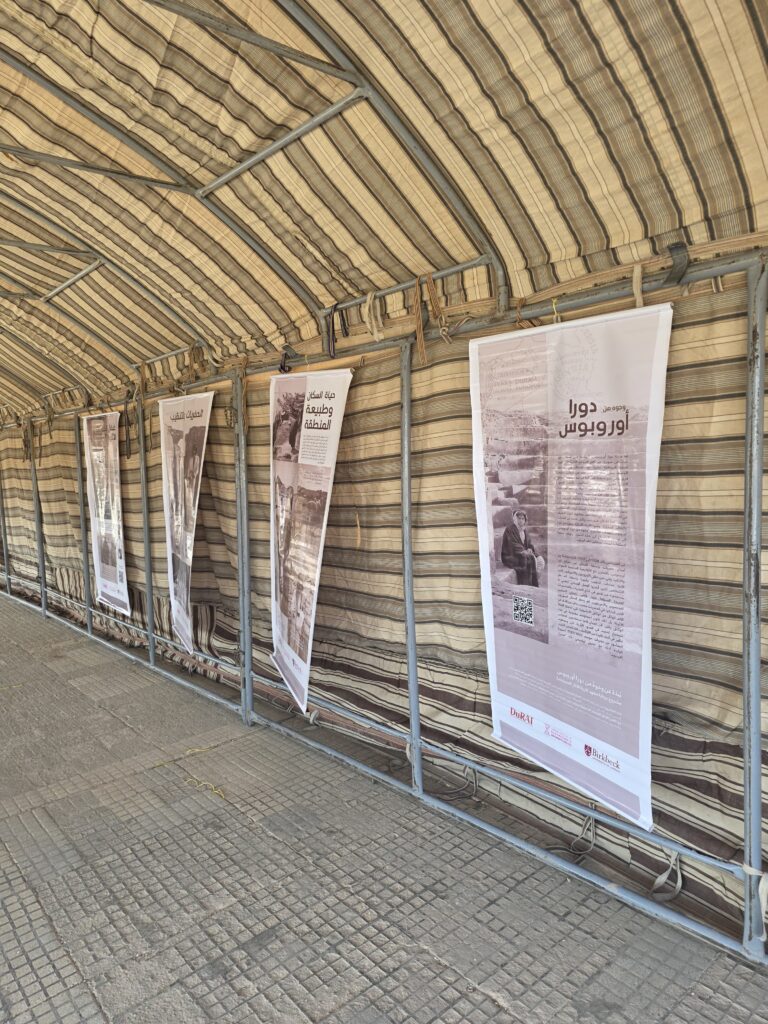
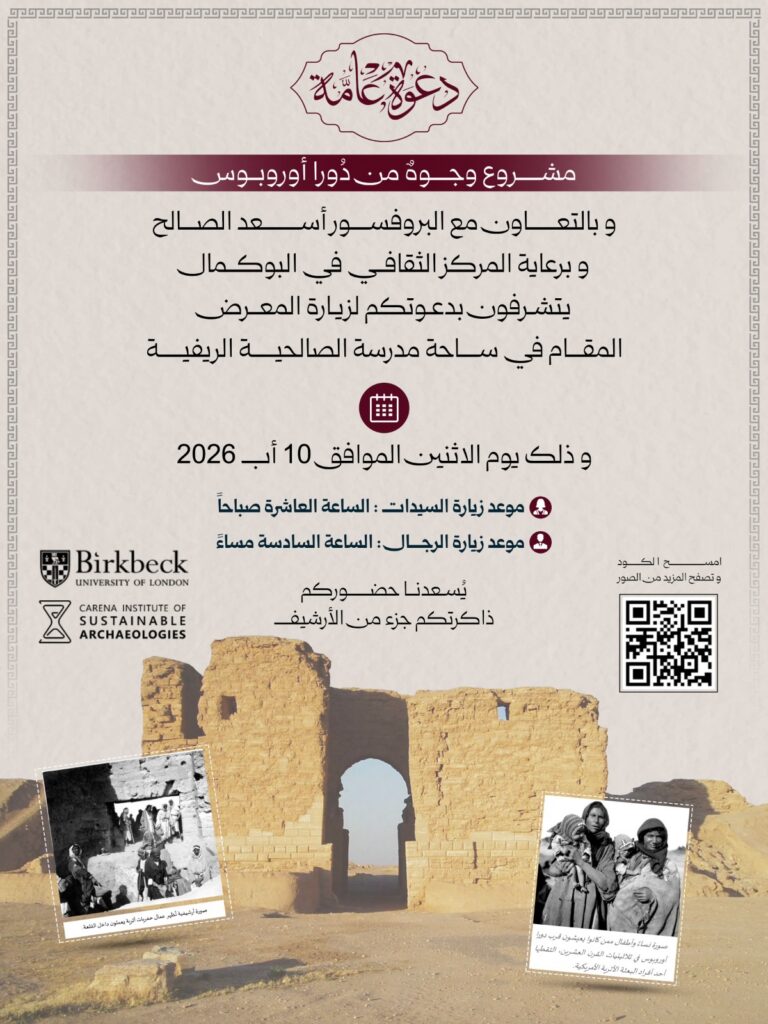
The Faces of Dura-Europos exhibition featured photographs from the 1930s excavations, including images of local workers whose names were rarely recorded. The project aims to reconnect these photographs with their descendants and with the wider communities around Dura-Europos, helping to bring names, memories and local knowledge into the archaeological record. 


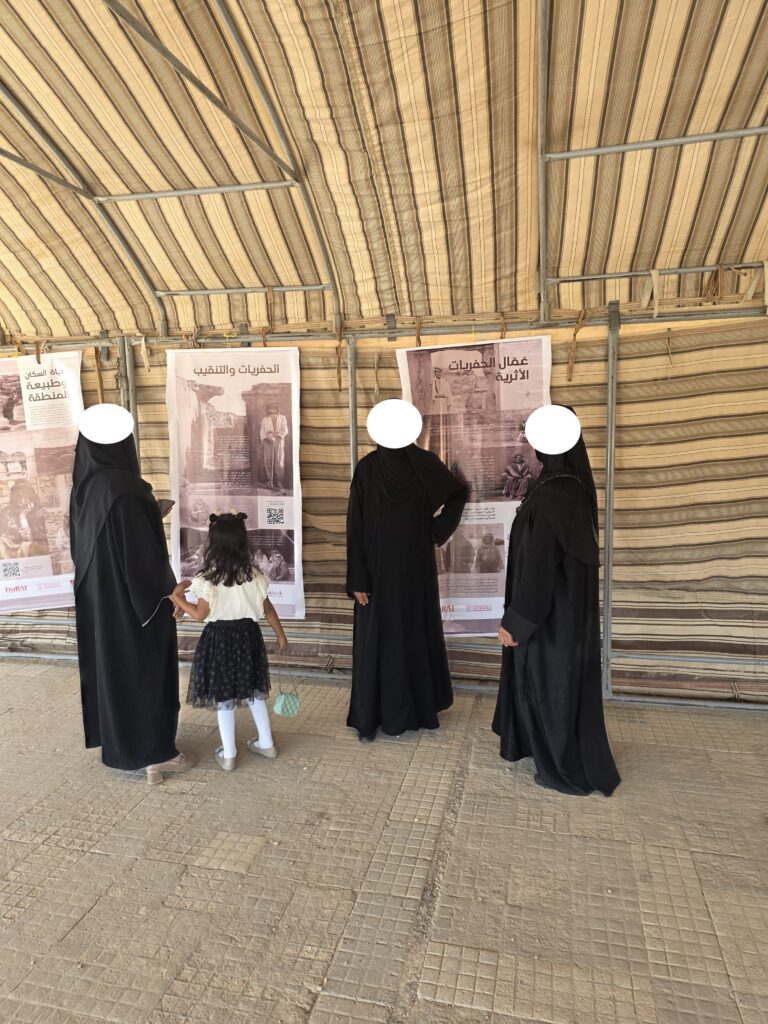
The exhibition was attended by men, women and children from Salihya, Albukamal and the surrounding region. Visitors were introduced to the history and significance of Dura-Europos through a short presentation and specially designed project leaflets. 

The exhibition was organised around three themes: The Work, The People, and Local Lives and Landscapes. Alongside the excavation photographs, it explored traditional clothing, everyday life and the landscape around Dura-Europos. 


Visitors were also invited to contribute through the digital Faces of Dura platform, helping to connect the historical photographs with knowledge held within the local community. 

The event is part of a wider programme of work to strengthen connections between local communities and Dura-Europos. By bringing photographs from the site’s excavation history back to the people who live in the region today, the project aims to create a more inclusive record of the site’s past and support communities in having a role in its future.

Images courtesy of Faces of Dura/Asaad Alsaleh.

Find out more 

Using immersive technologies to explore archaeological remains on the Thames foreshore

Members of Birkbeck’s Immersive Learning Centre (ILC) visited the Thames foreshore with Birkbeck Archaeology staff and students to investigate maritime artefacts at low tide. What followed was an unforgettable hands-on experience that combined history, technology, and creativity. Birkbeck work placement student, Jorge Bau I Munguira, shares how it went in this blog, after interviewing ILC staff member Luca Battiston.

A race against the tide

Luca Battiston and Dr Claire Harris using the Leo Artec Scanner

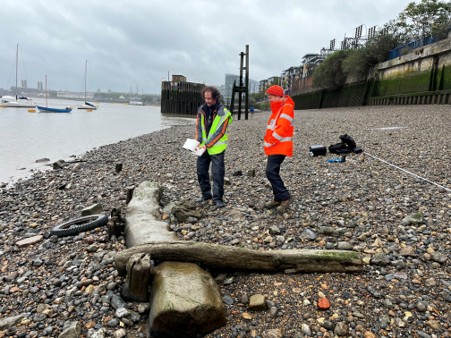
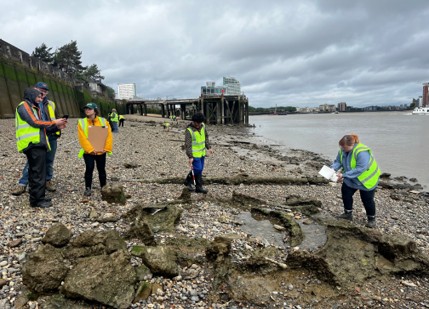
Since the Thames foreshore is only fully exposed at low-tide, we had an early start and a time-limited opportunity to explore archaeological remains between the high and low tide marks. We carried ILC 360° cameras & 3D scanning equipment to create interactive models for students, enabling them to learn and practice the techniques and methodologies used to create 3D models and immersive media in the field.

These models will be made available upon our return to campus. Due to the incoming tide, we had approximately 1.5 hours total time, including carrying the equipment to the shoreline, scanning the items, and collecting images for processing. Even under these tight time restrictions, we still produced some incredible results.

Scanning history

Luca Battiston with one of the student groups of the ‘Thames Through Time’ Birkbeck field school

We used Artec professional scanners and showed alternative scanning techniques to produce highly detailed 3D digital models from a series of photographs. The 3D models taken during the session can be viewed on phones, computers, and even VR headsets. Since much of London’s history lies beneath the water line at high tide, and it is not permitted to remove finds from the beach without a licence, we could capture and preserve these artifacts digitally and later create interactive models of objects found along the riverbank that students would otherwise never get to see.

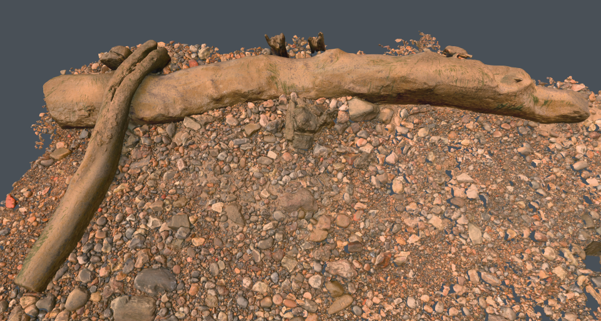
Some of the greatest finds of the day included a large dock structure, measuring over four metres in length, made from reused ship timbers including part of a rudder, which dated back centuries to the days when large ships would dock along the Thames. Archaeologist Dr Lesley McFadyen provided expert knowledge and historical context about the discoveries, and ensured the correct archaeological procedures were followed. Witnessing something so historically important, and often invisible, added another level of excitement to the session.

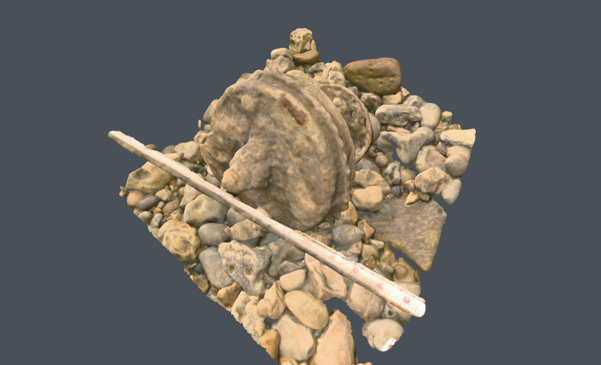
A screen capture of one of the 3D models created during the Birkbeck Archeology Field School

Throughout the session, the ILC team taught student groups how to properly position themselves while scanning, ensure they captured enough images to make a complete model, and described how to recognise potential issues when scanning irregular surfaces. Meanwhile, they also worked with the 360° cameras, providing panoramic views of the area and capturing the energy of the day, generating a complete immersive record of the event. Given the short amount of time, it was amazing to see the outcomes.

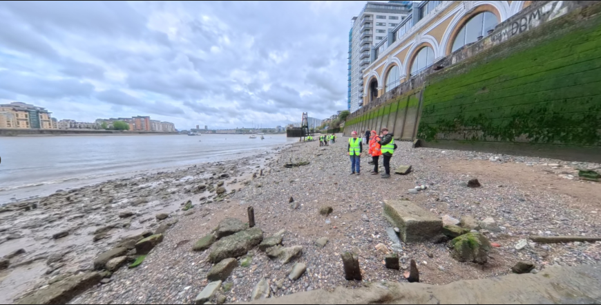
A screen capture from one of the 360° images shot during the Birkbeck Archaeology Field School

Students were ‘hooked’

The response from the ‘Thames Through Time’ field school students was incredibly positive. Many students stated they were ‘hooked’ not only because of the technology they were using but due to the unique location where they were utilising it. For many students, this was their first exposure to 3D scanning equipment and experiencing it outside in the open air on the shores of the Thames while discovering pieces of maritime history dating back hundreds of years is an experience they’ll never forget.

For many students, viewing a portion of London’s riverbed in detail as an interactive 3D model on a computer screen represented a whole new way for them to engage with history and their surroundings. This fusion of physical exploration and digital design created a dynamic that cannot be replicated inside a typical classroom and, as cultural institutions continue to embrace this technology, these skills could provide important employability opportunities.

The ILC and archaeology teams are already planning a second session for students to review and build upon their 3D models and learn more about the photogrammetry process.

A screen capture of one of the 3D models captured by the Birkbeck Archaeology Field School students

Immersive learning beyond campus walls

This trip shows exactly what Immersive Learning Centre’s are all about – immersing your learning beyond the limits of a lecture hall and into the real world. In addition to using cutting edge technologies designed for immersive experiences, we incorporated outdoor exploration and real discoveries from London’s rich history, allowing students to discover their own history rather than only studying it from a book.

In addition, it highlights how easy it is for anyone to take advantage of this type of experience. Immersive technologies (including 360° cameras and digital audio recorders) are available to checkout for free from Birkbeck’s library – all you need is your student or staff ID card. If you’re currently working on a project (research or creative), or if you’d like to try out immersive technologies and what can be achieved with them, then now is the time!

Trips like this Thames Foreshore trip demonstrate that, with some creativity and proper equipment, learning can occur anywhere, even along one of the world’s oldest rivers with tidal waters rising!

Further information

Plantations in film: witnessing violence, memory and repair 

Dr Izabela Delabre, Senior Lecturer in Birkbeck’s School of Social Sciences, draws on her research in political ecology, plantations and futures to reflect on a recent film screening exploring how these histories are remembered and reimagined today. 

Last month the Birkbeck Plantations Working Group, in collaboration with the Birkbeck Centre for Environment and Sustainability, held a screening at the Birkbeck Institute for the Moving Image, titled “Plantation Economies and Liberation Ecologies.” After watching four short films, we were joined for a discussion with two of the directors: Ayesha Hameed in person, and Jona Alexander dialing in from the US; with the discussion chaired by Lisa Tilley 

Watched together, the films highlighted the way that film is not just a tool to document plantation histories, but to also make space for memory, emotion, and reflection—and, importantly, to begin imagining forms of repair. 

Witnessing plantation violence, past and present 

Black Atlantis: the Plantationocene by Ayesha Hameed examines the relationship between plantations and climate change. It draws upon conversations Ayesha had with people in a former plantation in St George’s Parish in Barbados, and the port city of Port of Spain in Trinidad, which revealed the devastating impacts of the plantation on societies and ecologies. Ayesha commented how now, a decade after some of those initial discussions, it is so clear to see the climate devastation being experienced in the Caribbean. 

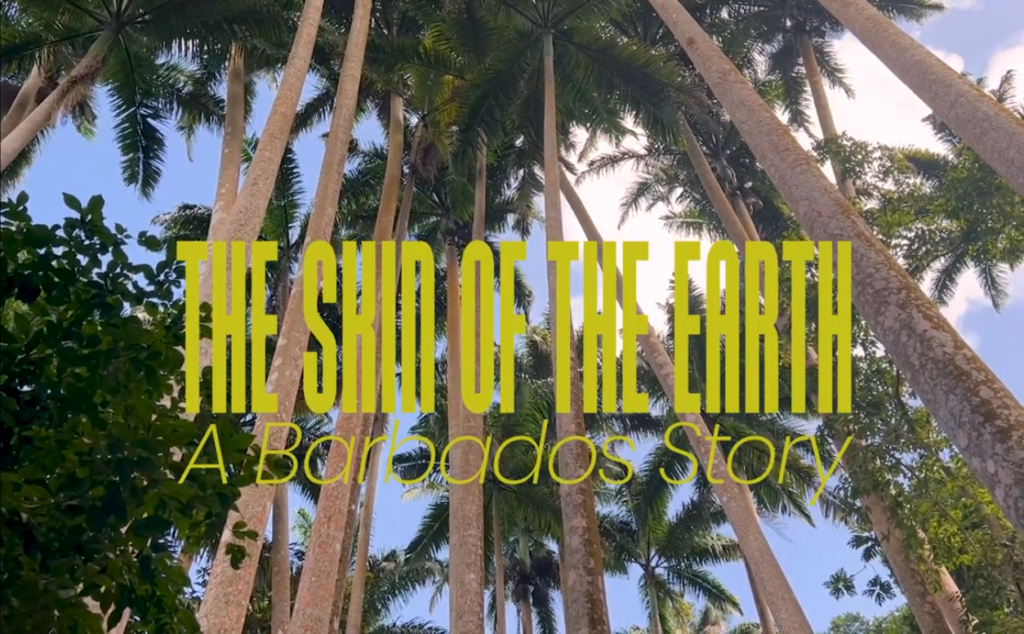
Morgan Senior’s The Skin of the Earth explores the human and ecological traumas of British Colonial rule in Barbados. As Ayesha Hameed commented, the recorded discussions between the generations, as they explored Barbados, describing how plantations looked, and how they had changed, speaks to the scale of violence of the plantation, and the film witnesses what people experienced just a few generations ago. The film effectively connects the plantation world back with London – where so much of the wealth from these very violent plantation economies ended up.  

Memory, land, and the layered meaning of “plot” 

JT Roane’s Plot was inspired by ongoing pilgrimages by his family to a site in Desha, Virginia, where St. Johns Baptist Church was lost during a 2015 tornado. Here, JT Roane’s family, visit this space to mourn and gather together. The film considers how people were about to reconnect with land and water following Emancipation, though small scale collective cultivation. This visually stunning film is deeply personal.  

As observed by Lisa, “Plot” has two meanings in relation to the plantation: plots of land used by enslaved peoples to grow life-giving diverse crops in complete contradiction to the monocropped land of the plantation; but also burying grounds, contrasting with the plot as a life-giving space; thus also being sites of mourning, grief, and memory. 

Reorienting space and ecology 

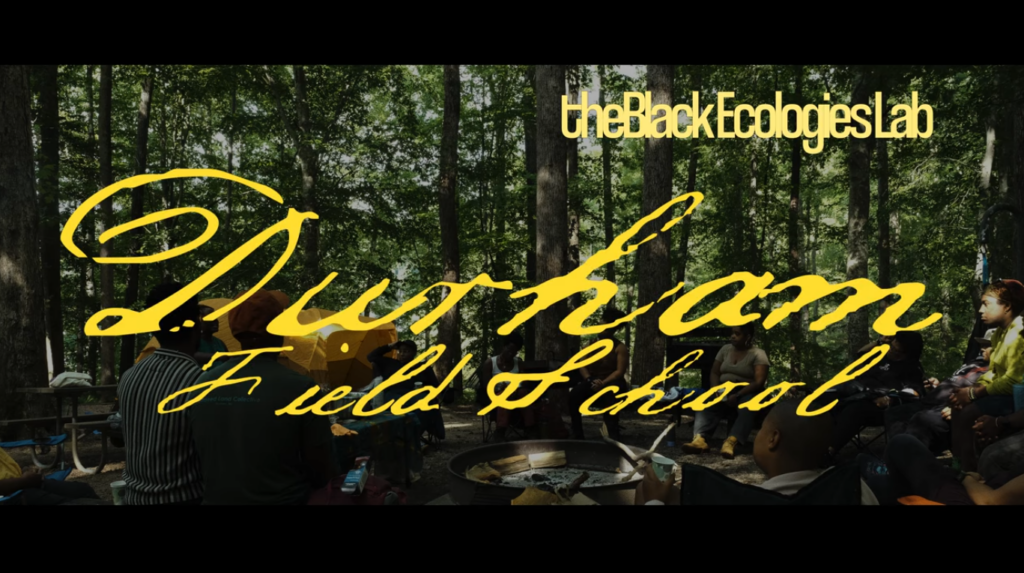
Jona Alexander’s Black Ecologies: The Durham Field School Documentary, documents a three-day gathering in Durham/Orange County, North Carolina, led by descendants and stewards focused on Black and Indigenous stories of the Eno River watershed. It is part of an ongoing collaboration with the Black Ecologies Lab at Rutgers University.  

Jona described how “Black Ecologies examines the ‘whens and wheres’ of Blackness and how this happens through social formations and plantations” and it takes feminism, Black studies, history – all different disciplines – to think through time and space. At the field school, the group visited different historical sites, including one of the largest plantations in North Carolina and spoke with descendants from that plantation. 

For Jona, “it’s a retelling of a time and our reorientation to space and land, and reckoning with violence, colonialism, and looking at ways in which we can repair our relationship to the land.”  What was striking in this film was connecting Black and Indigenous ecologies in an intertwined way, and the field school was a meditation to reckon with the violence of the illusion of separation that communities and ecologies face and the importance of solidarity across different spaces and times. 

Intimacy and the act of witnessing 

As discussed with the audience, intimacy plays out in several ways across the films. Ayesha discussed the importance of reflecting on the act of witnessing, writing herself into the work, thinking about the environment as well as people and not showing explicit depictions of violence.  

Jona considered how the camera can also be considered surveillance and described the importance of being mindful of that when people are building and organising. Some parts of the field school were too sacred to film. As an audience we felt we were being ‘let in’ to an intimate and sacred space – a feeling also evoked profoundly and beautifully in JT Roane’s Plot and in Morgan Senior’s The Skin of the Earth as these directly relate to the experiences as directors’ own families. 

Water and knowledge 

Water is an important theme across the films. Black Ecologies: The Durham Field School Documentary included a line read by poet Destiny Hephill “the water is the water is the water” which echoes throughout the film: even when water is not visible, you can feel its impact.  

For Jona, this was a way of communicating with water in ways that feel like home, or a calling.  Ayesha described how enslaved people had different knowledges of water including Mami Wata (“Mother Water”), so from Africa to the Caribbean “across water came cosmologies informed by practice of what to do with the water.” Such beliefs were frequently erased in processes of enslavement. As Jona commented, sharing these films together was a way of witnessing though film – involving performance, storytelling and mysticism.  

As well as the drawing attention to the scale of the violence of the plantation in Black Atlantis and The Skin of the Earth, we were able to witness the possibilities of reorientation and repair – laughter, being grounded on Earth, reclaiming land and waterscapes, gathering spirituality, sharing intentions, mobilising and sharing. 

Tackling online fraud: is it time to take a different approach?

A recent report by Crest Advisory in partnership with Birkbeck and the Police Foundation found that the emotional impact of online fraud for victims is often worse than the financial hit. In this blog Dr Bina Bhardwa, Senior Research Fellow at the Institute for Crime & Justice Policy Research (ICPR) at Birkbeck, drawing on findings from focus groups with the public, shares her vision for how we need a different approach to tackling online fraud.

Online fraud is an everyday ‘trip hazard’ that we have become, or are under pressure to become, better skilled at and (sadly) accustomed to navigating. The volume, sophistication, and constant barrage of fraud risks makes the task of filtering out this ‘background noise’ challenging and, most importantly, makes us ever more reliant on credible and trusted sources of information.

While most members of the public trust messaging from their banks, the occasional ‘fraud awareness’ training at work and household names such as Martin Lewis to keep them informed, much of their knowledge about fraud is derived from experiences shared by friends and family who have been victims of fraud or had near misses, and an avalanche of misinformation. The government’s latest anti-fraud campaign – Stop! Think Fraud – is a step in the right direction, but we know little as yet about its scope to bring about tangible change.

There was a perception among focus group participants we spoke to as part of a wider research project on Tackling Online Fraud that the police did not have the capacity to respond to volume fraud, especially where financial losses were thought of as insignificant and where more ‘serious’ crimes took precedence. This goes some way towards explaining the under-reporting of fraud. Deficiencies in the state’s capacity to protect its citizens from crime, means that responsibility for protecting oneself from online fraud threats rests largely with the individual.

Government fraud strategies, and the recommendations stemming from much of the research on fraud tend to centre, perhaps somewhat predictably, on three staples:

  • more resources – usually aimed at bolstering the numbers and specialisms of investigators,
  • forging and improving public-private partnerships, and
  • better financial education.

Of course, these are important and worthy recommendations. However, what we see less of is how we can beg, borrow, and steal ideas and good practice from other areas of criminal justice, to daringly try something different. Drawing on two examples from the drugs field, I present, here, a case for applying models and methods from elsewhere to tackling online fraud.

Drug safety checking at festivals

Not without contention among the conservative, drug-safety checking services made their debut in the UK in 2018 at the Secret Garden Party and Kendal Calling music festivals, pioneered by The Loop. Since then, the model of drug testing has expanded its reach and support. The operating model is centred on providing non-judgmental, harm reduction advice to members of the public. Substances are voluntarily submitted to The Loop’s chemists who test them and then share risk and safety information with individuals based on the results. A further feature is the dissemination of live-time, in-situ safety information via social media channels, which communicate the risks of, for example, adulterants and high strength substances in circulation at an event.

The key tenets of the drug safety testing model – non-judgmental, led by experts, a feedback loop and the live dissemination of knowledge – could be imported to tackle online fraud. This would not in fact be new to fraud prevention, as it is the premise of Action Fraud Alert. However, the majority of the participants in our public focus groups had not heard of Action Fraud, let alone proactively signed up for alerts. Is this then a case for raising public awareness of Action Fraud or is it a call for a more trusted and effective national system for circulating topical alerts? For example, during the height of the ‘Hi Mum’ impersonation scams, the government – informed by National Fraud Investigation Bureau (NFIB) analysis of reports – could have disseminated alerts and safety messaging to the public, as the equivalent to providing non-judgmental, credible, harm minimisation drug safety advice in live time.

A ‘whole systems approach’ to tackling drug misuse

Catalysed by Dame Carol Black’s independent review of drugs which highlighted the damning impact of years of disinvestment in drug treatment services, the government has invested in rebuilding drug treatment and recovery services, taking a ‘whole of Government’, ‘whole systems approach’. While the government’s latest Drugs Strategy is not without its shortcomings[1], what is key here is shared responsibility for the ‘drug problem’.

Project ADDER (Addiction, Diversion, Disruption, Enforcement, Recovery) is an example of this approach. The £59 million programme involved law enforcement, treatment and recovery services working together in areas with the highest prevalence of Class A (heroin and crack cocaine) drug use and drug-related deaths. An unpublished evaluation of the programme found that the close cooperation between government departments, public sector enforcement services and voluntary sector treatment services, working towards the shared goal of combating drug misuse, produced positive outcomes, such as contributing to an increase in arrests for high harm individuals involved drug supply. Can we not do the same for combating fraud, e.g. taking a ‘whole systems’ approach to tackling high harm fraudsters? Focus group participants recognised that the police alone are largely powerless in the face of the ever-increasing volume and global reach of fraud. The Home Office, Department for Education, Department for Science, Innovation and Technology, Department of Health, and other relevant departments, in conjunction with private and voluntary sector, should work together to disrupt fraud, divert fraudsters who are caught and better understand mechanisms for recovery from the psychological and health harms of fraud. This would be an expansive ‘whole systems approach’ that is held to account and subject to evaluation.

The fact that fraud now makes up over 40% of all crime in England and Wales signals that it’s time for a different approach. However, there’s no need to reinvent the wheel: we can build on evidence of good practice from other areas of criminal justice. As demonstrated here, the drugs field offers a good starting point.

Further information

The future is here – exploring the role of AI in the world of homecare

Dr Kerry Harman from Birkbeck’s School of Social Sciences and Ms Caroline Firmin and Ms Dominique Davies use this blog to reflect on a recent exhibition they attended entitled ‘AI: Who’s looking after me?

I’m a senior lecturer at Birkbeck with a particular interest in invisible labour and marginalised knowledges. My interest in this area has led me to collaborating with Ms. Caroline Firmin from Birkbeck, Ms. Dominique Davies from Birkbeck and researchers at the University of Manchester on a case study entitled ‘Reimagining Homecare’ which explores sensory ways of knowing care. Caroline and Dominique are both homecare worker-researchers, and the ‘Reimagining Homecare’ project is part of a larger three-year AHRC funded Care Aesthetics Research Exploration (CARE) project.  

In August, Dominique, Caroline and I attended an exhibition entitled AI: Who’s looking after me? We all found the exhibition extremely thought provoking, so much so that we all kept thinking about it for days after we’d visited. As Caroline rode home on the bus (it was a long trip) she pondered the question: ‘can AI play a part in homecare’? It wasn’t the first time she’d thought about AI and homecare as it has been a focus of discussion within the field of homecare. What follows is a combined critical and poetic response from the three of us: 

‘AI: who’s looking after me?’ – well one response to that question would be the 1.62 million people working in Adult Social Care in England (skillsforcare). Of this very significant number of workers, 82% are female, the average age is 45, 23% have black, Asian and minority ethnicity and 16% have a non-British nationality. Almost a quarter of the adult social care workforce are employed on zero-hours contracts. Did we hear from or see any of these workers in the exhibition? No, but their silence was deafening and reverberated in the photographs of interiors of outsourced AI worker’s homes in the Global South in ‘The future is here’. 

The future is here 

I’m an elderly person of a great age past my eighties and keeping the rest a secret. 

I’m bedridden I need help from carers to help me get washed dressed change my pad . 

Hoist me from bed to armchair. Give me my medication. Make my meals and drinks . 

Do my laundry and housework.  

My family do my shopping and see to bills . I do need quite a bit of support.  

Can AI give me that kind of support? Can AI greet me in the morning with a smile on its face ? Can it respond to my needs, does it know how I’m feeling?  

Will AI talk to me and tell me what is happening outside where I live? For example, what is the weather like outside today? Is there anything new going on? Did you see any neighbours?  

Does AI know when I need a doctor.  

Does it know my thoughts and feelings? How do you have a relationship with AI like I do with my carers and family? 

Can it sense moods? Can it sense changes?  

We rely on technology everyday, sometimes it’s frustrating. Mostly we adapt to technology, because we don’t have a choice.  

Can we do without technology?  We use our phones, laptops, bank cards on a daily basis but when these go wrong what happens?  

What if AI goes wrong? Who cares for me now?  

Does AI have a place or contribute to homecare? 

What is AI? what does it do?  

Many of us have heard of AI but I don’t think we fully understand what it means. How is AI made and who programmes them? What role do they play in our lives?  

Can they play a role in our lives better or worse than humans? 

Can AI be corrupted, can it be trustworthy? Would the person receiving care be comfortable with AI?   

Can AI help the blind, deaf, disabled, wheelchair users, mental health, dementia/ Alzheimer’s? How would the elderly understand communicating with AI? 

Is AI here to stay forever and replace human feelings, touches, senses?  

I think humans need human touches and human responses. I think it makes them feel more connected…. 

The future is here 

For me, ‘Who’s looking after me?’ spotlights the question of ‘what does it mean to be human’? Visiting the exhibition prompted me to read ‘The Inconvenience of Other People’ by Lauren Berlant. Berlant provides a detailed exploration of the impossibility of sovereignty and argues that politically we need to learn to work with the ambiguity that the fantasy of sovereignty creates. I contend that in many ways AI could be thought of as a human response to the human desire for sovereignty. In other words, because people are ‘inconvenient’ we seek to create a world where we can bypass them. Enter AI. However, as Caroline and Dominique both ask, can AI replace ‘care’? And even if it could, this raises a bigger question: if we humans are going to go to the trouble of teaching machines ‘to care’, why not invest in teaching humans to care more for each other and the world? Why do we want machines to do that? As Berlant maintains, people (and things) ARE inconvenient, but we need to move beyond the fantasy of sovereignty as we continue to bump into each other in this world. Creating machines that can ‘care’ will not address the fantasy of human sovereignty, it will only mean that we need to develop new ways of relating to things. While the possibilities generated by new types of relations and relating should not be foreclosed, the fantasy that this will lead to greater sovereignty needs to be abandoned. In other words, we need to learn better ways of getting along together.  

The future is here 

I feel like a robot – robotic, when I’m performing care.  

Perhaps the future is here?  

…so lots of questions as we continue in exploring care aesthetics and sensory ways of knowing care.  

More Information: 

Birkbeck’s First Christmas

Jerry White, Emeritus Professor in Modern London History, takes us on a trip down Christmas memory lane, reflecting on the College’s inception nearly two hundred years ago and considering how Christmas in 1823 might have looked.

Crown and Anchor Tavern

There probably wasn’t much talk of Christmas when the London Mechanics’ Institution was founded at a famous meeting at the Crown and Anchor Tavern, Strand, on 2 December 1823. Unlike today, when Christmas shopping and advertising begins around mid-November if not before, Christmas preparations then only began in mid-December: ‘The note of preparation is now sounding through all the different places of public Amusement, to gratify the visitors to London during the festive time of Christmas,’ the Morning Post told its readers on 19 December, and little seems to have been done up to that point. The weather didn’t help this year, with much of December unseasonably warm and humid till just a day or two before the festival, with a marked ‘mildness of weather in and about London; so mild, indeed is the season, that the writer, on Sunday [the 21st], saw, in a private garden at Hammersmith, a wall-flower in blossom, out in the open grounds….’[1]

A festive marketplace

But once the great day approached then all minds were turned to how Christmas might be celebrated: ‘Probably there is no country where Christmas is more enjoyed by the community than in Great Britain’, patriotic newspapers claimed.[2] The real opening announcement of Christmas to Londoners had come a few days before with the first of two Monday ‘Great Christmas Markets’ at Smithfield, where the country’s cattle farmers paraded their best beasts for sale, knocked down to the butchers of Smithfield, Leadenhall, Newgate and Whitechapel. The markets were packed tight with cattle and sheep, driven on the hoof for weeks before; the animals had their last stop for grazing and rest in the fields of Islington to get them to market in peak condition. Once sold at Smithfield, though, ‘the crowded state of the market’ presented ‘an unusual difficulty in getting the Beast out; their heads are battered by two or three drovers at a time, and their eyes in numerous instances knocked out; and this from sheer necessity….’[3]

Beef was, indeed, the favourite food for Christmas dinner, with turkey (driven in flocks from Norfolk), geese, hams (from Yorkshire, Westmorland, even Westphalia) and mutton (for poorer families especially) also in much demand. So much roast meat could pose a problem to some. ‘There is no period probably when persons sympathize with those who have lost their grinders, more than at Christmas, when stews and wishy washy messes are excluded from the festive board, and the loss of teeth is felt as the greatest misery and affliction.’ Boiled plum pudding, though, could be enjoyed by all, the toothless included, and was a Christmas necessity. Great care was essential in getting it just right: ‘If the plum-pudding, from being too rich, should crumble or break, the misfortune never fails of agonizing and fretting the worthy hostess – all the eyes of the company are instantly and most unkindly directed towards her, as if darting reproach, to add to her embarrassment, and aggravate the calamity.’[4] Wine with dinner for the middle classes was followed by madeira, sherry and ‘good old Port’ after the pudding; in poorer households, beer or porter would have to suffice and the whole dinner might have to be taken to the baker’s shop for roasting in the bread oven, though a plum pudding could be boiled in the copper or in a pan on the range. But probably all homes could enjoy some after-dinner games: ‘hunt the slipper’ a great favourite, and ‘snap-dragon’ in richer families, which involved the unlikely pleasure of snatching almonds or sultanas and raisins from a shallow bowl of burning brandy. In all houses, churches and shop windows Christmas decorations seem to have relied mainly on branches of evergreen, especially holly, and candles, though no doubt the theatres and places of public resort were able to put on a bigger display. Mistletoe seemed a little out of fashion in 1823, no longer said to be hanging from drawing-room ceilings but ‘sent down stairs’ to the kitchen ‘for the benefit of rubicund cooks and rosy house-maids.’[5]

Christmas presents were no doubt personal and varied, just as now. Diaries and ‘illuminated pocketbooks’ were much in demand if the advertisers were to be believed, like ‘Friendship’s Offering; or, The Annual Remembrancer: a Christmas Present and New Year’s Gift for the Year 1824’, at a whacking 12 shillings. Dancing at Christmas was all the rage and many advertisements were directed at helping people look their best: Mrs Bell, of 52 St James’s Street, offered  a ‘variety of novel and beautiful millinery, Head Dresses of almost every description, Ball and Evening Dresses’, as well as her ‘Patent Corsets, unrivalled and universally admired’; W. Rowe, at the Magasin de Nouveautes, 72 Oxford Street, offered an ‘assortment of Trinkets’, ‘just received from Paris’ and ‘adapted for Christmas present,’ like bead purses, red mohair bracelets, bone fans plain and painted, ornamental combs and much else; ‘Rowland’s Macassar Oil’ guaranteed ‘a beautiful arrangement of the Human Hair,’ for ‘the Youth of both Sexes … “To dance on the light fantastic toe”’; and music publishers offered fresh arrangements for solo piano and duets as Christmas presents, like Boosey & Co’s new editions of Rossini and Mozart operas, ‘with Italian words’. And there were Christmas foods on offer as presents, some exotic and reflecting London’s reach as the centre of world trade, like ‘Muscatels, in boxes; new Jordan Almonds … Spanish Grapes, very fine Normandy Pippins in baskets, Guimaraen or Portugal Plums, fine New Smyrna Figs in small drums,’ and much more from Hickson & Co’s Foreign Fruit Warehouse at 72 Welbeck Street.[6]

Dancing and riotous behaviour

Dancing could be everywhere, not just in the homes of the middle classes and above, and could no doubt spill into the streets, which were at their liveliest at Christmas. Perhaps this was the cause of ‘an unusual number of dissolute women brought before the [Bow Street] Magistrates yesterday morning from the watch-houses, charged with riotous behaviour in the public streets on the preceding night [the 23rd]. They pleaded the season in their defence. They had only indulged in a little Christmas festivity. The Magistrates told them that no season could justify drunken riots in the streets; and sent two of the most obstreperous among them to spend their holydays [sic] in Tothill-fields Bridewell – Mary Baskerville for one month, and Ann Davis for fourteen days.’[7] The streets had other dangers too. For a day or two before the 25th, apprentices, artisans of one kind or another and shop assistants would go house-to-house soliciting pennies and sixpences for their ‘Christmas boxes’. This year the ‘housekeepers in and around the metropolis are cautioned against a set of men who go about in the assumed character of Bow-street Patrol, soliciting Christmas Boxes. It is proper that it should be known such persons are impostors, and that the Bow-street Patrol are strictly prohibited from soliciting Christmas Boxes and are liable to be dismissed their situation if it be known that they do so.’[8]

Christmas boxes were one indication that charity was then as now one of the defining characteristics of Christmas, publicly lauded in the press and from the pulpit. Charity sermons were preached everywhere, with particular sections of the deserving poor in view, or for the benefit of charitable institutions like the Magdalen Hospital for ‘rescuing fallen women’, or the Asylum for Female Orphans, both in south London. There was an unusual Christmas tradition in a fast-growing part of west London where every year ‘according to annual custom, a large quantity of bread and cheese was distributed at Paddington Church amongst the poor by tickets; the assemblage was immense: until within these last three years the custom was to throw it in baskets full [sic] cut into square pieces from the belfry of the Church amongst the crowd, but owing to the confusion and many accidents occasioned by the scramble, that custom was abolished and the present mode substituted in its stead.’ This was paid for by an endowment from ‘two old maiden sisters (paupers), who travelling to London to claim an estate, in which they afterwards succeeded, and being much distressed were first relieved at Paddington on that day.’[9] The sisters were luckier than some in London that Christmas of 1823. At Marlborough Street Police Court on Christmas Eve, an ‘elderly woman, who stated that she had scarcely tasted food for the two last days’ told the magistrates that the St Pancras relieving officer had denied her relief until her case went before the guardians of the poor, who would now only meet after Christmas. The magistrate ordered that she be given temporary relief, presumably in the workhouse, until the committee should meet.[10]

christmas scene from 19th century

Pantomimes and Christmas cheer

Of all the pleasures of Christmas 1823 it was the London theatres who offered the richest dose of Christmas cheer. Pantomimes then began on Boxing Day and ran into the early New Year. Very few opened in the run-up to Christmas, in contrast to today’s extended festival, now often beginning at the start of December. But on Boxing Day the theatres – even the grand Theatre Royal, Drury Lane – let their hair down. This year there were Harlequin and the Flying Chest (Drury Lane), Harlequin and the House that Jack Built (Covent Garden) where the action travelled from the London parks to the Tuileries in Paris and back again, Fox and Geese, or Harlequin the White King of Chess (Surrey Theatre, Blackfriars Road), Harlequin’s Christmas-box, or the London Apprentices (Olympic Theatre, Wych Street, Strand), and Doctor Faustus and the Black Demon, or Harlequin and the Seven Fairies of the Grotto (Adelphi, Strand). At the last, all did not go according to plan. Despite ‘some pretty scenery’ and ‘a lively Clown and Columbine’, the pantomime ‘tried the patience of the audience severely through a number of scenes, throughout the whole of which there were not three clever tricks, and those that were attempted were for the most part bungled…. Good humour, however, which had more than once … begun to give way, was completely revived by the introduction of a panoramic view of the British fleet under Lord Exmouth bombarding the town of Algiers, which … was warmly applauded.’[11] The patriotic fervour of a London theatre audience was a sight to behold long before ‘Jingoism’ was ever invented.

By the time the London Mechanics’ Institution opened its first premises at Southampton Buildings, Holborn, late in 1824, this first Birkbeck Christmas was just a faint memory. Among those founders at the Crown and Anchor that December, who would have thought that another 200 Christmases would be celebrated with Birkbeck still providing adult education in London that is second to none?

London Mechanics Institute

[1] Morning Herald, 23 December 1823

[2] Morning Advertiser, 25 December 1823

[3] Cobbett’s Weekly Register, 20 December 1823

[4] Morning Advertiser, 25 December 1823

[5] Sunday Times, 28 December 1823

[6] Morning Post, 22 December 1823 (capitalisation simplified) and Bell’s Weekly Messenger, 22 December 1823 (macassar oil)

[7] Morning Herald, 24 December 1823

[8] Morning Post, 25 December 1823. The Bow Street Patrol were a small force of police run by the Bow Street magistrates, before the formation of the blue-uniformed Metropolitan Police in 1829.

[9] New Times, 23 December 1823

[10] Public Ledger and Daily Advertiser, 25 December 1823

[11] The Times, 27 December 1823

A very London Christmas… My first time experiencing Christmas in the capital.

BA Global Politics and International Relations student, Aditya Mukherjee, shares what his experience of Christmas in London has been like, and what made it so special.

Winter is the season we all wait for, it is the time Christmas brings all the joy. Those who live up North especially, experience Christmas in the snow; the building of snow men, and for the flexible amongst us, ice skating. This is the season I certainly allow myself to indulge in cheese fondues, baileys Irish creams in several flavours, and a range of foods in addition to spending evenings in front of a fireplace with loved ones.

The Christmas lights in London is a must see for anyone that has not been to this magical city. Every borough has its own Christmas theme and adds to the festive feeling. The Christmas Markets always spark the magical joy of seeing folks enjoying the festivity with food and drink. Christmas is also the time of year that most travel to be with their families.

Last year was my first Christmas in the UK and I was invited over by a close friend. Despite offering to help with cooking, I was asked to come in the late afternoon and bring some drinks and desserts. My friend had planned everything in detail and made sure all groceries were bought before the 24th as shops have limited opening times or can run out of stock through the days leading up to Christmas.

We enjoyed a meal with multiple courses, including a traditional roast with trimmings and Christmas pudding and watched one of the classic Christmas movies ‘The Grinch’, along with aperitifs and drinks. There are many brands that have their own Christmas flavors, and I was sure not to miss the Baileys red velvet cupcake – a symbol of the festive period.

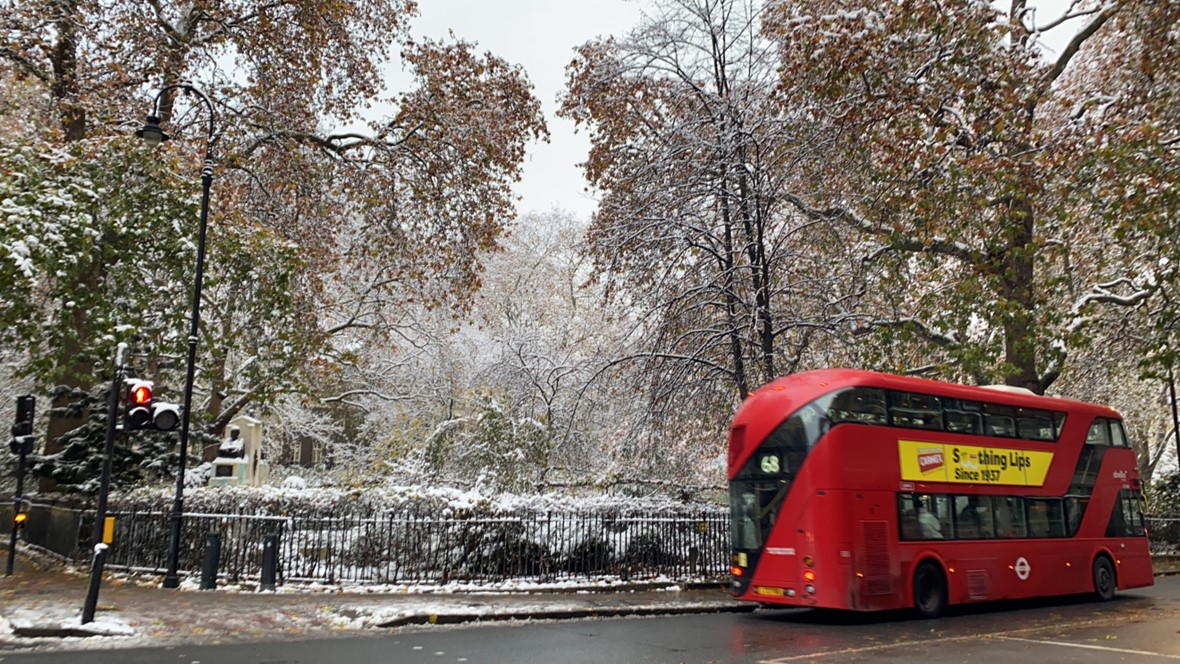
As some of you may be celebrating your first Christmas in the UK this year, I have a few tips for you. I recommend staying over if you plan on visiting a friend in London, or arranging your mode of transportation in advance. Public transport will be closed on the 25th: this includes trains, the tube, and buses. Luckily, my friend lives walking distance from my house, so I decided to go by foot last year.

Also, if you plan to go out to a restaurant, book in advance as most of the restaurants are booked and have limited availability. As I mentioned earlier, many supermarkets have limited operating hours, so plan your Christmas meal in advance and get those groceries in a few days prior to Christmas. The same goes for present shopping, as one of the greatest joys is you never know what gift might be waiting for you under your Christmas tree.

I wish you all a Merry Christmas and a successful 2023!

How studying in my 40s gave me much more than new knowledge and skills

Fabien Littel did an MSc in Organisational Psychology at Birkbeck. Here, in a blog post that originally appeared on his personal site in October, he talks about his experience studying whilst in his forties. 

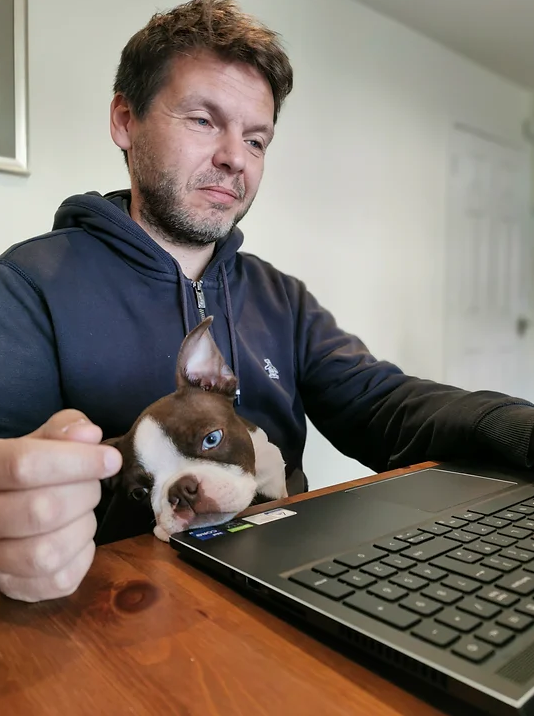
Fabien sitting in front of an open laptop looking at the screen with a dog sitting on his lap.

It’s only been two weeks since I handed in my dissertation, the final step in completing my MSc in Organisational Psychology, at the end of a life-changing 2-year adventure. It’s only been two weeks, and it will be another good few weeks before I get my final results and know if I’ve been awarded the Masters. Still, I already know just how much I have learned and how I developed a new perspective on work, and life in general, which no grade won’t take away. I have often used the term “life-changing” to refer to this experience, very mindful of how cliché and over-hyped it may come across. It is however merely a fact: through these studies, my life has changed. I am now embarking on an academic path I would have only dreamt of a few years ago, and most importantly have developed the courage and confidence to understand, accept and express my individual beliefs and views on the world around me, and to move away from the comfort and convenience of general blind acceptance.

From jigsaw puzzles to research journals
Looking back at September 2020, why did I suddenly decide to get back to university? My light-hearted answer to this question is usually that, during the first few months of covid-19 lockdowns, I had developed a dangerous addiction to jigsaw puzzles, and needed to find something else to occupy my free time. This was only partly a joke; I had genuinely built a large collection of jigsaw puzzles, was on them before, after – and sometimes during – work

(I’d argue that it helped me focus my mind…), and they frequently invited themselves in my dreams too. Aside from that, I was increasingly interested in what motivates people to work, what makes them feel good about their job, and what might they feel more conflicted about. The pandemic played a part in this too, as companies had to take responsibility for their employees in a way they never had before, and many employees had opportunities to contribute, in one way or another, to the response to this crisis, and gain a new sense of purpose in the work they were doing. I started reading on the topic, and gradually felt that I wanted to develop some more in-depth foundational knowledge to shape my own thinking. From there on, it became a relatively quick process, and probably just a matter of days until I enrolled onto my MSc. Organisational Psychology quickly appeared like the most appropriate choice for my area of interest, and to build on my first Masters in HR by approaching work from a different angle. And the choice of university was quite straightforward too, once I had narrowed down the options for part time online learning. Birkbeck, which I ended up joining, stood out with its mission of supporting lifelong learning, designing classes for people who study alongside work, and for its longstanding expertise in organisational psychology – a choice I never regretted, quite the opposite.

Learning about yourself while learning about others
The nature of the course and what we were studying meant that it enabled us not only to learn about careers and organisational behaviours of others, but also to reflect on our own. And this started quite early on, as we looked at career development, or employee motivation. A large part of the learning was about reading required lists of weekly research journals and additional material in support of essays and other work. And we weren’t short of additional recommendations from lecturers.

One of the first ones I took up was to read Herminia Ibarra’s book Working Identity. It provides a perspective on the sense of identity attached to people’s careers, and importantly how a change of direction and transition in one’s career can help reinvent this identity, or how Ibarra calls it, “becoming yourself”. She describes a process consisting of experimentations and sensemaking to define your new self, and a long process of transition made up of small steps, taking place through the course of several years. The book is illustrated with examples which bring to life these experiments, and steps people have taken to lay the foundations of a new career, and indeed reinvent themselves. It was a fascinating read, which I did just as I was beginning to envisage what a different second half of my career might look like, therefore couldn’t help seeing it both as a complement to the course, and a self-development book for myself. From that perspective, it made a great difference to read it when I did; while I was at first concerned about this perspective on career transition as taking years, requiring deep-level self-reflection and experimentation (especially when feeling a certain sense of urgency for change), it helped me take a more measured and long term view on a process which I am still only just probably half way through, and helped me come to terms with the fact that you shouldn’t just expect to wake up one day with a clear view of where your career, and life more broadly, should go, but that it requires time and effort.

“Resistance is fertile”
From the very start of the MSc, we were told that one the main skills we should develop was our critical thinking, and that we needed to find our voice. At first, this might have seemed like a contradiction as we were also told to base our writing and arguments on existing research and scholar literature – so how can we be critical, and find our own voice, if we can only repeat what has been said before? It turns out we were vastly underestimating the spectrum of ideas and perspectives already out there, and still learning the art of taking existing views, organising them and building on them in a way that becomes deeply personal to you (an art I am still working on…). The most energising and stimulating side of the reading we were doing was to read papers with opposing views and paradigms, particularly those highlighting the shortcomings and challenges with what had been seen and applied as most mainstream theories for decades. This came through particularly in a couple of modules, including one looking at selection and assessment, led by an inspiring lecturer who was committed to providing insights on not only the widely accepted theories and processes, but also the challenges of racism and social injustice which came with them, including issues such as racial bias in cognitive ability testing, and perpetuation of social inequalities via practices mostly developed through the lens of white western men.

Her teaching took inspiration from Paulo Freire’s Pedagogy of the Oppressed, particularly in rejecting the “banking” view of education, whereby someone in position of power imparts the knowledge they are the custodian of, to others in a position of inferiority who are expected to receive and accumulate this knowledge. Instead, it advocates for co-creation of knowledge, which is something we experienced through this teaching. Of course, some concepts and ideas were presented and shared with us, however through discussions opened up by the lecturer, there was a clear acknowledgement and respect of everybody’s individual experiences, and how much these experiences contributed towards everyone’s learning, and provided much richer perspectives.

I was fortunate to also get the opportunity to join this lecturer, together with a couple of other students, in a collective writing project, which I hope to share more about in due course, and was for us an amazing way to bring co-creation to life, and constructively share and bring together our lived experiences and beliefs, in an environment of solidarity and support.

Becoming a truer version of myself
University, and studying in general, is a time for exploring, exchanging, and experimenting with ideas, developing your own thoughts and beliefs, your hopes for the world. Too often, for young people, this risks getting quashed when confronted with the reality of the corporate world. One of the benefits of experiencing this after twenty or so years working, observing the dynamics of corporations, getting satisfaction from achieving things and bearing the scars of burnout, is that it enables you to pause and revisit those twenty years with a little bit of distance, and some new perspectives. What it did for me, was to bring out views on the world of work, and systemic injustice or harmful phenomena, as well as hope for meaningful and fundamental change, which I would have briefly thought about and kept well hidden in the past. It gave me permission to think these ideas through, resist the sense of inevitability I had felt up until that point. Learning, reading and discussing new concepts such as neoliberalism, social constructionism, social Darwinism, moral disengagement, and many more, which wouldn’t have meant much two years ago, put names on what had only been until then passing thoughts, and opened up the door for even greater exploration, and knowledge that not only did others share similar thoughts, some had actually spent much of their careers defining and studying them.

Practically, unearthing and embracing these views throughout the MSc, together with conducting my research project on matters related to moral reasoning at work, contributed to me questioning in more depth my own contribution to the world through my work. This led to my decision to leave the defence industry (which I have talked about in an earlier article), and to find a way to continue on this academic path. “Following your dreams / passions” is an easy piece of advice often given, however remains a very privileged thing to do, when the reality of daily life and cost of living hits, and prevents many from exploring a path of their choosing. And so I do feel privileged that I was able to find arrangements I could put in place to enable me to follow this path further through starting a full-time PhD.

I am only a couple of weeks into my PhD with the University of Southampton, grateful, energised and excited about what the next three years will enable me to learn and do. And I remain very mindful that I wouldn’t have reached this point if it hadn’t been for the opportunity to conduct part-time studies online while working. Both the practicality of what Birkbeck had to offer, and the commitment and dedication of its staff to deliver a truly transformative learning experience, despite some of the challenges they may have faced in trying to safeguard this level of quality and acceptable conditions for themselves, is to be applauded. At times when careers are stretching longer and many people will look to transition part-way, enabling access to higher education to the working population should be seen for the powerful and genuinely life-changing impact it can have.

More information: