Dr Izabela Delabre, Senior Lecturer in Birkbeck’s School of Social Sciences, draws on her research in political ecology, plantations and futures to reflect on a recent film screening exploring how these histories are remembered and reimagined today.
Last month the Birkbeck Plantations Working Group, in collaboration with the Birkbeck Centre for Environment and Sustainability, held a screening at the Birkbeck Institute for the Moving Image, titled “Plantation Economies and Liberation Ecologies.” After watching four short films, we were joined for a discussion with two of the directors: Ayesha Hameed in person, and Jona Alexander dialing in from the US; with the discussion chaired by Lisa Tilley
Watched together, the films highlighted the way that film is not just a tool to document plantation histories, but to also make space for memory, emotion, and reflection—and, importantly, to begin imagining forms of repair.
Witnessing plantation violence, past and present
Black Atlantis: the Plantationocene by Ayesha Hameed examines the relationship between plantations and climate change. It draws upon conversations Ayesha had with people in a former plantation in St George’s Parish in Barbados, and the port city of Port of Spain in Trinidad, which revealed the devastating impacts of the plantation on societies and ecologies. Ayesha commented how now, a decade after some of those initial discussions, it is so clear to see the climate devastation being experienced in the Caribbean.

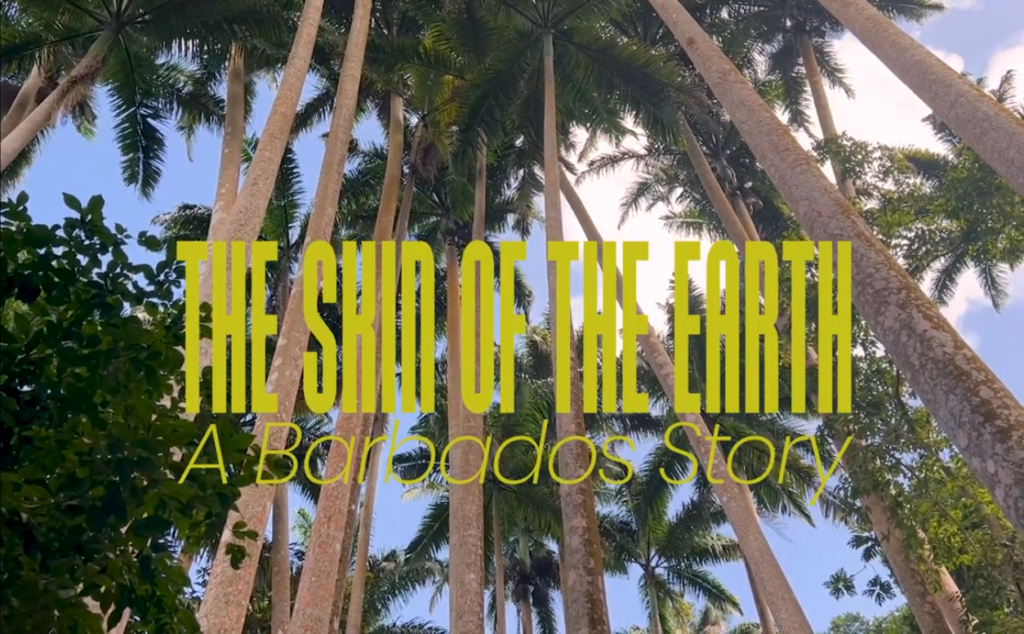
Morgan Senior’s The Skin of the Earth explores the human and ecological traumas of British Colonial rule in Barbados. As Ayesha Hameed commented, the recorded discussions between the generations, as they explored Barbados, describing how plantations looked, and how they had changed, speaks to the scale of violence of the plantation, and the film witnesses what people experienced just a few generations ago. The film effectively connects the plantation world back with London – where so much of the wealth from these very violent plantation economies ended up.
Memory, land, and the layered meaning of “plot”
JT Roane’s Plot was inspired by ongoing pilgrimages by his family to a site in Desha, Virginia, where St. Johns Baptist Church was lost during a 2015 tornado. Here, JT Roane’s family, visit this space to mourn and gather together. The film considers how people were about to reconnect with land and water following Emancipation, though small scale collective cultivation. This visually stunning film is deeply personal.
As observed by Lisa, “Plot” has two meanings in relation to the plantation: plots of land used by enslaved peoples to grow life-giving diverse crops in complete contradiction to the monocropped land of the plantation; but also burying grounds, contrasting with the plot as a life-giving space; thus also being sites of mourning, grief, and memory.
Reorienting space and ecology
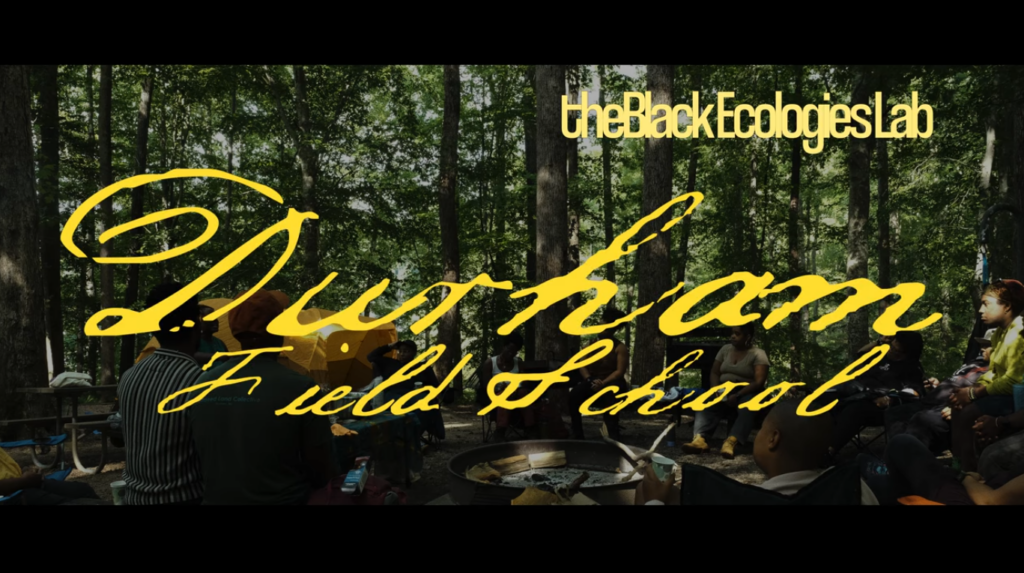
Jona Alexander’s Black Ecologies: The Durham Field School Documentary, documents a three-day gathering in Durham/Orange County, North Carolina, led by descendants and stewards focused on Black and Indigenous stories of the Eno River watershed. It is part of an ongoing collaboration with the Black Ecologies Lab at Rutgers University.
Jona described how “Black Ecologies examines the ‘whens and wheres’ of Blackness and how this happens through social formations and plantations” and it takes feminism, Black studies, history – all different disciplines – to think through time and space. At the field school, the group visited different historical sites, including one of the largest plantations in North Carolina and spoke with descendants from that plantation.
For Jona, “it’s a retelling of a time and our reorientation to space and land, and reckoning with violence, colonialism, and looking at ways in which we can repair our relationship to the land.” What was striking in this film was connecting Black and Indigenous ecologies in an intertwined way, and the field school was a meditation to reckon with the violence of the illusion of separation that communities and ecologies face and the importance of solidarity across different spaces and times.
Intimacy and the act of witnessing
As discussed with the audience, intimacy plays out in several ways across the films. Ayesha discussed the importance of reflecting on the act of witnessing, writing herself into the work, thinking about the environment as well as people and not showing explicit depictions of violence.
Jona considered how the camera can also be considered surveillance and described the importance of being mindful of that when people are building and organising. Some parts of the field school were too sacred to film. As an audience we felt we were being ‘let in’ to an intimate and sacred space – a feeling also evoked profoundly and beautifully in JT Roane’s Plot and in Morgan Senior’s The Skin of the Earth as these directly relate to the experiences as directors’ own families.
Water and knowledge
Water is an important theme across the films. Black Ecologies: The Durham Field School Documentary included a line read by poet Destiny Hephill “the water is the water is the water” which echoes throughout the film: even when water is not visible, you can feel its impact.
For Jona, this was a way of communicating with water in ways that feel like home, or a calling. Ayesha described how enslaved people had different knowledges of water including Mami Wata (“Mother Water”), so from Africa to the Caribbean “across water came cosmologies informed by practice of what to do with the water.” Such beliefs were frequently erased in processes of enslavement. As Jona commented, sharing these films together was a way of witnessing though film – involving performance, storytelling and mysticism.
As well as the drawing attention to the scale of the violence of the plantation in Black Atlantis and The Skin of the Earth, we were able to witness the possibilities of reorientation and repair – laughter, being grounded on Earth, reclaiming land and waterscapes, gathering spirituality, sharing intentions, mobilising and sharing.