The Union Jack, the flag of the UK

The Iraq War, Brexit and Imperial blowback

This post was contributed by Dr Nadine El-Enany, lecturer at Birkbeck’s School of Law. Here, Dr El-Enany shares her personal thoughts on the historical context of the EU referendum, and the British vote to leave. This post first appeared on Truthout on Wednesday 6 July 2016.

The Union Jack, the flag of the UK

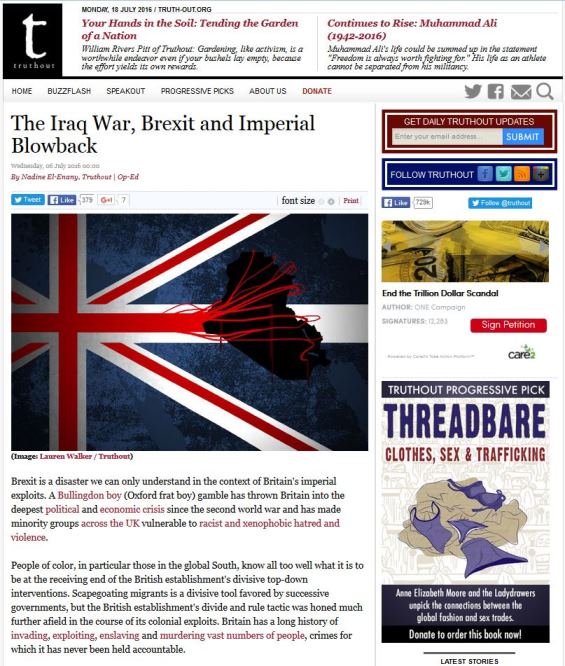
Brexit is a disaster we can only understand in the context of Britain’s imperial exploits. A Bullingdon boy (Oxford frat boy) gamble has thrown Britain into the deepest political and economic crisis since the second world war and has made minority groups across the UK vulnerable to racist and xenophobic hatred and violence.

People of colour, in particular those in the global South, know all too well what it is to be at the receiving end of the British establishment’s divisive top-down interventions. Scapegoating migrants is a divisive tool favoured by successive governments, but the British establishment’s divide and rule tactic was honed much further afield in the course of its colonial exploits. Britain has a long history of invading, exploiting, enslaving and murdering vast numbers of people, crimes for which it has never been held accountable.

Brexit

While the British Empire may be a thing of the past, British imperialism is not. This month the Chilcot inquiry reported on the role of Tony Blair’s government in the 2003 invasion of Iraq which resulted in the death of nearly half a million Iraqis and the destabilization of the region, for which its inhabitants continue to pay the price. It is no coincidence that the Blairite wing of the Labour Party, amidst the Brexit chaos, launched a coup against their current leader, Jeremy Corbyn, who was set to call for Blair to be put on trial for warcrimes.

The referendum that resulted in a 52 percent vote in favour of Britain leaving the EU was initiated by the Conservative government. Shortly after the result was announced, it became clear that the leaders of the Brexit campaign had not wanted this result. Boris Johnson MP appeared ashen-faced at a press conference. He had neither expected nor wanted to win the referendum. He only wanted to be next in line for Number 10 Downing Street. David Cameron, who had led the Remain campaign, resigned as Prime Minister immediately. He had called the referendum in a bid to keep the Conservative Party together, without sparing a thought for the lives that would be destroyed if the bet did not pay off. His gamble backfired, as did Boris Johnson’s. Michael Gove MP, who had been Johnson’s right-hand man in the Leave campaign, betrayed him within days of the result, announcing he would be running for Prime Minister, thereby ending Johnson’s bid to lead the country.

This series of events has thrown the Conservative Party into disarray, the very outcome Cameron had wanted to avoid. Nigel Farage, who stoked up unprecendented levels of racist hate and deserves much of the credit for the Brexit win, resigned as leader of the UK Independence Party on Monday, saying he “wants his life back.”

As political leaders jump ship in the wake of the Brexit vote, reports have emerged of a Britain divided, of a traumatized population, grieving and suffering the onset of depression. There is talk of the need for reconciliation in a country where communities and families have been divided. Alongside this, there are expressions of anger and demands for the British establishment to be held accountable for the outcome of the referendum.

There is no doubt that the feelings of anger and loss in the wake of Brexit are real, but where is our collective sense of outrage in the face of the establishment’s divisive and destructive actions elsewhere? After all, the deregulatory reforms entailed in austerity policies imposed in EU countries with disastrous consequences, including cuts to vital welfare services, following the 2007 financial crisis, as Diamond Ashiagbor has argued, is “medicine first trialled on the global South since the 70s”. Ashiagbor notes “European states are experiencing this as a category error, in part because they have not been on the receiving end of such policies”, which are all too familiar in the global South.

Brexit is the fruit of empire

In the week following the announcement of the referendum results, two news items probably escaped most people’s attention. The UK Supreme Court delivered a ruling that further impedes the prospect of the Chagos Islanders returning to the home from which they were forcibly removed in 1971 by the colonial British government as part of a deal to allow the US to establish a military base on the largest island, Diego Garcia.

Also in the news last week were reports of 94-year-old Kenyan, Nelson Njao Munyaka, who testified in the High Court about killings he witnessed by British soldiers under 1950s British colonial rule. Munyaka is one of 40,000 Kenyans suing the British government over injuries and loss suffered in the course of its repression of the Mau Mau independence movement. Munyaka spoke of witnessing the shooting of his workmates, being made to carry their corpses and the flashbacks he suffers of the physical and verbal assaults he endured at the hands of British soldiers.

Brexit is not only nostalgia for empire — it is also the fruit of empire. Britain is reaping what it sowed. The legacies of British imperialism have never been addressed, including that of racism. British colonial rule saw the exploitation of peoples, their subjugation on the basis of race, a system that was maintained through the brutal and systematic violence of the colonial authorities.

The prevalence of structural and institutional racism in Britain today made it fertile ground for the effectiveness of the Brexit campaign’s racist and dehumanizing rhetoric of “taking back control” and reaching “breaking point.” This rhetoric is entirely divorced from an understanding of British colonial history, including the country’s recent imperial exploits, which have destabilized and exploited regions and set in motion the migration of today.

Islamophobia powered the Blair-Bush war machine, allowing the lie to be peddled that only the Arab world produces brutal despots, and that the lives of nearly half a million Iraqis are an acceptable price to pay for Britain to be the closest ally of the world’s superpower. Just as the political leaders who called the EU referendum along with those who led the Leave campaign did so with no plan in place for the aftermath, so did the Bush-Blair coalition embark on the 2003 invasion of Iraq with catastrophic consequences. Thirteen years on, Iraqis continue to feel viscerally the trauma of war and the pain of their divided society. Only this week, another suicide bombing in a busy market place took the lives of more than 200 people.

Read Dr Nadine El-Enany's original blog post at Truthout

Read Dr Nadine El-Enany’s original blog post at Truthout

The British establishment does not care to learn lessons from the past. Recall its thoughtless and entirely self-interested military intervention in Libya in 2011, which has left the country in a war-torn state of violence and chaos, a hot-bed for ISIS. But we can learn lessons — lessons that might help the left build solidarity and resist repression in more productive ways. We can begin by understanding Brexit instability and our feelings of loss and fear in the context of longstanding and far-reaching oppression elsewhere. As for privileged Remainers with power and influence, they are disingenuous not to accept a large slice of responsibility for the outcome of the EU referendum. From New Labour’s redefining of the Left as “extreme centre,” to Labour’s “austerity lite,” to their support for imperial wars and the mainstream media’s marginalization of left voices and people of color, and their denial of racism, they oiled the wheels of the Brexit battle bus. It is no use for the powerful liberal mainstream to cry crocodile tears now. They would do better to recognize their role in creating the conditions for the sort of racism that propelled the Brexit campaign to victory.

Note: This post represents the views of the author and not those of Birkbeck, University of London

(Copyright, Truthout.org. Reprinted with permission)

Find out more

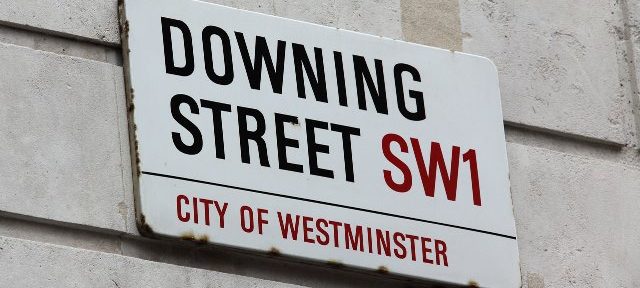
the Downing Street sign, SW1, city of Westminster

The take-over: Prime Ministers without a popular mandate, 1916-2016

This post was contributed by Dr Benjamin Worthy, lecturer in Birkbeck’s Department of Politics.This post first appeared on the LSE blog on 12 July 2016.

There are more or less two routes to becoming Prime Minister. You can either win a General Election or win a party leadership election to become head of the largest party when a Prime Minister leaves. Having just achieved the second route, Theresa May has become our ‘takeover’ leader. Here, Ben Worthy discusses the history of this route to power, its successes and – more often than not – its failures.

The table below shows the takeover PMs for the last 100 years, with the previous position, whether they won or lost the election, time in office, how they left office and their ranking as Prime Minister according to Professor Kevin Theakston’s 2004 expert survey.

Takeover Prime Ministers 1916-2016

[1] Pre 1965 Conservative party leaders were ‘chosen’ rather than elected
[2] Not included here is Ramsay MacDonald. He took over as Prime Minister in 1931 in charge of a national coalition government but, rather confusingly and controversially, took over from himself as Labour Prime Minister in the previous administration. He was ranked 14 in the survey.

What are the patterns from history?

One notable point is that takeover has been a very common route to the top. Of the 19 Prime Ministers from Lloyd George to David Cameron 12 have been, in some form and at some point, takeover PMs (counting twice Stanley ‘double takeover’ Baldwin).

May’s exact route, however, is rather unusual. Much has been made of May’s experience as the longest-serving Home Secretary since Attlee’s James Chute Ede (thanks to Gavin Freeguard from the Institute for Government, for putting everyone right). Interestingly, none of the other takeover Prime Ministers ever came to Downing Street directly from the Home Office, though two of them, Churchill and Callaghan, had been Home Secretaries in the past.

In terms of exit, Prime Minister May appears to have even chances of leaving office by election or resignation. Over the 12 takeovers 6 have resigned and 6 were defeated. The premiership of takeovers are relatively brief-their average time in office is a rather small 3.3 years.

Incoming Prime Minister Theresa May stands poised at the lecturn to give a speech

Theresa May – unopposed for the top spot (image; DFID – UK Department for International Development CC BY 2.0)

The big question is how such Prime Ministers are judged to have performed. Using Kevin Theakston’s rankings and Peter Hennessy’s ‘taxonomy’ of performance most takeovers don’t do well, and are in the lower reaches of the ranking. Only two of them, Lloyd George and Churchill, are truly ‘top flight’ or ‘weather-making’ leaders, though Macmillan comes close.

More worrying for Prime Minister May, the bottom 5 of the rankings are all takeovers. The nether reaches of Theakston’s table are full of names such Anthony Eden or Neville Chamberlain, both ‘catastrophic failures’ in crisis partly of their own making, and ‘overwhelmed’ leaders like John Major, who was famously told he was in ‘office but not in power’ (Arthur Balfour, not included here, also replaced Robert Cecil, his uncle, in 1902-hence the phrase ‘Bob’s your uncle’).

Dr Ben Worthy

Dr Ben Worthy

As the Financial Times said a new prime minister — now comes the hard part. Brexit, a divided country and the breaking up of Britain are huge challenges for any leader. Being Prime Minister is about the personality of the holder and much has been made of May’s competence and clarity. However, May’s habits of mulling over details is rather Brown-esque while her tactic of blaming others when things go wrong (just about) worked in the Home Office but is unlikely to do so in Downing Street.

Moreover, May has a slender majority in the House of Commons of 12 MPs and is inheritor of a rebellious party that has rebelled most over Europe and fears UKIP. Other recent takeovers like Callaghan, Major and Brown who headed similarly divided parties and faced deep crises became what Roy Jenkin’s called ‘suffix’ Prime Ministers, acting as historical codas to an era. We shall soon see if May joins the ‘weather-makers’ or the greatness of her office finds her out.

Note: This post represents the views of the author and not those of Birkbeck, University of London

Find out more

Labour Party leader Jeremy Corbyn

Labour’s contradictions on European integration after the referendum

This post was contributed by Dr Dionyssis Dimitrakopoulos of Birkbeck’s Department of Politics where he directs the MSc programme in European Politics & Policy. Here, Dr Dimitrakopoulos  looks at what the recent month’s activities indicates about the Labour Party’s possible future. A version of this post was commissioned by the ESRC’s ‘The UK in a Changing EU’ programme, and published on its website.

Labour Party leader Jeremy Corbyn

Labour Party leader Jeremy Corbyn

When Mark Rutte, the Liberal prime minister of the Netherlands, said that “England has collapsed”, he was not referring to England’s elimination from the European football championship by Iceland. What he meant was that the UK has collapsed, in his words, “politically, monetarily, constitutionally and economically”.

Far from looking like a party of government in waiting, capable of offering an answer, the Labour party has become entangled in this systemic crisis and may end up splitting as a result. The party’s reaction to the outcome of the referendum on the UK’s membership of the European Union demonstrates that the image of unity and pro-European conviction that could be detected before the referendum was little more than a façade.  The pro-European conviction is being shaken to the core and unity, if it ever existed, has evaporated.

Key facts indicate that it did not have to be like that.  Recent polling indicates that 81% of Labour party members are in favour of the UK’s membership of the EU.  Nearly two thirds of those who voted Labour in 2015 are estimated to have voted for the country to remain a member of the EU.  More than 90% of Labour’s MPs were active supporters of the Remain campaign and the leaders of virtually all trade unions and the TUC.  For a party that over the past year has been divided over a number of policies, these are indications of a remarkable degree of unity. In reality, though, things are quite different.  The behaviour of leading Labour politicians indicates that both the left and the right wing of the party find it very easy indeed to move away from their declared pro-EU stance.

Corbyn, and immigration

Jeremy Corbyn’s performance in the referendum campaign was so lackluster and he was, arguably, so late in supporting the Remain camp (a stance that may be the result of his Bennite associations), that a couple of weeks before the referendum almost half of Labour’s voters said they did not know where the party stood on the referendum question.  The extraordinary degree of hostility from the media towards its leader (a hostility that brings to mind the mendacity of the British press against the EU that arguably had a decisive impact on the referendum’s outcome) can explain only part of this state of affairs.  Even if one ignores the multiple allegations that Corbyn and his collaborators actively sabotaged the party’s Remain campaign, the suspicion that Corbyn actually preferred Brexit was compounded by his spokesman’s statement that the result shows that Corbyn’s view is much closer to the views held by the British public.

Secondly, the extent of anti-EU sentiment in the party’s former heartlands in the North of England was such that just days before the referendum leading members of the party’s frontbench like its deputy leader Tom Watson and prominent backbenchers like Yvette Cooper argued in favour of restrictions in the free movement of people inside the EU.  Cooper in particular was so desperate in this attempt that she argued in favour of the abolition (in all but name) of the essence of Schengen area (i.e. one of the most significant achievements of the process of European integration) despite the fact that the UK is not part of it.  This was a belated and ultimately unsuccessful effort to appease the anti-immigrant (to put it mildly) feeling that was unleashed by the referendum.

It was reminiscent of the party’s 2015 general election pledge to reduce new EU migrants’ access to some benefits for two years: late, wide of the mark, out of line with the party’s pro-EU stance and ultimately unsuccessful. Crucially, these Labour politicians did not try to confront the public’s misconceptions and prejudices at a time when academic research shows the significant contribution that EU immigrants make to the exchequer, even before one considers the cultural and other forms of their contribution.  Nor did they say much about the fact that for decades non-EU immigration (for which the UK has sole responsibility) has been higher than immigration from the EU.

So, even if one (despite the evidence) believes that immigration in the UK is a problem, policy failed in the part that is under the control of the UK government.  Though changing public perceptions during the post-fact politics is anything but easy, these Labour politicians have failed the party and the country by allowing the fact-free, anti-EU and anti-immigration sentiment to settle.

The European Union flag

A major dilemma

To his credit Corbyn publicly rejected the notion that immigration is a problem.  Both he and John McDonnell, the shadow chancellor, were right to argue that parts of the country were feeling the negative impact of immigration as a result of decisions made in Whitehall, not Brussels.  Proof of this is the scrapping by the Conservative/Liberal coalition government in August 2010 of the fund that was meant to help ease the pressure on housing, hospitals and schools felt by these communities.

The huge row inside the Labour party after the referendum has focused much more on Corbyn than on the policies that the party ought to pursue in the future. In this context even some of Corbyn’s supporters (including amongst trade union members) have acknowledged that under his leadership Labour cannot make the electoral progress that it needs to make and offer the country a real alternative to the Conservative government.

At the same time, internal analysis of Labour’s performance in last May’s local elections shows that the party has increased its share of votes in areas where this progress would not affect the outcome of a general election.  As the authors of that analysis put it:

“The strategic problem is that only 14% of our gains were in areas we need in order to win general elections – while just under 50% of our losses were in those areas.”

This poses a major dilemma, the answer to which will determine the fate of the Labour party in the next decade or so.  Should it abandon its pro-Europeanism of which its support for immigration is a key indication and hope to attract some of the voters it has lost in its Welsh and northern English former heartlands or should it stick to facts and principles and try to change (rather than echo) the views of these voters some of whom harbour xenophobic opinions.  In other words, at the end of the day, it must decide whether it is a progressive, left-wing party or not.

Those amongst its most prominent MPs and officials who (with varying degrees of enthusiasm) prefer the former to the latter must be aware of the costs that this option will entail. Joining the anti-immigration bandwagon (instead of, for example, attacking austerity and beefing up labour standards) is no free lunch.

The millions of cosmopolitan, urban dwellers (including those who helped propel Sadiq Khan to victory in the 2016 London mayoral elections) who support Labour (and have boosted its membership since Corbyn’s victory) will abandon it if it becomes little more than ‘red UKIP’ while it is hard to see why other voters (who could be tempted by the anti-immigration line) will prefer the copy to the original.  After all, preliminary evidence shows that a) there is absolutely no correlation between wage growth and support for Brexit and b) culture and personality, rather than material circumstances, lie behind majority support for Brexit.

Note: This post represents the views of the author and not those of Birkbeck, University of London

Find out more

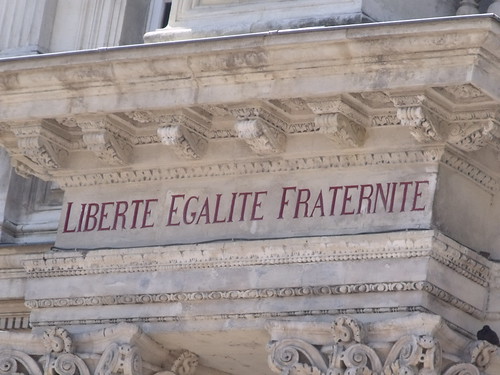
Avignon - Place de l'Horloge - Hotel de Ville - French Flags and RF (Copyright Elliot Brown via Flickr)

Three French words to explain the European Revolution and one word to leave that dream: Brexit

This post was contributed by Daniele D’Alvia, MPhil Law student in Birkbeck’s School of Law. Here, Daniele shares his personal thoughts on the Leave result of the UK EU referendum.

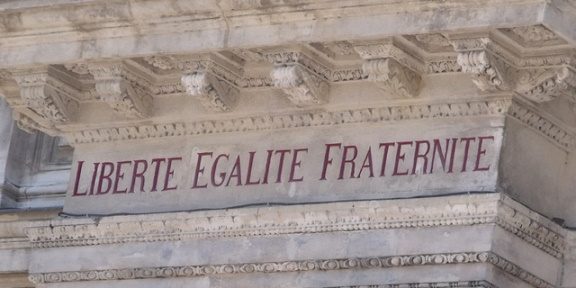
Avignon - Place de l'Horloge - Hotel de Ville - Liberte Egalite Fraternite

I am European. I am Italian. The day after Brexit on the 24th of June 2016 I started to attend a law course in Paris at the Sorbonne School of Law as part of my Ph.D. research in London. As soon as I entered the main building three words attracted my attention. They are the words of the French Revolution: liberté, égalité, and fraternité. They are the words that on the 23rd of June 2016 when the UK population decided to leave Europe I felt as forgotten in my soul and in my heart.

I teach seminars in European Union Law since I have started my Ph.D. at Birkbeck University of London and I have always been taught by my Italian law Professors that the principle of integration in Europe does not translate and never will constitute a conflict between sovereignties. The limitation and the sharing of competences between the EU sphere and the national sphere is not a limitation. By contrast, it is an opportunity for growth. Europe is not just an idea. It is not just a motivation to fight for ideals. Europe is a pure sentiment of cohesion of ideals and motivations.

I say this because I have lived the European integration in 2013 when I decided to leave my own country and I started to study an LL.M. in London. The UK was an extremely welcoming country and London made my mind vivid again. After only seven months I won a Ph.D. and I became a Ronnie Warrington Scholar. I started to teach European Union Law and I was appointed as the module convenor for Comparative Law at Birkbeck. I saw the opportunity for growth that was called Europe. I have lived that opportunity and it is beautiful.

The French Revolution: 3 words to explain the European Revolution  

Liberté, égalité, and fraternité these are the words that you can read on the front face of the building of the Sorbonne School of Law in Paris. In my view, these three simple words can clearly explain what Europe is about.

Firstly, liberté means freedom. During the French revolution freedom and the right to freedom was much more than a political idea of rebellion against the constituted power. Indeed, it was so important that it translates as the raison d’être of any other political and civil right that comes from a general conception of freedom. In the same fashion, the European Union has established four fundamental freedoms: free movement of goods, services, capitals and persons. These rights to freedom are the legal grounds for the establishment of any other civil or political rights within the Union (for instance, think to the right to non-discrimination not only as free movement of workers and security of the same job conditions, but specifically as free movement of goods in order to not discriminate against imported goods, or consumer protection).

Secondly, égalité means equality. It has a strong meaning, and it is the celebration of the humanity of law. In this light, the judge should be the bush de la loue, in other words he should speak for the law, not against the law. He has to interpret and apply the law for the ordinated coexistence of men. The law is above the judge. The European Union has always followed the same principle through the judicial review process of the European Court of Justice. Furthermore, think to the principle of supremacy of EU law over national legislation – can’t you see the glorification of law over domestic powers? It is a great harmonization of law for the first time, isn’t it? Again this is not a conflict between sovereignties. This is an opportunity for growth by virtue of the principle of integration.

Thirdly, fraternité is a motion to understand that all men are created equal. It is the French Déclaration Universelle des Droits de l’Homme et du Citoyen (1789). In Europe it is the European Convention of Human Rights (1950) and the Charter of Fundamental Rights of the European Union (2007). It means that the natural law is above positive law. In other words, the Charter of Fundamental Rights of the European Union has been approved in order to recognise the existence of a series of fundamental human rights that exist and are legitimised before the Law.

Three words

In the end, three words that derive from the French Revolution are capable of explaining the European idea of Union. This is the real Revolution. To think of Europe by virtue of three words is a Revolution itself that can explain much more to the reader than any complex view of European Union law as a pure technical exercise. It is for the first time a unique instance of a universal conception of law.

Law academic Daniele D'Alvia props his elbow on a mantlepiece

Daniele D’Alvia

For this, although I have seen Brexit in 2016, I am still in love for Europe. In particular, the challenge I would like to pose here – or better, provoke (I am Italian for this, we love to provoke) – is the following: if three words can explain Europe and, therefore, show that in front of the famous complexity and technocracy of Europe there is only a real opportunity for growth and unification, what does the word ‘Brexit’ alone mean? Can the significance of one word explain the significance of a decision to leave and reject all the universal meanings that only Europe is capable of conveying, and even before Europe the French Revolution?

I don’t think so. The dream of an “ever closer Union among the peoples of Europe” of the Treaty of Rome was not just a dream but is becoming and will soon become a reality despite Brexit.

Note: This post represents the views of the authors and not those of Birkbeck, University of London

Find out more

the Iraq flag

Could Tony Blair and others face a war crimes trial?

This post was contributed by Professor Bill Bowring, of Birkbeck’s School of Law. Here, Professor Bowring looks into the outcome of the Chilcot Report, published this week, and whether former Prime Minister Tony Blair and the others found responsible for taking the UK into Iraq are still in the frame for a war crimes trial.

Tony Blair, UK Prime Minister (1997-2007) (8228591861)

Could former Prime Minister face a war crimes trial in the aftermath of the Chilcot Report?

The Chilcot Report has now been published, and my colleague Dr Fred Cowell has already published an excellent Birkbeck blog analysing its main findings. The Report provides damning conclusions as to how the UK found itself at war, and as to the disastrous consequences. Chilcot’s team did not include lawyers, and his terms of reference did not permit findings as to the legality of the invasion and occupation of Iraq in 2003, or as to liability in the courts, especially criminal liability.

In fact, the war was illegal, and a violation of the Charter of the United Nations. That was the opinion of the former Secretary-General of the United Nations, Kofi Annan, on 15 September 2004; of the late Lord Bingham in his magisterial text The Rule of Law; and of the Foreign Office’s own legal advisers, as Elizabeth Wilmshurst, who resigned over the issue, has very recently repeated. She said “We ignored the rule of law – the result was Iraq.”

So the question remains: could Tony Blair and others face international prosecution?

On 5 July 2016 Geoffrey Robertson QC wrote in The Guardian “Putting Tony Blair in the dock is a fantasy”. He meant prosecution for the crime of aggression, for which the Nazi leaders were prosecuted in the 1945 Nuremberg trials. This is “the use of armed force by a State against the sovereignty, integrity or independence of another State”. When the International Criminal Court was established in 1998, the Rome Statute, the international treaty which created it, included a crime of aggression. But this has not yet come into force and cannot do so before 2017. But Robertson, who was quite right about the crime of aggression, did not turn his attention to prosecution for war crimes.

According to The Daily Telegraph this was not possible either. On 2 July 2016 it published an article under the headline “Outrage as war crimes prosecutors say Tony Blair will not be investigated over Chilcot’s Iraq war report – but British soldiers could be”.

Two days later, on 4 July, the Prosecutor of the ICC, Fatou Bensouda, elected in 2012, issued a strongly worded Statement, correcting the assertions made by the Daily Telegraph. She was obliged to remind her readers that her office is presently carrying out a “preliminary examination” into what happened in Iraq between 2003 and 2008. This was announced on 13 May 2014. It was the result of a complaint by a German NGO, ECCHR, and the Birmingham law firm, Public Interest Lawyers (PIL) – which represented the family of Baha Mousa, the Iraqi hotel receptionist tortured to death by British troops in 2003. The complaint concerns more than 60 allegations of war crimes – unlawful killing and systematic detainee abuse – by British troops in Iraq.

Bensouda stressed that the Chilcot Report will be taken into account by her, and stated: “Suggesting, therefore, that the ICC has ruled out investigating the former British Prime Minister for war crimes but may prosecute soldiers is a misrepresentation of the facts.”

She also emphasised that the Court can exercise jurisdiction only when a state is unable or unwilling to genuinely investigate and prosecute the perpetrators.

She will therefore take into account the fact that on 22 January 2015 David Cameron ordered a “clampdown on ‘spurious’ legal claims” against members of the UK military for war crimes in Iraq. This came 13 days after the Iraq Historic Allegations Team (IHAT) sent letters to around 280 British soldiers, informing them that they were under investigation.

The head of IHAT had previously stated that some soldiers could face criminal prosecution for war crimes. There have been no convictions. And a year later Cameron launched an assault on the lawyers taking the cases, calling for them to be disciplined.

Tony Blair and the others found responsible for taking the UK into Iraq, are, therefore, most certainly still in the frame.

Find out more

An Iraqi machine gun sits ominously in the foreground, pointing out towards an official Iraqi building

Chilcot Report: The consequences for International law

This post was contributed by Dr Frederick Cowell, lecturer in Law at Birkbeck. Here, Dr Cowell, offers an initial analysis of the report of the Iraq Inquiry from the perspective of its consequences for international law. Published today, the report follows a seven-year investigation into Britain’s involvement in the Iraq War.

Iraq-machine-gun-1174173_1280

The Report of The Iraq Inquiry (known as the Chilcot report) was released today. Unlike its predecessors, the Hutton Inquiry and the Butler Report which examined individual elements of the build-up to the 2003 Iraq war; this had a much more wide ranging brief to examine all of the causes of the Iraq war. Its wide ranging focus meant that it took over seven years to complete but this is justified given the complex nature of the conflict and Chilcot is careful to put things into a historical context beginning with the UN response to the 1990 invasion of Kuwait by Iraq.

The report is fairly unequivocal in its criticism that the 2003 war was ill planned and had a highly problematic legal basis, with Sir John Chilcot saying in his press conference that “the circumstances under which the UK decided there was a legal basis for war were far from satisfactory”.

There are some serious questions to be asked about the nature of government and structures in the UK in particular the Joint Intelligence Committee (JIC) – the body in the Cabinet Office responsible for directing the national intelligence organisations and running intelligence in government. In the executive summary the report criticises the JIC for conveying “certainty” in their intelligence assessments “without acknowledging the limitations of the intelligence” at hand. There is also some strong criticism of Tony Bair not least his commitment to stand by the then President of The United States, George W. Bush in the invasion of Iraq.

This is a brief overview of the some of the key points of the report with respect to the consequences for international law.

  • The Illegality of the War

It is important to note that the report is not the judgment of a court and therefore does not give any rulings about whether or not the actions of the UK government were definitively illegal. It is also not possible as things currently stand to prosecute Tony Blair at the International Criminal Court for ordering the invasion of Iraq (I explain why here). Nevertheless the report makes it clear that the decision to invade Iraq was of highly suspect legality. Under the UN Charter military action is permitted to enforce the decisions of the UN Security Council. But this has to be explicitly authorised by the UN.

The report notes on page 27 of Volume 1 that the assumption that there is a “residual right for individual Members to enforce Security Council decisions” cannot be considered correct. After the invasion of Kuwait in 1990 the UN Security Council had authorised UN military action to liberate Kuwait and then in response to the worsening humanitarian situation in Iraq authorised military action to protect civilians (in the form of No-Fly zones).

UN Security Council Resolution 1441 of November 2002 demanded that weapons inspectors be readmitted into Iraq to begin an extensive uninterrupted programme of weapons inspection and warned that unless Iraq cooperated “fully in the implementation of, this resolution” it would constitute “a further material breach of Iraq’s obligations”. In this context the advice given to by the Attorney General to the Prime Minister on the 11th of March 2003 made it clear that Resolution 1441 was “capable of reviving” the authorisation of Resolution 678 which authorised action against Iraq in 1991. This as several scholars have argued was a very thin basis for legality and the report is highly critical about the fact that the different views were not put to the Cabinet in making this decision, in particular the conclusion that a Security Council resolution explicitly authorising military action was necessary.

The upshot of the Chilcot report in this area is likely to be a strong restatement of the principle that any military action without explicit Security Council authorisation is illegal. In Libya in 2011 this was obtained but resolutions on Syria have not explicitly authorised the use of force in relation to the ongoing military action in Syria, although there may be an alternate legal basis for such action. The report also concludes that Britain was wrong to conclude that in 2003 Saddam posed a threat to the UK, justifying the use of force under the principles of self-defence in international law. However, on page 66 of volume 1 it notes that in the mid-1990s the sanctions regime was preventing Saddam Hussein developing missiles with the capacity to launch weaponised biological agents, indicating that the sanctions regime on the county was at least partially effective.

  • Humanitarian Intervention

Since the mid-1990s in the aftermath of the Rwandan genocide international lawyers and policy makers have debated the creation of a doctrine of military intervention into a state where crimes against humanity and Genocide are occurring. In 1999 NATO forces attacked Serbia to prevent attacks on Kosovans and although this lacked specific authorisation by the Security Council an international commission later concluded that the invasion was “illegal but legitimate”.

Professor Bill Bowring has criticised this conclusion noting that it paved the way for the legal advice that the Iraq war was illegal. In 2004 and 2005 a UN Commission looked at the creation of a legal doctrine of the Responsibility to Protect, which by 2009 had emerged as a general set of principles rather than a definitive legal doctrine. The principle moral argument behind humanitarian intervention JL Holzgrefe argues is that it is act utilitarian – in that it justifies action on the basis of favourable outcomes – rather than rule utilitarian – which justifies acts on the basis of existing rules designed to aggregate general well-being. This was the point of Tony Blair’s 1999 Chicago speech which set out the basis of humanitarian intervention; war was dangerous but often less dangerous than letting a dictator commit human rights abuses.

The Chilcot report’s conclusions on the aftermath of the war and long term planning arguably undermine the claim that the Iraq war could be justified on humanitarian grounds. It notes in section 7 of the report that “the diplomatic options had not at that stage [when the war started] been exhausted” and criticises the way that the build up to the invasion was run to a strict military timetable rather than considering a political solution. Furthermore it details in some depth how the post-war planning did not include any real planning as to how the post-invasion situation in Iraq would be managed or what would be put in place to enable transition.

What is particularly damning in the light of subsequent developments in Iraq is the transcript of a JIC report in April 2003 which noted that “the local population had high hopes that the Coalition would rapidly improve their lives” but that resentment “could grow quickly if it is seen to be ineffective” (Vol 8 p. 474). The impact of this for the doctrine of humanitarian intervention is likely to be that much more attention is paid to the impact of military action in post-conflict societies in subsequent debates on the doctrine’s legality as that is the only way for the principle to be consistent with any form of legal or moral principle.

  • The Authority of the Security Council

The Security Council under the UN Charter is the supreme decision making body on matters relating to the interpretation of the Charter and the use of force under Chapter VII of the UN Charter. As studies of international organisations have shown, the UN Security Council’s decisions and Resolutions have a reasonably high degree of compliance because the UN has a form of content independent legitimacy to it and it is believed as an institution. The Chilcot report is very critical of the British government for undermining the authority of the Security Council in the run up to the 2003 war. It notes that they were aware that if they tried to get a Resolution explicitly authorising the invasion of Iraq that it would be vetoed by other Security Council members.

Dr Frederick Cowell

Dr Frederick Cowell

It also notes that the diplomatic process was undermined to the extent that prior commitments to military action were “allowed to dictate the diplomatic timetable” (vol. 6 p.631). This undermined not only the authority of the UN but the weapons inspectors themselves who were not allowed to complete the function that had been entrusted to them. The UN Security Council is facing a series of unprecedented threats to its legitimacy due to ongoing issues in Syria and the Ukraine and the details of how the US and UK were able to subvert its by-pass its authority are likely to exacerbate this.

There is likely to be a lot more to be said about the Chilcot report, which is nearly 2 million words long, and this only a preliminary assessment of the consequences for international law.

Find out more

Was Adele offensive when she swore 33 times at Glastonbury?

This post was contributed by Professor Jean-Marc Dewaele from Birkbeck’s Department of Applied Linguistics and Communication.

I was interviewed on BBC 2 this morning about pop star Adele’s swearing and the public reaction to it.  Here is the gist of it.

Adele was credited with having won over the Glastonbury festival on 26 June with a generous, celebratory set.  She did create some controversy by swearing 33 times during her performance after admitting that the BBC had warned her about her potty mouth.

How should we judge Adele’s swearing? Was it deliberate? Did she mean to offend?

Adele at Glastonbury 2016. ©Jordan Scammell

Adele at Glastonbury 2016. ©Jordan Scammell

The first important fact is that she used the word “fuck” and “fucking” rather than more offensive words. In other words, she was quite measured (in a way) and certainly didn’t mean to offend her audience.  Being a native speaker of English, Adele has perfect sociolinguistic and pragmatic competence. This means that she knows exactly what effect her words will have depending on the interlocutors and the situation. That skill is part of the reason why she is a great artist. She is able to combine the right words with the right tune and deliver them with such passion that they resonate with her audience. Her swearing is thus not a lack of competence but a different use of her communication skills: her swearwords reflected genuine emotions, she was bonding with the crowd and expressing her solidarity with them. This fits her image of being “the world’s most normal megastar – a bawdy best friend, confiding her deepest secrets to an audience of thousands”.

She did not swear to elicit laughs but to emphasise her authenticity, to boost her credibility, and to remind the audience of her working-class, Tottenham roots.  Although she sings in standard English in a relatively formal register (and there is no swearing in her songs), she speaks in a more informal register with a clear North London accent. The swearing was a way to tell her audience that she belongs to the “in-group”, in this case mostly teenagers and young adults who typically swear more frequently than older generations. She treated her audience like friends – incidentally the people we are most likely to swear with (Dewaele, 2015, 2016a) – and her banter, humour and swearing offered a welcome relief between the sad emotional songs that had her audience in tears.

The star, who famously suffers from stage fright may also have used swearwords for their cathartic effect, to allow her to vent her strong emotions. People who are more anxious and more stressed tend to swear more (Dewaele, 2016b; Jay & Jay, 2015). Another factor linked to frequency of swearing is the environment.  People who hear a lot of swearing, in the home or workplace, typically swear more across contexts and interlocutors. I wonder how much swearing goes on backstage at concerts and in studios.

So to conclude, I am convinced that Adele did not mean to offend when she swore at Glastonbury. Fans who were interviewed after the performance said it had been brilliant and very emotional, but did not mention the swearing. Of course, some curmudgeons who sat listening to the concert at home may have been offended by the swearing because they were not on the same emotional rollercoaster, surrounded by thousands of sweaty crying and yelling fans. And inevitably, the defenders of morality in public speech condemned the use of swearing on the BBC because some children might have picked up the F-words.  What these people ignore is the fact that children need to become aware that some words are taboo or “bad” words and others are non-taboo, “good” or neutral words (Jay & Jay, 2013). Most children already possess the rudiments of adult swearing when they enter school. In other words, swearing does not corrupt them. I’m of course not claiming that parents can freely swear when their kids are around or allow their kids to swear at them – on the contrary. We simply have to accept that kids will pick up this crucial aspect of pragmatic competence at some point in their life.

Another myth to dispel is that people who swear frequently have a limited vocabulary (Jay & Jay, 2015). The authors found that taboo word fluency was correlated with general fluency. Adele serves as an excellent example to counter the simplistic view that swearing is a symptom of language poverty.

References

Dewaele, J.-M. (2015) British ‘Bollocks’ versus American ‘Jerk’: Do native British English speakers swear more –or differently- compared to American English speakers? Applied Linguistic Review 6(3): 309–339. doi 10.1515/applirev-2015-0015

Dewaele, J.-M. (2016a) Thirty shades of offensiveness: L1 and LX English users’ understanding, perception and self-reported use of negative emotion-laden words. Journal of Pragmatics 94, 112-127. doi 10.1016/j.pragma.2016.01.009

Dewaele, J.-M. (2016b) Self-reported frequency of swearing in English: Do situational, psychological and sociobiographical variables have similar effects on first and foreign language users? Journal of Multilingual and Multicultural Development http://dx.doi.org/10.1080/01434632.2016.1201092

Jay, K. L., and T. B. Jay. (2013) A Child’s Garden of Curses: A Gender, Historical, and Age-related Evaluation of the Taboo Lexicon. The American Journal of Psychology 126, 459–475.

Jay, K. L., and T. B. Jay. (2015) Taboo Word Fluency and Knowledge of Slurs and General Pejoratives: Deconstructing the Poverty-of-Vocabulary Myth. Language Sciences 52, 251–259. http://dx.doi.org/10.1016/j.langsci.2014.12.003.

the Downing Street sign, SW1, city of Westminster

Who will succeed David Cameron? A brief history of takeover Prime Ministers

This post was contributed by Dr Benjamin Worthy, lecturer in Birkbeck’s Department of Politics.

Following David Cameron’s announcement that he will resign following the EU referendum, Dr Worthy assesses the experiences of Prime Ministers who have taken over mid-term, and considers what can be taken from this as we look forward to the upcoming Tory leadership battle.

this post first appeared on Democratic Audit on Friday 24 June.

25056099261_b82cd9076f_z

Credit: Number 10 CC BY-NC-ND 2.0

David Cameron will not be Prime Minister by October, and is going even earlier than I predicted. So what does the past tell us about who might take over as Prime Minister, and how they might fare? Who, out of these runners and riders, will be next as First Lord of the Treasury?

There’s generally two ways you can become Prime Minister in the UK through (i) winning a General Election (ii) winning a party leadership election (or in the pre-1965 Conservative party being ‘chosen’) to become head of the largest party when a Prime Minister leaves-see this great infographic here.[1]

Whoever sits in 10 Downing Street after David Cameron will be what I’m calling a ‘takeover’ leader, who takes over government by (ii) rather than (i). As the UK Cabinet Manual states:

Where a Prime Minister chooses to resign from his or her individual position at a time when his or her administration has an overall majority in the House of Commons, it is for the party or parties in government to identify who can be chosen as the successor (p.15).

Although often seen as ‘lame ducks’ or less legitimate, remember both Lloyd George and Winston Churchill and Lloyd George, number 1 and number 2 respectively in the highest rated Prime Ministers of the 20th century, got to 10 Downing Street without winning an election.

Here’s a table looking at the last six Post-war ‘takeover’ Prime Ministers that sets out who they took over from, their previous position before Prime Minister, and – the all-important question – whether they went on to win the next election.

Takeover Prime Ministers 1955-2010

Screen Shot 2016-06-24 at 09.59.48

Interestingly, of the 12 Post-war Prime Ministers almost half were actually takeovers. So how did these takeovers do in the General Elections that followed? It seems there are exactly even chances of winning or losing, as 3 takeovers lost their elections and three won, though drilling down it can be close. John Major had a very narrow win in 1992 and Alec Douglas-Home a surprisingly narrow loss in 1964. What the table doesn’t show is the danger in stepping into Downing Street without an election, which explains why the other 50 % failed to win. Takeover is a risky business even in tranquil times, as this great paper shows.

In terms of who does the taking over now, a superficial look at the table offers good news for Theresa May and Michael Gove and bad news for Boris Johnson. All the takeovers Post-War were already holders of ‘great offices of state’. In fact, 3 were Chancellors and 3 were Foreign Secretaries. This makes sense as it is senior politicians who will have the resources, the reputation and, most importantly, the support in the party to win a leadership election.

The past is not, of course, always a good guide to the future, especially in a Brexit-ing Britain. To be Conservative leader you must make it through a particular bottleneck, as two potential leaders must emerge from the votes of the Conservative MPs for a run-off with the rest of the party. This morning it is very, very unlikely that the next leader will be the (probably) soon to be ex-Chancellor George Osborne. Foreign Secretary Phillip Hammond is, as far as we know, not interested.

The closest ‘great offices’ are Theresa May in the Home Office, whose chances have been talked up until yesterday, and Justice Secretary Michael Gove, who has ruled himself out repeatedly (though so did his hero Lyndon Johnson, many times). However, Boris Johnson, who has no great office but was Mayor of London for eight years, will have a large amount of political capital and has powerfully bolstered his reputation. A Brexit Johnson versus a Eurosceptic May run-off looks likely.

Gauging how ‘successful’ the takeover leaders were is more tricky-the whole question of whether and how a Prime Minister ‘succeeds’ depends on how you measure it. Half of the leaders achieved the most basic aim of winning an election and a number of them not only won but also increased their majority. Beyond this, some are widely regarded as having failed amid crisis, splits and defeats, especially John Major and Gordon Brown. Not all takeovers are failures or lame ducks. Three of the leaders came number 4, 7 and 8 in the academic survey of the top ten Post-War Prime Ministers and Harold Macmillan in particular is widely regarded as a highly capable and astute Prime Minister.

Whoever takes over from Cameron will face deep problems. He or she will be in charge of a ruptured party, and a worrying in-tray of pressing problems. Being prime Minister of Brexit Britain will mean trying to hold together a divided country and Dis-united Kingdom, not to mention overseeing a hugely complex negotiation process. Whoever takes over will need a very healthy dose of fortune and skill to be a Macmillan rather than a Brown.

__

[1] There are other ways but it all gets a bit complicated and constitutional see p 15 ofthe Cabinet Manual 2.18-2.19. If a government falls and an opposition can muster up a majority then an opposition leader could become Prime Minister without an election (but would probably want to call a General Election soon after). The Cabinet Manual hedges its bets by saying ‘The Prime Minister will normally be the accepted leader of a political party that commands the majority of the House of Commons’.

__

Note: This post represents the views of the authors and not those of Birkbeck, University of London

A young Asian female scientist wearing a white lab coat looks into a microscope

Women in STEM campaign 2016

Today (23 June) sees the launch of the Women in STEM (Science, Technology, Engineering and Mathematics) campaign 2016, supported by a wide range of partners including Department for Women and Equalities and The Equality Challenge Unit and led by MediaPlanet.

To mark the start of the campaign, Birkbeck spoke to women working in STEM (science, technology, engineering, and mathematics) departments across the College to find out more about what excites them about working in their research fields, how they came to follow a career in STEM and who inspires them.

https://www.youtube.com/watch?v=5t38idpiEtA&feature=youtu.be

The Departments of Biological Sciences and Psychological Sciences at Birkbeck have been awarded Athena Swan Bronze awards. Athena Swan awards are given by the Equality Challenge Unit in recognition of commitment to advancing the careers of women in STEM subjects. Other departments and the College are working towards further awards.

Read more content from #BBKWomeninSTEM

BBK article: This year’s BBK magazine featured a profile of Rosalind Franklin, the “dark lady of DNA” #WomeninSTEM16

Video
Inspired by science: women in science share their stories
What can we learn from the Apollo samples? Dr Louise Alexander

Brexit as Nostalgia for Empire

This post was contributed by Dr Nadine El-Enany, lecturer in Law at Birkbeck’s School of Law School. On 15 June 2016, Dr El-Enany presented at Law on Trial – the School’s annual public lecture series which this year focused on the EU referendum. Here, Dr El-Enany touches on the themes she explored in her talk which explored Europe’s current migration crisis.

This post was originally published on CriticalThinking.org on Sunday 19 June 2016.

Law-on-Trial-slider -WEB

This week Jo Cox, a pro-immigration Labour MP was brutally murdered by a man who shouted Britain First as he killed her and who gave his name in court on being charged with her murder as “Death to traitors. Freedom for Britain”.

Jo Cox was killed a week before the referendum on Britain’s EU membership and following months of campaigning which has been dominated by the topic of migration. This referendum has not felt like an exercise in democracy. There is something painfully undemocratic about denying EU citizens from other Member States living in Britain a vote. The message to them is that they do not belong here. Their neighbours, co-workers, friends and family decide on their future for them. Worse still, the referendum has licensed the expression of racism and xenophobia, which has been unleashed with deadly consequences. The racist discourse that has defined the Brexit campaign must be understood in the context of Britain’s imperial legacy. The terms on which the debate around the referendum have taken place are symptomatic of a Britain struggling to conceive of its place in the world post-Empire.

In this context waiting for Lexit is to be the frog in that cautionary tale — the one that sits in boiling water until it is too late. I have taught EU law for many years and have always tried to instil in my students a healthy scepticism about the EU. I have worked to show them that it is possible to be critical of the neoliberal, capitalist, imperialist EU and not fall into the anti-migrant, sovereignty-fetishising UKIP camp. When the EU referendum was first announced, I made a Lexit argument when the topic came up.

A vote for the EU is a vote for capitalism, austerity and militarised borders, I’d say. The reality is that argument has elicited only the minutest of echoes. The Brexit campaign has been entirely dominated by the ugliest form of Euroscepticism imaginable. As Priyamvada Gopal has put it, a vote for Brexit is a vote for the “magnificent lie that exploitation, austerity, greed and impoverishment have all come to Britain from the nasty outside”. Lexit is a dream that has not been realised. Waiting for Lexit is like waiting for Godot — in more ways than one. Graham Hassell has aptly described Beckett’s play of that name as “a metaphor for… mainland Britain, where society has ever been blighted by a greedy ruling élite keeping the working classes passive and ignorant by whatever means.”

The “means” adopted by the Brexit campaign in a bid to sway voters have primarily consisted of scare-mongering on the issue of migration. Despite the rhetoric about migrants being a drain on resources, HMRC tax figures for 2013–14 show that migrants contributed £2.5 billion more than theytook out in benefits, but I will neither myth-bust around migration nor be drawn into a debate about whether or not migrants enrich the societies in which live because fundamentally that is a racist question — it erases the history of the British Empire which has set in motion the migration of today and assumes a pre-existing, static society, membership of which can only be validly determined by birthright. Migrants tend to have the least capital and so are easiest to exploit. We have seen this in the unrelenting scapegoating of migrants that has characterised the Brexit campaign, a convenient distraction from the material consequences of the current government’s austerity measures.

It is not that I expected better of Michael Gove, Boris Johnson and Nigel Farage. I merely hoped they would not succeed, as they have, aided by the British mainstream media, in drowning out the possibility for a Left movement in opposition to the EU to emerge. It is difficult to choose a low point in the Brexit campaign. Was it when Nigel Farage had the gall to say to a black woman who challenged him on the racist rhetoric of the Brexit campaign in the course of a live televised debate that he is “used to being demonised”? Or Michael Gove’s Islamophobic rant about Turkish birthrates and criminality? Or UKIP donor-funded Leave.EU’s recent tweet, “act now before we see an Orlando-style tragedy here before too long”? Or Farage’s latest poster depicting non-white refugees crossing the Croatia-Slovenia border in 2015 along with the slogan “Breaking Point”, which has been reported to the police for inciting racial hatred?

Being faced with a choice between between David Cameron and Nigel Farage is a nightmare scenario for any anti-racist and anti-capitalist. With the debate on the referendum eclipsed by the topic of migration, it is no surprise Cameron is struggling to hold the fort having spent the last five years peddling the lie that migrants are to blame for society’s ills rather than his government of millionaires and their penchant for cuts to vital public services. But if Britain votes Leave, it does so on the terms of the racist and xenophobic Brexit campaign. A Leave vote would provide a mandate for Brexit leaders to push for Fortress Britain, which already exists insofar as it can as an EU Member State. Britain is the most fortified of all EU countries. It is not part of Schengen. It has a flexible opt-out from all EU law on immigration and asylum, which it has consistently exercised to opt into restrictive measures that further strengthen its capacity to exclude and out of those aimed at enhancing protection standards.

There is no “refugee crisis” in Britain. Britain has barely increased its resettlement quota in light of the movement of so many desperate Syrians, and a similar number of asylum applications have been made in Britain this year as in 2008 unlike the higher numbers we see in other EU countries. Britain has been the strongest advocate of the EU Dublin Regulation, which sees people seeking asylum confined to Southern Europe, sometimes under conditions found to constitute inhuman and degrading treatment by the European Court of Human Rights. We will see no loosening of Britain’s borders if it leaves the EU, quite the opposite. A Leave vote would provide a validating framework for the enactment of the ugly promises the Brexit campaign has made — take their wish for an Australian style immigration system for example, an idea originally proposed by Tony Blair, inspired by Australia’s “Pacific Solution”. We know what that looks like, visas for the white and privileged while brown and black refugees self-immolate in prisons on remote Pacific islands.

Nor is there a “migration crisis” in Britain. The only crisis identifiable is that caused by a capitalist system which sees the ongoing enrichment of the few and impoverishment of the many. Capitalist and imperialist structures enable oppression on a mass scale. Leaving the EU is not going to ameliorate this. In fact, the British government was so afraid that the EU might empower British workers that it negotiated an opt-out from the EU Charter of Fundamental Rights because it guarantees the right of workers to take strike action. Unlike in other EU countries, there is no right to strike in Britain. Successive governments have legislated to curtail the possibility for industrial action, the most recent assault being in the form of the Trade Union Act 2016.

The run up to the EU referendum has shown Britain for what it is. Woodwork: the washed-up bracken of the British Empire, and the ugly flotsam of its legacy of racism. From this woodwork the Brexiters have emerged. They have long romanticised the days of Empire when Britannia ruled the waves and was defined by its racial and cultural superiority. It is no coincidence that Farage has a preference for migrants from India and Australia as compared with East Europeans, and has advocated stronger ties with the Commonwealth. This referendum has not been about Europe, but about Britain and its imperial legacy. For Brexiters, turning their back on Europe and turfing out their neighbours is a step toward salvaging the shipwreck of the British Empire, which saw the exploitation of peoples, their subjugation on the basis of race, a system that was maintained through the brutal and systematic violence of the colonial authorities.

The violence in the Brexit rhetoric of “taking back control of our borders”, of excluding others for self-interested goals at a time when thousands of refugees are dying at sea, is resonant of the racism that pervaded imperial Britain at the time of the 1781 Zong massacre which saw slaves thrown overboard by their captor to save a British slave ship and in the interest of profiting from an insurance claim. If what we want is to live in a more equitable society, it is dangerous to begin by voting for an outcome which has been driven by racism. A nostalgia for empire is no starting point for emancipatory struggle based on solidarity with the oppressed.

This post represents the views of the author and not those of Birkbeck

Find out more