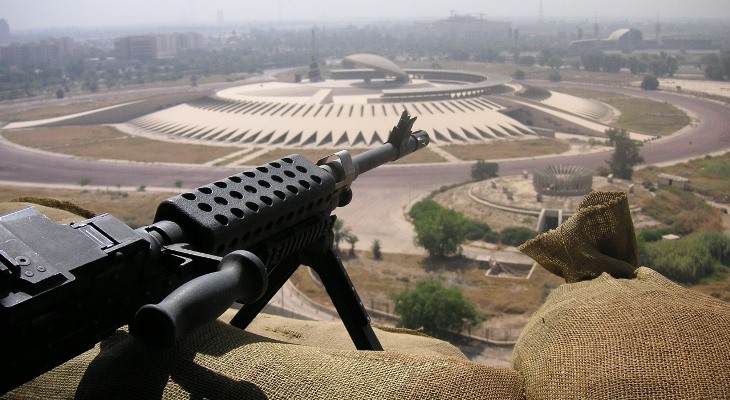
An Iraqi machine gun sits ominously in the foreground, pointing out towards an official Iraqi building

Chilcot Report: The consequences for International law

This post was contributed by Dr Frederick Cowell, lecturer in Law at Birkbeck. Here, Dr Cowell, offers an initial analysis of the report of the Iraq Inquiry from the perspective of its consequences for international law. Published today, the report follows a seven-year investigation into Britain’s involvement in the Iraq War.
Iraq-machine-gun-1174173_1280

The Report of The Iraq Inquiry (known as the Chilcot report) was released today. Unlike its predecessors, the Hutton Inquiry and the Butler Report which examined individual elements of the build-up to the 2003 Iraq war; this had a much more wide ranging brief to examine all of the causes of the Iraq war. Its wide ranging focus meant that it took over seven years to complete but this is justified given the complex nature of the conflict and Chilcot is careful to put things into a historical context beginning with the UN response to the 1990 invasion of Kuwait by Iraq.

The report is fairly unequivocal in its criticism that the 2003 war was ill planned and had a highly problematic legal basis, with Sir John Chilcot saying in his press conference that “the circumstances under which the UK decided there was a legal basis for war were far from satisfactory”.

There are some serious questions to be asked about the nature of government and structures in the UK in particular the Joint Intelligence Committee (JIC) – the body in the Cabinet Office responsible for directing the national intelligence organisations and running intelligence in government. In the executive summary the report criticises the JIC for conveying “certainty” in their intelligence assessments “without acknowledging the limitations of the intelligence” at hand. There is also some strong criticism of Tony Bair not least his commitment to stand by the then President of The United States, George W. Bush in the invasion of Iraq.

This is a brief overview of the some of the key points of the report with respect to the consequences for international law.

  • The Illegality of the War

It is important to note that the report is not the judgment of a court and therefore does not give any rulings about whether or not the actions of the UK government were definitively illegal. It is also not possible as things currently stand to prosecute Tony Blair at the International Criminal Court for ordering the invasion of Iraq (I explain why here). Nevertheless the report makes it clear that the decision to invade Iraq was of highly suspect legality. Under the UN Charter military action is permitted to enforce the decisions of the UN Security Council. But this has to be explicitly authorised by the UN.

The report notes on page 27 of Volume 1 that the assumption that there is a “residual right for individual Members to enforce Security Council decisions” cannot be considered correct. After the invasion of Kuwait in 1990 the UN Security Council had authorised UN military action to liberate Kuwait and then in response to the worsening humanitarian situation in Iraq authorised military action to protect civilians (in the form of No-Fly zones).

UN Security Council Resolution 1441 of November 2002 demanded that weapons inspectors be readmitted into Iraq to begin an extensive uninterrupted programme of weapons inspection and warned that unless Iraq cooperated “fully in the implementation of, this resolution” it would constitute “a further material breach of Iraq’s obligations”. In this context the advice given to by the Attorney General to the Prime Minister on the 11th of March 2003 made it clear that Resolution 1441 was “capable of reviving” the authorisation of Resolution 678 which authorised action against Iraq in 1991. This as several scholars have argued was a very thin basis for legality and the report is highly critical about the fact that the different views were not put to the Cabinet in making this decision, in particular the conclusion that a Security Council resolution explicitly authorising military action was necessary.

The upshot of the Chilcot report in this area is likely to be a strong restatement of the principle that any military action without explicit Security Council authorisation is illegal. In Libya in 2011 this was obtained but resolutions on Syria have not explicitly authorised the use of force in relation to the ongoing military action in Syria, although there may be an alternate legal basis for such action. The report also concludes that Britain was wrong to conclude that in 2003 Saddam posed a threat to the UK, justifying the use of force under the principles of self-defence in international law. However, on page 66 of volume 1 it notes that in the mid-1990s the sanctions regime was preventing Saddam Hussein developing missiles with the capacity to launch weaponised biological agents, indicating that the sanctions regime on the county was at least partially effective.

  • Humanitarian Intervention

Since the mid-1990s in the aftermath of the Rwandan genocide international lawyers and policy makers have debated the creation of a doctrine of military intervention into a state where crimes against humanity and Genocide are occurring. In 1999 NATO forces attacked Serbia to prevent attacks on Kosovans and although this lacked specific authorisation by the Security Council an international commission later concluded that the invasion was “illegal but legitimate”.

Professor Bill Bowring has criticised this conclusion noting that it paved the way for the legal advice that the Iraq war was illegal. In 2004 and 2005 a UN Commission looked at the creation of a legal doctrine of the Responsibility to Protect, which by 2009 had emerged as a general set of principles rather than a definitive legal doctrine. The principle moral argument behind humanitarian intervention JL Holzgrefe argues is that it is act utilitarian – in that it justifies action on the basis of favourable outcomes – rather than rule utilitarian – which justifies acts on the basis of existing rules designed to aggregate general well-being. This was the point of Tony Blair’s 1999 Chicago speech which set out the basis of humanitarian intervention; war was dangerous but often less dangerous than letting a dictator commit human rights abuses.

The Chilcot report’s conclusions on the aftermath of the war and long term planning arguably undermine the claim that the Iraq war could be justified on humanitarian grounds. It notes in section 7 of the report that “the diplomatic options had not at that stage [when the war started] been exhausted” and criticises the way that the build up to the invasion was run to a strict military timetable rather than considering a political solution. Furthermore it details in some depth how the post-war planning did not include any real planning as to how the post-invasion situation in Iraq would be managed or what would be put in place to enable transition.

What is particularly damning in the light of subsequent developments in Iraq is the transcript of a JIC report in April 2003 which noted that “the local population had high hopes that the Coalition would rapidly improve their lives” but that resentment “could grow quickly if it is seen to be ineffective” (Vol 8 p. 474). The impact of this for the doctrine of humanitarian intervention is likely to be that much more attention is paid to the impact of military action in post-conflict societies in subsequent debates on the doctrine’s legality as that is the only way for the principle to be consistent with any form of legal or moral principle.

  • The Authority of the Security Council

The Security Council under the UN Charter is the supreme decision making body on matters relating to the interpretation of the Charter and the use of force under Chapter VII of the UN Charter. As studies of international organisations have shown, the UN Security Council’s decisions and Resolutions have a reasonably high degree of compliance because the UN has a form of content independent legitimacy to it and it is believed as an institution. The Chilcot report is very critical of the British government for undermining the authority of the Security Council in the run up to the 2003 war. It notes that they were aware that if they tried to get a Resolution explicitly authorising the invasion of Iraq that it would be vetoed by other Security Council members.

Dr Frederick Cowell

Dr Frederick Cowell

It also notes that the diplomatic process was undermined to the extent that prior commitments to military action were “allowed to dictate the diplomatic timetable” (vol. 6 p.631). This undermined not only the authority of the UN but the weapons inspectors themselves who were not allowed to complete the function that had been entrusted to them. The UN Security Council is facing a series of unprecedented threats to its legitimacy due to ongoing issues in Syria and the Ukraine and the details of how the US and UK were able to subvert its by-pass its authority are likely to exacerbate this.

There is likely to be a lot more to be said about the Chilcot report, which is nearly 2 million words long, and this only a preliminary assessment of the consequences for international law.

Find out more

Was Adele offensive when she swore 33 times at Glastonbury?

This post was contributed by Professor Jean-Marc Dewaele from Birkbeck’s Department of Applied Linguistics and Communication.

I was interviewed on BBC 2 this morning about pop star Adele’s swearing and the public reaction to it.  Here is the gist of it.

Adele was credited with having won over the Glastonbury festival on 26 June with a generous, celebratory set.  She did create some controversy by swearing 33 times during her performance after admitting that the BBC had warned her about her potty mouth.

How should we judge Adele’s swearing? Was it deliberate? Did she mean to offend?

Adele at Glastonbury 2016. ©Jordan Scammell

Adele at Glastonbury 2016. ©Jordan Scammell

The first important fact is that she used the word “fuck” and “fucking” rather than more offensive words. In other words, she was quite measured (in a way) and certainly didn’t mean to offend her audience.  Being a native speaker of English, Adele has perfect sociolinguistic and pragmatic competence. This means that she knows exactly what effect her words will have depending on the interlocutors and the situation. That skill is part of the reason why she is a great artist. She is able to combine the right words with the right tune and deliver them with such passion that they resonate with her audience. Her swearing is thus not a lack of competence but a different use of her communication skills: her swearwords reflected genuine emotions, she was bonding with the crowd and expressing her solidarity with them. This fits her image of being “the world’s most normal megastar – a bawdy best friend, confiding her deepest secrets to an audience of thousands”.

She did not swear to elicit laughs but to emphasise her authenticity, to boost her credibility, and to remind the audience of her working-class, Tottenham roots.  Although she sings in standard English in a relatively formal register (and there is no swearing in her songs), she speaks in a more informal register with a clear North London accent. The swearing was a way to tell her audience that she belongs to the “in-group”, in this case mostly teenagers and young adults who typically swear more frequently than older generations. She treated her audience like friends – incidentally the people we are most likely to swear with (Dewaele, 2015, 2016a) – and her banter, humour and swearing offered a welcome relief between the sad emotional songs that had her audience in tears.

The star, who famously suffers from stage fright may also have used swearwords for their cathartic effect, to allow her to vent her strong emotions. People who are more anxious and more stressed tend to swear more (Dewaele, 2016b; Jay & Jay, 2015). Another factor linked to frequency of swearing is the environment.  People who hear a lot of swearing, in the home or workplace, typically swear more across contexts and interlocutors. I wonder how much swearing goes on backstage at concerts and in studios.

So to conclude, I am convinced that Adele did not mean to offend when she swore at Glastonbury. Fans who were interviewed after the performance said it had been brilliant and very emotional, but did not mention the swearing. Of course, some curmudgeons who sat listening to the concert at home may have been offended by the swearing because they were not on the same emotional rollercoaster, surrounded by thousands of sweaty crying and yelling fans. And inevitably, the defenders of morality in public speech condemned the use of swearing on the BBC because some children might have picked up the F-words.  What these people ignore is the fact that children need to become aware that some words are taboo or “bad” words and others are non-taboo, “good” or neutral words (Jay & Jay, 2013). Most children already possess the rudiments of adult swearing when they enter school. In other words, swearing does not corrupt them. I’m of course not claiming that parents can freely swear when their kids are around or allow their kids to swear at them – on the contrary. We simply have to accept that kids will pick up this crucial aspect of pragmatic competence at some point in their life.

Another myth to dispel is that people who swear frequently have a limited vocabulary (Jay & Jay, 2015). The authors found that taboo word fluency was correlated with general fluency. Adele serves as an excellent example to counter the simplistic view that swearing is a symptom of language poverty.

References

Dewaele, J.-M. (2015) British ‘Bollocks’ versus American ‘Jerk’: Do native British English speakers swear more –or differently- compared to American English speakers? Applied Linguistic Review 6(3): 309–339. doi 10.1515/applirev-2015-0015

Dewaele, J.-M. (2016a) Thirty shades of offensiveness: L1 and LX English users’ understanding, perception and self-reported use of negative emotion-laden words. Journal of Pragmatics 94, 112-127. doi 10.1016/j.pragma.2016.01.009

Dewaele, J.-M. (2016b) Self-reported frequency of swearing in English: Do situational, psychological and sociobiographical variables have similar effects on first and foreign language users? Journal of Multilingual and Multicultural Development http://dx.doi.org/10.1080/01434632.2016.1201092

Jay, K. L., and T. B. Jay. (2013) A Child’s Garden of Curses: A Gender, Historical, and Age-related Evaluation of the Taboo Lexicon. The American Journal of Psychology 126, 459–475.

Jay, K. L., and T. B. Jay. (2015) Taboo Word Fluency and Knowledge of Slurs and General Pejoratives: Deconstructing the Poverty-of-Vocabulary Myth. Language Sciences 52, 251–259. http://dx.doi.org/10.1016/j.langsci.2014.12.003.

the Downing Street sign, SW1, city of Westminster

Who will succeed David Cameron? A brief history of takeover Prime Ministers

This post was contributed by Dr Benjamin Worthy, lecturer in Birkbeck’s Department of Politics.

Following David Cameron’s announcement that he will resign following the EU referendum, Dr Worthy assesses the experiences of Prime Ministers who have taken over mid-term, and considers what can be taken from this as we look forward to the upcoming Tory leadership battle.

this post first appeared on Democratic Audit on Friday 24 June.

25056099261_b82cd9076f_z

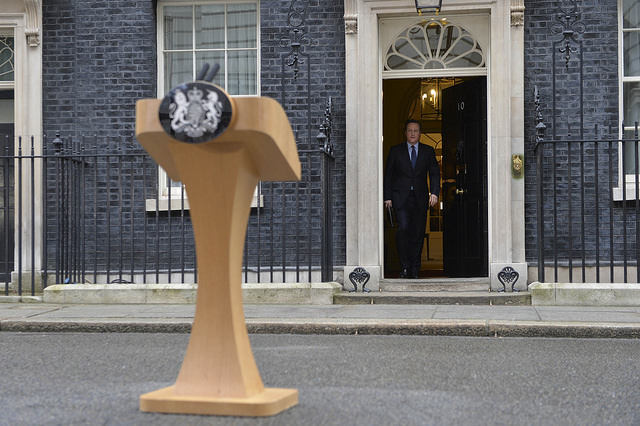
Credit: Number 10 CC BY-NC-ND 2.0

David Cameron will not be Prime Minister by October, and is going even earlier than I predicted. So what does the past tell us about who might take over as Prime Minister, and how they might fare? Who, out of these runners and riders, will be next as First Lord of the Treasury?

There’s generally two ways you can become Prime Minister in the UK through (i) winning a General Election (ii) winning a party leadership election (or in the pre-1965 Conservative party being ‘chosen’) to become head of the largest party when a Prime Minister leaves-see this great infographic here.[1]

Whoever sits in 10 Downing Street after David Cameron will be what I’m calling a ‘takeover’ leader, who takes over government by (ii) rather than (i). As the UK Cabinet Manual states:

Where a Prime Minister chooses to resign from his or her individual position at a time when his or her administration has an overall majority in the House of Commons, it is for the party or parties in government to identify who can be chosen as the successor (p.15).

Although often seen as ‘lame ducks’ or less legitimate, remember both Lloyd George and Winston Churchill and Lloyd George, number 1 and number 2 respectively in the highest rated Prime Ministers of the 20th century, got to 10 Downing Street without winning an election.

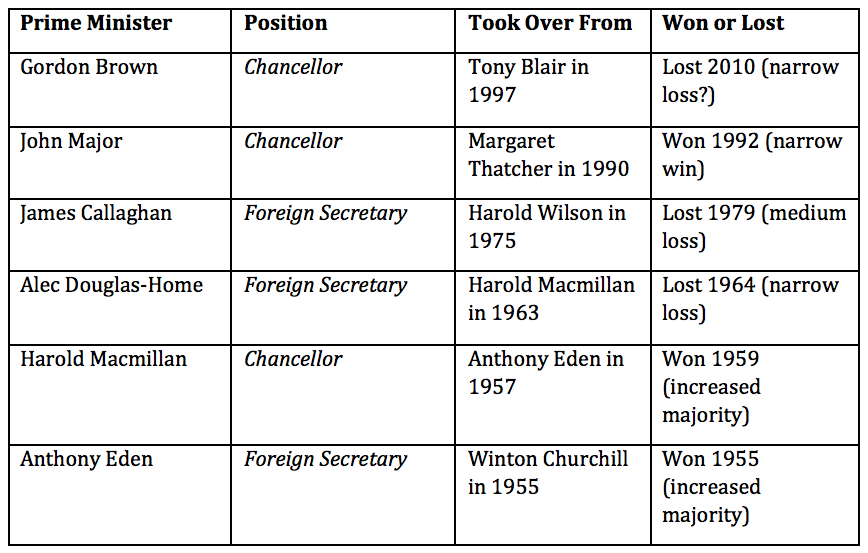
Here’s a table looking at the last six Post-war ‘takeover’ Prime Ministers that sets out who they took over from, their previous position before Prime Minister, and – the all-important question – whether they went on to win the next election.

Takeover Prime Ministers 1955-2010

Screen Shot 2016-06-24 at 09.59.48

Interestingly, of the 12 Post-war Prime Ministers almost half were actually takeovers. So how did these takeovers do in the General Elections that followed? It seems there are exactly even chances of winning or losing, as 3 takeovers lost their elections and three won, though drilling down it can be close. John Major had a very narrow win in 1992 and Alec Douglas-Home a surprisingly narrow loss in 1964. What the table doesn’t show is the danger in stepping into Downing Street without an election, which explains why the other 50 % failed to win. Takeover is a risky business even in tranquil times, as this great paper shows.

In terms of who does the taking over now, a superficial look at the table offers good news for Theresa May and Michael Gove and bad news for Boris Johnson. All the takeovers Post-War were already holders of ‘great offices of state’. In fact, 3 were Chancellors and 3 were Foreign Secretaries. This makes sense as it is senior politicians who will have the resources, the reputation and, most importantly, the support in the party to win a leadership election.

The past is not, of course, always a good guide to the future, especially in a Brexit-ing Britain. To be Conservative leader you must make it through a particular bottleneck, as two potential leaders must emerge from the votes of the Conservative MPs for a run-off with the rest of the party. This morning it is very, very unlikely that the next leader will be the (probably) soon to be ex-Chancellor George Osborne. Foreign Secretary Phillip Hammond is, as far as we know, not interested.

The closest ‘great offices’ are Theresa May in the Home Office, whose chances have been talked up until yesterday, and Justice Secretary Michael Gove, who has ruled himself out repeatedly (though so did his hero Lyndon Johnson, many times). However, Boris Johnson, who has no great office but was Mayor of London for eight years, will have a large amount of political capital and has powerfully bolstered his reputation. A Brexit Johnson versus a Eurosceptic May run-off looks likely.

Gauging how ‘successful’ the takeover leaders were is more tricky-the whole question of whether and how a Prime Minister ‘succeeds’ depends on how you measure it. Half of the leaders achieved the most basic aim of winning an election and a number of them not only won but also increased their majority. Beyond this, some are widely regarded as having failed amid crisis, splits and defeats, especially John Major and Gordon Brown. Not all takeovers are failures or lame ducks. Three of the leaders came number 4, 7 and 8 in the academic survey of the top ten Post-War Prime Ministers and Harold Macmillan in particular is widely regarded as a highly capable and astute Prime Minister.

Whoever takes over from Cameron will face deep problems. He or she will be in charge of a ruptured party, and a worrying in-tray of pressing problems. Being prime Minister of Brexit Britain will mean trying to hold together a divided country and Dis-united Kingdom, not to mention overseeing a hugely complex negotiation process. Whoever takes over will need a very healthy dose of fortune and skill to be a Macmillan rather than a Brown.

__

[1] There are other ways but it all gets a bit complicated and constitutional see p 15 ofthe Cabinet Manual 2.18-2.19. If a government falls and an opposition can muster up a majority then an opposition leader could become Prime Minister without an election (but would probably want to call a General Election soon after). The Cabinet Manual hedges its bets by saying ‘The Prime Minister will normally be the accepted leader of a political party that commands the majority of the House of Commons’.

__

Note: This post represents the views of the authors and not those of Birkbeck, University of London

A young Asian female scientist wearing a white lab coat looks into a microscope

Women in STEM campaign 2016

Today (23 June) sees the launch of the Women in STEM (Science, Technology, Engineering and Mathematics) campaign 2016, supported by a wide range of partners including Department for Women and Equalities and The Equality Challenge Unit and led by MediaPlanet.

To mark the start of the campaign, Birkbeck spoke to women working in STEM (science, technology, engineering, and mathematics) departments across the College to find out more about what excites them about working in their research fields, how they came to follow a career in STEM and who inspires them.

https://www.youtube.com/watch?v=5t38idpiEtA&feature=youtu.be

The Departments of Biological Sciences and Psychological Sciences at Birkbeck have been awarded Athena Swan Bronze awards. Athena Swan awards are given by the Equality Challenge Unit in recognition of commitment to advancing the careers of women in STEM subjects. Other departments and the College are working towards further awards.

Read more content from #BBKWomeninSTEM

BBK article: This year’s BBK magazine featured a profile of Rosalind Franklin, the “dark lady of DNA” #WomeninSTEM16

Video
Inspired by science: women in science share their stories
What can we learn from the Apollo samples? Dr Louise Alexander

Brexit as Nostalgia for Empire

This post was contributed by Dr Nadine El-Enany, lecturer in Law at Birkbeck’s School of Law School. On 15 June 2016, Dr El-Enany presented at Law on Trial – the School’s annual public lecture series which this year focused on the EU referendum. Here, Dr El-Enany touches on the themes she explored in her talk which explored Europe’s current migration crisis.

This post was originally published on CriticalThinking.org on Sunday 19 June 2016.

Law-on-Trial-slider -WEB

This week Jo Cox, a pro-immigration Labour MP was brutally murdered by a man who shouted Britain First as he killed her and who gave his name in court on being charged with her murder as “Death to traitors. Freedom for Britain”.

Jo Cox was killed a week before the referendum on Britain’s EU membership and following months of campaigning which has been dominated by the topic of migration. This referendum has not felt like an exercise in democracy. There is something painfully undemocratic about denying EU citizens from other Member States living in Britain a vote. The message to them is that they do not belong here. Their neighbours, co-workers, friends and family decide on their future for them. Worse still, the referendum has licensed the expression of racism and xenophobia, which has been unleashed with deadly consequences. The racist discourse that has defined the Brexit campaign must be understood in the context of Britain’s imperial legacy. The terms on which the debate around the referendum have taken place are symptomatic of a Britain struggling to conceive of its place in the world post-Empire.

In this context waiting for Lexit is to be the frog in that cautionary tale — the one that sits in boiling water until it is too late. I have taught EU law for many years and have always tried to instil in my students a healthy scepticism about the EU. I have worked to show them that it is possible to be critical of the neoliberal, capitalist, imperialist EU and not fall into the anti-migrant, sovereignty-fetishising UKIP camp. When the EU referendum was first announced, I made a Lexit argument when the topic came up.

A vote for the EU is a vote for capitalism, austerity and militarised borders, I’d say. The reality is that argument has elicited only the minutest of echoes. The Brexit campaign has been entirely dominated by the ugliest form of Euroscepticism imaginable. As Priyamvada Gopal has put it, a vote for Brexit is a vote for the “magnificent lie that exploitation, austerity, greed and impoverishment have all come to Britain from the nasty outside”. Lexit is a dream that has not been realised. Waiting for Lexit is like waiting for Godot — in more ways than one. Graham Hassell has aptly described Beckett’s play of that name as “a metaphor for… mainland Britain, where society has ever been blighted by a greedy ruling élite keeping the working classes passive and ignorant by whatever means.”

The “means” adopted by the Brexit campaign in a bid to sway voters have primarily consisted of scare-mongering on the issue of migration. Despite the rhetoric about migrants being a drain on resources, HMRC tax figures for 2013–14 show that migrants contributed £2.5 billion more than theytook out in benefits, but I will neither myth-bust around migration nor be drawn into a debate about whether or not migrants enrich the societies in which live because fundamentally that is a racist question — it erases the history of the British Empire which has set in motion the migration of today and assumes a pre-existing, static society, membership of which can only be validly determined by birthright. Migrants tend to have the least capital and so are easiest to exploit. We have seen this in the unrelenting scapegoating of migrants that has characterised the Brexit campaign, a convenient distraction from the material consequences of the current government’s austerity measures.

It is not that I expected better of Michael Gove, Boris Johnson and Nigel Farage. I merely hoped they would not succeed, as they have, aided by the British mainstream media, in drowning out the possibility for a Left movement in opposition to the EU to emerge. It is difficult to choose a low point in the Brexit campaign. Was it when Nigel Farage had the gall to say to a black woman who challenged him on the racist rhetoric of the Brexit campaign in the course of a live televised debate that he is “used to being demonised”? Or Michael Gove’s Islamophobic rant about Turkish birthrates and criminality? Or UKIP donor-funded Leave.EU’s recent tweet, “act now before we see an Orlando-style tragedy here before too long”? Or Farage’s latest poster depicting non-white refugees crossing the Croatia-Slovenia border in 2015 along with the slogan “Breaking Point”, which has been reported to the police for inciting racial hatred?

Being faced with a choice between between David Cameron and Nigel Farage is a nightmare scenario for any anti-racist and anti-capitalist. With the debate on the referendum eclipsed by the topic of migration, it is no surprise Cameron is struggling to hold the fort having spent the last five years peddling the lie that migrants are to blame for society’s ills rather than his government of millionaires and their penchant for cuts to vital public services. But if Britain votes Leave, it does so on the terms of the racist and xenophobic Brexit campaign. A Leave vote would provide a mandate for Brexit leaders to push for Fortress Britain, which already exists insofar as it can as an EU Member State. Britain is the most fortified of all EU countries. It is not part of Schengen. It has a flexible opt-out from all EU law on immigration and asylum, which it has consistently exercised to opt into restrictive measures that further strengthen its capacity to exclude and out of those aimed at enhancing protection standards.

There is no “refugee crisis” in Britain. Britain has barely increased its resettlement quota in light of the movement of so many desperate Syrians, and a similar number of asylum applications have been made in Britain this year as in 2008 unlike the higher numbers we see in other EU countries. Britain has been the strongest advocate of the EU Dublin Regulation, which sees people seeking asylum confined to Southern Europe, sometimes under conditions found to constitute inhuman and degrading treatment by the European Court of Human Rights. We will see no loosening of Britain’s borders if it leaves the EU, quite the opposite. A Leave vote would provide a validating framework for the enactment of the ugly promises the Brexit campaign has made — take their wish for an Australian style immigration system for example, an idea originally proposed by Tony Blair, inspired by Australia’s “Pacific Solution”. We know what that looks like, visas for the white and privileged while brown and black refugees self-immolate in prisons on remote Pacific islands.

Nor is there a “migration crisis” in Britain. The only crisis identifiable is that caused by a capitalist system which sees the ongoing enrichment of the few and impoverishment of the many. Capitalist and imperialist structures enable oppression on a mass scale. Leaving the EU is not going to ameliorate this. In fact, the British government was so afraid that the EU might empower British workers that it negotiated an opt-out from the EU Charter of Fundamental Rights because it guarantees the right of workers to take strike action. Unlike in other EU countries, there is no right to strike in Britain. Successive governments have legislated to curtail the possibility for industrial action, the most recent assault being in the form of the Trade Union Act 2016.

The run up to the EU referendum has shown Britain for what it is. Woodwork: the washed-up bracken of the British Empire, and the ugly flotsam of its legacy of racism. From this woodwork the Brexiters have emerged. They have long romanticised the days of Empire when Britannia ruled the waves and was defined by its racial and cultural superiority. It is no coincidence that Farage has a preference for migrants from India and Australia as compared with East Europeans, and has advocated stronger ties with the Commonwealth. This referendum has not been about Europe, but about Britain and its imperial legacy. For Brexiters, turning their back on Europe and turfing out their neighbours is a step toward salvaging the shipwreck of the British Empire, which saw the exploitation of peoples, their subjugation on the basis of race, a system that was maintained through the brutal and systematic violence of the colonial authorities.

The violence in the Brexit rhetoric of “taking back control of our borders”, of excluding others for self-interested goals at a time when thousands of refugees are dying at sea, is resonant of the racism that pervaded imperial Britain at the time of the 1781 Zong massacre which saw slaves thrown overboard by their captor to save a British slave ship and in the interest of profiting from an insurance claim. If what we want is to live in a more equitable society, it is dangerous to begin by voting for an outcome which has been driven by racism. A nostalgia for empire is no starting point for emancipatory struggle based on solidarity with the oppressed.

This post represents the views of the author and not those of Birkbeck

Find out more

Europe at the Crossroads: Professor Everson comments (Part 5)

This post was contributed by Michelle Everson, Professor of Law at Birkbeck. She has written widely on European Economic and Constitutional Law and has advised the European Commission, the European Parliament and the European Central Bank on matters of European Law.

Professor Everson is hosting a week long debate on ‘Europe at the Crossroads’ at Birkbeck (13-17 June). For details and to book your place, please visit the ‘European Law on Trial’ website.

Every day this week, Professor Everson writes for Birkbeck Comments, offering up her thoughts, opinions, and analysis on the EU referendum. Read part 1, part 2, part 3 and part 4 of her blog.

Law-on-Trial-slider -WEB

European borders: a paradoxical sting in the tail?

A couple of weeks ago, as we were stuck in Rome’s eternal traffic jam, an Italian Professor friend of mine told me a story I recognised, and not without a sliver of pain. In the early 1970s, his father, also an academic, took a sabbatical year at the University of London. Subject to his parents’ irrepressibly optimistic openness to the world, my friend found himself at one of the (little-lamented) Inner London Educational Authority’s finest primary school establishments in Richmond. He did so, however, without any local cultural knowledge, or indeed, being able to speak a word of English. The well-meaning school nonetheless stepped up to the European challenge and provided my friend with mentor, a little girl of mixed Italian-British heritage who might translate. The one problem in this arrangement was the fact that up until this time the little girl had done all in her power to hide her Italian heritage from her playmates, keeping her mother away from the school gates and denying all icons of culture that were not 100% British in origin. Her mortification was absolute. My friend’s embarrassment was total.

Being of much the same age and having grown up with a German mother in Chingford, I immediately recognised the pathology, though for some perverse reason (having a French name perhaps) I always followed a reverse psychology to dealing with the inevitable issues by flaunting my Germanness. No one who didn’t grow up in those grey and xenophobic days can truly understand the frustrations of living within the imagination-stagnation of a culturally-enclosed space, and worse still of a cultural space that seemed far past its sell-by date: Sunday afternoons of interminable repeats of British war films often found me pleading with the Luftwaffe Kommandant on the television not to give Douglas Baader his legs back. At a personal level, and even though I am sometimes shocked by lawlessness of the Italian-Polish mushroom wars now playing out in Epping Forest, I am grateful beyond measure that Europe is at home in London.

Yet, by the same tokens of location and age, I am also a middle-aged Londoner and wholly aware that the xenophobia of the 1970s and 1980s was not, or was not even primarily reserved for Europeans. As successive waves of immigrants from the Caribbean, from East Africa, from the Turkish communities of Cyprus, from Vietnam and from Latin America joined my world, the ineptitude of a UK television culture which persisted in a time warp that never allowed Germans to shed their Swastikas, paled into insignificance in the face of the ready offensiveness of British society towards what was perceived as the rest of the world. Those days are not yet over, but London is at least now more globally inclusive that it has ever been.

So what of Europe, with its by now painfully apparent, increasingly rigidly-enforced and often inhumane territorial borders? Is Europe now defining itself as a stagnant, culturally-enclosed space? This question is particularly relevant for a younger generation, with a heightened global outlook that makes little or any distinction between real or virtual friends in Sydney, Warsaw or Mombasa, or between market and cultural goods created in Beijing, Budapest or Rio de Janeiro. Is a concept of Europe a sustainable or even a just one in a globalising world? Within a social theory of European integration that identifies the only possible measure of a shared European culture as being that of the philosophical universalism which originated within the European Enlightenment, the question leads to the inevitably paradoxical conclusion that Europe can only ever be defined as Europe when it has dissolved itself in the success of its own universalising mission. Equally, from the altogether more pragmatic perspective of global economic development – or of the righting of the enduring structural wrongs of historically-engendered economic inequalities – is an ideational programme of European economic ordering a retrograde step and an act of global injustice?

Professor Michelle Everson

Professor Michelle Everson

In this latter regard, I cannot overcome paradox, and can only answer within the realms of my own personal experience and outlook. For me, Europe is only an ideal and not a place. I do not belong to the Habermasian circle of democratic federalists. At the same time, I cannot but feel that, as in the case of EU Enlargement, a global market justice that is founded in the precept of competitive labour advantage, or the notion that I will correct my own disadvantaged position by working for less than you do, is not justice at all, but a recipe for the abasement of the whole of the human condition. If, in its tentative and messy mastery of the innate tensions between a human desire for economic opportunity and a human want for cultural security, the European Union manages to provide at least a hint of a new model for the globalised economy; if it reminds the world that markets must exist within rather than take dominance over society, it will have done more than we might ever have expected of it.

Law on Trial 2016: The European Union at the Crossroads, runs at Birkbeck from Monday 13 to Friday 17 June. Book a free place here.

Listen to Professor Everson on the topic of the EU referendum in the latest edition of Birkbeck Voices

This post represents the views of the author and not those of Birkbeck

Find out more

Europe at the Crossroads: Professor Everson comments (Part 4)

This post was contributed by Michelle Everson, Professor of Law at Birkbeck. She has written widely on European Economic and Constitutional Law and has advised the European Commission, the European Parliament and the European Central Bank on matters of European Law.

Professor Everson is hosting a week long debate on ‘Europe at the Crossroads’ at Birkbeck (13-17 June). For details and to book your place, please visit the ‘European Law on Trial’ website.

Every day this week, Professor Everson writes for Birkbeck Comments, offering up her thoughts, opinions, and analysis on the EU referendum. Read part 1, part 2 and part 3 of her blog.

Law-on-Trial-slider -WEB

More order, but less Europe

My vote for Europe is not a vote for its current malaise of totalising economic rationalism, for its political, legal and intellectual abdication, or for its heedlessness for the dispossessed of Athens or Lisbon. It is a vote for the European Union qua its status as institution; an institution unique within a global mass of bilateral trade agreements that is bestridden, at the point of its judicial application, by the disembedded economic thinking of a culturally-denuded World Trade Organisation. However imperfectly, the EU, qua institution, is open to the voices of cultural and social self-determination and also to the voices of economic value that are not simply disregarded, but also traduced within dominant economic rationality. Hobbes is very long dead: In their rush to resurrect the dusty fairy tale of national sovereignty, Brexit campaigners, would have us abdicate at the global level, all potential for the re-establishment of political and social self-determination over the economy. We, by contrast, should take our fight for the soul of economic liberalism to Europe.

Norman Tebbit tells an interesting tale of his own disenchantment with the European project. As an airline pilot, working together with colleagues from other European nations in order to ensure airline safety, he was seized by the commonality of his lived experience with the European group, excited and liberated by the ease of communication between pilot-experts who sought to solve common technical problems. Only later did he worry that this technocratic group, in all of its shared enthusiasm, had become divorced from the masses still locked in more generalist national cultural discourse. To this I answer, yes, you are right ‘Norman’ (I’m from Chingford, I can), but only insofar as you are utterly wrong. In academic jargon, ‘epistemic communities’ of shared expertise are major culprits within democracy-denuding technocratisation processes, as well as within the near collapse of the global financial system: why did no one see it coming? Yet, cross-European meetings of like minds can also produce visionary rationalities; and I count myself blessed to be able to sometimes join the first generations of Eurocrats in toasts to their retirements. But, also in the medium of day-to-day, Ryanair-facilitated movement around Europe, in the Europeanisation of media discourse (German television transmitted the Farage-Cameron debate live and in full), in the Europeanisation of consumer, environmentalist, and economic pressure groups, the far broader conversation amongst European peoples can be heard, and is similarly exciting for its commonalities, rather than made discordant by its differences.

What do the peoples of Europe want? They want what we all want: economic and political autonomy, welfare and an effective means of their realisation. In a globalised age that is as unsettling as it is exciting, people want an order of opportunity and of security; and therein lies the common ‘European’ cause for those of the left and of the right. Here, we can identify the joint project for those with tradition and for those who wish to break free from their own cultural confines, the shared programme for those who wish to make use of their new opportunities and for those who prefer their own four stone walls. Yet, this want will never be satisfied, this order will never be created, where we continue to sacrifice ourselves to the totalising and socially-disembedding powers of a dominant economic rationality that is as socially-amoral as it is delusional.

By contrast, our first sacrificial victim in the effort to save economic liberalism within Europe, or to re-establish civilised EU order, must be the notion of economic efficiency, the founding myth of bastardised capitalism. Who on the streets of Athens believes that the unbearable pain of insecurity, of myriad ruined, even curtailed lives can in some way be made good in the maybe never-to-be fulfilled promise of future riches? Also, and perhaps more significantly so, what price the economic opportunities of the farmer or the supplier forced out of business by the price-cutting imperatives of ‘perfectly-efficient’ competition between ever more fast concentrations of economic power? The second sacrifice follows from the first, and for the foreseeable future at least must be given in a commitment to less rather than more Europe.

Professor Michelle Everson

Professor Michelle Everson

Certainly, in European economic constitutionalist mode we can create circumscribed rights of cross-border economic opportunity and can similarly seek to reverse the sad surrender of a once economically-decentralising European competition policy to the efficiency demands of the globally-dominant Chicago School of economics. Yet, by the same ordered token, where the primary locus of social, cultural and emotional attachment remains local, regional or national we must curtail European regulatory impulses, however attractive they might occasionally appear. The complex of ordo-liberal, (Christian) corporatist and social-democratic interests that still, to a certain extent, defines life in Bochum would go down like a lead balloon in Birmingham. Vice versa: the National Health Service, the one major survivor of Britain’s post-war universalist welfare tradition is still met with as much incomprehension in continental Europe as it is in the United States. It is certainly possible that, with time, Europe will find its own way to cultural unity and will embed a European economy within a European society.

In the meantime, however, in the manner of European federalism, this is all just a very pretty dream. The remnants of our national economic traditions left to us are perhaps sometimes irritatingly quaint, but they are still the greatest expression of ‘independent state action in a framework of respect for the economic and political autonomy of citizens,’ and we must all defend them determinedly within the institutions of the European Union, within its law, within its Parliament and within its source of executive competence (the European Council).

Law on Trial 2016: The European Union at the Crossroads, runs at Birkbeck from Monday 13 to Friday 17 June. Book a free place here.

Listen to Professor Everson on the topic of the EU referendum in the latest edition of Birkbeck Voices

This post represents the views of the author and not those of Birkbeck

Find out more


Alligator attack in Disneyworld reminds us of difficulties in managing human-alligator incidents

This post was contributed by Dr Simon Pooley, Lambert Lecturer in Environment (Applied Herpetology) in the Department of Geography, Environment and Development Studies

1024px-AmericanAlligator.JPGAs portrayed in numerous films, including Disney classics like The Rescuers, the American alligator (Alligator Mississippiensis) is an iconic and well known denizen of the State of Florida. It is surely difficult to visit the Sunshine State without being aware of the presence of alligators, which are effectively managed by the Florida Fish and Wildlife Service. However, yesterday’s attack on a two-year old visitor to Disney’s Grand Floridian Resort & Spa in Orlando, Florida, is a sad reminder that coexisting with large and potentially dangerous predators brings risks and responsibilities.

For those visiting Florida’s manicured gardens and golf courses and its theme parks and holiday resorts, it might seem that alligators are denizens of ‘the wild,’ of remote and inaccessible swamps and creeks. As this terrible incident reminds us, in fact alligators are widespread throughout natural and manmade waterways in the State, and it should never be assumed that alligators are not present unless explicit information is available to the contrary. This was highlighted in a widely reported incident just two weeks ago when a very large alligator strolled across a golf course in Palmetto, Florida.

While this attack may be ‘very rare’ (to quote Nick Wiley, executive director of the Florida Fish and Wildlife Conservation Commission), there have been at least 2-4 alligator bites per year reported in the state since record-keeping began in the early 1970s (deaths are much rarer). Being bitten by an alligator is thus always a possibility, though the risk is very small compared to the many other accidents that could occur. Witnesses interviewed after the attack lamented the lack of signs warning of the dangers of alligators, but it is a stretch to expect authorities to signpost every body of water in the State where alligators could turn up. Certainly areas home to stable populations of large alligators and accessible to people should be signposted. In fact, Florida has been a pioneer in the management of human-alligator incidents.

Following federal and state regulations in the 1970s, alligators were effectively protected and swiftly recovered, and complaints about ‘nuisance alligators’ rocketed. A Statewide Nuisance Alligator Program (SNAP) was put in place by the end of the decade, and today alligators are managed through a combination of targeted annual harvests, and incident response programmes outsourced to licensed hunters. Considering that the nearly 20 million inhabitants of the state, along with over 90 million visitors to the State annually, have a good chance of coming across the estimated 1.3 million alligators spread across all of its 67 counties, it is almost miraculous that so few incidents occur.

This incident is still unfolding, and more detail will emerge which may inform our understanding of the particular situation, but at this stage it seems that the incident should be viewed as a terrible accident. There are good educational materials available through the Florida Fish and Wildlife Commission website and public warnings should be issued in the months of peak alligator activity (April to August).

If we want large predators to exist outside of zoos and protected areas, which is necessary for their long-term survival, then we need to educate ourselves about their behaviour and how to behave around such animals. As wolves, bears, mountain lions, alligators and other large predators recover from past persecution and begin to range outside of fenced protected areas, we should learn about how to coexist with them, in the same way that we learn to behave safely around motor vehicles, roads, and also domesticated animals (which are responsible for more deaths and injuries than wild animals). We also need well trained and resourced wildlife management officials to respond swiftly and effectively when tragedies occur.

Europe at the Crossroads: Professor Everson comments (Part 3)

This post was contributed by Michelle Everson, Professor of Law at Birkbeck. She has written widely on European Economic and Constitutional Law and has advised the European Commission, the European Parliament and the European Central Bank on matters of European Law.

Professor Everson is hosting a week long debate on ‘Europe at the Crossroads’ at Birkbeck (13-17 June). For details and to book your place, please visit the ‘European Law on Trial’ website.

Every day this week, Professor Everson writes for Birkbeck Comments, offering up her thoughts, opinions, and analysis on the EU referendum. Read part 1 and part 2 of her blog.

Law-on-Trial-slider -WEB

The crisis in economic liberalism: A common ground for the fight?

To confirm the worst suspicions of Eurosceptics, I once met Gisella Stewart, acceptable face of the Brexit campaign, on a bit of junket in Vienna. Maybe I did fly Ryanair (into Bratislava), but I admit that I was also a touch squiffy on a sparking little Zweigelt when, in the hotel lobby, she voiced to me her concerns about the democratic futures of the Union. It was the time of the European Convention and ‘Gisella’ (if I may) was a UK parliamentary delegate to conferences preparing for the birth and unveiling of a shiny Constitution for the Peoples of Europe. Being then as now of a cynical frame of mind I was more relieved than upset by the eventual failure of the European Constitution and the subsequently functionalist approach taken by the European Commission and the member states in the redrafting of the constitutional draft as the Lisbon Treaty.

On the one hand, the sight of past leaders of France and Italy, Valerie Giscard D’Estaing and Guliano Amato (betimes in their battle bus) suborning the peoples of Europe to join them in a glorious democratic future, induced in me only a vaguely Brechtian feeling of alienation. On the other, in my travels around Europe, the only committed federalists I have ever met have been members of the Federalist party (go figure), and some (but definitely not all) EU employees.

In Puglia, Carla looks to the Regione when her vines fail, in Manchester, Martha collects plates of royal weddings, in North Germany, Christian rejoices when Werder Bremen avoids relegation. The daily experience of the vast majority of people in Europe is one of political, cultural and emotional attachment to the local, regional or national level. Although the visions of a democratically-federal Europe proposed, amongst others by great minds such as Jürgen Habermas, offer an obvious and immediate solution to problems of democratic deficit within Europe, the precipitate federalisation of the prisoner’s dilemma would only de-legitimate itself. Bismarck and Garibaldi are long dead: today, the only sustainable European federalisation would be one that felt in the soul as strongly as it is born in conviction.

Nevertheless, Gisella Stewart now makes a telling point. For the left, or so she argues, the European Union is a lost cause. The majority of European governments are formed by right wing or Christian Democratic parties, the European Parliament voted to be led by Claude Juncker, not by Martin Schultz. Fazit: the left can never defeat the dominant economic rationality of the right within the Union. Now, this is all perhaps true, but vitally so, only insofar as the dominant economic rationality that now governs the EU, as it does the globe, is a natural appendage to the right. And here, returning slowly to our much-maligned German ordo-liberals, we might state that all is not as it seems, or that Gisella Stewart is wrong to dismiss the potential for revolution within EU institutions. To the contrary: She is wrong because she has yet to understand the depth of a current crisis that is not simply a crisis of capitalism, but is rather a crisis that challenges the entire political-social edifice of economic liberalism. Seen in this light, the left might yet have common cause with the right within the European Union.

In the years since financial crisis, I have found myself with some strange debating bedfellows; not just the usual cast of well-meaning Germans and culturally-exhausted Italians, but rather also chairs of global insurance companies, heads of compliance within multi-national banking corporations, Christian Democrats of many national hues, community organisers, small-scale entrepreneurs and anxiously-overburdened technocrats. Our shared ground, however, has been a desire to consign the rhetorical usage of the catch-all-hate-term ‘neo-liberalism’, to the dustbin: blindly hating capitalism, or those facets of capitalism we feel are bad does little to extricate us from economic malaise.

Contemporary crisis has its roots in very many distinct movements, not just in unbridled and unprincipled rent-seeking on the part of private actors, but also – in a term coined by the political scientist, Colin Crouch – within a ‘privatised Keynsianism’ promoted by Governments of the left and of the right across the globe, which is predicated on substitution of a putatively endless supply of self-generating private capital for the fiscally-engendered revenues of the now economically-castrated nation state; a process which still continues, albeit now subject to Central Bank oversight of private money creation within a new, but still very vaguely-defined, technocratic function of macro-prudential supervision. Neo-liberalism, when used to denote a rampant and uncontrolled state of market nature, first misses the immediate point that the systemic failure of capitalism is not only being overseen, but is also being promoted, within an exponential growth of regulatory oversight that is dedicated to the service of the chimera of efficiently-perfected competition. Secondly, however, and far more importantly it also misplaces the fatal underlying alienation of all of our dominant economic rationalities from our political and social mores.

If one thing unites the disparate strands of our dominant economic rationality, it is their social amorality, or a denuded worldview that is exhibited either in their belief that man is no more than an economic animal (homo economicus) flourishing or failing in a state of market nature in which not even God finds a place, or in their contrary reification of ‘scientifically-constructed’ and market-fostering regulation, and concomitant denial of any (Hayekian) uncertainty in the affairs of the market or of man: ‘if only we can identify the right logarithms, Capital will always beget more Capital, Amen.’

This is all so very far from a first incarnation of the term neo-liberalism in 1930s Paris as a moral response to the communist and fascist challenge then being made not simply to free markets, but also to the liberal framework of social constitution within which classical economic liberalism had always suspended them. It is also light years away from a first and enduring clarification of this defensive liberalism in the Berlin of 1938. It is a world away from the rebirth of a cornered but still battling economic liberalism by the (anti-) heroes of German ordo-liberalism who sought to secure an ordered, economic constitutionalism within the nation’s highest laws. It is a travesty of the work of academics, steeped in Lutheran tradition, such as, the economists Alexander Rüstow and Walter Eucken, the latter of whom, also bravely resisted Martin Heidegger’s determined attempts to Nazify the University of Heidelberg, as well as the lawyer, Franz Böhm.

For clarity’s sake, I am of the left, and consequently cannot but disagree with vast tracts of ordo-liberal writing. Reading this work often sends me screaming into the garden. Nonetheless, it is not the individual precepts of ordo-liberalism that are at issue here, but rather its idealised view of the economy within society, a model more recently enunciated by one last living link with the beginnings of the movement, the Hamburg Law Professor, Ernst-Joachim-Mestmäcker.

The Economic Constitution:

‘constitutes the political potency of the economic realm … but not with an eye to offering up this realm to the democratic regime; instead, it does so in order to place the democratic regime in a position from which it might disinterestedly achieve its tasks of securing justice and social welfare. The role of the Economic Constitution is not one of securing the priority of the economic realm. Instead, its role is one of enabling the exercise of independent state action in a framework of respect for the economic and political autonomy of citizens.’

In his very final lectures at the Collège de France, Michèl Foucault distinguished ordo-liberal thinkers from what he termed ‘anarcho-liberals’ (read Milton Friedman). Ordo-liberals, so he argued, had an abiding fear of social forces and hence sought to suppress all revolution and reaction by means of their pre-emption within a constraining narrative of constitutionalised freedom. And, indeed, for a radical or collectivist left, this distinction must inevitably mutate into a critique of the forces of conservatism with a small ‘c’ which would similarly deny socialist governments the full use of the political potency of the economic realm.

Professor Michelle Everson

Professor Michelle Everson

Yet, today, in the face of socially- and politically-alienating economic rationalities that have simply forgotten, or choose to ignore the fact that the market exists within society, the painful irony of the left enjoining in a battle to overcome the crisis within economic liberalism is perhaps ameliorated. In its ordo-liberal form, the moral language of economic liberalism is one that we can recognise and engage with. Far more importantly, it is a moral language of political self-restraint which has proven itself accommodating to the demands of counter-posing forces of social tradition and of the left. The success and stability of Germany’s post war economy – and social settlement – was not the work of ordo-liberals alone, but rather the graft of ordo-liberals who fought with but similarly adapted themselves to other world views.

The reforming economic zeal of Ludwig Erhard was open to its tempering within the traditional politics of (Catholic) corporatism pursued by Germany’s first post-war Chancellor, Konrad Adenauer. In turn, the forces of social democracy, embodied by Willi Brandt and Helmut Schmidt, also shaped a now sadly-unravelling composite variety of German capitalism – a sometimes frustrating, but always democratic, culturally-rooted and socially-embedded capitalism.

Law on Trial 2016: The European Union at the Crossroads, runs at Birkbeck from Monday 13 to Friday 17 June. Book a free place here.

Listen to Professor Everson on the topic of the EU referendum in the latest edition of Birkbeck Voices

This post represents the views of the author and not those of Birkbeck

Find out more


Europe at the Crossroads: Professor Everson comments (Part 2)

This post was contributed by Michelle Everson, Professor of Law at Birkbeck. She has written widely on European Economic and Constitutional Law and has advised the European Commission, the European Parliament and the European Central Bank on matters of European Law.

Professor Everson is hosting a week long debate on ‘Europe at the Crossroads’ at Birkbeck (13-17 June). For details and to book your place, please visit the ‘European Law on Trial’ website.

Every day this week, Professor Everson writes for Birkbeck Comments, offering up her thoughts, opinions, and analysis on the EU referendum. Read part 1 of her blog here.

Law-on-Trial-slider -WEB

What can we learn from European malaise?

In my time, I have been patronised by the very best of them, including in the late 1990s, Horst Krenzler, an eminence grise of the founding European Commission and, at that time, Chair of a working group on the Eastern Enlargement of the EU. Acting as Rapporteur for a mixed group of functionaries and academics, my frustrations with the – to me – all-too-perverse implications of sealing the liberated futures of newly re-instated nations by requiring them to submit wholesale to the established (and already vast) EU economic rule book, boiled over into the high-pitched question: ‘Why can’t we just give them a Marshall Plan?’ An outburst of general laughter followed, and then, ‘Young lady [I was young then], no-one will pay for it!’

A perception that latter-day surrender of the Union to economic rationalities of market utility dates to, and was precipitated by the unforeseen geopolitical earthquake that followed the fall of the Berlin wall, has much to recommend it. The final surrender of the Deutschmark to long-resisted plans to create a European currency within the Treaty of Maastricht of 1992 was the price that the Federal Republic had to pay for German reunification. By the same token, the EU’s decision to alter the rules of the game of accession to the Union by requiring the nations of Eastern Europe to adopt all European market regulation prior to beginning membership negotiations, cemented the enduring paradigm, whereby Eastern Europe is required to compete itself to economic parity with Western European States.

Not for Poland or Hungary, the long process of adaptation to European rules afforded to the privileged post-dictatorial nations of Portugal and Spain; a break with tradition that also has as its flip-side in an inevitable pressure on wages and social provision in Western Europe, as Eastern workers make full use of their competitive labour advantage. And finally, as Germany – under pressure both from unfavourable Eurozone interest rates and from the financial burdens of reunification  emerged in the early 2000s as the sick man of Europe, economic conditionality first made itself felt when the then socialist Government bequeathed to us all the first lodestone of subsequent austerity regimes in its brutal curtailment of national welfare provision and simultaneous establishment of a debt brake on national expenditure.

If full truth be told, however, the destructive potentialities of economic rationality had already begun to afflict the European Economic Community a decade earlier as the rhetorical dominance of Thatcherism and Reagnomics extended throughout the Continent, colonising market integration logics to lever out distinct varieties of European capitalism from complex national patterns of sometimes corporatist, and sometimes welfarist economic-political organisation.

Campaigners for Brexit are obsessed to the point of absurdity with the safeguarding of a national sovereignty that is a simple chimera in our contemporary world of global economic interdependence. They pay little if any attention to the historical paradox that, whilst the then European Court of Justice had established its doctrine of the limitation of national sovereignty as early as the 1960s (in the now legendary cases of Van Gend en Loos and Costa v ENEL), a palpable loss of national territorial control only emerged with the success – originating at national level – of programmes of new economic liberalism in the 1980s. Far more than the Single European Act of 1986, establishing majority voting in the Council of Ministers for measures creating the Single European Market, it was this new predominance of the liberalising economic-political mind that created a beginning of the end of human self-determination, be that self-determination national, European or global.

That markets are never simply markets became very clear to me with regard to my then field of study: the integration of private insurance and finance markets. Comparing German with UK provision, I was left disquieted by the happy coincidence between demands for the capital-generating efficiency promised by a single European finance market and the concomitant integrative unravelling through legislation and case law of decades-long schemes of regulation with all of their underlying interest accommodations between consumers, industry and national economic policy. Certainly, in this case the already-liberal UK was not to be an immediate looser as the axe fell instead upon a largely stagnant scheme of German financial regulation, which had escaped the reformist zeal of the Federal Republic’s economically-liberalising post-war Finance Minister, Ludwig Erhard, and which seemed instead to serve more corporatist interests within a controlled economic policy of inward investment.

Yet, as the 1980s progressed into the 1990s, which also brought with them a sea-change in European competition policy away from range of market offer and towards economic efficiency, with its concomitant prising out of Germany’s local investment banks (Landesbanken) from their restrictively-controlled role of (state-supported) structural financing, we were all soon to pay a very high price indeed for the rolling out of a level competitive field by means of the flattening of distinct, nationally-embedded economies.

The example of insurance and finance markets may be a small one, but it was replicated across the Single Market, and also gains in vital significance when seen in the light of sovereign debt crisis and the EU’s own austerity regime imposed in order to shore up the Euro. A powerful analysis squarely lays the blame for the anti-democratic and economically self-defeating regime of New Economic Governance within the Eurozone on the shoulders of a German theory and ideal of ‘ordo-liberalism’. Working with the powerful mantra of ‘never again’, ordo-liberalism, it is said, seeks still, in its unfortunately-displaced act of memory politics, to fight the bogey of hyper-inflation experienced in Germany in the wake of the 1929 Wall Street crash, asserting its supreme goal of the constitutionalisation of monetary stability throughout the Eurozone within new European technocratic crisis law.

Contrary to the explicit terms of the European treaties, financial succour may be given to the debtor nations of the Eurozone, but – with the full blessing of the Court of European Justice (Pringle) – will necessarily be subject to the imposed brutality of an economic conditionality which makes even the International Monetary Fund think again. The hands of the European Central Bank will be tied by the constitutionalised principle of monetary stability, such that it cannot engage in the inflationary policies that might save the Eurozone without imposing unbearable pain upon its weakest members.

Finally, the air of permanent austerity is cemented within the Eurozone and far beyond as its members are required to constitutionalise a debt brake, and its non-members, or their politicians, seize on the rhetorical powers of financially self-restraining government to garner votes from a public bludgeoned in to believing that there is simply no alternative. Germany reaps and Greece weeps: German history, its painful remembrances, dictate the rules of the Eurozone game such that all Greeks – and with them all Europeans – who dream of a different way of doing things are left bereft, devoid of political voice in their vain battering against a tight mesh of legal and technocratic inevitability.

So far so German, but a slightly more nuanced tale may also be told: ‘Zutiefst unDeutsch’ is my ungrammatical and increasingly exasperated cry each time I stagger out of a Ryanair flight in Berlin, Frankfurt or Munich. This is all so unGerman. All those things that used to irritate me as much as I prized them: the ridiculously restricted shopping hours nonetheless balanced by service from an assistant who knew, after years of apprenticeship, exactly which vegetable peeler I might need to tackle my slightly woody asparagus; the sense of innovative ambition frustrated by centuries of craft and guild tradition counter-posed in equal measure by continuity and security.

All gone, or going, in the blink of an eye, or in the 30 years of an equalising and disembedding bastardisation of capitalism that has seen German financial institutions ejected from their drearily-constructive roles of fostering engineering enterprises in Dresden, Dortmund and Detmold and unpreparedly-launched instead upon a global financial market ruled by a myth as insane as it an opiate for the masses who have been ejected from their economic vocations, to now flit instead from zero-hours contract to zero-hours contract: Capital will beget Capital, world without end, Amen. Take a look at the destructive role played by WestLB, once the proudest and most constant donators of venture capital to Wolfgang in Wuppertal, in the Irish housing, and ask yourself this: did Germanness or unGermanness cause financial crisis in the first place?

Professor Michelle Everson

Professor Michelle Everson

So what have we learned from Europe? That it is bad, or that it is good? In its ideological substance, it is neither, but it has been held captive for the past 30 years by an economic rationality that was born and nurtured at national level, is now dominant on a global stage, and is often seized upon by equalising institutions as a short cut to European integration. Yet, within the EU, we do at least have institutions – institutions that have betimes resisted bastardised capitalism, the extraordinarily measured European Court of Justice of the 1980s being a case in point. It is this that distinguishes Europe from the still-uncivilised global stage; meanwhile, European institutions provide us with the best framework within which we can begin the fight back.

Brexit campaigners would have us believe that with its sovereignty restored, the UK will bestride a global stage, operating autonomously and serenely within the World Trade Organisation here, and calmly concluding bilateral trade agreements there. The delusion is absolute: neither the WTO, nor international treaties possess ameliorating institutions; the Investor Protection principle – now being successfully resisted by the institution of the European Parliament within bilateral trade negotiations between the EU and the US (TTIP) – is not only the sine qua non of all existing bilateral trade agreements, but also the final bonfire of the vanity of national sovereignty, establishing the absolute primacy of all trade interests and requiring signatory states to compensate economic forces who have been so sadly inconvenienced by their (social as well as economic) regulatory protections.

Law on Trial 2016: The European Union at the Crossroads, runs at Birkbeck from Monday 13 to Friday 17 June. Book a free place here.

Listen to Professor Everson on the topic of the EU referendum in the latest edition of Birkbeck Voices


This post represents the views of the author and not those of Birkbeck

Find out more