Category Archives: Uncategorized

Tuberculosis: the forgotten pandemic!

Every year March 24 marks World Tuberculosis (TB) Day and this year the theme is ‘Invest to End TB. Save lives’. In this blog, Professor Sanjib Bhakta, Professor of Molecular Microbiology and Biochemistry, discusses the effect of the COVID-19 pandemic on TB, why this is so alarming, and how research at the Mycobacteria Research Laboratory of the Institute of Structural and Molecular Biology (ISMB) at Birkbeck is making a difference. 

Professor Sanjib Bhakta’s research group at the World Tuberculosis Day Keynote lecture at the Infectious Diseases conference

World Tuberculosis (TB) Day is a significant and meaningful day to highlight public awareness of TB around the world. TB is typically a respiratory infection caused by Mycobacterium tuberculosis. The causal bacterial pathogens are spread via droplets and primarily infect the lungs. However, TB can infect any part of the body and can cause infection that spreads throughout the systems of the body.  

More than a quarter of the global population (approximately 2 billion) are infected with M. tuberculosis, with approximately 10% regularly developing into active TB, increased by risk factors such as HIV, smoking, diabetes and malnutrition. It is estimated that by 2050, drug resistant TB will be responsible for 2.6 million deaths a year.  

COVID-19 has greatly impacted the available services, treatment and diagnosis of TB, disrupting ongoing progress towards combating the disease1. Co-infection of COVID-19 and TB resulting in more severe disease and higher death rates have been reported among this population. Improved preventative measures, such as vaccines, rapid diagnosis and new drugs are in dire need to bring this pathogen under control.  

In order to tackle this forgotten pandemic effectively, strong global interdisciplinary partnerships, community engagement and antimicrobial stewardship are crucial. We, at Mycobacteria Research Laboratory, have participated in many key multi-centred research activities and public engagements in an effort to highlight community awareness on TB and antibiotic resistance. These include: 

  1. As active members of the British Society for Antimicrobial Chemotherapy, we have played roles as “Antibiotic Action Champion” and/or “Antibiotic Guardian” 
  2. We have partnered with the “Joi Hok” charity in Kolkata, India to reach out to local and global school children on various science and art based public engagement projects to raise public awareness on TB and anti-microbial resistance (AMR) in TB and the project won the Microbiology Society Outreach Prize in 2020.
  3. We aim to validate new therapeutic targets for new anti-TB drug design3. In addition, our research has identified the prospect of repurposing non-steroidal anti-inflammatory drugs (NSAIDs) to reverse the AMR in TB4
  4. Recently, we have received a Birkbeck-Wellcome Trust Institutional Strategic Support Fund (ISSF) Translational Research Award to fund our investigation on repurposing NSAIDs to tackle TB. In our research group World TB Day public awareness poster this year and World TB Day Keynote lecture at the Infectious Diseases conference (23 and 24 March 2022) in London, we will be highlighting our interdisciplinary approaches to tackle antimicrobial resistance in TB.    

Our international biotechnology partner, Dr Parvinder Kaur, Principal Scientist of the Foundation for Neglected Disease Research, said: “FNDR, India, is a not-for-profit biotech organization working to discover and develop novel drugs for various infectious diseases that have a high socio-economic impact. FNDR’s clinical drug candidate, TBA-7371, is currently undergoing Phase-2 clinical trial focusing on drug-resistant TB. Our collaborative efforts with Professor Bhakta’s Mycobacteria Research Laboratory at the Institute of Structural and Molecular Biology include TB drug development support and knowledge exchange to facilitate translational aspects of TB research.”  

Key References: [1] WHO, Tuberculosis deaths rise for the first time in more than a decade due to the COVID-19 pandemic, (2021) [2] Microbiology Society, Members Sreyashi Basu and Sanjib Bhakta win the 2020 Microbiology Outreach Prize (2020) [3] Maitra, A., et al., FEMS Microbiology Reviews, 43 (5) 548–575 (2019) [4] Maitra, A et al., Journal of Antimicrobial Chemotherapy, 75 (11) 3194–3201 (2020)  

 Further information 

In their own words: tips from our Cheveners

With interviews for the prestigious Chevening Scholarship currently underway in embassies and British High Commissions around the world, Birkbeck’s 2021 Cheveners share their experience applying for the prestigious UK government scholarship and offer tips for the interview.

photo of the 2021 Chevening scholars

Birkbeck’s Chevening cohort, 2021

  • The best advice is to read your essays and try to tell them to different people who can ask you more about them. You have to be very sure about what you want to tell, about your story. This is the most important thing.Adriana Marcela del Aguila Panduro, Peru

  • I read up on everything I could find about Chevening itself, then went on to read up about some of the alumni to get a sense of the calibre of people associated with Chevening. Then I thought critically of what I intend on doing with my life after the opportunity with the skills and qualifications if I were to be a successful awardee. Simphiwe Madlanga, South Africa

    photo of Chevening scholar Maria Laura Zerain

    Maria Laura Zerain by the Thames

  • The best advice I can give to applicants for the interview process is to practice in front of a mirror to be able to have good body language and above all feel and trust the content of their essays since this will allow them to flow when answering the questions.Maria Laura Zerain, Bolivia

photo of NIna Perunovic, Montenegro

Nina Perunovic, Montenegro

      In my interview I highlighted a few things:

  • Why I chose the course: before applying I carefully went through module descriptions, CVs of the professors and expected learning outcomes. Also, it is important to pay attention where a knowledge of particular modules can be applied.
  • I described why I chose a specific university (Birkbeck, University of London) by pointing out the benefits of studying there including the broad range of international students, the benefits and flexibility of evening classes, the high percentage of working professionals, convenient and attractive location etc. It is just as important as the program itself.
  • I also wanted to outline what I will be doing both with respect to short term and long-term goals. In addition, I wanted to express my interest on why I am passionate about the program I chose. I concluded by highlighting the commitment to my community and my country after I return. Additionally, my advice would be…
  • Demonstrate sincere passion for your chosen program. Passion is the only thing you cannot fake. At the end that is difference between having a job and having a career.
  • Be honest and humble about long term goals and your contribution to the community. Do not despise small beginnings because “a journey of thousands of miles begins with a single step.” – Nina Perunovic, Montenegro

    When I was applying for Chevening, I talked to former alumni
    . Some said it was a very complex process but simple.
  • I remember doing visualisation meditation thirty minutes before my interview.
  • My Number one tip would be to hug yourself, because you have already done a really good job.
  • Second, for the interview, I created a folder and named it ‘Practice, practice, practice and be spontaneous.’ So, be ready for the questions, but during the interview go with the flow.
  • Number three, do as many mock interviews as you can. Ask your family members, friends and even pets to listen to your thoughtful plans about the future and country.
    Khatuna Goguadze, Georgia  

Further information  

From finding Birkbeck on an alumni profile to studying and working in the UK

A self-taught software developer, BSc Computing student Peace Onyehanere, shares the details of life as an international student at Birkbeck and how she marries part-time work and studies. 

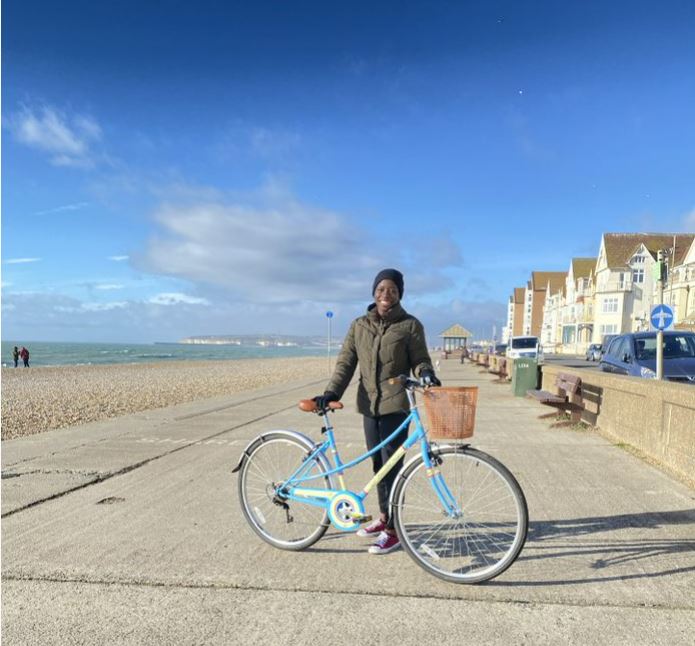
Peace Onyehanere by her bike

Can you tell us about your background? 
I am a self-taught software developer studying at Birkbeck to get a degree in Computing. Before joining Birkbeck, I did a diploma in Computing, and I worked as a software developer in Nigeria. 

How did you hear about Birkbeck?  
I found Birkbeck from an alumni’s LinkedIn profile. I got curious and did some research about studying at Birkbeck. I decided to choose Birkbeck as my first choice as I liked the evening studies, and I also had the best experience reaching out to lecturers for my course to ask questions. 

What is it like living in London?  
I watched a couple of YouTube videos on living in London and transportation in London so the first time I had to take public transport, I thankfully did not get lost. Google maps also came in handy. I always made sure to ask the driver when I got on the bus to be sure I am on the right bus. I shop at cheap supermarkets to save some money. There has not been any lockdown since I started studying. But there have been more cases of Covid-19 and new variants at the end of term one. I then had my classes online and I have enjoyed it.  

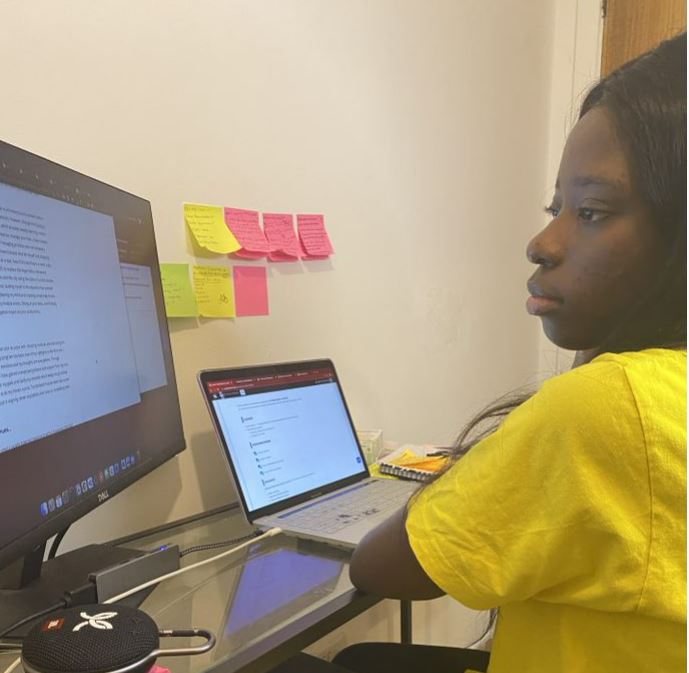
Peace Onyehanere at her desk

Can you tell us about your studies?   
I have honestly enjoyed online teaching over in-person teaching. With virtual learning, the classes are recorded, and you can refer back to it after the class. There are also reading material and pre-recorded videos you can go through before the class. Each of the courses I have studied so far have been three hours long. But we do have breaks in between the class. There is also a support class provided on weekends where you can ask more questions and get help. 

How is a typical day for you? 
I work as a Frontend developer at a FinTech company. I started job hunting before moving to the UK. I got a couple of offers before arriving, but I got the offer for the company I currently work at while in the UK. A typical day for me starts with work and ends with a lecture if I have one that day. As I work from home, I don’t have to go out. I try to go out and explore my environment, but I am mostly indoors all day. 

Have you used any of BBK support services?  
I have followed Birkbeck Futures and attended the last event organised. I have also had the opportunity to be mentored via the Mentorship program. 

What have you found most challenging about your time in the UK so far? 
I have had a great time in the UK. The one thing I have found challenging is the weather and the short days. I look forward to a great time at Birkbeck and meeting more people. 

Further information: 

Meet Astrea: Anna Phillips, Deputy Director of Estates Resources

In the first in a series of interviews with members of Astrea, we talk to Anna Phillips, the Deputy Director of Estates Resources at Birkbeck about how she pivoted from being an air hostess to her current role, what inspires her, and how she unwinds.

Anna Phillips on some scaffolding net to her colleague Can you tell us a bit about your career journey so far?

I never had a career plan until I came to Birkbeck. It was frustrating as most of my friends had some kind of idea of what they were good at and what they “wanted to be”! I knew I was always good at being practical, organised, and “building and fixing things” but I went to a school very focussed on academia and so didn’t quite fit into their ideals of Doctor, Lawyer, Politician etc.  Had there been more emphasis and support for alternatives I would probably have accessed Estates and Project Management much earlier on, rather than via a combination of circuitous routes and happy accidents!

I ended up doing German Language and Literature at the University of Kent purely because I liked languages and literature but with no intention of using it in any of the career paths that usually follow. Four years later, armed with a degree I had no idea what to do with, and none the wiser as to what to do next, I saw a job advert for London-based but German-speaking Lufthansa flight attendants. It was the perfect first job for me – languages, travel, organisation, responsibility, accountability, teamwork and self-confidence. Two years later, after 9/11, there were a huge number of redundancies, and I was again jobless and unsure what to do next. I intended to temp or find something short-term in order to return to flying when the dust settled, but the job and the industry were never the same after that and recruitment never returned to pre 9/11 levels.

And so, I ended up at Deutsche Bank (DB) as a contracted worker, again by chance really, having got an interview on a recommendation from a friend who already worked there. Whilst I was grateful to only have been out of work for a couple of weeks, I couldn’t stand the corporate atmosphere, which made for a stifling work environment. I don’t even know how I got stuck there for so long – I worked my way up from Reception to Room Bookings Co-ordinator, arranging meetings, conferences, and events and managing a weekly rolling team of six out of a full 40. The saving grace was that I liked the job itself, managing teams, and organising the use of rooms and the Estate. I didn’t even realise that “Room Bookings” was an actual job title until the sister of a colleague who had just graduated from Birkbeck sent her a job role listed as Room Bookings Team Leader – a job advert she then sent on to me as it described almost word for word the job, I’d been doing for 10 years! Two weeks later I had the interview at Birkbeck and an hour after that I’d been offered, and accepted, what would become a life-changing role.

And so, where my previous role had broken me, left me with no confidence in my abilities and no vision to excel or succeed, Birkbeck stepped in, picked me up, dusted me off and built me back up. I was enormously lucky to have a line manager who encouraged me to take on more and more responsibility, who trusted me and saw the career path that had eluded me, and so fortunate that Birkbeck gives the support, training and encouragement to those who want it. I took on various different aspects of Estates and learnt the integration needed specific to higher education and the different requirements and demands an Estate needs to provide for that setting. I became Commercial Services/Room Bookings manager in 2014 taking on the financial management for both Commercial Hire and External venue contracting along with more input in to the use and upkeep of space as well as the potential for future estate expansion. Because I finally found my career and niche, I was able to keep expanding into Estates and areas I found interesting and took on more of an Estates role within the wider college, resulting in becoming Deputy Director of Estates Resources in 2019. So, there we are – I took the long way round to the place I should have started if only I’d known, but it was all worth it to have a career I love, in a company whose ethos I agree with and support, and to be part of and help lead the most fantastic department.

What are some tips for success?

Be confident in your abilities, if there is something you want to do, or think can be done more efficiently just say so, you’ll be surprised at what you can achieve if you take ownership of something, no matter how small. Don’t limit yourself, look ahead to what you really want to do or where you want to be, and aim for that. Find the things you like and are good at even within something challenging or unknown, and take advice and support from colleagues in other departments to round out your knowledge and ability outside of your comfort zone.

What advice would you give to someone starting your career/field?

You need to experience all the facets of Estates – room bookings and events is a good place to start as you get a huge amount of knowledge about all different areas, demands and expectations that you need to know about going forward. Estates is weird, because the implications and use apply to absolutely everyone, it’s not an area specific to one person, group, department or faculty – it has repercussions for every single person coming through the doors, so the broader your knowledge the better.

What was the last thing you read/heard/saw that inspired you?

I’ve just read Shoe Dog by Phil Knight, the founder of Nike. The man went from selling shoes from the boot of his car to an annual sales return of 30 billion dollars – but mostly he writes about how much he loves shoes, which is perfect – Do what you love!

What do you do to unwind after work?

When my workload is steady, I go out with friends from work or home, see family, potter round the house “fixing” things, wonder why my cooking doesn’t look like it does on MasterChef, binge watch TV…the usual 😊

At “peak” times of the Estates year, I sit in a dark room with a bucket of wine and a straw.

Astrea is a grassroots network for women, transgender and non-binary people in professional and support roles. Find out more on the Birkbeck website.

Birkbeck supports London AIDS Memorial on Tottenham Court Road

Today, the College marks World AIDS Day to show support for people living with HIV and to commemorate those who have died from an AIDS-related illness; with the memorial serving to remember lives lost, a history marred by discrimination and the current impact.

World Aids Day Memorial site

Birkbeck is proud to support AIDS Memory UK, founded by Ash Kotak, with their campaign to create a London AIDS memorial and is delighted that the confirmed site is on Tottenham Court Road, next to Goodge Street Tube Station – one of the stations closest to the College.

AIDS Memory UK created the memorial as a ‘unifying national focal point to remember the lives of those lost to HIV and AIDS’. The central London location was chosen due to its proximity to the former Middlesex Hospital, which housed the first AIDS ward and was opened by Princess Diana in 1987. It was at the opening of this ward that, in front of the world’s media, Princess Diana shook hands with an AIDS patient at a time when there was global panic about transmission from touch. The site is also within close distance to James Pringle House, the STD clinic that saw some of the first patients in the UK, and the Bloomsbury Clinic, the busiest HIV clinic in the UK.

Daniel Monk, Assistant Dean for Equality in the School of Law, helped coordinate support for the memorial across the University of London and hopes that “the memorial will not only serve as a place of remembrance, but encourage academics and students to think about the place of HIV/AIDS within their programmes; from virology and global pandemics to grief and care, and the impact of stigma, discrimination and inequalities; HIV/AIDS has so much to teach us across every discipline”.

Creating this memorial is important as a way of remembering the many people who died and the discrimination they faced, as well as the ongoing impact of HIV/AIDS on so many people around the world. According to statistics from the Terrence Higgins Trust, the most recent estimate suggests that there were 105,200 people living with HIV in the UK in 2019, with London continuing to have the highest rates of HIV in the country – 36% of new diagnosis in 2019 were London residents.

Further information:

“One of the biggest misconceptions about finance is that it’s investment banking and that’s it, but I feel there is a role for everyone.”

Joseph Walsh studies BSc Financial Economics alongside his role as a Front Office Services Analyst at an asset management firm. Now President of Birkbeck’s Economics and Finance Society (EFS), he shares how the EFS has supported his career journey and his vision for the future of the society.

Joseph Walsh wearing a suit and tie against a white background.Why did you apply for BSc Financial Economics at Birkbeck?

After my A Levels, I went straight into work as an apprentice in Cyber Security. I started earning my own money and became more interested in investing and the world of finance, so I was keen to pursue further education and a career in finance and investing. I really liked the flexibility of Birkbeck’s evening study format, which allowed me to work and study at the same time. The course modules looked really interesting and had a good balance between economics and finance.


How did you get involved in the Economics and Finance Society (EFS)?

I found out about EFS through the Students’ Union at the start of term. It was one of the more prominent societies in the School of Business, Economics and Informatics and had a good range of ongoing events and activities.

One great guest speaker who sticks in my mind is an investor called James Hughes, who gave a really useful introductory talk about finance and investing. At that point, he was running his own private equity fund in Hong Kong, so it was really interesting to hear his experience of working in different locations and areas of finance.

What is your vision for the future of EFS?

As President of EFS, I’m looking to direct the society to cover two distinct areas. Firstly, the networking and social aspect, because it can be difficult to socialise spontaneously after class when everyone is juggling work and busy lives. I’ll be pushing for more structured events and activities. It could be something as simple as arranging a time for members meet at the student bar, but hopefully going forward we can host socials around London and do a range of different activities to get to know one another outside of lectures.

Secondly, and just as importantly is the technical knowledge and experience that you can get from having experts giving talks and speeches. That’s a really important part of the society and it’s something that is unique to EFS to hear from experts across finance and economics. It’s been difficult to replicate our networking events online, especially during exam term, so we’re looking forward to hosting in-person events when restrictions allow. In the meantime, we’ve been sharing useful industry-led content on our website and social media pages.

What are your career ambitions after Birkbeck?

I consider myself fairly lucky in that I know what I want to do in terms of a career and how to get there. I’m really interested in asset management, basically investing across the markets, so I’m strongly considering doing a master’s after my undergraduate degree to develop my knowledge and technical skills. Looking further ahead, I would like to go into some kind of investment research role. The dream role would be a portfolio manager, but I acknowledge that it’s quite a competitive field!

I appreciate that some people might not have that clarity of what they want to do, and that’s something that I and the other committee members are trying to address through the society. Through networking, talks and the different resources we post online, we can help people figure out what they’re interested in and whether they want to take economics and finance further and develop a career in it. One of the biggest misconceptions about finance is that it’s investment banking and that’s it, but I feel there is a role for everyone. Even for undergrads that haven’t got their degree yet, there are a variety of trainee schemes available. That’s how I started and was able to get a role at an asset management company.

Stay up to date with the EFS on Twitter, Facebook, LinkedIn and Instagram.

Further Information:

Do you know the significance of Chinese New Year?

Preparations for Chinese New Year, also known as the Lunar New Year and Spring Festival, started on Thursday 4 February and will last until New Year’s Eve a week later. It’s the first year those observing China’s longest festival, celebrated in many parts of the Far East and beyond, will do so with social distancing and a full lockdown in the UK.

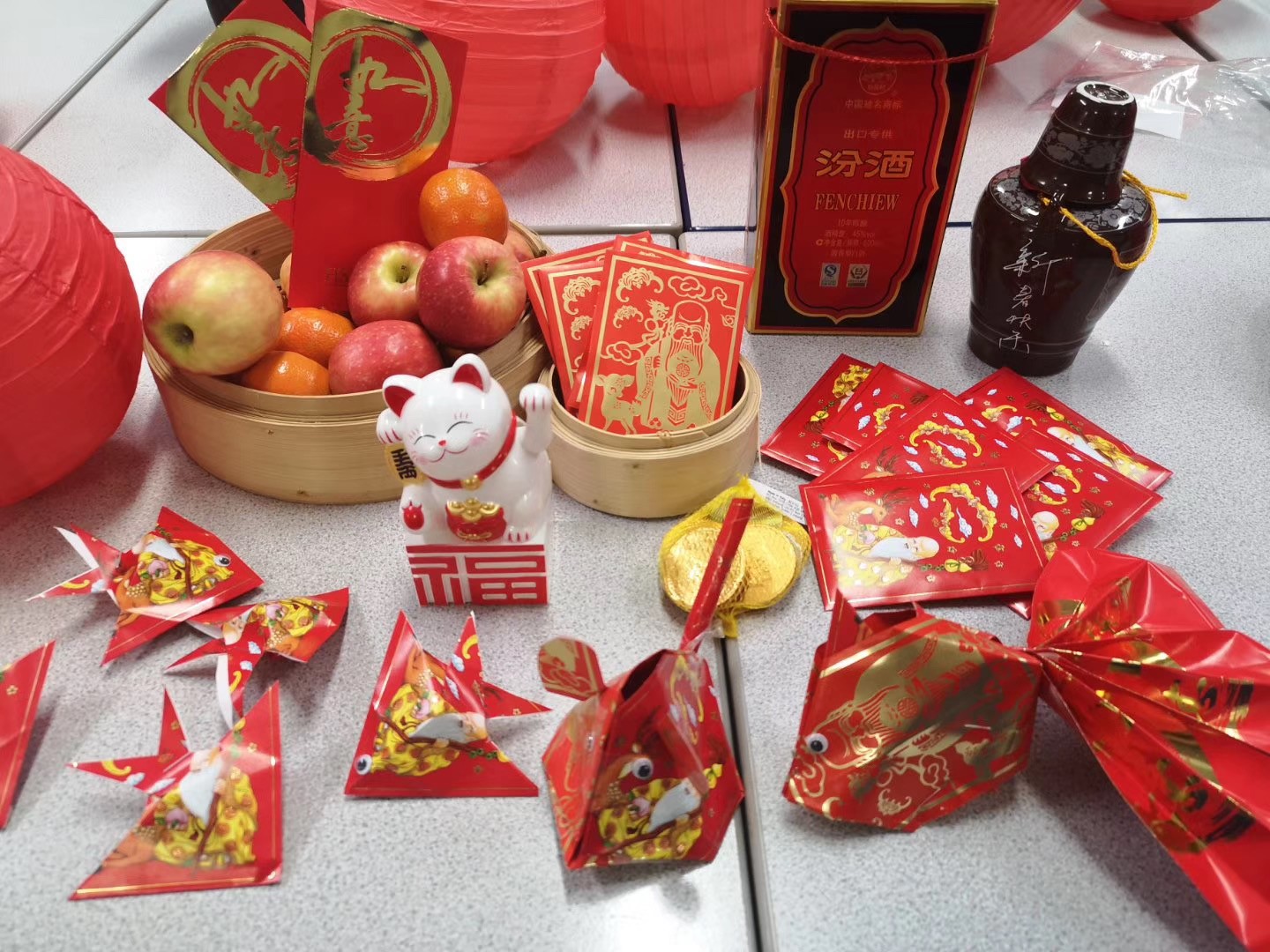
This is a photo of red Chinese New Year celebration items

Given the social restrictions, how will people be celebrating this year?
Organisers have been creative with their events, pulling most online. Birkbeck’s Chinese Society will be putting on an event, including a quiz and other activities, to commemorate Chinese New Year. This is a free event, open to all and can be accessed here.

There’s also the digital tour of Chinatown by Chinese Arts Now. Their festival starts right after Chinese New Year, from 15 February- 15 August and will feature performances and art installations. The National Maritime Museum, Greenwich, will also be putting on workshops, performances and storytelling online to mark the festivities on 13 February.

Will any of the usual traditions hold?
It’s very likely Chinese people will still observe the usual customs including sprucing up and decorating their homes with red lanterns and other decorations, having a dinner of fish, said to bring good fortune, and will stay up until midnight for fireworks to ward off any bad spirits.

So, what do you wear for the New Year, which is officially marked from 12 February until the Lantern Festival signifying the end of the celebrations on 26 February?
Well, if you’re born in any of the following recent years: 1961, 1973, 1985, 1997, 2009 or 2021, it’s highly recommended you adorn yourself and your house in red for the rest of the Chinese calendar year, which runs from February 12 2021 until January 31 2022.

Why?
Superstition has it that red, white, green and yellow will bring good fortune to those born in the Year of the Ox; who otherwise will be beset by bad luck according to Chinese astrology.

But isn’t red synonymous with bulls?
Well, yes, but 2021 is the Year of the Ox, specifically, which we all know is the bull’s close relation. The chinese calendar has quite a methodical way of assigning the ox to set calendar years.

What’s the significance of the Ox?
The Chinese zodiac has determined 2021 the Year of the Ox, an animal celebrated for its strength and reliability; and is the second of the zodiac animals.

Are they all animals?
They do, indeed, all happen to be animals. The Chinese zodiac is split into 12 blocks/houses, each with a one-year time span and an associated animal. Last year was the Year of the Rat and next year (2022) will be the Year of the Tiger. Though, bear in mind, with the start of the calendar falling between the end of January and the end of February, there’s some overlap with animals in any given year. The animals come around every twelve years.

So, does the calendar run with the smallest animal to the largest?
Not quite. Chinese folklore states that the Jade Emperor had beckoned 13 animals and thereafter named the years on the calendar according to the order in which they arrived.

13 animals?
Yes- one dropped out of the race. A very unlucky cat who is said to have drowned in the race. Not to be confused with the lucky cat charm, Maneki Neko, the Fortune Cat which is believed to bring good luck to its owners and is known for its signature wave.

Are there observations one should make in making sure they enjoy prosperity and good fortune?
Absolutely. Those celebrating are likely to skip a porridge breakfast on the Lunar New Year so as not to start the year off ‘poor’; and don’t expect to see them doing any work involving scissors or needles either, as this is said to lead to a loss of wealth.

We extend our well wishes for a safe, prosperous and Happy New Year to all within our community who are celebrating.

Read more about Birkbeck’s Chinese Society.

Joining instructions for Birkbeck’s free event here.

Find information for our International Student community.

See how Birkbeck students celebrated Chinese New Year last year (2020).

Diwali is the festival of light and new hope!

With the recent Diwali celebrations, Professor Sanjib Bhakta, Professor of Molecular Microbiology and Biochemistry, reflects on what the festival means to him.

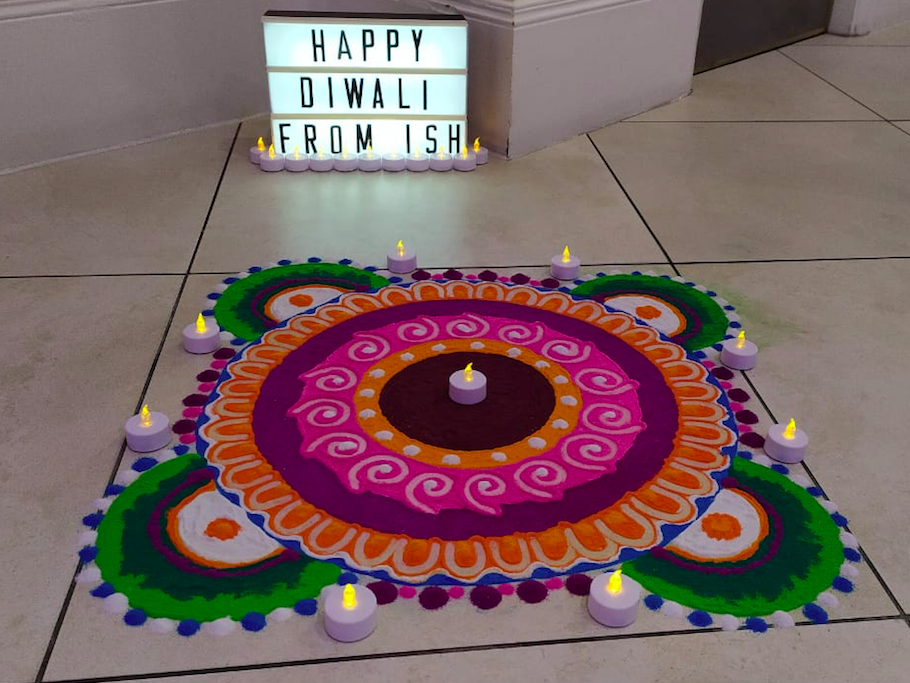
Mousumi Shyam, a Newton-Bhabha International Fellow at Birkbeck’s School of Science, has celebrated Diwali by decorating the International Students House with the traditional ‘Rangoli’. The purpose of the colourful design, ‘Rangoli’ is to feed strength, generosity and it is thought to bring good luck.

Diwali follows the epic story of ancient India: “Ramayana” to represent the victory of good over evil and light over darkness. The symbolism of Diwali is appropriately summarised in the simple act of lighting a lamp or ‘diya’. These are said to ward away evil and welcome the Goddess Lakshmi (the Hindu Goddess of wealth and prosperity) into the house.

The positive vibe that comes with the Diwali festival is more relevant worldwide in this challenging year than ever before with the unprecedented pandemic. During the second phase of lockdown in the UK, while we should strictly follow the Government guidelines on social distancing, face covering, good handwashing routine and patiently wait for a better control for the debilitating infectious disease to be available to us, I have been celebrating this ‘Diwali’ with my family at home and with all of you remotely over the weekend by lighting ‘diya’! Let us together give thanks for all we hold dear: our health, our family, our friends and to the scientists, NHS staff, and all the key workers who are working relentlessly to tackle the health challenges this year…

I moved to the UK precisely two decades ago but I still miss India when It comes to celebrating Diwali! To all the staff and students at Birkbeck, University of London I wish you and your family a very Happy Diwali!

Take care, stay happy and celebrate the festive season with all the available precautions and protections.

Why a Black History Month?

October marks Black History Month in the UK, a celebration of the history and achievements of people of African descent. In this blog, Rebekah Bonaparte discusses why Black History Month is still as important as ever. 

Claudia Jones

Claudia Jones is credited with creating the UK’s first black newspaper, the ‘West Indian Gazette’ in 1958, she has also been described as the ‘Mother of Notting Hill Carnival’ for her part in its founding.

Among the many challenges 2020 has brought, the conversation around racism and inequalities came to the forefront for many with the resurgence and prevalence of the Black Matters Movement following the murder of George Floyd in the US. The effects of this were felt here in the UK, and the subsequent conversations around inequality and belonging in Britain serves as a strong reminder why Black History Month is still as important as ever.

Black History Month was first established in the UK in October 1987 in London. It was organised by Ghanaian analyst Akyaaba Addai-Sebbo who served as a coordinator of special projects for the Greater London Council. The month was adapted from the United States Black History Month that began in the 1920s, and was established in response to heightened racial tensions in the UK.

Prior to it being established, there had been riots in the 1980s, and throughout the 20th century, which left the burgeoning Black British population relegated to outsiders, and marginalised, separate from the British cultural identity which was perceived as representing the interests of only the English.

The creation of Black History Month served as a way to celebrate the black people living in Britain, at a time when the denial of black people’s contribution to history was limited to the horrors of slavery.

In his book, Black and British: A Forgotten History, British Historian, David Olosugo notes that the “uncovering of black British history was so important because the present was so contested.” So, to highlight black people’s place and belonging in Britain, Black History Month serves as a welcome reminder that black people come from a long tradition of people who have enriched this country and beyond with their culture.

There is a rich and relatively unknown history of Black people within the UK that does not feature on the national curriculum, a glaring oversight considering the range of backgrounds that are seen in British schools, around the city and while diversity has become a buzz word in business and beyond, it is important to acknowledge and celebrate this history at all levels of society. It’s through history that we form our collective identity and therefore in studying blackness in the British context we can, in one-way, foster inclusion and pride.

To be clear, black history should feature in all months of the year, but setting aside a month when black people and their contributions can be marked and celebrated and brought to everyone’s attention should not be taken for granted. Black people have done so much in this country and continue to influence and shape culture, a fact that should never be forgotten.

Further information:

“Birkbeck was the only university offering the exact course I wanted to do”

A desire to specialise in innovation and electronic business led Nigerian, Ayomide Disu, to enrol on Birkbeck MSc Business Innovation with E-Business.  In this blog, the recipient of one of Birkbeck International Merit scholarship, tells us about his background and life in the UK.

Ayomide Disu

Ayomide Disu, MSc Business Innovation student from Nigeria.

Tell us about your background. What were you doing before you started studying at Birkbeck?

I am originally from Lagos, Nigeria. During my teens, I came to study at a boarding school in Gloucestershire in the UK. Following that I went on to the University of Central Lancashire and Cass Business School for my BSc and MSc respectively. Prior to Birkbeck, I was working as an independent consultant/advisor to a non-profit organisation in which I collaborated with C-Level executives and other stakeholders to gain an understanding of the business process which lead to bridging the communication gap between management and employees. I also suggested, pitched, trained and implemented the use of software such as Slack to increase productivity and pitched and developed a new website and algorithm for organisation operations.

Why did you decide to come to Birkbeck?

Studying management twice has its pros and cons, the understanding of different functions and different models of business are some pros, but the drawbacks are the overlap in knowledge and a lack of specialisation.

I wanted to specialise in innovation and electronic business which is what has led me to undertake a second postgraduate degree in that subject. I could have studied at Warwick and Newcastle, but I choose Birkbeck because I wanted to be in London, and it was the only university that had the exact course I wanted to do.

I attended orientation and it was quite useful just to get a feel for the surrounding areas, the Library and all other facilities. Birkbeck is unique as it’s the only place that gives working professionals the chance to study and work simultaneously (not that I’m working). However, for me as a full-time student, it allows me to be flexible and manage my time as I don’t have classes till 6 pm. However, although we don’t have lectures until night-time, there is still plenty of work to do in the day, so managing your time effectively is a must.

What it is like living in London?

The UK generally and London feels very much like my second home as I have been coming here since I was two years old for holidays and family gatherings. For me moving was quite simple as I had lived here when I was studying for my first masters.

Transportation is quite straightforward and efficient, and I love London as it’s so multicultural and has one of my favourite places in the world (Ronnie Scott’s).

What have you found most challenging about your time in the UK so far? What have been your highlights so far?

The only challenge for me personally is the weather and lack of sun, but I think it’s all part of the experience and I’m grateful. In terms of actual study challenges, I feel that the university could do better in bringing together the full-time students, so a sense of community may be fostered outside of the classroom. My highlights so far have been taking modules such as intellectual capital, digital creativity as they are so unique and give me a fresh perspective on how I approach business. Also, the friends I have made are lovely. I am looking forward to taking the block chain and entrepreneurial finance modules in the summer term, hopefully getting more sun and submitting my dissertation.

The advice I would give to prospective students would be to get involved in activities you enjoy, cultivate a habit of exploring different friendship groups outside your nationality and bring an umbrella.