Category Archives: Humanities and Social Sciences

My experiences of a year abroad as one of the last Erasmus students in the UK

Johanna Frank is on a year abroad studying BA Film and Media as part of the Erasmus programme. In this blog, Johanna shares how she is finding her year abroad and living in student halls.
Johanna Frank

When the application period at my home university, the Leuphana University Lüneburg in Germany, opened for the Erasmus programme, I jumped at the opportunity to study in Birkbeck’s Department of Film, Media and Cultural Studies. I knew a number of people who had been on the Erasmus programme, and no matter who I asked, their answer was always the same: the exchange was the best experience they’d ever had – intercultural exchange, a new city, new country, more people than you could count and a whole new way of experiencing studying.

I was happy when I found out I had been accepted onto the programme, and now here I am, one of the last Erasmus students in the UK, as with Brexit, the UK government pulled out of the Erasmus programme. The UK government has since created the Turing Scheme, a replacement for the Erasmus programme, which provides funding for international opportunities in education and training across the world.

It’s been interesting comparing the UK to Germany; the academic system in the UK is not that different to Germany. But evening studies are very new for me and as an early bird I’m still struggling a bit to find the energy to contribute to the seminars. It is another experience! During the day, I mostly discover London and the area around my student halls. I got a membership in the local gym, found a job at a small coffee shop around the corner and see my friends every day. I’m part of the Birkbeck badminton team, which is a lot of fun. I also got a Student Art Pass which makes it possible to enter a lot of exhibitions and museums for free and in my remaining time on my year abroad I plan to discover as much as possible.

This term, I am looking forward to the modules ‘Principles of Layout and Design’ and ‘Gender and Sexuality in Cinema’. I am especially curious for the latter! At my home university, I am taking modules to receive the Gender Diversity Certificate. The certificate is one of the elective profiles at the university. It is for students wanting to commit their complementary studies to learn in-depth about one certain topic. Gender studies, equality and feminism are not only at my university an important and present topic, the whole city, Lüneburg, is super open and questions patriarchal structures. I’m taking the seminars on a voluntary basis as I’m really interested in the history and recent developments of feminism. Coming to London, it was weird at first, as I didn’t feel the same spirit of “let’s change the system”. But that is why I’m even more excited for the module, just to see how other students think and how present the topic is in their daily lives.

Further information
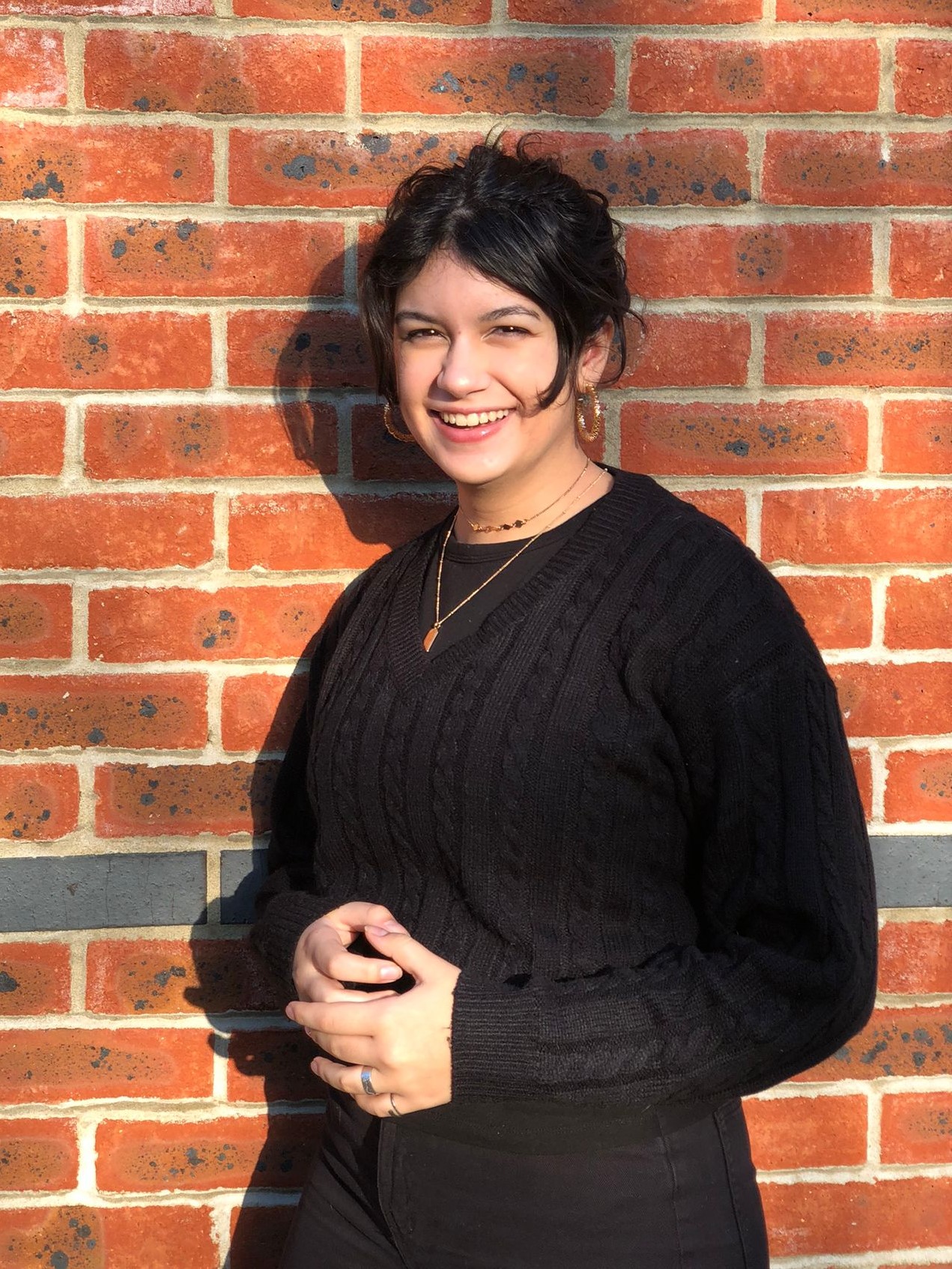
My favourite things to do in Bloomsbury

Valentina Martinez, BA Film and Media with Foundation Year student, shares her top tips of places to go and things to do in Bloomsbury, central London, where Birkbeck’s campus is located. 

Valentina Martinez

A key reason I chose to study at Birkbeck was its central London location. Located in Bloomsbury, it is in a student hub, with other universities close by and world-famous museums and galleries quite literally on your doorstep. I’ve shared below just some of my favourite things to do in Bloomsbury and the surrounding areas.  

Places to eat 

From pubs to museums, Bloomsbury is surrounded by incredible places to hang out, either before or after your evening classes. Let’s start with places to eat. Even though Birkbeck offers its own rooftop bar in the main building and cafes in different areas of campus, if you ever fancy a change of scene, there’s so many options to check out. 

In Gower Street, facing Birkbeck, you can find a beautiful building which houses Waterstones. Not only is it a fantastic bookstore with more than two floors filled with books, but it also has a  café attached to it that offers a pleasant place to have a nice hot chocolate or just to sit down and read before classes.  

However, if you’re in the mood to eat something I highly recommend going to DF Tacos, a Mexican restaurant with exquisite tacos and a great modern atmosphere. You can find this place on Tottenham Court Road near the British Museum. Finally, if you’re looking for somewhere to hang out after classes and have a few drinks I would go to a pub called The College Arms, located on Store Street, just five minutes from Birkbeck. It’s a lively pub filled with students, music and good drinks and it’s a great place to socialise and meet new people.  

Museums, cinemas and gardens 

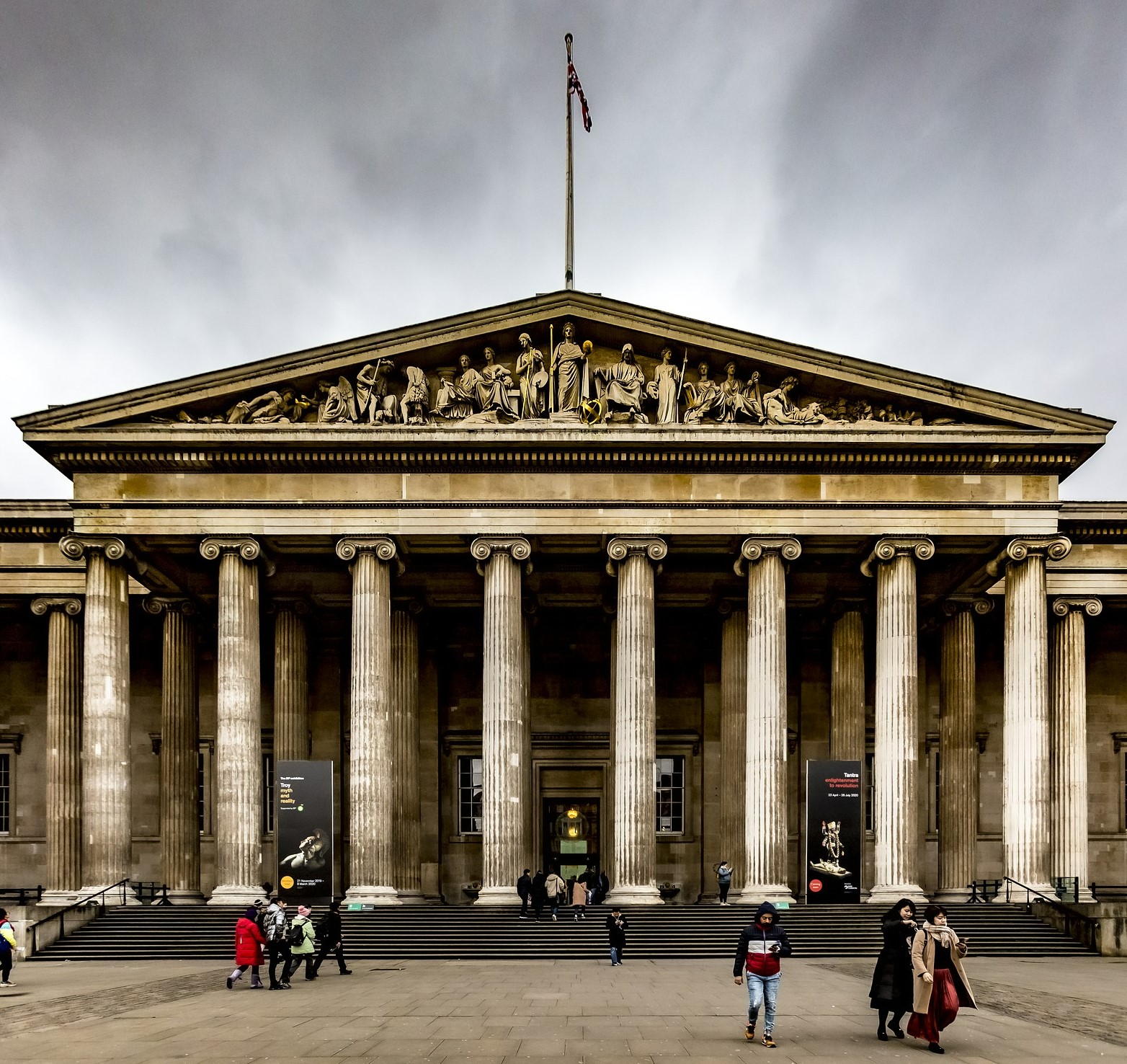
There are so many other exciting things to do in Bloomsbury aside from eating out. Firstly, there is obviously the British Museum. With its back entrance facing Birkbeck, this museum is a fantastic hangout spot to learn and even get inspiration for your future assessments. It will probably take you more than one day to walk through this enormous place, so you can visit it often and still find something new each time. You don’t even have to pay to get into the exhibitions.  

British Museum

British Museum

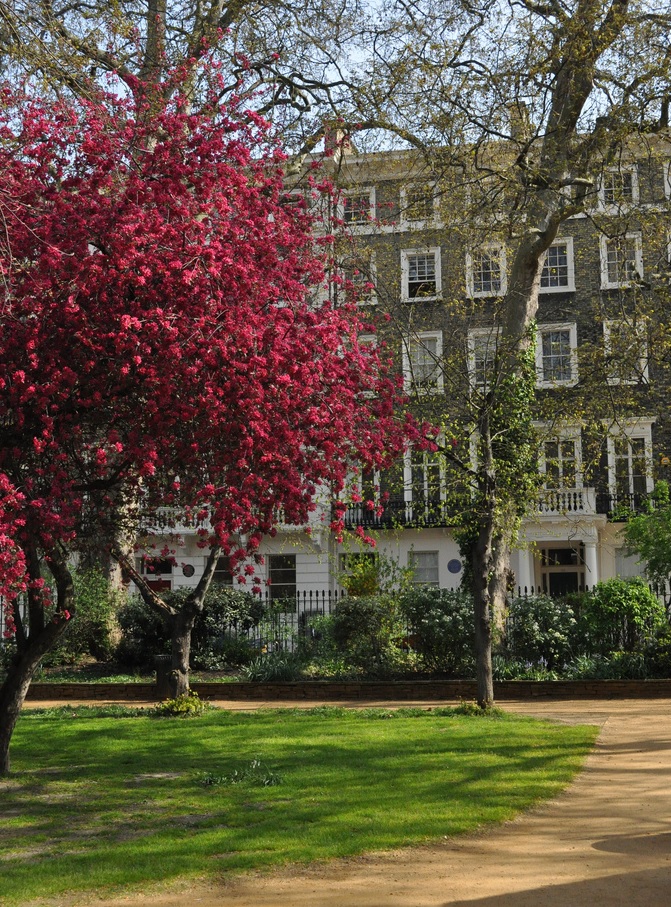
Next, if you have enough luck to enjoy a sunny day in London you will probably want to make the most of it. So, I would recommend heading towards Russell Square, which is right next to Birkbeck. This beautiful park has a lovely fountain with benches so you can soak up the sunlight or sit in their wonderful café. It is usually filled with kids playing football and people doing sports, so if you’re a sporty person yourself you can also have a workout there! I still can’t believe such a gorgeous green place exists in the middle of a busy city like London.  

If you enjoy watching films, Birkbeck has its own cinema in the School of Arts building, located at 43 Gordon Square, so do keep your eye out for upcoming film screenings. I would also recommend going to Picturehouse Central in Piccadilly Circus. I know this is not quite on campus, but this cinema has a stunning vintage aesthetic which is definitely worth the walk. It has the newest film releases and even a restaurant and café. If you’re a student, you will get student discounts on your tickets so you should without doubt check it out.  

As you can see, there are a lot of things to do around campus, and I have only told you about a very small percentage of attractions that Bloomsbury has to offer. I encourage you to go ahead and discover more things on your own, I can guarantee you will find hidden gems everywhere! After all, you are in the heart of London if you come to Birkbeck – there is bound to be something exciting around the corner for you to enjoy.  

Further information 

Birkbeck academic makes the ‘Disability Power 100’ list

Professor Martin Paul Eve (School of Arts) has been named on the Shaw Trust’s ‘Disability Power 100’ list, which celebrates the UK’s most influential disabled people. Here, he shares his own experience with a disability and speaks on both the ongoing challenging environment for the disabled community plus their heightened visibility.

Professor Martin Paul Eve

Q1) What does it mean to be one of the 100 finalists, selected from over 550 nominations?

This is an important award for me. My health and disability have played majorly detrimental roles in my life and it’s something I have to fight against almost every day. To be recognised as successful in spite of this is, I feel, extremely important, although celebrating the achievements of disabled people who do well should never be used as a comparator to people who aren’t able to ‘overcome’ their own challenges to the same extent. I am fortunate, in many ways, to have got where I am and luck plays a huge role.

Q2) Shaw Trust uses the annual event to highlight how businesses, and others, can champion more opportunities for the disabled. What progress have you witnessed at Birkbeck with respect to this?

Birkbeck is committed to the Disability Confident Scheme and I applaud that, but I would like the College to go further. I have co-chaired the Staff Disability Network for the past year and it’s clear that we have the opportunity to make a step change around disability in the same way that we have seen for gender and race. But it needs people to prioritise it.

Q3) In your view, what are the most critical issues facing the disabled community in the UK?

Disabled people, or people with disabilities (this terminology is contested), face continued persecution in their day-to-day activities. This should be unacceptable in the twenty-first century. That is why I am pleased to stand up and declare my status from a position of relative privilege. The ongoing impact of the pandemic also affects this group disproportionately. It is still not safe for me to leave the house and I remain in lockdown/shielding, despite the withdrawal of government support for people in this group.

Q4) What more can we all do to address those issues?

The visibility of disabled people does a lot to help. The Paralympics, actress Rose Ayling-Ellis on Strictly Come Dancing and the Shaw Trust’s list are all ways of showcasing the rich lives of disabled people, as people. But we also need a more empathetic society; one that values disabled people’s lives. In the past year, 60% of deaths from the pandemic have been disabled and vulnerable individuals. Writing this off as collateral is simply barbaric.

Q5) Disability History Month is being observed later this month (18 November). What value do you see from such events and how would you like to see people getting involved?

Disability History month is an important way in which the complex historical narratives about disability can be brought to greater attention and used to alter how disability is perceived in our present. For example, not many people outside of disability studies know of the ‘social model’ of disability, in which disability is seen as a socially constructed phenomenon. That is, rather than a person ‘having’ a disability, they are disabled by society. A good example is the use of stairs instead of ramps. It’s not that the person has a dis-ability to get to the top of the stairs, it’s that the societal choice to use stairs rather than an accessible ramp caused the disability. Disability history month is a time when we can celebrate the achievements of the disability rights movement and use this space to educate people about issues like this.

FURTHER INFORMATION

A day in the life of a commuter

Valentina Vlasich, BA Film and Media with Foundation Year student, commutes from Milton Keynes for her work and lectures at Birkbeck. In this blog, she offers advice to other students commuting and explains why living outside of London is the perfect solution for her.

Valentina Vlasich

Commuting to university, a total nightmare according to some. A waste of time according to others. But living in the heart of London can be expensive, so many of us don’t have any other option but to commute. The issue, I believe, is that there are many misconceptions about commuting. For instance, that you can’t have a social life, that you must spend hours on a train or that you won´t have a true university experience if you do it. All of this, according to my experience, is not true. So let me give you some tips on how to make the best use of your day and money, and show you what a typical day looks like for me, a commuter in my first year of university.

My day starts in Milton Keynes. I try to get up as early as possible to fit in my workout routine and get ready. If I have the time in the morning I also catch up on lectures and take notes for my next class. When the time comes to go to the train station, I cycle there which takes me 10 minutes, and I usually take the train at noon, which gets me to London in about 40 minutes. A great tip for commuters who take the train is to check out the National Rail Railcards, which reduce your travel costs by a substantial amount. For example, I bought the railcard for 16 to 25-year-olds, which cost £70 and it saves me a third on rail fares for the next three years. Another hack is to get on trains that are off-peak or super-off-peak because they are cheaper, you can check this out on the Trainline website. When I arrive at Euston Station it’s only a 10-minute walk to my work which is at Birkbeck. After that, I usually have about two to three hours before my classes begin at 6pm.

So, what do I do in my spare time in London? Well, a lot of things, but my top recommendations, which aren’t far away from Birkbeck, are the following: the British Museum, which is just around the corner; Chinatown, which is a great area to enjoy a variety of food; and, if you don’t mind a little walk, Southbank has a great vintage book market that I love. Sometimes, when I have a lot of time to spare, I plan my day and visit a Picturehouse cinema or a theatre in Soho with a friend. And for those lazy days, I just grab a coffee and sit in Russell Square reading a book (it’s also a good park to have an outside workout). After that, I head to my classes.

Most of my classes are three hours long, so when I finish it’s already dark outside. Sometimes I head straight to Euston Station and go home, other times I stay for a while in London and go to a pub with my friends. There are also many nightclubs in London to check out. However, when it is one of those days when I go home earlier, I tend to take advantage of my time on the train and complete homework.

As you can see, commuting isn’t the end of the world. It even helps me make the most out of London because not living there makes it more exciting to visit. It also forces me to have a more established routine and helps me make the most out of my day. Therefore, from one student to another, I wouldn’t worry too much about commuting, it is part of the experience. Just enjoy your years at university and make the most out of every situation.

Further information

“If you’re considering a career change, I would say go for it – shifting your focus can reignite motivation”

Simon Hayes, Birkbeck Politics PhD student, recently successfully defended his PhD thesis and has since been offered his dream job. In this blog, Simon reveals how undergoing a career change in his early thirties, from being an audio engineer in London to completing a PhD in Politics at Birkbeck, was the best decision he could have made.

Simon Hayes

What was your path to Birkbeck? Why did you undergo a career change from being an audio engineer to studying global politics?

My path to Birkbeck began after a move to London from Canada in 2002 – the initial purpose for this relocation was the aspiration to work as an audio engineer in the music industry. Eventually, I managed to land a job at Mayfair Recording Studios near Camden Town where I stayed for six years. This was an incredible experience: not only was the studio host to the rising talent of that time, but many of the bands and artists I had grown up with would also frequent. By 2009, falling music industry budgets saw Mayfair (and other studios like it) close for good. After a stint of freelance work and a string of unpleasant temporary employments, I decided to focus my energy onto another pursuit.

The idea of studying did not cross my mind: I was 32, I had not been to university, and I was uncertain about whether I could perform in an academic environment. However, whilst travelling to work one day, I saw a tube advertisement for Birkbeck. I went to an open day and decided to study global politics and international relations; shortly after, I met with the programme convener who helped shed light not only on life at Birkbeck, but also the possible educational pathways I could pursue.

I was relieved to find out that Birkbeck offered Certificate of Higher Education programmes and that I did not need to commit to a whole degree; in fact, I did not even need to complete the certificate because the option of taking individual modules was also available. This is exactly what I did: my first module was ‘The Study of Politics’ – an introductory course which, in addition to covering basic concepts such as ‘the state’; ‘sovereignty’ and ‘the international’, also taught us key skills including efficient note taking, essay structure and writing a bibliography. While this served as a necessary first step that would facilitate my future learning, the experience felt revelatory: it wasn’t just that I was learning new things, but it was changing how I thought and viewed the world.

From thereon in I was hooked, I enrolled on further modules in order to complete the certificate and after doing so, went on to complete the full degree graduating with a first-class honours three years later. After spending twelve months completing a Master’s in global politics at the London School of Economics, I returned to Birkbeck in 2017 where I have recently successfully defended my PhD thesis.

What are your main hobbies and passions in life? Where does your interest in global politics and human rights come from?

Although my main hobby and passion in life has been music, the events that took place in the first decade of the 2000s (e.g. September 11 attacks, the war on terror, the Iraq War and the financial crash of 2008) really began to spark my interest in global politics. Throughout my studies, these interests intensified not only because I was engaged with theories and concepts that helped explain these global dynamics; but also because I was sharing this experience with a diverse group of Birkbeck students, some of whom were able to offer first-hand accounts of the issues and places being discussed; for example, Rohingya refugees, individuals from Kosovo who had fled in the 1990s, and former members of the Peshmerga.

As time went on, my research interests became more concentrated, primarily as a result of a module I took on European integration. Here, I developed an enthusiasm for the study of regional and global institutions (e.g. the EU and the UN); I would later fuse this with my passion for workers’ rights to form the basis of my PhD thesis which assessed the impact of the International Labour Organization (ILO).

What are your aspirations for the future? What would you say to people thinking about a career change?

I am interested in research positions within organisations that have a social welfare focus – primarily governmental or public institutions either at the local, national or international levels. I have recently been offered employment with a local authority as an analyst looking at the socio-economic factors driving health outcomes. This will, I imagine, be a challenging role with the potential to make some positive difference and as such, is an exciting opportunity and one that I owe in part to the Talent team at Birkbeck Futures – a service which assists students in their career development.

When contemplating life changing decisions like a career change, especially when it is later in life, it is normal to feel apprehensive and to worry about all of the reasons why it might be too much of a risk. But if you are feeling as though things are stagnating and thinking of such a move, I would say go for it – shifting focus can reignite motivation, especially if it is something you feel passionate towards. This in-turn helps produce the outcomes you are aiming for whether they are career oriented or for reasons of self-development.

I feel Birkbeck is an incredibly important institution that can facilitate this process for individuals in varied and even challenging circumstances. I am grateful to have had the Birkbeck experience and thankful that such an institution exists, I hope to stay connected to it for years to come.

Further Information

Horns and a tail – Satan’s ticket to stardom?

Tom Graham, English and Humanities PhD student, is researching the long and complex genealogy of Satan as it relates to contemporary culture and politics. In this blog, Tom looks at how Satan’s horns and tail may have helped him go mainstream.

If you fancy dressing up this Halloween, you can order these devilish accoutrements on Amazon:

Wearing a bow tie is not particularly associated with the Devil, but sporting horns and a reptilian tail most certainly is. Why?

We might assume that the reptilian aspect connects us directly to Genesis where the serpent first tempted Eve to eat the forbidden fruit. But in fact, Genesis does not at all equate the serpent with Satan or anything demonic. It’s just a talking snake that thinks Eve should be a little disobedient. Why does it think this and where did it learn to talk? Genesis doesn’t tell us, but in the second century the Christian philosopher Justin Martyr cleared up the mystery a little by identifying the snake as Satan himself. Over a thousand years later, Martin Luther ascribed to the Satan-snake a definite motive: having been thrown out of Heaven, he was seeking revenge by spoiling God’s ultimate creation, through introducing sin into humankind.

There is, then, a long association of the Devil with snakes. But what about horns? From the earliest centuries of Christianity right through to the Middle Ages, images of pagan gods were adapted and converted into images of the Devil. This process included importing attributes such as horns. In this representation of the Celtic god Cernunnos, we find both horns (his name literally means “the horned one”) and a very fine snake:

Cernunnos was a god of wild things and wild places, the very opposite of culture and human civilization. Thus, his uncivilized traits leant themselves to Satan, the arch enemy of the divine order of creation. The snake, having become permanently linked in the Christian imagination to one of Satan’s many guises, could be readily incorporated into the Devil’s anatomy as a reptilian tail. As for the horns, they remind us that Satan, like Cernunnos, might choose to adopt a seemingly human appearance, but that’s just for show; at heart, he remains a wild thing; uncivilized, unpredictable and dangerous.

What we see playing out here in the long process of development undergone by the form and image of Satan, is a strong sense of Satan moving fluidly between human and animal forms – or, as is often the case, settling on an uneasy mixture of the two.

William Blake depicts the Devil as a human/animal hybrid

For St Anthony, who was subject to prolonged and repeated attacks by demonic forces when he lived as a hermit, the Devil took not only the form of a serpent but also (amongst other things) a seductive woman. Freudians will at once pounce on the coming together of phallic and libidinal imagery, but since St Anthony died precisely 1,500 years before Freud was born, we must be mindful of psychological readings that belong to an earlier period in history. What we can say, however, is that the Devil’s ability to freely mix-and-match human and animal attributes allows him to slip readily from the elite heights of theology to the common currency of folklore. This is because folklorists who seek to categorize types of folk tales have discovered that no meaningful system of classification can be established in terms of the characters of the stories; exactly the same story can be told with human or animal protagonists since, in folklore (as in demonology), the two are freely interchangeable.[1] Satan, with his inter-species shape-shifting between human and animal, fits right into this pattern.

I believe that although Satanic attributes such as horns and tail were developed by Christian philosophers – i.e. by an intellectual elite – the fluidity of human/animal attributes allowed the conceptualization of Satan to enter more freely into the popular imagination – as we see today when horns and tails are sold online as Halloween novelties. These horns and tail have, I argue, played a part in saving the Devil from languishing in dusty theological obscurity by helping him achieve vitality and renewal in the narrative structures of folklore, native storytelling, and popular culture.

The Devil – instant “brand recognition” across eight hundred years of reinvention and reformatting

[1] Simon J. Bronner (ed.) (2007) The Meaning of Folklore, USA: Utah State University Press, p.103.

Further information


The Exorcist movie: who is the demon?

In this blog, Tom Graham, English and Humanities PhD student, examines the movie, The Exorcist, and delves into the meaning behind the demonic possession of 12-year-old Regan.

If you haven’t seen the classic 1973 movie The Exorcist (and if not, why not?), then SPOILER ALERT. The film centres around the demonic possession of a 12-year-old girl called Regan. During the course of her possession, she speaks in multiple demonic voices, levitates, famously vomits impossible quantities of green goo at the exorcising priests, and – just as famously – slowly rotates her head a full 360º.

The demonic possession of a 12-year-old girl called Regan in movie, The Exorcist

Dramatic as it is in the movie, the head-spinning scene has often been criticized for straining credibility since, by all the laws of human anatomy, Regan’s neck would break and her head would fall off. Which, of course, it doesn’t.

But I believe the head-spinning scene can be justified if we more fully identify the nature of the demon that has possessed Regan.

So, who is the demon? The film never names him, but his identity is in no doubt. In the opening scenes, we see an archaeological site in Iraq, where Father Merrin – the priest who will later lead the rite of exorcism on Regan – has an ominous encounter with the statue of an ancient Mesopotamian demon. Later, the image of this same statue will briefly appear thousands of miles away in the US during the exorcism itself. The implication is clear: this statue represents the demonic entity that has possessed Regan.

The statue depicts Pazuzu, perhaps the most fearsome of all the ancient Sumerian demons. He was associated (as were most demons at this time) with disease and illness. It is not quite accurate to say that the Sumerians believed that demons cause illness as such; rather, they regarded the symptoms of disease as the physical manifestation of the demon. Nausea, skin rashes, fever, aches and pains, swellings, tumours – these things were regarded as the actual embodiment and reality of the demon itself. A sufferer could describe a demon as “clothing itself” in his or her body in the form of disease.[1]

In keeping with Pazuzu’s Sumerian origins, then, we can consider Regan’s symptoms as the physical manifestations of as aspects of the demon. Indeed, there is a moment in the film when, after a long period of increasingly severe symptoms of possession, Regan’s voice and personality are both suddenly completely replaced by those of the demon. This moment is marked by Regan’s eyes turning white and (perhaps in anticipation of the later head-spinning) her throat swelling unnaturally.

But we might now say that, in Sumerian terms, these are not Regan’s eyes and throat anymore. They are Pazuzu’s eyes and throat, just as the personality and voice that were once Regan’s are now the personality and voice of Pazuzu. After all, the demon does not cause the symptoms of possession, the demon is the symptoms of possession.

So, if we continue to follow this line of thought, we can say that it is not Regan’s head that turns 360º but Pazuzu’s. We can’t complain that Regan’s neck would break because it isn’t Regan’s neck at all. It (more or less) looks like Regan’s neck and head, and after she is freed from the state of possession they will once again belong to her – but at that moment both the head and the neck are in fact Pazuzu’s. A human cannot, of course, spin her head right round, but evidently a demon can, and what we are witnessing is a demon spinning its head, not a human. By such logic, the head-spinning scene may be regarded as credible (at least, credible in the world of a film that posits the possibility of demonic possession).

“Possession”, then, must not be thought of here as some sort of spiritual hijacking, whereby one’s soul is overpowered by invading entities who take control of the body until driven out again by exorcism. Rather, we should think of it as a state wherein the human body becomes the malleable clay by which a demonic entity brings itself into physical existence. A lump of clay on a potter’s wheel both is and is not the pot that can be made from it. The lump and the pot are both the same stuff and substance, and yet they are different entities, not least because the pot has qualities (such as holding water) that the lump of clay does not. Similarly, during possession, human and demon both consist of the same stuff and substance, and yet the demonic manifestation has qualities – such as head-spinning – that the lump of human clay does not.

Further information

[1] From Ludlul bel nemeqi, written circa 1500 BCE, Mesopotamia.


How do we experience Satan?

Tom Graham, English and Humanities PhD student, is researching the long and complex genealogy of Satan and the history of Satanic evil. In this blog, Tom delves into how Satan is conceptualised.

Tom Graham

Exploring the genealogy of Satan requires me to pore over a great many theological and philosophical treatises on the subjects of demons, hell, the nature of evil, and so on. What emerges from this line of study are many different intellectually conceptualized images of Satan. But intellectually conceptualizing Satan strips him of the gut-punching terror and dark, dangerous glamour that so defines him. We cannot merely know what Satan is, we must feel what Satan is, otherwise he loses that which makes him what he is.

In contrast, then, to the intellectually conceptualized Satan of theology and philosophy, I am also concerned with the viscerally experienced Satan that we find in folklore, in the common imagination, in pop culture, and perhaps even in nightmares and fears about the dark. This is Satan as he extravagantly appears in movies, in video games, in various sub-genres of rock music, and perhaps even in the knowingly ironic ceremonies and iconography of modern-day Satanic temples.

I see this viscerally experienced Satan beautifully manifested in those cruel (but admittedly sometimes funny) YouTube pranks where an unsuspecting dupe is encouraged to play (or rather, believe that they are playing) a simple computer game whereby they must guide a dot through a maze without touching the walls; the victim’s face draws closer to the screen as they concentrate intently upon the game – and then, after a few silent minutes, there is a terrible scream and the mutilated face of the demonically possessed child in The Exorcist suddenly fills the screen. The victim’s reaction – which can be extreme and result in genuine tears and trauma – embodies what I am talking about when I describe a viscerally experienced Satan. Maybe those poor duped YouTube victims show us how we really ought to react to the concept of ultimate evil – not by conceptualizing it in theological and philosophical terms, but by screaming and hurling ourselves out of our chair.

And yet, at the same time, this viscerally experienced Satan has in no small part been formed and developed by the intellectual conceptualizations of the very theologians and philosophers who (I believe) fail to capture and express the emotionally experienced aspect of Satan that is (I also believe) essential to his nature. There is, then, an intriguing and complex dialectic relationship at work between the “intellectual Satan” and the “visceral Satan”.

Further information

How to get your Birkbeck studies off to a flying start

Student Engagement Officer Rebecca Slegg offers top tips to new students, to help you settle into Birkbeck, get your studies off to a flying start and help you make sure you get the most out of your time here.

  1. Set up a study space at home. If possible, decide on one place where you will be able to study. Keep it free from clutter and other distractions as much as possible and make sure that your family/flatmates know that when you’re there they should avoid interrupting you if they can.
  2. Talk to your friends and family about your course. If the people in your life know why studying is important to you and what it involves, they will be able to better support you throughout your course. They’ll understand why you might not be able to go out every weekend at exam or assignment time. They’ll also be interested to hear about the new ideas and topics you’re now an expert on!
  3. Attend Orientation and the Students’ Union Fresher’s Fayre in September. This is a great opportunity to meet fellow students, find out about life at Birkbeck and join some of the many clubs and societies open to students.
  4. Create a wall planner and use it to map out your first term. Plot on your term dates, exam dates and assignment deadlines. This will help you to know when the pressure points are so that you can plan ahead in other areas of your life to accommodate your study needs and be well prepared to meet all of your course requirements comfortably.
  5. Set up a WhatsApp group/Facebook group with your classmates. This will enable you to share tips and information between lectures and seminars and help you get to know each other quickly. You will probably find that your classmates quickly become a source of support and encouragement.
  6. Sign up to academic skills workshops. Birkbeck offers a wide-range of resources for students to brush up on their academic skills, whether you need a refresher on essay writing or an introduction to academic referencing – get ahead with these skills now so you’re not trying to master them at the same time as researching and writing your first assignment.

  7. Explore the campus. Get to know Bloomsbury. There is a wide range of bars, restaurants, coffee shops, indie bookshops and cultural facilities close to our campus.
  8. Arrange to meet your personal tutor. Your tutor is there to offer advice and support on issues that may affect your academic progress. Some of the topics you might discuss with your tutor include module choices; exam revision; meeting deadlines; any personal or professional issues that are affecting your studies.

  9. Buy some nice stationery. Investing in some nice paper and pens is a subtle reminder to yourself of the investment you have made in coming to Birkbeck and that this is something that you believe is worth doing and will help you to move ahead with your life goals.
  10. Find out about Birkbeck Talent (the in-house recruitment agency) and the Careers and Employability Service. These two services can offer advice on CV writing, interview techniques, setting up your own business and can suggest suitable short- and long-term positions to match your skills and interests.
  11. Make sure you’ve ticked off all the items in our new student checklist, which includes all the practical details you need to have covered like enrolling on the course, paying your fees and setting up library and WIFI access.

At our graduation ceremony we asked those who had made it what advice they would give new students:

If you’re a current student, why not add your own advice for those just starting out in the comments section?


“Undertaking my curatorial internship has allowed me to discover the world of curating contemporary art and has enabled me to gain invaluable first-hand experience”

Mathilde Jourdan, MA Museum Cultures with Curating student, is undertaking a work placement at the P21 Gallery, London, as part of her degree course. In this blog, she highlights the experiences she has gained so far on her placement and her ambitions for the future.

The ‘We Refuse To Be Scapegoats’ exhibition

Work experience is increasingly essential to the development of a career, sometimes even more so than degrees and skills. For many students or recent graduates, acquiring that work experience is made difficult by the lack of opportunities in the professional world. Therefore, work placements and internships are often the first step into building one’s experience.

After an initial career in archaeology specialising in Greek cults and sanctuaries, I decided to switch to a museum career. The degrees available in France did not offer an interesting overview on the field of museums nor practical work experience; for those reasons, I decided to continue my studies in the UK. In the context of my MA Museum Cultures with Curating degree at Birkbeck, one of the main aspects I was looking forward to was the work placement, and I was thrilled when I was offered an on-going placement at the P21 Gallery in a curatorial role under the guidance of the director, Mr Yahya Zaloom.

During my degree I have been focusing on studying the impact of colonisation on museums’ collections and the decolonising process in art institutions. The P21 Gallery felt like the perfect environment to develop my ideas and curatorial experience. The gallery, located in Somers Town, is a London-based charitable trust promoting contemporary Arab art and culture. It also commits to increasing the visibility of Arab artists, partly thanks to their residency programme, reACT, offering opportunities for emerging student artists to contribute to the creating of art that aims to strengthen cultural ties and open dialogues between the East and West.

In the first few days of my placement, I met Pam Skelton, a British artist with mixed Eastern European Jewish heritage, who was preparing for her exhibition. We Refuse To Be Scapegoats was Pam Skelton’s first solo UK exhibition in the last ten years and it was the result of Skelton’s long-term research on her own family history, in particular the memories and impact of the Jewish Shoah (Holocaust) and the Palestinian Nakba (meaning ‘catastrophe’ or ‘disaster’) on ensuing generations. I helped her and the exhibition curator, Iliyana Nedkova, with social media posts and related publications, which enabled me to explore the exhibition resources they curated – all free to read, listen to, watch or download. Pam draws her work from different sources, including her own video and audio archive from her research trips to Poland in 1993 and 1996, Israel and Palestine in 1995, and Scotland in 2016, alongside online archives selected from Israeli and Palestinian non-governmental organisations, human rights charities, and media resources.

It was an amazing opportunity to be able to work alongside an experienced curator and an inspiring artist while discovering the importance of social media and diverse forms of communication to reach audiences, especially in a COVID-safe gallery environment. In the future weeks, I have the chance to develop my own online exhibition on the representation of Algerian women, by female artists of Algerian origin. The exhibition has two main goals: firstly, to denounce the hurtful stereotypes created by Orientalist men-artists from the 19th centuries which, to the present day, have consequences on the view of Arab women; and secondly, to help women of Muslim and Arab backgrounds reclaim their history, their bodies, and their image, eroticised and oppressed by the Western world.

Undertaking my curatorial internship in the lead to the private view of the We Refuse To Be Scapegoats exhibition allowed me to discover the world of curating contemporary art and has enabled me to gain invaluable first-hand experience of publicising a solo exhibition comprised of moving image works which span 20 years.

In the future, I intend to continue expanding my knowledge and experience to work in curating, in particular for difficult and silenced histories which are, more than ever, relevant nowadays. This work placement made me realise the importance of peoples’ struggles through history, the impact these events have had on our current society, and the priority we should give to those narratives to develop our understanding of the past to create a better future.

Further Information