Category Archives: Humanities and Social Sciences

Alligator attack in Disneyworld reminds us of difficulties in managing human-alligator incidents

This post was contributed by Dr Simon Pooley, Lambert Lecturer in Environment (Applied Herpetology) in the Department of Geography, Environment and Development Studies

1024px-AmericanAlligator.JPGAs portrayed in numerous films, including Disney classics like The Rescuers, the American alligator (Alligator Mississippiensis) is an iconic and well known denizen of the State of Florida. It is surely difficult to visit the Sunshine State without being aware of the presence of alligators, which are effectively managed by the Florida Fish and Wildlife Service. However, yesterday’s attack on a two-year old visitor to Disney’s Grand Floridian Resort & Spa in Orlando, Florida, is a sad reminder that coexisting with large and potentially dangerous predators brings risks and responsibilities.

For those visiting Florida’s manicured gardens and golf courses and its theme parks and holiday resorts, it might seem that alligators are denizens of ‘the wild,’ of remote and inaccessible swamps and creeks. As this terrible incident reminds us, in fact alligators are widespread throughout natural and manmade waterways in the State, and it should never be assumed that alligators are not present unless explicit information is available to the contrary. This was highlighted in a widely reported incident just two weeks ago when a very large alligator strolled across a golf course in Palmetto, Florida.

While this attack may be ‘very rare’ (to quote Nick Wiley, executive director of the Florida Fish and Wildlife Conservation Commission), there have been at least 2-4 alligator bites per year reported in the state since record-keeping began in the early 1970s (deaths are much rarer). Being bitten by an alligator is thus always a possibility, though the risk is very small compared to the many other accidents that could occur. Witnesses interviewed after the attack lamented the lack of signs warning of the dangers of alligators, but it is a stretch to expect authorities to signpost every body of water in the State where alligators could turn up. Certainly areas home to stable populations of large alligators and accessible to people should be signposted. In fact, Florida has been a pioneer in the management of human-alligator incidents.

Following federal and state regulations in the 1970s, alligators were effectively protected and swiftly recovered, and complaints about ‘nuisance alligators’ rocketed. A Statewide Nuisance Alligator Program (SNAP) was put in place by the end of the decade, and today alligators are managed through a combination of targeted annual harvests, and incident response programmes outsourced to licensed hunters. Considering that the nearly 20 million inhabitants of the state, along with over 90 million visitors to the State annually, have a good chance of coming across the estimated 1.3 million alligators spread across all of its 67 counties, it is almost miraculous that so few incidents occur.

This incident is still unfolding, and more detail will emerge which may inform our understanding of the particular situation, but at this stage it seems that the incident should be viewed as a terrible accident. There are good educational materials available through the Florida Fish and Wildlife Commission website and public warnings should be issued in the months of peak alligator activity (April to August).

If we want large predators to exist outside of zoos and protected areas, which is necessary for their long-term survival, then we need to educate ourselves about their behaviour and how to behave around such animals. As wolves, bears, mountain lions, alligators and other large predators recover from past persecution and begin to range outside of fenced protected areas, we should learn about how to coexist with them, in the same way that we learn to behave safely around motor vehicles, roads, and also domesticated animals (which are responsible for more deaths and injuries than wild animals). We also need well trained and resourced wildlife management officials to respond swiftly and effectively when tragedies occur.

The Hissène Habré trial: a triumph for victims and civil society

This post was contributed by Marie Gibert, an associate lecturer in Birkbeck’s Department of Geography, Environment and Development Studies. This post was originally published by the South African Institute of International Affairs.

Nearly 26 years after he was forced out of power, former Chadian president Hissène Habré has been found guilty of crimes against humanity, torture (including sexual violence) and crimes of war committed under his rule from 1982 to 1990. He has been condemned to life imprisonment by the judges of theExtraordinary African Chambers (EACs), a court specially created by Senegal upon the request of the African Union (AU). This was the first trial of its kind on the continent and years of lobbying were necessary to convince the AU and Senegal to proceed with it. In pushing Africa to bring Habré to justice, the victims and the international coalition of non-governmental organisations that have supported them have shown that Africa’s relationship to international criminal justice is far more open than the statements of some African leaders might suggest. Africa’s people demand such justice, and will pull all the necessary levers to obtain it.

The years that have passed seem to have reinforced the determination of the surviving victims, the victims’ families and the civil society organisations (CSOs) that have accompanied them – from the Chadian Association of Victims of Crimes and Political Repression (AVCRP) to the Chadian Association for the Promotion and Defence of Human Rights (ATPDH) to the Dakar-based based African Assembly for the Defence of Human Rights (RADDHO) to the international Human Rights Watch (HRW) and International Federation for Human Rights (FIDH). In the absence of a straightforward legal path – it was evident from early on that the Chadian justice system would not request Habré’s extradition from Senegal to prosecute him, and the International Criminal Court’s (ICC) jurisdiction does not cover crimes committed before 2002 – they have, over the years, knocked on all doors. This has included calling on Senegalese justice, of course, but also on the UN Committee against Torture, the UN High Commissioner for Human Rights, Belgium’s universal jurisdiction provisions, and the International Court of Justice, but also defending their case before the Court of Justice of the Economic Community of West African States (ECOWAS), (of which Senegal is a member) that had been seized by Habré’s supporters and lawyers.

The campaign for the Habré trial has also successfully drawn on previous cases, and on the expertise that has now accumulated across the world on cases of mass human rights abuses. Argentinian forensics experts, with similar experience in their own country, were thus called upon to analyse Chad’s mass graves and testify in the trial. The courts’ name also naturally draws on the Extraordinary Chambers in the Courts of Cambodia, set up to try the surviving leaders of the Khmer Rouge regime. It provided an initial legal template when Senegal was asked to create an ad hoc tribunal to try the former Chadian president.

The campaign, however, has not just been a legal one. In the absence of a guarantee that the trial would take place one day, the surviving victims have been keen to publish their testimonies. This has taken many forms, from the more traditional bibliographic account written by Souleymane Guengueng, to video testimonies gathered on HRW’s website or in documentary films such as Klaartje Quirijns’ The Dictator Hunter, Isabel Coixet’s Parler de Rose, or Mahamat-Saleh Haroun’s Hissein Habre: a Chadian Tragedy. There are also written testimonies in civil society publications – in 2013 HRW published The Plain of the Dead, a 714-page account of the Habré repression system in great part based on victims’ testimonies – and interventions in the media. In so doing, the survivors have not only made sure their testimonies would be available beyond their own deaths, but also helped to publicise the Habré affair and gave it a very human face. Some of them have equally been present throughout the trial, delivering most of the witness testimonies in an attempt to represent as best as they could all victims, alive and dead.

Img habre Oueddei peace treay cc Ammagina

Chad’s Government of National Unity, headed by Goukouni Ooueddei (left), was created on 23 March 1979 in an attempt to end the civil war. Hissène Habré (right) was Minister of Defence until his loyalists overthrew the government in 1982, ushering in a military dictatorship that lasted until 1990. Photo (c)Ammagina, CC BY-SA 4.0

As with many such international justice prosecutions, Habré’s trial has taken place many thousands of kilometres away from most of his victims and the places where his secret police’s crimes took place. While some observers note that geographic distance, in some cases, may contribute to greater judicial serenity, most commentators state that it also means that justice remains out of reach for many victims and most of the population, and that the national judiciary is unable to strengthen its legitimacy in the eyes of the people. These are obvious shortcomings in the Habré affair, although the Chadian justice system prosecuted and condemned 20 Habré regime officials in 2015, in an obvious effort to show that justice could also be served in Chad.

Here, too, the steady involvement of the victims and CSOs has had an important effect on reducing the distance. They, and a number of initiatives launched by volunteers and legal professionals, have also made creative use of new technologies to promote the trial, record it and reach out to Chadians.Websites and Twitter have served as platforms to post regular updates on the proceedings whileYouTube has hosted all trial recordings posted by the EACs’ interactive forum. Outreach activities in Chad are on-going and have notably included public screenings of extracts of the trial, and debates and dialogues with local inhabitants throughout the country.

Paradoxically, the victims’ long wait for a trial may well have increased the quality of the evidence presented before the EACs. It has had an obvious impact, first, on the quality of the documentary evidence used in the trial. The EAC investigators were thus able to use documents from the Direction de la documentation et de la sécurité (DDS), Habré’s political police, found by HRW investigators in 2001, as well as the testimonies gathered by CSOs and evidence collected by Belgian Judge Fransen, who investigated the case in 2001-2005 (at a time when it looked like Belgium, rather than Senegal, would prosecute Habré). Moreover, not only has the time elapsed had no adverse effect on the victims’ determination to testify, it may even have given them a greater freedom to do so. The trial thus uncovered a hitherto little-known aspect of Habré’s rule: the extent to which sexual violence was used by its repressive system (a crime now specifically acknowledged in the verdict although the EAC judges had initially refused to add it to the charges). This discovery was only possible thanks to the testimonies of a number of now middle-aged women who testified about the violence and abuses to which they were subjected with an incredible dignity and great clarity, looking Habré in the eye. It is not likely that they would have felt able, and free, to do so publicly twenty years ago, as younger women. The Habré trial has thus successfully overcome one of the main challenges in the prosecution of grave crimes, that of gathering enough high quality evidence and witness statements – something the ICC has been struggling to do, notably with regards to the Kenyan case.

In many ways, the Habré trial before the EACs and the campaign that led to it have underlined the importance of a multi-faceted approach in seeking international criminal justice. The victims and their allies have gone well beyond the obvious legal strategy to lobby the AU, Senegal and their international partners. In seeking the support of international civil society allies, drawing on existing international expertise, knocking on all institutional doors, using a wide range of media outlets, collecting, transcribing and storing evidence, and preparing for the trial and their witness statements, they have not only made sure that, in the words of one of Habré’s victims, Rose Lokissim, ‘Chad would thank [them] and History would remember [them]’, but that the long-awaited justice would be of the highest possible quality.

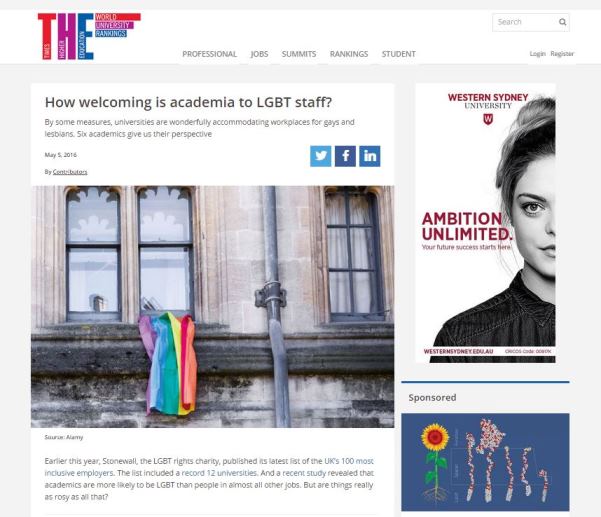
How welcoming is academia to LGBT staff?

This post was contributed by Professor Matt Cook, of Birkbeck’s Department of History, Classics and Archaeology. This comment piece first appeared on Thursday, May 5, in the Times Higher Education. The article “How welcoming is academia to LGBT staff?” features six academic’s responses to the question.

Birkbeck values its diversity and celebrates IDAHO – International Day against Homophobia, Transphobia and Biphobia.

“Many of those engaged in these early struggles and projects have sustained strong supportive networks. I have benefited hugely from these”

Professor Matt Cook

Professor Matt Cook

As a gay academic working on queer themes in history, my feelings of comfort and belonging owe a lot to the emergence of new areas of scholarship, to my discovery of community among colleagues and students – and to good timing.

I began my postgraduate studies in the mid‑1990s, just as work on gender and sexuality had gained some credibility and was even fashionable in some places – not least at Queen Mary University of London, where I found myself. By the time I emerged with my PhD in 2000, much ground had already been laid and my specialism was not the impediment to gaining an academic post that it had been for the preceding generation. There was a growing sense that explorations of sexuality had a real significance to broader understandings of society, culture and politics – past and present.

In the 1970s and 1980s, the scholars in the UK who inspired me – Jeffrey Weeks, Lynne Segal and Sheila Rowbotham among them – wrote much of their early work outside the university sector or against the grain of the jobs they were being paid for. They were nurtured instead by political and community networks arising from women’s and gay liberation, from the Gay Left collective and also from the History Workshop movement and journal (which, from its inception, had taken gender and sexuality – and those working beyond the academy – seriously). Such scholars had to argue that women’s and gay history were not marginal or peripheral areas of study and had a place in university departments. Once hired, some of them (including those I’ve mentioned) faced overt disdain or were “benignly” expected to focus on other things seen as more significant.

There was some notable resistance to this marginalisation. At the University of Sussex in 1991, Alan Sinfield and Jonathan Dollimore established the Sexual Dissidence master’s programme, exploring history, literature, post-structural and queer theory. It felt especially urgent in the context of the Aids crisis, Clause 28 (which prevented UK local councils from “promoting homosexuality”) and a broader homophobic backlash. Unsurprisingly, it was derided as insignificant, trendy (an insult in this context) and part of a “Loony Left” agenda. But, tellingly, the programme is still running 25 years on.

Read the original Times Higher Education article here

Read the original Times Higher Education article here

Many of those engaged in these struggles and projects have sustained strong supportive networks. I have benefited hugely from these. Research and teaching projects have meanwhile allowed me to work with LGBT community groups and with archive and museum professionals – giving me sustaining anchor points outside academia.

At Birkbeck, University of London – my institutional home for the past 10 years – I have found further communities. One is a history department with a collective commitment to wide-ranging historical work (and the intersections that it fosters). Another is with colleagues brought together through the Birkbeck Interdisciplinary Gender and Sexuality research centre. A third is with students whose engagement with their studies has often been underpinned by much more direct experiences of discrimination and marginalisation than I have had to deal with. Being a white, middle-class man has made me an insider in more ways than my queerness has set me apart.

Matt Cook is professor of modern history at Birkbeck, University of London and the author, most recently, of Queer Domesticities: Homosexuality and Home Life in Twentieth-Century London (2014).

Find out more

Notes from an intern at the Guildhall Art Gallery

This post was contributed by Fiona Ratcliffe, who is currently studying for an MA Victorian Studies at Birkbeck’s Department of English and Humanities. Here Fiona writes about her internship experience at the Guildhall art Gallery from January to March 2016.

The internship was carried out as a module on the MA programme – a popular element of the course in which successful students have the opportunity to spend a term working with one of London’s Victorian cultural institutions, gaining first-hand experience of working in the cultural sector and using their host institution’s archives to develop a unique research project. Previous interns have worked with the Dickens House Museum, and the Salvation Army Heritage Centre and Archive.

Guildhall Small Size-4Day One

Having cleared Security (a permanent fixture at galleries today), I meet the small, industrious team behind the scenes at the Guildhall Art Gallery – Katty (Curator), Andrew (responsible for the Roman Amphitheatre) and Jeremy who, as General Manager, handles the practical running of the Gallery.

Katty warns that finding desk (and computer) space is a constant challenge and I will inevitably have a variety of work-places, including perched in a corner of the small shop, gaining an insight into that essential income-generator for museums.

My first task is to familiarise myself with the preparations for the forthcoming exhibition, Victorians Decoded, opening in September. This exhibition will commemorate the 150th anniversary of the successful Transatlantic telegraphic cable-laying, demonstrating how artists subsequently re-imagined time and space, responding to their changing world.

In addition to artworks from the Gallery’s collection, five loans have been requested from other institutions. So far, the Royal Holloway Picture Gallery has confirmed the loan of Edward Landseer’s Man Proposes, God Disposes with the stipulation of a T-Crate for transportation – leading to challenges of storing the crate, space being at a premium here.

Early Weeks

Switching tasks (a constant theme ensuring plenty of variety), I am asked to prepare visitor-friendly information on the ‘Fire Judges’ for a Museum of London exhibition on the Great Fire. This involves circumnavigating the archives – a tiny cupboard space – to research the portraits of the judges who processed property and boundary claims prior to rebuilding the City.

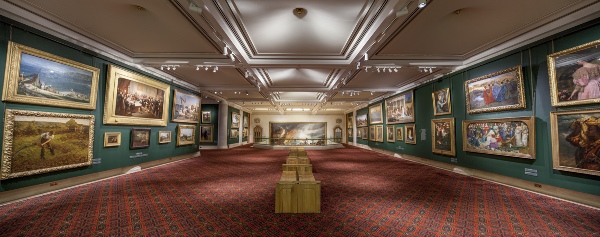
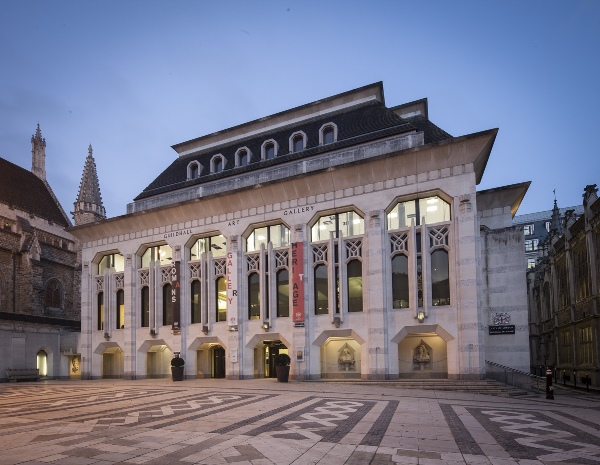
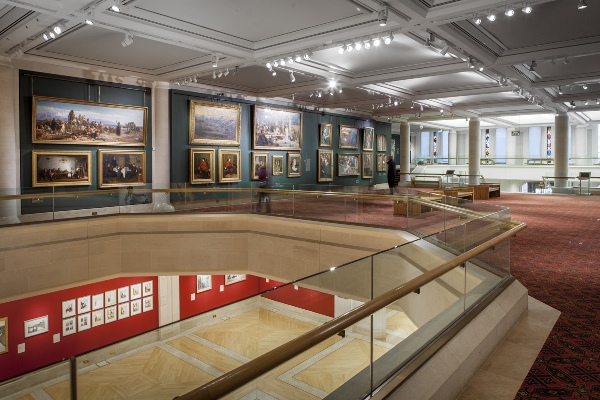
Guildhall Art Gallery

Guildhall Art Gallery

The Gallery is delightfully intimate and peaceful but being within the City’s municipal building, the Corporation’s civic presence is constantly apparent – particularly when the whole building goes into ‘total shut down’ (a security measure) while The Sun hosts The Millies, an awards ceremony commending military bravery, and I realise I may not be able to leave or return at lunchtime. In my haste to get a sandwich, I bump into Rod Stewart, Jeremy Clarkson and Boris Johnson – as a friend asked later, “What sort of gallery is this?”

It’s time for the de-installation of the exhibition “No Colour Bar”. Paintings are shrink-wrapped and swiftly taken through a side-exit by a specialist removal firm – with Katty’s eyes on every move whilst the door is temporarily de-alarmed.

Katty explains that loaned artworks are covered by ‘Nail to Nail’ insurance with the borrowing gallery insuring the painting for loss or damage for the duration. Surprisingly, the borrower also funds and organises any requisite conservation or frame refurbishment.

Exhibitions have astonishingly lengthy lead-times and London galleries are currently collaborating on exhibitions up to 2023 – including a London-themed one for which I am asked to source suitable artworks from the collection database. The remit is not just Victorian art, which is refreshing, but does lead to ‘St. Paul’s overload’.

In Week 3, Sonia (the Principal Curator) departs on maternity leave and we join the Conservation team for her farewell tea-party. Rossetti’s La Ghirlandata aloofly surveys us tucking into cake, and I notice just how exposed a painting appears without its frame. Excitingly up close to the brushstrokes, I am shown various tears and some ‘tenting’ where it has lifted from the canvas.

Middle Weeks

A memorable day! I join the planning meeting for Victorians Decoded and am asked to help with research in preparation for exhibit captions – a steep lesson in brevity. I’m struck during the meeting how much events-planning and budget control predominates – along with the logistics underpinning the positioning of cables and procurement of objects such as a telegraph machine. We didn’t discuss the art at all!

Heading towards spring, the gallery is becoming busier, visited by schools, interest-groups and individuals, many joining the in-house talks. One of the guides tells me that she’s a retired City financial journalist and had looked for voluntary work but could only find weeding in Epping Forest, so just called in at the gallery and was welcomed as a guide. Her groups are usually small and it often turns into a two-way exchange so she’s continually learning too.

In five years, footfall has increased from 30,000 to 100,000, reflecting a widening demographic – younger, international with rising tourism in the City, and also more Londoners increasingly culture-seeking in their own city. Exhibitions are vital – a way for a lesser-known gallery to achieve publicity, although a recurring tension between free access and charging for exhibitions persists.

It’s Friday afternoon and we’re surveying the new Robin Reynolds’ 2016 artwork of London commissioned by the Gallery to hang next to Visscher’s 1616 cityscape. As a commemoration of Shakespeare’s 400th anniversary, Reynolds has incorporated references to all 37 plays but we’re not here trying to identify them. Unfortunately, the canvas is ‘bulking’ where the artist has tried to fix a central rip, at eye level. The conservators arrive, armed with various canisters, but are unable to do a quick fix –it will have to be dismantled, repaired and re-framed as quickly as possible by this time-pressed team.

Final Week

Inside Guildhall Art Gallery

Inside Guildhall Art Gallery

Another exhibition, Martin Parr – Unseen City, begins and there is a flurry of media activity. Katty’s role requires multiple skills – preparing speeches for opening nights, coordinating hanging and lighting, and dealing with both the press and the local authority the Gallery belongs to, who approve the exhibitions but may still express criticisms with the outcome.

Preparations are escalating for Victorians Decoded, with the room layout established six months ahead. A balancing-act is required to ensure the technical aspects of telegraphy are comprehensible, whilst providing substance for visitors specialising in art and science. A subsequent challenge will be to fill the spaces in the permanent collection where paintings have moved to the exhibition. Katty describes it as a four-dimensional puzzle: satisfying the aesthetic, chronological & contextual, scale & size, and overall fit.

On my last day, Katty gives visiting VIPs a private viewing of two Pre-Raphaelite artworks held in store – Millais’ sketch of Lorenzo and Isabella (being watercolour the picture can’t be regularly exposed to UV for long periods of time, which precludes it from being on permanent display) and charcoal drawings from Holman Hunt’s sketchbook. Both the guests and I feel utter wonder at having access to these hidden gems – a true privilege of working behind the scenes in this very special gallery.

The internship has altered my perception of artworks and I’m now far more aware of their vulnerability. Visiting an exhibition will never be the same again, having witnessed the in-depth forward-planning and bustle behind the scenes. Ultimately, however, the experience has opened up new avenues and inspired me to pursue research opportunities with galleries after graduation.

Find out more

Tripadvisor for Linguists

This post was contributed by Professor Penelope Gardner-Chloros, Department of Applied Linguistics and Communication

I recently returned from a trip to Southern Italy. Apart from enjoying the delights of Neapolitan pizza (3 stars), the Bay of Naples (4 stars) and Pompeii (5 stars), I also went right down to the heel of Italy on a linguistic fact-finding mission, starting in the lovely Baroque town of Lecce.

SoletoGrecia Salentina – like the smaller area of Bovesia down in the toe – comprises nine villages where, intriguingly, it has been claimed that a form of Greek (written in the Roman alphabet) may have been spoken since the 8th century BC. Others say that the Greek spoken there was brought over by refugee settlers in Byzantine times; yet others claim that at least in its current form, it has more recent origins, dating to the 19th century.

Even discounting the more ancient origins which are claimed, it is intriguing that a linguistic minority should have survived so long in this context. Having failed to find any easily accessible and up-to-date sociolinguistic studies, I wanted to carry out a quick recce, and if possible hear this dialect for myself. I therefore went round all nine villages (one of them incidentally called Calimera, or ‘good day’ in Greek), looking for evidence of Greek both in the visual (‘linguistic landscape’) sense and for potential speakers.

Seeking Greek

There was plenty of evidence in the visual sphere: street signs, shop names (some even in the Greek alphabet), explanations on various monuments – even a fully fledged parish magazine trilingual in Modern Greek, Italian and Griko. There were also some clear culinary connections, probably dating back centuries: ‘chorta’ or wild greens, boiled and served as a salad in Greece, were also on the menu here, as was twice-baked bread as found in every Greek bakery.

But what of the active linguistic scene? Italian was standardised late in the 19th century and regional dialects are still widely spoken. As in Naples, in this area many locals do not speak standard Italian among themselves.

Like other Italian dialects, Neapolitan and Salentino varieties are being eaten away by the spread of the standard variety but they are still noticeably active in the local population. Our taxi driver in Naples, assailed from all sides by motorbike riders cutting in on him – a local pastime – opened his window and screamed with ferocious irony at one of them: ‘Ha raggiu! Ha raggiu!’ (‘You are right! You are right!’).

The Italian form: ‘Ha raggione’ simply would not have carried the same impact, savour or street cred. So like many other linguistic situations, the Southern Italian one is as multilayered as the local lasagne. If Greek was there to be found, it would be vying not only with Italian but on a range of local dialects. Indeed this may have contributed to its decline, since an alternative ‘in-group’ variety, closer to the standard, was also available.

‘Relic’ languages and NORMS

Greek-italian flag combinationBut what was the evidence of the ‘Griko’ dialect actually being spoken? As all sociolinguists will know, the best hope of finding speakers of ‘relic’ languages is by interviewing ‘NORMS’ – non-mobile, older rural males. Fortunately for me, one of the principal pastimes of the ‘norms’ in Mediterranean countries is hanging out in the cafe with their friends, sipping a coffee or an alcoholic beverage, flicking their worry beads round (in Greece), and toothlessly commenting on the world going by. I therefore approached and spoke to a number of elderly gentlemen in their seventies or eighties in these villages.

I told them I was carrying out a linguistic study and was interested in whether any of them spoke Griko. All were friendly and interested, but none (save one) offered to produce any words of Griko. Their near-universal opinion, whichever village you were in, was that far more people spoke it in the next door village than in their own. In fact, on reflection, they thought it was indeed still widely spoken – only definitely somewhere else.

They also universally claimed it had been the normal means of communication between their parents, but that the latter had not passed it on to them. Finally, I was given the details of someone who definitely spoke it in Castignano dei Greci, and an appointment was made for me to meet him. I also spoke to a young family who said that certain schools taught Griko since the Italian government had declared it to be a regional language of Italy, but only as an extra-curricular ‘add-on’ on a par with folk dancing, and mainly through songs. There has therefore been a revival of sorts through this policy, and perhaps a positive change in attitudes, as Manuela Pellegrino’s doctorate at UCL recently showed, but there is Vesuvius to climb before this translates into active usage.

Sadness and elation

Professor Penelope Gardner-Chloros

Professor Penelope Gardner-Chloros

When I arrived in Castrignano, my 94-year-old host and his wife could not have been more charming. He had written poetry extensively in Griko and had won prizes for it in the 1970s and 1990s. He proudly allowed himself to be recorded reading it out, occasionally checking my understanding as a Modern Greek speaker.

In spontaneous speech he did not appear to be really fluent any more – his wife was not a speaker, and at 94, there was no-one else much left to speak to. Even a mother-tongue atrophies through long disuse. But he could respond appropriately to my questions as to what his mother would have said in Griko in various circumstances, the dialect being close enough to Modern Greek, despite many borrowings and much general influence from various types of Italian, for all this to be understandable to me.

I left with a signed and dedicated copy of his Griko poetry anthology, and a feeling of sadness mixed with elation: elation to have spoken to one of the last native speakers of a language, and recorded a small piece of European history; and sadness that if I go there again, there may be no-one left to record…not even if I go to the next-door village.

Find out more

Off the agenda: Why press silence speaks volumes about the dangers of concentrated media

This post was contributed by Dr Justin Schlosberg, lecturer in journalism and media. This post first appeared on Open Democracy on Wednesday 13 April

canary-wharf-1145616_1920Real press power resides in the the ability to suppress a scandal, at least as much as the ability to produce one. This is the lesson we learn repeatedly when journalists, facing the combined pressures of austerity, failing business models and an increasingly cautious and interventionist management decide enough is enough.

The latest in this new cadres of whistleblowers from inside the fourth estate is Jim Cusick, former political correspondent for the Independent. Like his former counterpart at the Telegraph Peter Oborne, who resigned amidst the appalling silence of his paper in the face of the tax scandal embroiling HSBC (coincidentally, a major advertising account holder), Cusick has pointed the finger at senior management – and an enduring Fleet Street cabal – for strangling journalism at the Indie.

The merits of the suppressed story itself – which centres on the alleged relationship between the culture secretary, John Whittingdale, and a woman thought to be a sex worker and fetishist – are certainly questionable. But not by Fleet Street standards. And this is the crux of the matter for Cusick who suggests that the story wound its way through successive newspapers with each title deciding against publication not because they thought the allegations were baseless or not much of a story.

On the contrary, it was precisely because of the perceived ‘value’ of the story, that editors and owners decided against publication. This provided the blackmail stick that supposedly made Whittingdale an ‘asset’ for a newspaper lobby hell-bent on destroying the BBC and the new system of press self-regulation recommended by Lord Justice Leveson (and enshrined in Royal Charter and law).

To be clear, Cusick offers little to substantiate this cover up, save a published email from his editor at the Indie calling off the story for reasons undeclared. But his piece does alert us to the wider question of what gets routinely left out of the mainstream media agenda – including stories that are much less ambiguously in the public interest than the not so lurid details of a politician’s private life. From Google’s immersion within the surveillance state to allegations of rampant corruption and criminality within British American Tobacco – real scandals are often very far from the front pages of major newspapers or the headlines of broadcasters.

Stories which play to elite interests

Of course, sometimes a scandal becomes too big for Fleet Street to ignore – even when it does not suit the interests of powerful owners and editors, as when the Guardian revealed in 2011 that murdered school girl Milly Dowler was among the victims of phone hacking by journalists at the former News of the World. It is also true that when the political climate is right, newspapers can go on the front foot in exposing abuses of power at the heart of the political establishment. The backdrop of a deep fracture in the conservative elite caused by the impending EU referendum has certainly provided ripe conditions for the unprecedented onslaught on David Cameron’s personal tax affairs by the right wing press.

But we should also remain vigilant to the way in which the story can be subtly told or retold in ways that ultimately play to elite interests. So, for instance, when the Guardian and other newspapers partnered with Wikileaks in 2010 to publish a series of secret US diplomatic cables, the headlines quickly became dominated by the alleged sexual misdemeanours of Wikileaks founder Julian Assange, rather than communiqués that suggested Britain’s long-running and controversial Iraq War Inquiry had been systematically undermined by government officials from the outset; or that legal loopholes had been cynically exploited by British and American governments in order to maintain a stockpile of US cluster bomb munitions on British territory; or that British military personnel were involved in the training of a Bangladeshi paramilitary group dubbed a ‘death squad’ by human rights groups.

Optimists argue that none of this stuff matters anymore because in the digital environment, one way or another, everything gets published all of the time. But it is precisely because of such information noise that amplification – the ability to be heard­ – has become the major currency of communicative power, and that power is still very much vested in the owners of major news brands. And those who think their agenda or gatekeeping power has been diminished by the rise of digital intermediaries should take one look at Google’s most recent news algorithm patent update, which reveals the degree to which it favours dominant, western media brands like “the BBC and CNN”.

The BBC’s dominance

Others argue that if there is any problem with media concentration in Britain today, then it resides in the BBC’s dominance of news consumption across broadcasting and digital platforms. From this perspective, the mere existence of a national press, however partisan and ideologically driven in its selection of news scandals, is a much needed check on the near monopoly status enjoyed by the BBC. Rather than worrying about the agenda influence of mainstream media in general, commercial media lobbyists argue that we should be concerned exclusively with the overarching reach and influence of the BBC.

But how far does the BBC’s own news selection decisions reflect or align with that of the commercial press? When scholars at Cardiff University set out to investigate this question during the 2015 UK general election, they found a very different picture to that often conjured by critics in the right wing press. Rather than harbouring a liberal or left wing metropolitan bias, the BBC appeared to follow their story priorities which in turn synched with the Conservative Party campaign agenda. Just like the national newspapers, the BBC’s coverage systematically marginalised stories relating to both the NHS and immigration in favour of stories relating to the economy and the threat of Labour-SNP coalition, two issues at the forefront of the Conservative Party campaign. The extent of this agenda alignment was corroborated by other research conducted at Loughborough University and by the Media Standards Trust.

Media ownership

Read the original blog on Open Democracy

Read the original blog on Open Democracy

At a time when many public service broadcasters around the world – including the BBC – are facing varying degrees of existential crises, public debate is all too often reduced to a choice between preservation or market-based reforms; with the latter usually amounting to cutbacks or closures. What’s left off the policy agenda is the possibility of radical democratic reform aimed at reconstituting the independence, accountability and internal plurality of public service media.

This is also an issue that is intimately tied to questions of media ownership. The idea that a substantive section of any democratic media system needs to be in public hands is one that retains a great deal of force, in spite of the digital transition and corresponding end of channel scarcity (which underlined the original rationale for public service media). But the way in which public service broadcasters are structured, regulated and governed can have profound implications for independence in relation to both the state and market.

As for concentration in the wider media – and especially the national and local press – the evidence suggests that ownership still matters, in some ways more than ever. Far from justifying inaction or inattention to media ownership, the complexities, uncertainties and obscurities surrounding concentrated power in a converged media environment make progressive media ownership rules more necessary and more urgent. The rise of grassroots channels of resistance to mainstream media agendas has produced a limited sea-change but not a reason to refrain from tackling the problem – more a basis for doing so.

The need for reform of media plurality rules has been a much talked about issue for some time now, and in many parts of the world. But as digital news markets reach maturity and the political long grass continues to grow, we need a groundswell of pressure from below, along with politicians that have the courage to champion and act on policies that will promote a genuine redistribution of voice and communicative power.

Find out more

When gardens become a nature reserve

Frustrated by a lack of political interest in conservation issues, Dr Adrian Cooper, former Associate Research Fellow in Birkbeck’s Department of Geography, has been developing an innovative and successful approach to community-based conservation in Suffolk.

Felixstowe’s Community Nature Reserve was born out of my frustration with politicians during the 2015 General Election debate. None of them mentioned the catastrophic decline in bee and other wildlife populations. Clearly, local grass roots action was needed.

Dr Adrian Cooper - gardenI started talking and listening to people from local government and the local community about what might be possible, and gathering a small team of volunteers. Most people understood that wildlife populations in Felixstowe were falling, and they wanted to help, but they simply did not know how. It also became clear that getting hold of a single plot of land for any kind of nature reserve project in the Felixstowe area would take too long, and would be too complicated.

Participation in this initiative had to be as simple as possible. First, I re-defined what a nature reserve could be. Instead of it being one area of land, I suggested that local gardeners and allotment owners only had to allocate three square yards of their gardens or allotments for wildlife-friendly plants, ponds and insect lodges, and we could then aim for 1,666 people to take part. That combination would give us a total area of 5,000 square yards – the size of a football pitch.

In this way, we are developing a “community nature reserve” composed of many pieces of private land, but between which insects, birds and other wildlife can fly and develop sustainable biodiversity.

Creating our new nature reserve  

With my partner Dawn Holden, I started a Facebook page, on which we advise local people about appropriate wildlife-friendly plants. I also wrote articles for our local advertiser magazines and gave an interview to our local community TV station and BBC Radio Suffolk. We were thrilled with the early take-up of our ideas, and at the time of writing, we know that 207 people have bought and planted at least one of the plants we have recommended. But the good news hasn’t stopped there.

Where are we now?        

Thanks to Facebook, we’ve had enquiries from people all over the UK, asking about how we set ourselves up, and how the initiative has developed. BBC presenter Chris Packham found out about us, and his tweets to his 145,000 Twitter followers have produced a small avalanche of enquiries about our work and achievements.

In the Leicestershire villages of Cosby and Burbage, people decided to copy our model to develop their own community nature reserves. So now there is the Cosby Community Nature Reserve, and the Burbage Community Nature Reserve. That’s why I wanted to write this blog – to inspire and help other communities to take responsibility for their local conservation in a way that means everyone can get involved. Even window box owners are encouraged to take part – after all, they can grow herbs, crocus, snow drops and much else. So, no one is excluded.

Further action

During the first three months of this year, we’ve recruited lots more volunteers and received some wonderful new ideas, such as the organisation of a plant-swap opportunity, to keep the cost of buying and growing wildlife friendly plants as low as possible.

We’ve also started to work alongside Suffolk Wildlife Trust’s community projects officer to help with their grassroots conservation initiatives and to raise our profile. As a result, this month, April 2016, we hope to help the Trust to raise awareness of falling populations of swifts, and what people can do to help. In September, we plan to help the Trust raise awareness of local hedgehog populations.

Lessons learned

The most important lesson we can offer groups who may wish to start their own community nature reserve is to listen to as many local people as possible. Be patient. Don’t rush on to Facebook until your local community feels comfortable with what you plan to do.

The next lesson is to keep listening, so fresh ideas from the community can be fed into Facebook and other social media as often as possible. We like to use Streetlife.com because it’s a great way to get discussions going among local people who otherwise might not get involved in community engagement.

Finally, we recommend using as many different types of local media as possible to spread the message. We have used Facebook, Streetlife.com, LinkedIn (including multiple LinkedIn posts), local magazines, our community radio and TV station, BBC Radio Suffolk and Twitter. For more information have a look at our Facebook page

Three Reasons Why Boris Doesn’t Matter

This post was contributed by Dr Benjamin Worthy, lecturer in Birkbeck’s Department of Politics. This blog was originally posted on the 10 Gower Street blog on 23 February 2016.

poster,220x200,ffffff-pad,220x200,ffffff.u7

On Sunday evening, Boris Johnson, with the zeal of a convert or the scheming of a Machiavellian, has decided to join the ‘Outers’. Here’s 3 reasons why it doesn’t matter:

Reason 1: Boris isn’t that popular. Remember, Heineken isn’t that strong. I’m intrigued by the poll in the Evening Standard that claimed ‘he could be a game-changer in the historic vote’ as ‘one in three people regard him as “important” to deciding whether they vote In or Out’. Putting aside exactly what ‘important’ means, the statistics are revealing. 32 % of those asked said Boris could be ‘important’ but a full 28 % said Theresa May’s and George Osborne’s views were important-only 4 % points behind Boris (and 23 %, by the way, identified Stuart Rose as ‘important’ too). So if, as the report claimed, Boris could ‘partly’ cancel out Cameron’s influence, presumably May and Osbourne could do the same to Johnson? Boris’ position as ‘the most popular politician’ is often cited though his reach to UKIP voters is probablyrather unnecessary– and it looks like Nicola Sturgeon pipped Boris in the popularity stakes at least once.

Reason 2: Boris doesn’t do arguments. As Janan Ganesh argues in the FT‘voters like Mr Johnson. But they like Judi Dench too. Liking someone and deferring to their judgment on a serious question are different things’. As a number of people have argued, what the Leave campaign needs, above all, is a serious alternative vision, equivalent to the Scottish YES campaign’s positive, mobilising narrative. Boris hangs hilariously from aerial slides but he doesn’t really do ideas or arguments, just quips and ‘mishaps’. Cameron’s speech last night in Parliament was perhaps a taste of the gravitas, clarity and seriousness the Remain campaign will deploy. Judging by his question in Parliament, Boris’ re-joiner will be about ‘soveregnity’ a word not even constitutional lawyers agree on. And there is no nuance or wriggle room in a vote to leave.

Reason 3: Boris doesn’t do teams and messages. Being the Mayor of London is (or was) the perfect job for Boris, where he can be a maverick, a loose cannon and is able to rail against everyone and everything. His record when part of an organised group e.g. in the shadow cabinet, is much less glittering given his tendency to be rather egocentric or, as one unkind review put it, a gold medal egomaniac. How will he fare as part of an organised group with a message and a ‘line to take’?

Boris cites his great hero Winston Churchill. However, for most of the 1930s Churchill, a

Randolph_Churchill

similarly gold medal level egotist, entangled himself in a series of failed and doomed campaigns, from the cross-party ‘arms and the covenant’ rearmament initiative (which he almost wrecked), to supporting Edward the VIII and a bizarre solo effort to stop Indian independence. Churchill was very much, and very often, on the wrong side of history, and only his later struggle against appeasement saved him.

Last night, Michael Crick quoted an unhappy MP who spoke of another Churchill, Winston Churchill’s dad, Randolph (above). He was also a famous politician, gifted, witty and talked about as a future Prime Minister in the 1880s and 1890s. Randolph had, as Winston wrote of his father, ‘the showman’s knack of drawing public attention to everything he said or did’. Why did his career end? Boris take note-he gambled and took sides against his own party and leader on a fundamental debate in British politics. And lost, never to return.

Find out more

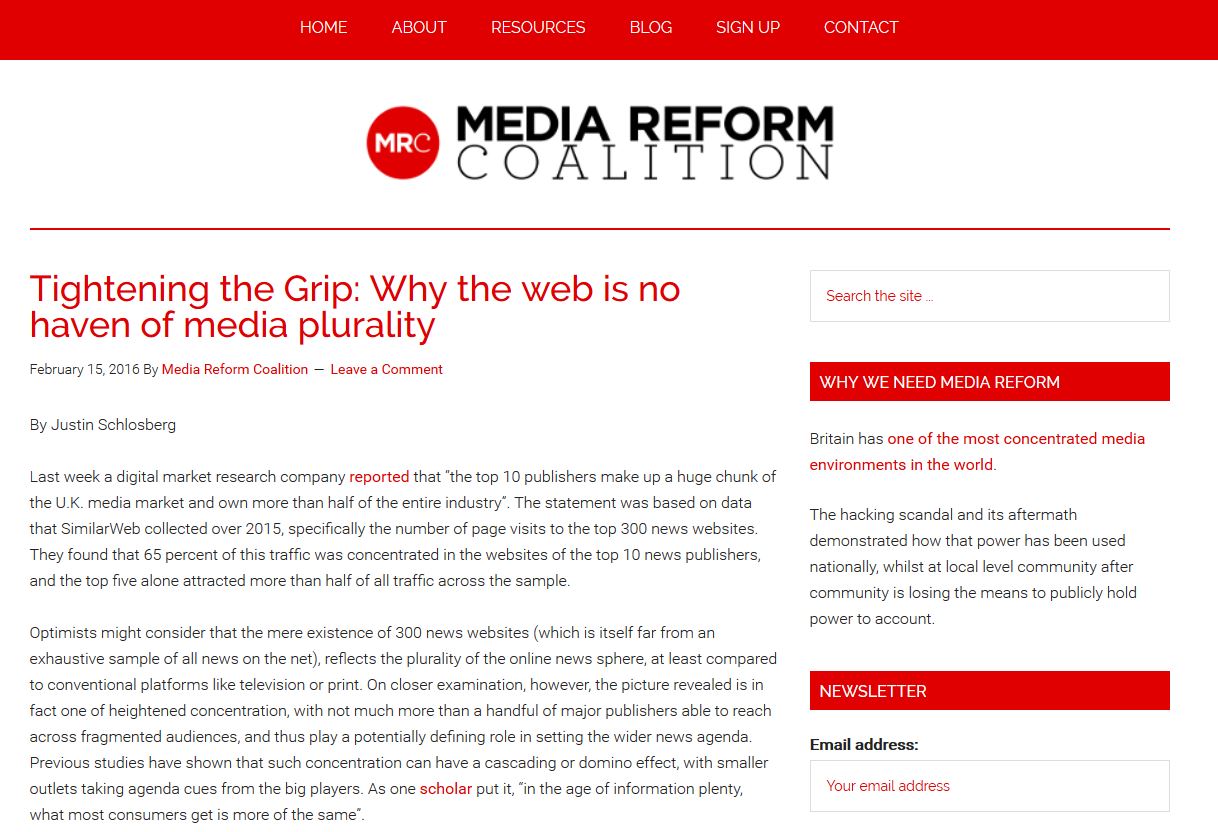
Tightening the Grip: Why the web is no haven of media plurality

This post was contributed by Dr Justin Schlosberg, lecturer in Journalism and Media at Birkbeck’s Department of Film, Media and Cultural Studies. This was originally posted on Media Reform Coalition blog on Monday, 15 February 2016.

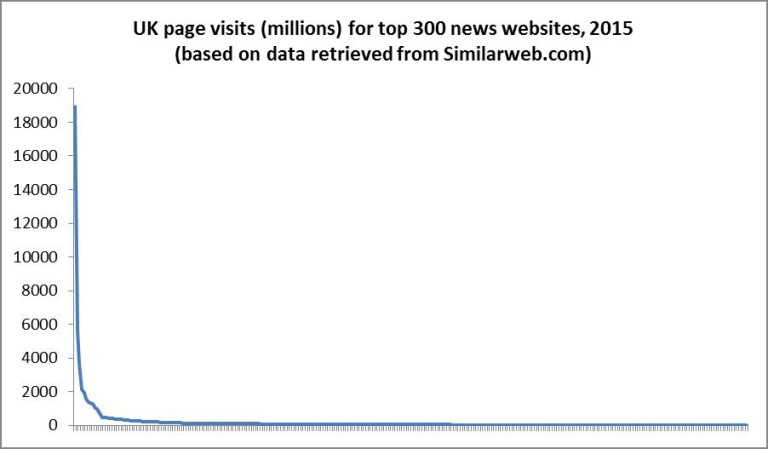
GoogleLast week a digital market research company reported that “the top 10 publishers make up a huge chunk of the U.K. media market and own more than half of the entire industry”. The statement was based on data that SimilarWeb collected over 2015, specifically the number of page visits to the top 300 news websites. They found that 65 percent of this traffic was concentrated in the websites of the top 10 news publishers, and the top five alone attracted more than half of all traffic across the sample.
Optimists might consider that the mere existence of 300 news websites (which is itself far from an exhaustive sample of all news on the net), reflects the plurality of the online news sphere, at least compared to conventional platforms like television or print. On closer examination, however, the picture revealed is in fact one of heightened concentration, with not much more than a handful of major publishers able to reach across fragmented audiences, and thus play a potentially defining role in setting the wider news agenda. Previous studies have shown that such concentration can have a cascading or domino effect, with smaller outlets taking agenda cues from the big players. As one scholar put it, “in the age of information plenty, what most consumers get is more of the same”.

Blind Spots

To glimpse this reality we have to peel away a number of veils that make the gatekeeping and agenda setting power of mainstream news organisations not less significant, but rather less visible in the digital environment. Let’s start with the numbers. The lowest ranked news website – Pink News – still attracted some 16 million page views. Which sounds like a lot. But if we compare page views to unique visitors (as measured by the National Readership Survey among others), the average ratio works out to around 250:1. So 16 million page views over the course of the year will probably amount to an audience reach of around 60,000.

That’s still not a tiny amount given that we are at the bottom of the pile here. But it’s important to consider that the list includes many websites that are not really what we would generally think of as news providers. They are much closer to the equivalent of special interest magazines in the print world, focusing on music/film/sport/entertainment etc.

At the heart of plurality concerns is a conviction that healthy democracies depend on the circulation and intersection of diverse voices and perspectives. From this standpoint, it would seem odd to consider the plurality contribution of popularmechanics.com or cylclingweekly.co.uk as equivalent to a daily news provider, especially one that covers political news and current affairs.

One idea that captures the supposed plurality renaissance of the information age is the so-called long tail theory. According to this theory, the ‘personalising’ and tailored recommendations of search, social media and retail algorithms ensure that niche providers flourish and the ‘head’ (representing mainstream culture) dissipates over time. But if we plot Similarweb’s data into such a graph we find the opposite: the curve produces a highly defined ‘head’ followed by a very flat tail…

graph-768x449

A decade after the long tail effect was first explained and predicted, not much seems to be changing. If anything, we may be experiencing a regression back to the kind of mass culture that revolves around superstars, best-sellers and mainstream headlines.

Another problem with the SimilarWeb data is that it does not capture news consumption via aggregators like Yahoo and social media sites like Facebook. Most of this content is produced by mainstream news brands which would make the head look even more concentrated if we were to attribute those page views to the original news sources.

OFCOM – the UK’s media regulator – repeatedly makes the opposite mistake by including these sorts of sites in survey data alongside what it calls ‘content originators’ like the BBC, Sky, Daily Mail, Guardian, etc. This again overestimates plurality by counting aggregators (sites that predominantly host content of other news providers) and intermediaries (sites that predominantly serve as gateways to third party news sites) as news sources in their own right.

Gateway Power

Uncover these blind spots and what we are left with, by any measure, is a highly concentrated picture of media power in Britain today. How has this happened? Given that so much of the traffic to news websites is ‘referred’ by intermediaries, the intricacies of Google’s news algorithm is a good place to start in addressing this question.

For some time now, Google has been weighting and ranking news providers according to a broad spectrum of what it considers to be the most reliable indicators of news quality. But it turns out machines are not much better at assessing news ‘quality’ than human beings. They may be free of subjective bias in one sense, but this means they rely (paradoxically) on quantitative measures of quality, which produces its own bias in favour of large scale and incumbent providers. One look at Google’s most recent patent filing for its news algorithm reveals just how much size matters in the world of digital news: the size of the audience, the size of the newsroom, and the volume of output.

Perhaps the most contentious metric is one that purports to measure what Google calls ‘importance’ by comparing the volume of a site’s output on any given topic to the total output on that topic across the web. In a single measure, this promotes both concentration at the level of provider (by favouring organisations with volume and scale), as well as concentration at the level of output (by favouring organisations that produce more on topics that are widely covered elsewhere). In other words, it is a measure that single-handedly reinforces both an aggregate news ‘agenda’, as well as the agenda setting power of a relatively small number of publishers.

Google engineers may well argue that the variety of volume metrics imbedded in the algorithm ensures that concentration effects are counterbalanced by pluralising effects, and that there is no more legitimate or authoritative way of measuring news quality than relying on a full spectrum of quantitative indicators. Rightly or wrongly, Google believes that ‘real news’ providers are those that can produce the most amounts of original, breaking and general news on a wide range of topics and on a consistent basis.

News plurality reconsidered

At face value, that doesn’t sound like such a bad thing. In a world saturated with hype, rumour and gossip, it’s not surprising that most people are attracted to news brands that signal a degree of professionalism. Part of Google’s corporate and professed social mission is to match users to the content they value most, and if most people prefer the mainstream, then that’s where the traffic will flow.

But there is no getting around the fact that Google favours dominant and incumbent news organisations. The company made its view clear when it stated in its patent filing that “CNN and BBC are widely regarded as high quality sources of accuracy of reporting, professionalism in writing, etc., while local news sources, such as hometown news sources, may be of lower quality”. But when the ‘mainstream’ is held as the ultimate benchmark of good quality news, we start to run into real problems for the future (and present) of media plurality.

Read the original article on Media Reform Coalition

Read the original article on Media Reform Coalition

For one thing, algorithms used by Google, Facebook and (to a lesser extent) Twitter actively discriminate against both prospective new entrants into the news market, as well as those that focus on topics, issues and stories beyond or on the fringes of the mainstream agenda. Yet these are precisely the kind of providers that need to be supported if we want to redress the symptoms of concentrated media power. In the post phone-hacking world, such symptoms continue to manifest in systematic ideological bias, as well as the enduring back door that links Whitehall to the Murdoch media empire.

As print newspapers start to fall by the wayside, news concentration online is of even greater concern. Policymakers, meanwhile, are distracted by dominant narratives that suggest the gatekeeping and agenda power once attributed to media owners has dispersed among ‘the crowd’, or transferred into the hands of intermediaries like Google and Facebook, or that the only plurality ‘problem’ today concerns the so-called filter bubble or echo chamber effects of personalised news.

There is truth in all of these claims but the unseen or overlooked reality is that the gatekeeping power of Google and Facebook works in tandem with that of mainstream news providers, mutually reinforcing each other around what is considered real, legitimate and authoritative news. As Des Freedman urges in his most recent book, “far from diminishing the importance of media moguls and tech giants, announcing the death of gatekeepers or lauding the autonomy of the public, we should be investigating the ways in which their power is being reconstituted inside a digital landscape”.

Find out more

Dickensian delight: Our ‘serial’ fascination with the afterlife of Charles’s characters

This post was contributed by Dr Ben Winyard, digital publications officer at Birkbeck, University of London. Dr Winyard has been a co-organiser of Birkbeck’s Dickens Day event since 2005, and is one of the organisers behind the current Dickens reading project at the College

BBC drama Dickensian (image copyright Premier)

BBC drama Dickensian (image copyright Premier)

Is there a word for that familiar feeling of sadness or melancholia that accompanies finishing a novel? Perhaps there is a ferociously lengthy compound noun in German, or an elegant Japanese word with multiple, elusive meanings that can’t be fully encompassed by a solitary English word. A quick, unscientific search on Google reveals fascinating discussions on sites such as reddit about this emotional state and the various words that might describe it: sadness, ennui, nostalgia, regret, catharsis, homesickness, mourning, separation anxiety, and the delightful but somewhat toxic sounding ‘book hangover’.

Another suggestion is the term ‘limerance’, used in psychoanalytic theory to describe an invasive sexual and emotional obsession with a person or object – an infatuation or crush, in more demotic idiom. This feels a little too histrionic for such a quiet, fleeting but pervasive feeling. Imagining a curiously powerful parental bond, Dickens described David Copperfield as his ‘favourite child’, which suggests the intense feelings of attachment readers (and writers) can develop for fictional creations.

Do Dickens’s books deliver more noxious ‘book hangovers’? After all, Dickens was keen throughout his writing career to evoke feeling in his readers, meaning that his forceful use of sentimentality and melodrama, to induce laughter and tears in rapid succession (what Dickens described as his ‘streaky bacon’ approach), might be regarded as a particularly heady and intoxicating form of emotional pummelling. Dickens’s work provokes powerful feelings and his readers are famous for their attachment to the author and to his works. Dickens’s sentimental mode entices, coaxes and even coerces us to be affected by its depictions; it is a form of aesthetic and imaginative self-projection. Indeed, the shared, collective experience of feeling is what often brings us together as a community of Dickens enthusiasts.

It is also worth remembering that Dickens’s original readers would have encountered multiple hiatuses, as they read the novels serially in weekly or monthly instalments, which may have provoked feelings of frustration, anticipation, excitement and longing. A novel’s plot may be thrillingly propulsive, providing a forward momentum that, when halted, generates an exasperated thirst to traverse the ‘empty’ space in-between as quickly as possible. These manifold mini or false endings – which sometimes took the form of cliffhangers, but were more often simply breaks in the narrative – are similar to the final ending of the novel, in that they represent spaces that evoke fantasy and speculation. Just as the serialised instalments represent only temporary cessations that are potentially bridged by longing-filled fantasy, the end of a Dickens novel may similarly rouse imaginative speculation and fancy about the afterlives of the characters.

A scene from BBC drama Dickensian, featuring Stephen Rea in the role of Inspector Bucket (image copyright Premier)

A scene from BBC drama Dickensian, featuring Stephen Rea in the role of Inspector Bucket (image copyright Premier)

Adaptation, reimagining, pastiche and outright bootlegging

Dickens was himself no stranger to this phenomenon. The exceptional success of his first novel, The Pickwick Papers, serialised in 1836–37, stimulated a veritable industry of adaptations, pastiches, rip-offs and continuations. One of the most famous was Pickwick Abroad; or, The Tour in France (1837–38) by George W. M. Reynolds, a hugely successful radical journalist Dickens intensely disliked. In this decidedly rough and ready sequel, the Pickwick Club ventures into France, where crass national stereotypes and risqué adventures abound. In an era before copyright law – for which he campaigned vociferously – Dickens witnessed the multiple imaginative afterlives of his stories and characters on stage and in unlicensed prequels and sequels.

There was also a bustling trade in Dickensian souvenirs featuring his characters, including illustrations, porcelain figures, china plates, Toby jugs, keepsake boxes, and miscellaneous other household items and collectibles. Interestingly, in his short-lived journal Master Humphrey’s Clock, which he wrote and edited alone between 1840 and 1841, Dickens acknowledged and indulged readers’ desire for afterlives and new adventures for their favourite characters by reintroducing the hugely popular Mr Pickwick and Samuel Weller. We can also sense in Dickens himself the irresistible urge to resurrect characters he evidently longed to spend time with again – just as many of his readers did.

A digital Dickens afterlife

More recently, Birkbeck’s inventive and successful Twitter retelling of Our Mutual Friend, which saw dozens of people tweet as characters in this multitudinous novel, provided an outlet for Dickens readers to reengage with, and extend the afterlives of, their favourite characters. Many tweeters were unafraid to present their characters in decidedly modern, updated terms, which meant that, while the novel’s plot remained essentially the same, many characters took on new aspects, had new adventures and relationships, and occupied more imaginative space than in the original work.

At the most recent Dickens Day (October 2015), Professor Holly Furneaux, an alumna of Birkbeck who is now based at the University of Cardiff, delivered a fascinating paper on Dickensian fan fiction online, which is forging communities and providing avenues for original, and even erotic, (re)engagements with popular Dickensian characters. Furneaux demonstrated the particular popularity of the triangular relationship between Mortimer Lightwood, Eugene Wrayburn and Lizzie Hexam in Our Mutual Friend, which many online Dickens fan fiction writers reimagined more capaciously, with space within Eugene and Lizzie’s marriage for Mortimer.

Dickensian ­– Goading the stuffy old gatekeepers

Given the powerful attachment of Dickens’s readers to his works and the long history of adaptation, reimagining, pastiche and outright bootlegging of Dickens’s work, Tony Jordan’s Dickensian feels less of an oddity or a provocation than it may first appear. In this twenty-part TV serial, we enter a fantasy Victorian world, in which many of Dickens’s characters, from several of the novels, coexist. Thus, Inspector Bucket (Bleak House, 1852–53) is investigating the demise of Jacob Marley (A Christmas Carol, 1843), with the forensic assistance of Mr Venus (Our Mutual Friend, 1864–65). Accompanying these fantastic mash-ups is Jordan’s reimagining of backstories and subplots in the novels; thus, Honoria Barbary is embarking upon a relationship with Captain James Hawdon that readers of Bleak House know is doomed. And in a delightful nod to the queer affiliations that Professor Furneaux has observed in online fan fiction and other literary and non-literary sources, Arthur Havisham is hopelessly in love with Meriwether Compeyson, the dastardly seducer he has appointed to marry and defraud his sister, Amelia (who will become the bitter, decrepit Miss Havisham of Great Expectations, 1860–61). The first episode of Dickensian thus presented a delightful, uncanny guessing game, as Dickens fan scrambled to identify all of the characters and connect them to their extant stories within the novels.

Jordan himself is keen to present his work as goading the stuffy old gatekeepers of Dickens’s legacy, irreverently insisting in an interview with the Daily Telegraph that ‘he knew the changes risked “p––ing off the Dickens community”’. In actuality, Jordan’s work taps into a rich seam of readerly fantasy about Dickens imaginative worlds that has been amply mined by authors, playwrights, filmmakers and TV executives. Furthermore, the intense relationship between Dickens and his readers, and the love and affection readers have felt, and continue to feel, for Dickens, his fictional world and the people who inhabit it, have all been objects of intense scholarly scrutiny and analysis.

Dickens Gurney head

Charles Dickens – By Jeremiah Gurney (Heritage Auction Gallery) [Public domain], via Wikimedia Commons

It is a truism that all Dickens fans and scholars inevitably encounter that, ‘Were Dickens alive today, he would write for a soap opera’. Jordan, who famously wrote for Eastenders (and less famously, for the slated, 90s camp classic Eldorado), has been keen to emphasise that Dickens’s serialised fiction prefigured the episodic melodrama of the contemporary soap opera. In a recent interview with The Big Issue, Jordan observes that,

“People can be far too reverential. We mustn’t forget that Dickens was a populist writer who wrote for the masses. He wrote episodically, trying to flog magazines every month. He was sensationalist and did cliffhangers way before soap operas. He and Wilkie Collins said their secret was to make them cry, make them laugh and make them wait. That is everything I did in my EastEnders career. It is that deferment of gratification.”

The originality of Dickensian lies in its audacious bringing together of numerous characters at once, but one of the impulses that has powered this – the desire to make characters live again and to imagine them into new aspects, new stories and new worlds – accompanied Dickens’s fiction from its earliest moments. In the spaces in-between and after instalments, we find that readers’ emotional engagement births alternative and new stories, trajectories and lives that all demonstrate the enduring power of Dickens’s fiction.

Find out more