Tag Archives: politics

Chile election: young Chileans have voted for a radical change of direction

This post was contributed by Dr Oscar Guardiola-Rivera of Birkbeck’s School of Law. It originally appeared on The Guardian.

Sunday’s elections in Chile will prove significant, regionally and globally. The centre-left candidate, Michelle Bachelet won nearly twice as many votes as her closest rival, Evelyn Matthei, of the governing rightwing Alliance for Chile. Bachelet, Chile’s president from 2006 to 2010, will have to go through a second-round runoff in December but is expected to win. Meanwhile, a new generation of student leaders – most notably, 25-year-old Camila Vallejo, who helped lead Chile’s student uprising in 2011 – has been elected to Congress as part of Bachelet’s coalition. It is this younger generation that is set to radically transform the direction of the country. In doing so, they’re breaking apart the dominant myths concerning the relation between politics and economics in the region – and in the world at large.

At the national level, the rightwing government of Sebastián Piñera is struggling to understand how, after four years of high growth, fiscal discipline and low inflation – which many would argue are the very measures of success – Chileans failed to award his party another term in office. Some commentators are already beating their chests at the apparent scandal of “irresponsible” Chileans voting the wrong way. Others argue that the conservatives “couldn’t transform a successful government into political success”.

The right’s resounding defeat, however, isn’t simply a case of its inability to tap into middle-class frustration. For some time now, many Chileans have been rejecting the very economic model that Piñera, Matthei and their supporters around the world continue to praise: that there may be change – a transition to democracy, the implementation of human rights, and so on – but only insofar as the “model” stays as it was before.

The “model” is what Chileans call both the economic and paternalistic establishment that emerged under Pinochet’s dictatorship and the myth that underpins it – that nothing can change. The myth is based on the terror and violence following the violent overthrow of Salvador Allende in 1973, and the attempt to erase history and hope from minds and hearts.

Chileans, especially the young, have realised this. They have blown apart the message of good cheer, that if the economy is well, all is well. Their reasoning is clear: the economic model produces wealth for the benefit of the few and widespread unhappiness. In Chile, the wealthiest 5% earn 257 times more than the poorest 5%. Higher education is private and expensive. Parents are left with huge debts, and their children face impossible odds to start a family or envisage a hopeful future.

The Chilean youth have an agenda: free higher education and replacing the Pinochet-era constitution through a self-appointed popular assembly. Some also want renationalisation. However, the rebellion that exploded in Santiago in 2011 is not simply against this or that policy. This is a rebellion against historical compulsion – the idea that no matter what you do, nothing changes.

Vallejo has warned that this will not be a repeat of the same compromise-prone Concertación government, which won every election from the end of military rule in 1990 until Piñera came to power in 2010. A considerable percentage of voters responded to the students’ call for a constitutional assembly. As the new generation of politicians is swept to power, the next step towards reform is given radical legitimacy.

For the region this means that just as the first wave of leftism may be reaching an impasse in Argentina and Venezuela, a second, more profound one is beginning in unexpected parts of Latin America: conservative Chile, ultra-conservative Colombia and moderate Brazil. For the world, this spells the end of the dogma that the economy determines people’s consent rather than the other way around. It is the time of the people once again.
Lobbying: why is it so difficult to reform?

This post was contributed by Dr Ben Worthy, a lecturer in Birkbeck’s Department of Politics.

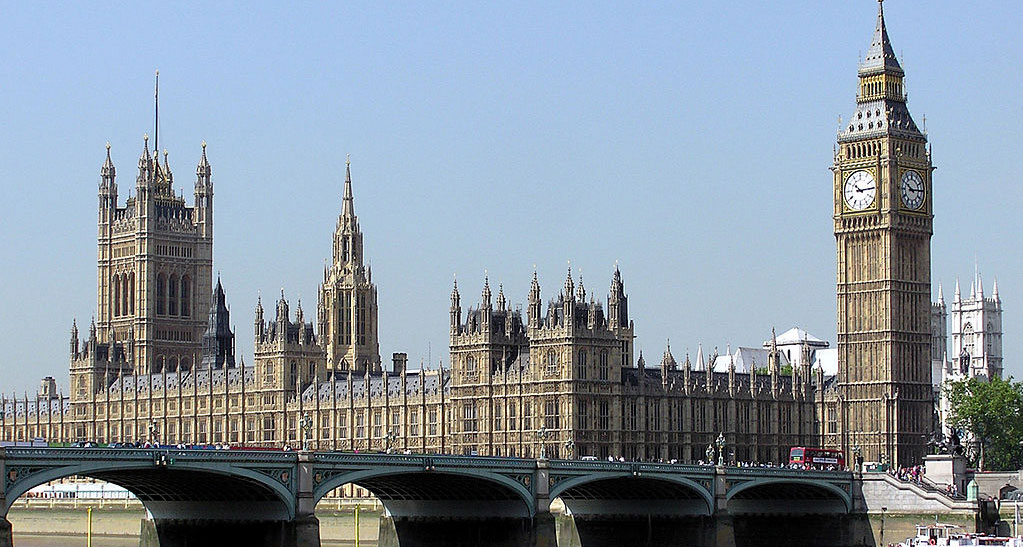
Last week David Cameron admitted that Westminster has a ‘problem’ with lobbyists. Governments have long struggled with lobbying. The Coalition has had its own share of scandal around ‘inappropriate’ influence, from former military chiefs to access to the prime minister.

However, finding a solution is tricky. Like many political issues, the solution depends very much on what you believe the actual problem to be.

Now, MP Patrick Mercer and three peers face allegations of misconduct after a lobbying ‘sting’ by journalists. As of Sunday 9 June, the controversy is spreading to Select Committee chairman Tim Yeo , and questions are being asked about Conservative election strategist Lynton Crosby. This is not only a Conservative problem – two of the peers suspended from their party are Labour.

Like ‘expenses’, the word ‘lobbying’ is now synonymous with corruption. David Cameron made this link explicit

“…secret corporate lobbying, like the expenses scandal, goes to the heart of why people are so fed up with politics. It arouses people’s worst fears and suspicions about how our political system works, with money buying power, power fishing for money, and a cosy club at the top making decisions in their own interest.”

In 2012, a report by the Political and Constitutional Reform Select Committee pointed out that lobbying is not all bad. Indeed ‘it is a fundamental part of a vibrant democracy’ – lobbying  ended the slave trade and gave us all seat belts. It is also a vital information channel for politicians.

It is the ‘perception of undue influence’ that is corrosive. So, the solution is to regulate and open up the system: sunlight, as a famous man argued, is the best disinfectant. The Coalition government has dusted off suspended plans to introduce a register of lobbyists, requiring third parties lobbying on behalf of others to sign a public register.  But why, given the continued allegations, is it so difficult to do?

How you define lobbying shapes the solution. The government pointed out in 2011 that ‘the scope of the register will in large part be set by the final definition of lobbying’.

In his statement last week Cameron defined the ‘problem’ in a particular way: ‘I think we do have a problem in Parliament with the influence of third parties’ – meaning those lobbying on behalf of others. The Committee had previously said that

“…a statutory register which includes only third party lobbyists would do little to improve transparency…as these meetings constitute only a small part of the lobbying industry. The Government’s proposals only scratch the surface.”

The groups consulted last year also felt a ‘third party’ definition was too narrow. Many ‘could not identify the problem that the register was aiming to solve’.

To further complicate things, any definition is also highly political. Does lobbying include church groups? Charities? And does it include, crucially for Labour, Trade Unions, as Cameron thinks it should?

The Committee overall took a dim view of a third party register:

“We recommend that the Government scrap its proposals for a statutory register of third party lobbyists…the proposals…will do nothing to improve transparency and accountability about lobbying.”

So is there a better solution? For the Committee, a well-functioning regulation ‘would include all those who lobby professionally, in a paid role, and would require lobbyists to disclose the issues they are lobbying Government on’. This would help ‘improve transparency about lobbying, and reduce public concerns about undue influence’ (see more here).

The government should also do more to ensure basic information, such as records of meetings published online, are kept up to date. But even keeping track of when and where lobbying is taking place is difficult. Speaker Bercow has restricted access to passes to Parliament pending an investigation. The site ‘who’s lobbying’ seeks to map who is doing what and where. Yet while having a pass and formal meetings with a Minister can be connected to lobbying taking place, where do you draw the line? Does dinner with an old (ex-minister) friend, who happens to work for company X, count as lobbying?

The key question is whether transparency promotes good behaviour or pushes bad behaviour even further underground. Work by Cornelia Woll and David Coen show how lobbying adapts to new and different systems. For example, the US has some of the strongest transparency regulations around lobbying. Yet lobbying still exerts huge amounts of pressure on politicians – see here and here. The reason is obvious – a study calculated that in lobbying over one tax issue, companies gained $220 for every $1 spent on lobbying, a 22,000% return. With such returns and no agreement on how to define it, no solution or regulation will fully ‘solve’ the lobbying ‘problem’.

Austerity under Thatcher and the Coalition: the second time as tragedy

By Professor Deborah Mabbett, who will be delivering her inaugural lecture this evening, 8 November 2012.

In 1979, a new government came to power in Britain determined to rein in public spending and set the economy on a new path led by private innovation and enterprise. Sound familiar? There are certainly some parallels between the Thatcher government and the current Coalition, but there are also some puzzling differences. Take social security. Both tried, or are trying, to cut back this unloved area of government spending, but their cuts are quite different. Thatcher cut back the state pension, but more or less maintained the safety net of means-tested benefits. The Coalition has targeted many parts of the means-tested system for cuts, while the state pension is to be protected with a ‘triple lock’: indexed to the best of wages, prices or 2.5%. Thatcher’s policy was based on the philosophy that the state should provide a minimal, residual safety net, and the private sector would do the rest. But what philosophy guides the Coalition’s pattern of cuts?

The answer shows something important about the relationship between the government and the financial services sector. Under Thatcher, this sector was not only the great hope for the deindustrialised British economy; it also had a key role to play in privatising welfare. Council tenants exercising their right to buy would get their mortgages from the newly-liberalised building societies, while workers would entrust their pension contributions to investment funds which held out the promise of good returns, albeit reduced by large fees.  Twenty-five years on, the government was forced into a dramatic bailout of the financial system. Less noticed, it is also locked into supporting privatised welfare in expensive ways.

Problems with privatised pensions have been apparent: mis-selling, fraud and high fees have afflicted the sector. The government’s response has been to tighten the regulatory framework, while continuing to encourage contributions with generous tax incentives. Regulation was the price of making finance the agent of the government’s plans: private pensions had to be made to work, and if they didn’t, the government would step in to ‘correct’ the market.  Regulation was seen as a burden by the financial sector, but it could also be costly for the government, as the Equitable Life case showed. Equitable Life made commitments to its policyholders that it was unable to honour: the government ended up having to compensate policy-holders for ‘a decade of regulatory failure’. The failings of private sector agents could come back to bite the government.

Indexing the state pension only to prices meant that it failed to keep up with rising living standards. This was intentional: the idea was that private pension provision would expand to fill the gap. For those who lacked a private pension top-up, means-tested benefits were available. However, the rise of means-testing conflicted with the aim of expanding private provision, because workers can contribute to a pension scheme and then find that state benefits are reduced. While successive governments tried to mitigate the effects with various allowances and tapers, it remained the case that pension contributions could bring a very small return in increased retirement income.

The decision to adopt ‘automatic enrolment’ made it a necessity to do something to restrain means-testing. This policy aims to boost private pensions by relying on workers to accept ‘defaults’ in market transactions rather than actively evaluating their options. The problem with this type of ‘nudge’ is that the nudger must be quite sure that the default is in the interests of the worker. In short, the government must make private pensions pay. The triple lock on the state pension is one step towards this, as it should slow down the growth of means-testing.

Is there any alternative? A much larger compulsory state scheme would avoid many of the problems with private pensions, but apparently that is politically untenable. What makes it so is the continued power of the financial services sector. Privatisation does not stand for individual autonomy and choice – the contributing worker is a passive figure in pensions policy. Instead, privatisation stands for making policies for the financial services sector, protecting its role in provision. The result is inefficiency and expense, complex regulation and a high risk that the government picks up the tab in the end.

The Thatcher government sowed the seeds of a private welfare sector, and the Coalition has reaped an unwelcome harvest. Privatising welfare has locked government and finance into a tight embrace which neither desired but neither can bear to leave.

Watch the “P is for politics” video series produced by our Department of Politics.