Introducing our Chevening students 2020 part two

In this second instalment of our Chevening series, and ahead of the application deadline for the 2021 Chevening scholarship, we meet scholars from Albania, Brazil, Cameroon, the Dominican Republic, Rwanda, Turkey and Zimbabwe.

Rogerio Henrique Ferreira Miranda, Brazil, MSc International Security and Global Governance
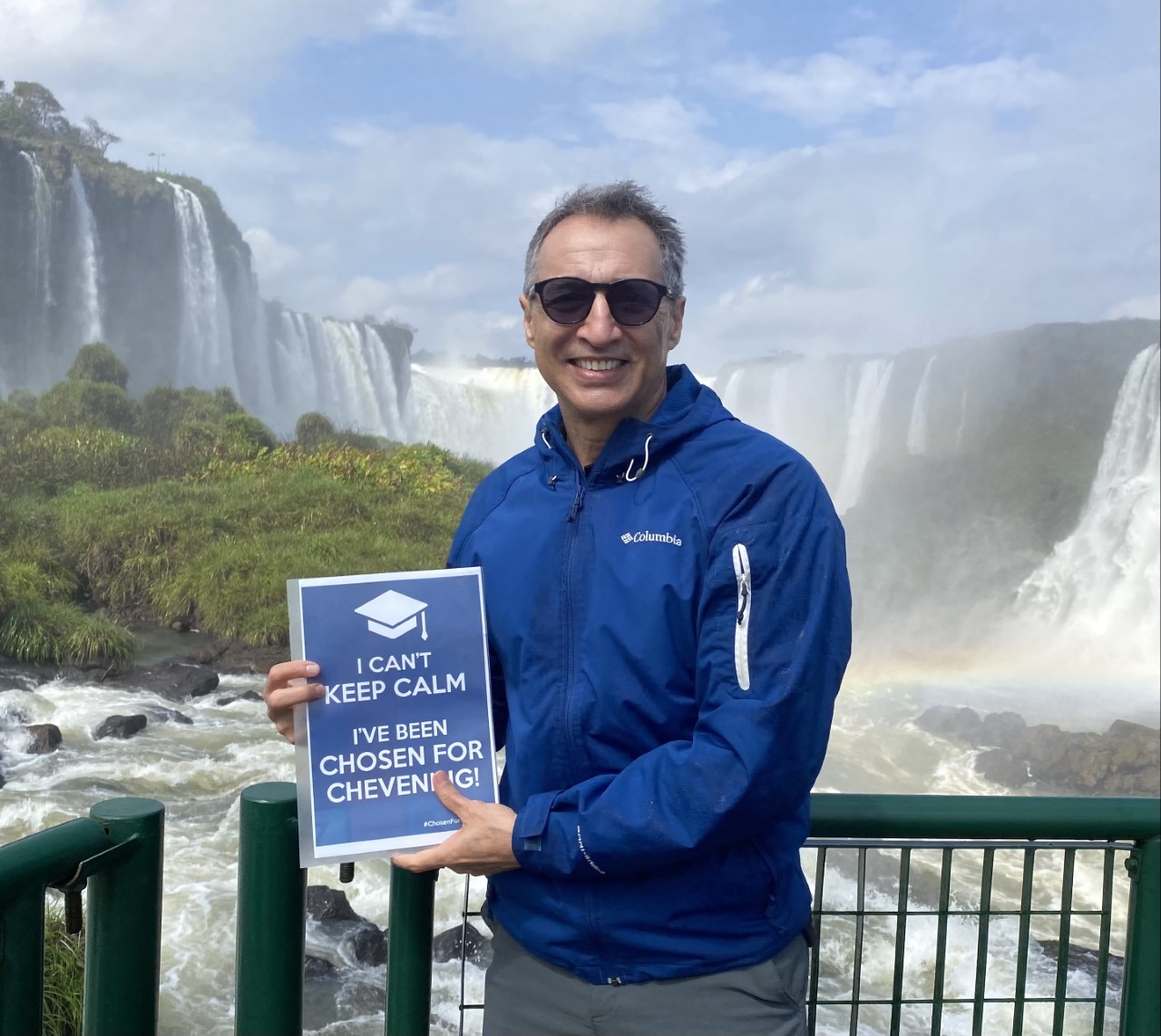
Rogerio Henrique Ferreira Miranda

Rogerio Henrique Ferreira Miranda

Rogerio Henrique Ferreira Miranda’s academic background comprises of undergraduate degrees in Geology and in Law, postgraduate degrees in Management of Electric Sector Companies, International Executive and Technology, Management and Sustainability. Rogerio has just retired as a Security Manager and Director Chief of Staff in Itaipu Power Plant (the largest producer of clean and renewable energy in the planet) where he worked for 30 years, and where he designed important corporative programs such as the company innovation award.

After his Masters at Birkbeck Rogerio plans to become a college lecturer.

Mbiwan Eyere Takor, Cameroon, MSc Education, Power and Social Change
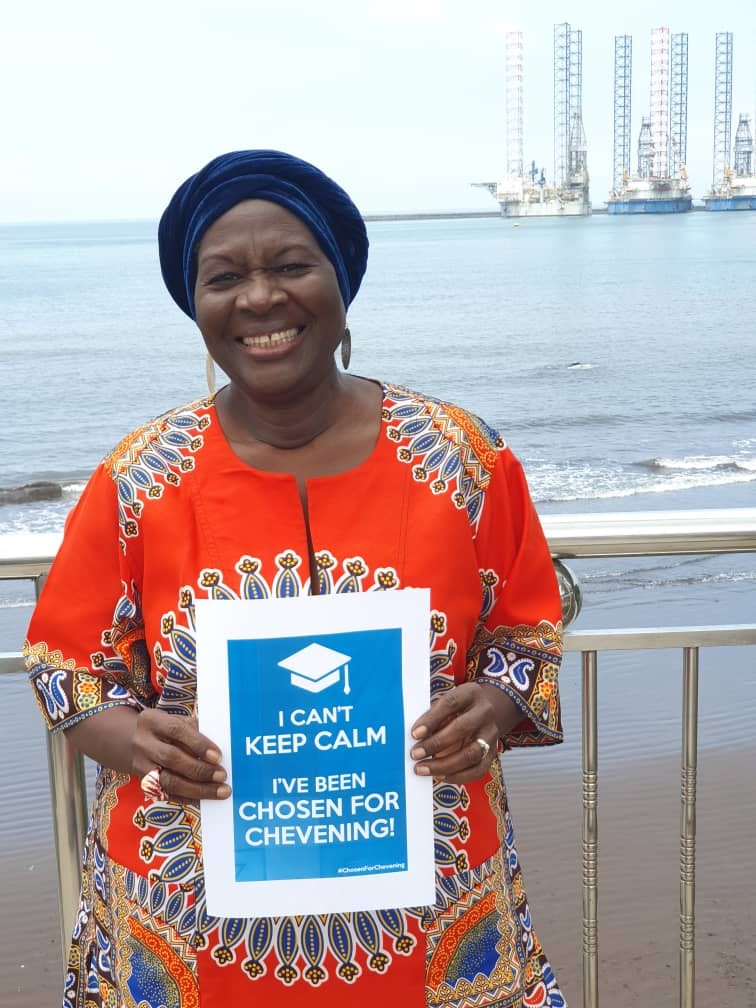
Eyere Takor

Mbiwan Eyere Takor

“Over the last 45 years I went from being just me to a wife and mother of four daughters and a son, to a teacher, mentor, educational administrator and founder of several social organisations as I explored a passion for social justice and empowerment.

In this time, even though the world has gone through many changes with targeted policies to improve access to education and opportunities for growth, women and girls are still at a big disadvantage as compared to their male counterparts.

I applied to Chevening because it has a reputation for being fair, inclusive and high achieving. Here I am at almost 69 with a Chevening scholarship to study at the prestigious 200-year-old Birkbeck, University of London. Again, Chevening alumni include formidable talents that are great resources to their countries around the world.”

Eva Shimaj, Albania, MSc Corporate Responsibility and Sustainability
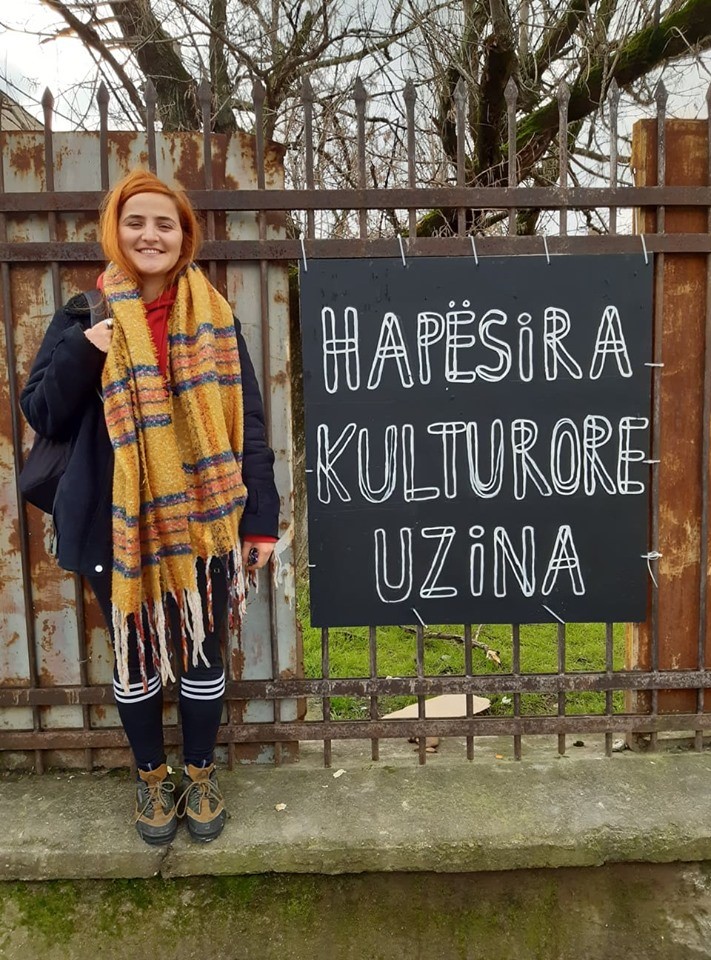
Eva Shimaj

Eva Shimaj

“Working in an international business organisation made me realise the potential resources that companies can put into communities is immense and what is most needed is a change of vision, going towards ethical, environmentally-oriented and sustainable business practices. This motivated me to start this new journey and study Corporate Responsibility and Sustainability. This would have not been possible without the support of the Chevening Scholarship program, which I thank for giving me this opportunity. It is a proud moment for me to be part of this network of excellent scholars and future change-makers.”

Freemen Pasurai, Zimbabwe, MSc Human Resource Development and Consultancy

Freeman Pasurai

Freeman Pasurai

“My life story glides on the back of a fractured past and not even in my formative years did I ever imagine studying in the UK. Nothing less but my faith assured me that the things which I had never dreamt of can become a reality.

In high school I was fascinated by poetry and it’s a passion I’m still pursuing as a poet.

My breakthrough years came when I went to Midlands State University to study for a Degree in Human Resource Management. I became the Student Representative Council President and graduated with a Book Prize Award. Thereafter, I joined Econet Wireless Zimbabwe where I gained experience in customer experience, training and development and human capital management. I also assumed the role of President for the company’s Toastmasters Club which perfected my public speaking skills and leadership abilities.

I was enthralled by the reputation of the Chevening Scholarship and how much it has developed leaders across the world. I chose to apply with an understanding that in the UK ideas come alive and the ultimate Chevening experience provides a platform for leadership growth and professional networks that last a lifetime.”

Carolina del Carmen Pichardo Hernandez, Dominican Republic, MA Investigative

Reporting
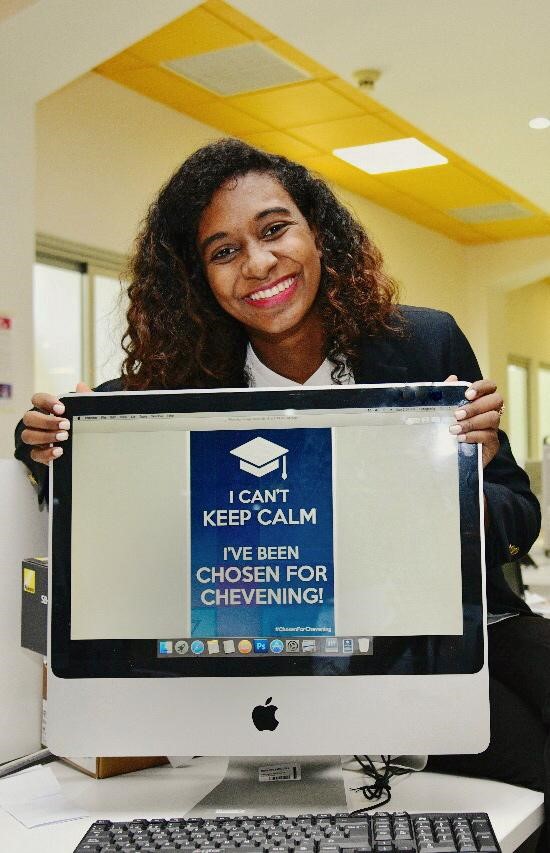
Carolina Pichardo

Carolina Pichardo

“Since 2017 I have worked as a reporter for the oldest and most important newspaper in the Dominican Republic “Listín Diario”, where I write features about different topics such as Government, Education, Health and daily news.

But my main passion is investigating. For that reason, I have written features about the adoption system in the Dominican Republic and the orphans of murdered women. With these articles, I have won multiple journalistic prizes in my country.

I applied for Chevening because studying in the UK on a one-year scholarship will give me the bravery and independence I need to reach all my personal and professional goals. And of course, Chevening is the best way to study in a prestigious British university while meeting future leaders from all over the globe. “

Mariam Camara, Guinea, MSc Public Policy and Management
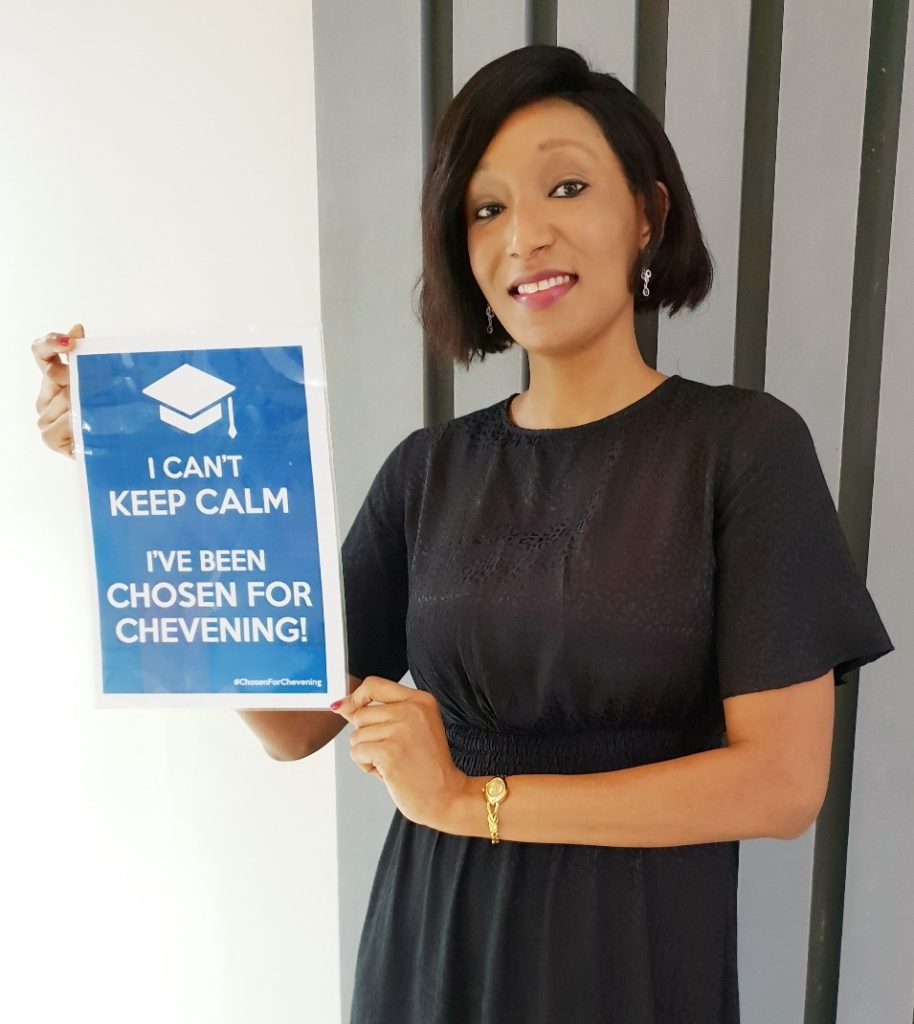
Mariam has ten years of experience in management, capacity building and skills development programmes. Currently, she is the Human Resources Manager of the Guinean State Mining Company, where she promotes skills development for employees.

In 2017, Mariam was selected by the US Department of State as a Young African Leader for the Mandela Washington Fellowship programme.

Her professional goal is to take a leadership role in the social and economic development of her country by promoting education, local content development, women’s empowerment, good governance and transparency.

Elif Harmanci, Turkey, MSc Business Innovation with Entrepreneurship

Elif Harmanci

Elif Harmanci

Elif’s passion for social entrepreneurship can be traced back to her college years. Whether as a full-time volunteer for four years in an award-winning NGO working in innovation and technology, or a regional finalist in Hult Prize Challenge in London, Elif has been on social innovation journey from the start, collaborating with students from diverse areas including visually-impaired peers, refugees and the pupils under legal protection.

As a person who is committed to developing an impactful social enterprise in the future, Elif is honoured to be a Chevener. She sees the UK is the centre of innovation and Chevening offers her the opportunity to meet and work together with innovators and leaders from diverse backgrounds who all wish to make the world a better place.

Sarah Busingye, Rwanda, MSc Business Innovation with Entrepreneurship

Sarah Busingye

Sarah Busingye

Sarah Busingye, a digital catalyser consultant, is an experienced face-to-face and online trainer with 10 years’ experience in the financial sector. She has delivered training on technical skills (e.g. banking, microfinance, digital finance, credit management) as well as soft skills (e.g.Leadership, Project management, Human resource management, Communication, Staff training, Client training, Customer service, Transformation). She is also an expert in trainers’ training and in systems for staff performance management.

Having served in different capacities on both the formal and informal sectors Sarah is passionate about tackling issues that impact the development of informal businesses, such as the lack of skills and education.

She is intent on using the professional and academic skills she will gain at Birkbeck to improve her community.

Find out more about:

Denials and ignorance in the time of a pandemic

Professor Renata Salecl, Professor of Psychology, Psychoanalysis and Law, explores how and why people react to COVID-19 with denial and ignorance.

Ignorance is often understood in a negative way, which is why we can easily accuse others of it while we rarely admit our ignorance. Most often, ignorance is understood not only as a lack of knowledge but primarily as a lack of the desire to know. However, psychoanalysts have observed that people might very well have a desire to know, but then do everything not to come close to the core of their suffering.

In politics, ignorance is often intentional or even strategic. At the start of the pandemic, many world leaders employed such deliberate strategies of ignorance. It was not so much that they did not know about the dangers of the novel coronavirus; they downplayed the pandemic for political and economic reasons.

In their private lives, people adopt their own types of denial. These denials are not so different from the types of denials that were studied in the 1980s by the Israeli psychologist Shlomo Breznitz, who questioned how people deal with potentially life-threatening health situations. Breznitz observed that many people who survived a heart attack did not think that they could suffer its repeat, even if they learned that others with a similar condition did. Denials helped people to feel confident in their wellbeing, and people often went from one form of denial to another. Altogether, Breznitz observed seven different kinds of denials among the patients he studied. One form of denial was that people felt that what happened to others cannot happen to them. Another involved a lack of urgency – when people experienced worsening of their health, they delayed seeking help. Still, another form of denial was a denial of vulnerability, when people felt that they were somehow protected from the illness because of their presumably healthy lifestyle. One of the forms of denial was the perception that illness is just luck, fate, or destiny. Moreover, while some people denied effects related to their condition or have invented an appeasing explanation for their anxiety provoked by their near-death experiences, others denied the information regarding their health. However, the most severe cases of denial included delusions, which meant that people created an explanation for their condition that was far away from reality.

With people who deny COVID-19, one can also observe how they often go through similar types of denials. Some people behave as if the novel coronavirus is of no personal relevance and that infections affect only other people. Even when already infected, some deny the urgency of the situation and do not seek medical treatment when their symptoms worsen. Many people who deny that the novel coronavirus can affect them, similarly to Breznitz’s patients, harbor illusions that they are somehow protected from getting infected because of their healthy lifestyle or even good genes. Some people take infection as merely a matter of luck or destiny. Overwhelmingly present are denials linked to people blocking unpleasant information or pushing aside their emotions related to the pandemic. Furthermore, with the continuation of the pandemic, psychiatrists are also observing delusional thinking. Some people are even developing particular COVID-19 related delusions.

Medicine often does not pay enough attention to people’s denial of illness as epidemiology says little about how ignorance and denial are played out in times of a pandemic. Now that so many countries are going through the second wave of the pandemic, many people are fatigued by it and are not willing to follow often erratic measures governments are proposing to limit the spread of the virus. While on the one hand, people need to deal with the conflicting messages about how to protect themselves and others from the infection, on the other hand, they have to deal with the emotions the pandemic is provoking. When dealing with something traumatic, anxiety-provoking or hard to grasp, people often embrace ignorance and denial, instead of knowledge and facts.

The pandemic has taught us the importance of acknowledging the unknown. As Thomas Jefferson, third President of the United States said, “He who knows, knows how little he knows.” One cannot imagine that today’s world leaders would utter something like this. Although, as German politician and epidemiologist Karl Lauterbach recently reminded us in The Guardian: “Uncertainty and doubt are not a disgrace for scientists or politicians at this time. What is disgraceful is excessive self-confidence, self-righteousness or dishonesty towards fellow human beings.”

Further Information

Keeping busy in Tier 2: Tiptop icing recipe

Birkbeck student Pav returns with more lockdown baking recipes to get the tastebuds tingling.

Picture of Pav


Hello guys, it’s me, your Pav. I hope that you are all well and keeping warm and safe. As Londoners look for ways to keep busy during the Tier 2 lockdown, please see a new addition to your baking adventures.

This time, I’m sharing my tiptop icing recipe, which you can pair with the perfect muffin recipe I promised in my last blog.

What you need:

  • 225g unsalted butter at room temperature
  • 450 grams (1pound) icing sugar
  • 2 teaspoons vanilla extract
  • 3 tablespoons double cream or semi-skimmed milk
  • Pinch of salt

How to do it:

1. Mix the butter for 10-15 minutes. Don’t worry about overdoing it – the more you mix it, the better it gets.

2. Add sifted 225 grams of icing sugar (cover the bowl with a clean kitchen towel to prevent icing going everywhere) – mix for approximately 5 minutes. The key is to ensure that you sift the icing sugar before mixing it to avoid big lumps of sugar and to make sure that all the icing sugar incorporates nicely with the butter.

3. Include 2 teaspoons of vanilla extract and mix for another minute. During mixing, add one tablespoon at a time of double cream or milk up to 2 tablespoons. Don’t forget to leave the last tablespoon for the second part of the icing.

Top tip – the higher quality of vanilla extract you use, the better the icing will taste.

4. Once the icing is coming nicely together, add the second half of sifted icing sugar and a pinch of salt and mix for 2-3 minutes. After 3 minutes, add the last tablespoon of milk and mix for another 5 -6 minutes.

Should I use milk or double cream for the icing?

The difference is in consistency – double cream is creamier, where milk is better for basic icing on fairy cupcakes. However, it does depend on preference and season. I tend to use double cream in winter and milk in summer.

How do I know when the icing is ready?

Try it and if you feel sugar bits, continue mixing. If the icing is too watery, add a bit of sifted icing sugar at a time to change the consistency. If your frosting is too dry, add a tablespoon of milk. The key is in proportion and mixing it all well together.

How to decorate with your icing

Before decorating, be mindful of the current season – in summer ingredients get wet very quickly. That is why in summer, I tend to put the icing in the fridge for 10 minutes to reach a thick consistency for the best decoration. However, not too thick – the best icing is the one which creates strong shapes once squeezed through the icing bag.

In terms of piping and decoration, the world is your oyster – so enjoy your baking and do not forget to let me see your creation on Instagram adding #lifeofpav♈️.

Your Pav.

Widening access to postgraduate courses

Birkbeck’s Access and Engagement Department have been working with the local community in the London borough of Newham for many years. In this blog, Hester Gartrell, Senior Outreach Officer at Birkbeck discusses what widening access to postgraduate courses looks like in the Birkbeck context.

A post-it with a lightbulb

There is a lot of buzz around ‘Widening Participation (WP)’ or ‘access’ to Higher Education. In fact, the Government, through the Office for Students, requires universities to prove that they are actively engaged in activities that will support students from ‘non-traditional’ backgrounds into undergraduate study. At most universities Widening Participation activities focus on supporting secondary school pupils into university. Birkbeck’s Access and Engagement Department challenges this model, supporting BTEC and Further Education College students alongside prospective mature students from a variety of backgrounds including Trade Union members and people who are Forced Migrants.

At Birkbeck, we also want to challenge approaches to access that only focus on undergraduate students. We have a fantastically diverse undergraduate cohort, but this diversity is not reflected to the same extent in our postgraduate student body. As our postgraduate student numbers grow and a Master’s degree becomes increasingly important for gaining a professional job we have pioneered new approaches which reach out to potential postgraduate students.

Birkbeck’s Access and Engagement Department have worked in the east London borough of Newham for many years and in 2018, the department received funding from the London Legacy Development Corporation enabling them to expand their work in Newham and began trialling advice and guidance for potential postgraduate applicants. While there has been substantial economic development in the borough since the 2012 Olympics, many local graduates still find themselves underemployed or unemployed.  For graduates looking to move on from zero-hours contracts, take the next step after poor attainment in their first degree or stepping back into a career after taking time to care for family, postgraduate study can be just as life-changing as undergraduate.

Working with potential postgraduate students through the lens of access enabled us to explore the many unanswered questions around ‘what actually is non-traditional’ and what is defined as ‘widening access’ at postgraduate level. Across a sector dominated by 18-year olds, the traditional widening access criteria and interventions for undergraduate can’t simply be transferred wholesale to postgraduate applicants. This is especially relevant for Birkbeck, where our undergraduate access work already looks very different from the rest of the HE sector, leading to the question, if our access work at undergraduate aims to reach those left behind by traditional widening access work, what does postgraduate widening access look like in the Birkbeck context?

Our postgraduate Information, Advice and Guidance pilot enabled us to begin exploring this question alongside a wider strategic project going on across the College to improve access to Masters programmes for a diverse range of students.

To find out more about our learnings from the east London widening access at postgraduate programme, watch our webinar. We also have a range of open-access videos for potential postgraduate students that can be used in student communications.

Why a Black History Month?

October marks Black History Month in the UK, a celebration of the history and achievements of people of African descent. In this blog, Rebekah Bonaparte discusses why Black History Month is still as important as ever. 

Claudia Jones

Claudia Jones is credited with creating the UK’s first black newspaper, the ‘West Indian Gazette’ in 1958, she has also been described as the ‘Mother of Notting Hill Carnival’ for her part in its founding.

Among the many challenges 2020 has brought, the conversation around racism and inequalities came to the forefront for many with the resurgence and prevalence of the Black Matters Movement following the murder of George Floyd in the US. The effects of this were felt here in the UK, and the subsequent conversations around inequality and belonging in Britain serves as a strong reminder why Black History Month is still as important as ever.

Black History Month was first established in the UK in October 1987 in London. It was organised by Ghanaian analyst Akyaaba Addai-Sebbo who served as a coordinator of special projects for the Greater London Council. The month was adapted from the United States Black History Month that began in the 1920s, and was established in response to heightened racial tensions in the UK.

Prior to it being established, there had been riots in the 1980s, and throughout the 20th century, which left the burgeoning Black British population relegated to outsiders, and marginalised, separate from the British cultural identity which was perceived as representing the interests of only the English.

The creation of Black History Month served as a way to celebrate the black people living in Britain, at a time when the denial of black people’s contribution to history was limited to the horrors of slavery.

In his book, Black and British: A Forgotten History, British Historian, David Olosugo notes that the “uncovering of black British history was so important because the present was so contested.” So, to highlight black people’s place and belonging in Britain, Black History Month serves as a welcome reminder that black people come from a long tradition of people who have enriched this country and beyond with their culture.

There is a rich and relatively unknown history of Black people within the UK that does not feature on the national curriculum, a glaring oversight considering the range of backgrounds that are seen in British schools, around the city and while diversity has become a buzz word in business and beyond, it is important to acknowledge and celebrate this history at all levels of society. It’s through history that we form our collective identity and therefore in studying blackness in the British context we can, in one-way, foster inclusion and pride.

To be clear, black history should feature in all months of the year, but setting aside a month when black people and their contributions can be marked and celebrated and brought to everyone’s attention should not be taken for granted. Black people have done so much in this country and continue to influence and shape culture, a fact that should never be forgotten.

Further information:

Making a difference in the local community: learning from the Central Saint Martins Birkbeck MBA

With over thirty years’ experience working in his local authority, Eubert Malcolm brought a wealth of knowledge to the classroom. Having just been promoted to Assistant Director for Stronger and Safer Communities, he reflects on how the MBA has supported him to make a positive difference.

Picture of Eubert Malcolm

As local authority leaders go, Eubert Malcolm must be among the most personally invested in his community.

“Somebody said to me the other day that I’ve been in Haringey from boy to man,” he laughs, but with over thirty years’ experience in various roles in the local authority, this isn’t far from the truth. Eubert joined Haringey Council as an environmental health officer apprentice in 1988. From there, his role expanded into different fields as his skillset developed, encompassing housing, food safety and pollution.

“I made my way up the local authority and picked up Diplomas in Environmental Health and Management Studies along the way,” explains Eubert, “but I always felt that not having a first degree would hinder me at some point.”

The value of life experience

It was during the hunt for an undergraduate degree that Eubert stumbled across the Central Saint Martins Birkbeck MBA. The idea of studying part-time at the weekends was a particular draw, but was it really possible to do a Masters level programme without an undergraduate degree?

“I went along to the open evening without much hope,” says Eubert, “but I really liked the course leaders and they encouraged me to apply. I think I was the least qualified but most experienced of that first cohort, and the idea of a co-production and developing new types of leaders seemed perfect for my role. It felt like I was in the right place at the right time.”

Seeing things differently

The collaboration between Central Saint Martins and Birkbeck’s School of Business, Economics and Informatics offers an innovative perspective on businesses and the problems they face. This, combined with the diverse international cohort on the MBA, gives students an opportunity to look at situations from a fresh angle. For Eubert, this proved invaluable when looking for ways to connect with the local community:

“When I first started the MBA, there was lots of gang activity and a spate of deaths in the community. I wanted to learn more about how violence was affecting young people in Haringey, so I commissioned a community group to speak to them and to people in prisons to figure out the drivers of criminality. Until you actually sit down with young people and hear from them, their teachers and their parents, you don’t really understand the challenges that they are facing. We need to engage with them and ensure that they are part of the solution.”

Eubert’s MBA dissertation was Haringey’s public health approach to tackling serious youth violence, a combination of academic research and an in-depth evidence base that came from his experience in the local authority, which informed the young people at risk strategy.

“At Haringey, we want to co-produce strategies with the community,” he explains. “Now, we’re incorporating business principles into our local authority point of view and using action learning techniques to think issues through from beginning to end, predicting the challenges we might need to address along the way. It’s an approach the managers I work with are now also starting to adopt.”

Leading in the pandemic

The rapid unfolding of events in the COVID-19 pandemic has made an agile approach essential:

“If you look at how much COVID-19 has cost local authorities,” says Eubert, “I don’t think we’re going to be fully recompensed for that. It has made us look at what opportunities could come out of it instead.

“For example, we couldn’t deliver a lot of our face to face services during the pandemic and many of them went online. We found that the young people we work with instantly took to that approach, which we hadn’t really considered before.”

Now Eubert, his team and the wider council are working on campaigns to bring the local community together to reduce the spread of COVID-19: “The approach we’re taking, trying to get right to the hearts and minds of people in the borough, is something I don’t think we would have attempted before. It just goes to show that with the right support and network in the workplace, you can be successful even through challenging times. I know that anything I set my mind to I will be able to achieve.”

Further Information


A moving celebration of Black History Month

Carmen Fracchia, Professor of Hispanic Art History, Cultures & Languages, School of Arts, reflects on her recent book tour and the emotive nature of the response to her book in considering the experience of Black people in Spain.

Flemish painter, Baptism of the Ethiopian Eunuch. Book of Hours of Charles V, do l. 82r. Brussels or Malines, c. 1519, Österreichische, Nationalbibliothek

On 2 October, I was invited to present my new book ‘Black but Human: Slavery and Visual Art in Hapsburg Spain, 1480-1700’ (Oxford: OUP, 2019) at the University of Lincoln (UK) to celebrate Black History Month, together with two poets, one visual artist, and an art historian. I found this event, UT PICTURA POESIS: An Evening of Poetry, Art and Art History, deeply emotional.

Organised by Dr Laura Fernández-González (School of History and Heritage), the title emerged from her belief in the power of images, following the steps of Horace’s maxime, ‘as is painting, so is poetry.’ Her aim, however, was to show new work produced as a case study on how to construct a ‘new anti-racist Art and Architectural History’. Her brief was followed by the presentation of the three artists by the art historian Michael Ohajuru, a TV personality and director of The John Blanke Project.

In my view, the most unexpected feature of the evening, was the poem ‘Negro pero humano’ (‘Black but Human’) by the literary activist, editor, publisher, and, award-winning poet, Kadija Sesay MBE. It was one of her two extremely powerful poems, written specifically for this event as a response to my book, to its title, and to two images of her choice, The Miracle of the Black Leg and The Baptism of the Ethiopian Eunuch.

The first part of the title of my book, ‘Black but Human’, was an Afro-Hispanic proverb and the prism from which I tried to foreground the forgotten presence of Africans and their descendants in the visual form in early modern Spain. This proverb also allowed me to explore the emergence of the ‘enslaved subject’ and the ‘emancipated subject’ in Spanish portraiture.

This saying, that was circulated in the Afro-Spanish oral tradition and appropriated by well-known Hispanic poets, such as Luis de Góngora in Spain and Juana Inés de la Cruz in Mexico, was also written by enslaved and liberated Africans, as the findings of anonymous black carols, in 2004, testify.

‘Black but Human’ encodes the paradoxical nature of what it meant to be a ‘black’ person in ‘white’ Spain, between 1480-1700. To be ‘black’, as I have recently written in my blog, ‘How long do we need to wait to acknowledge that black people are no longer our slaves?, ‘meant to be a chattel, a piece of property, to be hired, bought and sold as a precious commodity at auctions; to become objects of material exchange: traded to save the donor’s soul, gifts, dowry, and, heritage; money to pay debts, to settle accounts in lieu of mortgages, and rents.

To be a black person meant to be owned by a slave master and to suffer punishment at any sign of rebellion against this complete dehumanization in a society where the word ‘black’ and the physical appearance of blackness were signifiers of the specific social condition of slavery. Besides, to be a black person also meant to become a strategic resource for the colonization of the New World.’ Africans were also considered ‘children of God’ as they had a soul that was whitened by the transformative powers of baptism. Christianity made them equal to Spaniards, but only in the spiritual realm.

Kadija’s beautiful poems encapsulated the ideological, painful, and contradictory position of Africans in the Spanish empire that I explored in my book, perfectly. Her poems set up the emotional barometer of the Lincoln event that was strengthened by the topical work made by the visual artist Victoria Burgher. In her presentation, she showed ten temporary works made with ‘colonial commodities’, like sugar and cotton to ‘re-examine white-washed narratives of empire’ and as a critique to the British Transatlantic Slavery in the Caribbean and in the UK. This strong visual presentation was complemented by the speed and cascade of words by international media activist and poet-educator Mark Thompson’s brilliant performance of his personal and historical poems, that brought the energy and anger of the young.

The last half of the evening was followed by the conversation between Michael and I about my book. We discussed the historical amnesia of the African presence in today’s Spain; the title of my book; the visual representation of the Miracle of the Black Leg, as the metaphor of the violence of slavery and the roots of contemporary racism in the Hispanic world; the portraits of the enslaved Juan de Pareja (c.1606, Antequera, Málaga–c.1670, Madrid) by his owner, the court painter Diego Velázquez; Pareja’s self-portrait, as a freedman, in his painting The Calling of Saint Matthew, and, the urgent need to recover the Afro-Hispanic contribution to the Hispanic culture.

This event was attended by approximately 80 people and generated so many questions from the numerous national and international attendees (students, academics, museums curators, filmmakers, artists, writers, among many others) that time was not enough to address all of them.

Read Kadija Sesay’s poem, Negro pero Humano

Birkbeck welcomes Compass Scholars, 2020-2021

This year we welcomed 20 new scholars as part of the Compass Project, a scheme that helps refugees and asylum seekers access higher education in the UK. In this blog, Isabelle Habib, Senior Access Officer, Forced Migrants shares how the new students were introduced to Birkbeck and student life in London. 

Compass Scholars outside of the Malet Street building

Compass Scholars outside of the Malet Street building.

Over the summer, Compass said goodbye to its 2019-20 cohort of students, after what was a demanding but very successful year for the programme. Many of the students have now moved onto other opportunities within higher education or are embarking on work or volunteering placements. We are also pleased that a few of the students have been able to continue their studies at Birkbeck this term through the support of external sponsorship.

The Compass Project is now entering its fourth year at Birkbeck and we are delighted to welcome a new cohort of students this term, that’s 75 students and counting! After a rigorous application and selection process over the summer, the new scholars successfully enrolled and began their courses with us in October. They have already portrayed a great commitment to their studies by attending a variety of orientation activities. These activities have included a two-part induction on online learning where students were invited to participate in a mock seminar and an introduction to the wellbeing and disabilities services.

The scholars will be supported this year by the Compass Project team within the Access and Engagement Department and by academic mentors who were assigned to them in September. Mentors also participated in a start of term workshop that was coordinated by a compass alum, Michael, who delivered training on how to support students who come from forced migrant backgrounds during their studies. This workshop was very successful, and we are grateful to have students with such talent and commitment to compass amongst our alumni.

In addition to online activities, on the 9 October, the Compass Scholars were invited to visit the Birkbeck campus. During this visit, they were introduced to the facilities at Birkbeck and had the chance to meet one another as well as the Compass Coordinator, Isabelle, in person.

During the day, the students received a warm welcome address from Professor Stewart Motha, Dean of Law. Then they got the opportunity to get to know the Bloomsbury area a little better on a walking tour that was delivered by Dr Leslie Topp, Head of the Compass Steering Committee. They also heard from current Compass students about their experiences at Birkbeck. The students offered their top tips and guidance on settling in this term.

Overall, the day was a huge success and the students left feeling confident about beginning their studies and even more excited about embarking on this new journey with us. We wish them the very best of luck this year!!!

Occupational Psychology at Birkbeck: the early years

This post by Gerry Randell, Emeritus Professor of Organisational Behaviour, University of Bradford, was originally published in 2009.

Birkbeck Occupational Psychology: staff and students in October 1958

The first master’s students in Occupational Psychology in Britain graduated from Birkbeck 50 years ago this October: I was one of them.

A postgraduate diploma in industrial and commercial psychology had been on the statutes of the University of London since the 1920s, mainly at the instigation of the National Institute of Industrial Psychology and taught by and tailored to the Institute’s staff. Alec Rodger had been on the staff of the NIIP in the 30s and had risen to be Head of Vocational Guidance. In the early years of the war, most of the NIIP staff were drafted into the services, mainly to work on personnel selection. Alec became the Senior Psychologist for the Admiralty. After the war he was appointed Reader in Occupational Psychology (a term he invented) at Birkbeck and set about resuscitating the old diploma course. He published an article in Occupational Psychology in 1952 describing and explaining the curriculum for the new ‘Postgraduate Diploma in Occupational Psychology’ that he had just established. It was probable that the first students on this course were young NIIP staff and Alec’s friends. One of them was Peter Cavanagh whom Alec had spotted as someone who had scored particularly well on the Navy’s selection tests and had somehow arranged for him to be allocated to the Senior Psychologist’s Department. Subsequently Peter joined Alec at Birkbeck as his first Lecturer in Occupational Psychology.

A diploma, not being an attractive qualification for budding occupational psychologists, was not pulling in the students in the early 50s, so Alec then set about manoeuvring for it to become a masters and recruiting students on the strength of that. He happened to be the UG External Examiner for psychology at Nottingham at that time and persuaded two of the students he examined to sign up for the 2 year part-time MSc/MA to be course, Peter Henderson and I. When we turned up at Birkbeck in October 1956 there was a third student on the course, Russell Wicks from UCL. There was also a ‘visitor’ – Mrs Hussein from India – who would be ‘sitting in’; over the years Alec was very welcoming to ‘visitors’ from all over the world. We assembled in room 408 on the top floor of the college from 6 to 9, Tuesdays, Wednesdays and Thursdays.

During the year, the Diploma was turned into a Master’s degree, so the three of us had to re-register and look forward to an extra year of attendance! In 1957 eight new students enrolled and joined in the lectures/ discussions with us, in 1958 a further nine enrolled. After submitting our dissertations in September, eight of us graduated in October 1959, Professor Leslie Hearnshaw of Liverpool being the External Examiner. Of the three of us in cohort 1, Russell went on to teach at Surrey, Peter to Queens Belfast and I stayed on at Birkbeck as Alec’s first Assistant Lecturer.

Further Information:

Twenty years of network learning

Malcolm Ballantyne reflects on how this unique model of blended learning developed at Birkbeck.Picture of Organizational Psychology students in 1958 and 2008.

As far as we know, the MScs in Organizational Psychology and Organizational Behaviour were the first degree courses in the UK to require students to interact online. So why did it happen at Birkbeck? As is often the case there was no single reason, there were three contributing factors.

First, in the mid-1980s, the whole of Birkbeck faced a financial crisis. There was a change in the funding formula for part-time students that assumed that a university’s core funding should be based on full-time student numbers and that part-time students were a marginal additional cost. It didn’t work for Birkbeck and for a while it looked as if the whole College might close. The matter was resolved, but only for undergraduate students. Postgraduate departments had, in effect, to double the number of students. In Occupational Psychology (as it then was) we quickly realised this meant extending our catchment area beyond London.

Quite coincidentally, the Psychological Services Division of the Manpower Services Commission approached the Department, asking if we could develop a distance learning version of the MSc for their psychologists who were based throughout the country. If so, they could support the necessary curriculum development.

Lastly, I had been experimenting with on-line tutorials on my second-year module ‘People and Advanced Technology’. The technological support for this was very crude but I had actually done it as early as 1981. Looking back, I think I was the person who needed persuading the most but we brought these three factors together and the result was Network Learning.

A story which hasn’t been told is how, as an occupational psychologist, I was running on-line tutorials in the early 1980s. I came to psychology relatively late in my career, I didn’t get my BSc until I was 30. For the first ten years of my working life, I worked as a television technician for the BBC. I quickly discovered that a technical career was not for me, but the work was interesting, and I became absorbed by the experience of technological change. Between 1960 and 1970, the original 405-line television system was replaced by the 625-line system, colour television was introduced and, less obviously but more profoundly, valves were replaced first by transistors and then by the first generation of silicon chips. The work I and my colleagues did was transformed dramatically.

Having got my degree, I then worked as a psychologist for British Steel and saw even more dramatic effects of technological change on heavy industry with essentially heavy manual jobs becoming mechanised and computer-controlled.

And so, in 1974, to Birkbeck, as one of the two last lecturers to be taken on by Alec Rodger – Leonie Sugarman and I were interviewed on the same day. I covered ergonomics and work design and, when we redesigned the course in 1976, I started my second year module on the effects of changing technology on people’s working lives.

In the summer of that year, the College very generously supported me in attending a NATO ‘Advanced Study Institute’ – two weeks in Greece working with some of the world’s top human-computer interaction specialists and it was here that I first became familiar with the work which was being done on the organizational impact of IT. This also led, three years later, to being invited to join a British Library funded project in which we aimed to replicate the production of an academic journal on-line. The software we used was an early computer conferencing system called Notepad which, incidentally, gave me access to e-mail for the first time. In 1979, there weren’t many people to send messages to.

In 1978, a very influential book on computer mediated communication was published, Hiltz & Turoff’s ‘The Network Nation’. This described how computer conferencing systems had first been created and, significantly from my point of view, raised the possibility of interactive learning systems. I had to try it and persuaded Brian Shackel, the director of the BL project, to allow me to register my 1981 students on Notepad. It was immensely difficult. The computer was at the University of Birmingham and there weren’t that many dial-up terminals at Birkbeck. The telephone system was quite unreliable in those days but we actually managed to make contact and run some on-line discussions.

Following this experience, I applied for funding for more reliable technology. The feedback I received for these unsuccessful bids suggested that what I was proposing wasn’t really understood. So, with the arrival of the first Birkbeck VAX computer, I wrote a system myself – OPECCS, the Occupational Psychology Experimental Computer Conferencing System. It was very simple – and by this time we had e-mail in the form of VAXmail – but it worked quite well and I think it must have been around this time that my colleagues became aware of what I was doing.

So, why has Network Learning been so successful? It’s difficult to be certain but my own feeling is that it was because we had a clear philosophy from the start. We started with the assumption that what made the Birkbeck approach distinctive was the opportunity for students to meet face-to-face and discuss things informally – allowing for what John Dewey called ‘collateral learning’, learning which is neither planned nor intended but which nevertheless happens and is significant. In taking on students from a wider geographical spread, the face-to-face element would have to be less frequent but should remain an essential part of the process. The purpose of the technology was to be that of maintaining continuity of discussion between these face-to-face meetings. This was quite unlike the Open University’s approach where the process was seen as a distance learning experience where the technology was an additional, and optional, means of support.

More recent ideas, particularly from knowledge management, would support the Birkbeck approach. The debate on ‘stickiness’ and ‘leakiness’ of knowledge in organisations (why is it so difficult to get ‘best practice’ transferred across an organization while the company’s best guarded secrets disappear out of the back door to one’s competitors?) recognises the importance of face-to-face contact in the transfer of tacit knowledge. Even Microsoft, determined to operate its R&D function in Washington State, eventually had to relocate to Silicon Valley. I’ve never been able to understand those who maintain that for ‘true distance learning’ there must be no face-to-face contact.

I left the Department at the time that Network Learning was starting in earnest. We had one year of a pilot with Manpower Services Commission psychologists as students – it was shaky but it worked. Today, it’s wonderful to see the success that has followed.

Further Information