Working in the arts is a real job – don’t you dare ask us to retrain!

Arts workers are among the worst hit by the COVID-19 employment crisis. Professor Almuth McDowall asks why the government is so reluctant to offer support.

As a former classically trained dancer, I have been deeply moved by the plight of my colleagues working in the performing arts across theatre, music and dance.

Our pioneering research with PiPA in 2018 highlighted that over 54% of people working in this sector are self-employed, almost four times as many as in the UK general population. One in three don’t have a steady contract. Unlike in any other industry, it is common and expected that people finance the work which they love through other income. Teaching, cleaning, waitressing – you name it, they’ve done it. Taken together, this has always made for a toxic cocktail of precarious work. But never more toxic than now, as theatres are closed, orchestras can practice socially distanced at best (witness the recent ‘come back’ streaming of the Royal Opera House), and dancers now rather famously, thanks to social media posts aplenty, train in kitchens, bedrooms, on balconies or in the park.

Yet, the notion remains that work in the arts is somehow not real work, but a privilege that only the few can indulge. Recent controversy about the ‘Cyber Add’  illustrates the point. BA Acting student Ruby Hoggarth shares an alternative view about life in the arts during the pandemic:

“Graduating during a pandemic into an industry that is in complete crisis has been hard enough, but being nationally downgraded and humiliated by the very people who allegedly have our best interests at heart has been an embarrassment like no other. Not only has this media strategy grossly disregarded the importance of our industry, especially at a time of national crisis when people turn to the arts for healing, it has shown us that this government have little humanity and no ability to believe in the beauty of art.”

It’s a feeling BA Musical Theatre student Alex Conder can relate to:

“I chose to move away from home to study in the UK as a Musical Theatre student as I knew the spirit and quality of the art made in Great Britain is second to none. To then graduate and be told my career in the arts is viewed as a hobby or “not viable”—after the world has done nothing but devour art in the pandemic—is not only a slap in the face to our current artists, but also tarnishing an incredible historic legacy of fine art and creativity in this country.”

Along with hospitality, retail and manufacturing , the arts are the one of hardest hit sectors in the UK. Companies had to make judicious use of the furlough scheme which is now coming to an end. What next? Theatres will find it hard to put on productions at a profit with social distancing measures in place, as even the sell-out run of an adapted Jesus Christ Superstar in Regent’s Park Open Air Theatre demonstrated. We can’t very well take the roofs of all our theatres to aid ventilation, either!

So who’s responsibility is it? Chancellor Rishi Sunak has said that all workers need to adapt to the changing world of work and life in the wake of COVID-19. Well, those working in the performing arts have shown formidable resilience and adaption skills to date, our data shows that many juggled two if not three jobs to make ends meet and have a reasonable income. Tom Rogers, a soloist with Birmingham Royal Ballet has long branched out, initiating his own podcast series, Tom & Ty Talk, and as a guest editor for his company.

Tom says “For me it is vital that people working in the arts respond to the times we are in through creativity and self expression. Despite the political and social upheaval brought about by COVID-19 and our current government, the desire for art and culture remains. By continuing to be creative and bringing art to our communities, we will remind society and this naïve government of the true value arts and culture plays in all our lives.”

Chancellor Sunak seems to have forgotten that the arts and culture industry contributes £10.8 billion a year to the UK economy and gives jobs to 363,700 people.

The enjoyment and quality of life the arts bring to our lives is, however, much harder to measure. I know that I am privileged as I earn a reasonable income which I spend first and foremost on the arts. Life has lost its technicolour, since frequent carefree visits to the Royal Ballet, Sadlers Wells, Birmingham Royal Nutcracker seasons at the Royal Albert Hall, and London musicals are no more. I miss the bonding experience of going to see live music with my three teenage girls or treating my mum to a classical concert visit together.

These are small worries in comparison to existential crisis. The stress and worry caused by the uncertainty and lack of support is taking a toll on those working in the arts. Is Universal credit really an option? Of course it isn’t, as this quote from Geddy Stringer illustrates vividly:

“I timed my move to London terribly, having just finished a somewhat interrupted year on the MA in Musical Theatre at the Royal Academy of Music. There’s been no clear support from the government and no industry to work in. I’ve been trying desperately to get a part-time job elsewhere, but the job market is a minefield to say the least. My only option has been Universal Credit. I know that this can’t last forever, nor do I want to take it for much longer. But until the government sees the arts as a viable and lasting career option – instead of a hobby – and gives it the support it has long justified, then there isn’t really anywhere else to go.”

So what is the answer? A government funded rescue package doesn’t come soon enough. But a rescue package is exactly that – a sticking plaster. What we need is a long-term strategic solution, as COVID-19 is not going to go away in a hurry. More than ever, we need to continue to celebrate the past, present and future of the arts as  part of our legacy and identity.

Further Information

Introducing Birkbeck’s 2020 Chevening cohort

This year Birkbeck is delighted to welcome 30 new Chevening scholars, hailing from all corners of the world. The prestigious Chevening scholarship is offered each year by the UK Foreign and Commonwealth Office to promising students, chosen for their leadership potential and academic promise.

Once again Chevening students from a number of countries opted to join Birkbeck, attracted by its reputation, the possibility it offers to study alongside London’s professionals.

Meet our 2020 Chevening cohort.

Nozipho Nomzana “Zana” Mziyako, Eswatini, MSc Corporate Social Responsibility & Sustainability

Nozipho Mziyako, Etiswani

Nozipho Mziyako, Etiswani

“I applied for the Chevening scholarship because it presents a big opportunity for individuals like me who envision themselves as key contributors to society’s positive development, to learn through academics, forged networks and international experiences.  I love travelling, hiking, adventures, meeting people as well as experiencing different cultures. Through this Chevening experience, I look forward to the exposure and growth and most importantly ploughing back to society.”


Joan Santani Santanasam, Malaysia, MA Journalism

Joan Santani Santansam, Malaysia

Joan Santani Santansam, Malaysia

“I’m a business journalist working with Malaysia’s National News Agency, Bernama. I have been working in the journalism industry for eight years now covering a range of news on business, finance, commodities, stock market and politics.

The Chevening Scholarship is really the gateway for me to enhance my knowledge, broaden my worldview and hone my leadership and social skills. These are essential skills to further enhance my career as a journalist.”


Bongani Njalo, South Africa, MA Arts Policy & Management

Bongani Njalo, South Africa

Bongani Njalo, South Africa

Bongani Njalo is an award-winning South African artist whose work in drawing, performance, installation and traditional bead-making explores themes in culture, collective and individual identity. Njalo was a recipient of the David Koloane Award (2014), he was named one of the Top 200 Young South Africans by the Mail & Guardian (2016) and went on to become a Mandela Washington Fellow in 2017, a programme lead by the Department of State for Young African Leaders.


Yoandra Rodriguez Betancourt, Cuba, MSc Marketing Communications

Yoandra Rodriguez Betancourt

Yoandra Rodriguez Betancourt

“As a communication specialist and marketing enthusiast, I’ve been able to work and gain experience on different scenarios; from large public companies to private small businesses in Cuba, and they all could benefit from accurate and up-to-date marketing tools.

For me, to deserve this opportunity means one of the greatest challenges that I’ll ever have, I’ve always found British culture and history fascinating, and being able to experience it in person is a unique privilege; especially for a woman like me that coming from a working-class family I’ve always felt driven to exceed expectations”.


Zeina Ramadan, Palestine, MSc Creative Industries

Zeina Ramadan

Zeina Ramadan, Palestine

“Being a professional in the creative industry in my home country and observing the sector first hand on the ground led me to choose this major. Through working on various projects and different institutions within filmmaking, animation, TV, content editing as well as the audio publishing industry, I gained a deeper insight into the needs and the hole in the wall which need to be filled not only in my home country but in the region as a whole and the potential it has to grow. This heightened my passion and consequently led me to Chevening as it was a one-of-a-kind opportunity for me to be able to make a difference. Here I am! About to start a life-changing experience whilst simultaneously gaining knowledge and connections in the field I am most passionate about.”


Chiranthi Senanayake, Sri Lanka, LLM International Economic Law, Justice andDevelopment

Chiranthi Senanayake

Chiranthi Senanayake

A youth empowerment advocate specializing in the niche area of Youth Empowerment Incubation (YEI) Chiranti Seneneyake is the Founder and President of Hype Sri Lanka which is the country’s first youth empowerment incubator. She is also the Founding President of the Young Legal Professionals Association of Sri Lanka.

She was appointed as the United Nations Youth Delegate for Sri Lanka in 2016 in recognition of her community service. In this capacity she has worked as a Youth Focal Point to the National Youth Services Council and the Ministry of National Policies and Economic Affairs. Chiranthi also served as the Global Ambassador for Sri Lanka for Youth Opportunities in 2018. She is a Women Deliver Young Leader of 2020 and the recipient of The Diana Award 2020.


Presely Gitari, Kenya, MSc Climate Change

Presley Gitari

Presley Gitari, Kenya

“I’m a conservation biologist from Kenya, who works with the country’s Ministry of Interior and Coordination of National Government in helping ex-offenders reintegrate into society by using environmental conservation as a tool of socio-economic empowerment.

“I’m also an Associate Fellow with the Royal Commonwealth Society and I am passionate about improving the lives and prospects of citizens of the Commonwealth.

“I applied for Chevening because it represents purpose beyond academic progression, as it inculcates a mindset focused on leadership and fostering networks to positively impact the lives of others. ”


Further information:

Changing cities and the meaning of beauty

Dr Daniele D’Alvia, Module Convener in Comparative Law, delves into his thoughts on how cities and communities are changing and with this explores the concept of beauty.

Dr Daniele D’Alvia

In 2019, I agreed with Professor Anne Wagner, Professor of Legal Semiotics at Lille University, to write about the relative and absolute meanings of beauty in relation to cities. I wrote about the beauty of cities, mentioning the sentence of Fyodor Dostoyevsky, Russian novelist, “Beauty shall save the world”. A sentence that today becomes – as I affirmed in 2019 – ‘a necessity and a new way to see the world’ especially in the face of political transformation, environmental changes or catastrophes.

As a Birkbeck Ronnie Warrington scholar and a passionate reader of Oscar Wilde, I shall write on the meanings of beauty. Beauty cannot be seen as an absolute, fixed concept. Indeed, I firmly believe that beauty must be interpreted as relative and susceptible to change to become the expression of a new transformation that can turn the actual signs of imperfection and political change into a new beautiful meaning. The ‘imperfect’ past or present can, indeed, vanish in front of crowded streets of protesters that today march side by side with people of different religions, races, and sexual orientations. This because the new future shall start to become the new present of an evolved and transformed vision of cities as well as of communities.

In this light, the ‘Black Lives Matter’ movement this year as well as the political demonstrations and protests in Minsk, Belarus, represent the necessity of seeing the world differently. As I have affirmed in 2019 ‘beauty becomes a necessity’. That same necessity to re-invent the world in front of the violence and dictatorship has given new meanings and interpretations to cities.

Minsk has shown the world that people are now asking to become more aligned with democratic concepts of equality and freedom. The flower-bearing women protesting in Minsk in August in response to the police violence inflicted on Belarusians represents the new meaning of beauty of the silenced innocents. Additionally, the removal of statues that symbolised colonial power becomes the symptom of a transformation of cities towards new ideals of inclusion, diversity, and tolerance. Indeed, it seems that nowadays the concept of beauty must be relative and open to change, rather than absolute and fixed, because it is inside the same ‘relativity’ that we can identify the meaning of change and revolution.

It is with discussions and the debating of our own views and opinions that we can change the world. Everything that is perceived as absolute and fixed can only absolutely destroy. The relativity of ideas, the doctrine that knowledge, truth and morality exist in relation to culture, society, or historical context, is the key to progress and equality. Indeed, I firmly believe that each real revolution starts within ourselves and we need to open ourselves to thinking beyond our own self-interests and boundaries.

Further Information
Golden Dawn: Greece’s neo Nazi leaders jailed

In response to the guilty verdict in the Greek Golden Dawn Nazi trial in Athens, Greece, Dr Maria Tzanakopoulou from the School of Law charts the history of the group, the anti-fascist movement in the country and the people’s reaction to the historic verdict. 

A huge crowd gathered outside of the Court of Appeal in Athens

A huge crowd gathered outside the Court of Appeal to hear the verdict.

The world salutes yesterday’s historic verdict in the Greek Golden Dawn Nazi trial before the Athens Court of Appeal, Criminal Division. Five and a half years after the commencement of proceedings, the Nazis were jailed. The most momentous trial for an entire generation of Greeks, and possibly the biggest post-Nuremberg Nazi trial in global history, yesterday’s verdict came to the relief, emotional outburst and thrill of thousands of citizens gathered outside the Court of Appeal in Athens. The Nazis were jailed!

From a fringe fascist group in the mid-1980s, Golden Dawn developed into a decisive political force, securing 21 seats in the 2012 general election to the astonishment of Greek democratic people. Yet the development was not without prior notice. The ascension of Golden Dawn to a dominant political and ideological force was the offspring of years of far-right radicalisation, pauperisation, austerity and debasement of the lives of citizens. With the exception of the Left, mainstream political forces did very little, if anything, to put a stop to extreme far-right, nationalist and anti-immigrant voices. The words used by mainstream politicians in their references to Golden Dawn following their 2012 election are hair-raising: ‘an authentic political movement’; ‘activists’; ‘polite’; ‘earnest’ are a few among them.  As such, the Nazis did not solely make it to Parliament; they were normalised by the system, becoming an almost conventional interlocutor in everyday public political discourse. They exerted decisive influence, developed into a better-organised criminal organisation with military hierarchy and, covered with parliamentary immunity, began to spread hatred and violence through society in ways far more effective and extensive than before. The Nazis attacked, and often murdered, whatever and whoever they could not comprehend – from the immigrant worker to the dignified anti-fascist to the fighting trade unionist.

Magda Fyssa, mother of Pavlos Fyass the moment the verdict was announced

Magda Fyssa, mother of antifacist rapper Pavlos Fyass (who was assasinated in 2013), the moment the verdict was announced.

Antifascist rapper Pavlos Fyssas’ murder in 2013 was a milestone in the turn of events that led to the Nazis’ conviction. Pavlos’ assassination was preceded by the murder of 27 year old Pakistani Shehzad Luqman, the attack against Communist trade unionists by organised assault battalions, and the violent attack against four Egyptian fishermen. The above events occurred between 2012 and 2013 and were just a few among many brutal assaults by the Nazis. Yesterday’s trial was about the individual crimes, which had been by and large confessed, but above all it was about the recognition of the Nazis as a criminal organisation.

The historic announcement of the conviction of the entire Nazi group for leadership and/or participation in a criminal organisation was followed by an ecstatic outburst of applause and tears by the crowds. Thanks to the strenuous efforts of the Greek anti-fascist movement, the demand for jailing the Nazis became hegemonic in society, assimilated into the mainstream, and relieved the people of at least some of the bitter fascist hatred that was spreading through. Over the past few days, the slogans ‘Jail the Nazis’ and ‘I won’t be scared’ were projected on central city landmarks of Athens and Thessaloniki. Convicts of the country’s largest prison raised a banner demanding that Nazis be jailed. Millions of citizens made small gatherings raising similar banners and posting them on social media. From Greek cities to Italy and France and from London and Liverpool to Dachau Concentration Camp, Europe cried out: ‘Jail the Nazis.’ Yesterday’s gathering was joined by schools, by grandparents with their grandchildren, by working people and their trade unions, by political organisations and anti-fascist groups, by mothers with their babies and citizens on wheelchairs. Pavlos’ mother, Magda, whose tenacious struggle against the Nazis made her the unwitting symbol of the antifascist movement, was deified by the crowds on her way out of the Court: ‘You made it, son! You did!’, she screamed.

The pain is soothed but our minds are not put at rest. Whatever gave birth to this is still alive. The trial was not the beginning and it is not the end of the struggle against fascism. It is a stage, albeit momentous, in the continuous war against fascism, xenophobia and hatred for the Other. It is one stage in the continuous effort to rebuild our communities on the basis of solidarity, respect and dignity. As these lines were written, just after the verdict announcement, police forces, though unprovoked, started teargassing the crowds. But yesterday, the people were no longer scared. Yesterday they paused and took in a great victory. In the name of Pavlos, of Shehzad and of a deeply wounded society, yesterday the people defeated the Nazis. Yesterday, society was no longer scared!


What’s the best way to raise funds for a startup?

Alexander Flint Mitchell, MSc Business Innovation with Entrepreneurship alumnus and founder of Blind Cupid shares his experience of raising capital for his business venture.

Picture of business man launching into the air.

Like most first-time entrepreneurs, Alexander was a total novice when it came to funding startups before setting up his own business.

Having now secured £175,000 to launch, with the prospect of completing fundraising over the next six weeks, he shares his experience of raising capital for a startup.

Angels and venture capital

When Alexander began fundraising for Blind Cupid, a matchmaking app that uses systematic philosophy and artificial intelligence to match users based on their fundamental values, he took a traditional route of approaching angels (high net worth individuals who provide financial backing for startups) and venture capital firms.

“We contacted many venture capital companies and had some very successful conversations with them,” explains Alexander. “These companies are usually specialists in a certain field and it’s common to be asked to deliver as many as five or six presentations to secure funding. While we would obviously spend some of this time talking about the business idea, the key thing to get right was the financial information.”

The downside of this method of fundraising? Time.

“Venture capital funders are demanding and even getting a response from them, never mind retaining their interest, requires a lot of time and effort,” explains Alexander. “There’s a lot of back and forth, often with your whole team needing to attend calls or presentations, which can feel never-ending when you’re in it.

“We also faced difficulties with our product not fitting neatly into a specialist area. The app we’re developing combines matchmaking with brand new artificial intelligence that has never been built before, and so there are no investors currently specialising in it. Given the amount of money that venture capital funds invest, it’s understandable that they would prefer to go with something tried and tested. We raised around half the funds we needed through this method, but I began to look for alternatives to speed things up.”

Gaining crowd appeal

Many different methods of fundraising are covered in the Entrepreneurial Venture Creation module taught at Birkbeck, among them crowdfunding.

Alexander admits to being sceptical to this approach: “I had the impression when I started that crowdfunding was on a smaller scale and more about conventional ideas than disruptive new businesses – I had no idea that companies do their series A and series B rounds on crowdfunding.”

While individual investment amounts can be much smaller, as little as £10, on crowdfunding sites, Alexander now sees this as an opportunity:

“Compared to venture capital, crowdfunding is a really quick and innovative way to finance startups,” he says. “The main difference is that our investors through crowdfunding are likely to also be our users, which is really exciting. Even if they only invest a tiny amount, they will benefit from a future IPO – it’s similar to holding shares in the stock market.”

The personal touch is also something that appeals to Alexander and the ethos of Blind Cupid:

“We aren’t just trying to match people together; we really want to make sure that these matches are accurate and that once you meet someone you will stay together. We’ve done it for 80% of our beta test users, and now we want to do it throughout the rest of the UK and world. It’s an unusual business concept in a way, because we don’t want people to come back – we want people to find the person that’s right for them.

“Our business model is very different from other players in this market because of this — and other reasons. We offer a premium service which gives our users access to podcasts, blogs and more written by experts that advise them on every aspect of their lives. Topics include how to discover who you really are, what self esteem is and how to build it, how to nurture a healthy relationship and more.”

Blind Cupid have now launched their crowdfunding campaign on Crowdcube. For Alexander, it will be a relief to move to the next stage:

“When you’re looking for funding, it feels like it’s never-ending, but I know that when it’s complete I‘ll forget the months that it took. Many things in life are a learning curve and you find what suits you best. It’s great to finally see it all come to life.”

Further information

How to ask your employer for sponsorship

Picture of a man holding a piggy bank.

If you’re in employment and have a place to study on one of our programmes, you may be eligible for employer sponsorship.

Employer sponsorship is when your employer pays for all or part of your tuition costs. This is usually in recognition of the fact that your studies will benefit your work in some way.

For many of our students, a Birkbeck degree allows them to seek a promotion or to perform their role more effectively. Here’s how to discuss your educational ambitions with your employer.

Find out what’s available in your organisation

Before approaching your line manager about sponsorship, do your homework so you know what definitely is or isn’t available.

Larger firms may have established sponsorship schemes with an application process, while others may operate on a case by case basis.

If you can’t find anything on your company website, your HR learning and development lead will be able to help.

Consider your motivations for study

Take some time to think about why you want to study your chosen course. Will it help you develop the skills to perform a technical aspect of your role? Will it provide a theoretical underpinning to help you manage complex problems? Will you gain a broader understanding of how to differentiate your organisation in the sector?

Once you have a clear understanding of why you want to study this particular course, it will be easier to translate this into reasons why your employer should be interested.

Demonstrate the business case

To secure employer sponsorship, you will need to show the positive return on investment it will provide for your employer. Perhaps the skills you gain in the course will enable you to apply for a promotion and stay with the company for longer. Developing your knowledge of an area of the business might make you more efficient, enabling you to take on more responsibility. Link the programme description to objectives in your current role to show the direct value for your employer.

Show your commitment to learning and development

What have you already done as part of your continuous professional development (CPD) that can show your commitment to your career? It could be as simple as reading around the subject, attending a webinar or signing up for in-house training. Your employer will want to be confident that you will make the most of the opportunity that they are investing in.

What if I can’t get sponsorship?

Employers often have limited budgets available for staff learning and development, so don’t be disheartened if you’re unable to secure funding. Having demonstrated your commitment to your professional development and to the organisation, it is worth asking whether there are any alternative opportunities for you to develop your skills, such as shadowing another employee.

You can also find more information about what alternative financial support is available for our students on the Birkbeck website.

Bringing our ‘whole selves to work’

Last year we spoke to Richard Morely, an MSc Computer Science student who took part in Birkbeck Future’s Ability Programme, a scheme that helps students and alumni with a disability, neurodiverse or long-term health condition connect with a disability-confident employer. Richard undertook a placement at, the insurance company, Azur where he was tasked with improving the company’s interface.

Richard Morley, a Birkbeck student who took part in the Ability Programme

Richard Morely

Richard Morley, an MSc Computer Science student with a hearing disability, applied to the Ability Programme and was given a place at digital insurance company Azur. Richard had been in contact with Birkbeck Futures before joining the scheme and applied to take part in the programme because he had been out of the job market for a while and doubted his ability after a few unsuccessful interviews. He wanted the opportunity to improve his existing skill-set and boost his wavering confidence in the job market.

At Azur, Richard was given the role of Software Development Intern and tasked with improving the interface of the company’s application called Magic. This entailed improving the colour scheme using the brand guidelines and working on developing animated features for the app. In a previous company, Richard had felt very pressured which he did not find conducive to progression. The positive atmosphere at Azur, by contrast, allowed him to develop his skills and confidence. He developed a good relationship with his team and said that: “I found the work challenging because I was doing things that I hadn’t done in previous positions, such as programming and creating animation on the app.”

One of Richard’s biggest challenges at Azur was delivering a presentation about his project. He noted that in previous roles, “I never did presentations. Even if I was given the opportunity, I would be reluctant to do it.” But after receiving support from a colleague in the preparation and delivery, he found it contributed to improved confidence around his skill-set and employability prospects.

Reflecting on the importance of the work placements for people with disabilities, Richard said: “It’s good because lots of employers think that people with disabilities might not be able to get things done because they have certain problems that get in the way of work.” Being given placements such as these “demonstrates that people with disabilities are hardworking and for me personally, that I can adapt to any situation despite my hearing disability.”

Richard’s placement culminated in a job offer which he will take up after he graduates. “It made me feel like there are more opportunities out there for me. It’s created more connections and made me feel more confident in my abilities. I have a bright future ahead of me.”

Many of the employers that took part said that the scheme was important in opening their eyes to the way they could attract and accommodate employees with disabilities or neurodiverse conditions, and encourage an open dialogue about the individual needs of the employees. Tom Armitage, Head of Talent and Performance at the Telegraph commented; “we were able to craft work experience placements that were really meaningful” and said that it challenged his team’s way of thinking.

It is the experience of Richard and students like him that show why schemes like the Ability Programme are necessary to break down stigmas attached to people with disabilities and in turn allow people to bring their “whole selves to work.”

Further Information
Student life in the time of COVID-19

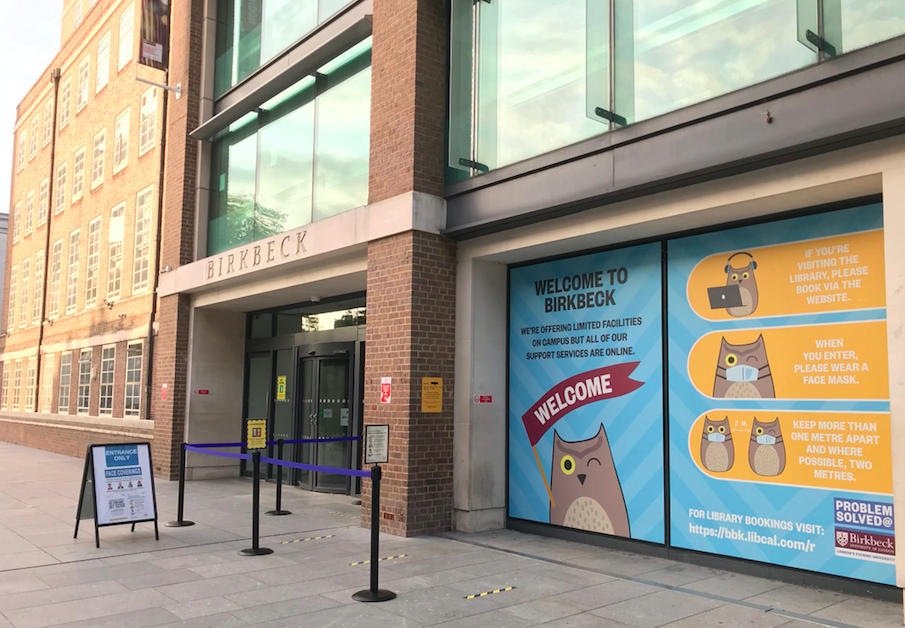
As the new academic year commences soon on 5 October, this blog summarises the current public health advice and information to remind students what they need to know before the university term starts.  

Birkbeck's main building, Torrington Square

Birkbeck’s main building, Torrington Square

Protect yourself, your university and the wider community remember ‘Hands. Face. Space’.

  • Wash your hands regularly 
  • The College has adopted a 1M+ approach to social distancing in circulation areas across the estate. This means that people should maintain a two-metre distance, as far as is reasonably possible whilst in buildings but, with the mitigation of face coverings, it is possible for people to be in closer proximity, for example when passing each other in corridors. However, when people are in rooms for prolonged periods, such as in a classroom, the Library or shared office space, then a 2M social distance should be maintained. This will be supported by laying out furniture, such as classroom desks or library study spaces with two metre spacing
  • We require that everyone wears a face covering whilst inside Birkbeck buildings
  • Get a test and self-isolate if you develop symptoms 
  • Use the NHS Test and Trace app

Whether you’re a new or returning student you’ll no doubt have lots of questions or concerns about how the COVID-19 pandemic will impact your student life. Whether you are already based in London or moving to the city, you’ll need to know what actions you should take to keep yourself safe but also fellow students, university staff and the local community. This blog summarises the important public health advice and information to remind you of what you need to know before the university term starts.   

Public health basics  

You’ve probably been looking forward to starting or returning to university, your friends but it’s essential to keep the public health basics front of mind and always remember ‘Hands. Face. Space’. 

Your ‘household’ will consist of your family or flatmates that you share your home with or if you are living in university halls your halls of residence will let you know what makes up your household. 

Follow the student guidance and booking process for visiting the Birkbeck libraryWe will have very limited on-campus classes and events in the autumn term, but this is under constant review and we will update you as plans change.

The College has adopted a 1M+ approach to social distancing in circulation areas across the estate. This means that people should maintain a two-metre distance, as far as is reasonably possible whilst in buildings but, with the mitigation of face coverings, it is possible for people to be in closer proximity, for example when passing each other in corridors. However, when people are in rooms for prolonged periods, such as in a classroom, the Library or shared office space, then a 2M social distance should be maintained. This will be supported by laying out furniture, such as classroom desks or library study spaces with two metre spacing. We require that everyone wears a face covering whilst inside Birkbeck buildings.

To stay safe while travelling try to avoid car sharing and using public transport at peak times. Walk or cycle when it’s possible and safe to do so. These basics will help protect you, university life and local residents, especially those that are more vulnerable. 

If you’re a student in the clinically extremely vulnerable group, having previously been shielding, and you have a particular health concern you should seek medical advice.

Moving to your university home 

Be sure to follow the government’s latest advice on coronavirus. London is not currently listed as an area with additional restrictions, but if you’re coming from Wales, Scotland or Northern Ireland, remember that the rules and restrictions are different to those in England. It’s also a good idea to get up to speed on the overall advice on staying safe outside your home and find out your new local council so you can keep uptodate on local guidance.  

If you’re an international student coming to the UK from abroad, make sure you provide your journey and contact details before you travel to the UK and you know whether you need to self-isolate for 14 days when you arrive, and read the guidance on entering the UK safely.  

International travel restrictions and local restrictions can change quickly and without much warning so be sure to keep an eye on the latest guidance while making your travel plans.

What to do if you need to self-isolate 

If you test positive for coronavirus while at university, the rules on self-isolation remain the same. You must self-isolate for 10 days and follow NHS guidance. Your other close contacts that will be informed by NHS Test and Trace if they should self-isolate. 

If you’re living in university accommodation where someone in your ‘household’ (as set out by the accommodation management team) has symptoms of coronavirus or tests positive you must let the management team know. 

Wherever you live, you should self-report on My Birkbeck so the university can offer any extra support you might need for your course 

NHS Test and Trace 

Make sure the university has your latest personal details to ensure the NHS Test and Trace can get in touch if they need to – you can update your personal details on you’re MyBirkbeck profile. 

If you or anyone you’ve had close contact with test positive for coronavirus, you’ll be contacted by NHS Test and Trace and asked to self-isolate. If you are contacted, you will be asked to provide them with information they’ll need to help stop the spread of the virus. 

The NHS Test and Trace app is part of the national effort to get us back doing the things we love and every person who downloads the app will be helping in the fight against coronavirus. The app will help you to report symptoms, order a coronavirus test, check in to venues by scanning a QR code and help the NHS trace those who may have coronavirus. The app will do all this while protecting your identity and data security. The app will be available shortly so do the right thing and download it and encourage your student household and friends to do likewise.

Got symptoms – get a test 

Make sure you are clear about the symptoms of coronavirus and when you should get a test. If you have any of the following symptoms you should get a test: 

  • a high temperature 
  • a new, continuous cough 
  • a loss of, or change to, your sense of smell or taste

You can book a test on line at GOV.UK at https://www.gov.uk/get-coronavirus-test or by phoning NHS 119.

If you have a confirmed case of COVID-19, you can self-report on your MyBirkbeck profile.

Be mindful of your mental health 

Recent months haven’t been fun or easy for anyone not least of all students. The new online resource at Student Space has a variety of useful mental health and wellbeing materials that can support you. Public Health England has also published general guidance on mental health and wellbeing during COVID-19.

Your role is crucial 

By following the guidance on washing your hands; keeping your distance; not socialising with more than 6 people; wearing a face covering; using the NHS Test and Trace app, self-isolating and getting a test if you have symptoms you are helping to save lives. Respecting the rules will keep you, your friends and family healthy, and your university town a safe and enjoyable place to live. 

We will continue to post updated on Birkbeck’s coronavirus information page, and in the weekly email to students.  

Welcome to Birkbeck Orientation module is now live and Library study space is now open

As we prepare for the new term Fraser Keir, Academic Registrar, at Birkbeck shares some essential tips to get you started at the College.

Today the Welcome To Birkbeck Orientation Moodle module is launched and available to all enrolled students. It’s full of relevant and useful information including the fantastic Freshers Week programme offered by the Birkbeck Students Union. From Monday 14 September the Birkbeck Library will be open with almost 200 bookable study spaces. As the new academic year commences on 5 October you need to enrol as soon as you can to gain access to all these resources to get you orientated and study ready.  

Complete the Welcome To Birkbeck orientation module 

strongly recommend that you work through each of the sections in the Welcome to Birkbeck Moodle module, ahead of the beginning of term. Each section outlines key information including how to approach learning online, effective study skills along with an introduction to the Birkbeck student community, the personal tutor system, student services, careers support and the Birkbeck Library. All of this will help you make a success of the year.  

Students who completed the module during user-testing took around 4-5 hours, and even continuing students in their final year told us that they learnt new things that would be of great value. You can complete it at your own pace and return to the sections as you wish. Completing the various sections will help ensure that you are ready for the new term. To whet your appetite you can Watch a brief overview of the Welcome to Birkbeck Orientation Moodle module 

If you need help as you work through this Moodle module you can ask for help on the College’s ASK page by selecting ‘Moodle’ then ‘Orientation Module’ from the drop-down. 

Enhancing online course delivery

Over the summer over 500 colleagues have transformed our modules to be ready for online delivery, as explained in the Vice Chancellor’s message. All our content on Moodle has been produced and is being delivered by our research-led academic colleagues.  

The library has invested heavily in online e-books and digitisation to make sure your reading lists and course materials are available on your devices and computers. If you can’t easily study at home we have made COVID-19 secure spaces for you to study on campus if you need.  

Once you complete the Orientation Moodle module you will continue your studies in an interactive and online face to face medium. As soon as health and safety permits we can revert to in-person teaching on campus, and you will have the option to continue your studies online for the remainder of the year. Our coronavirus information will be updated regularly.  

Student protocol for attending the Library – September to December 2020

Birkbeck is committed to providing a COVID-19 secure environment whilst you study and use facilities in the Library. From Monday the 14 September the College Library in Malet Street will have almost 200 study spaces available for student use. The Library will be open from Monday to Friday from 12pm – 7pm To visit the Library, you will need to book a study space in advance. You can also use this link to make a booking if you simply want to come in and borrow items. There will be no access to the Library without a booking.  

Be sure to read the protocol for attending the Library before you travel.  

To keep our College community safe during the COVID-19 pandemic we all have a responsibility to follow these protocols. This protocol will remain subject to amendment and change depending on NHS advice during Autumn Term.  

Complete your enrolment

To access the orientation Moodle module and access the library and other Birkbeck resources, complete the process to enrol as soon as you receive your invitation. Don’t worry if you haven’t received your invite yet, invitations to enrol continue to be sent throughout September, and students who have had Summer re-assessments will not receive their invitations until all their marks have been agreed and processed.  

Birkbeck is a great place to study and now is a great time to be undertaking your Higher Education and getting a University of London degree. 

A short history of Computer Science at Birkbeck

The story of the contribution of one department to the life of the College, the development of computing technology and to the computer industry.

The first official reference to computing at Birkbeck can be found in the 1947-8 College Annual Report, which says: “An ambitious scheme is in progress for the construction of an Electronic Computer, which will serve the needs of crystallographic research at 21-22 Torrington Square; it will also provide a means of relieving many other fields of research in Chemistry and Physics of the almost crushing weight of arithmetic work, which they involve.”

The origins of these computing efforts at Birkbeck are inextricably linked with the names of J D Bernal, the great crystallographer, and his new assistant, Andrew Booth. Returning to Birkbeck at the end of the Second World War, Bernal started building a new research group to study crystallography. He appointed four assistants, one of whom was Booth, who was to lead on mathematical methods. Booth began by building his first electromechanical calculator, the Automatic Relay Calculator (ARC).

Kathleen Britten, Xenia Sweeting and Andrew Booth working on ARC in December 1946

A highlight of Booth’s early career at Birkbeck was an extended visit to the Institute of Advanced Studies at Princeton, where he was accompanied by Kathleen Britten, who would soon become his wife. The trip allowed the pair to work with John Von Neumann, one of the most influential early computer pioneers, and convinced them that the ARC should be redesigned in accordance with what is now commonly known as a “von Neumann” architecture. Together, Andrew and Kathleen wrote a widely-circulated paper entitled “General Considerations in the Design of an All-purpose Electronic Digital Computer” which examined the options then available for building each component. The construction of their first electronic computer, called SEC (Simple Electronic Computer), was completed around 1950. Andrew wrote up the project in his MSc dissertation, which appears to make him the first computing graduate at Birkbeck and hence the Department’s earliest alumnus.

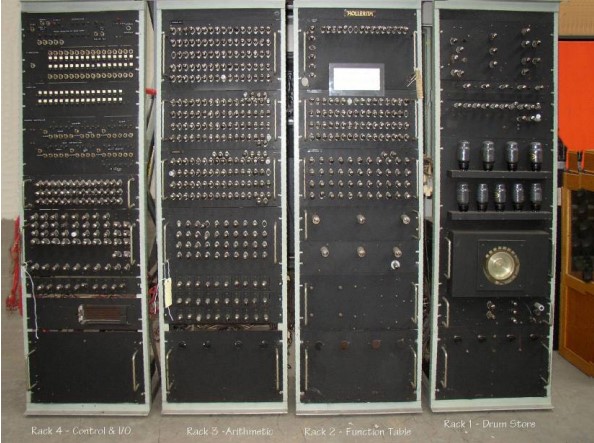
The couple’s best-known machine, APEC (All-Purpose Electronic Computer), was designed in 1949. In 1951, BTM used its hardware circuits as the basis of the design of their HEC1 computer, which evolved directly by the end of the 1950s into the bestselling British computer, with a total of nearly 100 machines installed.

The BTM HEC1 Prototype in store at Birmingham Museum

Even in the days of cumbersome early machines, Andrew wrote about making computers available as widely as possible, securing a grant for a programme of research on “desk calculating machines” as early as 1949. A copy of his report evaluates the technical options for putting computers on, if not the desktop, at least the laboratory bench.

From the start, Kathleen was closely involved in the building and testing of the computers that Andrew designed. Getting these early machines to work involved a combination of testing the electronics and then checking that the programmes executed correctly. In 1953, they co-authored their best-known book, Automatic Digital Calculators, which ran to three editions. As part of her software development work, Kathleen developed a very early assembly language for their computers and in 1958 she published a book on software entitled Programming for an Automatic Digital Calculator.

The first of its kind

In 1957, a Governors’ Resolution stated that Birkbeck’s Computer Laboratory was to be constituted as a separate Department under the headship of Dr Andrew Booth. As far as can be made out, the Department of Numerical Automation was the first department established to teach computing in a UK university; elsewhere the courses were still taught in Computer Laboratories.

Andrew and Kathleen Booth stayed in the Department until the summer of 1962, when they moved to Canada. Andrew continued his career in computing initially at the University of Saskatchewan and subsequently as President of Lakehead University, Ontario.

Over subsequent years, the Department crossed many milestones: adopting the name Department of Computer Science in 1963; awarding MScs to 29 students in 1968; and appointing a chair in 1970. The College Calendar for 1970-71 is the first to acknowledge “Computer Staff” as a distinct group, comprising two programmers, two operators and four computer assistants who prepared paper tape and punched cards. At this time, the College’s IT support staff reported to the Head of the Computer Science Department. This arrangement continued for many years until a separate College Computer Service was created.

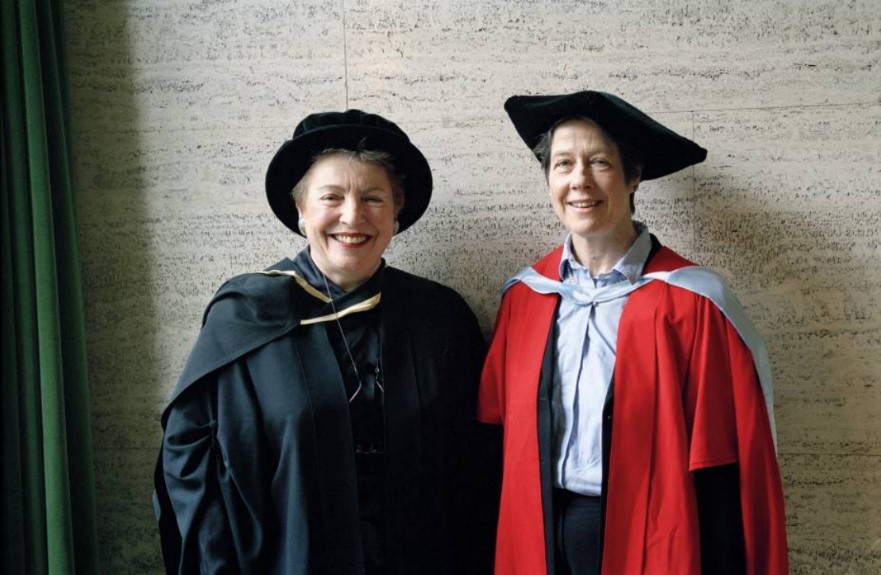
At the turn of the century, Birkbeck gave its highest accolade, a College Fellowship, to two members of its community who had made distinguished contributions to the advancement of computing. Firstly, in 2002, to Dame Stephanie Shirley, who created a major UK software house, whose workforce for many years was composed principally of women working from home and who has subsequently done much to promote the responsible application of IT and other charitable activities. Secondly, in 2003, it awarded a College Fellowship to Andrew Booth in recognition of his lifetime contribution to computing.

Dame Stephanie Shirley (left), on the occasion of her installation as a College Fellow in 2002 with Dame Judith Mayhew, Chairman of Governors.

The Department today

The Department of Computer Science and Information Systems’ research activities have continued to expand over the past twenty years, into advanced logics, computer vision, ontologies, personalisation, web technologies, and ubiquitous computing, with the appointment of several new members of academic staff.

In 2004, the Department set up the London Knowledge Lab in collaboration with the neighbouring Institute of Education. The Birkbeck Knowledge Lab established in 2016 extends this legacy, drawing on multi and interdisciplinary perspectives and methodologies to investigate how digital technologies and digital information are transforming our learning, working and cultural lives.

The Birkbeck Institute for Data Analytics was founded in 2016 to develop interdisciplinary research in data analytics and data science between computer scientists at the Department and members of Birkbeck’s other departments, across the sciences, social sciences, economics, law and humanities.

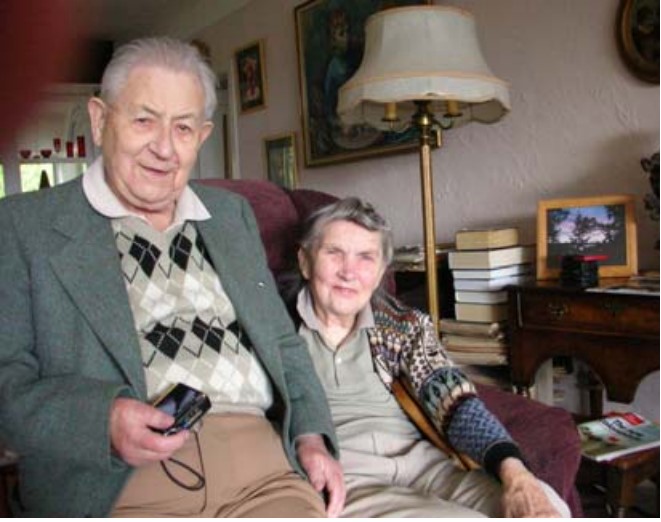
Andrew and Kathleen Booth in 2008

The Department celebrated its 60th anniversary in 2017, and the legacy of Andrew and Kathleen Booth continues to inspire generations of computer scientists. Each year, distinguished scholars and practitioners of computer science are invited to the College to deliver the Andrew and Kathleen Booth Memorial Lecture, which commemorates their pioneering work.

In 2018, Birkbeck became a founding member of the Institute of Coding, a national initiative established to address digital skill needs in industry sectors in key areas including data science, cyber security, artificial intelligence, and coding. Through our part time evening face-to-face model of delivery, Birkbeck is well placed to support those already in employment and has developed new full and part time programmes in Data Science to address the digital skills gap in this area. The Department has also established a relationship with industry through our partnership with the British Library and National Archives, where we jointly develop a PGCert in Computing for Cultural Heritage to help upskill their respective workforce and address the need for digital skills, such as programming, to manage the large volumes of digitised documents being made available for research and to the public as part of our digital economy.

The discipline of Computer Science is never dull. Rapidly evolving technology is always opening up new application areas, while new challenges from the real world drive technology developers to continually push the frontiers forward. We look forward to what the next 60 years will bring.

This article was adapted from the School of Computer Science and Information Systems: A Short History by Dr Roger Johnson, which was originally produced for the Department’s 50th birthday celebrations.

Department of Computer Science and Information Systems Timeline

1947      Andrew Booth and Kathleen Britten undertake a six-month US tour based at Princeton, where they work with early computer pioneer John Von Neumann.

Andrew Booth secures funding from the Rockerfeller Foundation for a computer to carry out natural language translation.

1948      Andrew Booth designs the Simple Electronic Computer.

1951      Andrew Booth is Birkbeck’s first computing graduate.

BTM’s HEC1, based on Andrew Booth’s Circuitry, is built.

1955       The Birkbeck Computer Laboratory gives a public demonstration of machine translation.

1957       The Department of Numerical Automation is officially established.

Andrew Booth is elected to serve on the first Council of the British Computer Society.

1958       Kathleen Booth’s book Programming for an Automatic Digital Calculator is published.

1961       International Computers and Tabulators Ltd. provide the Department with an I.C.T. Type 1400 computer, worth just under a quarter of a million pounds.

1967       The Chair in Computer Science is established.

                George Loizou (now Emeritus Professor), joins the Department as a Lecturer.

1968       29 students are awarded MScs, seven with distinction.

1971       Betty Walters is appointed Department Secretary, where she will serve for over 36 years.

1973       The Department takes part in a College Open Day, offering specialist equipment demonstrations. The then Secretary of State for Education, Margaret Thatcher, is among the attendees.

1983       Dr Roger Johnson (now Fellow of the College) joins the Department.

1987       The Department plays a major role in organizing the Very Large Data Base Conference in Brighton, which will host 700 delegates from all over the world.

1992       Dr Roger Johnson serves as President of the British Computer Society.

2002       Dame Stephanie Shirley is made a Fellow of the College in recognition of her distinguished contributions to the advancement of computing.

2003       Andrew Booth is made a Fellow of the College in recognition of his lifetime contribution to computing.

2004       The London Knowledge Lab is established in partnership with the Institute of Education.

2008       The first degree programmes are offered on Birkbeck’s Stratford campus.

2009       The School of Business, Economics and Informatics is established. The Department of Computer Science and Information Systems becomes one of four in the School.

2016       Birkbeck Institute for Data Analytics is founded.

2017       The Department celebrates its 60th anniversary.

2018       Birkbeck is a founding member of the Institute of Coding.

2020       The Department of Computer Science and Information Systems offers twelve scholarships to the PG Cert Applied Data Science for black and female candidates in order to widen representation in computing.

Further Information