Making Working from Home Work for You

The first Birkbeck Astrea event of 2020-21 explored how small changes can make a big difference to wellbeing, productivity and work-life balance while working from home.

Picture of a laptop with coffee and a children's toy.

If you, like much of the UK population, are continuing to work from home in the New Year, how did you feel returning to your desk (/dining room table/kitchen worktop) after the Christmas break? Were you relieved to give a freezing January commute a miss, or disappointed to miss out on catching up with colleagues? Are you returning to your laptop refreshed, or is it already feeling like Groundhog Day? 

If you’ve found the prolonged absence from the office a difficult adjustment in any way, be it the technology, loneliness or struggling to switch off at the end of the day, you’re not alone, as Birkbeck Astrea members discovered in their first formal event of the 2020-21 academic year, Making Working from Home Work for You. 

Working from Home: Love it or Hate it? 

This virtual event began with an opportunity to share the highs and lows of working from homeAmong the bugbears that we’d rather not carry into 2021 were an increasingly sedentary lifestyle; technological issues ranging from Wi-Fi crises to video call etiquette; as well as habits that we just can’t seem to save ourselves from, such as the obsessive reading of bad news on social media known as ‘doomscrolling’. 

It wasn’t all bad though, as colleagues also shared some of the highs from lockdown life, such as getting to know co-workers on a more personal level by being introduced to pets and other elements of home life; having an opportunity to get chores done in the week, leaving the weekend free to relax; and enjoying more comfortable attire, as one member commented: ‘Spending my working day in outside shoes seems ludicrous and I don’t know how I ever did it.’ 

Change One Thing 

While this end of term gathering was a great opportunity to get together and let off steam about working from home, there’s a serious side to this too. The blurred boundaries created by working from home mean that many of us are working longer hours and finding it harder to switch off at the end of the day. Mental health can suffer too, both for those juggling caring responsibilities with work and for those living alone who may feel isolated. So what can we do to make an improvement in 2021? 

Thinking about how we could improve our work/life balance, productivity and foster a healthy mind in the New Year, we asked members for suggestions of one small thing we could do in 2021 to make a difference. Here’s what they said: 

One change to improve work/life balance: 

  • Turn off all notifications: social media, email – they are designed to serve someone else’s priorities. 
  • Ditch the guilt: give yourself permission to take breaks and don’t feel bad for sticking to your agreed working hours. 
  • Make plans to call a loved one on your lunch break or straight after work. 

One change for a healthy mind: 

  • Be kind to yourself: don’t beat yourself up if you don’t finish everything on your to do list. 
  • Use your commute time to walk or read a book – whatever helps you switch off from the day. 
  • Go outside: use your lunch break to get some daylight and fresh air. 

One change for increased productivity: 

  • Take breaks away from your desk – in the physical office we were much less attached to our desks than we are now! 
  • Focus on one thing at a time – multitasking is distracting. 
  • If you’re in a meeting, switch off your emails. Don’t try to spread yourself too thinly. 

Got a great tip for working from home? Add it to our list. 

What small change can you make this year to get 2021 off to a great start? Let us know what you’ll do differently in the comments below. 

Birkbeck Astrea is a grassroots networking group for women and non-binary people working in professional services roles at Birkbeck, University of London. Stay in touch with us on Twitter and Instagram.

Life of an international student during a pandemic

Embarking on studies in the UK has been made even more challenging due to the pandemic. In this blog, Presley Gitari tells us what motivated him to study at Birkbeck, and his life as an international student.

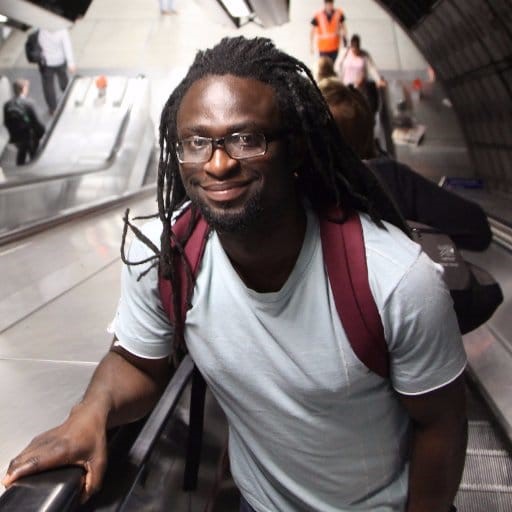
Presley Gitari

My name is Presley Gitari. I am 27 years old and my nationality is Kenyan. I am a conservation biologist currently pursuing an MSc in Climate Change at Birkbeck, University of London on a Chevening Scholarship.

Ever since I was a child I have always been fascinated by the natural world. It has fuelled my curiosity to learn about how the environment works and how we can conserve it for future generations. I attained a BSc in Environmental Conservation and Natural Resource Management from the University of Nairobi. My previous role was with Kenya’s Interior Ministry where I was working on a programme which focused on helping underserved communities in utilising environmental conservation as a socio-economic empowerment tool. I was both humbled and honoured to contribute to our country’s goal of achieving 10% tree cover by 2022.

Why Birkbeck?

Presley with Chevening scholar sign I was drawn to Birkbeck’s diverse and talented faculty and student base. While searching online for a graduate course focusing on Climate Change, I stumbled upon the College which had an impressive course overview and also had an opportunity to listen to an introductory lecture by Dr. Becky Briant on ‘Climate Change and the River Thames’ I was impressed by the factual analysis in the lecture. It was also an incentive that being an evening university, I could interact with students who bring perspectives from their daytime jobs into the classroom, which has been an enriching experience.

Being awarded a Chevening Scholarship by the Foreign Commonwealth and Development Office was an exhilarating prospect. In the backdrop of the COVID-19 pandemic, travel arrangements were thrown into disarray which created a lot of uncertainty about whether we would travel to the UK or continue our autumn lectures virtually. Eventually, Kenya lifted the ban on international flights which was a huge relief.

Moving to London

I have been to London before to attend an international meeting and as always have been fascinated how diverse London really is. A real melting-pot of cultures! Getting used to the tube was made easier by technology which makes getting between points a seamless experience. Coming from a coastal city with a laid-back demeanour it is quite a cultural turn-up for the books having to experience the hustle and bustle of an international hub that London is. I have taken a huge liking for the amazing parks where I regularly go out for a jog or just to admire the scenic beauty on afternoon walks (the squirrels are an interesting lot!).

Unfortunately, due to the pandemic, I haven’t got to visit many attractions as I would have loved to, but I keep an ever-growing list of places to visit when many of the affected places open up.

Studying during pandemic

In response to the COVID-19 pandemic, Birkbeck’s shift towards virtual learning has been possible by asynchronous as well as synchronous learning activities. The asynchronous component takes the form of pre-session activities. We get to interact with pre-recorded lectures, activities and reading material on our university Moodle platform. I usually set aside 1-2 hours in the evening in preparation for our live session where we go over the provided material with our lecturers and ask questions. This forms the synchronous component. We then join a seminar session where we are divided into groups to carry out joint activities which in many ways provides an opportunity for us to put into practice the knowledge acquired from the pre-session as well as the live session.

In a particular module, we had the opportunity to work on a group presentation highlighting a key environmental report which beyond building my in-depth understanding of the content of the material also helped me develop my communication skills. We use Blackboard Collaborate for our live sessions, as well Microsoft Teams for one-to-one interactions with our tutors and dissertation supervisors. The platforms allow for students to efficiently interact and present material, as well as take polls. We also make use of Google Jam Boards which allow all students to put in their contributions without feeling left out. The broad array of options provided by these platforms are suitable for both extroverted and introverted personalities. The live sessions and group work/presentations take about an hour and a half.

A typical day for me would start with a jog in the park or a visit to the gym. I then work from home through the afternoon. I usually take my live sessions from home but sometimes use the Library if I happen to have a book that I need to collect or drop off. The Library has set aside safe spaces to study and participate in lectures which one may access by reserving online, especially for students who may not have a conducive learning environment from home.

Challenges and highlights

Being far away from home in the midst of a pandemic has been quite a challenge. The situation diminishes any opportunities for human connections which form an important role in our mental and physical well-being as a social species. The pressure is thus more on international students who are far away from their loved ones and seek to form crucial connections with their new environment.

My highlight in the UK is when on a whim, I hired a Santander bike and decided to ride from Buckingham Palace, taking in the sights of London’s architecture, finally ending up at Canary Wharf! It was a healthy and environmentally friendly way of introducing myself to London.

I look forward to fully interacting with my fellow students as well as having the full Birkbeck experience when we will be able to. My 2020 has been an opportunity to reflect and develop gratitude for many of life’s pleasures which we take for granted.

“I’m finding my experience at Birkbeck studying MSc Sport Management to be precious and valuable”

Ryotaro Tsutsui, MSc Sport Management student and policy maker in the Japanese Government, describes his experiences at Birkbeck as an international student and his aspirations for the future.

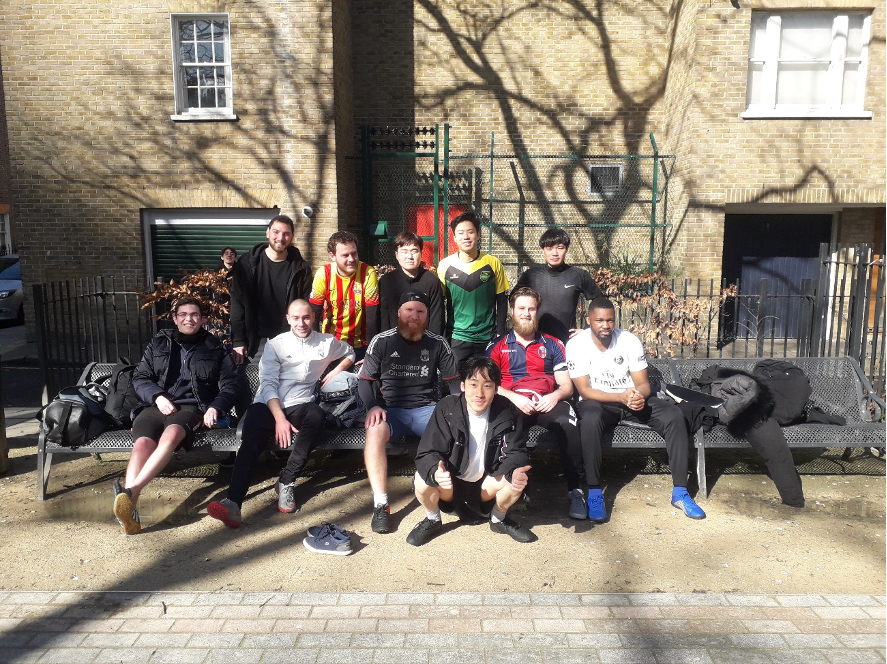
Ryotaro Tsutsui with classmates after playing football at the pitch near Birkbeck

Why did you decide to study at Birkbeck? 

I work for the Government of Japan and I’ve been working as a policy maker since 2012. As an opportunity for developing language skills and knowledge which is related to my policy area, I was allowed to study in the UK to get two Master’s degrees. I chose to join sport management courses as I’m interested in sport policy. I knew that Birkbeck is famous for sport management and my supervisor at Loughborough University (I studied at Loughborough University for the first year of my stay in the UK) strongly recommended Birkbeck.

How are you finding your course?

My experience undertaking the MSc Sport Management degree is precious and valuable. I think it is difficult for Japanese people to catch up on the global trends and affairs in the sport community as many of the international sport federations are in Europe and compared to Japan, the economic scale of the sport industry is huge. One of the advantages of the MSc Sport Management degree at Birkbeck is the wider and well-balanced range of global trends and topics covered.

How is the social life at Birkbeck?

Fortunately, I have made a lot of good friends at Birkbeck. I love the ethnic diversity of the students. There was no majority ethnic group in my course, which provided a good environment for students to form friendships. Also, a hidden advantage of life at Birkbeck – students can easily go for drink after evening lectures, which I really enjoyed!

Do you enjoy having lectures in the evening? What do you do with the time you have in the day? 

The evening based educational system suits students who want to explore new things in the day. For most of them, doing an internship in London would be the best choice. In fact, lecturers were willing to introduce various kinds of internship opportunities to students. I wanted to do an internship in the sport sector and I consulted with one of my lecturers; he kindly suggested a non-profit sport organization and I worked there for several months.

What is the best thing about studying in London? 

It was convenient to commute to Birkbeck as it is in the centre of London. There are much more opportunities in London to do internships than any other city.

What do you hope to achieve in the future? 

As a career path, I’m seeking the best way to be a competitive sport policy maker. After studying in the UK for the last two years, I realise how important it is to learn from the UK and other sporting countries about sport policy. In terms of sport policy including international and domestic policies, Japan is still behind the UK, however, this motivates me to develop sport policy in my country. I’m also motivated to keep human connections which I have made in the UK.

Any advice for international students considering studying at Birkbeck?

I’m really confident in recommending Birkbeck to international students. To make the most of studying at Birkbeck, it is important to plan what to do in the day. Mixing both studying in the evening and doing an internship or other social activities makes international students feel extremely productive!

Further information

What has the Covid crisis taught us about happiness?

For many, the COVID-19 pandemic has changed the way we define our happiness. In this blog, David Tross, Associate Lecturer in the Department of Geography, discusses how the crisis has changed society and definitions of happiness. 

Cup of coffee with smiley face

Given what we experienced in 2020 (and on into 2021), it might seem inappropriate to consider a pandemic and happiness as having much to do with one another. And in many ways, levels of happiness in the UK followed the bad news. The Office of National Statistics (ONS) has been measuring the nation’s happiness for almost a decade now and it has barely shifted over that time. Austerity, Brexit turmoil —none of these made a dent, until March when the first national lockdown was announced. Then, life satisfaction and everyday mood plummeted while anxiety rocketed. But by summer, with the easing of restrictions, these happiness indicators had pretty much returned to pre-Covid levels.

This resilience may also be testament to a key phenomenon identified by happiness researchers — the extraordinary ability of people to adapt to changes in circumstances and, after the initial shock, to shift their expectations to whatever the ‘new normal’ might be. This ‘adaptation’ principle explains why chasing riches produce what economists call ‘low marginal gains’ in happiness terms: you get used to your new-found wealth quite quickly and need to keep accumulating to maintain the same level of wellbeing (yes, just like addiction). New stimuli, both positive and negative, will make quite short-term, dramatic differences to wellbeing; before long, most people revert back to their normal happiness levels. So it was with lockdown. People adapted, found alternative ways to pass the time and got on with things.

But lockdown wasn’t merely tolerated. There were aspects of it people really rather liked. A clue is in the fourth indictor the ONS uses to gauge happiness, often termed the ‘eudemonic’ measure– reflecting a tradition associated with Aristotle that happiness is more than simply feeling good but is connected to the meaningful pursuits and good relationships of our lives – that asks people whether they feel their life is worthwhile. Unlike levels of anxiety, mood and life satisfaction, this measure remained relatively stable throughout 2020. Sure, some of what we find worthwhile (an active social and cultural life for example), took a hit, But the enforced hiatus from normal life that we never expected to inhabit –many dreamt of escaping the rat race; few thought the race itself would stop –has, for some at least, led to realisations and re-evaluations about the way they live.

Because by June, the ONS was reporting that almost half of us had identified some positive benefits of lockdown. One was work-related: not having to commute and spend long hours in the office (one UK wellbeing at work issue is that we put in more hours than most equivalent European nations but get less done!). Other benefits were spending more time with family (particularly quality time with children), appreciating a slower pace of life and connecting with the natural environment. People cooked more and did more exercise. During a guest lecture for UCEN Manchester students, one participant provided a neat formula for staying sane during lockdown: ‘run, plant, bake. Repeat’.

We shouldn’t be surprised. Most of the activities research studies have shown to be associated with happiness –loving relationships, achieving things, the arts, nature, doing things for others – were still possible during lockdown. Volunteering is another activity associated with happiness. ‘For me’, says Karl Wilding, CEO of the National Council of Voluntary Organisations (NCVO), ‘Covid demonstrated that people want to be part of something bigger’. Not only did the one million plus people volunteering (only the tip of the philanthropic iceberg) constitute what the NCVO called ‘the largest peacetime mobilisation in British history’, there was a demonstrable uplift in what might be termed ‘community spirit’: more people felt that others were helping one another, they were more confident that others would help them if needed, and they were checking on neighbours far more than normal. In common adversity, solidarity. Maybe Nietzsche was right when he suggested that human societies ‘build their cities on the slopes of Vesuvius!’.

Of course, even precarious living is subject to the adaptation principle. When danger becomes the new normal, it is hard to maintain this collective spirit. In addition, social solidarity depends not just on feeling connected to a larger entity but also on the idea of shared experience across social groups. This has already faded. Recent reports from the Institute of Fiscal Studies lays out in painstaking detail the ways in which the crisis has both highlighted and deepened the profound social inequalities of UK life. Going forward, unemployment – a key predictor of unhappiness– looks set to rise steeply; a really alarming bit of data picked up from a recent ONS survey was that a third of the population, and half of all renters and parents, say they would not be able to afford an unexpected emergency payment of £850.

Happiness is inseparable from its social context. Every year the UN commissions a ‘World Happiness Report’ and one theme is persistent: the happiest countries spend a higher percentage of GDP on social support systems. Therefore, during the first lockdown, the policy environment became more happiness-friendly. Witness not just furlough but also getting ‘everyone in’ off the streets, suspending housing evictions and benefit sanctions. One Department for Work and Pensions worker told me that advisors ‘no longer felt like cops’ and could offer a more efficient service when clients felt they could speak openly about their problems without a punitive threat. Pre-Covid, a softening of social attitudes towards welfare recipients were being observed in reports like the British Social Attitudes Survey, and it is hard to imagine this reversing any time soon.

In 2020 the state was back, and it felt friendlier. But will this turn out to be just a glimpse of something more hopeful and not a decisive shift? This year has given some actual substance to some of the vague nostrums rolled out by politicians: the big society, the good society, all sectors working together towards a common goal. As vaccines are rolled out, we may not be living on the slopes of Vesuvius for much longer, but we should be mindful of what Covid has taught us about happiness, on a macro level about a more generous politics and on a personal level that the mantra of happiness- Carpe Diem! has two meanings. One, invoked by Robin Williams in Dead Poets Society and by T-shirts, mugs and online dating profiles, refers to the hot pursuit of happiness. But the aphorism has been re-purposed for our frenetic age. its original meaning pays tribute to the moderate happiness philosophy of Epicurus whose idea of seizing the day was not grabbing it by the scruff of its neck. Rather, cultivate simple joys and appreciate what we have instead of always seeking more. For, he wrote, ‘nothing is sufficient for he who finds sufficiency too little’.

Other ancient philosophies had good lockdowns. The Stoic creed of equanimity seems a bit dreary when there’s fun to be had. But in times of adversity, to face one’s fears, accept what we can’t control and still retain a sense of dignity never seemed so apposite. In a timely piece, writer Brigid Delaney recalled the Roman Philosopher Seneca, who, exiled by the state, cut off from his friends, wealth and influence, began to reconcile himself with the enforced simplicity and seclusion of his reduced circumstances, noting that ‘until we have begun to go without them, we fail to recognise how unnecessary things are’. Or, as one UCEN Manchester student put it: ‘the things we thought mattered, didn’t matter’.


Bringing his own dose of magic to the field of Law

Tomas McCabe is a recent prize-winner in the inaugural British Inter University Commercial Awareness Competition 2020. BIUCAC was established to provide opportunities for non-Russell Group students to develop commercial awareness and to highlight the talent at respective law schools. Contestants receive support with enhancing their CVs and win one of twelve prizes at top City law firms. Tomas won the prize offered by Simmons & Simmons and in this blog, he shares his path to success, a smart mix of the conventional with the unconventional, including a 10-year career as a magician.

This is a photo of Law student Tomas McCabe

Tell us about your course, what you’re studying and how you came to study at Birkbeck?
I am in my second year of the LLB course. My job for a long time has been as a magician, however I decided last summer (2019) that I would love to study a law degree around that work. I’ve always been interested in law and have considered studying it for a long time, and when I finally decided to go for it, Birkbeck’s evening structure allowed me to study it conveniently as well as giving me a University of London degree.

What’s your view on the opportunities available to Law students once they graduate?
I have researched a lot about the opportunities for law students after they graduate. While there are some fantastic opportunities, it is a very competitive industry and a majority of students will never get the chance to work as a barrister or solicitor simply because everyone wants to. However, with a good degree behind you and a lot of extra volunteer work, competitions and experience on your CV, it seems you stand a better chance. Thankfully, as I learnt in BIUCAC, the city law firms traditional tendency to hire from Oxbridge and Russell Group universities is being steadily improved to give more students a chance at obtaining the top positions.

What are your career plans following your course?
I have been awarded work experience at two law firms- Simmons & Simmons and CANDEY. Following my placements there, I will have a much better idea where exactly I would like to take my law career. Currently, I am simply trying to take advantage of every opportunity and keep doors open.

How has Birkbeck supported you with those plans?
Birkbeck has supported me in numerous ways. As I mentioned, I much prefer the evening scheduled work as it frees up my day to do my own combination of studying, legal research and other work to support life in London. I have jumped at opportunities presented to students, including this one (BIUCAC), representing Birkbeck at the Landmark Property Moot Competition and applying for some volunteer work. I think students themselves, however, need to do a bit more research into what needs to be done early on in order to build experience and stand out at the time when you are applying for jobs.

Tell us how you came to hear of the competition and how you went about applying?
I heard of the competition through an email sent to students. Initially I wasn’t sure about taking part as I hadn’t really thought about commercial awareness or why I might need it. As it was multiple choice, I decided to give the first few rounds a go. By the time I got to the interviews and presentations stages, I was sucked in and loved it.

How do you see competitions like this helping students, especially non-Russell Group students?
The most obvious answer here is that anything that can make your CV stand out, against the hundreds applying for the same job as you, is important. After all, most – if not all – will have a law degree. That aside, this competition has built my commercial awareness a lot and from doing my research I now realise how important this is. Also, the opportunity to network with graduate recruiters, trainees and more senior lawyers from the top firms in London – magic circle included – was brilliant. Finalists also got a Just Eat voucher!

What were your thoughts on winning 3rd place- an incredible achievement?
To say I was shocked would be an understatement. However, as the competition moved through the rounds and I became more invested in it, I decided soon enough that if I was going to do it, I should do it right. I put in the time and effort for the finals and was really pleased with my achievement. However, the whole way through I was aware of the standard of the other students and didn’t believe I could place third from over 4100 entrants. I’m really happy with myself for doing so though.

Any final takeaways from the competition?
My main takeaways from the competition are: degree class is becoming more important to the top firms than the university you study at, so never think you can’t compete with the best. And also, take every opportunity you can. At worst it’ll cost you a few hours, at best it could get you your dream job.

FURTHER INFORMATION:
More about Birkbeck’s School of Law

“Birkbeck was fantastic…I have been looking for opportunities to give something back”

In September, a 2017 recipient of the Compass Project Sanctuary Scholarship, Michael led a wellbeing workshop for mentors of the Compass Project. These mentors are academics at Birkbeck who volunteer to mentor a Compass scholar during their course.

Drawing on his past experiences as a mentee, Counselling student and person seeking asylum, here is what Michael had to say about the session.

Michael

Michael Darko

Why did you want to offer a wellbeing training workshop to Compass mentors?

My experience of being at Birkbeck was fantastic, I always felt valued there and since completing my course, I have been looking for opportunities to give something back. Drawing on my expertise as a student and in a caring role for many years, I chose to offer this workshop to mentors. Having had a superb mentor-mentee relationship, I wanted to offer this in support and appreciation of mentors’ commitment and sacrifice and importantly, share a mentee’s perspective through the workshop.

What did the workshop involve?

As the focus of the workshop was on wellbeing and self-care, I encouraged the use of a self-care ‘toolbox’ for academic mentors to support not only their mentees but themselves too. I started by giving a presentation on the complexities and challenges often faced by forced migrant students. This included the potential changes to their precarious statuses and how this might affect their university performance and health.

The second part of the workshop consisted of raising awareness of possible secondary stress responses that can affect mentors. I reflected on methods of self-care already in use by the mentors, offered practical breathing and stretching exercises and emphasised the importance of signposting to external support when necessary.

What did it feel like to be presenting to Birkbeck academics?

I felt proud presenting to Birkbeck academics. I expected to be nervous, and although I had not slept the previous night, I was surprisingly relaxed and confident about the workshop. I had a lot of support from the lovely Isabelle (Compass co-ordinator), who is always available, supportive and encouraging which helped a great deal with my confidence.

Leading the workshop was a personal goal that I accomplished. It reaffirmed that I am proud of who I am becoming and showed me that I should never be afraid of making mistakes and getting things done. Just do it and learn from the mistakes.

What are you up to now?

I am currently in my second year at Goldsmiths, University of London where I am studying BA Psychosocial Studies. Despite the volume of reading materials and the frequency of assignments, I am thoroughly enjoying the course and gaining some unimagined practical skills from my Research Methods module, a delightful surprise for someone who has a dislike for maths! Being aware of my individual learning style, which I identified during my time at Birkbeck, means that my engagement with the course contents is managed in a way that supports my development.

What is your favourite memory from your time at Birkbeck?

I genuinely had many pleasant moments, but my best memory is the help I received when I hit rock bottom. I became homeless in the winter and came close to leaving my course. I felt like everything was stacking up against me, then I made a phone call to Naureen, the Compass Project Officer at the time, who worked her magic to help me find a place to stay. Because of that help, I completed my course, without which I would not be where I am today.

Another favourite memory is of the support and safe space provided by my mentor, Ben. When Bail 201 came into effect, I was threatened with losing my freedom to study. I remember going to visit Ben, who calmly created a safe space where I could start taking apart the problem at hand and focusing on what I could do. I remember this moment fondly because I received so much support from him, my lecturer Anne and the Compass team. I tackled the Home Office in court about their ‘no study’ decision with no legal representation and won. This was an astounding moment and because of the level of support I had from Birkbeck, I was able to face the Home Office, not feeling alone or scared.


Lockdown loneliness

In this blog, Rob Martin a Learning Development Tutor at Birkbeck shares four ways to help manage loneliness during lockdown, and some resources available to Birkbeck students. 

A woman looking at her phone to depict loneliness

Some of us during lockdown are experiencing difficulties with loneliness. Many people are relying on the internet for all of their social and relational needs. This may not be the case for all students, and we will be covering other lockdown issues in further posts. Below are our top four top tips for managing your loneliness during lockdown.

1.    Quality connections, not quantity

Academic research into online communication suggests that its added distance and anonymity can provide more immediate rewards than face-to-face (FTF) communication. This might encourage us to text or chat with a greater number of people. But sometimes this can lead to frustrations, because, over thousands of years, we have evolved to relate to others through FTF communication.

In FTF we communicate through a variety of ‘channels’ – through the words we use, through the tone, pace, and volume of the speaker, body language and facial expressions, but also through silences. Silences are natural to us in FTF and allow for a moment to process what’s happening, but most online meetings contain few natural silences. Communicating through a more limited number of channels, with fewer opportunities to pause for thought, could explain why many of us feel more exhausted and could be less satisfied.

If you are noticing a sense of dissatisfaction in your relationships during lockdown, try to acknowledge that things are not quite as you would like them to be at the moment. Ask yourself “how can I take responsibility for better meeting my need for connection/company/entertainment?” Might it be better to distance yourself from certain relationships? During lockdown, it might feel tempting to try to meet our needs for connection through channels that do not serve us in the long run. Try to focus on developing higher quality connections with a smaller number of people. You can make a start on this by switching notifications off on your mobile device, even if just for 20 minutes.

2.    Give yourself permission to feel the way you feel

Give yourself permission to feel dissatisfied, if that is what you feel. Do you feel something else? That’s fine too. Some schools of thought believe that suffering comes from the sense of conflict we experience when we try to fight unpleasant emotions, rather than to understand it or simply be with it. It probably doesn’t feel good, but denying it or resisting it will likely feel worse. There are, of course, certain situations or relationships where an exit strategy is necessary, and this should not be overlooked.

Here, we are talking about particular emotions we might feel when alone – sadness, frustration, loneliness, anger. Acknowledging where we are now puts us in a better position to manage our responses and find more helpful ways of getting our needs met. If you want to learn more about managing difficult feelings, take a look at the range of free mental wellbeing apps via the NHS or contact Birkbeck’s Wellbeing Services.

3.    Use this time to develop a more compassionate relationship with yourself

The pace of life in 2020 has changed for most of us. Forgive yourself for feeling less than thrilled about it. Can you use this time to reflect on what it is that you want, or do not want, to invest your time in? Mindfulness meditation can be a good way of developing self-awareness and cultivating a sense of compassion for yourself and others. Try this list of mindfulness meditation apps to get started.

4.    Use this time to develop your personal interests

Is there something you have always wanted to read about, but haven’t? Are there hobbies you have been interested in, but never found the time or space to pursue? For example:

The Students’ Union still have active clubs and societies – perhaps there is one that matches your interests? Hopefully, you will gain a sense of satisfaction from taking up a new interest or two. It will also give you something different to talk about on Zoom.

We hope that loneliness is not affecting you adversely, but if you are finding things too much, contact Wellbeing Services to ask about counselling or contact the Samaritans. You may wish to consult your GP if you require help, or in an emergency, contact Emergency Services on 999 or visit A&E.

“My journey at Birkbeck as a trans person couldn’t have been easier”

BSc Geology student and Birkbeck Trans Students’ Officer Jayden Solitro describes the experience of coming out as transgender at school age and settling into university life at Birkbeck.

Jayden Solitro

I came out as transgender at 15-years-old on the day of my last GCSE exam. I stayed at the same school in sixth form, and when I came out to my teachers, they decided to have a “transition period” – no pun intended – in which they would call me a short-hand version of my name for a while, because they thought other students would be confused by the sudden change of my name.

To this day, I’m still speechless at the fact that my teachers were more concerned about the effect my gender identity would have had on other students.

As a transgender person, I have always felt disconnected to my gender identity due to society not acknowledging it or respecting it. Every day I feared being misgendered or being called my former name (deadnamed). After I spent two years in a small town in Surrey trying to make stubborn teenagers use the right name and pronouns, I was terrified to go to university, because I thought I would have to start my journey all over again. Luckily, I was wrong; as soon as I came to Birkbeck, I noticed that I was surrounded by respectful adults, and my journey couldn’t have been easier.

When I joined the Students’ Union in 2019 as the Trans Students’ Officer, the Supporting Transgender, Intersex and Gender Non-Binary Students policy was enforced, thanks to the collaboration of College and Union staff.

As soon as I changed my name on the Birkbeck online portal, my decision was immediately respected by all members of staff, which was such a refreshing experience after having to wait for weeks in hope that my teachers would stop deadnaming me in school.

As a fellow student, and not just the Trans Students’ Officer, I am passionate to make sure that transgender students feel safe at Birkbeck, and I would like to encourage you to read this new policy, as it is important for us to know our rights and that they are a way to make our experience as a student the best it can be.

Thanks to this policy, chances to be “deadnamed” on campus will be lowered, as students are now able to change their preferred name on My Birkbeck and receive a new student ID free of charge. As a Deed Poll is not required to do this, this is also accessible to international or EU students who can’t apply for a deed poll in the UK, like myself.

Further Information

Is the Imprisonment for Public Protection (IPP) sentence turning into the Ministry of Justice’s own Windrush scandal?

Professor Mike Hough, Emeritus Professor and Founder of Birkbeck’s Institute for Crime and Justice Policy Research (ICPR) explains how thousands of prisoners are still facing injustice, ten years after IPPs’ failings were first exposed, and endorses latest demands for action.

Ministry of Justice, Westminster

The Prison Reform Trust (PRT) is to be congratulated on their excellent – but profoundly depressing – report No Freedom, No Life, No Future, which charts how large numbers of prisoners sentenced to the indeterminate sentence Imprisonment for Public Protection (IPP) are still stranded in prison many years after they were sentenced. As the report vividly demonstrates, part of the cause of this is the irrational and grossly unfair way in which the recall system is operating, following prisoners’ breach of their licence after release.

In 2010 Professor Jessica Jacobson and I worked on an ICPR/PRT collaboration which resulted in the report on the IPP sentence, Unjust Deserts. We showed how prisoners were required to demonstrate to the Parole Board that they were no longer a danger to the public, mainly by participating in courses to reduce the risks they posed. However, prisoners were denied means to demonstrate that they no longer posed a high risk to the public. Often courses were simply unavailable. In some cases, prisoners were told that they presented too low a risk for the course on offer, or that their levels of literacy were too low for the course in question. More broadly, the effectiveness of courses as a means of reducing dangerousness was questionable; while, at the same time, there were no obvious alternative ways in which individuals, in a prison setting, could prove the negative proposition that they no longer posed a risk to the public.  Matters were made worse by the originally mandatory nature of the sentence, meaning that many more IPP sentences were passed than originally expected, and many of these were for relatively minor offences. The Parole Board was overwhelmed by cases and delays grew. The net result was that many IPP prisoners were serving much longer sentences than expected – sentences that were, by any yardstick, grossly disproportionate.

Our report was well-received, and the then Justice Secretary, (now Lord) Kenneth Clarke, asked to see a pre-publication draft. We took some satisfaction in the announcement made shortly afterwards that the sentence would be abolished, qualified only by the fact that there were no plans to deal retroactively with those still serving IPPs, for example by converting all IPPs into determinate sentences. However, we thought that it would not take long for solutions to be found to release those prisoners in a fair and sensible way, whether through legislative or executive action.

How wrong we were! I was astonished to learn from PRT’s new report that by mid 2020 almost 2,000 IPP prisoners have never been released, and almost 1,400 have been released but are now back in prison, facing exactly the same intractable problems of proving their reduced risk as we found ten years ago.  The ongoing treatment of IPP prisoners is scandalous, and the scandal is, for the Ministry of Justice, taking on qualities that parallel the Windrush scandal that the Home Office is failing to deal with. The obvious unfairnesses and inhumanity which IPP prisoners face demand rapid attention.  We strongly endorse PRT’s call for action.

Further Information

Educating the educators

What motivates a Maths teacher to return to life as a student? From reigniting a love of learning to getting their head around applied statistics, teachers Sebastian Bicen, Donato Schiavo and Leonard Pistol share their experience of going back to school.

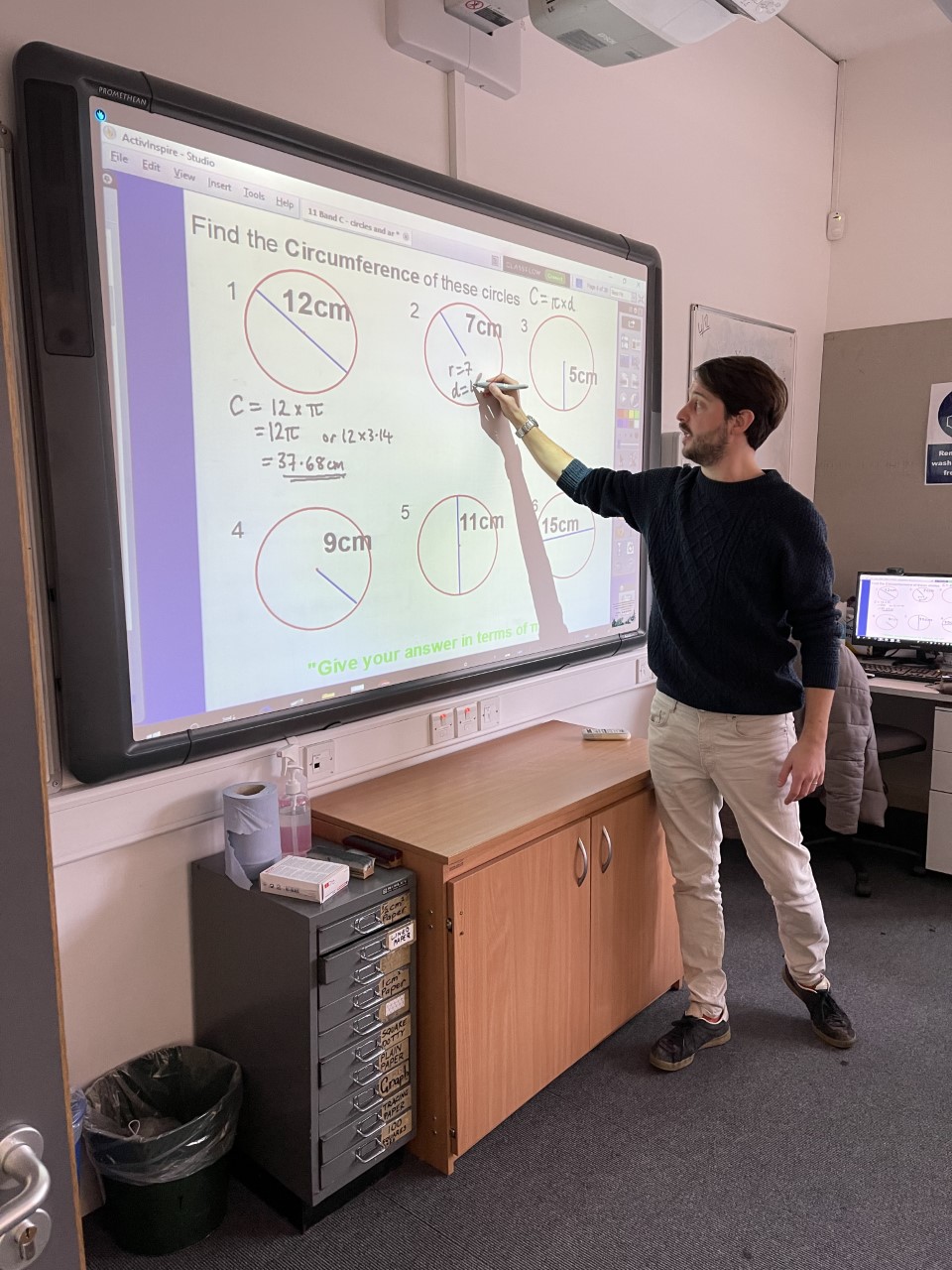
Picture of Maths teacher Seb Bicen.

Graduate Diploma in Mathematics alumnus Sebastian Bicen teaches Maths and Further Maths in London.

The reputation for being one of the most difficult A-level subjects is something that Mathematics has found hard to shake. Yet with rising demand for STEM teachers, it’s increasingly common for educators to find themselves teaching Maths with no experience of further study in the subject.

That’s how Sebastian Bicen, a History graduate from Oxford University, found himself teaching Maths through the Teach First training programme in 2010. Indeed, it’s easy to assume that stress around subject knowledge was what prompted Sebastian’s return to further study.

“You might expect that I went back to university because someone told me I needed a Maths degree,” he explains, “but in reality, even people with Maths-related degrees often don’t want to teach A-Level or Further Maths. Instead, it was being back in the classroom and seeing my students’ passion for the subject that reignited my own love of Maths and my enthusiasm for learning.”

The buzz of the classroom is something fellow teacher Donato Schiavo, who completed his MSc Mathematics in 2013, can relate to: “I remember as a student I really enjoyed explaining concepts and helping my friends with their homework,” he explains, “that pleasure of helping others made me realise I could be a teacher myself.”

Looking for a study route that would complement his work, Sebastian enrolled onto Birkbeck’s Graduate Diploma in Mathematics on a part-time basis: “It’s quite rare for universities to offer something that bespoke, like a personal conversion course where I could jump in at my level and not repeat the concepts I already knew.” Sebastian managed to secure partial sponsorship from his employer and, as a union member, was eligible for a 10% fee discount from Birkbeck.

What’s the point?

While every Mathematics classroom has students who love the subject for its own sake, there are many more who need some convincing, as Maths and Further Maths teacher Leonard Pistol discovered: “A lot of my students were interested in studying Maths at university, but not in becoming Mathematicians. They wanted to know how Maths could be applied in other fields and I felt like I came a bit short in providing personal, real world experience.

“I thought MSc Mathematical Finance would be a really good application. When I was talking to my students about it, I was able to give them concrete applications of the use of statistics and probabilities. The more into the applications I got, the more interested I became and the easier it was to teach as a result.”

For Donato, who now teaches at an international school in Italy, deepening his understanding of Mathematical concepts was a way to engage students in the subject: “When I tell people that I’m a Maths teacher they always say ‘I was so bad at Maths’ – it’s rare to meet someone who enjoyed Maths as a student. I had some wonderful teachers who shaped my idea of what Mathematics can be – solving a problem and understanding the logic that underpins it.

“A lot of my students can’t see the point of studying Maths, so I try to bring in examples that are tangible, like developing passwords or working out the dimensions of a room. The course helped me bring fresh examples to the classroom and teach at a higher level.”

Back to school

So, how did it feel being on the other side of the desk?

“As teachers, we forget what it’s like to be a student,” Sebastian admits, “It was really humbling being in the same boat as my students and having to take my own advice on revising! I experienced first-hand what worked and which things I was telling my students to do that even I wasn’t doing in practice.”

Re-living the university experience also enabled Sebastian to prepare sixth form students for higher education: “I want to treat my year 12 and 13 students as maturely as possible, knowing that they will be going to university. Having access to online lectures and notes from Birkbeck was really reassuring and helped me stay organised, so now I do that for my students as well. I give them lecture notes just like I had to help them experience what university teaching is like. Recording my lessons has been the biggest transformation to my teaching and the response from students has been amazing.”

Leonard, too, found that heading back to university supported his role as a Year 13 tutor: “I had fresh experience of the academic environment, so could give my students up to date advice on lectures and what life would be like. Being able to advise students on what modules to take for their specific goals was really valuable. I was reminded of the expectations lecturers have of you: asking for help, making sure you see your lecturers often, and that’s linked very much to what it’s like to be a teacher.”

Further Information