Henry Brougham – Lawyer, Lord Chancellor and defender of London Mechanics’ Institute 

To commemorate the College’s bicentenary in 2023, we’re showcasing 200 ‘Birkbeck Effects’ which capture the incredible stories of our vibrant and diverse community, highlighting their achievements and impact on the world. 
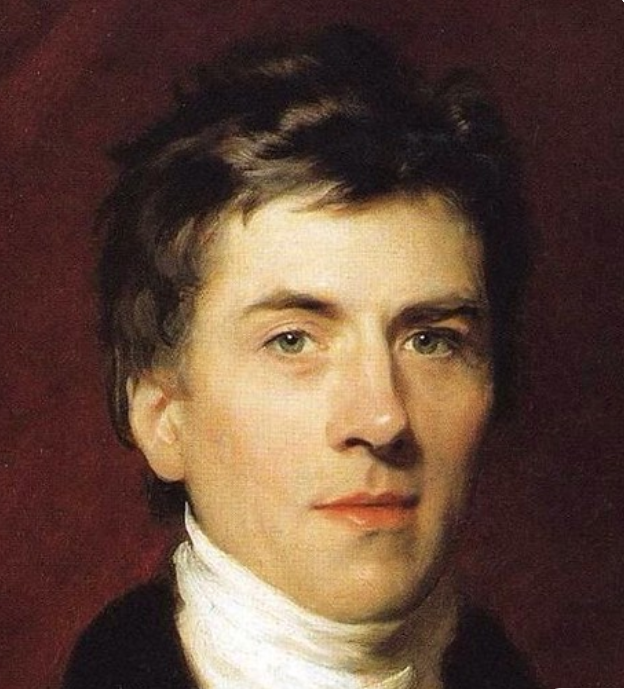
Henry Brougham

Brougham was a British statesman and was the London Mechanics’ Institute’s leading orator, playing a significant role in its establishment and survival. In 1826, he founded the Society for the Diffusion of Useful Knowledge which published information to people who were unable to obtain formal teaching or who preferred self-education.   

His book on education became the ‘Bible’ for everyone involved in educating working people.  He argued that only “tyrants “and other “bad rulers” should be terrified by “the progress of knowledge among the mass of mankind”.  

In Parliament, Brougham was a tireless champion of workers’ education and believed that mass education was essential for political reform.  He also played a prominent role in passing the 1832 Reform Act, which introduced major changes to the electoral systems of England and Wales, and the 1833 Slavery Abolition Act. 

Brougham holds the House of Commons record for non-stop speaking in 1828 when he spoke for six hours on law reform. 

Helena Kennedy KC – human rights lawyer and civil liberties advocate 

To commemorate the College’s bicentenary in 2023, we’re showcasing 200 ‘Birkbeck Effects’ which capture the incredible stories of our vibrant and diverse community, highlighting their achievements and impact on the world. 

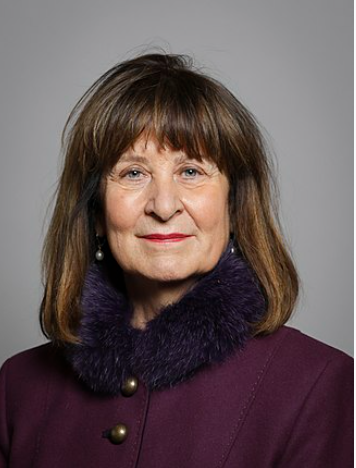
Helena Kennedy

Helena Kennedy KC is one of the UK’s most distinguished lawyers and has spent her professional life advocating for the least represented in society, championing civil liberties and promoting human rights.  

Baroness Kennedy of the Shaws was elevated to the House of Lords as a peer in 1997 and has acted in many of the most prominent British criminal cases of the last 30 years, including the Brighton bombing attack on the British cabinet, the Guildford Four Appeal and the Michael Bettany espionage case.  

As chair of the Further Education Commission into Widening Participation, she produced the seminal Learning Works 1997 (aka the Kennedy Report), which led to changes in government policy in further education and has been hailed as a turning point in efforts to close the education divide in the UK. 

Baroness Kennedy was made a Fellow of Birkbeck since 2021 and was commended during her oration for sharing Birkbeck’s ethos of promoting higher education for everyone, and not only the privileged few. In 2023, she participated in King Charles and Queen Camilla’s coronation at Westminster Abbey, carrying the Queen Consort’s Rod with Dove.  

Geraldine Sundstrom – Pimco managing director 

To commemorate the College’s bicentenary in 2023, we’re showcasing 200 ‘Birkbeck Effects’ which capture the incredible stories of our vibrant and diverse community, highlighting their achievements and impact on the world. 

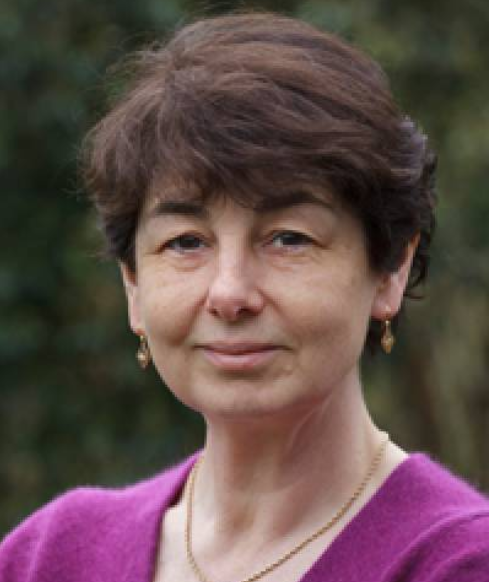
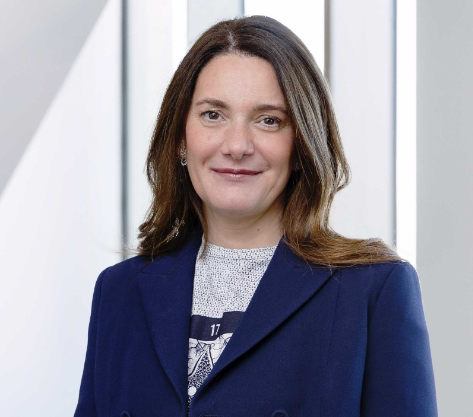
Geraldine Sundstrom

Geraldine Sundstrom is a managing director and portfolio manager at investment management firm PIMCO, the world’s biggest bond fund manager and a passionate advocate for increasing the visibility and empowerment of women in finance and committed to building a portfolio of investments that support a green recovery.     

She is a prominent figure in the hedge fund industry and was formerly a partner and portfolio manager at Brevan Howard Asset Management LLP, where she was responsible for leading the Emerging Markets Strategies Fund, which invests in interest rates, currencies and bonds. With over twenty years investment experience, Geraldine has also held positions at Moore Capital and Citigroup.  

She has been referred to as “The Hedgefund Superstar”, by the London Evening Standard and “the most prominent woman in the famously secretive world of hedge funds” by The Times. Geraldine has said that she follows the motto of “winning by not losing” when it comes to managing investor portfolios. 

Geraldine graduated with an MSc in Finance from Birkbeck in 1998 and in 2010 received the 100 Women in Hedge Funds European Industry Leadership Award. 

James Lovelock – Chemist, environmentalist and Gaia hypothesis theorist

To commemorate the College’s bicentenary in 2023, we’re showcasing 200 ‘Birkbeck Effects’ which capture the incredible stories of our vibrant and diverse community, highlighting their achievements and impact on the world. 

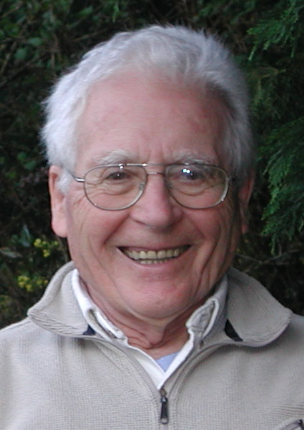
James Lovelock

James Lovelock is best known as the originator of the Gaia hypothesis, the idea that the Earth is a self-regulating system, with that evidence forming Gaia theory. Among his numerous and notable inventions are the electron capture detector, making possible the detection of ozone-damaging CFC gases, and the microwave oven.  

James studied chemistry at Birkbeck College, just before the start of the Second World War, and in 2008 was made a Fellow of the College. He was brought up a Quaker and indoctrinated with the notion that God is a still, small voice within. 

He was viewed as one of the UK’s most respected independent scientists and never officially retired, taking daily two-to-three-mile walks until his later years, and publishing his book Novacene, an argument for the emergence of a new age from existing artificial intelligence systems, just before his hundredth birthday. 

James died in 2022, on the day of his 103rd birthday and, besides his scientific achievements, will be remembered as an environmentalist with his research highlighting some of the most recent environmental issues such as the destruction of the ozone layer and global warming.

Helen Sharman – British scientist and astronaut 

To commemorate the College’s bicentenary in 2023, we’re showcasing 200 ‘Birkbeck Effects’ which capture the incredible stories of our vibrant and diverse community, highlighting their achievements and impact on the world. 

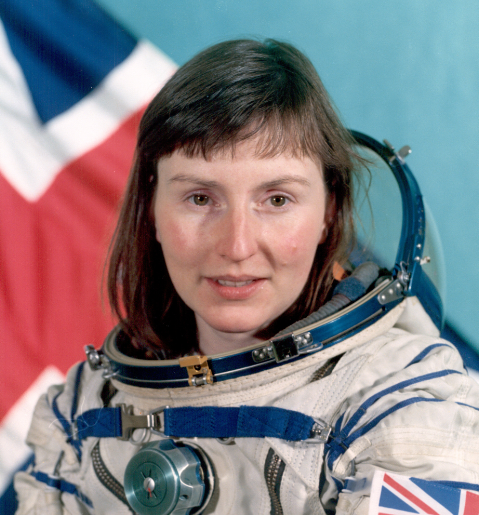
Helen Sharman

Helen, a scientist and astronaut, is renowned for being the first British person in space and the first woman to visit the Mir space station. She excelled at science, being the only girl in her class to take physics and chemistry and was awarded a PhD in chemistry at Birkbeck in 1987.  

Two years after completing her studies at Birkbeck, Helen responded to a radio advert asking for applicants to be the first British space explorer. She was selected on the basis of her strong scientific background and capacity for learning foreign languages. Her eight-day mission to the Mir space station, in 1991 at the age of just twenty-seven, involved medical and agricultural experiments, photographing the British Isles and a radio hookup with British schoolchildren.  

She has served as a role model for many young people, which has resulted in numerous schools naming houses and buildings after her as well as holding annual Sharman science events. 

Helen is now president of the Institute of Science and Technology and has written two books, including a children’s book, The Space Place. She was appointed an Officer of the Order of the British Empire (OBE), the year following her space mission. 

Eric Hobsbawm – Professor of history

To commemorate the College’s bicentenary in 2023, we’re showcasing 200 ‘Birkbeck Effects’ which capture the incredible stories of our vibrant and diverse community, highlighting their achievements and impact on the world. 

Eric Hobsbawm

Eric was one of the world’s leading historians, appointed to Birkbeck’s Department of History in 1947 and served as its President from 2012 until his death at the age of 95.  

He was born in Alexandria, Egypt and came to London as a schoolboy via Vienna and Berlin. As an historian, he was as comfortable writing about society in the Middle Ages as he was talking about twenty-first century culture. Through his writings, the lives of working people, including bandits, factory workers, and trade unionists, were brought into historical focus.   

Eric wrote extensively on many subjects as one of Britain’s most prominent historians and also wrote a regular column about jazz for the New Statesman under the pseudonym Francis Newton, taken from the name of Billie Holiday’s communist trumpet player, Frankie Newton. He had become interested in jazz during the 1930s when it was frowned upon by the Communist Party. 

He was a lifelong Marxist and interpreted for Che Guevara. He even hosted members of the Colombian revolutionary armed forces group, FARC in Birkbeck’s cafeteria. 

Five Black Caribbean individuals who have made a difference in the UK

Ikenna Okoye-Ahaneku, BA Philosophy student, highlights five Black Caribbean people who have inspired him by making a difference in the UK, with 22 June marking National Windrush Day.

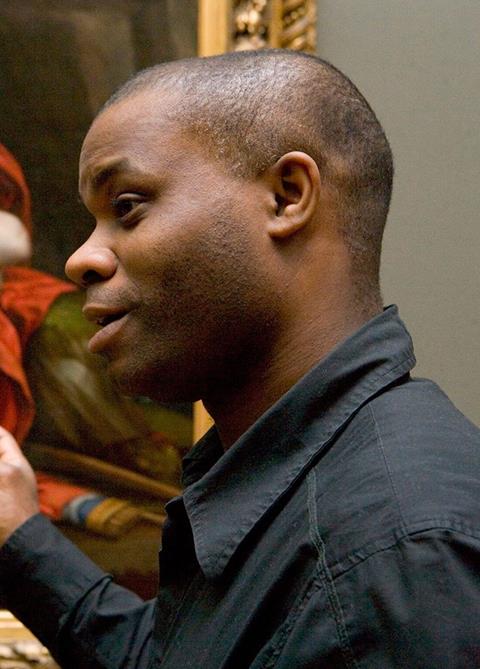
Ikenna Oyoke-Ahaneku

Ikenna Oyoke-Ahaneku

  1. Stuart Hall

Stuart Hall (3 February 1932 – 10 February 2014) was a Jamaican-born British Marxist sociologist, cultural theorist, and political activist. He was one of the founding figures of the school of thought named as British Cultural Studies or the Birmingham School of Cultural Studies. During the late 1950s, Hall was a founder of the prominent “New Left Review” – a British bimonthly journal, where intriguing topics such as world politics, economy, and culture were discussed! Inspired by the life and work of Stuart Hall, the Stuart Hall Foundation (SHF) was made and is driven to helping public education, tackling race and inequality in culture and society through talks and events, and developing a network of SHF scholars and artists in residence.  

  1. Khadija Ibrahiim

Khadijah Ibrahiim has Jamaican parents and was born in Leeds. She is a literary activist, theatre maker and writer. Khadijah started developing programmes about black history and poetry. One of her greatest creations is Leeds Young Authors, a programme for 13 to 19-year-olds, which after 20 years, has had great success because of her work as its artistic director. She is also the executive producer of the documentary “We Are Poets”. Khadijah and her work have appeared on BBC Radio 1Xtra, BBC Radio 3 and BBC Radio 4!  

  1. Benjamin Zephaniah

Benjamin Zephaniah (15 April 1958 – 7 December 2023) was born in the Handsworth area of Birmingham. He is known for his poetry as well as novels, plays, and other impressive works. His poetry is named “dub poetry” which means that it is performed – and the words are recited over the beat of reggae music. He was in The Times list of Britain’s top 50 post-war writers in 2008! His parents were Jamaican and as a child he loved reggae music and the poetry of Jamaica. He began writing poetry when he was very young. By the age of 15, he had many fans in his neighbourhood. Quickly, he became famous and he released many great books, plays, poems and even had some acting roles, including in the hit show, “Peaky Blinders”!  

  1. Bob Marley

Born in Jamaica, Bob Marley (6 February 1945 – 11 May 1981) is regarded as the king of reggae, and his impact on music and culture is unquestionable. Marley combined aspects of reggae, ska, and rocksteady, also having a unique singing and songwriting style. He gave birth to countless classic songs such as “One Love”, “Three Little Birds” and “Buffalo Soldier”. “Get Up, Stand Up!” is the Bob Marley Musical that is watched and adored by thousands of Britons each year in theatres.   

  1. Raheem Sterling

Raheem Sterling MBE is a Jamaican born professional football player who plays for Chelsea in the Premier League. He also previously played for Liverpool and Manchester City. He has won multiple Premier League titles with Manchester City, being a vital part of Manchester City’s recent success. He is regarded as one of the best players in the world and is someone who has worked tirelessly to reach the top of English football. However, his life isn’t without problems. Off the field, he has suffered racial abuse by fans and has been negatively portrayed by the British media. He also plays for England and has been a key player and captain, for Gareth Southgate and England.  

Pride is a time for celebration, protest and solidarity

As we mark Pride Month and extend our support for the rights and inclusion of LGBTQ+ people worldwide, Sarah Lamble, Reader in Criminology and Queer Theory, writes on the recent backlash against LGBTQ+ rights and the need for international solidarity.

photo of a Pride flag

June is a month of celebration and pride for LGBTQ+ communities, both in Britain and around the world. For many, Pride Month is an important time to reflect on the struggles and achievements of LGBTQ+ communities. Amidst the glittery street parties and marches, the community events and rainbow-emblazoned festivities, it is an opportunity to gather in both queer joy and protest.  As many will know, the origins of Pride Month can be traced back to historic events in June 1969—the uprising at the Stonewall Inn in New York City by working class queers of colour, drag queens, sex workers, and street folk who resisted ongoing police violence and brutality.

While much has changed since then, many of the fundamental problems persist, particularly for those in the LGBTQ+ community facing intersecting forms of economic and social insecurity. Many of the same groups within our communities that were most targeted back then, remain acutely vulnerable to violence, harassment, and discrimination today. In Britain and around the world, LGBTQ+ people are still disproportionately targeted by policing and imprisonment; face high risk of homelessness; persistent discrimination in employment and health care; and are subject to heightened risks of violence, mental health distress and even death because of systemic inequalities.

We are currently seeing a growing backlash against LGBTQ+ rights at home and abroad. Many have raised alarms about the rise of far-right anti-LGBTQ+ and anti-migrant groups across Europe, the anti-homosexuality bill recently passed in Uganda, and the attacks against LGBTQ+ rights in the USA. In fact, so many anti-LGBTQ+ bills have been proposed across US state legislators, that community organisers recently declared an LGBTQ+ state of emergency.

In Britain, LGBTQ+ communities are also facing increasing threat. In a recent country visit to the UK, the UN Independent Expert on protection against violence and discrimination based on sexual orientation and gender identity, Victor Madrigal-Borloz, expressed deep concern about increasing hostilities against LGBTQ+ people. Highlighting rising incidents of harassment and threats of violence against LGBTQ+ people in the UK, Mr Madrigal-Borloz attributed this backlash, in part, to a relentlessly hostile media and the ‘the toxic nature of public debate surrounding sexual orientation and gender identity’. There is much work needed to address this, yet we are moving in the wrong direction. Most recently, British MPs formally considered proposals to amend the Equality Act 2010 that would seriously erode the hard-won rights and protections currently afforded to trans and gender diverse people.

Now, perhaps more than ever, it is necessary to remember that pride is political and the need for cross-movement and international solidarity is paramount. Although our struggles may differ across contexts, we have a shared interest in joining together to combat systemic discrimination and ensure equality and freedom for all LGBTQ+ people.

Further Information:

Avtar Brah, founder of Southall Black Sisters

To commemorate the College’s bicentenary in 2023, we’re showcasing 200 ‘Birkbeck Effects’ which capture the incredible stories of our vibrant and diverse community, highlighting their achievements and impact on the world. 

Avtar Brah

Avtar was a Professor of Sociology at Birkbeck; a specialist in race, gender and ethnic identity issues and was awarded an MBE in 2001 in recognition of her research.

Born in India, raised in Uganda, and made stateless by the anti-Asian policies of Idi Amin in the 1970s, she was made a refugee overnight and forced to extend her stay in the UK into a long-term residence.

She attended a thousands-strong demonstration organised by women’s collective Southall Black Sisters against the National Front in the mid-1970s which gathered national media attention and resulted in hundreds of demonstrators being arrested.

Avtar lectured and researched at Birkbeck for over twenty years from 1985 until her retirement from professorship. Her most seminal works are Cartographies of Diaspora, which takes a feminist, post-structuralist lens to analysing ‘difference’ and ‘diversity,’ and Hybridity and Its Discontents, exploring the history of ‘hybridity’ across multiple continents.

Isabelle Habib – Access and Engagement Access Manager

To commemorate the College’s bicentenary in 2023, we’re showcasing 200 ‘Birkbeck Effects’ which capture the incredible stories of our vibrant and diverse community, highlighting their achievements and impact on the world. 

Isabelle Habib

As Access Manager (Forced Migrants), Isabelle’s work is key to Birkbeck’s commitment to its founding principle of supporting adults who would not otherwise be able to access education.

Isabelle engages with, inspires and supports forced migrants and asylum seekers to access education through Birkbeck’s award-winning, donor-funded Compass Project, which dramatically improves the lives of some of the most vulnerable and marginalised people in the UK. She joined Birkbeck following time as a volunteer supporting forced migrants. She says Compass is a vital way to “resist the negative rhetoric on migration.”

Her work contributes to Birkbeck’s recognition as a University of Sanctuary, the first higher education institution in London to be awarded this status, in 2021, for its work to provide safety, solidarity and empowerment to people seeking sanctuary.