“The London Critical Theory Summer School made me think differently”

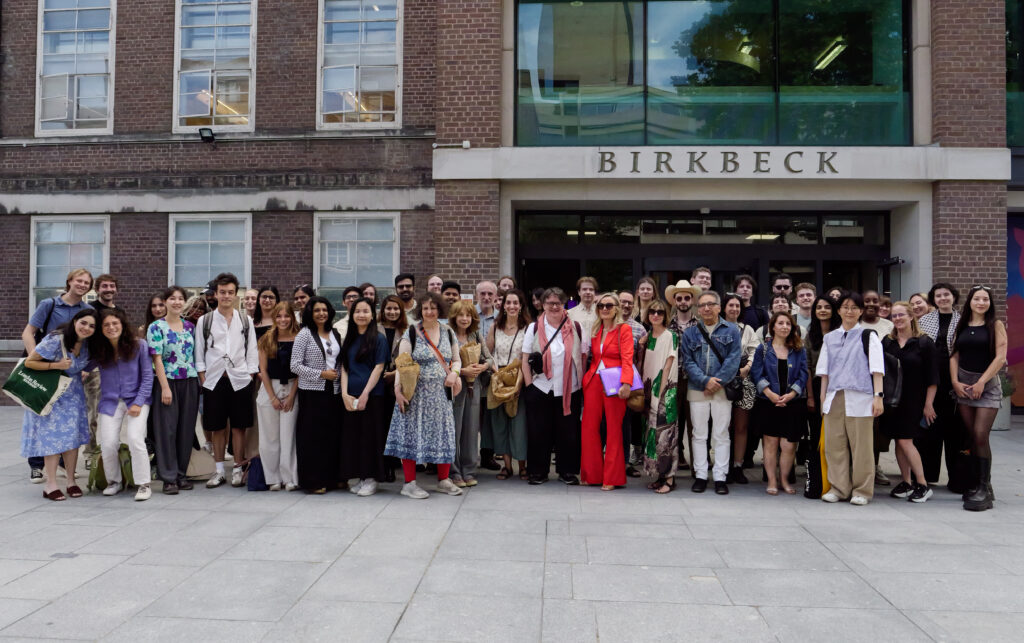
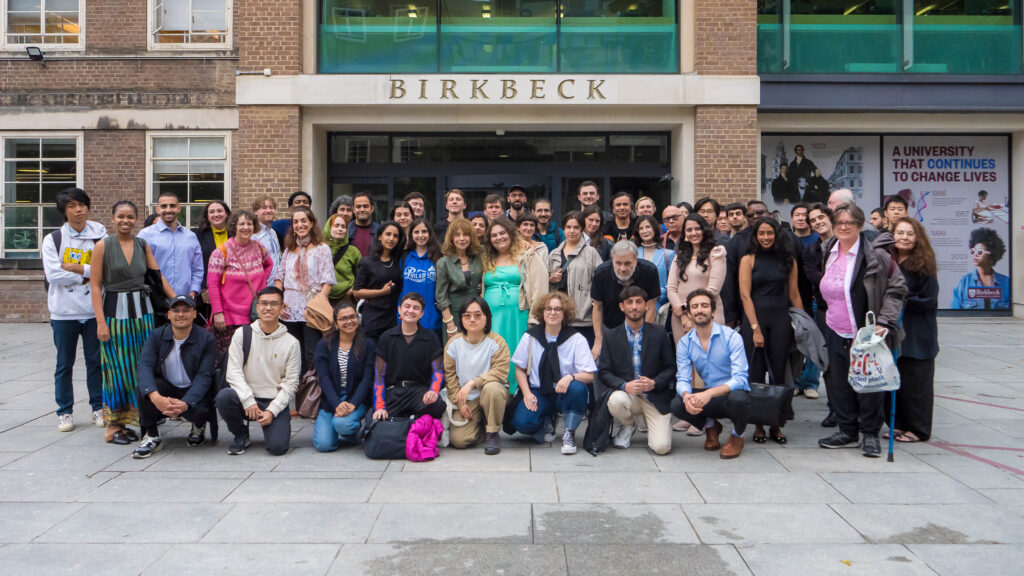
Every year, the Birkbeck Institute for the Humanities (BIH) runs the London Critical Theory Summer School. In this blog, participants from this year’s Summer School and previous years, share their experiences and its impact on their work and lives.

2025 participants

Dolly Shah, Himachal Pradesh University India

Being part of the 2025 London Critical Theory Summer School was not just an academic experience; it was a profound breakthrough in my life. I am the first person in my entire ancestry to have had the chance to participate in a global intellectual space like this. Coming from a background where such access has long been denied, this opportunity represented not only a personal achievement, but a step forward for many others whose stories remain unheard.

To be in a room where thinkers like Jacqueline Rose, Esther Leslie, Sarah Nuttall, Achille Mbembe, Eduardo Cadava, Stephen Frosh, Laura Mulvey, Slavoj Žižek, and others shared their insights was beyond anything I had imagined. I learned about ideas, histories, and frameworks that I didn’t even know existed; and with each session, I felt more seen, more validated, and more empowered.

The importance of speaking up; and more importantly, of being heard; was felt every single day. Listening is a privilege that many people in the world still do not receive. This Summer School, in its structure and spirit, was the epitome of what it means to create space for critical voices, to honour complexity, and to build solidarity across difference.

What made this possible was the generosity of the OSF bursary. This scholarship did not just remove financial barriers; it removed existential ones. It gave me, someone who would never have imagined being able to study at Birkbeck alongside leading global thinkers, the chance to take up space, to be heard, and to learn in a setting where my voice and presence were not an exception, but part of the very fabric of the programme. The full coverage of fees, accommodation, and support for travel lifted a weight I often carry; the emotional cost of navigating spaces not built for people like me.

To the Open Society Foundations: your support did not just fund a student; it empowered a story, a history, and a future. This scholarship is not just a financial provision; it is a powerful act of inclusion, hope, and justice.

To the entire LCTSS team, and especially to Polona, whose unwavering support during the application and preparation stages made the entire process smooth and welcoming.
Thank you. I return with new knowledge and a renewed purpose: to carry what I’ve learned into my own community, and to share this experience as a beacon of what is possible. Because this programme showed me; and will show others; that there are places in the world where we matter, where our voices and experiences are not just tolerated but valued.

Pia Bakshi, Ashoka University, India

On the very first day of the program, I realised that LCTSS was going to be like nothing else I had experienced before. I was proven correct right up to the last moment.
From learning from a stellar ensemble of creative, generous, and empathetic theorists and critics, who truly practice what they preached, to learning from peers from all over the world, each embedded in their own unique contexts, LTCSS became an opportunity to engage with diverse perspectives about issues that concern all of us in the world today. It could not have come at a better time for me, as I work towards completing my dissertation on the politics of mourning and instrumentalisation of memory. Conversations within the classroom with the faculty and the ones in between classes with peers and tutors led to burning thoughts that led to a new chapter and a postscript that I wrote in my room each day after class. Academia can be a solitary space but LCTSS created a community of people who care deeply about the world, the role of academia within it, and individual responsibility. I am grateful to the OSF for making it possible for me to be a part of a global dialogue on theory. I hope that the spirit of true global representation continues, and grows, each year through OSF’s support.

Rahul Dutt Gautam, Indian Institute of Science Education and Research Bhopal  India

I entered the methexis of the Summer School as a participant and soon became a particle in a Chamber, a methechōn, going through the various floors, basements, library, and lecture halls of Birkbeck. I experienced this shift quite early as the program is very well organized and aims for a mature and straightforward participation without a unilateral survey of your decisions. One can be rewarded for focus as well as experiements. As a methechōn, at times, I entered the books, the notes of the speakers and at least a few times I entered the ideas themselves as the tutors would radically accept the limit of theory and philosophy. Prof. Jacqueline Rose and Prof. Esther Leslie are resposible and inspiring directors for aspiring ones. The rigor at the School is intellectual with all its natural cloudiness but also ‘solid’ in the sense of an ever brewing solidarity, a becoming-solid for human concerns. An imagination ties the entire program which demands a generic seriousness as one goes through various disciplines of Humanities and Social Sciences, this genericity also requires one to abandon one’s usual subjective acoustics and listen to the music of concepts and melodies of the disciplines. I was lucky to be in company of students from all over the world and especially from Ukraine and Palestine. As participants we unifacially listen to the speakers but the program also gives an opportunity to play with this usual surface topology to facilitate heated discussions between All. The best of the speakers from the fields were invited who share a conceptual subsription to Freud’s humbling solution of a quotidian unhappiness and a selfeffacing commitment of Benjamin and Adorno. Finally, as a particle, excuse my analogy, who is designed to participate by its nature, the Summer School brought me to the margins of what is taking place in the crucibles of Critical Theory and how we are in a moment where it is already a becoming-science. I witnessed that a shift is happening in Theory and its traces are being recorded on the surface of this School-Chamber by the best of comrades; reminds one of Plato’s chôra from Timaeus.

Jana Pinto Koosah, University of São Paulo, Brazil

Not long ago, I learned that theory is practice.

I was away from university for a few years because I prioritised the practice of psychology and psychoanalysis as soon as I graduated. I aspired to be someone with extensive clinical experience. And so, I graduated after 10 years of working in Brazil’s public health system, only to return to university at a time when the so-called practice had exhausted me. My return coincided with the rise of the far right in the country. I went to university, but with scholarships scarce, work outside academia is essential, and I, like many others, work and do a PhD. I complain about my misfortune of not being able to devote myself more to my studies, but I have learned that, at the same time, clinical practice and activism keep my mind agile and remove me from the everyday solipsism that is so likely to appear in higher education. Out of necessity, but also out of desire, clinical work puts pressure on my studies, and my academic studies put pressure on my clinical practice. I have come to see theoretical moments as unavoidable breaks in the amalgam of daily urgencies in a world that is now also thought of in terms of successive crises. Clinical practice and activism bring me the urgency and presence of the other, inevitably other; and theory helps me breathe, think about what has happened in a broad way, connect with others from other times or places, based on what they have already done.

Without further ado, I can say that Birkbeck Summer School is situated at this point: between the urgency of the present moment and the complex temporality of the wandering thought. A meeting point the size of a pinhead! A meeting that always misses the mark, and is never exactly where we would like it to be. An account with no zero balance, no easy solution, certainly.

For me, being able to be in an environment where the present moment serves as a backdrop and object of study, articulated with what others have already thought about in other emergencies, is fundamental to what I develop in Brazil, whether as a psychoanalyst or as an activist. The theoretical practice that gives rise to other practices was possible at Birkbeck during those two weeks.I listened to what important intellectuals of this historic moment are thinking, and above all, I saw them disagreeing with each other, as an inherent part of the process. At the same time, these intellectuals were also necessarily challenged by their fellow students to think about urgent issues. The question ‘but what can we do?’ was repeated throughout the two weeks and was often answered in the most difficult way: ‘I don’t know.’ Like it or not, the question remained open most of the time. In the end, this is a question that each of us must ask ourselves, whether we are scholarship recipients or not, teachers or students. Back in the ordinary world, outside the intensity of Birkbeck, what matters most is what each of us can think and do in relation to the enormity of the present moment, rather than a comprehensive answer from an intellectual.

As a person who was born and lives in the so-called Global South, I was also struck by the differences between my fellow participants, which made me think about all that colonialism and its updates do to our bodies and subjectivities. If theory is a practice and, at many times, a collective practice, the repetition of what is studied is a constant, and international participation is rich and needed precisely because of the counterpoint they offer. In many moments, the counterpoint of an epistemic sensitivity.

Well, it was an intense summer, as it should be, in which, moved from my familiar place, even finding it strange to simply cross the street, I necessarily placed myself in these multiple temporalities and territories. Participating in the course was so enriching that I have not yet understood its full extent, and it will unfold over the coming weeks, months, and, I hope, years. The richness of making a joint effort to try to break free from the imperative of action without falling into the pessimism of reason.

Sihle Booi, University of the Witwatersrand, South Africa

I would like to express my heartfelt gratitude to the OSUN Bursary for affording me the privilege of attending the London Critical Theory Summer School (LCTSS). This opportunity not only deepened my theoretical knowledge and sharpened my critical thinking but also fulfilled a lifelong dream of traveling abroad. I would also like to thank Polona and Elia for the seamless administration that facilitated the entire process.

The LCTSS challenged and stretched me mentally, emotionally, and intellectually. Coming from a legal background, I was confronted with the exhilarating task of reimagining law through radical lenses such as poetics, aesthetics, and other artistic forms. It was transformative.

One of the most unexpected ironies of the experience was being intellectually challenged by mind blowing lectures and discussions by lecturers from South Africa, some of whom were from my own university (University of the Witwatersrand). I remember laughing to myself at how absurd and slightly embarrassing it was that I had to travel to England to meaningfully engage with the works of Professors Achille Mbembe and Sarah Nutall—scholars whose offices are just a short walk from my teaching assistant workspace. Professor Barnard-Naudé left me in complete awe and occasional frustration. I found myself wondering, “How can poetry possibly serve as an interpretive tool for legal texts?” Yet, by the end of the programme, I couldn’t get enough of his concept of “poetic witnessing” as a method of engaging, interpretation and citation.

Prof. Esther Leslie’s presentation moved me to think more deeply about how social media is currently deployed to dilute the severity of oppressions, crimes and other atrocities—how platforms censor descriptive language by labelling it “harmful content,” thus numbing public engagement with real-world violence. Prof. Jacqueline Rose’s compassionate yet assertive poise, in her writing, presentation, and presence, was an academic climax. I was especially moved by her engagement with the plight of Palestine. Without centering herself in the narrative, she echoed the voices of Palestinians through direct quotations, allowing their lived experiences to speak for themselves. I would characterise this as a powerful example of cause-advocacy grounded in authentic scholarship.

Prof. Costas Douzinas’s seminar on ‘lawfare’ was the pinnacle of my academic experience of the LCTSS. His reminder—that law, particularly in contexts of necessity or declared emergencies, can become a tool of violence, especially in jurisdictions where ruling political will routinely undermines the rule of law and/uses the law to justify human rights atrocities—resonated deeply. After all, apartheid was once law.

His reflections on Trumpism-libertarianism and how law constructs and reinforces social hierarchies through sanctioned obedience struck a chord. A substantial part of his seminar focused on how we, as scholars and practitioners, might use law as a means of countering the increasingly entrenched and emboldened agenda of the extreme right and advance a leftist agenda. But it was the questions raised by fellow participants, about what exactly the ‘left’ is, and where it’s geographically situated, that gave me pause. It left me wondering whether I, as a South African, was ever meant to be the intended subject or participant of such a conversation.

Throughout the two weeks, I felt shocked, disappointed, inspired, confused, exposed, alienated, and at home. Raptured from the comfort of my intellectual biases, my passion for academia was reignited, both by the formal lectures and the informal exchanges with fellow participants.

Through the LCTSS, I’ve built friendships and connections that will no doubt shape my academic and civic future. More importantly, the experience has sparked a commitment in me: to contribute to the crystallisation of an African academic and socio-legal voice. I hope to explore the location of Africa within global Left and Right ideological spheres, and perhaps even uncover a possible ‘missing middle’ currently asserting itself into legitimate existence.

Vlad Eugen Neagu, University of Bucharest, Romania

When I found out that I had been accepted to the Summer School I was working as a financial consultant on a very tedious and stressful project. The thought that I would be able to participate in such an event immediately gave me a second wind and renewed my hope that there might still be a path in academia I could pursue. I am usually not very optimistic about the future, so this was finally something to look forward to. Now, in retrospect, I can sincerely say that it was an extraordinary experience. I had the opportunity to engage with thinkers and scholars I had only read before, to hone my knowledge, to ask questions, be challenged, humbled, learn, and feel like I was part of a true academic community. The life of a doctoral student can be alienating and, in a way, self-reflexive; this is why the LCTSS is an excellent space not only to realize that your peers might feel the same, and thus rid you of this specter of inadequacy, but also to enter into productive and thought-provoking discussions and debates, and to forge friendships and relationships that will hopefully be long-lasting and fruitful. I very much appreciate being offered a bursary, as well as all the other efforts made by the organizers to make everyone feel at home and have this fantastic experience.

Binita Adhikari, South Asian University, India

The London Critical Theory Summer School 2025 truly lived up to its promise of being a space for the ‘training of the imagination.’ Each day in school,  classes offered a powerful surge of ideas and critical concepts that challenged me to think beyond conventional frameworks. In a world facing complex crises, what we need most is critical thinking, the language and imagination to shape new possibilities and leadership —and this school provided these.

Beyond the richness of the content, what I am most grateful for is the space it created: a space for meaningful, rich and  intellectuall conversations among peers and scholars from across the world. The experience reminded me that theory is not only something to be studied, but something to be lived and shared collectively. Truly, I left each session feeling intellectually stretched, ethically challenged, and deeply inspired. Once again, I am grateful for the opportunity.

Fahim Abrar Abid, University of Glasgow, Bangladesh

The 2025 London Critical Theory Summer School has been one of the most rewarding academic experiences of my career. Coming from an international law background, I was eager to test my discipline against critical philosophy, and the School provided precisely that intersection. Each session challenged me to reconsider core legal concepts through a theoretical lens, enriching the way I understand power, rights, and global justice.

Having the opportunity to engage with thinkers such as Slavoj Žižek, Achille Mbembe, and Costas Douzinas was invaluable. Their lectures added depth and urgency to our discussions and underscored how a critical approach can illuminate legal questions in fresh ways. Equally inspiring was the diversity of participants: lawyers, philosophers, sociologists, and artists—all exchanging ideas and perspectives that broadened my own.

Beyond the lectures, the film screening, small-group workshops, and the all-attendees panel discussion made this programme stand out from other summer schools I have attended. These segments created space for reflection, collaboration, and constructive debate, allowing theoretical insights to evolve into practical research questions and new professional connections.

I leave the Summer School with a strengthened critical toolkit that I look forward to applying in my future work on international law. The experience has deepened my commitment to approaching legal issues through a more philosophical and holistic lens. I am grateful to the LCTSS team and the Open Society Foundations for making this opportunity possible and would highly recommend the programme to anyone seeking to bridge rigorous legal study with transformative critical theory.

I remain grateful for the bursary. Thank you once again for the amazing experience. I look forward to engaging with the program again in the future.

Amiya Thajudeen, Institute of English, University of Kerala, India

I am incredibly grateful for the OSF partial bursary, which enabled me to attend the Critical Theory Summer School at Birkbeck. Though managing accommodation in central London proved quite expensive, I was staunchly determined to be there, because as a student from an English Literature department in the Global South, where critical thinking can sometimes feel confined to a syllabus, this opportunity was particularly vital for me. I arrived feeling puzzled by how to meaningfully respond to the traumatic events unfolding around us, seeking a robust framework than what my conventional studies offered.

I must say that the sessions were meticulously organized and the chance to engage with academics from Birkbeck and across the world was exhilarating. The range of issues covered, along with the varied backgrounds of my peers, enriched every discussion. Much of my time at the summer school was spent listening, and allowing ideas to settle so as to enable myself to forge a language of solidarity capable of holding the immense complexity of our world. I’ve come to understand solidarity not as a completed project, but as an imaginative and ongoing practice- a space where perpetual rethinking of our own identity in relation to others is necessary. I can say for sure that I leave the 2025 London Critical Theory Summer School with a deeper understanding of the urgent work ahead.

Aya A, Central European University, Uzbekistan

I am happy to have had the opportunity to become part of the London Critical Theory Summer School (LCTSS) 2025 thanks to the OSF bursary. 

These two weeks were incredible! I had a chance to openly discuss urgent topics, I was academically challenged and met iconic thinkers and cool students from around the world. Firstly, speaking up about Palestine critically has not been quite possible in many academic and political contexts and I immensely appreciated the possibility to do so within the LCTSS. Secondly, attending school was indeed intellectually stimulating – not always I understood the content fully but that was the point – I loved learning something new everyday. Thanks to the renown thinkers like Eduardo Cadava, Sara Nadal-Melsió (!), Costas Douzinas, Stephen Frosh, Esther Leslie, Achille Mbembe, Sarah Nuttall, Laura Mulvey, Jacqueline Rose and Slavoj Žižek, I got inspired to fight theoretically and, most importantly, to stay true to our values in this ever-changing and often cruel world. My dear schoolmates or rather friends now, from different schools, backgrounds and contexts, made the school so much richer with their perspectives, experiences and continuous support. Finally, I am grateful to all the people who were involved in organizing and supporting this school, from those who prepared amazing coffee breaks, passed microphones, provided lunch coupons, facilitated discussions (shoutout to Katherine) and planned the entire program to all the personnel whose work is often left unseen but still precious! Overall, it was a great experience and I leave the school with many new connections, a huge reading list and burning motivation.

Vinícius Brandalise Valente, Federal University of Paraná, Brazil

I am beyond grateful to have received the OSF bursary to attend the Birkbeck London Critical Theory Summer School. Without any exaggeration, it has been a life-changing experience: the course creates a very special environment for learning, allowing us to engage with trailblazing scholars and to connect with colleagues from different fields and places in the world.

Theoretically, the lectures, seminars, and panels were filled to the brim with the most innovative works in Critical Theory, allowing me not only to get in touch with the current debates in fields as diverse as Psychoanalysis, Marxism, Social Theory, Law, Aesthetics, and Literature, but also to learn new ways of seeing and thinking the current phenomena through the readings and lessons provided. With a serious commitment to interdisciplinary thinking and to understanding the world in which we live, the professors sharply spearheaded conversations that made even more evident to me the necessity for us to push our critical skills to their limits.

Even more than that, attending this Summer School reinvigorated me. Sharing two weeks with people who are committed to radically transforming the world allowed me to acknowledge all the diverse forms of resistance that we are building collectively throughout the world. This space, crafted with so much care and sometimes unnoticeable labor from the people at Birkbeck, is a safe haven in times where academics are under heavy attack, something that unfortunately seems so rare these days. It provided me with an opportunity to really listen to the call of our times: to engage in intellectual work as a means of speculating about what the future should be, carefully allowing us to work through our past and break free from the inevitability with which the present presents itself.

2024 participants

Joshua Williams – University of Witwatersrand, South Africa

I am grateful to the Osun network for receiving a bursary as it was an honour to be able to attend the programme in person and engage with renowned scholars. The Summer school is truly an enriching experience which deepened my knowledge and approach to critical theory. The two-week experience is an intensive programme which allows one to be immersed in critical thought. Over the two-weeks not only are you able to engage with leading scholars in psychoanalysis and political aesthetics but through the international community of scholars who attend. Listening to attendees coming from different parts of the globe and different disciplines allowed for nuanced perspectives to be heard and shared.

 For many scholars it’s a privilege to be suspended from teaching and other research commitments and engage in what felt like a summer camp. It’s becoming increasingly difficult to engage in free speech and open dialogue at different learning institutions and to be in room with scholars who collectively allow for a space of sharing critical thought is encouraging. The content of the course from different speakers felt timely as we collectively thought through forms of solidarity towards Palestine and Israel conflict amongst the wider political unfolding of elections and what this means for political identification.

 Thank you to LCTSS team Jacqueline Rose, Esther Leslie and Elia Ntaousani for organising the summer school and holding space. Special thanks to Jacqueline Rose for holding a space of critical dialogue and her deeply informative, sensitive lectures and engagement throughout the weeks. Thank you to OSUN network and Birkbeck in offering an exceptional and selective opportunity for intellectual growth, one which should be experienced by as many scholars as possible. I hope to return to the LCTSS in the future.

Masooma Hashemi – Bard  College Berlin, Germany; originally from Afghanistan

I am very grateful to have received an OSUN bursary to attend the 2024 London Critical Theory Summer School at Birkbeck. The opportunity to engage with highly respected academics and like-minded peers from around the world was truly inspiring. As someone with a background in politics and human rights, I was particularly eager to learn from speakers with a political focus ,but also found immense value in the sessions on social theory as well.

Learning in such a unique and stimulating environment was a privilege that allowed for significant academic and personal growth. The sessions, impeccably organised by Jacqueline Rose, Esther Leslie, and their dedicated team, provided a platform for both students and academics to share their insights. The diverse range of topics and contemporary challenges discussed within the framework of critical theory was particularly enriching.

The Summer School addressed pressing global and local issues, with participants from diverse backgrounds bringing a wide range of perspectives to the table. I greatly appreciated the ample opportunities for student engagement and the chance to hear from peers who work across different disciplines and fields, both within and outside academia.
The discussions were enhanced by participants’ personal experiences and research, making the learning experience even more dynamic and comprehensive.

Leaving the summer school with a significantly expanded reading list and a renewed sense of intellectual curiosity, I am grateful for the insights gained and the connections made. The experience reminded me that critical theory transcends institutional boundaries, and fosters a global community of engaged and thoughtful individuals.

Angela Kassis – Al Quds Bard College, Palestine

I am profoundly grateful for the OSUN bursary that allowed me to attend the Critical Theory Summer School at Birkbeck. As a student from Palestine, where there is no critical theory education, this experience was transformative. From my first day, I was exposed to a variety of perspectives and philosophies. We, the participants, had sessions regarding advocacy for transgenderism, exploring its complexities and implications. Laura Mulvey’s work on women in cinema, particularly her book “Afterimages: On Cinema, Women, and Changing Times,” sparked intriguing discussions. We dissected power dynamics in visual narratives that helped women in reclaiming agency. We also had sessions led by an advocate dedicated to fighting for black people’s rights and shared stories of ongoing injustices. These narratives resonated deeply, urging us to confront systemic racism and work toward change. What truly enriched my experience was the diverse cohort of participants. Writers, film producers, poets—they all contributed to my understanding of critical theory. We discussed global issues that made me realize that there are issues the whole world suffers from. Thanks to OSUN’s generosity and Birkbeck’s hard working team, I honed my critical thinking and writing skills, and got inspired by the wisdom of scholars and the passion of activists. 

Thank you, OSUN, for making this reality possible.

Galina K. – Central European University, Vienna, Austria; originally from Russia

As a student from Russia, I kindly requested that an abbreviated version of my name be used. This is because studying at CEU and receiving a bursary from OSUN is considered a criminal act in my home country. After CEU was declared an ‘undesirable organisation’, Russian students risk up to five years in prison.

In my motivation letter, I expressed my desire to deepen my understanding of global political dynamics and to meet renowned critical scholars. Indeed, the LCTSS proved to be a fascinating two weeks of discussions that advanced my thinking, but I also experienced something more profound.

In an increasingly polarised and hostile world, this school offered a precious experience of care. My application was carefully considered, my first trip to the UK, including obtaining a visa, was supported and went smoothly, and I was given the opportunity to learn.

Students and acclaimed tutors from different parts of the world shared their perspectives on global changes and engaged in discussions about how to live together. Throughout, the school management made sure that everyone was seen and heard.

I hope that what I have learnt will one day be relevant in my home country. Regardless, I am grateful to be part of LCTSS and to have a sense of belonging to an international academic community.


Reem Wehbe, American University of Beirut

When I first heard about the Summer School, I was intrigued by the prospect of delving into a program that would integrate psychoanalysis with broader socio-political theories, offering tools to navigate the complexities of our social and political landscape. I could not wait to start taking a class that would dig me into a critical look at the relationship between art and theory along interdisciplinary lines and shared by communities.

Understanding that knowledge is built upon diverse experiences and challenges, I discovered great benefits in being part of the program that not only welcomed learners from different parts of the globe but also encouraged the development of their unique yet intertwined systemic realities by working together.

The school provided an intellectual haven where we could negotiate ideas, share experiences, and explore the historical and contemporary evolution of theories. At school, we’re the thought leaders where we address various issues, share experiences, and delve into the evolution of theories, both past and present. This environment pushed me to ponder about the dual nature of time, the links between yesterday and today, and the potential futures and ways of living one might aspire for.

One session that profoundly impacted me raised compelling questions about how cinema depicts time through its materiality and narrative processes. As regards this, we discussed the relevance of those films that use footage from the archives and pre-recorded materials in contesting the traditional idea of a continuous film time. These films become an artistic tool that enables marginalized culture to rewrite itself a new story, and thus, they can present the private narrative at a public level. This technique, from a civilizational context, becomes a more central matter of consideration. By way of contrast, the film The Arbor, which is a manifesto for female narratives, accomplishes experiments with storytelling by employing precisely its formal design and the use of filmic language as structural elements to show that the feminists are now extending their narratives into the past and future.

Moreover, I found the lecture on Walter Benjamin’s writings particularly enlightening. This point was represented through the exploration of such issues as blushing, shame, and the human face, and the themes were illustrated by the examples that were drawn from the imagined dialogues with Goethe. This addressed specific topics such as the instinct of the West which is used to change forms into something else like miming, colonial theft of Africa’s silver, and humankind’s relationship with nature.

The Summer School’s remarkable combination of strict academic content and diverse intellectual ways of thinking and learning was very effective in creating a special learning environment and fostering the students’ cognitive process and progress. The interactions that resulted from my collaboration with fellow students and academic scholars constructed a network that reaches beyond borders and mixes the disciplines.  I eagerly look forward to returning to this intellectually stimulating space and continuing to explore and challenge the theoretical frameworks that shape our understanding of the world.

Lais Nardon Martins – Universidade do Vale do Rio dos Sinos, Brazil

Between June 22nd and July 5th this year I had the honor and privilege of participating in the London Critical Theory Summer School at Birkbeck, University of London. To be there, I was awarded a scholarship and, among many applications, I was the recipient of the BIH International bursary -Global South champion.

Enthusiasm, hope, euphoria, and new perspectives on the path of human rights and critical thinking are not enough words to describe the full range of knowledge and wisdom that I was able to enjoy from the excellent study schedule that was provided to us. There we had solid lectures with some of the greatest thinkers of critical theory in the world, among them, with great affection, I highlight the incredible activist Juliet Jacques, Professor Jacqueline Rose, Professor Esther Leslie, Professor Fumi Okiji, Professor Oscar Guardiola-Rivera, Professor Costa Douzinas and, the brilliant Professor Achile Mbembe.

There were hours of wisdom and transmission of knowledge. An experience that marks my academic trajectory and revealed to me how much more together we can move forward with hopes for building a future for the next generations. The Paper Cuts exhibition allowed us to learn a more about the brutality and marks of colonialism that the British Empire left in India. A great moment of reflection on colonization and its legacies, which are colonialism and coloniality.

Also, in these days elections took place in the British Empire. What marks a future of hope and renewed democracy were the elections in the United Kingdom. After 14 years the Conservative Party leaves power, the Labor party is in power with Keir Starmer as its prize. It is a milestone of a new era. Experiencing all these moments that LCTSS and Birkbeck, University of London, marks my story and leaves a feeling of optimism and hope in my heart.

All the love that lives in me thanks Professor Jacqueline Rose, Professor Esther Leslie and Professor Elia Ntaousani. You changed the course of my story. The LCTSS opened new perspectives of critical human rights thinking in my research. Clearly Birkbeck, University of London is one of the most important research and teaching centers in the world. 

I am deeply grateful for choosing me to be there.  

The future we want to build depends on all of us. And LCTSS and Birkbeck, University of London are completely in tune with the reality of our world and the legacy for future generations. It was an honor to live these days with you and all the friends I met there. You are the most fantastic and determined people I have met. Thankful for each one of you. They are all in my heart.

“I am another you and you are another me”, together we are the transforming force of our world.

Finally, I leave the following poem that I was able to create in our creative session:

“Even if I make an effort to put on your shoes and put on your lenses, I can even walk the journey alongside you and enjoy the same landscape, but I will never be able to feel the pain of your feet and shed the tears from your eyes.

 I see you,

 InnSæi, 

 Inkiri,

 In Lak’ech Ala K’in.” 

With all my love and gratitude living in, thank you.

Sabrina Peirce – Bard College Berlin, Germany; originally from Barbados

I am extremely grateful to have received the OSUN bursary to attend the Virtual Stream of the Critical Theory Summer School at Birbeck this year (2024). Having the opportunity to engage with esteemed scholars in critical theory and attend lectures on their research and ideas broadened my perception and understanding of many topics which I realized I had only scraped the surface of before. The ability to also reflect on these lectures with like-minded individuals from all over the world brought nuanced and personalized considerations which I deeply value. Tackling pressing world issues from a critical theory perspective granted me the opportunity to follow my thoughts in a multitude of directions, showing me that there can be a variety of ways to approach topics, some of which may coincide but also overlap, and complicated my understanding of what is a “correct” or “established” answer to questions. Moreover, the summer school allowed me to deepen my own thoughts about my region, The Caribbean, through fostering and encouraging individual perspective sharing. Furthermore it made me reflect on how to approach and develop my BA Thesis topic and gave me great insights and recommendations through my discussions with other participants and attendance of the lectures, into my topic of discussion. Empowering me to weave together my ideas at the cross sections of art, nationalism, memory politics, post colonialism and race and power. Overall, I am very appreciative for this opportunity and know that it will serve me well in my future academic, professional and personal endeavours.

Vishal Parkash – Bard College Berlin, Germany; originally from Pakistan

Attending the London Critical Theory Summer School as an online participant has been a transformative experience and I am grateful to OSUN for its generous bursary award. Despite the physical distance, the intellectual rigor and vibrant discussions made me feel deeply connected to the scholarly community. This year, the session led by Professor Jacqueline Rose on “Gaza – How to think?” was particularly impactful for me. Rose’s exploration of the complexities surrounding the events since October 7, 2023, and the ensuing crisis in the Middle East provided a profound and necessary framework for understanding these urgent issues. This issue also became more important for me since the outbreak of protests in Germany. 

Through this session, I learned about the multifaceted nature of Zionism, the catastrophic injustices faced by Palestinians, and the challenges of reconciling these narratives within the broader context of international politics and human rights. Professor Rose’s insights into the dissident tradition of Zionism and literary works from within the conflict helped me grasp the historical and contemporary dimensions of this deeply polarizing issue. Her discussion on the forms of psychic and political impasse illuminated the obstacles to a viable future and underscored the importance of critical thinking in addressing these challenges.

Through the 2 weeks, the breakout sessions were also pretty vital in making connections and engaging in deeper conversations with fellow participants. These smaller group discussions allowed for more intimate and focused debates, fostering a sense of camaraderie and shared purpose among attendees. Additionally, the debate on the last day was particularly interesting to watch, providing a platform for a robust exchange of ideas and perspectives that encapsulated the essence of the Summer School. Being part of this vibrant community, even virtually, was a great experience.  The London Critical Theory Summer School embodies a commitment to challenging conventional thought and fostering critical inquiry. Its mission to cultivate a deeper understanding of societal structures and its vision of empowering individuals to enact social change resonates deeply with my own academic and personal aspirations. Via this experience, every layer of my identity: the journalist, activist, cultural buff, debater, history nerd, and social entrepreneur, is catered to. As part of this summer school and beyond now, I am not fragmented by my nuanced identity but whole.

FROM PARTICIPANTS OF PREVIOUS YEARS: 

Jessica Nogueira Varela – Phd Candidate, Cornell University, Ithaca, US / Central European University, Vienna, Austria; originally from Brazil 

Weeks have passed since the summer school ended, and I still cannot help but wish to live it all over again. I am confident that I benefitted from attending LCTSS from a professional, academic, and personal perspective, which is why I am incredibly grateful for the generous grant offered through the OSUN network, without which I wouldn’t have been able to attend at all. The whole thing was thought-provoking, with excellent lecturers and experts. Likewise, I was captivated by the generative and insightful exchanges the organizers allowed through tea breaks and small group discussions. 

I had the privilege of attending lectures with speakers I never dreamt of meeting in person, in addition to conversing with and learning from my peers. Each lecture was filled with questions relevant to our current context: we touched upon the psychological effects of war, the expanding borders of Fortress Europe and the imperial US into the global south, the long-durée of capitalist exploitation and the war on drugs, and the environmental catastrophe in relation to other catastrophes (military, technological). 

 We questioned what critical theory is, what its role should have, and what it can do in the world. By thinking through contemporary problems, we were invited to reconsider the role of the aesthetic within legal systems, the effects of archives, the humanitarian crises across the Global South Global North, and the challenges intersectional feminist solidarities pose to the current state of affairs.  

By having smaller group discussions with my peers about these issues, and many more, we learned from one another’s perceptions of the day while deeply considering ways to address the issues presented. Granted, we often left with more questions than answers, but I was touched by the entirety of the experience because of the interdisciplinarity embedded in the program and the expertise of the cohort.  

For example, through the practical and theoretical approaches brought by lecturers Sisonke Msimang and Kojo Koram, our group discussions ventured into the importance of historical contextualization vis-a-vis capitalist exploitation and anti-black racism. We were positioned to reconsider the very premise and design of our institutions, academic fields, and activism.  

Overall, I believe the summer school provided the attendees with some of the most useful theoretical and practical frameworks we could have had access to, while also giving us the space for our thoughts and feelings to autonomously grow as we listened to and learned from each other. I am aware of how much work there is to do, but I am also encouraged by how many of us understand critical theory as a theory and practice of transformation, enabling us to act in the world and fail better. 

 Israr Hasan – BRAC University James P. Grant School of Public Health, Bangladesh 

It was a fantastic opportunity to have been a recipient of the OSUN bursary. As someone who lives and works in the Global South, the bursary paved an opportune moment for me to meet with fellow students and learners from across the world and be acquainted with stellar intellectuals like Jacqueline Rose, Esther Leslie, Stephen Frosh, Slavoj Zizek, Eyal Weiszman and many others.  

Conversations with them had a healthy current of agreement and disagreement, which has strongly influenced my way of thinking about the world we live in and the multipolarity of crises that take place in the realm of nationalism, gender rights, violence, and justice.  

I am grateful for the gift of learning bestowed upon me by my fellow teachers and classmates, who have helped me navigate a new understanding of being attentive and observant of various problems plaguing our world. The debates and discussions were fruitful and emotionally charged yet civil in allowing us to express ourselves and come to terms with ideas that seemed “foreign” and “taboo” in our respective countries. In the end, the summer school has armed me with the know-how of various topics that I hope to integrate into my mode of thinking, translating into the broader scheme of action I will undertake. 

Yara Malka – American University of Beirut, Lebanon 

Receiving the OSUN bursary for the Birkbeck’s Critical Theory Summer School 2020 was a formative and life-changing experience for me in many ways. One of them was academic. With Dr. Jacqueline Rose, Dr. Elia Ntaousani and Dr. Esther Leslie spearheading a challenging and intense schedule, I felt I was privileged and lucky to be under their wing.  

Every day was a milestone, and the speakers exceeded my expectations. I learned more about my initial fields of interest, critical theory and psychoanalysis, straight from the academics who have always inspired me from afar. I do not know how to describe the feeling of meeting your academic idols and learning from them firsthand; it truly made me speechless. I was also exposed to new conceptual tools which I find myself using in my thesis now. This includes forensic architecture as a new theoretical foundation for my work.  

On a personal level, this opportunity is one which I could only dream of as a Lebanese citizen, so it was literally a dream come true. In only two weeks, I noticed a spike in my learning curve on both professional and personal levels. The exposure to great intellectuals from different parts of the world, be it the participants, speakers, or coordinators has been an exercise in building character. Thank you endlessly for this experience.  

A special thanks goes to the directors and staff for working so hard in an effort which I witnessed every second of this program without fail. I am grateful and I hope this opportunity will reach more academics from my country because the potential is endless, particularly if the conversation includes Lebanon.  

Mustafa Mayar, Bard College Berlin, Germany; originally from Afghanistan 

Ever since leaving Afghanistan due to the Taliban takeover of the country and studying in Germany, attending the London Critical Theory Summer School at Birkbeck has been one of the highlights of my academic life. This remarkable experience introduced me to scholars who delved into subjects and theories previously unfamiliar to me, leaving an indelible mark on my intellectual growth.  

One topic that stood out was forensic architecture and its significance in democratizing physical spaces. Listening to Eyal Weizman and Christina Varvia elucidate the ways digital tools unveil how current power systems perpetuate the subjugation of marginalized communities was genuinely captivating. Equally profound was Stephen Frosh’s seminar, where the firsthand accounts of Ukrainian teenagers detailing their experiences of war opened my eyes and stirred deep emotions. 

Joining the summer school with limited knowledge of critical theory’s application to real-world issues, I left with a profound shift in my approach to social justice and a renewed understanding of our role in effecting positive change. I now recognize the intricate interconnectedness of various social issues and the necessity of considering intersectionality when addressing them.  

Yet, beyond the academic voyage I embarked upon, the impact of connecting with fellow participants and immersing myself in their stories from different corners of the world was transformative. During a break, I engaged in conversation with a participant who seemed to be in their late twenties, and they shared their research topic for a Ph.D. with me. This encounter shattered my preconceived notions, as I had previously associated doctoral pursuits with seasoned professors in their fifties. It made me realize that age is not a barrier to achieving greatness within one’s academic field. This revelation instilled in me a sense of liberation, allowing me to recognize the immense potential within myself to make a meaningful impact and exceed the limits I had unknowingly placed upon my aspirations.  

Inspired by the London Critical Theory Summer School, I now embrace the true value of my potential, driven to achieve more in life and leave a positive imprint on those around me. 

Aigerim Azimova, Central European University, Austria; originally from Kyrgyzstan 

I am immensely grateful to have been selected as one of the recipients of the OSUN bursary, granting me the opportunity to participate in an exceptional and highly esteemed summer school in Critical Theory. I would like to express my deepest appreciation to the Birkbeck Institute of Humanities, particularly Co-directors Jacqueline Rose and Esther Leslie, as well as Manager Elia Ntaousani, for their exceptional organization and the wonderful spirit they fostered throughout the unforgettable two weeks. 

It is difficult to adequately articulate just how much I gained from this summer school experience. The London Critical Theory Summer School has undeniably expanded my critical thinking skills and will undoubtedly prove to be an invaluable asset in my professional journey. Coming from a legal background with a focus on human rights and criminal justice, I found the exploration of investigative aesthetics particularly captivating. Given my involvement in torture consideration cases during my past work experience and the inherent challenges of proving such claims, I see this field very compelling in the pursuit of justice. 

I extend my heartfelt gratitude to all the esteemed speakers who contributed to the event. Each of them left an indelible mark on my mind, provoking profound thoughts and reflections. Additionally, I am grateful for the opportunity to connect with a diverse and brilliant cohort of participants from across the globe. Engaging with like-minded individuals has truly broadened my horizons and enriched my perspective. 

No words can express the depth of my gratitude for this remarkable opportunity in my life. The OSUN bursary and the Critical Theory Summer School have had a marked impact on me, and I am honoured to have been a part of it. 

Celebrating Sisterhood for Black History Month 2023

October is Black History Month, which recognises and celebrates the invaluable contributions of black people to British society. This year’s theme is ‘Saluting our Sisters’, which pays homage to black women. Read the remarkable and inspiring story of Dr Jan Etienne, Honorary Research Fellow (Faculty of Humanities and Social Sciences) who shares some of her earlier experiences through to her current work in black feminist research.

Dr Jan Etienne

Who is Dr Jan Etienne?

Jan is a distinguished Academic and Honorary Research Fellow, in the Faculty of Humanities and Social Sciences at Birkbeck. She is the author of several academic publications, including the following books: Learning in Womanist ways: Narratives of first generation, African Caribbean women (2016) (UCL Press); Communities of Activism: Black women, higher education, and the politics of representation (2020) (UCL Press); Doing contemporary womanist research (2023) (LPP) and Decolonising the higher education academy; decolonial feminist approaches (forthcoming).

She is a graduate of the School for Policy Studies, University of Bristol, and Chair of Birkbeck’s (Womanism, Activism, Higher Education Research Network  where she leads a 22-member strong international team of decolonial feminist activists working together with community activists to promote black women’s activism in higher education research. This research network is supported and funded by the Birkbeck Institute for Social Research.

Jan says, “Collaboration with black women on anti-racist work in education is everything, together we are stronger and collaboratively we can make things happen.  This is what celebrating sisterhood feels like to me.

The people who have inspired me along the way include fellow pupils, community activists, teachers, and lecturers who collaborate with me, as well as students from whom I learn a great deal.

I am committed to securing our spaces in higher education to enable us to breathe and heal, in a climate where there is often mistrust and rage.  However, it is essential that we collaborate with our fellow anti-racist educators, to learn, act and change.”

Outside of Birkbeck, Jan is Editor for the Gender Studies Collection at Lived Places Publishing,  an international education publishing house, based in New York.

Jan was awarded the 2022 Womanist Ethnography prize by the Centre for Womanist Ethnography research from Vanderbilt University at the 5th Annual Womanist Ethnography Conference (Nashville, Tennessee, USA) for her work in promoting and developing black feminist ethnographic research in higher education.

She says: “I believe in promoting the voice of black women activist educators, in collaborative participative research for social justice.  For me it is the most powerful educational development in the fight to end systemic and structural racism.   Like black women on the frontline of community activist work, ‘we are collaborators, we are leaders, we are negotiators, and we are finding ways to overcome!’   Spaces to share our lived, first-hand experiences are invaluable to help deliver effective anti-racist programmes in higher education.”

Early life in activism

Dr Jan Etienne

Jan shares, “My earliest awareness of activism was as a working-class pupil attending Rokesley school in Hornsey, North London.  At first, I was victimised, and alone – until the journey home, where a seemingly invisible group emerged, powerful.  Here, other girls like me came alive as we walked, talked, and shared our pain.  In such times, we listened to each other’s voices, and developed ideas in conversations with each other – in solidarity and in sisterhood.

I listened carefully to the words of those who inspired me in this small group.  Their commitment to doing something ‘for all of us’ remained with me and set me on my own path to liberate my ways of thinking and doing.  Those hurried conversations were taking place ‘alone’ but ‘together’ as we strategized on how we might best cope with what we knew as racism and sexism.  Being black, female, and on our way home to attend to family chores, we became bolder, stronger, braver, and prepared to face the world.

“Clinging to our sisters for survival was everything.  Today it is still everything.”

——————————————————————————————————————————————

Upcoming event

Jan will host this year’s Womanism, Activism, Higher Education Research Network conference on Tuesday 31 October, 1.00 – 4.30pm. The theme under discussion is: ‘Sharing good practice in doing Black feminist research for community’.

Read more details and book tickets for the online conference, here.


Further information

View Birkbeck’s Equality and Diversity initiatives.

Read the oration for Dr Jan Etienne.

Find out more about Birkbeck’s Faculty of Humanities and Social Sciences.

Learn more about Birkbeck’s history and its diverse communities.

Meet the international student: Saheed Ajibola, from Nigeria 

Recipient of the International Excellence Scholarship, Saheed Ajibola came to Birkbeck to study MSc Geographic Data Science. Here he shares more about his background and experience.

Saheed Ajibola

Embracing Birkbeck’s unique flexibility 

One of the standout features of Birkbeck, University of London, is its flexibility. This institution offers evening and part-time courses, making it a perfect fit for students like me who want to strike a balance between studies and other commitments. It’s been a game-changer, allowing me to pursue higher education without completely disrupting my existing routines. 

Life in the heart of London 

Birkbeck’s location in London is a dream come true for many, including me. London is a diverse and vibrant city with a rich cultural scene, historical landmarks, and a global atmosphere. What makes it even more special is the multicultural aspect, fantastic networking opportunities, and the presence of esteemed educational institutions like Birkbeck. As a student, I’ve loved being able to immerse myself in London’s unique blend of academic excellence and cultural exploration.  

Tips for international students 

Adjusting to life in the UK can be both challenging and rewarding! Here are some tips to make the most of your time at Birkbeck and in the UK: 

  1. Familiarize yourself with the campus and resources: take the time to explore the university building and get to know the available resources, including libraries, study spaces, and student support services. This will help you feel more at home and better prepared for your studies.
  2. Build relationships: connect with your tutors, classmates, and fellow students. Networking can be incredibly valuable for your academic and future career endeavors. Attend seminars, workshops, and conferences related to your field of study as much as you can.
  3. Explore the city: London is a treasure trove of experiences waiting to be discovered. From museums and parks to historical sites and cultural events, there’s something for everyone. Trust me; you’re in for a great treat.
  4. Seek help when needed: don’t hesitate to seek assistance if you face academic, personal, or health-related challenges. Birkbeck offers so many student support services, including counselling and academic advising, to assist students in various aspects of their lives.

Academic challenges and preparation 

While your academic journey at Birkbeck can be immensely rewarding, some courses may be academically demanding. Expect coursework that challenges you to think critically, engage with complex concepts, and demonstrate a deep understanding of the subject matter. To thrive, develop effective study habits, master time management skills, and refine your note-taking techniques. Remember, your tutors are there to guide you, and Birkbeck has numerous academic resources like sessions to improve study skills and essay writing. 

My favourite London gem: St. Pancras International 

Amidst the hustle and bustle of London, one place that truly captivates me is St. Pancras International. Its historical significance and architectural excellence make it a remarkable destination. This iconic location houses international, underground, and overground rail services, making it a hub of connectivity and as well as an architectural masterpiece. 

Future endeavors and aspirations 

While I haven’t worked in a field directly related to my course yet, I’m actively applying for jobs. I have my eyes set on the Graduate GIS Analyst Role at Stantec, where I hope to work after completing my course. The journey continues, and I’m excited to see where the future takes me! 

Further information 

Meet the international student: Ekhomalomen Inegbenose Pierre, from Nigeria

Recipient of the International Excellence Scholarship, Ekhomalomen Inegbenose Pierre came to Birkbeck to study MSc Information Technology. Here he shares more about his background and experience, and even gives tips to future Birkbeck students. 

Ekhomalomen Inegbenose Pierre

Discovering myself at Birkbeck and beyond 

Birkbeck wasn’t just a college to me; it was a revelation. Nestled in Bloomsbury, this esteemed institution gave me more than just an MSc in Information Technology – it handed me a kaleidoscope through which I saw the vibrant hues of life, both academically and personally. 

My Birkbeck and London love affair 

I vividly recall my first evening class at Birkbeck; the room echoed with a medley of accents, reminding me of London’s cultural symphony. Conversations shifted from coursework to personal anecdotes, from hometown tales to shared dreams. In that diversity, I found camaraderie. Beyond Birkbeck’s walls, London became my playground. From spontaneous weekend trips to Brick Lane for its famous curries to late-night study sessions at quirky cafes in Shoreditch, every corner of this city whispered stories and secrets. 

To all future Birkbeck international scholars 

Dear future Birkbeckian, dive headfirst into everything! That small seminar you’re thinking about? Attend it. The group from class planning a walk along the river Thames? Join them. Each experience, no matter how trivial it seems, adds a brushstroke to your London canvas. 

Trials, tribulations, and triumphs 

Juggling coursework, London’s allure, and bouts of homesickness wasn’t always a walk in Hyde Park. The UK’s academic approach, emphasizing self-study and critical analysis, often overwhelmed me, but I knew it was an important learning curve. My coffee-fueled nights, deciphering complex IT problems, were punctuated by Skyping family and sharing laughs. A tip? Embrace every challenge; they’re often veiled lessons.  

Hidden gems: my sanctuaries in the city 

There’s a small nook in the British Museum, away from the usual tourist buzz, where I often lost myself among ancient scripts. It became my thinking spot, my refuge from the rigours of coursework. 

Outside Bloomsbury, the quaint bookshops along London’s famous South Bank became my haven. Nestled with a book, against the backdrop of the Thames, I found serenity amidst the city’s bustle. 

Internships and insights 

Midway through my course, I stumbled upon an internship opportunity with a tech startup during a Birkbeck mixer. As a Junior Systems Developer, I wasn’t just coding; I was imbibing the entrepreneurial spirit of London’s tech scene. That startup environment, with its blend of chaos and creativity, its failures and triumphs, taught me resilience and innovation. My MSc journey at Birkbeck, intertwined with London’s charm, has been a rollercoaster of emotions, experiences, and epiphanies. It’s a chapter of my life I’d reread endlessly, cherishing each word, each memory.  

Rishi Sunak’s retreat on climate policies is troubling

Last week UK Prime Minister Rishi Sunak announced the scrapping and watering down of several key climate targets. Academics Dr Pam Yeow, Reader in Management and Dr Becky Briant, Reader in Quaternary Science, share their thoughts in a blog. 

Planet Earth

We read with disappointment and concern the latest announcement from the UK Prime Minister, of the intentions to roll back climate positive strategies and priorities until 2035. This is unfortunate for both scientific and economic reasons. 

Over the past decade it has become increasingly clear that the impacts from climate change are being experienced at lower levels of change than previously projected. Most climate mitigation policies propose to keep warming below 2 degrees centigrade beyond pre-industrial averages and yet at current levels of warming (only 1.2 degrees), we are already seeing extreme weather events on an annual basis, from the wildfires that started in Canada in June and are still alight, to extreme heatwaves and wildfires in southern Europe and the Middle East this July, to significant hurricane disruption in the US in August, to multiple floods and landslides just this month, for example in Libya and Hong Kong. The facts of climate change don’t stop being facts when we choose to ignore them. 

Similar thresholds are being crossed in all areas of environmental degradation, with the reporting this month that six of the nine ‘planetary boundaries’ identified back in 2009 as ‘guard-rails’ beyond which humanity should not go if we want to live on a habitable planet have been crossed, meaning that Earth is now significantly outside of the safe operating space for humanity. For example, the disposability of single-use plastics, once hailed as a symbol of modernity with its low cost, convenience and durability has resulted in significant social and environmental concerns such as low recyclability rates and large volumes entering landfills and marine-based environments, leading to health concerns. Action is needed across the board to ensure our planet remains habitable; also to avoid the extreme costs associated with both clearing up and rebuilding after extreme weather events and taking care of those whose health has been damaged by the degradation of our environment. The issues involved are so intertwined that action on one will increase the likelihood of success on another. 

Globally, the only way to avoid the worst climate change scenarios is for all countries in the world to reach net zero emissions by 2050 and then to move to negative emissions. Reaching net zero by 2050 requires such a steep emissions reduction that emissions need to halve by 2030 in order to reach it, in what the United Nations (UN) have called ‘the decisive decade’. The UK’s previous policy commitments were barely able to bring the UK economy to net zero by 2050 anyway, but last week’s announcements move us even further away from success. Furthermore, given that the requirement is global and many countries are moving much more slowly to action, the UK has an ethical obligation as an early and substantial historical emitter to double down on climate action, not roll back. 

These announcements are particularly troubling because we had not so long ago led the field in taking environmental action, with the first statutory commitments in the 2008 Climate Change Act and a raft of strategies and policies over the last decade that addressed many, if not all, of the UN Sustainable Development Goals (SDGs) in addition to straight emission reduction commitments. For single use plastic waste for example, in 2017, the UN adopted an additional resolution in relation to SDG 14 (Life Below Water) that included an agreement to implement long-term and robust strategies to reduce the use of single-use plastics and microplastics (UN General Assembly, 2017). In 2022, a UN resolution was drafted to end plastics pollution. Meanwhile, the UK, alongside the EU, introduced similar measures around single-use plastics, including a 5p carrier bag charge which increased to 10p in 2021, and a ban on single use plastic items that included plates, trays, bowls, cutlery and food containers from October 2023. A plastic packaging tax generated £276 million in the first year of introduction (2023) and there were other consultations that took place, regarding the introduction of deposit return schemes in England, Wales and Northern Ireland.  

More industries than ever have now come aboard and engaged with the sustainability agenda, giving hope that concerted action might be possible. Many voluntary initiatives were introduced and taken on by organisations like the Waste and Resources Action Programme (WRAP) and the Ellen MacArthur Foundation which introduced concepts like the plastic circular economy and the encouragement of a reduction alongside recycling and reusing. The UK Plastics Pact have some of the world’s largest packaging producers, brands, retailers and NGOs signed up to a shared vision with targets of eliminating ‘problem’ plastics, increase the use of reusable or recyclable plastics and achieving 30% average recycled plastic in items (WRAP, 2022). Similarly, many companies have signed up to the UN’s ‘Race to Zero’. 

The UK government needs to recognise that environmental action and economic health are not mutually exclusive. We need a systemic framework of engagement, involving global, national and local groups, which occurs in the context of cross-party consensus and does not change. In addition to the environmental harm caused, chopping and changing government policy kills jobs and future investment. After the shock announcement this week, the car industry reacted furiously as they had agreed as an industry to work towards more environmentally friendly automobiles, contributing to an infrastructure of electric charging network as well as better performing fully electric vehicles. Other global leaders have also reacted with dismay at this turnaround and have urged the UK government to reconsider.  

We are clear that negative climate changes and environmental degradation are already taking place. It is imperative that governments work in tandem with industry, local governments and citizens towards priorities and strategies that help our planet thrive. We urge the UK government to take the lead again in creating opportunities for a greener planet and healthier and happier citizens.  

Further information 

Meet the Chevening Scholar: Michail Le Roux, from South Africa

An esteemed attorney of the High Court of South Africa, Michail Le Roux joined Birkbeck to study LLM Law and New Technologies to help with his 10-year career plan. Here we get to know more about his background, his experience as a Chevening Scholar and Birkbeck student, and his hopes for the future 

A path that led to Birkbeck 

I’m proud to be an attorney at the High Court of South Africa. I’ve dedicated over seven years of my life to the captivating world of Blockchain & Digital Assets, and it’s been quite a journey, advising on numerous complex cross-border transactions that involve cutting-edge technologies, all in largely unregulated markets. My driving force? An unwavering commitment to professional growth. 

Some time ago, I came up with a ten-year plan, leading me to pursue the prestigious LLM Law and New Technologies master’s course at Birkbeck. I carefully chose this course because it perfectly complements my existing expertise and awards me a formal qualification, making me even more equipped to provide exceptional legal counsel to clients across various domains. 


A course that stands out 

What truly distinguishes this Master’s program is its deliberate focus on empowering legal professionals like me, who are actively navigating the challenges of unregulated markets while having a profound understanding of the legal frameworks shaping the future. I’m a staunch advocate for fellow tech-driven professionals from the Fourth Industrial Revolution to seize this transformative course and enrich their knowledge. 

Now that I’ve successfully completed the program, I’ve got ambitious plans to spearhead two Blockchain projects in the Sub-Saharan African region. The future is looking bright! 

The Chevening Experience 

The Chevening experience is truly unparalleled. Undoubtedly, it stands as the most competitive international scholarship award; honouring professionals amidst the 65,000 applicants and yielding a 3% success rate. It also offers those granted scholarship the opportunity to meet future world leaders and nurture an invaluable network, irrespective of your industry. 

Although I was selected on my first application, I would strongly advise prospective applicants to persevere and apply as many times as necessary. The application process demands rigor, requiring prior work and high achievements to stand out. Nevertheless, this journey embodies the essence of a future leader, and the sacrifices made will undoubtedly reap rewarding outcomes. 

Another thing I came to realise is that the key to an exceptional Chevening experience lies in actively taking part in all network events. Seize every opportunity to connect with as many individuals as possible and share your aspirations. These connections will pave the way for future collaborations with colleagues, investors, partners, and officials. My highlight was immersing myself in all the opportunities that being a Chevening scholar offered in the vibrant heart of London. It’s an experience I cherish deeply.  

My Birkbeck Experience 

The exceptional quality of the lecturers truly set my experience apart. Throughout my Master’s course, I had the privilege of learning from thought leaders who held esteemed positions within the industry. It was an inspiring journey of intellectual growth. 

For anyone contemplating an application to Birkbeck, here’s my advice: ensure a deep understanding of why your chosen course aligns perfectly with your goals. In other words, be intentional and highly selective when making your course choice. It’ll greatly enhance your overall learning journey. 

In conclusion, it’s been a remarkable adventure, and I eagerly anticipate the chapters yet to be written in my future endeavors! 

FURTHER INFORMATION 


Meet the Chevening Scholar: Awa Toure, from Mali

The first female from Mali to be granted a Chevening scholarship, Awa Toure joined Birkbeck to study MSc Management with International Business and Development as the sole recipient for the 2022 Chevening scholarship intake from her home country. Here we get to know more about her background, her hopes for the future, and her experiences of both Chevening and Birkbeck. 

An enriching path to Birkbeck 

At the age of 15 I left Mali to pursue my studies in Canada. In Montreal, known for its diverse population, I had the opportunity to attend the prestigious high school, College Jean de Brebeuf, and obtain a Bachelor’s degree in International Business from the Écoles des sciences de la Gestion from the University of Quebec. Living in such an international environment allowed me to interact with people from many backgrounds, broadened my horizons, fostered acceptance of different perspectives, and deepened my understanding of diverse cultures. Additionally, during my undergraduate years, I participated in the ERASMUS university exchange program in Madrid, Spain where I attended the Colegio Universitario de Estudios Financieros. Wanting to continue my path of enriching education, I decided to study MSc Management with International Business and Development at Birkbeck, to enhance my technical expertise and nurture my global network at a prestigious institution.  

With great aspirations also come great responsibilities  

I recognize that vicious cycles of internal and external systemic shocks can perpetuate poverty and hunger in a nation. I also recognize that this can be made worse by inadequate government systems and firmly believe that valuable and sustainable development solutions lie in the collaborative efforts of individuals, communities, and markets. So, yes, I aspire to become a powerful international businesswoman, but I also want to serve as a role model and make a positive impact in Mali’s journey towards economic independence and self-sustainability.  

When adaptability is a superpower 

I believe the role I play as a young female in bringing positive change to Mali, must be equally multifaceted as the challenges facing my nation. Understanding the complex and inter-sectoral challenges facing my home country and wanting to serve as well as do well for myself, I have become something of a polymath. My academic and professional experiences have married the disciplines of international business with social enterprise, communications, storytelling, gender rights development, digital access, and transformative justice. What matters most to me is understanding and platforming the trajectories of Malian economy, the stories of its communities, its women and girls, the able-bodied and ability impaired, the rural and urban, the old and young. When public systems fail, we must ask: how have they coped up until now? What do they need to survive and thrive? And how can we support communities in developing and maintaining their livelihoods outside of weak public structures?  

The role of Chevening in my aspirations 

Before applying to Chevening I was unaware of its existence.  During a heartfelt conversation with a friend, who coincidentally happens to be a former Chevening alumnus, we embarked on a discussion regarding the development trajectory of Mali. It was within this enriching exchange that my friend enlightened me about the Chevening program, expressing her conviction that it would be an impeccable match for my aspirations. And now, I find myself standing proudly as a member of this amazing community, to which I am eternally grateful.  

For anyone thinking about studying at Birkbeck: don’t hesitate!

The level of study and intellectual stimulation at Birkbeck has been truly outstanding, with engaging lectures, thought-provoking discussions, and a supportive learning environment. The faculty members have been highly knowledgeable and passionate, offering valuable insights and guidance at every turn. I enjoy every seminar I attend, and know that the learning outcomes from these will follow me for the rest of my life. If there’s anyone out there thinking of studying at Birkbeck, I would wholeheartedly encourage them to take the leap. Birkbeck also offers a flexible and inclusive learning environment, making it an excellent choice to pursue higher education while managing other commitments. I love the flexibility offered by the university to balance work, personal life, and academic pursuits and I am sure you will too. Do not hesitate! 

FURTHER INFORMATION 


Meet the Chevening Scholars: Immanuel Tangi Shilamo, from Namibia

In this series we profile Birkbeck’s Chevening Scholars to find out about their backgrounds, what makes them tick and their experiences while studying at Birkbeck. In this edition we get to know Immanuel Tangi Shilamo, from Namibia studying LLM Criminal Law and Criminal Justice. 

Tell us your background and what led you to studying LLM Criminal Law and Criminal Justice?  

I am a Police Officer in the Namibian Police Force. My undergraduate and honours degrees were in criminal justice, and I decided to pursue an LLM in Criminal Law and Criminal Justice because it represents a step-up on the work I have done at undergraduate and honours level. It offers a unique opportunity to integrate criminal law and criminal justice from an interdisciplinary position. This was a very attractive aspect of Birkbeck’s course for me, owing to my experience as a police officer and also coming from a criminal justice background where criminal law was one of the core modules. 


What’s the Chevening Experience been like for you? 

Applying to Chevening has been a fascinating process on the whole. From preparing essays that had to meet certain requirements to progress to the interview stage, to the waiting periods between the stages – there was a level of trepidation at every turn. But actually, every second of the application process is worthwhile when you finally get selected. I was selected after my second application.   

As a scholar, I attended the Chevening conference in Coventry and also the Peak District event in Edale. I also participated in the football match between Chevening and Commonwealth scholars in Manchester. These sorts of events have been great, because I got to meet and get to know other scholars.  

Between tight academic schedules and a busy London social life, I think my Chevening highlight is simply the fact that I have met and engaged with so many people from different backgrounds – from both intellectual and literal perspectives. Everyone has come from all over the world and is studying something different and fascinating.   

What advice would you give to future Chevening scholars?  

Make the best of your year in the UK. Time really flies. Before you know it, you are booking your flight back home. Therefore, when you get a chance, expand your circle, make friends, engage with new people. But don’t forget your purpose for coming to the UK either! Prioritise your schoolwork as much as possible. 

How about your Birkbeck experience?  

The highlight at Birkbeck has been the quality of the education. The delivery of the modules really stands out. The demonstration of the depth of knowledge by the tutors and module convenors is very clear to see and understand. Also, the diversity of module topics and how they were offered was impressive. Birkbeck created a highly intellectually stimulating environment for me. 

What plans do you have for the future?  

After completing my studies, I plan to return to my home country and share the knowledge and experience I gained while studying in the UK, both with my colleagues in the Namibian Police Force and also generally with the criminal justice community in Namibia. Through this, I am hoping to contribute to the goals and aspirations of the Namibian Police Force in particular, and the criminal justice system at large. 

What would you say to someone thinking of applying to Birkbeck? 

You don’t need a second invitation. Birkbeck will not only serve as an intellectually stimulating knowledge hub, but you will also enjoy the convenience of evening education, which offers you time to expand your horizons and get to experience the best of both social and academic life on offer in London.  

More information: 

Emma “Ma” Francis – Canteen worker throughout World War II 

To commemorate the College’s bicentenary in 2023, we’re showcasing 200 ‘Birkbeck Effects’ which capture the incredible stories of our vibrant and diverse community, highlighting their achievements and impact on the world. 

Emma Ma Francis

“Ma” Francis was one of Birkbeck’s unsung heroes, an essential worker during the second world war who made a considerable contribution to sustaining university life. 

She joined Birkbeck’s Fetter Lane premises in 1896, and left fifty years later, aged eighty. When bombs dropped in the vicinity, she was “unruffled,” calmly handing out mugs of coffee and “sardines on toast, with fried tomatoes twopence extra.”  

On 11th May 1941, incendiary bombs started falling on the College. Ma Francis made her way to the College’s kitchen. A “policeman in Fetter Lane tried to stop me,” she later recalled, who told her “Can’t go down there, Ma!” She abruptly retorted, “Impudence. Young man … I’ve got my work to do – you can’t stop me.” And work she did. Although the building next to Birkbeck was a “raging inferno,” Ma Francis made coffee for everyone on a Primus stove and then served 150 people for lunch. She was heard muttering, “Lucky I cooked the joints yesterday!” 

Eva Pascoe – Angel investor and e-commerce consultant 

To commemorate the College’s bicentenary in 2023, we’re showcasing 200 ‘Birkbeck Effects’ which capture the incredible stories of our vibrant and diverse community, highlighting their achievements and impact on the world. 

Eva Pascoe

Eva is an angel investor and e-commerce consultant and co-founded London’s first internet cafe, Cyberia, in 1994. She pioneered the Internet’s early online and offline communities, online secure payment and expanded the business globally across Europe and Asia backed by Saatchi&Saatchi and Mick Jagger.   

Pascoe raised £3,000 to finance her first venture, a software company, by knitting and selling mohair jumpers: “This was in the middle of a deep recession and here was I, a woman with a funny accent – the banks just laughed at me.” 

She was a key figure in introducing online shopping to British fashion brand, Topshop, setting up their e-commerce team in 1999. Eva also created the first HTML courses for the public in Cyberia and ran the first women-only courses for women interested in getting into technology, focusing on closing the gender gap in technology use. 

She studied for a BSc Psychology and Ergonomics of Human-Computer Interaction at Birkbeck and, jointly with Gene Teare, was the winner of a Sunday Times Technology Award.