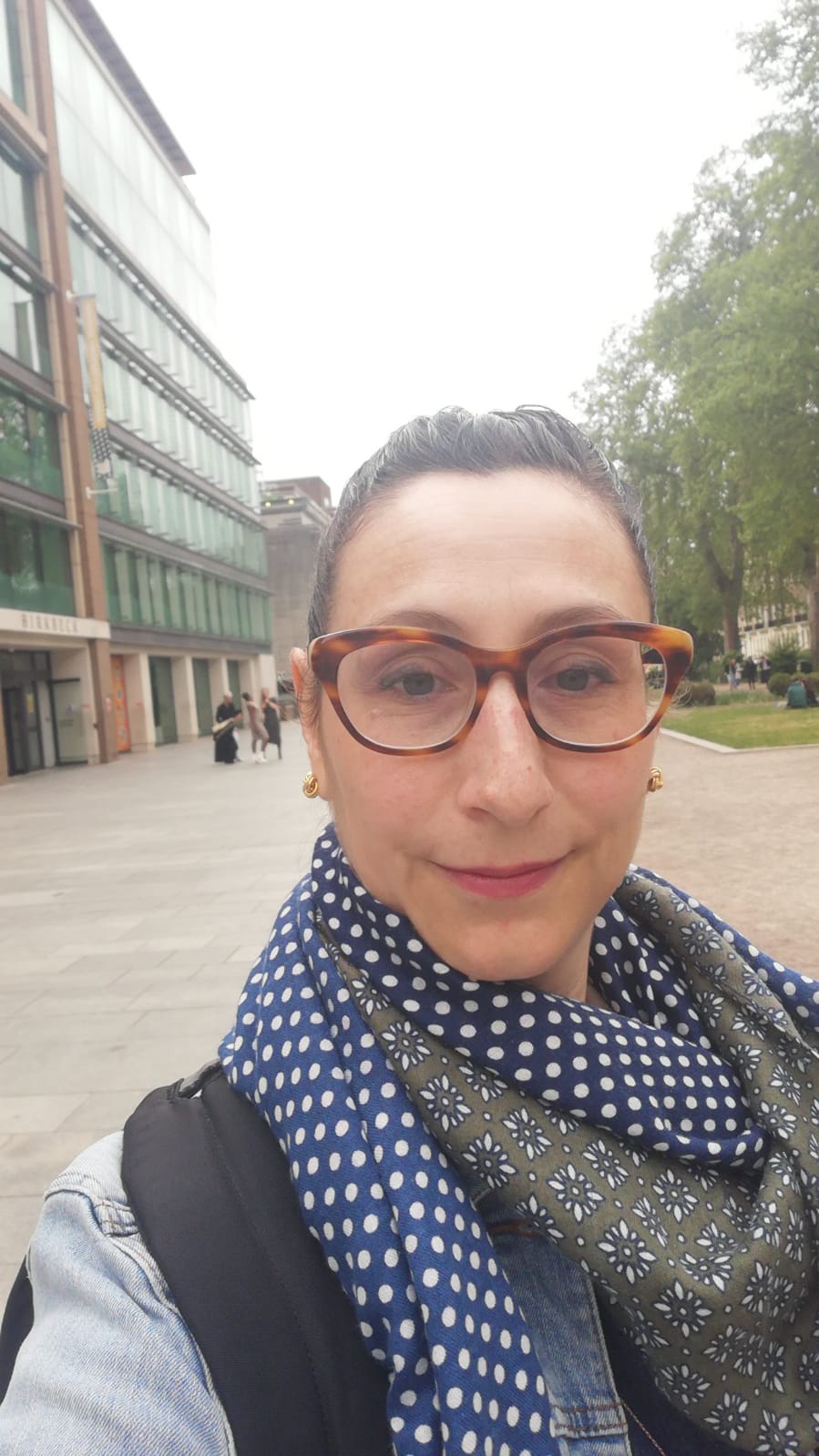
200th Anniversary: Alison Stamps – Alumna and Quality Development Manager

Alison Stamps graduated in 2007 with a BA Film and Media and now works as a Quality Development Manager with the University of Exeter. She spoke of her experience for Birkbeck’s Part-time Matters campaign in 2013:

“In my early 30s someone told me about Birkbeck, and the experience changed who I am. I took my BA Film and Media over a period of 6 years, going to class between two and three times a week after work. I worked full-time throughout the part-time degree and had to defer my second year to care for my sick mother.

I passed my degree with first class honours, having never written an essay or taken lecture notes before my first class at Birkbeck. My degree gave me confidence and opened doors professionally and I could wax lyrical about Birkbeck and what it did for me. It changed my outlook on life and gave me goals and ambition.

To in any way diminish the part-time study opportunities for potential students within the UK would be potentially catastrophic to a body of students/future students that have so much to give our economy.”

200th Anniversary Birkbeck Effects: Alfred Russel Wallace – natural historian  

Alfred Russel Wallace was an explorer, collector, naturalist, geographer, anthropologist, political commentator and a Birkbeck alum.

He conceived the revolutionary idea of evolution by natural selection entirely independently of Charles Darwin, though Darwin and his The Origin of Species would overshadow Wallace and it has usually been Darwin’s name alone associated with the theory of evolution by natural selection.

Charles Darwin was impressed with how much Wallace’s theory of natural selection matched his own: ‘He could not have made a better short abstract! Even his terms now stand as heads of my chapters!’


Unlike Darwin, however, Wallace was a spiritualist and believed that natural selection could not explain the human intellect, and that the human spirit persisted after death.

200th Anniversary Birkbeck Effect: Alexandra Cardenas – Head of public affairs at Starling Bank and former Law Society chief of staff

Alex Pitchford is a solicitor of England and Wales, Head of corporate affairs (London & East of England) at Barclays Bank.

She specializes in financial services, technology policy and government affairs. Earlier in her career, Alex was a human rights lawyer in Colombia, where she’s originally from, and held senior roles in UK charities.

Alex is also a trustee for the Uganda Child Development Fund.

200th Anniversary Birkbeck Effect: Alex Gerard – Executive director of Tiyeni

After a diverse career involving shark conservation, primate rehabilitation, arts management and more, Alex Gerard began working with Malawian agricultural charity Tiyeni in 2022 to support their mission of eradicating food poverty across Africa.

Alex initially specialised in underwater camerawork while studying for his BA in Photography in Plymouth. He became fascinated with marine science and ecology and then spent the next decade training as a shark behaviourist in Australia and specialising in marine husbandry for aquariums in the UK. But it was in 2010, while site managing a primate protection education centre in Nigeria, that Alex was inspired to return to study and enrolled in Birkbeck’s MSc in Environmental Management.

Tiyeni has trained over 80,000 farmers in ‘zero-tech’ Deep Bed Farming methods that improve soil quality, and thereby crop yield and crop quality. The Malawian Ministry for Agriculture recently certified Tiyeni’s method as the most effective farming technique available in Malawi.

200th Anniversary Birkbeck Effect: Alan MacKay – Scientist

Professor Alan MacKay is a British crystallographer and spent his scientific career at Birkbeck. He has made important scientific contributions related to the structure of materials and has been called “one of the most fertile scientific minds of this. or any other era.”

Professor MacKay decided to study for his PhD and joined Birkbeck part-time, from 1949, in the crystallography laboratory of J.D. Bernal, later moving to full time. He stayed at Birkbeck for the rest of his professional life.

In 1962 he published a manuscript that showed how to pack atoms in an icosahedral (a solid figure with 20 place faces) fashion; a first step towards five-fold symmetry in materials science. These arrangements are now called Mackay icosahedra.

He became a Fellow of the Royal Society (FRS) in1988 and a Fellow of Birkbeck in 2002.

200th Anniversary Birkbeck Effect: Aaron Klug – Biophysicist, chemist and Nobel Laureate

Nobel prize winner Aaron Klug’s research achievements have had a profound impact on the understanding of diseases including Cancer, Polio and Alzheimer’s, with the Lithuanian-born British scientist’s discovery of modular proteins called zinc fingers, inspiring their synthetic design in targeting various conditions.

A research fellowship at Birkbeck, in 1953, and collaboration on vital research with virologist, Rosalind Franklin into proteins and viruses, led to a great advancement in the knowledge of the structure of the Tobacco mosaic virus, the first pathogen to be identified as a virus. That same year, he became director of the Virus Structure Research Group at Birkbeck.

In 1982, Klug was awarded the Nobel Prize in Chemistry for his investigations of the three-dimensional structure of viruses and other particles and for the development of crystallographic electron microscopy.

200th Anniversary Birkbeck Effect: Tom Blundell – Biologist and former professor of biochemistry

Blundell is a Birkbeck Fellow and former Head of the Department of Crystallography (1978).

In 2017 he received the acclaimed Ewald Prize, the most prestigious available in the field of Crystallography, only given once every three years for outstanding contributions to the discipline.

The prize was given to Blundell in recognition of his worldwide leadership in crystallographic innovation, especially at the interface with life sciences. He is perhaps most well-known for his part in determining the structure of insulin with Dorothy Hodgkin and for co-founding Astex, a biotechnology company focused on the discovery and development of drugs in oncology.

Blundell’s contributions were recognized by a knighthood in 1997.

200th Anniversary Birkbeck Effect: Mark Johnson – founder of CBCD and BabyLab

Mark Johnson is a pioneering professor of developmental cognitive neuroscience and co-founder of the Birkbeck Centre for Brain and Cognitive Development (CBCD). He has had a wide-ranging impact on the understanding of early brain and behavioral development in infancy and childhood.

Through over 360 papers and 10 books, Mark has explored how specialized functions in the brain emerge and expanded the knowledge of the development of many aspects of basic cognition.

Mark came to Birkbeck in 1997 and founded the Babylab as the first research lab in the CBCD. The CBCD rapidly grew to become a world-leading multi-approach, multi-lab, internationally admired centre for methodological and theoretical innovation in developmental cognitive neuroscience research.

Mark has also trained and mentored generations of developmental researchers whilst at Birkbeck, winning the Association of Psychological Sciences Mentor award in 2019.

Why I love teaching on Birkbeck’s Get Started Law taster course

Dr Susy Menis, Lecturer in Birkbeck’s Law School, teaches a Get Started Law Taster course, which aims to give people without experience of studying at a UK university an opportunity to try out a university level course. In this blog, she shares her approach to teaching, what she wants learners to achieve, and why she enjoys teaching the course so much.

Dr Susy Menis outside Birkbeck’s Malet Street building

What is the Get Starter taster course, and who is it for?
This is a freebie short course run by Birkbeck once a term. Currently, it offers tasters in law, criminology, and computer science. This initiative is targeted to welcome those who may feel excluded from taking a step into higher education.

How did I get into the delivery of the Law taster?
I had set up an artwork exhibition at Stratford Public Library with the help of the Access and Engagement team; then, the Coronavirus hit us. Subsequently, I could not turn down their plea to deliver free online content to a target audience. The first Law taster occurred in June 2020 on Collaborate; I was told it sold out.

Online delivery so early in the pandemic wave, panic?
No. During my PhD studies, I taught and designed content for Kaplan Open Learning on behalf of Essex University Online. I was also an associated lecturer at the Open University remote LLB programme, and in 2017/18, I created a blended-learning option module for the Birkbeck LLB. Still, I needed content, and I knew that a ‘transfer’ of in-person learning materials into an online context is not what relevant pedagogy advises. Hence, I felt under pressure.

So, how did I approach this?
I reminded myself of the two principles I had followed in my teaching and that I applied the Certificate HE Legal Studies (I re-designed it from scratch in 2018 as its new programme director): 1. less is more, and 2. active learning. These need to be matched with the right level of delivery, and the first taster’s cohort set the threshold: Union members and Reps between 30+ to 50+ years of age (now we have younger students, too) and a majority of up to level 3 formal qualifications (few on 5 and 6). Subsequently, I added another principle: 3. recognise adult learners’ prior knowledge.

My taster is delivered yearly on Teams across four weeks, and now I alternate between two different contents. Last year, the taster was about ‘The curious case of the “flick knife”’ and concerns legal reasoning. This year’s topic was ‘Common law and legislation in practice: the case of theft’, and it looks at the interplay between legislation and judicial precedent.

What do I want learners to achieve?
The overarching learning outcome I want the students to achieve is a ‘transformative learning’ experience. ‘Transformative’ could range from the emotional sense of and practical achievement of attending a course, contributing to class discussion, and being heard to learning something new and the cognitive satisfaction of its application in context.

Learning is scaffolded and focuses on bit size depth of knowledge, emphasizing critical thinking and application. Each week’s learning builds on a short, recorded lecture. The live sessions are teacher-led, but the students bring the knowledge we work with. To this end, I avoid ‘lecturing’; I ask open questions, we reflect, and concepts are illustrated through students’ application to scenarios.

My final thoughts
Recent pedagogical scholarship recognises the significance of the teacher’s social presence and learners’ motivation in online learning, and this taster allowed me to reflect on the grounding of my practice. My main conclusion is that this has been a transformative experience for me too, not least because I was struck by the dynamic collaboration between the students and me and how much they said they got out of it. I am looking forward to the next cohort 2024/25!

Here’s some recent feedback from attendees of the course:

“Reflective skills for sure, reasoning skills, reading complex information!! Really, I enjoy very much all of the sessions!!”

“Miss Susy, and to the whole management team thanks a ton for putting together this awesome law taster. It was truly memorable & I won’t forget it anytime soon. Your efforts made it extra special, I really appreciate it”

“The Law Taster journey has been an absolute bliss with you” 

“Absolutely adored today’s session. Thank you so much for making it so interactive”

“I like the cases and the incisive way Susy teases out the legal logic and principles to make us understand more simply”

Further information

The future is here – exploring the role of AI in the world of homecare

Dr Kerry Harman from Birkbeck’s School of Social Sciences and Ms Caroline Firmin and Ms Dominique Davies use this blog to reflect on a recent exhibition they attended entitled ‘AI: Who’s looking after me?

I’m a senior lecturer at Birkbeck with a particular interest in invisible labour and marginalised knowledges. My interest in this area has led me to collaborating with Ms. Caroline Firmin from Birkbeck, Ms. Dominique Davies from Birkbeck and researchers at the University of Manchester on a case study entitled ‘Reimagining Homecare’ which explores sensory ways of knowing care. Caroline and Dominique are both homecare worker-researchers, and the ‘Reimagining Homecare’ project is part of a larger three-year AHRC funded Care Aesthetics Research Exploration (CARE) project.  

In August, Dominique, Caroline and I attended an exhibition entitled AI: Who’s looking after me? We all found the exhibition extremely thought provoking, so much so that we all kept thinking about it for days after we’d visited. As Caroline rode home on the bus (it was a long trip) she pondered the question: ‘can AI play a part in homecare’? It wasn’t the first time she’d thought about AI and homecare as it has been a focus of discussion within the field of homecare. What follows is a combined critical and poetic response from the three of us: 

‘AI: who’s looking after me?’ – well one response to that question would be the 1.62 million people working in Adult Social Care in England (skillsforcare). Of this very significant number of workers, 82% are female, the average age is 45, 23% have black, Asian and minority ethnicity and 16% have a non-British nationality. Almost a quarter of the adult social care workforce are employed on zero-hours contracts. Did we hear from or see any of these workers in the exhibition? No, but their silence was deafening and reverberated in the photographs of interiors of outsourced AI worker’s homes in the Global South in ‘The future is here’. 

The future is here 

I’m an elderly person of a great age past my eighties and keeping the rest a secret. 

I’m bedridden I need help from carers to help me get washed dressed change my pad . 

Hoist me from bed to armchair. Give me my medication. Make my meals and drinks . 

Do my laundry and housework.  

My family do my shopping and see to bills . I do need quite a bit of support.  

Can AI give me that kind of support? Can AI greet me in the morning with a smile on its face ? Can it respond to my needs, does it know how I’m feeling?  

Will AI talk to me and tell me what is happening outside where I live? For example, what is the weather like outside today? Is there anything new going on? Did you see any neighbours?  

Does AI know when I need a doctor.  

Does it know my thoughts and feelings? How do you have a relationship with AI like I do with my carers and family? 

Can it sense moods? Can it sense changes?  

We rely on technology everyday, sometimes it’s frustrating. Mostly we adapt to technology, because we don’t have a choice.  

Can we do without technology?  We use our phones, laptops, bank cards on a daily basis but when these go wrong what happens?  

What if AI goes wrong? Who cares for me now?  

Does AI have a place or contribute to homecare? 

What is AI? what does it do?  

Many of us have heard of AI but I don’t think we fully understand what it means. How is AI made and who programmes them? What role do they play in our lives?  

Can they play a role in our lives better or worse than humans? 

Can AI be corrupted, can it be trustworthy? Would the person receiving care be comfortable with AI?   

Can AI help the blind, deaf, disabled, wheelchair users, mental health, dementia/ Alzheimer’s? How would the elderly understand communicating with AI? 

Is AI here to stay forever and replace human feelings, touches, senses?  

I think humans need human touches and human responses. I think it makes them feel more connected…. 

The future is here 

For me, ‘Who’s looking after me?’ spotlights the question of ‘what does it mean to be human’? Visiting the exhibition prompted me to read ‘The Inconvenience of Other People’ by Lauren Berlant. Berlant provides a detailed exploration of the impossibility of sovereignty and argues that politically we need to learn to work with the ambiguity that the fantasy of sovereignty creates. I contend that in many ways AI could be thought of as a human response to the human desire for sovereignty. In other words, because people are ‘inconvenient’ we seek to create a world where we can bypass them. Enter AI. However, as Caroline and Dominique both ask, can AI replace ‘care’? And even if it could, this raises a bigger question: if we humans are going to go to the trouble of teaching machines ‘to care’, why not invest in teaching humans to care more for each other and the world? Why do we want machines to do that? As Berlant maintains, people (and things) ARE inconvenient, but we need to move beyond the fantasy of sovereignty as we continue to bump into each other in this world. Creating machines that can ‘care’ will not address the fantasy of human sovereignty, it will only mean that we need to develop new ways of relating to things. While the possibilities generated by new types of relations and relating should not be foreclosed, the fantasy that this will lead to greater sovereignty needs to be abandoned. In other words, we need to learn better ways of getting along together.  

The future is here 

I feel like a robot – robotic, when I’m performing care.  

Perhaps the future is here?  

…so lots of questions as we continue in exploring care aesthetics and sensory ways of knowing care.  

More Information: