Category Archives: Uncategorized

Meet the Santander Scholars

This post was contributed by Andrew Youngson, media and communications officer

“Why are you the ideal candidate to receive the £5,000 Santander scholarship?”

This is the question posed to all Latin American students hoping to be selected for a special scholarship opportunity at Birkbeck. It’s a straightforward question, but one that needs a certain amount of objectivity and a keen insight into your skills and plans for the future to answer effectively.

Each year – providing they have an unconditional offer from the college – applicants are invited to answer the question in an essay of no more than 500 words. If successful, they receive £5000 to be applied towards their course tuition fees at Birkbeck – a significant sum of money that is provided by the college’s longstanding corporate partners, Santander.

Lauren Prone, Head of International Marketing and Recruitment at Birkbeck said: “We are very grateful for Santander’s donation, which has allowed Birkbeck to support the studies of promising scholars from across Latin America.

“This has proved highly attractive opportunity for students to pursue their passions, and in the past two years since launching the scholarship, it has been granted to students pursuing a range of courses, including the Arts, Social Sciences and Business Studies.”

Michael Wilson, University Regional Manager-London and East for Santander Universities UK, said: “We signed our agreement with Birkbeck in 2013 and we are delighted to see how the students have benefitted from this agreement.

“Talented young people have been able to study in the UK thanks to our funding and UK students have been able to have study abroad experiences. We are extremely pleased with the university’s approach to internationalisation and the transfer of knowledge between universities and we are proud to be part of this long-term partnership.”

So, who are the latest lucky recipients of the Santander scholarship? We caught up with the three successful applicants from the 2015-16 intake, to find out how they are getting on in their studies.

Camila_Villegas-0623


Camila Villegas

  • MA Arts Policy and Management
  • From Bogota, Colombia


How are you finding Birkbeck’s learning environment?

“My teachers here have been really supportive, and have always been available to help me. It has been a major shift for me educationally, because British education is very theoretical and I hadn’t experienced that much before. So it’s been challenging. For example, I didn’t do a dissertation at my last university; it was just projects and portfolios. I had never done research before, and it’s been a while since I have done essays, so it’s been a challenge, but I feel there’s a lot of support here.”

Read Camila’s full interview here and watch her video interview in English here and below, and in Spanish here.


Fernanda_Costa-0654


Fernanda Costa

  • BA History and Archaeology
  • From Curitiba, Brazil


How are you finding the Birkbeck experience?

“I’m really enjoying my lectures. At first I wasn’t keen on the seminars because I don’t like speaking up, but now I enjoy the discussions. I’m talking much more in class than I used to. At first I didn’t think I was clever enough but I feel like I understand the readings a lot better now so that has helped my confidence.”

What is the makeup of your classes?

“There’s a real mix. There are people of all sorts of ages – from my age, some are a bit younger, and some who are much older which is really nice because they have so much more life experience. I find that listening to what other people have to say is really mind-opening because hearing different points of view helps you rethink your own.”

Read Fernanda’s full interview here and watch her video interview in English here, and in Portuguese here and below.


Diana_Navia-0727


Diana Navia

  • MSc International Management
  • From Bogota, Colombia


How did it feel to be selected for the Santander scholarship?

“I was very happy, very very happy. I think you feel it’s like you are pursuing your dreams, you’ve found the right path and finally you’re going to achieve your goals. I was so happy to hear I got it, I think I must have called everyone to tell them!”

Read Diana’s full interview here and watch her video interview in Spanish here and below.

Applications for the 2016-17 cohort of Santander scholarships are now open, and must be made before 1 June 2016. Scholarship recipients will be chosen based on academic promise, the essay, the personal statement submitted with the course application, and need. The £5,000 scholarship will be applied towards course tuition fees.

Apply here

scholarship_students-0699

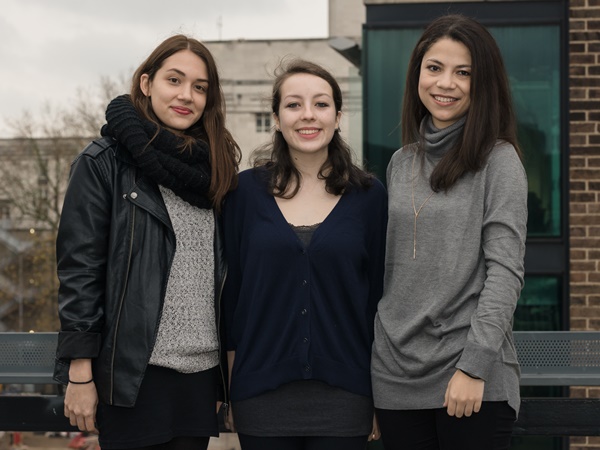
The Santander Scholars (left to right): Camila Villegas, Fernanda Costa and Diana Navia

Find out more

The demise of part-time study – who cares?

This post was contributed by Claire Callender, Professor of higher education at Birkbeck, is based on her contribution to the Higher Education Policy Institute’s new report on part-time study, It’s the finance, stupid!, published today.

Part-time-educationSince 2010-11, the number of entrants to part-time undergraduate study in England has fallen by 55 per cent. Last year alone, the numbers dropped by 10 per cent.

This has gone almost unnoticed by most of the higher education sector, the media, politicians and the public. Yet, if there had been a drop of 55 per cent in full-time undergraduate entrants following the 2012/13 student funding reforms, there would have been uproar.

Universities and other higher education stakeholders would have been outraged and demanded action. Ministers’ heads would have rolled. When this occurred among part-time entrants, nothing happened.

Yet part-time education matters because it transforms lives and drives our economy by enabling people to upskill and advance their careers or reskill for a new one. It matters for higher education, too, because part-time study contributes to a more flexible and diverse sector, while helping to widen participation and increase social mobility.

In 2012/13, public teaching funding in England was largely replaced by tuition fees, capped for part-time students at £6,750 a year. Income contingent loans were made available to cover the fees, which students taking a Bachelor’s degree start to repay four years after starting their course, so long as they are earning over £21,000 a year. They then pay 9 per cent of their income above £21,000, with any outstanding debt written-off after 30 years. The Government at the time claimed these reforms would make part-time study more affordable and open up access. They have had the opposite effect – part-time study is less affordable while numbers have plummeted.

As public funding fell away, tuition fees rose – in some cases tripling. But the majority of potential part-time students do not qualify for the new loans to cover these higher fees because of the overly restrictive eligibility criteria. Instead, they are faced with far higher fees that they have to pay upfront and out of their own pocket. And amongst those who qualify for loans, loan take-up is far lower than predicted. The government estimated that a third of part-timers would take out loans. But only 19% have done so since the new loans were introduced. This suggests that these loans are not necessarily perceived as a safeguard against the risks of part-time study.

Part-timers are typically older than full-time students, and have numerous family and financial responsibilities that take priority over discretionary spending such as on study – especially in times of economic uncertainty. Put simply, part-time study is unaffordable for more people than ever before.

The recession may have contributed to the fall in demand for part-time study. However, the recession in England was less severe than in the rest of the UK yet the decline in part-time entrants in England has been far greater. The difference is that the other UK countries did not withdraw teaching funding or increase tuition fees.

As demand for part-time study has dropped, so too has the supply. There are no longer any incentives for higher education institutions to offer more expensive and risky part-time courses, especially where there is an excess of demand for now-uncapped full-time courses. Even if demand recovers, reviving dismantled part-time provision and infrastructure will be challenging.

The student loan rules, which are designed for young, full-time students, need to be rejigged to acknowledge the distinctive characteristics of the part-time population. At a minimum, the government needs to loosen the eligibility criteria. It also needs to consider larger subsidies to part-time study to encourage demand.

If the government is committed to up-skilling the workforce, it must take some radical action to arrest the decline of part-time study before it becomes terminal.

Birkbeck is an advocate for combining work and study. More information can be found here.

Find out more

“It’s a story of sex, scandal and divorce”: Bringing ‘The Scandalous Lady W’ to the screen

This post was contributed by Andrew Youngson, media and publicity officer for Birkbeck, University of London

Natalie Dormer stars as Lady Seymour Worsley (C) Wall to Wall Productions Ltd - Photographer: Laurence Cendrovitz

Natalie Dormer stars as Lady Seymour Worsley (C) Wall to Wall Productions Ltd – Photographer: Laurence Cendrovitz

In summer 2011, a book written by author and historian, Hallie Rubenhold, arrived at playwright and Birkbeck lecturer David Eldridge’s door.

‘Lady Worsley’s Whim’ (as Rubenhold’s book was known before being republished as ‘The Scandalous Lady W’), told the nigh-unbelievably-dramatic story of Seymour Worsley, an 18th century British noblewoman who was at the centre of a scandalous court case.

In 1782, when Lady W’s husband, Sir Richard Worsley, brought a ‘criminal conversation’ case against her lover – George M Bisset – it backfired. In retaliation, Lady W disclosed to the court and the media many shocking details of her marriage with Sir Richard – including the 27 lovers she had kept in total, in large part to satiate the voyeuristic desires of her husband.

It was a court case which wouldn’t look out of place in the pages of today’s tabloids, but for the time, it was incendiary stuff.

David received Hallie’s book through a circuitous route, with his old professor from Exeter University recommending him to her as a playwright of real talent, and who, alongside his own original work, was ever on the lookout for works to adapt for the stage and screen.

“The morning after the book arrived, I was meant to be doing something else,” David explained to me as we sat together in his office at Birkbeck’s School of Arts where he lectures in creative writing.

“I began to read and I couldn’t stop. It was brilliant. It was just a fantastic story. One of those stories that felt genuinely extraordinary and unique. I keep thinking my memory plays tricks, but looking back through archived emails, I see I did write to Hallie that evening: ‘I’m enjoying your book hugely. I’ll be in touch’.”

Four years later, Seymour Worsley’s story is set to be told to a fresh audience, this time in the form of a 90 minute BBC drama, ‘The Scandalous Lady W’, starring Game of Thrones and The Tudors actor, Natalie Dormer.

In the run up to the drama’s transmission date of Monday 17 August at 9pm on BBC 2, I spoke to David about the gripping real-life story, the process of bringing it to the screen, and what lies ahead for the prolific playwright and screenwriter.

Hi David. What was your main aim in writing this piece and how does it link to Hallie Rubenhold’s book?

The aim was just to tell the story really well in dramatic form. One of the things that’s very interesting about Hallie’s book is that she’s done something quite unusual in terms of its narrative: she withholds information, which is really a fiction writer’s trick.

For example, in the court trial which is at the centre of the story, there’s a big reveal. Hallie tried to find a way to replicate that in her history book. That’s not the kind of thing a historian would usually do in a nonfiction book. Normally you just set out the facts in chronological order. So I thought that was very interesting, and something I could develop in the script.

What did you want to achieve in writing about the central female character, Seymour Worsley?

One of the things that appealed to me was that Seymour Worsley acted in a very modern way for the time. It took great courage, because she was trying to fight a legal battle, but also overcome the expectations of polite and fashionable society of the time.

I’ve done a lot of research into the work of Henrik Ibsen, and I saw Seymour in this same light. Like Ibsen’s heroines she’s very complex. She was used by her husband in terms of his sexual peccadilloes, but she also revelled in her own sexuality. She wanted to live an unconventional way of life with her husband – although it was hidden from view – and also wanted to break out of that and to have her freedom to live as a ‘Modern’. But on the other hand, she also wanted the conventionality of a marriage with George Bisset.

So she’s a very complex character. She does some things in the course of the story that are hard to admire. You can admire her courage and chutzpah, but then she really did humiliate her husband, and also left her three-month-old daughter at home. And I think that’s where a lot of the tension is in the film: you really do admire her, but equally there are moments when you question her.

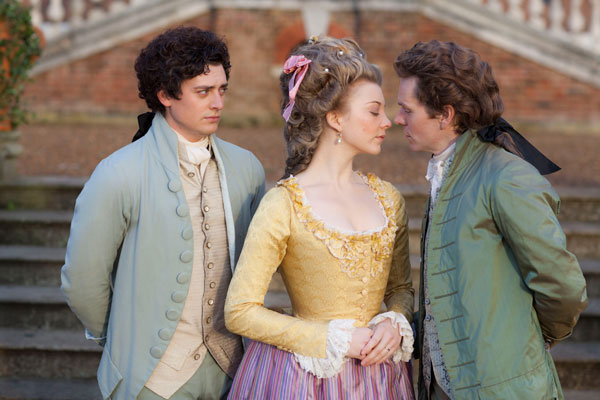
(L-r) Aneurin Barnard as Captain George Bisset, Natalie Dormer as Seymour Worsley, and Shaun Evans as Sir Richard Worsley (C) Wall to Wall Productions Ltd

(L-r) Aneurin Barnard as Captain George Bisset, Natalie Dormer as Seymour Worsley, and Shaun Evans as Sir Richard Worsley (C) Wall to Wall Productions Ltd

The press coverage in the run up to the film’s broadcast has focused a lot on the sex and scandal of the story. How does that sit with you?

I think it’s right, because that’s what it’s about. It is about sex, scandal and divorce, though of course it’s about other things as well. But she did after all have – including Captain Bissett who she eloped with – 27 lovers. And her husband did have voyeuristic tendencies. But also, the way that the press has covered it, I don’t think that’s obscured other elements. They have talked about common law and ‘criminal conversation’ at the time. I don’t think those things have been ignored.

What role did you play during the production process itself?

Although I wasn’t executive producer, I was treated a bit like one. I was involved in all of the creative decisions that were particularly relevant. In TV, one of the things that’s very different than writing for theatre is that it’s about working with the practical circumstances of the shoot, both in terms of budget and locations. As writer, I did four set visits during the three weeks of shooting.

But your role is more about being at the end of the phone or email. For example you might need to rewrite something if it’s going to be too expensive to shoot, or if a particular location allows you to do something much more with it. As a writer you are responding to the practical issues of making the film. Screenwriting is always an artistic process, but it’s an incredibly practical and pragmatic craft.

You must have been delighted that Natalie Dormer was cast in the lead role. What has she brought to it?

First and foremost, she’s perfect for the role. She’s really brought the impetuousness, sexiness and naivety, but also a really principled core which is really important to this role. She’s absolutely a team player and she really believes in the character. She’s really passionate about the themes of the film and what they say about the role of women at that time.

Is it strange hearing the words you have written spoken out loud?

Not anymore, no. When I first started, when I had my first plays on back in the ‘90s, it was very strange. But it’s part of the joy of it now. It’s what it’s all about. I write the script, but it’s not a drama until it’s embodied by a performance.

What’s next for you?

There are a couple of things I can talk about. I’m adapting (Birkbeck colleague) Benjamin Wood’s first novel, The Bellweather Revivals, for BBC films. It’s a really great book. And I’m also adapting a contemporary novel for the West End, for a show with the Michael Grandage Company.

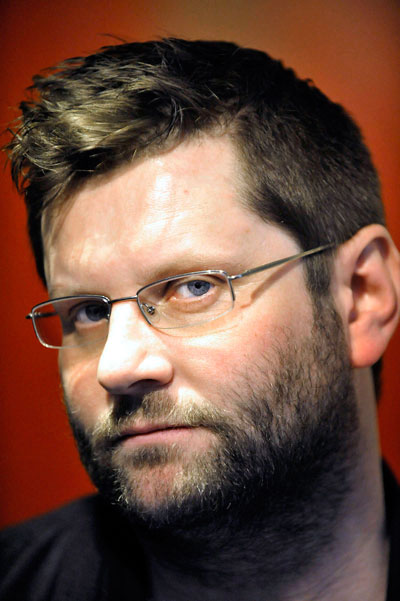
David Eldridge (C) Photographer: Keith Pattison

David Eldridge (C) Photographer: Keith Pattison

That sounds exciting. Is the ideal situation for you to be constantly alternating between writing for the stage and screen?

I’d like that, yes. I’m the kind of writer who does maybe one completely original piece every 18 months, but I have a lot more energy for writing than that. So the question is, ‘what do I do in the meantime’? The answer has been in ‘found stories’ – things I read about, true stories, and novels I would like to adapt because they would make good dramas.

Lastly, how does your teaching role at Birkbeck fit into the broader picture of your career?

I’m about to start my fourth year as a part-time lecturer at Birkbeck, but I’ve always done a lot of teaching throughout my career. It’s very important to me in my own practice and craft. The very act of teaching and communicating leads me to reflect on my own practice and to change my own ideas with what works and what doesn’t.

Plus it’s wonderful for the student too.

One of the things that’s really great about the teaching staff on the creating courses here is that we’re all professional writers who are making work now. It’s not a programme taught by washed-up writers who have decided to go into education. I think it’s really important that our students are benefiting from being taught by lecturers who are doing in the real world what we are asking them to do in the seminar room.

The Scandalous Lady W will be aired on BBC 2 at 9pm on Monday 17 August

Find out more