Category Archives: Uncategorized

Developing digital skills with UpScale

This blog was written by Frederic Kalinke, an ex-Googler who is now Managing Director of agile marketing technology company Amigo.digitaltechoriginal

I am a big fan of the UpScale programme at Birkbeck, which inspires students to work in the wonderful world of digital technology. Several big brands like LinkedIn, ASOS, JustGiving and MediaMath are partners, offering dedicated seminars to aspiring students. I have delivered a number of workshops focused on the power of Google and online marketing. In this article, I want to share why I believe UpScale is so important, as well as some tips on how to learn digital skills effectively.

I started my career at Google. Besides overdosing on sushi and chocolate, I learnt everything there is to know about Google’s marketing tools, which help businesses acquire customers online. I was also lucky to discover a passion so early. The thing that got me out of bed in the morning was developing novel and effective ways to teach companies about how Google products work. Before I dive into these, it’s worth spending some time exploring why working in technology is a fantastic place to be.

Never get bored

The UpScale programme focuses exclusively on the digital technology sector. Why? The UpScale website talks about employer demand. As the world gets increasingly digital, companies will continue to require and reward people who have technical skills and interests. This is undeniably true. You only have to look at the market salaries for software developers, data scientists and digital marketers to understand that demand for digital talent outstrips supply.

I would argue, however, that there is an intrinsic reason why technology is a fantastic career choice: it never gets boring! By nature it constantly evolves and never lies still. Here’s a clear example. Before the internet, the hotel, taxi, retail and entertainment industries remained largely unchanged. Hoteliers and taxi companies enjoyed oligopolistic privileges so could charge whatever they wanted to customers; high street shops enjoyed healthy margins based on the fact that customers had no other choice but to purchase their goods and services from them; and content producers, movie distributors and cinemas moved in lockstep, creating a profitable triumvirate. Then the internet arrived. And so did AirBnB, Uber, Amazon and Netflix, which have completely transformed their respective industries. It’s mind-boggling to think that two of these companies did not even exist 9 years ago. And none of them existed 23 years ago.

I was given the recommendation to work in digital by a wise CEO of a large FMCG company whom I met at university. He told me to forget the FMCG (Fast Moving Consumer Goods) sector as, despite its name, was the “commercial snail”. It turns out that washing powder and toothpaste don’t really change that much.

So if you want excitement and constant innovation, digital technology will not disappoint and UpScale will equip you with the skills and networks to help get you there.

How to learn digital effectively

Having established the significance and thrill of working in technology, I’d now like to outline three ways to learn digital skills effectively. These insights are based on my experience of running several UpScale workshops.

  1. Interactive learning: From the very start of my workshop, I involve everybody in warm-up exercises and thought experiments to get people thinking. I am a big believer in the saying that if you “tell somebody to do something they will forget, if you show somebody they will remember, but if you involve somebody they will understand”. Because digital technology touches every part of our life, I advise students to get together in small groups to debate digital and challenge each other with questions like: why is Amazon so successful? Why is Twitter’s stock price so low? If you had £100k, what business would you set up and why? Why is using data important in decision-making? Which industry will be disrupted by technology next?
  1. Metaphors: I use a lot of metaphors to teach digital marketing concepts. For example, when we look at keyword planning, the bedrock of Search Engine Marketing, I use fishing and football; when we discuss Website Optimisation, I use the metaphor of a great restaurant. Metaphors make new things memorable and familiar. I always advise students to devise their own metaphors for newly learnt subjects and try them out on friends. As the Feynman Technique tells us, explaining something to a newbie is the best way to master any topic.
  1. Get practical: The last part of my workshop is about applying theory to practical exercises. Participants create their own Google AdWords campaign for an industry of their choosing. In whatever technical subject you are learning, there is always a practical application. If you’re learning a computer language, grasping data science or building a Microsoft Excel dashboard, get stuck in by building something. You will be amazed at how much this aids the learning process.

Improving access to student service information

This post was contributed by Dr Ben Winyard, Digital Publications Officer in Birkbeck’s Department of External Relations

Birkbeck offers a comprehensive range of services, to give our diverse student community the support and assistance it needs. These services are open to all and almost all of them are free to access. Our students consistently tell us that it is the human touch – meeting an academic at an Open Evening, emailing a Programme Administrator for assistance, seeking professional advice from our Careers and Employability Service, speaking to a counsellor about emotional issues – that makes Birkbeck so special. We are very proud of the willingness of our staff to go the extra mile: we’ve been helping students use their evenings to transform their lives for nearly 200 years now, so we know the challenges and obstacles they face – and the life changing opportunities we offer.

But how best to present over a dozen varied and distinct services on our website has been a particular challenge. In 2009, we launched My Birkbeck, a bespoke, specially designed website that presented these services in one place for the first time, to make reading about, and accessing, them more straightforward. However, in the intervening years, the design began to look antiquated – the pace of digital change is so breakneck that nothing ages more quickly and dramatically than a website – and the content became outdated, repetitive and progressively difficult to navigate. Increasingly, prospective and current students, as well as Birkbeck staff, have become frustrated with the outmoded design and the challenges of finding important and up-to-date information.

The My Birkbeck site was suffering from a proliferation of pages and files, an overload of content and a breakdown in user friendliness. We discovered that the site contained over 1100 content pages, of which 85% attracted fewer than 1000 views in the whole academic year – this is a very low number for a university with nearly 20,000 students. Moreover, well over 30% of the site had not been edited or updated in the past year, while 27% had not been updated for more than two years and 10% had last been updated three years ago. There were even pages that hadn’t been updated since the site launched in 2009. There was also excessive duplication of files: we found 1093 Word, Excel and PDF files on the My Birkbeck site, but the majority of them were copies or new versions of existing files that had already been uploaded – in one case, we found 25 published versions of the same file.

This confirmed that there was too much content and that the majority of it was out-of-date, underutilised and unloved. Although the original site had been impressive, user friendly and well designed, the intervening years had been unkind and, despite the valiant efforts of staff across Birkbeck, the site had become frustrating to navigate and off-putting to staff and students alike.

User feedback commissioned before Christmas confirmed that our students found accessing information about our services confusing and discouraging. They were aware that the My Birkbeck site was separate – in look and feel – from the main Birkbeck website, but they were critical of the site’s multiple failings. Although their perseverance and investigative prowess were impressive, our students shouldn’t have to expend lots of time tracking down information to access vital services.

In 2016 we launched a project to replace the My Birkbeck site, with the following objectives:

  • reduce the number of overall pages to make the site more navigable and user friendly
  • delete duplicate and out-of-date content
  • draw everything together into a single, definitive source of information
  • apply our new House Style and a consistent tone of voice
  • improve content to make it easy to scan and to make the key information, especially contact details, more prominent
  • optimise the content for search, to make it easier to find information via Google and other search engines
  • make it easy to login to online student services, such as our online learning environment, Moodle.

The first step was to meet with all of the key staff who run the services, to listen to their particular concerns and frustrations with the My Birkbeck site, and to work together to present the information in new, user friendly ways. We utilised high-tech tools – post-it notes and felt-tip pens – and asked staff to think about the key questions that a visitor to their services would have in mind. This helped us more intuitively structure the content on the site, giving priority to the most important and urgent questions and tasks. We also asked staff to consider the emotions that students might be experiencing when visiting the site – which ranged enormously, from excitement, optimism and determination to confusion, anxiety and frustration – which helped us adopt the most appropriate and helpful tone of voice when rewriting content. The focus throughout has been on meeting the needs of users and giving them the information they want, quickly and clearly.

The new Student Services site has reduced over 1000 webpages to just 100 – a tenth of the original size. The layout is brighter and easier to navigate, with more images and new, distinctive sections for each service. The content has been completely rewritten, following our new House Style, with an awareness of tone of voice and an emphasis on usability. Key pages from other areas of the Birkbeck website have been incorporated into the new Student Services section, to bring everything students need together in one place. As 30% of all visitors to the old My Birkbeck site were solely using it to access Moodle and other password protected areas for current students, we have improved access to those login areas by making them more prominent.

Overall, our ambitions have been to create a well-designed, user friendly and useful new area of the website, to bring together and re-present information about our impressive range of student services, and to make those services as open, welcoming and accessible online as befits Birkbeck’s ethos.

Trump trolls, Pirate Parties and the Italian Five Star Movement: The internet meets politics

This article was written by Andrea Ballatore, Lecturer in Geographic Information Science, and Simone Natale, Loughborough University. It was originally published on The Conversation

We blame the internet for a lot of things, and now the list has grown to include our politics. In a turbulent year marked by the U.K.‘s decision to leave the European Union and the election of Donald Trump, some have started to wonder to what extent the recent events have to do with the technology that most defines our age.

In the aftermath of Trump’s victory, commentators accused Facebook of being indirectly responsible for his election. Specifically, they point to the role of social media in spreading virulent political propaganda and fake news. The internet has been increasingly presented as a possible cause for the post-truth culture that allegedly characterizes contemporary democracies.

These reactions are a reminder that new technologies often stimulate both hopes and fears about their impact on society and culture. The internet has been seen as both the harbinger of political participation and the main culprit for the decline of democracy. The network of networks is now more than a mere vehicle of political communication: It has become a powerful rhetorical symbol people are using to achieve political goals.

This is currently visible in Europe, where movements such as the Pirate Parties and the Italian Five Star Movement, which we have studied, build their political messages around the internet. To them, the internet is a catalyst for radical and democratic change that channels growing dissatisfaction with traditional political parties.

Web utopias and dystopias

The emergence of political enthusiasm for the internet owes much to U.S. culture in the 1990s. Internet connectivity was spreading from universities and corporations to an increasingly large portion of the population. During the Clinton administration, Vice President Al Gore made the “Information Superhighway” a flagship concept. He linked the development of a high-speed digital telecommunication network to a new era of enlightened market democracy.

President Clinton and Vice President Al Gore joined volunteer efforts to wire schools to the internet in 1997. AP Photo/Greg Gibson

The enthusiasm for information technology and free-market economics spread from Silicon Valley and was dubbed Californian Ideology. It inspired a generation of digital entrepreneurs, technologists, politicians and activists in Silicon Valley and beyond. The 2000 dot-com crash only temporarily curbed the hype.

In the 2000s, the rise of sharing platforms and social media – often labeled as “Web 2.0” – supported the idea of a new era of increased participation of common citizens in the production of cultural content, software development and even political revolutions against authoritarian regimes.

The promise of the unrestrained flow of information also engendered deep fears. In 1990s, the web was already seen by critics as a vehicle for poor-quality information, hate speech and extreme pornography. We knew then that the Information Superhighway’s dark side was worryingly difficult to regulate.

Paradoxically, the promise of decentralization has resulted in few massive advertising empires like Facebook and Google, employing sophisticated mass surveillance techniques. Web-based companies like Uber and Airbnb bring new efficient services to millions of customers, but are also seen as potential monopolists that threaten local economies and squeeze profits out of impoverished communities.

The public’s views on digital media are rapidly shifting. In less than 10 years, the stories we tell about the internet have moved from praising its democratic potential to imagining it as a dangerous source of extreme politics, polarized echo chambers and a hive of misogynist and racist trolls.

Cyber-optimism in Europe

While cyber-utopian views have lost appeal in the U.S., the idea of the internet as a promise of radical reorganization of society has survived. In fact, it has become a defining element of political movements that thrive in Western Europe.

In Italy, an anti-establishment party know as the Five Star Movement became the second most-voted for party in Italy in the 2013 national elections. According to some polls, it might soon even win general elections in Italy.

The Five Star Movement’s Virginia Raggi, 37, was elected as Rome’s first female and youngest mayor in June. AP Photo/Fabio Frustaci

In our research, we analyzed how the Italian Five Star Movement uses a mythical idea of the internet as a catalyst for its political message. In the party’s rhetoric, declining and corrupt mainstream parties are allied with newspapers and television. By contrast, the movement claims to harness the power of the web to “kill” old politics and bring about direct democracy, efficiency and transparency in governance.

Similarly in Iceland, the Pirate Party is now poised to lead a coalition government. Throughout the few last years, other Pirate Parties have emerged and have been at times quite successful in other European countries, including Germany and Sweden. While they differ in many ways from the Five Star Movement, their leaders also insist that the internet will help enable new forms of democratic participation. Their success was made possible by the powerful vision of a new direct democracy facilitated by online technologies.

A vision of change

Many politicians all over the world run campaigns on the promise of change, communicating a positive message to potential voters. The rise of forces such as the Five Star Movement and the Pirate Parties in Europe is an example of how the rhetoric of political change and the rhetoric of the digital revolution can interact with each other, merging into a unique, coherent discourse.

In thinking about the impact of the internet in politics, we usually consider how social media, websites and other online resources are used as a vehicle of political communication. Yet, its impact as a symbol and a powerful narrative is equally strong.

The Conversation

Rebirth and regeneration, or just a Trojan horse for gentrification?

Mark Panton, researcher in the Department of Management, is currently investigating sport as a key agent for urban regeneration. Here, he considers the issues in the context of the Rio 2016 Olympic and Paralympic Games, as well as developments closer to home.

“It’s just a Trojan horse for gentrification” is a phrase I have heard frequently during my PhD research into stadium-led regeneration in Tottenham. With the Olympic Games as a “catalyst”, rebirth and regeneration was the message behind the Opening Ceremony that heralded the start of the Rio 2016 Olympics.  Where does the balance lie?

The estimated total Olympic spend in Rio is US$ 9.75 Billion[1] according to the Plan of Public Policies – Legacy report presented at the 2016 Play the Game international conference. Undoubtedly sporting facilities can have longevity and value – as can improvements in transport infrastructure tied to Olympic projects. However, they are costly and there is growing concern about “Cathedrals in the desert”; abandoned facilities that deliver little value after the event.

Transportation infrastructure is emphasised by Rio as the most substantial Olympic legacy.  Projects have included construction of two substantial museums, revamping of several public spaces and incentivized building construction. There has been urban renewal around the Maracanã stadium, but this has led to communities being evicted from surrounding areas and a public athletics centre closed without warning in 2013. None of the major environmental projects linked to the Olympics were completed before the Games and Mario Moscatelli, a biologist, who has campaigned for decades to clean-up Rio’s water, says he “only sees things getting worse”.

There is also recognition that in property terms, hosting the games creates winners and losers.  With Rio’s Games closely following the Brazil World Cup in 2014 there have been many losers. It is estimated that all over Brazil, families in their several tens of thousands have been moved.  This process has been described as “social cleansing rationalised as instrument of ‘slash and burn’ planning,” (Lawrence & Wishart Blog, 2016). For many who remain in areas of Olympic-linked reconstruction there is the fear of the effects of gentrification such as the displacement of lower-income families and small businesses – as there is in the stadium-led regeneration of Tottenham.

However, there has been an unplanned but similar legacy from these developments in Rio and Tottenham. This is the growth in community networks that have been mobilised, aided by increased access to new technologies. As RioOnWatch points out, this may be scant consolation for many of those whose lives have been harmed by the Olympic dream (or demolitions in Tottenham), but these connections may represent the real regeneration for communities wanting to influence future policy decisions.

[1] This figure used an undervalued exchange rate of US$1 = R$ 4.00.  If the exchange rate used in the dossier of the application of US$ 1.00 = R$ 2.00 had been maintained, the total cost would be US$ 19.5 billion.

The importance of language

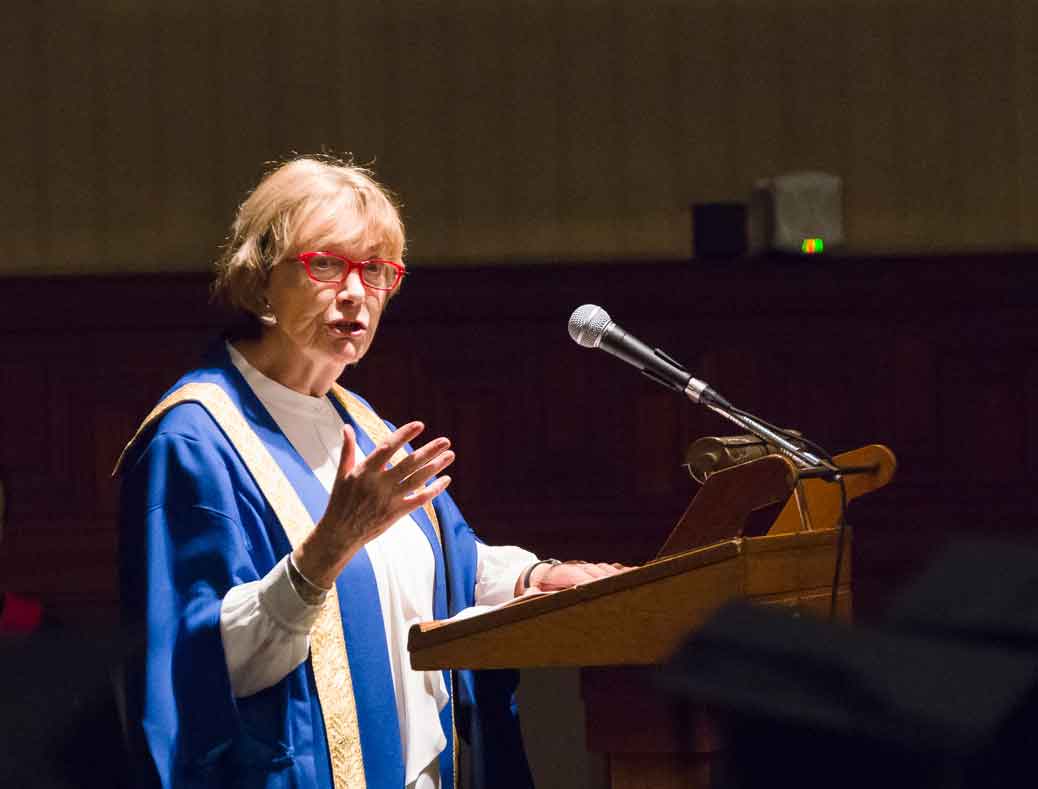
Baroness Bakewell, President of Birkbeck, spoke during Graduation Week at ceremonies to congratulate the College’s newest graduates.

Here, she explains the importance of the skills graduates from Birkbeck learn in the course of their studies and how it is vital, now more than ever, that the use of language needs to be reasoned to foster democratic debate  

You have all been studying hard to earn the degrees you have received today.  In so doing you have come to appreciate the important of being correct in how you express yourself:  mathematicians will appreciate that a digit out of place; a miscalculation can destroy chapters of effort.

Those of you studying social sciences, history and law will be finely tuned to the need for a precise and consistent pursuit of what is exact.  Those of you graduating in philosophy will have tangled directly with the nature of truth itself and when and how to present a statement – and to refute it.

I hope you excuse my telling you what you already know: because this matter of language is playing an important role in the life of not only our country, but in the world at large.  In two major arenas of public activity – the American election and the Brexit situation – language and how it is used is coming under great strain, not to say misuse and deliberation falsification.

Does it matter? It is only politics after all; it is only election rhetoric.  My case is that it matters very much – and that now, more than ever, the nature of language needs to be safeguarded by those trained in analysis, logic and deduction; that is, people such as yourselves.  I encourage you to welcome and uphold that responsibility.  Here’s why.

We have lived through an American election that insults the reputation of that great country and the foresight and shrewdness of its founding fathers.  When one candidate can insult and distort the role of the other with such impunity – speaking of Hillary Clinton as a criminal, deserving of prison, even a possibly target for direct violence – then civilised language has reached its limit.

When there is nowhere else to go with language then strong feeling gets expressed in action – often violent action. What is significant is that the strong statement itself – eye-catching  but wrong and  taken up by the media – is unyielding to correction.

It is no good to say, ‘she isn’t a criminal’, or more challengingly ask, ‘where’s the evidence?’ Damage has already been done.  Damage in public life is what we seek to avoid.  Damage – harm to our civil life and to our political institutions – can be long term and permanently undermining. That is why respect for language and the delicacy which it can express subtle ideas needs to be part of all our – of all your – lives.

The situation with Brexit is equally alarming.  It is one of the most serious changes to our constitution in more than 50 years. Unfortunately it has been  subjected to what many of us recognised as extravagant exaggeration: quite  separate from the very important issues that deserve thoughtful  assessment and judgement.  “Come out of the EU and the NHS can get the millions saved”; “Turkey is joining the EU so soon millions of Turks will be coming to Britain” – these  widely publicized slogans were to distort the very sound case to be made for leaving the EU and damage the reputation of  leading politicians  for the foreseeable future.

Well, OK, they’re politicians and they can be expected to be casual with language. Then last week a national newspaper accused three High Court judges, ruling on the rights of Parliament to discuss Brexit or not of being ‘enemies of the people’. Historically enemies of the people have been subject to charges of treason, to Star Chamber trials, to torture and execution.  It is a use of language that is well beyond any civilised exchange of opinions. It is of course, quite correct to challenge judgements made by the courts – there are checks and balances that allow us to do so – and such a challenge will indeed take place.

My point is that the use of such emotive and irrational language drives out the more subtle arguments that are the nature of democratic exchange and leads to a gross distortion of what is actually the intended case.

While we all digest the prospect of Brexit let me address some of the crucial issues close to the heart of Birkbeck.  We are an open society:  look around at the diversity by age, gender, ethnicity and faith of those around you.  This is society as we want it to be.  We at Birkbeck know it works:  it brings happiness and fulfilment into many lives. It promotes discourse, harmony, tolerance and civic responsibility among those who come here.

We rejoice that you too have been and I hope will remain part of such a society and take into your homes, your jobs and your communities the values we all share.  Do not let false and damaged language persuade you otherwise. The society of learning is global, interconnected and mutually respectful:  you are all welcome to its ranks.

Armistice Day: Remembering Birkbeck’s war poet

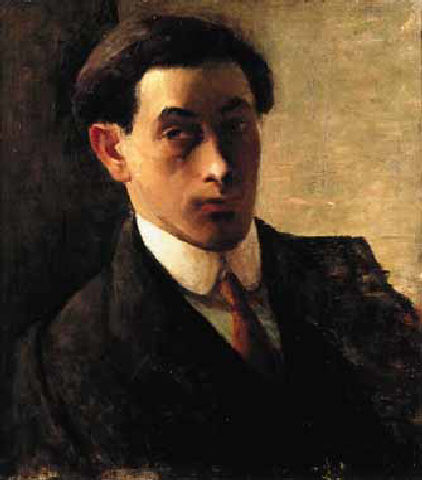
A self-portrait of Isaac Rosenberg, who as painted as well as writing poetry

A self-portrait of Isaac Rosenberg, who painted as well as writing poetry

An evening celebrating the life and work of Isaac Rosenberg is taking place on Sunday, 27th November between 6pm and 8pm in Senate House, Bloomsbury.

Featuring actress Miriam Margolyes, Alexander Knox, Simon Haynes, Philip Bell, Elaine Feinstein and Vivi Lachs and her band, this evening of words, music and images has been written and devised by Rosenberg’s biographer, Jean Moorcroft Wilson.

The event is being hosted by the Jewish East End Celebration Society to raise funds for a statue of Rosenberg in Torrington Square, outside Birkbeck’s main Malet Street building.

The First World War inspired a huge amount of poetry, by both soldiers and civilians. One of the most well-known poets, Isaac Rosenberg, studied in the evenings at the Art School at Birkbeck from 1907-1908, while spending his day as an apprentice graver. Rosenberg won several prizes during his time at the College and exhibited his work in the Art School’s annual exhibition after leaving. Rosenberg was killed while fighting in the Battle of the Somme in the spring of 1918. Today, we publish one of his most famous poems to mark Armistice Day.

In 2000, Professor Steven Connor  gave a lecture at Birkbeck about Rosenberg’s life and works. Read the lecture.

Break of Day in the Trenches

The darkness crumbles away.
It is the same old druid Time as ever,
Only a live thing leaps my hand,
A queer sardonic rat,
As I pull the parapet’s poppy
To stick behind my ear.
Droll rat, they would shoot you if they knew
Your cosmopolitan sympathies.
Now you have touched this English hand
You will do the same to a German
Soon, no doubt, if it be your pleasure
To cross the sleeping green between.
It seems you inwardly grin as you pass
Strong eyes, fine limbs, haughty athletes,
Less chanced than you for life,
Bonds to the whims of murder,
Sprawled in the bowels of the earth,
The torn fields of France.
What do you see in our eyes
At the shrieking iron and flame
Hurled through still heavens ?
What quaver – what heart aghast?
Poppies whose roots are in man’s veins
Drop, and are ever dropping;
But mine in my ear is safe –
Just a little white with the dust.

The Brexit High Court judgment: what it means

This article was contributed by Dr Frederick Cowell from the Birkbeck School of Law’s Department of Law.

The High Court today handed down their judgment in the case brought by Gina Miller and Deir Dos Santos against the Secretary of State for Exiting the European Union.

Billed as the ‘Brexit’ litigation, what was at issue was whether the Prime Minister had to go to parliament before triggering Article 50 of the Treaty of the European Union (also known as the Lisbon Treaty), which would set in motion Britain’s exit from the European Union.  The judgment was first and foremost a question of resolving a basic legal question; is it the government or parliament that has the power in these matters?

The court were, in fact, keen to cut out the party political question altogether, declaring that they were “dealing with a pure question of law”. The judgment is, however, likely to become the ultimate political football and within half an hour the Government had announced that intended to appeal the decision to the Supreme Court on the 7th of December.

The core issue was the scope of prerogative powers relating to foreign policy, which are held by the Prime Minister and other government ministers. Historically, treaties were signed between monarchs by their representatives and, as the UK’s constitution became more democratic in the nineteenth century, prerogative powers were delegated to government ministers.

Many prerogative powers are now governed by legislation – for example, the 2010 Constitutional Reform and Governance Act put the power to manage the Civil Service onto statute governed by clearly definable legal powers. Prerogative powers are not easy to control as they can be exercised by ministers without the approval of parliament – for example Margaret Thatcher’s decision to ban trade unions from GCHQ (the secret service signal intelligence headquarters) did not require an Act of Parliament in the way that her other restrictions on trade unions did.  They are also difficult to control through the courts, which are often reluctant to intervene in areas where these powers are exercised, especially when it comes to foreign policy. On the eve of the Iraq war the High Court held that they could not hear a case from the Campaign for Nuclear Disarmament, who were asking for Tony Blair to seek a resolution from the UN Security Council authorising the use of force.

Shortly after becoming Prime Minister, Theresa May took the position that she didn’t need parliament’s approval to activate Article 50 and she could exercise her prerogative powers to take the UK out of the EU. In fact, she went so far as to guarantee in October that Article 50 would be activated by the end of March.  In 1971 the question of whether the government should accede to the European Economic Community (as it then was called) was debated in the House of Commons, even though technically, under the UK’s constitutional system, the Prime Minister of the day Edward Heath did not need an Act of Parliament to accede to the EEC.

What he did need parliament’s approval for, and what was at the heart of the Brexit litigation, was the 1972 European Communities Act which brought EEC law (later EU law) into UK law. This took nearly 300 hours of debate to pass, with Labour and Conservative MPs voting against their own party line repeatedly in an early indication of how divided the two main political parties were on this issue.

The 1972 Act – as the High Court Judgment noted – created rights for individuals as well as empowering the lawmaking institutions of the EU (paragraph 37 R(on application of Miller) v Secretary of State of Exiting the European Union). There were three kinds of right created under the 1972 Act; rights the EU had created and could be incorporated into UK law (such as the 48 hour working week and the right to cheap data roaming), rights enjoyed by citizens of other EU member states in the UK (the right to work) and rights enjoyed by UK citizens in other EU member states (the right live in other EU states).

The big issue was whether the loss of rights conferred by the 1972 Act could not sanctioned by the Government acting without parliamentary authority.  The Court noted that the lawyers for the Secretary of State had effectively conceded that some rights would be lost were this to happen (para 63). Therefore, the question was who should make the decision. In deciding this, the High Court noted that since the English Civil War in the seventeenth century the basic proposition was that the Crown (the executive branch of government) could not override parliament.

It is noteworthy that when the courts have previously reined-in abuse of ministerial power they have pointed out that one of the founding principles of Britain’s unwritten constitution was parliament’s supremacy over the executive.  The Secretary of State’s lawyers relied heavily on an earlier court ruling at the time of Maastricht Treaty in the early 1990s which held that ratifying a new treaty was within the government’s prerogative powers. But this was a different question all together as Paragraph 94 of the judgment made clear, as the government’s actions on an “international plane” (i.e. activating Article 50) would remove rights granted via a domestic statute (the 1972 Act): therefore they needed the approval of parliament.

What this means is difficult to say at this point, although the Government’s strategy – and possibly its timetable for leaving the EU – have been dealt a significant blow. Whilst there are potentially points of law to appeal in the judgment, it is difficult to see some of the core conclusions reached by the High Court being overturned by the Supreme Court as they follow a century of established case law on the subject.

The real danger for the Government is that it will be very difficult to get their version of Brexit in a statute through both the House of Commons and the Lords, as Jolyon Maugham QC explains here. This is why political commentators are speculating heavily on the possibility of an election next year which would give the government the political mandate, and the Commons majority to push exit legislation through the House of Commons. Although the status of the June 23rd referendum was only advisory, were a Government to be elected in a General Election on a pro-Brexit manifesto there would be no way of stopping that in parliament.

On being attractive – and dumbing down the blond(e)

This post was contributed by Professor Penelope Gardner-Chloros, of Birkbeck’s Department of Applied Linguistics and Communication

Briden-Starr Aspinell (8053352575)A congress of blonds/blondes[1] is holding a maths quiz on stage, in order to show the world that blonds/es are not as dumb as they are made out to be. The first contestant has great hair but is really struggling with the question put to her: “What is 3+2?” Eventually she screws up her courage and ventures: “6?”

The audience – made up of blonds/es – starts clapping but the compere interrupts: “I’m sorry, that is not correct”. The crowd roars: “Give her another chance! Give her another chance!” But when asked the sum of 4+1, the contestant stumbles again.

“Give her another chance! Give her another chance!”, the blonds/es chant once again. Finally she cries out “I’ve got it! It’s 5!” As one, the crowd roars out, “Give her another chance! Give her another chance!”

The audience at this contest might not be the ideal candidates for a university degree, but in the struggle to sign up students in difficult economic times, universities need to make themselves as attractive as possible to all potential applicants. Many of them are of course affected by which course has the lowest fees, the best location, the most famous professors. But how can we present the actual courses as attractively as possible?

Is ‘Linguistics’ too difficult?

Free College Pathology Student Sleeping Creative Commons (6961676525)In Linguistics as in other subjects, this means keeping up with current issues and interests; for example, our department would ideally like to introduce an option on CMC[2] – not just out of a desire to be trendy, but because this is a serious issue affecting not only how we communicate but also language itself (see for example the recent Routledge Handbook of Language and Digital Communication, eds. Georgakopoulou and Spilioti).

Another aspect of being attractive is to do with what courses, and even departments, are called. Two of my earlier blogs are relevant here: one about the – almost magical – power of names, and another about how Linguistics is among the least well understood of academic disciplines. In the second one, I was thinking of the public in general rather than potential students. The latter, one would hope, might at least have looked the word up on Wikipedia. However some colleagues seem to be taking the need to be attractive to heart…perhaps too much? It has been suggested that the term ‘Linguistics’ is too difficult, too intellectual, too off-putting. We should call our department and our courses by some other name. We have already become a Department of Applied Linguistics and Communication, but that was not in order to be more attractive; it is because we are now teaching a completely different subject alongside linguistics.

The study of Communication does not require burning the midnight oil over phonetics, phonology, syntax, morphology, language change, sociolinguistics, psycholinguistics, bilingualism, semantics, pragmatics – to mention but a few of the sub-categories within linguistics – and has indeed proved a crowd-puller. But does that mean we should get rid of “Linguistics”??? And that because potential students applying for postgraduate courses can’t understand what it means ?!?? Surely even in these straightened times, there are some students we actually do not want.

‘Stuff about language’

It does make you think though. How much better the History Department’s recruitment would be if it was renamed the Department of Things that Happened in the Past (or, as they define it in the History Boys, One Bloody Thing after the Other). Physics could be renamed How Objects Behave.

Why talk of Geography when you could make millions in fees by calling it Where People and Mountains Are? Economics could be How to Spend It (or Not) – though the Financial Times supplement got there first; Law could be Rules you Had Better Obey; Philosophy could be Thinking it Through, and even Media Studies could surely be made (even) more attractive by being renamed Watching the Box. Exciting possibilities.

But Linguistics? What else could we call it, with all those tiresome sub-disciplines? Stuff about Language? Suggestions from readers would be welcome – and if all else fails, I guess we could always ask a blond(e).

Find out more

[1] Linguistic fact of the day: did you know this was the only English adjective to be marked for gender?

[2] Computer-mediated communication

Fear and resilience: Psychologist shares breast cancer experience

This post was contributed by Professor Naz Derakhshan of Birkbeck’s Department of Psychological Sciences. The article first appeared on the Huffington Post UK blog on Wednesday, 23 March 2016.

What a Cognitive Psychologist Learned About Fear and Resilience When She was Diagnosed With Breast Cancer

It was the spring of 2012, and I remember well the exhilarating feeling of being promoted to the title of full professor within only six years of my first appointment as lecturer at Birkbeck University of London. Previously, my research was focussed on understanding what makes us vulnerable to emotional disorders like anxiety and depression and how we can overcome vulnerability and practice resilience. Cancer, however, did not care that I had been awarded a prestigious fellowship to continue my work in the prime of my life, when I was diagnosed with multifocal invasive breast cancer on January 2nd, 2013. I was in my 30s, and my daughter, Ella, was just under three years of age.

Professor Naz Derakshan

Professor Naz Derakshan

To say that my whole world turned around is an understatement because every day since that day my world has been changing in an emotional and physical roller coaster that I continue to challenge. I am a mother and an academic. And I have had to face my mortality so early having a dependent child who means everything to me. While I have so far survived the storm of diagnosis and treatment, the storm, however, never left. The sound of the rain reminds me that lightening can strike again. Will I survive it next time? Or will I be washed away? I am reminded of the anticipation, the expectation: the fear of recurrence. The fear that can distract, interfere and apprehend. “But, you have become an integral part of my life, so I shall take you forward with me”, I say.

Using fear

I feel lucky that I am able to continue my work, but cancer is never far away. I am pleasantly distracted by a paper that is accepted for publication; I marvel that I have been invited to give a distinguished lecture at an International Conference for Stress and Anxiety Research. I start to prepare my talk. I hear the sound of the lightening in the far distance, I stop. I turn to my daughter and start playing hide and seek (her favourite game), and the voice is somehow louder. “I hear you”, I say to my fears. “I feel you. Perhaps you can guide me”. So, I continue, still fearful.

Three years down the line, I still continue to be haunted by my cancer. Like the background music to a movie it’s always there, singing the trauma that I have endured. Approximately, two-thirds of women with a breast cancer diagnosis suffer PTSD (Post-Traumatic Stress Disorder) and this can make them prone to anxiety and depression later. I love exercising, but frequently go through chronic fatigue and am still suffering the well-known ‘cognitive decline’ or ‘chemo-brain’. Yet I am expected to function to my full capacity, what the storm left of me. Of course I will never give up, I am grateful for a second chance. And this goes for all the 57,000 people who are diagnosed with breast cancer in the UK, every year. If they are given a second chance.

Understanding resilience

What is resilience I ask myself? Common perception sees resilience as mental toughness, fighting the fears. It’s about positivity. Yet, this ideology seems far-fetched, the fear is very real. Rather, resilience, I have learned, is about flexibility, adapting and adjusting: accepting our fears, and the strength to embrace and harness them. Yes, we are scarred but the scars do not define us. The scars signal our gratitude and grit, and the fears that mark what matters to us. Resilience helps us listen to our fears. So, how can we learn to be resilient, I ask myself.

Read Professor Derakhshan's original blog on Huffington Post UK

Read Professor Derakhshan’s original blog on Huffington Post UK

I set up the educational Research Centre for Building Psychological Resilience in Breast Cancer on October 2nd, 2015, with this purpose in mind. To improve cognitive function towards resilience using interventions that exercise brain function. Our private group has over 330 members in less than five months.

And our centre’s blog: Panning for Gold, showcases the many fruitful ways our amazing members discuss their growth from the trauma they endure, through works of art, writing, and science. I would not have been able to sustain and promote the aims of the centre without the vital input of Tamsin Sargeant and Vicky Wilkes who run the centre with me. I have learned more from other women than anything in my academic work, we are more vulnerable than we think we are; we are more resilient than we think we are. Because, from vulnerability stems strength.

Find out more

Introducing Birkbeck’s digital donor wall

This post was contributed by the Birkbeck Development and Alumni team

“Birkbeck was founded by philanthropists who believed that university should be accessible to all. Thanks to our generous former students and friends, this tradition continues, enabling our uniquely flexible learning opportunities and high-quality research to thrive year after year.”

Professor David Latchman CBE


The new digital donor wall in Birkbeck's Malet Street building

The new digital donor wall in Birkbeck’s Malet Street building

The words above, from the Master of Birkbeck, are proudly displayed on Birkbeck’s new digital donor wall. Installed this week in the foyer of the College’s Malet Street building, the wall is the latest platform created by the College’s Development and Alumni team to recognise importance of philanthropy to Birkbeck’s near-200-year educational mission.

In this handy Q&A, the Development and Alumni team explain what the digital donor wall does.


What’s the purpose of the digital donor wall?

The wall has been installed to publically thank the College’s donors and volunteers for their generous support. It is also for students and staff to engage with the content to raise their awareness about the importance of philanthropy to the College and also to show current and prospective donors when they come to visit the College.

How is this different from the previous recognition for donors?

It replaces our previous static donor board which was updated annually with donors’ names. Having it digital means the data is live. Therefore, as soon as a donor donates, their name will be listed.

Sounds great. What can we see on the board?

The first screen displays a list of all donors to the University who give over £1,000 by way of publically acknowledging their support. It also shows those alumni who have pledged to remember Birkbeck in their wills. The board also acknowledges the support of volunteers and the importance of this form of support.

The second screen displays eye-catching animations and text, showcasing some of the key projects we’ve fundraised for over the past 12 months. Throughout the year, it will also be used to highlight different events – for example, during our Telephone Campaign in April/May 2016, we will include live totals raised for the four-week period of the campaign on screen two during that time.IMG_1348

Find out more