Category Archives: Business and Law

Emotional rescue: how to stop your employees burning out

This article was contributed by Dr Andreas Liefooghe, Reader in Organizational Psychology, and Dan Vacassin, an alumnus of Birkbeck’s MSc Organizational Behaviour and Director of Indigo Gold.Businessman asleep at his desk on white background

Sometimes it seems as though it’s no longer enough for employees just to turn up for work and do their jobs as well as they can.  Today, many organisations demand varying amounts of what is known as emotional labour, a phenomenon that sits apart from actually doing the job. Emotional labour manifests itself in a number of ways, but here we are referring to a perceived need to ‘Live the brand’ – to strain every sinew in a bid to achieve the cultural utopia envisioned by the leadership team.

This is not healthy. At best, it can leave employees so exhausted by the energy they put into ‘getting their game face on’ that they have little left to do their jobs properly. At worst, we’ve seen it lead to cases of burnout, where the emotional demands placed on individuals have left them no longer able to function.

While many of society’s ills seem nowadays to be subjected to inflated terminology (for instance we no longer seem to have heavy colds, it is always flu) burnout is very real and its effects can be shocking to witness. In our experience, burnout tends to happen not because individuals work hard, but more because they become emotionally immersed in their work, to the detriment of everything else.

This is not to suggest that presenting a strong brand to the customer is a bad thing. Equally, customer-facing employees have a certain responsibility to embody that brand. We are talking instead about a deeper emotional contract demanded of employees, playing to a need to ‘fit in’ which may be a unique human condition.

Alleviating the burden of emotional labour, as with other culture-related issues, must start at the top. Very often, investigating a case of burnout uncovers insecurities among the leadership team, with senior managers finding it hard to judge when an organisation is working at or close to its optimal level and so continue to push relentlessly towards their version of utopia.

As well as the emotional fatigue it causes, the emotional labour around being constantly ‘on message’ can also stifle fresh ideas and creativity, while negating attempts to promote the diversity of the workplace in terms of personality types and behaviours. The whole point of creativity and diversity is that they involve breaking away from perceived notions of the norm; if people feel they must always behave in a certain way in order to get on, then the norm becomes all-pervasive.

We all have a responsibility to learn, to improve and to better ourselves in whatever career we have chosen. So why not let people get on with doing precisely that, instead of focusing on whether they’re sufficiently on message? You might just keep them burning brightly, instead of burning out.

ICC drops its Kenyatta case, leaving culture of impunity intact

This article was contributed by Frederick Cowell of Birkbeck’s School of Law. It was originally published on The Conversation.

“One down, two to go,“ was how Kenyan President Uhuru Kenyatta reacted to the International Criminal Court’s decision to drop its case against him.

Kenyatta had faced charges of being an indirect co-perpetrator of crimes against humanity after post-election violence in Kenya. On 5 December, the chief prosecutor of the International Criminal Court, Fatou Bensouda, announced that she was discontinuing the case against him.

The cases against Kenyatta’s two Kenyan co-accused, including Vice President William Ruto, have not yet been dropped – but as his reaction showed, they now have reason to be hopeful.

This is a major blow to the ICC’s credibility, and it’s likely to have implications for its ability to prosecute political leaders.

To the Hague

The ICC became involved in Kenya in 2009 after political parties failed to reach an agreement on the establishment of a special domestic tribunal to deal with the 2007-2008 post-election violence. An independent commission set up by the Kenyan government passed on the names of individuals suspected of being responsible for its orchestration to the ICC. The move seemed popular, with the Kenyan media pushing the slogan “don’t be vague, let’s go to The Hague.”

In January 2012, after an independent investigation by the prosecutor’s office, charges against six individuals for Crimes Against Humanity were confirmed. The Court ultimately proceeded with cases against four individuals accused of responsibility for the violence, which claimed over 1000 lives. The charges against Kenyatta included responsibility for orchestrating rape, sexual violence, and murder during attacks on the supporters of his political opponents.

This did not stop Kenyatta running in the 2013 presidential election. The Kenyan government and the African Union (AU) had been lobbying for the prosecution to be delayed. Under the Rome Statute of the International Criminal Court, the UN Security Council has the power to defer prosecutions for up to a year, and it was argued that a deferral was necessary in order to allow the Kenyan government to co-ordinate the campaign against Al-Shabaab in Somalia. The UN Security Council refused, and the Kenyan government sided with the anti-ICC states at the AU who were denouncing the court as imperialist.

Hostility towards the court had being building in the AU since 2009 when the prosecutor issued a warrant for the arrest of Sudanese President Omar Al-Bashir. While some AU members still support the ICC, there is a strong sentiment in favour of total non-co-operation with the ICC.

Finally, in September 2013, the Kenyan Parliament voted to withdraw from the ICC – and while this could not stop the case against Kenyatta, it made it very difficult for the prosecutor to proceed.

Dropping the Kenyatta charges

On 3 December, the Trial Chamber at the ICC rejected a request made by the prosecutor for a further adjournment of proceedings. Over the course of 2014, the prosecutor’s office held a series of conferences with the Kenyan government aimed at gathering evidence, such as records of phone conversations held before the outbreak of violence in 2007 and information held by the Kenyan security and intelligence services.

ICC Chief Prosecutor Fatou Bensouda. EPA/Michael Koor

The process faced endless delays, and although the judges noted the government’s lack of co-operation they said that in the interests of justice, they could not grant the extension that the prosecutor’s office was requesting. This resulted in the decision to drop the charges.

Kenyatta expressed excitement at the result; his British lawyer, Steven Kay QC, said that the prosecutor’s office owed him an apology for bringing the proceedings and for “impugning his [Kenyatta’s] integrity.”

For her part, Bensouda reiterated that the Kenyan government’s steadfast refusal to co-operate had posed “severe challenges” to the case. She also criticised the “relentless stream of false media reports” and widespread attempts at witness intimidation, which she said had led to her being forced to dismiss the charges. Crucially, the Court held that she could bring new charges at a later date should new evidence arise.

Impunity forever

The decision to cease Kenyatta’s prosecution almost certainly sends a signal that repeated failure to cooperate with the ICC can reap rewards.

The ICC still has outstanding arrest warrants for Bashir and two other individuals in Sudan who are who are charged with committing Crimes Against Humanity and Genocide in Darfur. Bashir has long resisted any attempt to prosecute him, and this recent decision will almost certainly give the Sudanese accused political ammunition against the ICC.

And while some states have co-operated with the ICC to ensure prosecutions of military leaders responsible for War Crimes and Crimes Against Humanity, most notably Uganda, the mission of the ICC was always meant to be much more ambitious. At the court’s creation, many optimistically hoped it would end the “culture of impunity” surrounding political leaders, bringing old tyrants to justice and deterring new ones from committing crimes.

Even though ICC is prosecuting the deposed former president of Côte d’Ivoire, Laurent Gbagbo, the Kenyatta case sends the message that if a political leader can hang onto power, de facto immunity is still theirs.

The Conversation

Read other blogs posts by Frederick Cowell:

As winter descends upon us, is your community prepared for devastating storms and floods?

FrankWatt_400x400This post was contributed by Frank Watt, a part-time PhD student in Birkbeck’s Department of Organizational Psychology. He retired from his job as an Assistant Chief Officer for Derbyshire Fire and Rescue Service in 2008. Frank is now a consultant specialising in coaching and re-energising stalled projects.

The media coverage of the flooding in the Somerset Levels in late 2013 and early 2014 brought the water, heartache and misery into all of our homes.

Comments about the handling of the emergency had a common theme that appeared to follow a well-beaten path to the Government’s doorstep: “they should have done more.”

More what? More dredging? Expert engineers state that dredging  would not have solved the problem and is more of a red herring that flood victims  have latched onto. More pumps? Emergency services would ask: “And pump it where?” Excess water was already being pumped into the River Parrot . More funding? And do exactly what with the funding? Probably throw it all on flood defences, and, yes, that’s what they have done. Danny Alexander, chief secretary to the Treasury, recently announced £2.3bn investment in 1,400 flood defence projects. Engineered solutions can help, but are a short-term solution to a longer-term problem.

What about less? Less incentives to cultivate land that holds vast amounts of water in check,  less building on land that was originally a marsh and less reliance on agencies and services that are stretched to cope with the on-going emergency.

Whilst the Somerset Levels may be seen as an extreme example of flooding in the UK, it is not uncommon. A flooding timeline over the past 10 years shows extreme flooding in many parts of Britain but not consistently in the same place year on year.

The Met Office weather map comparing the 2013 and 2014 rainfall shows a marked difference in location for the heaviest downpours.

So where does that leave policy makers and planners? The Environment Agency has many large projects, some already underway, to try and deal with the deluge of water produced by constant rain falling on water logged ground and an urban environment that was not designed to cope with the current levels of surface water.

Perhaps part of the solution is localised planning together with mobilising of national resources to carry out some preventative measures. But is it all up to the professionals or can local communities get together to assist the professionals? Better still, can local communities get together and prepare before the flooding has a chance to affect their properties?

A typical scenario might be: it’s been raining all night and the weather forecast predicts a storm is approaching that might last for hours. What are your initial thoughts?

Will you focus on self-preservation or just sit tight and hope everything will turn out all right? You could offer help to someone more vulnerable, or would you feel vulnerable and seek assistance from someone nearby? Perhaps you might check to see if your neighbours need assistance or even phone around to see what everyone else is doing?

I suppose what you believe you might do depends upon many factors such as experience of similar events, the risk of something actually affecting you or your property or having people around you that might get together and do something to reduce the effect of the emergency.

Much of the previous disaster research focuses on response during an emergency or the aftermath, whether that is professional emergency managers or organised groups of volunteers or residents.

Before we can ponder about the effectiveness of residents actively engaged in preparing their community for a weather-related emergency, one might want to ask the question: “Do they want to be engaged”? There appears to be an assumption at national policy level that all communities will engage with local emergency planners to undertake risk-based preparedness measures, but what if they don’t want to be engaged and view preparation for extreme weather to be the responsibility of an agency or government department?

Local emergency planning departments offer a range of support mechanisms from information to assisting in communities getting involved. There are a number of other agencies that provide information and volunteer assistance, such as the National Flood Forum, a registered charity that does some great work with communities and flood victims.

Having been engaged in research on this topic for the past six years I believe it would be useful to know if residents believe that their communities can undertake preparedness activities. Not only that but the very enquiry as to what they believe may spark something in them to find out more and get engaged with protecting their community. If you want to find out more about my research and take part in the survey please visit my web page, www.fwatt.co.uk. Keep dry and be safe!

Business and Corporate Responsibility in Russia

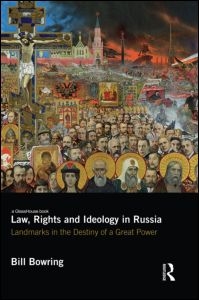
Book coverThis post was contributed by Bill Bowring, Professor of Law in Birkbeck’s School of Law; and a practising barrister at Field Court Chambers, Gray’s Inn. His latest book is Law, Rights and Ideology in Russia: Landmarks in the Destiny of a Great Power (Routledge, 2013). This article was originally published on Who’s Who Legal.


“Despite privatisation policies and programmes since 1991, the Russian state still owns two-thirds of the market capitalisation in the Russian stock market.”


On 22 August 2012, after 18 years of negotiations, Russia became the 156th member of the World Trade Organization. As a BBC report pointed out, Russia is the EU’s third biggest trading partner, with member countries exporting €108 billion euros of goods to Russia, including €7 billion worth of cars and €6 billion of medicines. Russia also exports enormous quantities of oil and gas around the world. Despite complications arising from Russia’s actions in Ukraine – including EU and US sanctions on Russian financial and other interests, and Russian sanctions on imports from the EU – the Russian economy and its governance are of great importance to the rest of the world.

Does this important step mean that the Russian economy can be compared with those of Western Europe or North America?

There is one particularly striking difference. Despite privatisation policies and programmes since 1991, the Russian state still owns two-thirds of the market capitalisation in the Russian stock market. The state’s ownership is concentrated in four strategic sectors: energy (oil, gas and electricity), banks, defence industries and transport. There is little state ownership in most other sectors in the Russian economy, including consumer goods, non-defence manufacturing, agriculture, insurance and services. But it is precisely in the two-thirds of the economy which has remained in state hands, or been seized by the state (as in the expropriation of Yukos, according to the Hague Court of International Arbitration, and the arrest and imprisonment from 2003 to 2013 of its owner Mikhail Khodorkovsky) that the most senior government officials are in control. This includes Igor Sechin, head of the state oil company, Rosneft, which took over the former assets of Yukos. Many of these officials have become incredibly rich.

Accession to the WTO was not the first marker of Russia’s participation in the global economic order, especially where corporate social responsibility was concerned. On 10 April 2008 the UN Secretary General Ban Ki-moon spoke at a Moscow meeting of more than 30 Russian business leaders, preparing to establish the Russian network of the UN’s Global Compact. Kofi Annan launched the Compact, which carries ten principles, on 26 July 2000. With over 12,000 corporate participants and other stakeholders from over 145 countries, it is the largest voluntary corporate responsibility initiative in the world. On 17 December 2008 the Russian network adopted its statutes.

In 2009 a Report on Corporate Social Responsibility Practices in Russia was published by, the United Nations Development Programme (UNDP), together with the Russian Union of Industrialists and Entrepreneurs (RSPP) and the UN Global Compact Network in Russia. It highlighted the corporate social responsibility commitments of some of the largest Russian enterprises: Viktor Vekselberg’s Renova Group of Companies, employing more than 100,000 people in Russia; Oleg Deripaska’s UC Rusal, the world’s largest aluminium manufacturer; and Vladimir Yevtushenkov’s Sistema investment group. Ironically, Sistema has recently lost its investment in the oil producer Bashneft through court proceedings that have been seen by many as part of the Russian state’s strategy to consolidate its dominance of oil production. Mr Yevtushenkov himself was arrested.

The RSPP is headed by Vladimir Shokhin, formerly Russia’s deputy prime minister and minister of economics. It was founded in 1991 following the collapse of the former USSR, and is based on the foundations of the Scientific and Industrial Union (which launched in 1990). It has a membership base of over 120 regional alliances and industry associations representing key industries, including the fuel and energy, machine-building, investment banking, military industrial, construction, chemical and food industries. It has more than 328,000 members representing industrial, scientific, financial and commercial organisations and individual members in all Russian regions.

The RSPP is itself responsible for a series of initiatives in the field of social responsibility, including the Global Compact. It has its own Charter of Corporate and Business Ethics, established in 2002, and a Social Charter of Russian Business, adopted at its Congress in 2004 and amended in 2008. It covers 254 businesses and NGOs, and more than 6 million workers. On 20 September 2012, in Sochi, the RSPP promulgated its Anti-Corruption Charter of Russian Business in the presence of the current prime minister Dmitry Medvedev.

Some highly influential Western companies promote corporate responsibility in Russia. For example, the Russian website of PricewaterhouseCoopers (PwC) includes glossy report on the firm’s corporate responsibility programme. It is the market leader in professional services in Russia, with eight offices and over 2,000 staff. Its client base of 2,000 companies includes: every single on of the 10 largest financial services companies and banks; nine of the 10 largest oil and gas companies; seven of the 10 largest power industry companies; six of the 10 largest retail companies; five of the six largest telecommunications companies; four of the 10 largest mining companies; and five of the 10 largest ferrous metallurgy companies. The report states that PwC is a signatory to the UN Global Compact, and in 2009 signed the RSPP’s Social Charter of Russian Business: “a set of principles for businesses to follow that are the foundations of responsible business practices”.

PwC’s competitor Ernst & Young also publishes a report on corporate responsibility. It began work in Russia in 1989 and employs 3,000 staff in eight offices. Since 2012 it has had a corporate responsibility expert panel, which brings clients together with representatives of the educational and ecological sectors.

Baker & McKenzie was the first international law firm to open an office in Moscow in 1989, and employs more than 120 qualified lawyers in Moscow and St Petersburg combined, including 27 partners. This year it was voted Law Firm of the Year in Russia. Its report, “Doing Business in Russia (2014)”, describes the country’s legal and judicial systems in detail and presents a picture of a properly and normally functioning rule of law.

Yet a different perspective comes from Medvedev’s initiative, announced on 27 April 2012: the creation of a new business ombudsman. Mr Medvedev’s last day in office as Russia’s president was 7 May 2012 (he was sworn in as prime minister the following day). 7 May also marked the introduction by Vladimir Putin (who had just been elected president, after serving as prime minister for four years) of a national business ombudsman’s office by December 2012.

On 21 June 2012, in advance of the law, Putin appointed business lobby leader Boris Titov as the Ombudsman for Entrepreneurs’ Rights. According to a BBC report published in July 2012, Mr Titov claimed that in the last 10 years Russia has imprisoned nearly 3 million entrepreneurs, many unjustly. He added, “It is hard to find another social group persecuted on such a large scale.” How has this come about?

The answer is to be found in two of the most insidious problems of doing business in Russia. These are “criminal prosecutions to order” and “criminal corporate raiding”. In short, there have been complaints for many years that private and state businesses, and powerful individuals, have been able to frame commercial rivals by paying corrupt police officers and prosecutors to plant evidence and make arrests to order. The judicial system itself has been a willing participant in such activities.

Another reason for creation of the Ombudsman was the $84 billion in capital that left Russia in 2011: a record amount. Russians were investing overseas because they feared for the safety of their businesses at home. Indeed, many Russian entrepreneurs have fled the country for their own safety. London has even been dubbed “Londongrad” because of the many Russians who have taken up residence and carried out business in the city.

The author of this article, who first travelled to Russia in 1983 in the days of the USSR, has since 2003 been employed as an expert witness on Russian law and politics in several cases in the London and Cyprus courts. The cases fall into three categories.

First, there have been requests by the Russian Federation for the extradition of Russian citizens resident in the UK, on the basis of criminal charges. Many of these were activities connected with Yukos and Mr Khodorkovsky. In almost all of these cases the English judge found that the requests were politically motivated. In none of these cases has Russia been successful. Second, expert evidence has been given in appeals against refusal of refuge status. Third, there have been commercial disputes in which an important preliminary issue has been the potential for a fair trial in Russian courts, given the continued prevalence of “telephone justice” and the possibility of political interference or pressure from highly placed and wealthy individuals and interests.

In fact, prior to his arrest in late 2003 and the destruction of Yukos, Mr Khodorkovsky was the leading Russian exponent of good corporate governance and corporate social responsibility. After two trials and 10 years in prison (he was released in December 2013), he now leads a global campaign to transform Russia into a democracy with an independent judiciary, a viable opposition and free and fair elections.
Birkbeck’s School of Law contributes to consultation on policing and HIV

MatthewWeait_400x400This article was contributed by Matthew Weait, Professor of Law and Policy at Birkbeck’s School of Law.

There is robust empirical evidence indicating that traditional approaches to policing can result in adverse health outcomes for those who are at particular risk of harm.  In particular, a focus on their law and order function, a narrow view of what constitutes public safety, and a conservative occupational culture has meant that in many parts of the world the police have contributed to an enhanced risk of HIV infection among so called “key populations”, including sex workers and injecting drug users.  There is, for example, evidence that police may use the possession of condoms – an effective barrier against infection – as evidence to support an allegation of prostitution, and the possession of syringes as evidence to justify the arrest of drug users.  The consequence of this is that sex workers wishing to avoid harassment and arrest may not carry condoms with them, thereby reducing the opportunity to practise safer sex, and drug users avoid carrying their own “works”, thereby increasing the possibility that they will share those of others and so increase their risk of infection with HIV and other blood-borne diseases.

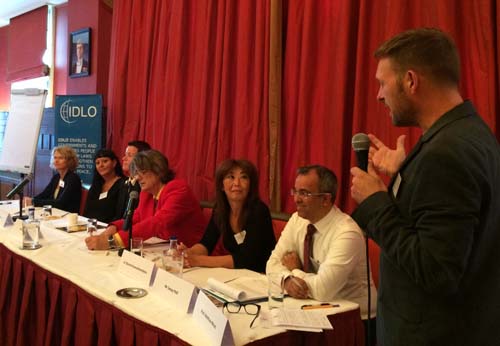
These negative effects of traditional policing are increasingly recognised, and efforts are being made to address them.  An important milestone was reached this month at a Consultation on Policing and HIV in Amsterdam, convened by the Centre for Law Enforcement and Public Health (CLEPH) and supported by the Law Enforcement and HIV Network (LEAHN), the International Development Law Organisation (IDLO) and the School of Law at Birkbeck.

I attended the international consultation along with more than 100  senior police officers, representatives of key populations, policy makers and academics.  After a day of discussion and deliberation, the attendees agreed the Amsterdam Declaration on Police Partnerships for Harm Reduction, an important document that commits its supporters to an approach to policing key populations that is informed by the principles of harm reduction and which will promote rather than hinder health through active collaboration and partnership.

I am delighted that the School of Law has been involved in this significant international development. I had the privilege of working with some extraordinarily enlightened police officers from all across the world, each of whom realises the importance of working with those at heightened risk of acquiring HIV in reducing that risk.  There was an incredible energy in the room, and a real willingness to make progress. The School of Law at Birkbeck has an internationally recognised reputation for research and scholarship that can contribute to progressive legal change, and it was a privilege to showcase this and to put the School’s principles into practice.

Professor Weait, of Birkbeck's School of Law, chaired a panel at the Consultation on HIV and Policing in Amsterdam, with (left to right) Annette Verster, World Health Organization; Pye Jakobsson, Global Network of Sex Worker Projects; Marja Lust, Amsterdam Police; Julian Hows, Global Network of People Living with HIV; Dr Zhannat Kosmukhamedova, United Nations Office on Drugs and Crime; Dr Sanjay Patil, Open Society Foundations

Professor Weait, of Birkbeck’s School of Law, chaired a panel at the Consultation on HIV and Policing in Amsterdam, with (left to right) Annette Verster, World Health Organization; Pye Jakobsson, Global Network of Sex Worker Projects; Marja Lust, Amsterdam Police; Julian Hows, Global Network of People Living with HIV; Dr Zhannat Kosmukhamedova, United Nations Office on Drugs and Crime; Dr Sanjay Patil, Open Society Foundations

Human rights plan will please eurosceptics but what’s in it for the rest of us?

This article was contribute by Frederick Cowell from Birkbeck’s School of Law. It was originally published on The Conversation.

David Cameron has nailed his colours to the mast by promising to create a British bill of rights. His intention is clear – the Human Rights Act will be abolished and the UK will abandon the European Convention on Human Rights.

Cameron seems to be using populist anger over the European Court of Human Right’s decision on prisoner voting to justify a power-grab in the form of a pro-state human rights instrument. Since UKIP has a clear line on withdrawal from the European Court of Human Rights and the abolition of the Human Rights Act, this has the potential to be very popular among some voters.

But in its analysis of Cameron’s latest proposals, legal charity Justice notes that many issues, such as provisions to ensure only the “most serious cases” are heard, already exist.

Even more worrying is the promise that a British bill of rights will stop “terrorists” and “criminals” exploiting the system. This is an unambiguous statement that certain categories of people will be stripped of their rights under the Tory proposals.

This might be a popular move, particularly in the context of British citizens who join extremist groups, but it is important to remember that the home secretary has the power to designate people as terrorists without them even being convicted of a criminal offence.

In defence of the ECHR

The European Court of Human Rights is often criticised for being slow to tackle its backlog of cases. But the backlog has been steadily shrinking. The tabloid press has also labelled the court as anti-UK because it rules so often against it. In reality though, the UK only loses around 2% of all cases brought against it. The Court often allows states some considerable leeway in interpreting the convention through the margin of appreciation doctrine and only rules that a state should change its laws in the most serious cases.

Reform is perfectly possible too, as was shown by the 2012 Brighton Declaration which was actively supported by the current government. The current reforms don’t expressly remove the UK from the European Convention but they seem designed to engineer a series of confrontations between the Court and the UK. In the long term the direction of travel is clear; the withdrawal of the UK from the Convention. This would make Britain the first country to leave the Convention. Currently, Russia is the only other country entertaining such a move.

Suspect rhetoric

Cameron has been talking about producing a British bill of rights for nearly eight years. In 2007 he framed the proposal as the antithesis of the Human Rights Act when he blamed the latter for creating “an excessive sensitivity to the demands of criminals”.

But while he has long been crystal clear about what a Bill of Rights wouldn’t be, he remains vague about what it would contain that wasn’t already in the European Convention. When asked, Cameron has cited the right to trial by jury as example of a change. But this is already protected by Article 6 of the European Convention on Human Rights and the margin of appreciation doctrine.

Before the 2010 election, Cameron framed the issue as a matter of democratic trust but again failed to specify what would actually go in a British bill of rights. The political pressures of coalition led to the creation of the Commission on a Bill of Rights, which published a report in 2012 broadly in support of maintaining the status quo. The issue was effectively shelved and has only since been raised in the context of abolishing the Human Rights Act.

This fits into a broader reactionary trend in the Tory Party. In the late 1950s there was a large internal row about corporal punishment for offenders and until the 1980s backbenchers were openly calling for capital punishment to be reinstated. Abolishing the Human Rights Act is the latest manifestation of this trend. Some thinkers have criticised the plan as being illiberal and anti-conservative but senior politicians, such as Ken Clarke, who have often defended the Human Rights Act, were dismissed in the last cabinet reshuffle.

The plan is a perfect fusion of tough-on-crime rhetoric and Euroscepticism. It looks very much like an appeasement to the latest manifestation of reactionary Toryism. The justice secretary showed that perfectly when he described the proposals as an attack on foreign judges “deciding our laws”, while ignoring the details about rights restrictions. This appears to be law reform being done for short-term electoral gains against UKIP rather than enhancing the protection of rights.The Conversation

Frederick Cowell is also a Labour Councillor for the London Borough of Lambeth. This is written in his capacity as an academic at Birkbeck, University of London.

European poll shows democracy still needs a bit of work

Professor Daniele Archibugi, of Birkbeck's Department of ManagementThis article was contributed by Professor Daniele Archibugi, of Birkbeck’s Department of Management. It was originally published on The Conversation

Every year, the UN celebrates its International Day of Democracy, even if it often feels like there is little to smile about on this front. Research to be presented at the Italian parliament to mark the occasion shows that while Europeans across the continent share a powerful faith in democracy, they think their countries are lacking some of its most fundamental components.

The research, carried out by the European Social Survey is an attempt to quantify the difference between Democratic ideals and reality.

The results confirm that the overwhelming majority of Europeans share the democratic faith. In most countries, citizens strongly believe that they should be governed by elected representatives. In countries like Cyprus, Sweden, Germany and Israel, respondents rated the importance of living in a democratic country as a nine or above on a scale of zero to ten. And in almost every other country in a survey of 29 – including 21 EU member states – it was rated at least seven or above.

But Europe is vast and brings together a huge array of nations and cultures. It seems we can’t be sure that the word democracy means the same thing to them all.

Digging inside the ballot box, the survey reveals that in northern Europe, there is a greater focus on the rule of law, while in southern countries there is a stronger desire to obtain social justice. Scandinavians fall somewhere in the middle.

Eastern Europeans appear to be something of a special case. Citizens in many former soviet states only got the right to vote in proper elections around a quarter of a century ago and continue to expect the social protection that was once guaranteed by the old communist regimes while also demanding that the rule of law is enforced. Russian respondents attached the least importance to being run by a democratic government.

The basic definition of democracy is what is known as liberal democracy. This is a government chosen in free and competitive elections, with checks and balances in place and a free media and opposition in operation. Liberal democracy was considered to be operating in only around half of the 29 countries surveyed.

People in eastern European nations do not believe their countries hold free and fair elections and they do not consider their media free. And in southern Europe, citizens feel they lack equality before the law.

Asked about the social components of democracy – such as income equality and protection from poverty – citizens gave a harsh assessment. In 26 of the 29 countries, this side of democracy was considered insufficient.

In Scandinavia the gap between what people expect from democracy and what they think is actually delivered is smaller than in any other country. But even in these countries, there is the clear perception that the social dimension of democracy lags behind the liberal.

The political class should take this survey very seriously. It shows that the public has an increasingly broad idea of what it is to be a democracy but also that they are well informed. When expectations are not met, substantial resentment can build and that is reflected at the ballot box. Voters either back new entrants to the political sphere – like UKIP – or they stay at home on polling day.

An increasingly qualified and demanding public can’t simply be administered from above. New forms of participation need to be invented. If people are asked to participate in the delivery of public goods – through direct democracy and social involvement – they will have the opportunity to improve what is provided by elected representatives only. Or, at least, they will realise that everyone should implement their own dreams, democratic dreams included.

French burqa ban upheld: a victory for democracy and a setback for human rights

This post was written by Frederick Cowell, a lecturer in Birkbeck’s School of Law. It was originally published on The Conversation.

The European Court of Human Rights has upheld a French ban on the wearing of face veils in public. The French Senate voted on the ban in 2010 and people who wear the burqa or niqab in public risk being fined. The anonymous woman who appealed the ban argued she was making a free choice to wear the burqa, and that the law banning it infringed her right to privacy and her right to freedom of religion, under Articles 8 and 9 of the European Convention on Human Rights (ECHR).

The Court’s judgement held that whilst there had been an interference with her rights under Articles 8 and 9, this limitation of rights was necessary to protect the “rights and freedoms of others”.

Ultimately, the court sympathised with the French government’s position that seeing a person’s face whilst walking along the street was an essential part of “living together” in society.

A step too far

The court had previously ruled that the Turkish ban on the hijab in universities was not a violation of Article 9, reasoning that it was necessary to protect against extremist movements and promote secular education. The UK House of Lords followed this decision when a pupil at Denbeigh High School was expelled from school after she broke school uniform policy by wearing a jilbab, rather than the uniform-mandated hijab.

In 2009 the European Court held that the display of the cross in Italian classrooms violated a child’s right to a secular education. This decision caused a political uproar in Italy, where all school classrooms had been displaying the cross for decades, and the decision was later overturned in the Grand Chamber (the European Court’s appeals body).

There, it was held that the display of the cross was allowed in classrooms as it was an essentially passive symbol. This has led some commentators to surmise that the Court has a mildly secular leaning.

But the French ban goes much further than any of the above cases. It applies to any public space, not just an institution such as a school or university where there may be good educational reasons to limit religious freedom.

The European Court of Human Rights knows best?

Where the judgement is particularly problematic is in its treatment of the margin of appreciation doctrine, which holds that the court will not interfere where the state party is “best placed” to determine the appropriate limits of a particular right.

For example, if one country that is signed up to the court has lax laws on pornography and another country imposes tighter censorship, both laws can still be compatible with the protection of free speech provisions in the ECHR. However this is not a blank cheque; states have to show that any restrictions on rights are necessary for their society, and the court has frequently held that restrictions of rights in some countries go well beyond the margin of appreciation.

In the burqa ban judgement, the court held that the ban was within France’s margin of appreciation as it “constituted a choice of society”. It further stated that the democratic nature of the decision meant that different social interests had been correctly balanced. This in essence condoned the idea that a majority can legitimately remove minority rights under the aegis of democratic decision making.

This raises further questions about the relationship between democratic decisions and the protection of rights. In 2005, the court ruled that the UK’s blanket ban on prisoner voting was a violation of the right to participate in elections. But in 2011, the British Parliament voted by an overwhelming majority to reject this ruling. In principle, if democratic decision-making is allowed to restrict one minority’s rights, there’s no reason it can’t restrict another’s.

“Living together”

In the burqua ban case, the court argued that the objective behind the ban – the promotion of “living together” – was a legitimate social aim. This is weak reasoning. The court has rejected many other cases involving seemingly nebulous social aims. For example it has consistently ignored claims from states that laws limiting the rights of the LGBT community are representative of the morals of society.

This case is symptomatic of a deeper problem with the court. When it was set up in 1950, it was designed to safeguard democracy against the external threats of totalitarian fascism and communism; the political consensus behind the court’s continued operation is based on the narrative of protecting democracy. This makes it politically difficult for the court to rule against states when they make democratic decisions restricting rights.

To make matters worse, along with other European institutions, the court is now the target of popular political rage and many Eurosceptics deride it as anti-democratic.

Upholding the burqa ban was a weak legal decision, but it will prevent a row between the court and the French government. After it’s row with the UK government over prisoner voting this may be a blessing in disguise.

The Conversation

On FA Cup final day, homophobia is still a problem for English football

This post was written by Dr Andy Harvey – a Researcher at the Birkbeck Sport Business Centre. His PhD thesis was on the history of homophobia in sport. A monograph derived from his thesis, Boys will be boys? An interdisciplinary study of male sexuality and homophobia in football fiction, is due to be published by Fisher Imprints in 2015.

Dr Andy Harvey is a Researcher at the Birkbeck Sports Business Centre

Dr Andy Harvey is a Researcher at the Birkbeck Sports Business Centre

As millions of people across the globe switch on their televisions to watch the FA Cup final on Saturday 17 May, the match happens to coincide with the International Day Against Homophobia and Transphobia (IDAHOT) that is marked on 17 May every year. Celebrating its tenth anniversary this year, IDAHOT is a worldwide campaign that aims to bring attention to the problem of homophobia and transphobia that persists across the world.

No British sport has been associated with homophobic attitudes as much as football. A recent Channel 4 Dispatches programme, Undercover: Hate on the Terraces, broadcast on 3 March 2014, reinforced the idea that English football remains a potent site of discriminatory chanting by significant numbers of fans. The documentary showed how such chanting was often carried out in full view and earshot of stewards and police with little action taken by them or the football authorities. The programme confirmed a 2013 study by the Gay Football Supporters Network (GFSN) that showed how Brighton fans were the target of regular and persistent homophobic abuse from opposition supporters. The perpetrators of abuse have not been confined to fans: in April 2014 former Blackburn Rovers player, Colin Kazim-Richards, was found guilty of making an “utterly disgusting” homophobic gesture at Brighton and Hove Albion fans.

From the playing side of the professional game, it is now commonplace to mention that no professional footballer has ‘come out’ as gay while still playing in the English game. The fate of Justin Fashanu, who committed suicide after declaring his homosexuality in 1990 to a barrage of homophobia from the media, has acted as a warning to other gay professionals not to follow in his footsteps. In February 2013 the former Leeds United player, Robbie Rogers, ‘came out’ as gay in the same breath as announcing his retirement from professional football because he could not conceive of continuing to play due to the homophobic atmosphere of the dressing room and terraces. Earlier this year former German international and Premier League star, Thomas Hitzlsperger, announced he was gay after he had retired from the game, although the positive public reception he received stands in stark contrast to Fashanu’s experience.

A famous victim of football’s inability to accept sexual diversity was Chelsea and England defender, Graeme Le Saux, who, although known to be heterosexual, became the target of homophobic abuse during his playing career in the 1990s. Le Saux’s case graphically illustrates one of the little-mentioned aspects of homophobic behaviours: the vast bulk of homophobic abuse is aimed at straight men. No-one actually believes that Brighton fans are gay (although, as with any other club, some of them may be), or that a player who falls down rather easily is ‘a poof’. Opposing fans sing ‘does your boyfriend know you’re here?’ in order to call into question the gender credentials of the opposition supporters as a means of reinforcing their own ideas of a masculine heterosexuality. In other words, homophobic ‘banter’, whether perpetrated on the terraces or in the dressing room, acts as a mechanism for policing straight men’s sexuality.

In contrast to racist abuse where no-one would think of calling a white person by the ‘n’ word, homophobia relies on the assumption that being thought of as gay is a culturally demeaned identity that needs to be constantly repudiated at all times. The argument that homophobia is ‘like’ racism may be useful tactically to promote the importance of tackling homophobia. However, it is not the case that homophobia is ‘like’ racism since it works in very different ways.

The fact that straight men experience the negative consequences of homophobia should not in any way be taken to mean that gay men do not suffer from homophobia. The tragic consequence of the cultural regime that devalues gay lives is that homophobia is not confined to the football arena but is present in every city, town and community in the country. Homophobic attacks are a more violent means by which some men (it is usually, although not invariably, men who are the perpetrators) shore up their own narrow notions of their heterosexuality, or even attempt to deny their homosexuality. From personal testimony, I have had two acquaintances murdered in violent homophobic attacks and many LGB&T people still lead lives that are saturated in fear and anxiety due to their experience of persistent homophobia. This is what sets homophobic abuse apart from the other ‘banter’ of football: homophobia has disastrous impacts well beyond the football terraces.

Understanding that homophobia is steeped in the culturally demeaned status of sexual minorities is crucial if effective strategies to tackle it are to be developed. To do so successfully will mean challenging the notion that football is a ‘man’s game’ with all the gendered and cultural freight that is loaded on to that term. The work that the FA has commenced in opening up participation in the game will be crucial in this endeavour. Despite worrying levels of discrimination that still persist in Britain, there is evidence that, in some places, homophobic attitudes may be receding: after all we now live in a country where there are openly gay Conservative members of the government. Football has the potential to make a significant contribution to the shift against homophobia. The task is to work on the cultural regime of football in order to end forever the idea some forms of masculinity are superior to others or that football can only be played by a certain type of ‘man’.

A longer, and fully referenced, version of this article can be found on the Birkbeck Sports Business Centre web site.

The Coach on the Couch

This post was contributed by Dr Andreas Liefooghe, Reader in Organizational Psychology and Programme Director for the Postgraduate Certificate in Coaching, launched this week. 

The rise of executive and other forms of coaching is arguably one of the most significant changes in the work context so far this century. Prior to 2000, professional helping relationships were clearly linked to the tasks and operations of the organization, mainly in the guise of consultants. Care of the personal kind, when it happened, had a whiff of failure – no-one would admit to seeing a counselor, far less a psychotherapist or psychiatrist. So the idea that conversations in a specific professional relational context can help someone has finally shifted from Viennese couches to executive boardrooms.

Coach!

Of course, the name helps.  Coaching, derived from sport, has a much more macho feel than the more feeble counseling. Primarily, the focus is on ‘reaching your full potential’, ‘increasing your performance’, ‘finding solutions’. Coaching carries no stigma, unlike counseling with its progression from madness to neurosis to ordinary unhappiness.

Once the sole preserve of the executive classes, coaching has now been democratized and is accessible to most levels in organizations. The focus has shifted for coaches, too. Largely gone is the soul-searching about whether coaches deliver coaching or therapy. It has been replaced by angst about which accrediting professional body will legitimize their actions.

There is still, of course, the niggling doubt as to why coaching should be necessary in organizations. Is there not enough help already? Why does this helping relationship need to be outsourced, and in such numbers?

Helping others

We believe the answer to this might be found in social psychology. Rather glumly, experiments from the sixties and seventies provide evidence that when we would expect people to help, they actually don’t. The famous Good Samaritan experiment demonstrated that, ultimately, we see ourselves as more important than others, particularly when pressed for time. As Darley and Batson (1973) put it, morals are a luxury when the speed of life increases. In today’s fast-paced organizational cultures, helping others may not be efficient.

Instead of a more positive picture, Organizational Citizenship Behaviour (OCB) research sets out why investing more time cultivating OCBs makes commercial sense. Also referred to as contextual performance, this field of study maps the extent to which altruism, civic virtue, sportsmanship, courtesy and conscientiousness are manifested at work. One important predictor of OCB is leadership – if there is a good relationship between the leadership and the employees, more examples of helping behaviours will be found, and higher performance levels (Motowidlo, 2011). And it is perhaps here that an executive coach can make a difference.

Coaching – a menace or a miracle?

Neither. Coaching can promote understanding, facilitate change, and develop potential, amongst others – but it would be wrong to claim it is a silver bullet to organizational helping and performance. Coaching is not a unified approach, and many different things manifest themselves under this moniker.

Edward Wray-Bliss (2013) writes of the deification/demonification of CEOs, and how they become the absolute Good and Evil. These attributions, while flawed, help organizational members make sense of a complex environment. Executive coaching in this context is no exception. Loh and Kay (2003) warned of the coaching menace, where coaching was seen as the silver bullet, and delivered by individuals with dubious credentials to people who didn’t need this macho sports-metaphor at the company’s expense. On the contrary, others see the miracle of executive coaching as further evidence of the well-deserved, god-like status, imbued with machismo, of the Glorious Leader. Indeed, in the late nineties one of the first CEOs I coached mentioned that I came third only to the private jet and his chauffeur…

The Post-Graduate Certificate in Coaching

Given that coaching is perhaps one of the most important organizational developments in the last decade, we decided it was important to spend more time reflecting on its impact. This one-year programme is designed for both established coaches who want more structure to their work, and to help those new to the field build a strong grounding. As you would expect from the Department, we emphasise rigorous academic theory and practice, combined with skills development and reflexive practice.