Author Archives: K Best

10 recipes to try this Diwali that are not curry

Today (November 4) is Diwali or Deepavali, a religious Indian festival of light that celebrates victory of light over darkness, good over evil, and knowledge over ignorance. This celebration comes from the legend of Lord Rama, who was deprived of his kingdom and sent into exile for 14 years. Rama eventually defeats the evil spirit Ravana and returns to his home. Diwali honours this triumphant return and is celebrated by Hindus, Sikhs, Jains and some Buddhists all over the world. Here, Birkbeck final-year Marketing student, Shweta Menon shares the festival’s culinary delights.

UG Marketing student Shweta Menon

Shweta Menon

Diwali has distinctive celebrations across India and in more recent times around the world. However, lip-smacking vibrant foods, a variety of Indian sweets and the combined play of colours and fireworks remain a constant. Growing up I would see my grandmother prepare an array of snack and sweets for Diwali. There were some traditional items like murukku (crispy rice stick), sheera (semolina pudding), rava laddoo (sweet semolina balls) and some innovative ones.

If you, like me, are away from home this Diwali or want to put on your chef’s hat to try some Indian delicacies, here are some recipes for you:

  1. Murukku

Murukku

Murukku is a traditional South Indian deep fried snack recipe made with rice flour, urad dal and spices. Chakri is like Murukku, but the ingredients slightly differ They are savoury and crispy.

  1. Shankarpali

shankarpali

Shankarpali, sweet diamond cuts, is a crispy sweet snack made with flour, ghee and sugar. These can last you for a good week or two.

3.Gulab Jamun

gulab jamun

Gulab Jamun is a classic Indian sweet made with ghee, milk solids and cardamom powder.

  1. Rava Ladoo (Sweet Semolina Balls)

rava ladoo

Rava Ladoo is yet another classic indian sweet made with semolina, ghee and sugar.

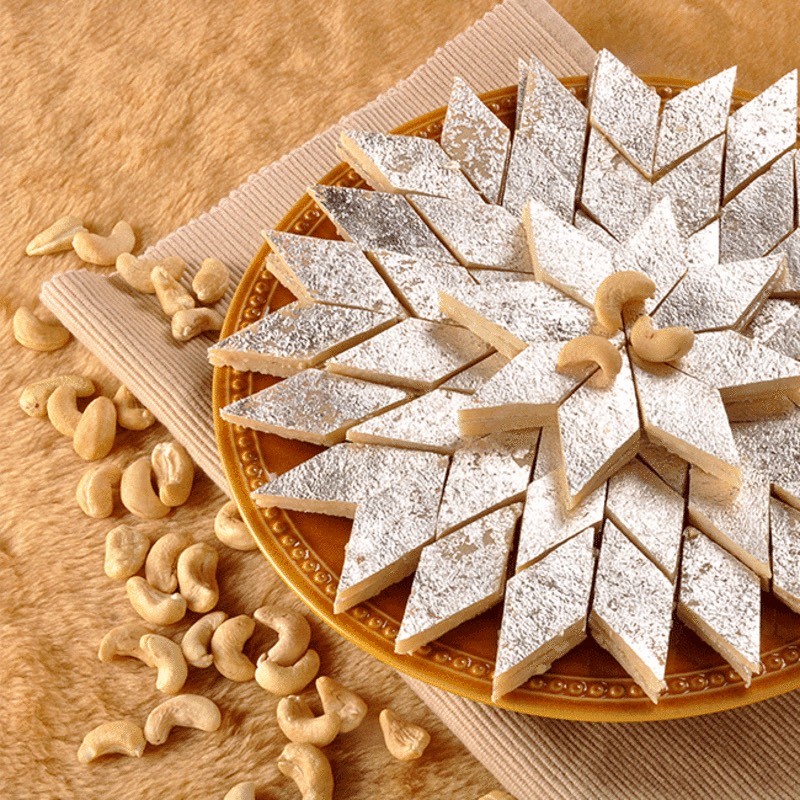
5.Kaju Katli

kaju katli

Kaju Katli is popular Indian sweet made with cashew nuts, sugar and cardamom powder. Kaju, in Hindi, means cashew and katli refers to thin slices.

  1. Aloo Tikki Chaat

aloo tikka chaat

Aloo Tikki Chaat is a famous Indian street food made of spiced fried potato patties served with yogurt, pomegranate and chutneys.

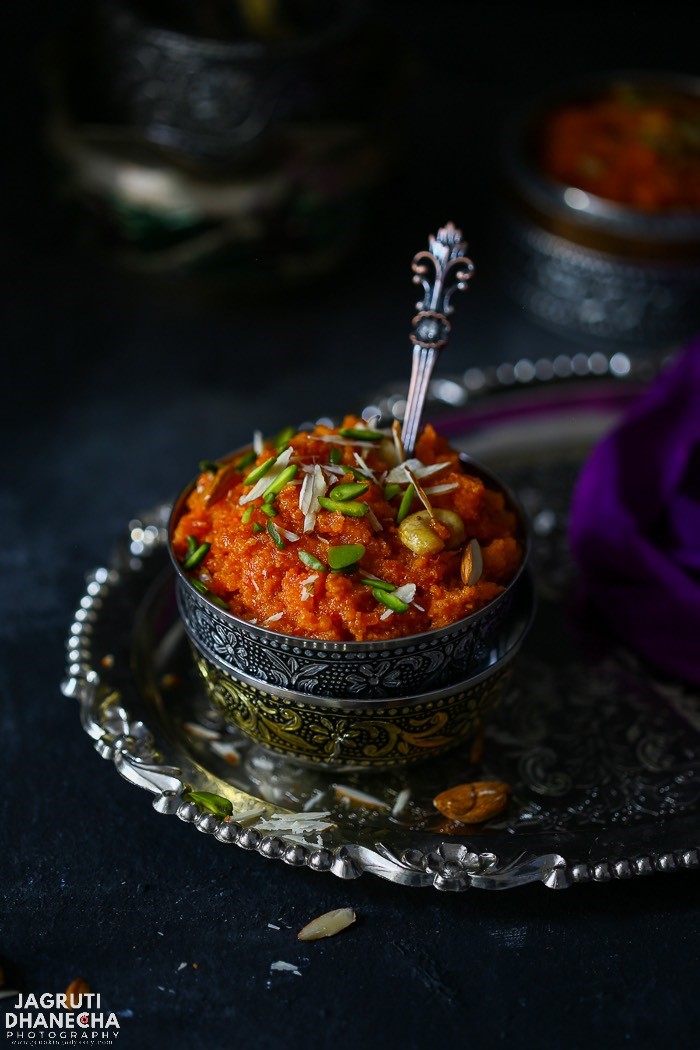
  1. Carrot Halwa

carrot halwa

Carrot Halwa, natively known as Gajar Halwa, is a sweet carrot pudding made in the winter months when carrots are in abundance .

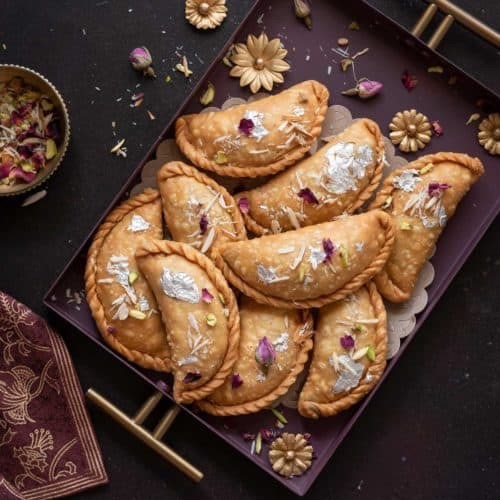
  1. Gujiya

gujiya

Gujiyas are scrumptious sweet fried dumplings. The filling of the dumpling is a delightful combination of dry fruits and milk solids.

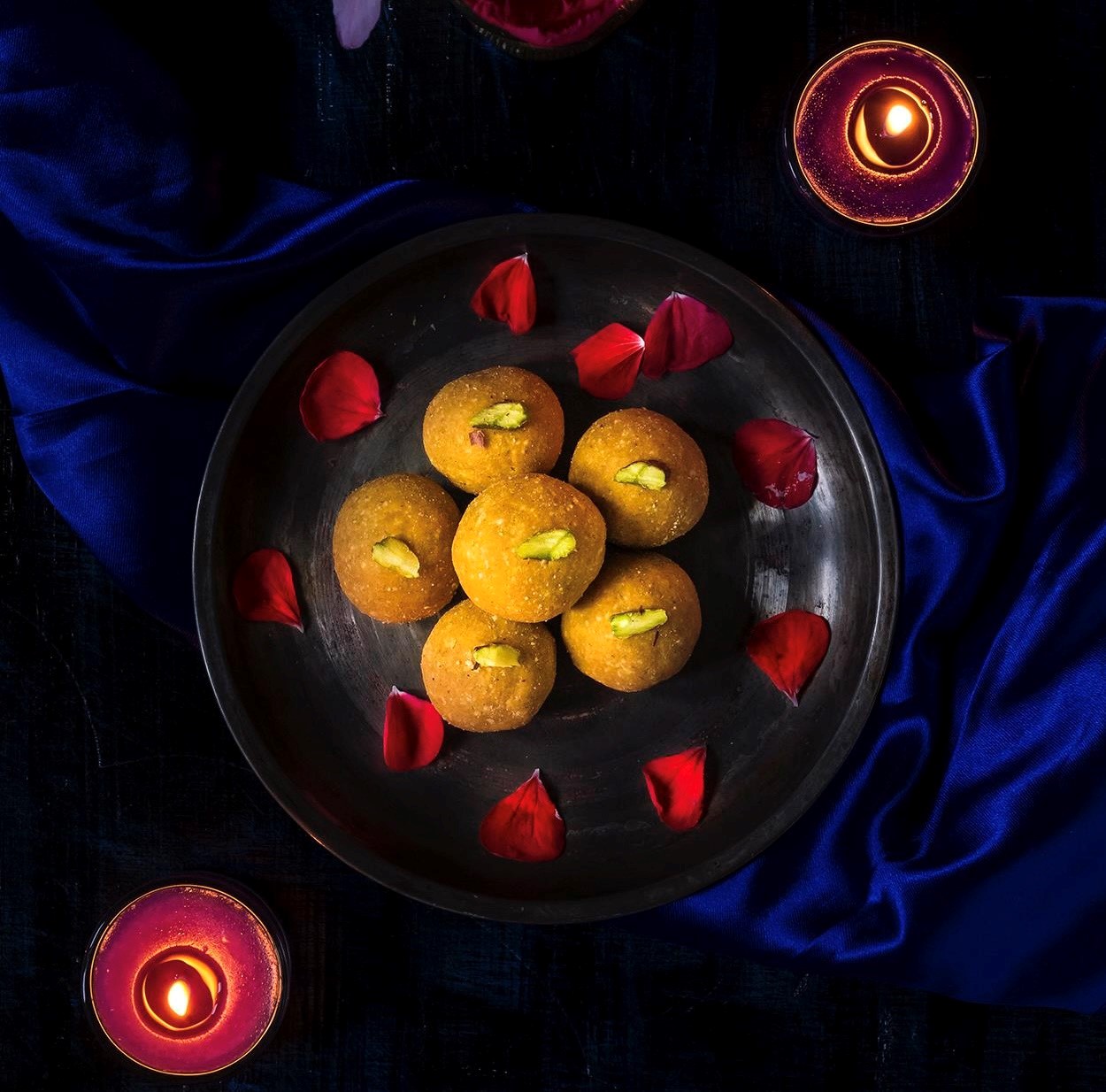
  1. Besan Ladoo (Sweet Gram Flour Balls)

besan ladoo

Besan Ladoo is a staple Diwali sweet made with roasted gram flour, ghee and sugar. They only take as much as 15 minutes to make and are absolutely finger-licking.

  1. Turmeric Cumin Margarita

turmeric cumin margarita

This bright coloured Margarita with its smoky notes is the perfect cocktail for the festival of lights

What does Bandhi Chhor Divas mean to you?

On 4 November, Sikh people around the world will observe the Day of Liberation: Bandhi Chhor Divas. With the celebrations often coinciding with Diwali, the Festival of Light, celebrated by Hindus and more widely recognised around the world, the annual Sikh festival holds a special place for the community, with distinct personal observations on its significance. Here, Bayparvah Kaur Gehdu, Birkbeck PhD student, shares some of these.

Bandhi Chhor Divas, in English and traditional Sikh spelling

credit: Bayparvah Kaur Gehdu

Reflections on Bandhi Chhor Divas, the ‘Day of Liberation’

“Bandhi Chor Divas is not about light for Sikhs, it’s about self-reflection and seva (service), a reminder of our commitment to stand for social justice as forged by our Guru Sahibaan.”- Jasmeet Kaur (she/her), Secondary Education professional, writer, and disabilities advocate.

“[It] is a reminder, to me, of our responsibility, as Sikhs, to fight oppressive systems- ALL systems of oppression in a spirit of solidarity, but one that is understood and driven by our history, our faith, our gurbani (speech), and our radical/revolutionary love.”- Sharanjit Kaur (she/her), PhD (cand.) UBC, History, Sessional Instructor of History, UFV and co-curator Sikh Heritage Museum, National Historic Site Gur Sikh Temple, Abbotsford, B.C.

“For me, Bandhi Chhor Divas is a reminder of our continued struggles and how they are interconnected with critical and compassionate approaches to social change. Together, we can stand against those stripping others of their humanity and we can walk side by side, or open space for those who have had their humanity taken from them. Together, we can take steps towards liberation.”- Shuranjeet Singh (he/him), PhD candidate and mental health advocate.

“Bandhi Chorr Divas is celebrated on the same day as Diwali, the Festival of Lights, and is sometimes also interpreted as a day commemorating the existential journey from darkness to light. However, Bandhi Chorr goes way beyond this literal symbolism, and for me, it symbolises the fight for justice. It symbolises the need to take a stance against injustices and having the moral and spiritual strength to defy oppressors. Guru Hargobind Sahib Ji waived the opportunity to his own freedom while the 52 rajahs imprisoned with him were not granted theirs. This incident is a graphic depiction of being defiant against oppressors. Currently, the farmers of Punjab are battling the same injustices, and Bandhi Chorr Divas takes on renewed significance about the fight for justice.” – Dr Gursharan Kalsi, Research Manager, King’s College London.

“Bandhi Chorr Divas happens to fall on the same day as Diwali. Every year when Diwali comes around people exchange greetings and wish each other well there is less mention of the festival Sikhs celebrate, known as ‘Bandhi Chhor Divas’. I remember at a very young age I learned the story of what the significance was of the day. The story of Bandhi Chorr Divas, to me, represents freedom over oppression. After being released, Guru Ji went to Amritsar to celebrate Diwali and that, to me, represents what Sikhi is primarily about: Unity.” – Amandeep Kaur Bhurjee (she/her), student and mental health advocate.

“My interpretation of Bandhi Chhor Divas falls into two areas. Firstly I think it was about the guruji giving the 52 rajas salvation from literally being released from imprisonment at that actual time in history. But secondly it might also be perceived that by being led by guruji, we seek freedom from our own metaphorical imprisonment from being within darkness and not knowing, to be enlightened from the knowledge, learned and gained.”- Kulvir Singh (he/him), Learning Design Officer, Warwick University.

“Bandhi Chhor Divas means the day of liberation. Guru Hargobind Sahib liberated 52 soldiers from prison to freedom. For me, Bandhi Chhor Divas signifies that Guru Sahib is there to liberate us from our internal and external fears and vices. It also teaches us to accept hukam and place our trust in Guru Sahib’s hand.  Guru Sahib had an option to just leave the prison alone, yet he decided to free the other kings, teaching us an important lesson about selfless sewa.”- Sarbjot Kaur (she/her), audit and risk management professional and disabilities advocate.

“This is what Bandhi Chhor means to me: The key message is the focus on the ‘inner light’ and not the external representation we are used to seeing. This is something that’s pure and eternal. The guru dispels this darkness of ignorance and ego with this light of understanding. As a result we realise ourselves, everything around us and the oneness of the creator god- Waheguru. – Taree Singh Bhogal (he/him), IT support engineer.

“From the outside, we see this part of Sikh history as our Guru Ji made prisoner to the Mughal empire, later being released. However, this is not the case. In reality our Guru Ji is the one who frees us and releases us from bondage. So, for this reason any of the Sikh Gurus could never be imprisoned. The display we see is Guru Hargobind Sahib Ji had a reason to enter that prison of their own free will. Guru Ji went there to help those who needed saving. This is a lesson for Sikhs and those who believe in the Sikh Gurus, that when we are in trouble and need help our Guru Ji is always there to stand with us and help free us from the many forms of prisons we are trapped in.”- Vickramjit Singh, Business Intelligence Developer.

What is Sikhi (Sikhism)?

An image depicting the true essence of Sikhi- Oneness, with the number 1 written in Gurmukhi script and One written in English script underneath. The writing is centred in the middle of a orange circle.

An image depicting the true essence of Sikhi- Oneness, with the number 1 written in Gurmukhi script and One written in English script underneath.

Sikhi (the authentic term for Sikhism), is the ‘revealed path of Enlightenment’ as taught by the Gurus from 1469 to 17081. The Sikh Gurus were ‘revered as spiritual teachers, as warriors, poets, emancipators, and as sovereign rulers2. Sikhi is fundamentally based on the premise of Oneness; humans are all equal as there is ‘no religion and God has no chosen people’1 (ref Top Ten Questions about Sikhi 2021; Singh, S. (2021). SatGuru Bandi Chhorr Hai — National Sikh Youth Federation).


Background to Bandhi Chhor Divas/Day of Liberation

According to tradition, the long imprisoned Guru Hargobind Sahib Ji, the sixth Sikh Guru, was released from Gwalior, India, taking with him 52 Rajas, also political prisoners.

The Emperor Jahangir said that those who clung to the Guru’s coat would be able to go free. This was meant to limit the number of prisoners who could be released. However, Guru Hargobind (Guruji/Guru Ji) had a coat made with 52 tassels attached to it so that all of the princes could leave prison with him. This act of defiance demonstrated the concept of ‘Oneness’: how we are all equal and interconnected with our struggles, pain, and oppression but also in our love and joy.

On Bandhi Chhor Divas, Sikhs celebrate the freedom and human rights associated with this history. While the day often falls on the same day as Diwali, they are two distinct festivals with the Day of Liberation falling days before, on occasion.

Storm Train

Throughout Breast Cancer Awareness Month (October), the Building Resilience in Breast Cancer Centre (BRiC) is sharing stories, told first-hand by women who’ve experienced the illness. Here, Sara Williamson, Writer and Chair of the Mid-Yorkshire Breast Cancer Support Group, shares her journey.

image of Sara Williamson quote

So, after a mastectomy: node clearance (as 14/17 lymph nodes were affected), then chemotherapy, sepsis delaying radiotherapy, more surgery due to infections, Herceptin being stopped and started due to heart failure twice, then the Zoladex harpooning, followed by reconstruction, reduction, lypo filling – that filled four years from 2015 – 2019. That was the treatment plan! Nothing went in a straight line! The train kept derailing and diverting. Nothing prepares you for the side effects. Having to relearn to walk again and use my arms was an upward challenge.

Cancer disrupts your career, friendships and day to day living. I remember people being scared of me, the sad looks, no close proxemics. I was a reminder of the possibility of death and subjects always changed so that they did not have the burden of carrying my illness.

So, grade 3, stage 3c with a 40% chance of living. Five years was the predicted life expectancy, if I completed all treatment. I fought to continue treatment as was bloody minded enough to prove that those stats would be wrong. You would think after completing four years of treatment that you would be relieved, but the truth is that psychologically and emotionally the clock starts ticking backwards and the mind plays tricks on you. There’s the whisper in your ear that means that you have one year left to live, and reaching the five-year mark is supposed to be good, right!? People don’t realise that although alive you feel half dead with the side effects.

Every blood test recalled, mammogram, urine test and medical review terrifies me, so much so that there are sleepless nights until a recurrence is ruled out. When the word ‘cancer’ hangs over a cancer survivors head, it can be emotionally paralysing, making decision-making a challenge. New unexplained aches and pains cause fear of recurrence, and anxiety can be triggered by sounds and smells in hospital waiting rooms. Knowing your own body helps distinguish and recognise changes, but to what extent are we vigilant? Checking daily is obsessive but like a form of necessary obsessive compulsive disorder (OCD).

There’s emotional grief with enforced menopause and the loss of fertility, even if you never planned to have children. Body image, scars and disfigurement mean that you can’t relate to old friends in the same way. It’s difficult losing part of your body especially one so visible, and one which defines you as a woman. There’s frustration at life interrupted. Trying on bras and t-shirts that never seem to fit. Life and the body is lopsided.

Words all seem to have new meanings: ‘Warrior, fighter, survivor’. There’s no emphasis on one’s quality of life, or acquired disabilities, or new health issues. For secondary metastatic breast cancer patients, the word survivor seems to optimise the gift of life inappropriately. Then there’s guilt and grief at hearing of friends that have not lived. You are back on that storm train again.

Further information:

Learn more about BRiC

Do you know the significance of Chinese New Year?

Preparations for Chinese New Year, also known as the Lunar New Year and Spring Festival, started on Thursday 4 February and will last until New Year’s Eve a week later. It’s the first year those observing China’s longest festival, celebrated in many parts of the Far East and beyond, will do so with social distancing and a full lockdown in the UK.

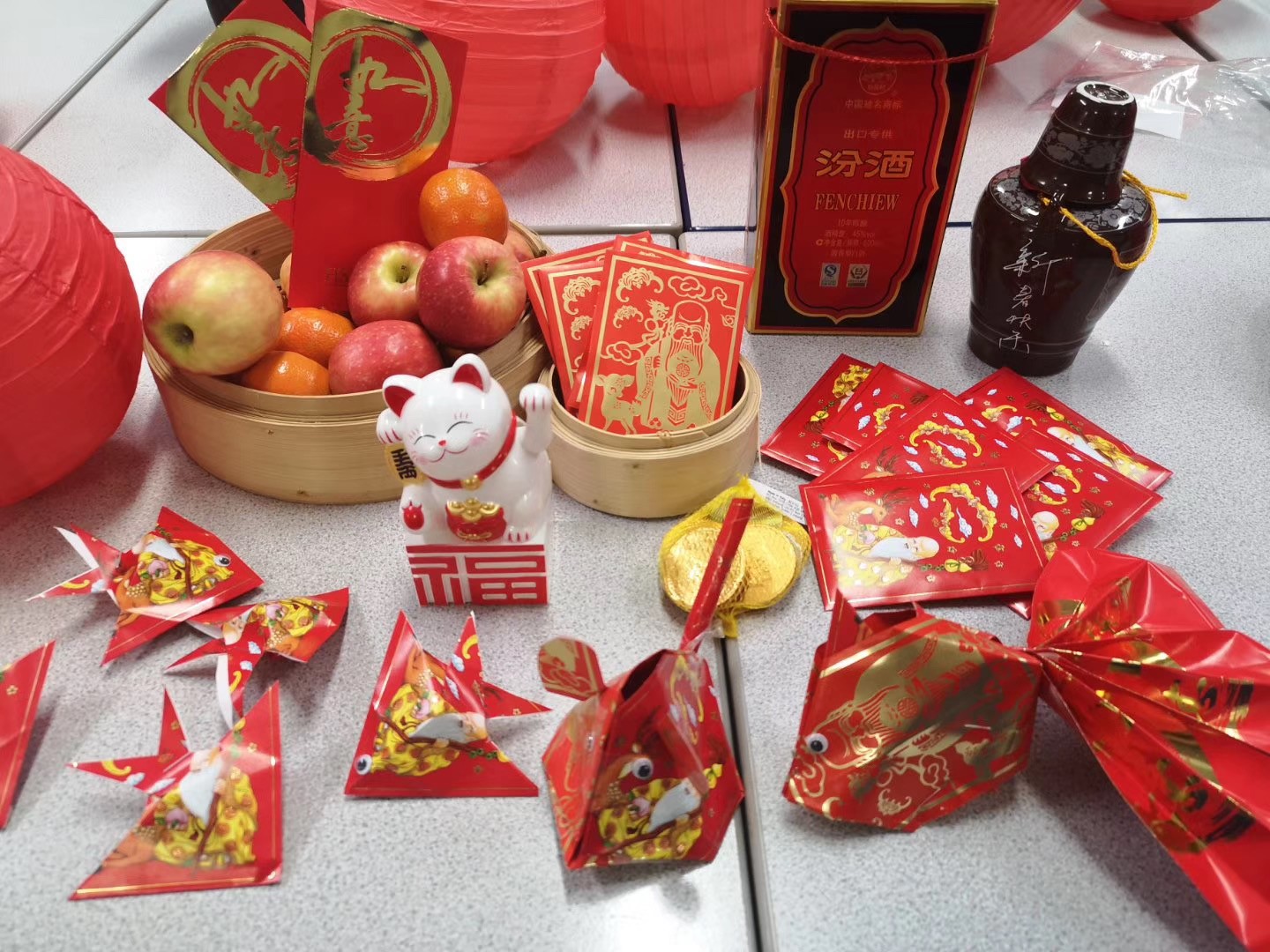
This is a photo of red Chinese New Year celebration items

Given the social restrictions, how will people be celebrating this year?
Organisers have been creative with their events, pulling most online. Birkbeck’s Chinese Society will be putting on an event, including a quiz and other activities, to commemorate Chinese New Year. This is a free event, open to all and can be accessed here.

There’s also the digital tour of Chinatown by Chinese Arts Now. Their festival starts right after Chinese New Year, from 15 February- 15 August and will feature performances and art installations. The National Maritime Museum, Greenwich, will also be putting on workshops, performances and storytelling online to mark the festivities on 13 February.

Will any of the usual traditions hold?
It’s very likely Chinese people will still observe the usual customs including sprucing up and decorating their homes with red lanterns and other decorations, having a dinner of fish, said to bring good fortune, and will stay up until midnight for fireworks to ward off any bad spirits.

So, what do you wear for the New Year, which is officially marked from 12 February until the Lantern Festival signifying the end of the celebrations on 26 February?
Well, if you’re born in any of the following recent years: 1961, 1973, 1985, 1997, 2009 or 2021, it’s highly recommended you adorn yourself and your house in red for the rest of the Chinese calendar year, which runs from February 12 2021 until January 31 2022.

Why?
Superstition has it that red, white, green and yellow will bring good fortune to those born in the Year of the Ox; who otherwise will be beset by bad luck according to Chinese astrology.

But isn’t red synonymous with bulls?
Well, yes, but 2021 is the Year of the Ox, specifically, which we all know is the bull’s close relation. The chinese calendar has quite a methodical way of assigning the ox to set calendar years.

What’s the significance of the Ox?
The Chinese zodiac has determined 2021 the Year of the Ox, an animal celebrated for its strength and reliability; and is the second of the zodiac animals.

Are they all animals?
They do, indeed, all happen to be animals. The Chinese zodiac is split into 12 blocks/houses, each with a one-year time span and an associated animal. Last year was the Year of the Rat and next year (2022) will be the Year of the Tiger. Though, bear in mind, with the start of the calendar falling between the end of January and the end of February, there’s some overlap with animals in any given year. The animals come around every twelve years.

So, does the calendar run with the smallest animal to the largest?
Not quite. Chinese folklore states that the Jade Emperor had beckoned 13 animals and thereafter named the years on the calendar according to the order in which they arrived.

13 animals?
Yes- one dropped out of the race. A very unlucky cat who is said to have drowned in the race. Not to be confused with the lucky cat charm, Maneki Neko, the Fortune Cat which is believed to bring good luck to its owners and is known for its signature wave.

Are there observations one should make in making sure they enjoy prosperity and good fortune?
Absolutely. Those celebrating are likely to skip a porridge breakfast on the Lunar New Year so as not to start the year off ‘poor’; and don’t expect to see them doing any work involving scissors or needles either, as this is said to lead to a loss of wealth.

We extend our well wishes for a safe, prosperous and Happy New Year to all within our community who are celebrating.

Read more about Birkbeck’s Chinese Society.

Joining instructions for Birkbeck’s free event here.

Find information for our International Student community.

See how Birkbeck students celebrated Chinese New Year last year (2020).

Camden Scholarship brings a fresh start and legal opportunities on the horizon

Birkbeck has supported disadvantaged, low-income Camden residents with full scholarships to progress their studies for the past few years. One of the programme’s students discusses her new lease of life following family woes and the lack of confidence she struggled with for years.

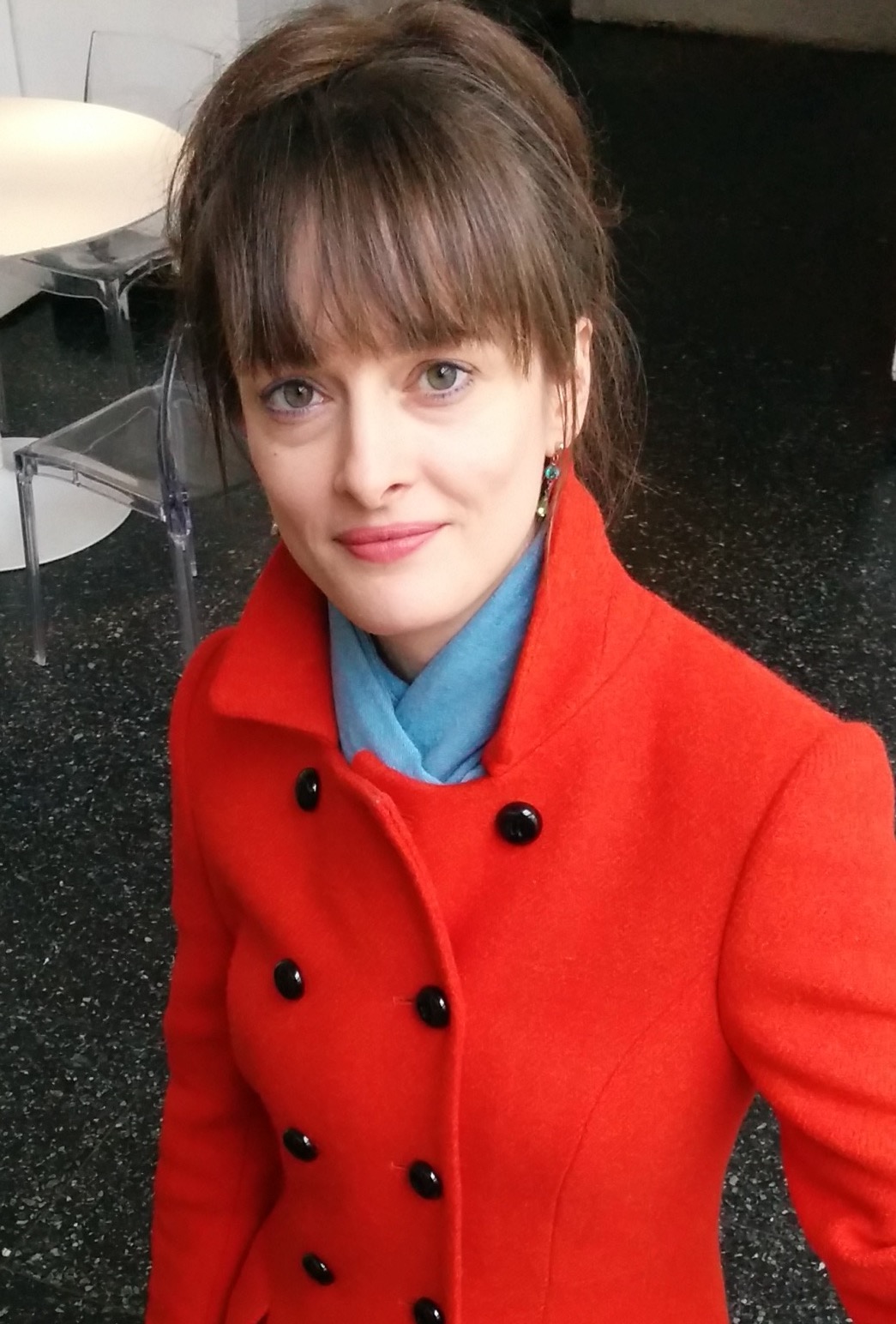
This is an image of a female student

Helen recently started her studies at Birkbeck on the LLB Law programme, with the full cost of her course funded by the Camden Scholarship, available to two Camden residents each year who have already applied for their undergraduate courses at Birkbeck and who fulfil a number of criteria.

If you’d asked Helen a few years ago if she could have envisaged being a student on a law programme, she most likely would have replied with an emphatic ‘No’, given that she had to shelve her education after becoming pregnant while at university previously in her late teens. Any chance of education was further compounded with her ensuing role as caregiver and home provider, her strict upbringing and the observance of cultural norms.

As a child, Helen was obedient, respectful and quiet. She recalls always feeling anxious and conscious of her culture’s perceptions of the place of a woman. This created certain limitations on what she perceived as a reality for her future and she delicately reflects on her childhood as ‘difficult’.

She says, “Since becoming a parent and with life in general, my anxiety has become progressively worse. I believe this is linked to my childhood as I’ve gone through a lot of things. My upbringing taught me that women are subordinate and I’ve seen personally how women are oppressed. Over time, it’s left me feeling that I’m not good enough. I always knew I had potential but I always find myself experiencing barriers. I put it down to the anxiety…I realise I’ve had this my whole life.”

It wasn’t until her early thirties that Helen would endeavour to resume her education.  She attempted to complete a statement for university five years prior to the Camden scholarship application. However, family life got in the way and she once again felt discouraged and “let got of the dream”. Helen then applied for a number of apprenticeships but was unsuccessful; and then an email came through with information about the Camden scholarship.

She decided to take a chance and put the application in April 2020, giving it her all. She still had her reservations, concerned she couldn’t complete the course with a family. But she called on the advice of people who had done the course and they assured her she would be okay. She shares, “I’m so glad I did. I realise I’m determined and made the right decision. At first I thought the timing of my life- leaving it too late- would make it impossible. Then I realised, it’s me who has been stopping myself and I needed to change my mindset.”

Following a successful application, an invitation to interview and the positive outcome, she reflects on the jubilance of hearing the good news: “I felt ecstatic, like a weight had been lifted. I was so happy, like I had a new lease of life given to me, a second chance that I didn’t even think I deserved. It’s just a dream.”

Now in her late 30s, she still feels the oppression of her past: “Sometimes you revert back to how you were as a child. Regardless of your achievements in life, you revisit your past. I’ve struggled with that my whole life.”

But the course has given Helen a fresh start and she observes a change in herself with increased confidence. She is particularly thankful for Birkbeck in helping her adapt to the academic world, especially since she’s been out of education for many years. Being around people who come with different perspectives has given her the ability to balance work and family life and has given her networking and learning resources. She adds, “Birkbeck really motivates people to think of different areas, exposes you to a wide range of careers and expands the possibilities.”

Now she’s looking ahead to the next five years and feels lucky and blessed: “I’m so happy that I even attempted to apply. I’m really grateful for this opportunity. I hope this is seen by people and someone’s life changes by seeing this.”

Helen is now planning to advance her legal studies and hopes to practice in the field of Law. Her encouraging words to others: “It’s never too late. Take small steps and follow your dreams.”

The Camden scholarship 2021/22 is now open for applications. Birkbeck’s funding support for Camden residents and other groups, administered by the Access and Engagement team, can be found here. The work of the Access and Engagement team at Birkbeck supports those from groups who are underrepresented in higher education in their university journey through resources about accessing university and free learning opportunities. This includes mature learners without a first degree, those with non-traditional qualifications and forced migrants.

DID YOU KNOW? Camden is home to the largest student population in London (2011 Census); with over half educated to degree-level- 5th highest in England and Wales.

*The student’s name has been changed owing to sensitive family matters.

Bringing his own dose of magic to the field of Law

Tomas McCabe is a recent prize-winner in the inaugural British Inter University Commercial Awareness Competition 2020. BIUCAC was established to provide opportunities for non-Russell Group students to develop commercial awareness and to highlight the talent at respective law schools. Contestants receive support with enhancing their CVs and win one of twelve prizes at top City law firms. Tomas won the prize offered by Simmons & Simmons and in this blog, he shares his path to success, a smart mix of the conventional with the unconventional, including a 10-year career as a magician.

This is a photo of Law student Tomas McCabe

Tell us about your course, what you’re studying and how you came to study at Birkbeck?
I am in my second year of the LLB course. My job for a long time has been as a magician, however I decided last summer (2019) that I would love to study a law degree around that work. I’ve always been interested in law and have considered studying it for a long time, and when I finally decided to go for it, Birkbeck’s evening structure allowed me to study it conveniently as well as giving me a University of London degree.

What’s your view on the opportunities available to Law students once they graduate?
I have researched a lot about the opportunities for law students after they graduate. While there are some fantastic opportunities, it is a very competitive industry and a majority of students will never get the chance to work as a barrister or solicitor simply because everyone wants to. However, with a good degree behind you and a lot of extra volunteer work, competitions and experience on your CV, it seems you stand a better chance. Thankfully, as I learnt in BIUCAC, the city law firms traditional tendency to hire from Oxbridge and Russell Group universities is being steadily improved to give more students a chance at obtaining the top positions.

What are your career plans following your course?
I have been awarded work experience at two law firms- Simmons & Simmons and CANDEY. Following my placements there, I will have a much better idea where exactly I would like to take my law career. Currently, I am simply trying to take advantage of every opportunity and keep doors open.

How has Birkbeck supported you with those plans?
Birkbeck has supported me in numerous ways. As I mentioned, I much prefer the evening scheduled work as it frees up my day to do my own combination of studying, legal research and other work to support life in London. I have jumped at opportunities presented to students, including this one (BIUCAC), representing Birkbeck at the Landmark Property Moot Competition and applying for some volunteer work. I think students themselves, however, need to do a bit more research into what needs to be done early on in order to build experience and stand out at the time when you are applying for jobs.

Tell us how you came to hear of the competition and how you went about applying?
I heard of the competition through an email sent to students. Initially I wasn’t sure about taking part as I hadn’t really thought about commercial awareness or why I might need it. As it was multiple choice, I decided to give the first few rounds a go. By the time I got to the interviews and presentations stages, I was sucked in and loved it.

How do you see competitions like this helping students, especially non-Russell Group students?
The most obvious answer here is that anything that can make your CV stand out, against the hundreds applying for the same job as you, is important. After all, most – if not all – will have a law degree. That aside, this competition has built my commercial awareness a lot and from doing my research I now realise how important this is. Also, the opportunity to network with graduate recruiters, trainees and more senior lawyers from the top firms in London – magic circle included – was brilliant. Finalists also got a Just Eat voucher!

What were your thoughts on winning 3rd place- an incredible achievement?
To say I was shocked would be an understatement. However, as the competition moved through the rounds and I became more invested in it, I decided soon enough that if I was going to do it, I should do it right. I put in the time and effort for the finals and was really pleased with my achievement. However, the whole way through I was aware of the standard of the other students and didn’t believe I could place third from over 4100 entrants. I’m really happy with myself for doing so though.

Any final takeaways from the competition?
My main takeaways from the competition are: degree class is becoming more important to the top firms than the university you study at, so never think you can’t compete with the best. And also, take every opportunity you can. At worst it’ll cost you a few hours, at best it could get you your dream job.

FURTHER INFORMATION:
More about Birkbeck’s School of Law

A moving celebration of Black History Month

Carmen Fracchia, Professor of Hispanic Art History, Cultures & Languages, School of Arts, reflects on her recent book tour and the emotive nature of the response to her book in considering the experience of Black people in Spain.

Flemish painter, Baptism of the Ethiopian Eunuch. Book of Hours of Charles V, do l. 82r. Brussels or Malines, c. 1519, Österreichische, Nationalbibliothek

On 2 October, I was invited to present my new book ‘Black but Human: Slavery and Visual Art in Hapsburg Spain, 1480-1700’ (Oxford: OUP, 2019) at the University of Lincoln (UK) to celebrate Black History Month, together with two poets, one visual artist, and an art historian. I found this event, UT PICTURA POESIS: An Evening of Poetry, Art and Art History, deeply emotional.

Organised by Dr Laura Fernández-González (School of History and Heritage), the title emerged from her belief in the power of images, following the steps of Horace’s maxime, ‘as is painting, so is poetry.’ Her aim, however, was to show new work produced as a case study on how to construct a ‘new anti-racist Art and Architectural History’. Her brief was followed by the presentation of the three artists by the art historian Michael Ohajuru, a TV personality and director of The John Blanke Project.

In my view, the most unexpected feature of the evening, was the poem ‘Negro pero humano’ (‘Black but Human’) by the literary activist, editor, publisher, and, award-winning poet, Kadija Sesay MBE. It was one of her two extremely powerful poems, written specifically for this event as a response to my book, to its title, and to two images of her choice, The Miracle of the Black Leg and The Baptism of the Ethiopian Eunuch.

The first part of the title of my book, ‘Black but Human’, was an Afro-Hispanic proverb and the prism from which I tried to foreground the forgotten presence of Africans and their descendants in the visual form in early modern Spain. This proverb also allowed me to explore the emergence of the ‘enslaved subject’ and the ‘emancipated subject’ in Spanish portraiture.

This saying, that was circulated in the Afro-Spanish oral tradition and appropriated by well-known Hispanic poets, such as Luis de Góngora in Spain and Juana Inés de la Cruz in Mexico, was also written by enslaved and liberated Africans, as the findings of anonymous black carols, in 2004, testify.

‘Black but Human’ encodes the paradoxical nature of what it meant to be a ‘black’ person in ‘white’ Spain, between 1480-1700. To be ‘black’, as I have recently written in my blog, ‘How long do we need to wait to acknowledge that black people are no longer our slaves?, ‘meant to be a chattel, a piece of property, to be hired, bought and sold as a precious commodity at auctions; to become objects of material exchange: traded to save the donor’s soul, gifts, dowry, and, heritage; money to pay debts, to settle accounts in lieu of mortgages, and rents.

To be a black person meant to be owned by a slave master and to suffer punishment at any sign of rebellion against this complete dehumanization in a society where the word ‘black’ and the physical appearance of blackness were signifiers of the specific social condition of slavery. Besides, to be a black person also meant to become a strategic resource for the colonization of the New World.’ Africans were also considered ‘children of God’ as they had a soul that was whitened by the transformative powers of baptism. Christianity made them equal to Spaniards, but only in the spiritual realm.

Kadija’s beautiful poems encapsulated the ideological, painful, and contradictory position of Africans in the Spanish empire that I explored in my book, perfectly. Her poems set up the emotional barometer of the Lincoln event that was strengthened by the topical work made by the visual artist Victoria Burgher. In her presentation, she showed ten temporary works made with ‘colonial commodities’, like sugar and cotton to ‘re-examine white-washed narratives of empire’ and as a critique to the British Transatlantic Slavery in the Caribbean and in the UK. This strong visual presentation was complemented by the speed and cascade of words by international media activist and poet-educator Mark Thompson’s brilliant performance of his personal and historical poems, that brought the energy and anger of the young.

The last half of the evening was followed by the conversation between Michael and I about my book. We discussed the historical amnesia of the African presence in today’s Spain; the title of my book; the visual representation of the Miracle of the Black Leg, as the metaphor of the violence of slavery and the roots of contemporary racism in the Hispanic world; the portraits of the enslaved Juan de Pareja (c.1606, Antequera, Málaga–c.1670, Madrid) by his owner, the court painter Diego Velázquez; Pareja’s self-portrait, as a freedman, in his painting The Calling of Saint Matthew, and, the urgent need to recover the Afro-Hispanic contribution to the Hispanic culture.

This event was attended by approximately 80 people and generated so many questions from the numerous national and international attendees (students, academics, museums curators, filmmakers, artists, writers, among many others) that time was not enough to address all of them.

Read Kadija Sesay’s poem, Negro pero Humano

Locked down, yet together!

In this blog post, we hear from MA Screenwriting student, Omneya Okasha on the support of peers and tutors at the virtual screening of her new short film

Omneya Okasha

As a Birkbeck student and an independent filmmaker, I’ve had the double pleasure of sharing my short film, “Lippie aka Sheffa” with my tutors and colleagues via the virtual screening event that was organized by La Young Jackson from International student administration on the 17th June 2020.

The event was originally planned to take place mid March, in the vicinity of Birkbeck’s Iconic cinema. I was excitedly looking forward to sharing my directorial debut on the large screen with Birkbeck’s community, but unfortunately as we know, we all went through a global crisis and the historical event of the COVID-19 outbreak.

Hopeful as we were then, the event was postponed ’til the summer term, expecting the university buildings would reopen by then. Not too long into lockdown, it was evident we would not be returning to the University this year, and I was regretful I hadn’t held my event sooner in the year.

However an email from La Young in June gave this event another opportunity,  as she suggested that we could hold a virtual screening of my film followed by an online discussion. I was thrilled at this chance revival, though I was a little concerned that the online screening of an international short film may not draw an audience. To my surprise, many registered to the event and showed quite the enthusiasm to attend.

On the screening day, I was delighted to see my professor, classmates, and attendees who I was first acquainted with during the event. La Young has kindly introduced me and I gave a brief presentation about my background as a filmmaker, and about the film. After the introductions, we all watched the film together, then the space was given for a Q& A, which La Young moderated.

The audience’s engagement was incredible, and the discussion was highly intellectual, and I was elated to receive the audience’s questions and gestures of support for my film. It was truly rewarding for me as a filmmaker to welcome such encouragement from an amazing crowd of highly talented professionals and fellow students.

I guess we have all got accustomed to the new normal of the current situation, and it was refreshing on many levels to know that we can still go through such difficult times, making the most of them, with each other’s support. Looking back on this experience, I feel recharged with hope and drive to work hard on my upcoming project, thanks to the support and sense of unity I have received, to which I am deeply grateful.


A photo of the poster for the movie Sheffa Aka Lippie

Sheffa (meaning Lip) follows the story of a 10-year old boy and is so-called for the scar he bears. His mother scolds him and uses him and his friends to sell weed on the streets. Her ambitions are threatened when Sheffa gets a period, revealing that in fact Sheffa is a girl being raised up as a boy.

Watch the trailer for the film Sheffa aka Lippie here

Dr Clare Press discusses life as a scientist

Dr Clare Press reflects on her parents’ encouragement of her inquisitive mind, and her support for measures to increase the representation of women in science

Tell us a bit about who you are in a few sentences.

I’m a Senior Lecturer (Reader from October) in the Department of Psychological Sciences, and I’ve been faculty here since 2012. I’m also Assistant DeanPhoto of Dr Clare Press, Lecturer, Department of Psychological Sciences for Research for the School of Science. I run the Action Lab where we study questions relating to how we move around and perceive our world. We look at how someone behaves (e.g., close monitoring while they pick up a cup or press a button), and what they report seeing or hearing, and relate this to what is going on in the brain to allow them to act or perceive. Neither action nor perception are simple jobs for the brain even if they seem effortless to us. Once we understand how these systems work we can apply this understanding to individuals with various conditions who struggle with these basic tasks, to understand what may be different.

What has the lockdown period taught you?

That I am quite happy to be at home. I like my family (most of the time), enjoy my job, keep up with other friends and family over video, and I miss the other parts of my previous life less than I expected. Of course we need the labs to be up and running again as soon as possible but I can imagine working from home more once the offices are open again. I have found the period painfully exhausting, because we have three young children (ages 5, 3, 3) who have been ‘locked up’ at home with us. But if I look past the exhaustion and the fact I’ve had far too much to do, I’ve generally been quite content with it in a way I may not have imagined.

A person is either scientific or religious in their outlook…What are your thoughts on this?

I think the statement is too simplistic. Both science and religion aim to answer life’s big questions, and it is sometimes speculated that once science has an answer to a question there is no need for religion anymore. However, science is unlikely ever to answer everything because it requires that the system we are trying to understand is of a complexity we can fathom. This is unlikely to be true of everything as human intelligence is limited. We cannot comprehend limitless time or space, for example. Many also believe that higher powers relate to the underlying causes of phenomena understood via scientific methods (e.g., natural selection). The element of religion that consists of moral codes for life is of course not at odds with science either.

What or who influenced you to enter the field of Science?

I have always loved science, which I attribute mainly to my parents fostering such an inquisitive character and excitement to understand how the world works. They were both passionate about science and clearly enjoyed explaining underlying causes as I grew up. They did not believe in ever telling a child ‘because I say so’, believing that children should be discouraged from simply accepting what they are told and that children are interested in understanding and interrogating how things / society works. The fruits of their labour were clear by the time I was 5, when I told my grandma it was implausible that we breathed all the time – that may be true for her but certainly not me, and surely I would notice if I did. So it was definitely my parents who generated my curiosity in understanding how the world works, and I was certain by mid teens that I would study psychology or physics at university.

What have your experiences been, as a woman in Science, throughout your career?

I am passionate about science and would not trade the career. In few other professions do you have the freedom to ask whatever questions you fancy and the constant discovery is especially stimulating.

99% of the time I do not think of myself specifically as a woman in science. Being a scientist is a large part of my identity but being a woman less so. The data certainly suggest that people perceive me differently because I’m a woman. To use a collaborator’s words, “(I) am a short, blonde woman who laughs a lot and wears cardigans and jeans”, which will mean implicit biases stacked against me. For the most part I feel respected by people in my field, but I will not know if anyone secretly ascribes my successes to collaborators! I’d say my everyday experience is one where I’m perfectly at ease with my treatment as a woman, but at the daily level I am largely surrounded by people who have chosen to work with me (in my group or in collaboration).

I occasionally notice treatment where I wonder whether life would be easier if I completely fitted the typical male scientist mould. For instance, without checking my background, people have occasionally explained to me – in great detail – theories and findings relating to my own expertise. The classic ‘mansplain’ – and I am without a doubt that this happens more to women. Some flag work from my lab, linking it only to male co-authors and not me. Not frequently though. With particular instances of behaviour you can rarely know the true underlying reasons so I try not to dwell on it. However, there is serious work to be done in overcoming these biases given we know most people hold them. It will presumably take a long time for implicit biases to disappear. They follow centuries of assumptions that men are better at science and structures resulting from those assumptions – where fewer women enter science, and when they do, they don’t always get the credit they deserve. I therefore strongly support measures aiming to counteract these biases, e.g., approximately equivalent ratios of men and women for conference presentations and grant awards. At the moment I see these as measures to counteract the belief biases but that changes to the beliefs themselves will take longer. However, we can hope that with time – if insightful women are equivalently represented in the highest positions – the biases will reduce and ultimately disappear. There is an extensive focus in universities now on these initiatives, especially given Athena Swan. I think it’s important to remember that the aim is never Athena Swan itself, but facilitation of the scientific enterprise by having all of the best brains onboard rather than a subset.

Einstein himself has credited a woman with helping him to formulate his general Theory of Relativity. Yet history has shown that female scientists have often been overlooked for their contributions to science, with men often receiving the credit for major advancements. Tell us about a woman in Science who we should know about.

My PhD supervisor, Prof Cecilia Heyes, is outstanding. She is the perfect role model of a scientist, preoccupied by the generation of empirically testable theories of cognition and slotting together all the pieces of the empirical jigsaw. She thinks long, hard and deeply about any problem, and carves theoretical reasoning at appropriate joints that can be interrogated via scientific methods. She also provides the perfect role model of a PhD supervisor. She didn’t appear to see PhD students solely as a pair of hands to help pursue her own endeavours, but people she should properly train in the skills of academia. She spent hours with us each week debating theoretical nuances and passing down her theoretical wisdom, as well as explicitly encouraging challenge. She says she attracted students who enjoyed that element of science, but the atmosphere was also one where every view was given time and deconstructed. She gave swathes of time to training us how to write and give talks – e.g., always listening to dry runs before conferences – and told us she would be a mentor for life upon completion. I lucked out having a supervisor who was both so sharp academically and so nurturing, and think Celia should be celebrated on both of these dimensions.

This month marks 100 years since the birth of our very own Rosalind Franklin. How far have women come since then, in terms of their contribution to the field?

Prof Angelica Ronald and Dr Emma Meaburn, both from Psychological Sciences, have recently been running events inspired by Rosalind Franklin – highlighting many of the particular contributions of women to science. Rosalind Franklin is a good example of the fact that women have been making huge contributions to science throughout history, but perhaps not always receiving due credit. Therefore it may make more sense to speak of changes in how women are treated. Certainly explicit biasing against women is unacceptable these days, but implicit biases are much harder to address.

What more can be done to encourage more young girls and women to become scientists?

I assume this will partly require developing a passion for science in girls from infancy – as with boys. Encouraging them to search for answers and not being afraid to challenge what they hear. We may think society is now more aware of biases in the way we raise children but it doesn’t always translate into behavioural change. Some teachers and nursery staff widely talk about particular activities that will appeal to the boys or girls, without thinking about the repercussions of their statements. I was told during maths at school that I would likely find 3D geometry more difficult due to being female (!). It just irritated me but assume many may be discouraged by this. We need to watch how we raise children and the beliefs we engender with our comments.

It is also important explicitly to promote science to girls and women. For instance, Prof Essi Viding at UCL has received a Royal Society award to raise the profile of women in STEM with workshops and other initiatives aimed at schoolgirls. These initiatives aim to address the reasons for girls dropping out of science during A level years – i.e., partly low confidence and partly because of concerns surrounding working in a male dominated area. Additionally, I am part of the ‘SOFAR’ network – led by Dr Trudi Edginton and Dr Gilly Forrester – dedicated to supporting women in research through their careers by providing expertise, advice and support through mentorship. If we provide girls and women with good role models and good support, then with time men and women will become more equivalently represented.

What do you see as the most significant impact of science on the world?

At the moment, the development of vaccinations against infectious diseases.

If you could be doing anything else, career-wise, what would you be?

At school I told the careers adviser that my two career deal-breakers were that it should be predominantly maths-based and involve largely working by myself. Their data-crunching exercise came back with the answer that I should be an Actuary. I disagreed, and in fact I can only really imagine working in another academic branch of science! Very unimaginative of me. I should also point out that I especially enjoy many of the social elements of academia now, even if the idea of lecturing to 250 students would have made me rule out this profession in my teens!

Tap Dancing, Poetry and Black Mascara

Birkbeck PhD student is one of four prize winners at the 2020 International Book and Pamphlet Competition for her collection: ‘Black Mascara (Waterproof)’

This is a photo of Rosalind Easton

Rosalind Easton

An English teacher for the past 10 years and an English, Theatre and Creative Writing PhD student more recently, Rosalind Easton has spent as many years deconstructing poetry. But it took the interaction with and observations of her young niece to inspire her to write poetry in the first instance. 

Just two and a half years ago, she penned her first poem about the birth of her niece and found other familial influences through her grandmother’s love of literature. She shares that her writing was sporadic- just one or two poems every few months but also notes that “when you get into a rhythm of writing, that’s when you get the lightbulb. That’s why it’s so important to try and write every day.”

Easton was able to source further creative expression through her love of dance; tap dancing, in particular. She points to the correlations and expresses, “The rhythm of my tap dancing comes through in my poetry.”

Having found her rhythm and routine, Easton would spend her mornings before going into work, writing in a local cafe for just under an hour, a process driven by “50% ruthless discipline, 50% pie-in-the-sky dreaming.”

Connections between things is a key component of Easton’s work. She draws the link between poetry and mathematics for its patterns and structures; as well as likening the visual elements of poetry to paintings and sculptures. Throughout her winning collection, objects seem to take on a life of their own with judge, Imtiaz Dharker capturing this most aptly:

Catching sight of a former lover makes my iPhone flicker/ with the ghost of a Nokia brick. All kinds of inanimate things come alive enthusiastically in these poems: the stiletto heel, the music stand, the microphone, a wand with no spells, making every poem a delightful surprise.”

It’s all a far cry from when Easton had worried about her poetry being publishable, acknowledging that she writes long lines; so she was pleasantly surprised when judge, Ian McMillan praised her for this. Indeed, both judges McMillan and Dharker were emphatic in stating the“final choices were unanimous”.

A Book & Pamphlet winners reading will he held at The Wordsworth Trust in Grasmere in Spring 2021, and the four winning pamphlets will be published in Feb 2021. Read more about the competition and winners.