Author Archives: I Edwards

What is intrapreneurship and how can it help your career?

The life of an entrepreneur isn’t for everyone, but you can still reap the career benefits by embracing an enterprising spirit in the workplace.

Brainstorming, Business, Cheerful, Clap Hands

I don’t know about you, but a pretty clear picture springs to mind when I hear the word entrepreneur: suited and booted, firm handshake, these are the people who can talk to anyone, are interested in everything and have a remarkably persuasive knack of bringing people on board with their ideas.

While the risk-averse among us may want to steer clear of the career path of an entrepreneur, you might be surprised at how much there is to gain from embracing an entrepreneurial spirit from within an organisation.

That’s where intrapreneurs come in.

What is intrapreneurship?

Intrapreneurship involves developing the skills and mindset of an entrepreneur, but using these to benefit the company you currently work in, rather than starting up your own business.

Intrapreneurs are recognisable in organisations as the people who are confident, question how things are done and are willing to try new approaches in search of better outcomes.

What’s in it for you?

Adopting an enterprising attitude in the workplace might sound like a lot of hard work, but it’s a smart career move. Putting forward suggestions and championing new ideas allows you to put more of your own personality and interest into your role, making it ultimately more satisfying. We also know that increased autonomy at work is one of the keys to staying motivated.

Entrepreneurship develops skills that are transferable in any workplace, such as emotional intelligence, innovative thinking and leadership. Plus, any suggestions that you make and work on can be used as concrete examples of your achievements when you’re looking for your next opportunity.

What’s in it for your employer?

Although the concept of intrapreneurship has been around since the 70s, it’s becoming increasingly relevant in today’s world. Creative thinking, emotional intelligence and the ability to embrace and adapt to change, all key skills of an entrepreneur, are becoming essential in the modern workplace and are where humans differentiate themselves from artificial intelligence.

Employers value team members who are proactive, resilient and who can offer creative solutions to the challenges their business is facing.

Enterprise at Birkbeck

At Birkbeck, there are many ways to get involved with enterprise to suit any level of ability and time commitment.

  • Pioneer

Pioneer is a fantastic way to launch your enterprise journey, and applications for this year’s programme are now open. Birkbeck’s flagship enterprise course is open to Birkbeck students and recent graduates from any discipline who are looking to develop their entrepreneurial skills.

  • Workshops and Events

Birkbeck Futures host events throughout the year focusing on a different aspect of enterprise.

  • Courses in Enterprise

Birkbeck’s School of Business, Economics and Informatics has a strong reputation for research excellence and innovation and offers a range of programmes where students can prepare themselves for the modern workplace.

The Ultimate Guide to Networking

Love it or hate it, when 85% of jobs are filled via networking, you can’t afford not to get involved. Lucy Robinson from Birkbeck’s Careers Service explains how to make networking work for you.

Play Stone, Network, Networked, Interactive, Together

If the idea of networking has you running for the door faster than you can say “So what do you do?”, you’re not alone. Many people with career ambition shy away from networking for fear of appearing manipulative, exploiting friendships for personal gain, or because they don’t know the rules of this odd social game.

The truth is, we unwittingly network all the time in our day to day lives. If you enjoy meeting with and learning from people in your university, workplace or industry, you’re already an experienced networker. Here’s how to make the most out of networking to help you achieve your career goals.

Do your homework

While networking is a far cry from a formal job interview, doing a little prep beforehand will make it worth your time. If you’re attending a formal networking event, research the people or organisations that will be there and plan who you want to speak to. Think of a few questions you might like to ask, so you can get the most out of your time when you’re there.

Plan your entry

Often, the hardest part of networking is finding a way into discussions. Prepare a few low-risk conversation starters that you’ll feel comfortable using on the night. Something as simple as “What brings you to this event?” or even “May I join your conversation?” is a great way into a discussion. People come to networking events to get to know others, so it’s highly unlikely that you’ll be rebuffed.

Understand networking etiquette

There’s no single correct way to network, but there are a few ways it can go very badly wrong. Fortunately, once you know the pitfalls, they’re easy to avoid.

While it’s important to be open and friendly, don’t disclose or expect personal information from contacts you’ve just met. Similarly, avoid controversial topics that might cause disagreements.

Networking won’t change your career prospects overnight, so avoid handing out CVs or expecting immediate results – you never know when a contact you make will come in handy later down the line.

Practise your story

“So, tell me about yourself?” It’s a simple question, but one that can throw you completely if you’re caught off guard. Take some time to think about what makes you unique – what events and experiences have shaped you?  What challenges have you faced and where are you heading now? Telling people about yourself in story format means they’re more likely to remember you as well.

Listen as much as you talk

If the idea of networking is way beyond your comfort zone, remember that it isn’t just about personal gain – it’s also an opportunity for you to see how you can help others professionally. Really taking the time to listen to people isn’t just polite, it will give you a better understanding of their role and industry and help you identify opportunities to help others.

Create a LinkedIn profile

LinkedIn is THE social media platform for building and maintaining professional connections. Your profile is an online version of your personal story that will help employers during the recruitment process. LinkedIn is also a great tool to follow up on any in-person connections and make sure you don’t lose touch. Make the most of it by joining relevant discussion groups for your industry or career interests.

Birkbeck Futures offers careers support, advice and guidance to students, researchers and graduates. Drop in to their Student Central office any weekday afternoon – no appointment necessary.

Further Information:

Life in London as an international student

Yvette Shumbusho, an MSc Marketing Communication student from Rwanda, talks about arriving in London as an international student and what had made her feel so at home.

I arrived at Gatwick Airport on 15 September 2018, two weeks before the start of my MSc Marketing Communication at Birkbeck. The weather was chilly, serving as a reminder that I was no longer home in Kigali, Rwanda or even close by. The drive to my accommodation for the next year was longer than I had expected, I reached late in the evening, evidently postponing the sightseeing for the next day.

The following morning, I was awakened by the rays of sunlight from my window complementing my excitement of being in a new city. I got ready to explore as much of London as I could, starting off by shopping. No matter where you are from, shopping is a universal activity. There are a number of brands from the UK that I was especially excited to visit and purchase from. That same day I was taught how to use public transport and there were many similarities to the system back home. For instance, an Oyster card is comparable to that of Rwandan Tap and Go cards. Just as I was about to purchase one, I was informed about the Student Oyster card, reducing my monthly expenses!

The major cities of the world – New York, Milan, Rome, Paris – are known to be expensive and London is no exception. I was advised to look for sales and only shop then and, given that summer was coming to an end, there were quite a few around. For the next two weeks, I purchased all the necessities for my home and warm clothing for the upcoming winter period. The most thrilling part of this experience was visiting Oxford Street. It can be overwhelming for a newcomer but it was also exciting. I went to the cinema, shopped some more, ate oriental cuisines that were quite affordable compared to those back home. I felt right at home by the time I began classes – I adjusted so easily and most of the credit goes to London’s element of diversity.

There are a number of nationalities residing in London, and with each there is a piece of culture that has been embedded in that of the British. I was so accustomed to eating particular foods back home that I was afraid I wouldn’t be able to find it here. That is until I visited a market in Dalston, which consists of the spices and dishes from many countries in Africa – I have been grocery shopping there ever since. Honestly, London is a city that almost everyone can get used to, it’s a wonderful place!

There are many things I am yet to do, such as visit Hyde Park (for Winter Wonderland!), catch shows (The Lion King) and explore the museums. Given the continued advancements in technology, I’m kept up to date with events and fun activities to enjoy via an app called Visit London. In addition, the International Community as Birkbeck organises events that add on to the beauty of London and give you a sense of it all at a student-friendly price.

Further information:

What is a vote of no confidence?

Dr Ben Worthy from Birkbeck’s Department of Politics explains why confidence is such an important part of being Prime Minister and what might happen when it’s no longer there.

Being prime minister is all about confidence. In fact, the British constitution is held together by confidence. Being, and staying, prime minister means you have to ‘command the confidence of the House of Commons’. You don’t have to have a majority (though that’s always nice) but you do need to able to get your votes through. The Cabinet Manual, which sets out the rules as to how government runs, states that:

The Prime Minister is the head of the Government and holds that position by virtue of his or her ability to command the confidence of the House of Commons, which in turn commands the confidence of the electorate, as expressed through a general election.

So to be thrown out without an election, you need to somehow lose that confidence.

The main way this can be done is if the opposition passes and wins a vote of no confidence. If a prime minister loses such a vote then, technically, they’ve lost the magic ‘confidence’ and something has to happen, whether their resignation or an election. So far, so simple. So, to illustrate, Jeremy Corbyn has said if May loses her vote on her crucial bill next week, Labour will immediately call for a vote of no confidence in the government.

The government can also do the opposite and call for a motion of confidence in itself. This makes a vote crucial, and was a way of making sure it’s MPs supported them. This is a good discipline device and has been used by ‘prime ministers down the ages to keep their backbenchers in line and say that “this vote really matters”’. John Major famously did it over Maastricht, as a way of saying to his party: ’support me or we lose power’. Neither of these, by the way, should be confused with a party vote against its leader, of the type that fizzled out against May recently.

So far, so simple (ish). So why aren’t both sides throwing around confidence or no confidence motions every few months when things get sticky? One reason is that they are seen as a weapon of last resort. Another is that to win a vote you need the numbers, obeying Lyndon Johnson’s first rule of politics to ‘learn how to count’. Politically, you shouldn’t call one unless you are pretty sure you can win. So Labour can call for a vote of no confidence but whether they have the numbers to pass one is another matter.

Most importantly, do they work? Well, sometimes. The last successful no confidence vote was in 1979, which led to the end of James Callaghan’s government (the government lost by one vote, legend has it because one MP was in the pub and didn’t get back to the House of Commons in time). Before that you have to go back to 1924 when the first ever Labour Prime Minister, Birkbeck’s own Ramsay MacDonald, was forced out by one.

Then things get more complicated. The Fixed Term Parliament Act has limited how no confidence votes can be called. It also means that if a government loses a vote there is 14 days before another, after which an election is called if that’s lost too.

So, If May loses a Labour confidence, let’s say next Wednesday, what happens then? The next 14 days could be very messy and confusing. Probably she would resign as Prime Minister, though she could stay as a caretaker leader. Another possibility is that someone gets an early Christmas present, and steps in as a temporary Tory PM to cobble together enough support to carry on.  Where would Labour stand in all of this, and should Corbyn get a chance? Because the rules aren’t set, no one is quite sure. A week is a long time in politics. Two weeks could be even longer. Catherine Haddon, who you should follow on twitter, is best placed to explain all the scenarios.

So one outcome of the next few days could be a vote of confidence. Yet no one knows, with any confidence, what would happen next if it’s lost. And all the time, the clock is ticking on Brexit.

Further information:

‘As an international student, there was a lot of support from Birkbeck’ – an MSc student shares her experience

Nadia Raharinirina, whose passion for education led her to apply for Birkbeck’s MSc Education, Power and Social Changereflects on her reasons for choosing the College and the support she has received as an international student.

Before coming to Birkbeck, I ran the international exchange program at a local business school in Madagascar. My work gave me a global outlook by allowing me to build connections with overseas universities and meet students from all over the world, sparking in me a desire to learn more about education.

I chose Birkbeck because of its excellent academic and research reputation: the opportunity to study alongside other professionals at a research-intensive university was one that I couldn’t miss. Evening study was very convenient because it allowed me more time for other activities during the day, for which Birkbeck, with its easy access to restaurants, parks and historic locations, is perfect. The College and surroundings are a busy, cosmopolitan place with plenty of history to uncover too.

It takes a good deal of perseverance to apply for a Chevening scholarship, as the process takes a year. It’s exciting to prepare for such a life-changing opportunity, but it’s scary as well as you might not be successful. I’m so pleased that my efforts in applying paid off.

Being a Chevening scholar is one of the most prestigious opportunities I’ve ever had in my life. It has not only given me access to a renowned university in the UK, but allowed me to connect with future leaders from all over the world. Before Chevening, I didn’t know much about the UK, but my experience here has been priceless, not only because of the education I’ve received, but because of the people I’ve met who’ll be friends for life.

Birkbeck offers a range of accommodation for international students. I was attracted to the International Lutheran Student Centre for its vibrant, inclusive feel. For me, it was the perfect place because I could call it home. Students connect with each other through different events and activities, which is exactly what international students need: a local community.

I’ve had a really enjoyable year at Birkbeck. Evening classes allowed me to study alongside a part-time job and other activities during the day. The different workshops were extremely helpful for me as an international student to integrate into the College and reintegrate into the academic world. Birkbeck Talent allowed me to access a range of professional advice and opportunities, through which I found my part-time job. Their advice was so helpful in understanding and preparing for the professional world in the UK. I am especially grateful I can still benefit from their services even after my studies at Birkbeck. The library is a great space to study; it’s very calm with generous opening hours. As an international student, there was a lot of support from Birkbeck which allowed me to smoothly integrate into the academic world and the local culture.

During my studies in MSc Education, Power and Social Change, I learned about the dynamics of education in a globalized system, the different powers around it and its transformative potential. I was so inspired by how education can transform something, someone, and alongside my studies, I’ve been looking for ways to implement that. As education is my passion, strengthened by the inspiration of the support and opportunities Birkbeck and the UK gives to its students, I decided to create a platform, Madagrads.com, to encourage students in Madagascar to grow personally and professionally through the different opportunities around them. The goal is to help improve the lives of students in Madagascar and to create a better future for them. In the long term, my plan for the future would be a role as an advocate for education in one of the International Organisations such as the United Nations, to impact more lives, not only in my country, but also globally.

2018 World Cup Q&A with Ben Mackriell, Head of OptaPro

OptaPro is a sub-division of Opta, focused on supporting professional clubs with analytics, for example match analyses, players’ and team performance, and scouting reports. Birkbeck spoke to Ben Mackriell, Head of OptaPro, about the 2018 World Cup games and football in a digital world.

Birkbeck and OptaPro have joined forces to deliver a Football Analytics module in 2019.

Overheard in a pub during a World Cup game: “Technology is killing football; it is a sport by humans for humans, and humans err.” How would you respond to this statement about the beautiful game, in an era of big data and digital technology?

This is understandable – ultimately, football is a game played by people, and people make majority of the key decisions.  I would say that data and technology are additional strands of information to players, coaches, analysts, and managers, in the same way a scouting report or physio assessment would be considered. With data, there is a challenge to ensure that what is produced is tactically relevant and can help inform decision-making. “How will this information help me win?” is a key question that should always be asked when conducting, producing, or presenting data-driven analysis.

People talk about the “World Cup champion’s curse” – what does OptaPro’s data analysis say about this? Does it exist, and if so, what are the factors involved?

We must remember that a World Cup is played over a very small number of games – a winning team will play seven matches. In such a small sample, random events that can affect the score may happen, and the impact is magnified because of the small sample, as well as there being hardly enough time to revert to underlying form.

Take Germany for example – despite their performances, they still created enough high-quality chances that would often see them win the matches they lost (Their expected goals (xG) totalled 5.59 – the highest in their group). While there are of course many factors that contribute to their early exit, in such a small sample it is possible that these chances could have gone in and this narrative would not exist.

The world cup can potentially affect a player’s reputation and value. How are clubs using data from the World Cup in their player targeting and acquisition strategies?

This is something clubs are extremely careful about, and this particular landscape has very much changed over recent tournaments. The World Cup is useful in that it provides a unique scenario for players to showcase their talent, and that can be valuable. However, tournament football brings such a small sample that it can be extremely difficult to draw any firm conclusions. Clubs would be considering this information of course, but they would also look beyond World Cup performance to investigate how a player has performed over a longer period.

What kind of information are football clubs most interested in receiving, and how has Opta’s research helped coaches and football teams?

Every football club is different. Some will be in the early stages of the journey with data, and others will have full analysis teams across different age groups.

A good example of the information clubs might look for is consistency. 99% of clubs cannot simply scout every player in South America – it is too expensive and too time consuming. A consistent dataset provides a club with player information which they know they can compare with more familiar players. This comes down to consistent definitions when we collect data, ensuring that a right winger in Brazil can be accurately compared with a right winger from the J-League.

This year, we saw the introduction of video assistant referees (VAR), which fans continue to discuss. Does OptaPro have any data on player performance following VAR decisions? For example, does VAR slow the game down or potentially increase the risk of injuries?

It is still very early days with VAR, and more research needs to be done in this area. It is an interesting question to understand how breaks in play may impact performance. A lot of work is being done across VAR to ensure delays are minimal, and I think that this is a trend we will see continue.

What makes Opta unique, compared to other organisations providing performance data?

Opta data has been part of the football conversation for years – be it through OptaJoe on Twitter, or data appearing on Match of the Day, or more recently, Monday Night Football. The detail of this data – every ball touch is collected live – is what makes Opta data unique. Having to capture this information to this level of accuracy in real time is certainly not easy, and in a fast-moving media and professional football world, live collection is essential.

Regarding OptaPro, it is all about how we apply this data. We’ve built bespoke tools that are tailored for professional clubs, allowing them to apply this data to inform their decision-making across performance analysis, recruitment, and even with their strategic planning, where teams will be using data to help bring through academy players, for succession planning with squads, and for recruiting managers.

How might someone interested in a career in sports analytics get involved?

There are many ways for people to get involved. In recent years, we’ve seen people enter the industry through presenting at our OptaPro Analytics Forum – an event that allows amateur analysts the opportunity to present detailed analysis to the professional football industry. The key is to not only understand how to work with data and maximise its impact, but also to understand how the game is played and what coaches are looking for in the information, which is arguably more crucial.

Reflections on the European Association for Sports Management (EASM) Conference 2017 (Maggligen and Bern, Switzerland)

Bob Olukoya is an MSc Sport Management graduate of Birkbeck, University of London and the inaugural head of the Birkbeck Sport Business Society. Bob practised law in the United Kingdom and later Nigeria before deciding to pursue a career in sport. 

Bob is a member of the European Association for Sport Management (EASM) and attended the 25th annual conference in Biel and Bern, Switzerland where he made presentations with other participants.

He has documented his experience below and made a case for more delegates from Birkbeck at the 26th edition in Malmo, Sweden.

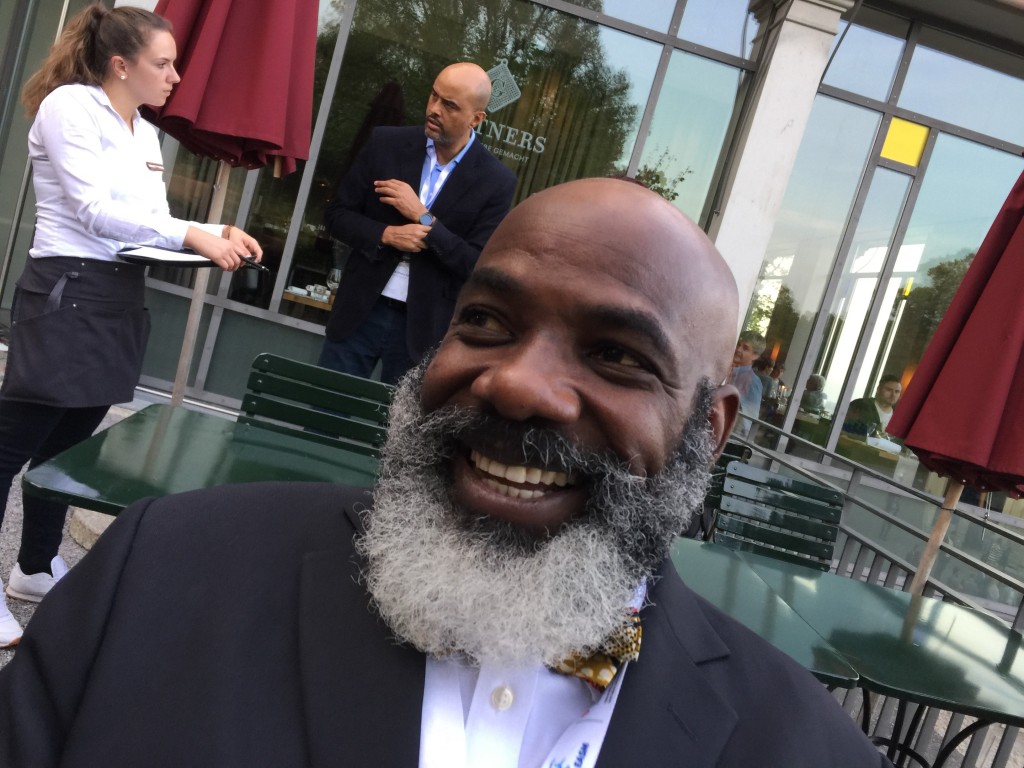
Picture of Bob smiling.

Introduction

The European Association for Sports Management IEASM) annual conference (https://www.easm2017.com/) is the gathering of the great and the good in European sports administration, academia and beyond. Current and former athletes; sport administrators; sport governing bodies; international sport federations; students, the academia, sports equipment manufacturers, non-sport related professionals such as economists, accountants, bankers, etc were all brought together for the 25th edition of EASM. The first 5 days called ‘Students Seminar’ were dedicated to Masters (49 students) and PhD students (19) from all over the world (I met people from Australia, Brazil, Morocco, New Zealand and South Africa) while the remaining 4 days were dedicated to the Association’s business.

Student Seminar – Maggligen, Switzerland

This part of the conference started on 1st September 2017 at the prestigious Swiss Federal Institute of Sport in Magglingen, Biel, Switzerland. The Institute is situated 2,000 metres above sea level in the Jura Mountains accessible by either walking (1 hour – longer going up); driving or by cable car (funicular). The first evening started quietly with students getting to know each other; the impressive facilities at the Institute, the staff, and of course the bar! It was immediately obvious that representatives from British universities would be in the minority (1 representative each from Bournemouth University and Birkbeck, University of London). The Dutch were in the majority followed by the Germans; Belgians, Finns and Swedes. The rest of the weekend was spent preparing group presentations on why particular sports should remain in the Olympic programme for the 2020 and 2022 summer and winter games. In between these preparations and presentations, we made a road trip to the International Olympic Committee (IOC) in Lausanne with stop-overs at the Olympic Museum, Stade Pierre de Coubertin and Mason du Sport International (home of International federations). The highlights of the trip to Lausanne were the presentation by C. Dubi (Executive Director, Olympic Games); P. Fratter-Bardy (Head of summer sports) and N. Puig (Head, External Relations). Representatives of World Archery and International Bob and Skeleton Federation (IBSF) delivered other International Federation (IF) specific presentations. I presented a paper titled: “why Swimming should remain in the 2018 and 2020 Summer and Winter Olympics” together with Michelle Van Grefen, Peter Schreuder and Felix Schimanko

EASM Conference – Bern, Switzerland

The conference started with the well attended opening ceremony, keynotes speeches and get-together on Tuesday, 5 September 2017 at the impressive University of Bern auditorium and conference centre. It continued the next day at the same venue with more keynote speeches and parallel break-out sessions. The parallel nature of the presentations made it a difficult task to choose which to attend as all the sessions were relevant. However, for the first day, I choose the Sport Governance and Policy session with specific focus on the persistent failure of interventions to increase national sport participation levels, with England as the case study. The paper was delivered by Mike Weed of Canterbury Christ Church University, United Kingdom. It was very enlightening especially as the topic was a recurring theme in our discussions here at Birkbeck.

The second day highlight for me was the Sport Facility Management session with specific focus on Venue Legacy of the 2018 Pyeongchang Winter Olympics.  This was delivered by Se Hee Choi of the Korea University, Republic of South Korea.  This was immediately followed by the EASM General Assembly where the new president of the Association was elected (Mr. Vassil Girginov of Brunel University). There were several relevant presentations on the third and final day but the highlight for most people, especially the students, was the workshop on ‘Swissness’ and the closing banquet which took place in the town of Gurten high up in the mountains. It took a 15 minutes ride in the cable car to get to the top of the mountain with impressive facilities.

It was a high value event especially for first timers with lots of intellectual, cultural, social and professional networking opportunities.  The 26th EASM will be hosted in 2018 by the city of Malmo in Sweden. The plea from the Swedish organizers is that more British representatives especially from Birkbeck will be appreciated. It is my candid opinion that Birkbeck students will benefit from this event especially as Brexit looms. The Students Union, Birkbeck Sport Business Society (BSBS) and the University authorities will do well to work out a funding regime to finance students’ participation just like the Dutch, Germans, Swedes and Belgians did.

Final note: My birthday was on 7th September, a day before the end of the conference. The students; tutors, delegates and organizers made it a memorable one for me despite their very tight schedule. I am grateful.

Sport Management at Birkbeck: Innovative perspective on the sport industry

Natalie Gedra at a sports stadium.

Over the past 30 years, there has been significant growth in the number of sports management programs offered by Higher Education institutions, from undergraduate level courses to MBAs with a focus on sport business. These courses aspire to provide students passionate about sport with the experience, management and leadership skills required for career success in this expanding and varied sector.

As a respected academic research centre, the Birkbeck Sport Business Centre in the Birkbeck Department of Management, offers a range of programmes to help students delve deeper into the business management, marketing and governance of the sports’ industry. Natalie Gedra, who was awarded a prestigious Santander Scholarship in 2016/17, recently featured in a short video outlining her positive experience of the Birkbeck Sport Business Centre, where she studied an MSc in Sport Management:

Before coming to Birkbeck, Natalie obtained a BA in Journalism and worked for 6 years as a sports reporter in Brazil, most recently with GloboTV. When she chose the Master’s programme in Sport Management, she hoped to pursue a role in the third sector related to sport. She says that studying sport management at Birkbeck has allowed her to step back from her industry position to view and assess the organisation, structure and behaviour of the sport industry from a broader, more detached perspective. These insights have enhanced her overall understanding of the sector:

“I’m already seeing a professional benefit from my Master’s; I already see sports in a different way.”

To find out more about the academic postgraduate programmes in Sport Business and Sport Management, please visit the Birkbeck website.

To keep up to date with Natalie’s sport journalism, you can also follow her on Twitter.