Tag Archives: Law

Opening doors to the legal profession: meet Birkbeck’s newest Bar scholars 

This year, several Birkbeck Law School students have been awarded prestigious scholarships to support their journey towards becoming barristers. These scholarships, awarded by the Inns of Court, help aspiring barristers undertake the vocational training required before they can practice at the Bar. For many students, receiving a scholarship is not only valuable financial support but also recognition of their hard work, commitment and potential. We spoke to this year’s recipients about their route into law, what the award means to them, and their hopes for the future 

André Buller 
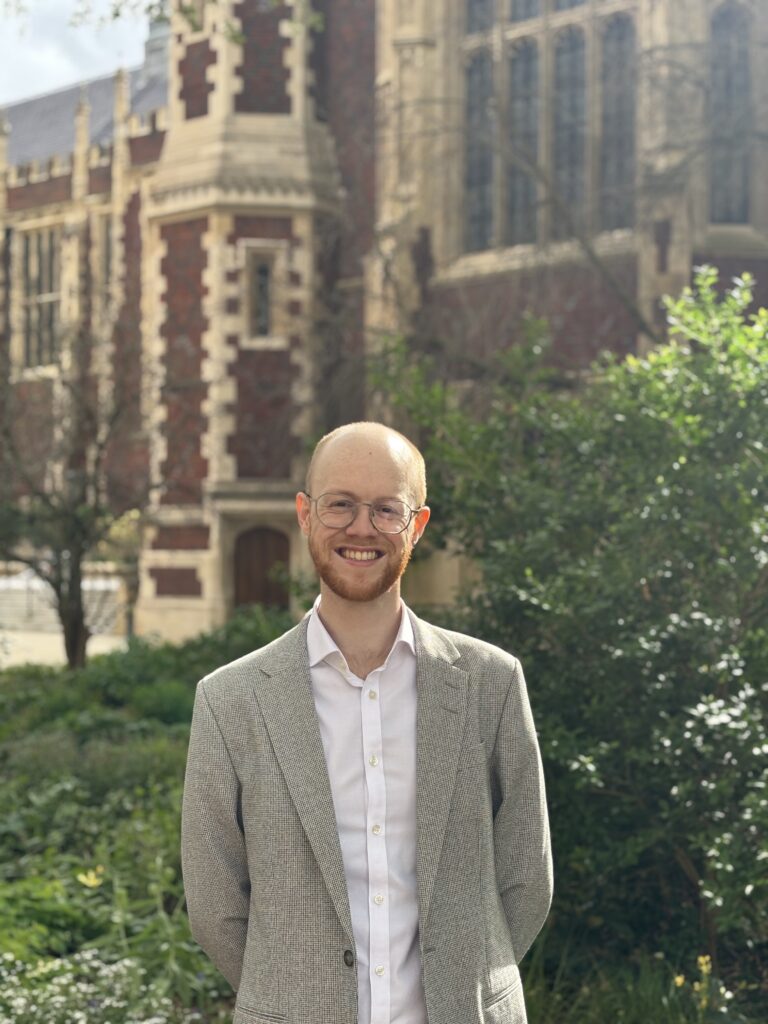
Scholarship: Lord Denning Scholarship and Daniel Lett Scholarship 

Congratulations on receiving your scholarship. How did you feel when you found out you’d been successful? 

I was honestly very surprised. The application process includes an intense interview with a panel of practising barristers who are very poker-faced, so I had no idea how well I’d done. Getting notification of my success blew me away (and I was in the library, so had to try to respond calmly)! After the initial surprise, I mostly felt really encouraged. It meant that a panel of impartial experts all believed I was worth investing in for this exciting journey. 

What first inspired you to study law? 

Personal circumstances led to real engagement with law from a young age, which I found incredibly fascinating. My first proper inspiration to pursue law began later through my work. As a copyright specialist for a major academic publisher, I negotiate, draft and advise on contracts and complicated intellectual property rules. It was this exposure to legal processes and language that captivated me. 

What area of law have you been most interested to learn about during your studies at Birkbeck and why? 

I have a real fascination with intellectual property (IP) law. My prior academic background in literature focused on critical theory and narratology, which engages quite heavily with the abstract. As IP law aims to provide protection and rights around intangible property, much of the complex methods of its construction and application reflect these literary concepts. 

The opportunity to study this, and to explore beyond my professional familiarity with copyright into patents and trade marks, was really exciting. 

Many Birkbeck students balance study with work, family or other commitments. How have you managed your own journey? 

I decided to study the GDL full-time because I was eager to prioritise the conversion and devote most of my attention to learning the law. I was fortunate enough to receive scholarship funding and to be able to keep working throughout my course. 

By scheduling all my classes for the evening, there was minimal impact on work, though I did reduce my hours to balance my workload and extra-curricular commitments. It can be intense, but it’s very rewarding, and much easier when you can study in hours outside the ordinary 9–5 schedule. 

What advice would you give to someone considering studying law or pursuing a career at the Bar, especially if they are coming to it through a non-traditional route? 

Go for it! The law is incredibly interesting, engaging and widely applicable. I would definitely advise someone to take advantage of, and emphasise, any non-traditional route. The Bar responds positively to those who can demonstrate experience and a background outside a direct academic path, and some of the best skills for a barrister’s day-to-day life are developed in non-traditional areas: timekeeping, balancing multiple workloads and adaptable thinking, for example. 

Finally, especially at Birkbeck, I recommend connecting with your fellow students. Most of my peers are also coming to law from varied backgrounds, and their wisdom and support are equally encouraging and essential. Good luck! 

Daniel Cloney 
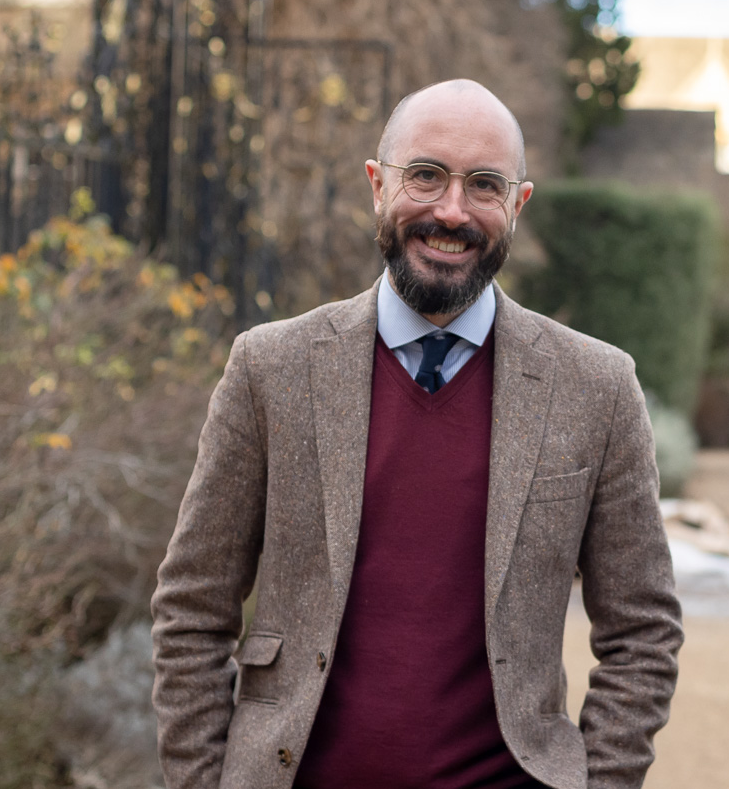
Scholarship: Cassel Scholarship (Bar Course), The Honourable Society of Lincoln’s Inn 

How did you feel when you found out you’d been successful? 

Honestly: huge relief, for a few reasons. On the one hand, the Inn’s financial support was fundamental to my ability to take the GDL in the first place, and the Bar Course would not have been feasible without it. But beyond that, the vote of confidence from the profession makes a huge difference. 

What first inspired you to study law? 

I came to the study of law late, aged 35, when I took a master’s degree in International Human Rights Law. It was then that my academic interest in law more broadly blossomed, and I realised I wanted to make it the centre of my career. The choice to do a GDL was an easy one after that. 

What area of law have you been most interested to learn about during your studies at Birkbeck and why? 

Given my background, I already had a fairly good handle on aspects of public and human rights law. So, what I really enjoyed at Birkbeck was the ability to deepen my engagement with criminal law and aspects of private law, especially contract and company law. They provided refreshing new puzzles to consider, and fascinating insights into the historical development of law in England and Wales. 

Many Birkbeck students balance study with work, family or other commitments. How have you managed your own journey? 

I couldn’t give up work completely, so I switched to 0.5 FTE, which was just about feasible alongside full-time study. That allowed me time during the afternoons to study and to take my classes in the evenings. I also really enjoyed attending classes in person, which helped me to make some good friends here. 

What advice would you give to someone considering studying law or pursuing a career at the Bar, especially if they are coming to it through a non-traditional route? 

On the one hand, you have to put your ego to one side and be patient. It’s a very competitive profession with a tight bottleneck at the entry point. At the same time, it’s a hugely supportive community. There is a wealth of help and advice on offer, whether from Birkbeck, the Inns of Court, certain sets of chambers or individual barristers. It’s vital to take advantage of that: it will be there for you when the process gets tough. 

Alfie Hansen

Scholarship: BPP Bridge Programme Scholarship 

How did you feel when you found out you were successful? 

I was lost for words. It’s quite literally life-changing. I work and want a career in the human rights and charity sector, but due to the area’s limited training opportunities and an inability to privately fund the SQE, I’d been emotionally preparing to pivot into a corporate firm just to get qualified. Now I’ll be able to keep working in the sector I’m passionate about, helping vulnerable people, with half of my qualification funded. 

What first inspired you to study law? 

I don’t come from a privileged background and have witnessed a lot of injustice in my life. One particular example occurred during the Covid pandemic. I spearheaded a union action against a coffee chain about unsafe business practices that put workers’ and public health at risk for corporate profits. 

I wrote a petition that received 40,000 signatures, was interviewed on BBC Radio and in the Financial Times, which led to several meetings with corporate executives. Despite this, once the coverage faded, so did the executives’ sincerity and any prospect of change. This exploitation of power resonated with me for a long time and directly informed my decision to study law. For me, it was a decision to equip myself with the tools to help others in a similar position and be the difference that makes real change. 

What area of law have you been most interested to learn about during your studies at Birkbeck and why? 

I’ve really taken to modules with a critical approach to law, particularly State Crime, Housing Justice, and Law, History and Political Violence. What really struck me is just how much philosophical and sociological perspectives are implicitly embedded in the law. This has helped me understand the true structure of the law and how it embeds itself into every aspect of our social lives. 

How have you managed multiple commitments? 

I won’t pretend it hasn’t been difficult. I’ve been studying full-time, working part-time, volunteering to get legal experience, taking on side projects to make my CV stand out and trying to have a personal life at the same time. 

I found planning and prioritising helped the most. When studying multiple modules, I’d break down my weeks, dedicating several days at a time to solely studying one module. Mapping out assessment deadlines was also a must. Knowing when I had to begin work on essays and exams meant I never felt I handed in work I was unhappy with or felt underprepared for. 

What advice would you give to someone considering studying law, especially from a non-traditional route? 

The idea of “traditional” is just a ceiling put on your potential by someone who doesn’t know you. Forget what they think and give it 110 per cent! I was lucky enough to benefit from having a big support network, which was really important when things got tough. So I’d also say to leave your ego at the door if you want to succeed and don’t be afraid to ask for help, whether that’s asking someone to check over your essay or simply having a shoulder to cry on. 

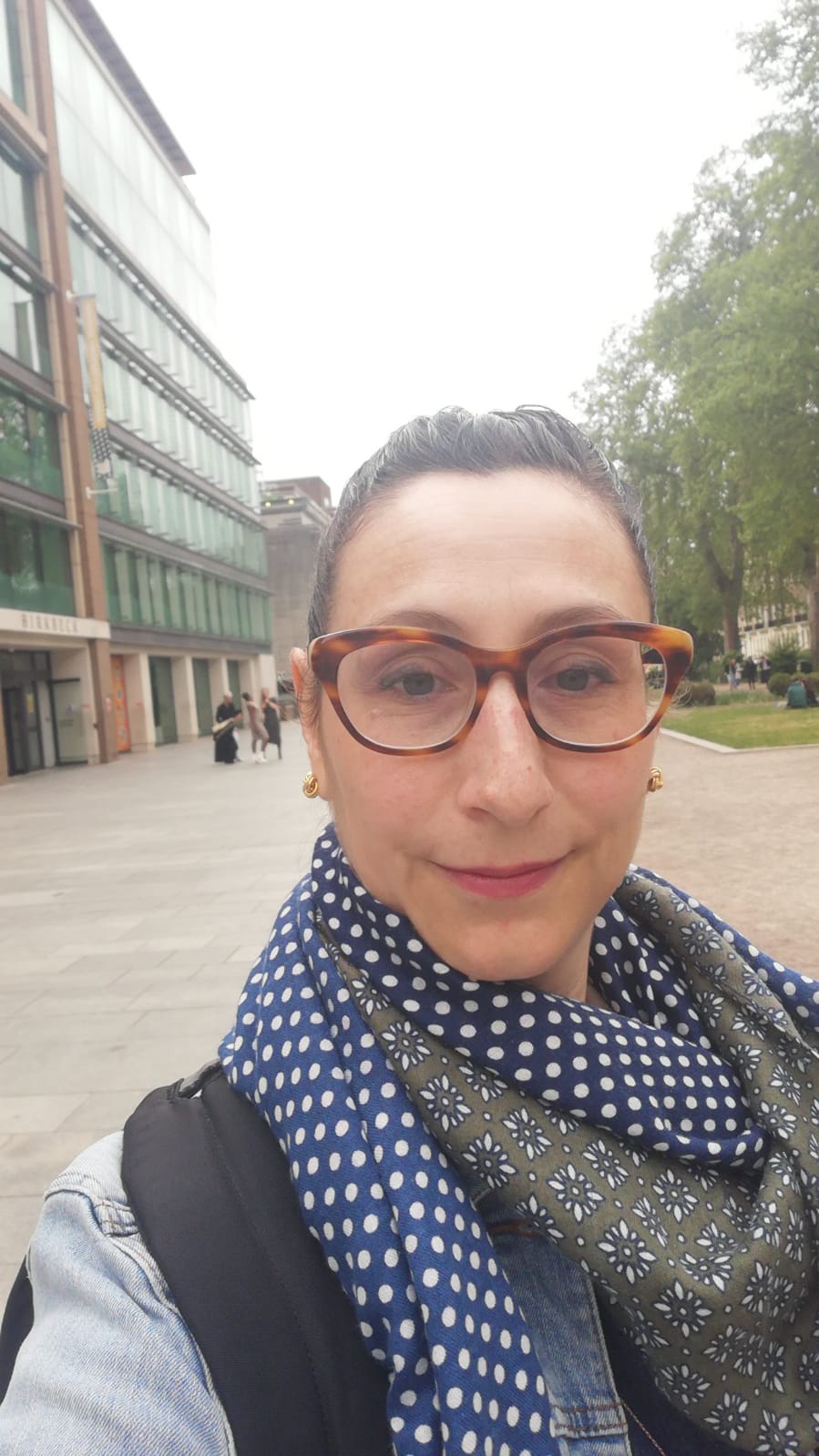
Chloe Hennigar
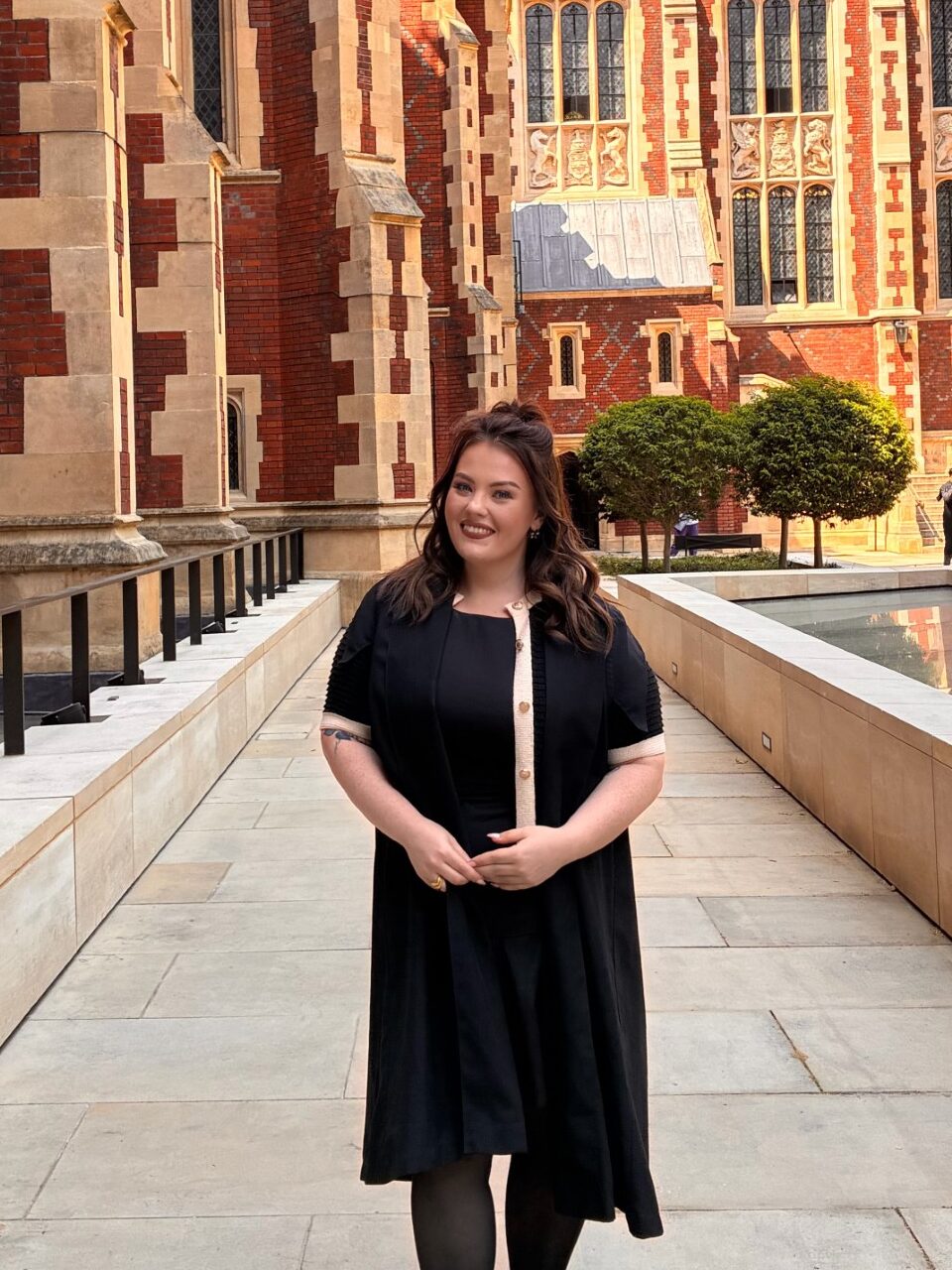
Scholarship: Helen Grindrod Social Mobility Prize from Lincoln’s Inn 

How did you feel when you found out you’d been successful? 

I was delighted. The prize gives me the opportunity to attend a summer school hosted at Lincoln’s Inn, where we’ll develop our advocacy and case analysis skills and also have the opportunity to undertake a mini-pupillage. It also provides invaluable opportunities to meet and learn from barristers, making it a really significant step towards my goal of becoming a barrister. It feels both like recognition of the work I’ve put in so far, and also opens opportunities to gain practical experience, build my network and continue developing as an aspiring advocate. 

What first inspired you to study law? 

Growing up in a relatively disadvantaged area, I saw first-hand how much difference access to knowledge, resources and representation can make. I became increasingly aware that people often struggle not because they lack ability or determination, but because they don’t know where to turn or don’t have access to the right support. That has motivated me to pursue a career where I could help people navigate those challenges. Law appealed to me because it combines intellectual challenge with the opportunity to make a meaningful difference in people’s lives. 

What area of law have you been most interested to learn about during your studies at Birkbeck and why? 

I’m most excited to study criminal law, as I’m drawn to its complexity and the way it balances protecting individual rights with serving the public interest. I’m also really looking forward to studying banking and finance law and immigration law, as I’m interested in the wider economic and international dimensions of legal practice. 

Many Birkbeck students balance study with work, family or other commitments. How have you managed your own journey? 

I’ve found that being organised and prioritising my commitments allows me to perform well academically while also making the most of the opportunities available to me.  

Alongside my studies, I work at Birkbeck and I’m actively involved in a number of extracurricular activities, including the Birkbeck Law Review, the Birkbeck Law Forum, which I founded, BIUCAC and other initiatives. These commitments are important to me because they allow me to contribute to the student community while developing skills that will support my future career. At the same time, I make a conscious effort to maintain a healthy balance by making time for friends and family. 

What advice would you give to someone considering studying law or pursuing a career at the Bar, especially if they are coming from a non-traditional route? 

There isn’t one ‘right’ pathway into the profession, and the experiences you bring with you can become one of your greatest strengths. I’d also encourage people to be proactive. Attend networking events, apply for opportunities even if you don’t think you’ll get them, and don’t be afraid to ask questions. Every application, conversation, and experience helps you build confidence and develop your understanding of the profession. Finally, remember that it’s a marathon rather than a sprint. Progress doesn’t have to happen all at once, and consistency will take you much further than comparing yourself to other people. 

Samuel James Barley 

Scholarship: Lowry Calvert Scholarship from Middle Temple 

How did you feel when you found out you’d been successful? 

I was at work when the email came through, and I had to take a moment out to just sit in the feeling. I recall a warmth spreading through me as I thought, “You know what, I could actually do this.” Ultimately, it was the feeling of being positively viewed by practising barristers that mattered to me most. 

It’s been such a busy year that I’m not sure I’ve celebrated it properly or let it sink in just yet! There’s still a long way to go, but it really is such a confidence boost at this stage, and I’m determined to keep going. 

What first inspired you to study law? 

I’d actually fallen for law during my original undergraduate degree, albeit it’s taken me about a decade to get around to pursuing it again. I’d been put in a module on “Legal Cultures in Late Antiquity” in my third year and ended up doing a master’s degree on the same theme. I’ve worked in criminal justice since leaving my studies, so coming back to complete a GDL was always a possibility. Last summer, I took the leap and applied. 

What area of law have you been most interested to learn about during your studies at Birkbeck and why? 

I was surprised by just how much I enjoyed Equity & Trusts. There can be a tendency from people outside the legal world to think of law as this rigid and soulless set of rules to be applied, which simply isn’t accurate. The Common Law is continually growing and shifting, and my class quickly identified which judges we enjoyed reading most. In Equity, that movement is even more obvious, and the near-obsession with fairness over procedure is something I hope to take with me into my career. 

Many Birkbeck students balance study with work, family or other commitments. How have you managed your own journey? 

I’ve balanced studying full-time with working full-time this year, and if I could easily explain how I’d managed that, I would. Ultimately, organisation and commitment are key. I’ve studied tired, on my commute, on holiday, in groups and on my own. There’s been impeccable support from my partner, ensuring that I look after myself and eat enough vegetables, and a fantastic group of people in classes to talk issues through with. Birkbeck’s format has been really useful for managing my time too. Knowing that my classes are in the evening, or online if need be, and that I can watch and rewatch lectures as and when allows me to be flexible. It’s been a hectic year but an enjoyable one. 

What advice would you give to someone considering studying law or pursuing a career at the Bar, especially if they are coming from a non-traditional route? 

Know why you want to do it. You’ll read online and in books about how competitive it is and that the odds are against you, which is all true. That doesn’t mean you shouldn’t do it, though; it means you have to really want it to try. This year has taught me just how much I want this.  

Take all the opportunities you can to get experience, whether that be mini-pupillages or marshalling, and definitely participate in mooting. I was fortunate enough to compete at the Jessup International Law Moot and the Birkbeck Law Forum Mooting Competition this year, and I’ve received some incredible feedback to bolster pupillage applications in the future. There’s plenty of challenges still ahead for me, but knowing how much I’ve enjoyed this year fuels my ambition to continue. 

Aravindi Rubasinghe

Scholarship: Dame Juliet Wheldon Scholarship 

How did you feel when you found out you’d been successful? 

Complete shock and disbelief. I wasn’t sure how my interview went. I’d spent a lot of time ruminating on what I could have done better, so I hadn’t given myself any credit for what I’d probably done well (great life lesson, I think!). I’d kept my expectations intentionally low because of this. When I got that email, I genuinely had to read it multiple times. I took a big leap of faith in choosing to pursue the Bar, and this encouragement from the Inn means a great deal. Above all, I feel incredibly grateful to the Inn and blessed to have their support. 

What first inspired you to study law? 

Before deciding to pursue law, I had another career:  studied medicine and currently work as a doctor while completing my postgraduate law conversion. Law has always been something I found myself drawn to, even during medical school. Once I began practising medicine, although I enjoyed the work, I became increasingly aware of how deeply the law shapes healthcare and provides the framework within which so many professions and systems operate. That only strengthened my interest. Over the past few years, I’ve also grown personally and gained a much clearer understanding of the kind of career I want for my life. 

What area of law have you been most interested to learn about during your studies at Birkbeck and why? 

I’m particularly interested in public law, so I was especially looking forward to studying constitutional and administrative law. I find the way public bodies make decisions that directly affect individuals compelling and deeply important. I’ve been able to witness this within medicine, where wider systemic decisions impact the care we deliver day to day. 

That said, one of the biggest surprises has been how much I’ve enjoyed modules I wasn’t initially drawn to. One of the best parts of my first year at Birkbeck has been being exposed to such a wide range of legal disciplines and discovering something interesting in all of them. It’s made me even more excited to explore new areas of law in the coming year. 

Many Birkbeck students balance study with work, family or other commitments. How have you managed your own journey? 

I currently work full-time as a doctor while undertaking my Master’s, and continuing to work has been essential as I self-funded the first year of my degree. That’s why I’m so grateful for the opportunity Birkbeck offers to fit education around the realities of everyday life. I genuinely don’t think I would have been able to pursue law at this stage in my career without that flexibility. 

I’m also continually inspired by my classmates, who come from all walks of life, bringing with them a wide range of experiences and perspectives. Balancing study alongside work, family and other commitments means that everyone has made a conscious decision to be there, and that creates a learning environment where people are genuinely engaged and motivated. That’s been one of the most rewarding parts of my experience so far. 

What advice would you give to someone considering studying law or pursuing a career at the Bar, especially if they are coming from a non-traditional route? 

I’m very early in my journey towards the Bar, so I tread carefully! However, I do know a thing or two about scary decisions. When I first started thinking seriously about pursuing law, it felt overwhelming knowing I had devoted many years to another profession. My advice would be to listen to your intuition (it’s telling you something for a reason!) and then really critically think to find your why.  

I would say don’t ever think it’s too late. There are so many things in this world to learn, and if something has made you stop and think, “I could do that”, and you have the opportunity to pursue it, don’t let the critical voices inside your head or the voices of what others might say stop you. 

More Information

The future faces of law: a closer look at two rising legal scholars

Meet the Birkbeck law students in receipt of prestigious scholarships to aid them in their journey to becoming barristers.  

Law students hoping to become barristers must undertake the Bar Professional Training Course, which serves as the vocational stage of training required for entry to the Bar of England and Wales. Upon successful completion of their course, graduates are eligible to be called to the Bar and embark on their careers as barristers.

This year, two students from Birkbeck’s Law School have been awarded prestigious scholarships towards their Bar courses by the Honourable Society of the Inner Temple, one of the four renowned Inns of Court. Membership in one of these Inns is a prerequisite for individuals aspiring to be called to the Bar and pursue a career as a barrister in England and Wales. 

Viran Solanki, studying LLB Law at Birkbeck, and recipient of Middle Temple’s Jerry Parthab Singh Scholarship to help fund his Bar Course. 

What attracted you to studying law?

I have worked in various roles within the court service since 2018, initially at a County Court and currently at the First-tier Tribunal (Immigration & Asylum Chamber). Witnessing first hand on a day-to-day basis the way in which barristers used their specialist knowledge to make a real difference in an individual or family’s lives motivated me to pursue a career in law.

Why did you choose to study Law at Birkbeck?

The flexible studying options really appealed. Studying here allowed me to work full-time while studying across four years in the evenings. 

With the flexibility afforded to you through your studies, how do you spend your days? My full time is as a Legal Officer in the First-tier Tribunal (Immigration & Asylum Officer). This involves working to delegated judicial functions to effectively case manage immigration appeals, identifying and resolving barriers to case progression. I’ve also found that I’ve been applying legal research skills learnt at Birkbeck to real world scenarios to communicate complex procedural matters in a simple way. I have also presided in several Case Management Appointment hearings, with the goal of effectively narrowing issues in dispute and ensuring compliance prior to a substantive appeal hearing. 

What’s been your favourite thing about your academic journey so far?  

The opportunity to meet new people from all kinds of backgrounds and careers has been wonderful. I definitely would not have achieved much throughout the last few years without the support of colleagues and tutors!

What are your plans for the future?

Results permitting, I plan on studying the Bar Course at the Inns of Court College of Advocacy from September 2024, following which the plan is to find pupillage and qualify as a barrister specialising in immigration law!

How do you think law can make a difference in the world?

People generally interact with the face of the law when they are in need and often at a low point in their life, be it after an arrest or as a victim of crime, a particularly bitter family dispute or in an immigration context as they flee persecution in their home country. Law makes a difference for these people by ensuring that they are able to have the fairest assessment of their dispute or issue. I hope that by developing skills grounded in my studies at Birkbeck, I will be able to contribute to assisting those that are in need.

What does the scholarship mean to you?

The scholarship means a lot! Of course, the financial assistance towards the paying of fees for the Bar Course is greatly appreciated, but also coming through a difficult application and interview process has in a sense validated the long nights at the library and studies leading up to this point. Being awarded the scholarship has reiterated the sense that the path towards becoming a barrister is the right one for me, and has motivated me to continue to strive towards this goal.  

Jack Soares Mullen, studying the Graduate Diploma in Law at Birkbeck and recipient of Middle Temple’s Harmsworth scholarship which will fully cover his Bar Course. 

What attracted you to studying law?

I worked as a teacher for three years and then, two years ago, changed careers and joined the civil service. In my current role I work for the Judicial Office and work closely with a number of judges which has exposed me to the workings of the justice system, and this sparked an interest in becoming a barrister. 

Why did you choose to study Law at Birkbeck? 

I wanted to be able to continue working in my current role and, with classes held in the evening, Birkbeck provided the perfect opportunity to study alongside my work commitments.

With your classes taking place in the evenings, how do you spend your days?

I’ve continued to work full-time alongside studying full time this year which takes up most of time. Even so, I have managed to complete two mini pupillages and marshalled some judges this academic year. A highlight was marshalling two high court judges at Bristol Crown Court, observing two complex murder trials.

What’s been your favourite thing about your academic journey so far?

I loved representing the university at the Michael Corkery Criminal Law Moot. I was sure I wanted to become a criminal barrister once I took the course, and getting to test my advocacy skills alongside my fantastic mooting partner, Emma, was great fun and a real adrenaline rush. I can’t recommend to other students the value of taking up mooting opportunities – particularly if they are looking to get a pupillage at the bar.

What are your plans for the future?

I was fortunate enough to receive a scholarship for my GDL (law conversion course) from Middle Temple and then another scholarship to study the bar course, which I will begin in September this year. I’ve also managed to secure a pupillage at a well-respected criminal chambers, 2 Hare Court, for September 2025 so, if all goes well, I will begin my career at the bar there then.

How do you hope to make a difference in the world?

I hope that becoming a criminal barrister will give me the opportunity to make a difference in people’s lives. Whether someone is a complainant, defendant or witness, when someone encounters the criminal justice system it is likely to be a stressful moment, and for some, a very difficult moment of their lives. Being able to guide people through the process and present their position to the court is a valuable and exciting thing to do. Perhaps unlike other areas of law, crime will always have people at the centre no matter how serious the offence. Therefore, even at the earliest stages in my career, every day in court will matter to somebody and make a real difference in their world. 

What does the scholarship mean to you?

The scholarship is invaluable to me, because the journey to the bar can be an expensive one. Securing scholarships for both the GDL and bar course has meant I haven’t taken on any debt and removed that barrier. Scholarships from the inns are also a useful stamp of approval for any aspiring barrister when applying for pupillage. They show that at least one panel of barristers and judges believes that you are capable of a career at the bar. Knowing this has given me some confidence that I’ve chosen the right path, particularly given how competitive it is to get pupillage and tenancy. 

More information: 


Why I love teaching on Birkbeck’s Get Started Law taster course

Dr Susy Menis, Lecturer in Birkbeck’s Law School, teaches a Get Started Law Taster course, which aims to give people without experience of studying at a UK university an opportunity to try out a university level course. In this blog, she shares her approach to teaching, what she wants learners to achieve, and why she enjoys teaching the course so much.

Dr Susy Menis outside Birkbeck’s Malet Street building

What is the Get Starter taster course, and who is it for?
This is a freebie short course run by Birkbeck once a term. Currently, it offers tasters in law, criminology, and computer science. This initiative is targeted to welcome those who may feel excluded from taking a step into higher education.

How did I get into the delivery of the Law taster?
I had set up an artwork exhibition at Stratford Public Library with the help of the Access and Engagement team; then, the Coronavirus hit us. Subsequently, I could not turn down their plea to deliver free online content to a target audience. The first Law taster occurred in June 2020 on Collaborate; I was told it sold out.

Online delivery so early in the pandemic wave, panic?
No. During my PhD studies, I taught and designed content for Kaplan Open Learning on behalf of Essex University Online. I was also an associated lecturer at the Open University remote LLB programme, and in 2017/18, I created a blended-learning option module for the Birkbeck LLB. Still, I needed content, and I knew that a ‘transfer’ of in-person learning materials into an online context is not what relevant pedagogy advises. Hence, I felt under pressure.

So, how did I approach this?
I reminded myself of the two principles I had followed in my teaching and that I applied the Certificate HE Legal Studies (I re-designed it from scratch in 2018 as its new programme director): 1. less is more, and 2. active learning. These need to be matched with the right level of delivery, and the first taster’s cohort set the threshold: Union members and Reps between 30+ to 50+ years of age (now we have younger students, too) and a majority of up to level 3 formal qualifications (few on 5 and 6). Subsequently, I added another principle: 3. recognise adult learners’ prior knowledge.

My taster is delivered yearly on Teams across four weeks, and now I alternate between two different contents. Last year, the taster was about ‘The curious case of the “flick knife”’ and concerns legal reasoning. This year’s topic was ‘Common law and legislation in practice: the case of theft’, and it looks at the interplay between legislation and judicial precedent.

What do I want learners to achieve?
The overarching learning outcome I want the students to achieve is a ‘transformative learning’ experience. ‘Transformative’ could range from the emotional sense of and practical achievement of attending a course, contributing to class discussion, and being heard to learning something new and the cognitive satisfaction of its application in context.

Learning is scaffolded and focuses on bit size depth of knowledge, emphasizing critical thinking and application. Each week’s learning builds on a short, recorded lecture. The live sessions are teacher-led, but the students bring the knowledge we work with. To this end, I avoid ‘lecturing’; I ask open questions, we reflect, and concepts are illustrated through students’ application to scenarios.

My final thoughts
Recent pedagogical scholarship recognises the significance of the teacher’s social presence and learners’ motivation in online learning, and this taster allowed me to reflect on the grounding of my practice. My main conclusion is that this has been a transformative experience for me too, not least because I was struck by the dynamic collaboration between the students and me and how much they said they got out of it. I am looking forward to the next cohort 2024/25!

Here’s some recent feedback from attendees of the course:

“Reflective skills for sure, reasoning skills, reading complex information!! Really, I enjoy very much all of the sessions!!”

“Miss Susy, and to the whole management team thanks a ton for putting together this awesome law taster. It was truly memorable & I won’t forget it anytime soon. Your efforts made it extra special, I really appreciate it”

“The Law Taster journey has been an absolute bliss with you” 

“Absolutely adored today’s session. Thank you so much for making it so interactive”

“I like the cases and the incisive way Susy teases out the legal logic and principles to make us understand more simply”

Further information

Meet the Chevening Scholar: Michail Le Roux, from South Africa

An esteemed attorney of the High Court of South Africa, Michail Le Roux joined Birkbeck to study LLM Law and New Technologies to help with his 10-year career plan. Here we get to know more about his background, his experience as a Chevening Scholar and Birkbeck student, and his hopes for the future 

A path that led to Birkbeck 

I’m proud to be an attorney at the High Court of South Africa. I’ve dedicated over seven years of my life to the captivating world of Blockchain & Digital Assets, and it’s been quite a journey, advising on numerous complex cross-border transactions that involve cutting-edge technologies, all in largely unregulated markets. My driving force? An unwavering commitment to professional growth. 

Some time ago, I came up with a ten-year plan, leading me to pursue the prestigious LLM Law and New Technologies master’s course at Birkbeck. I carefully chose this course because it perfectly complements my existing expertise and awards me a formal qualification, making me even more equipped to provide exceptional legal counsel to clients across various domains. 


A course that stands out 

What truly distinguishes this Master’s program is its deliberate focus on empowering legal professionals like me, who are actively navigating the challenges of unregulated markets while having a profound understanding of the legal frameworks shaping the future. I’m a staunch advocate for fellow tech-driven professionals from the Fourth Industrial Revolution to seize this transformative course and enrich their knowledge. 

Now that I’ve successfully completed the program, I’ve got ambitious plans to spearhead two Blockchain projects in the Sub-Saharan African region. The future is looking bright! 

The Chevening Experience 

The Chevening experience is truly unparalleled. Undoubtedly, it stands as the most competitive international scholarship award; honouring professionals amidst the 65,000 applicants and yielding a 3% success rate. It also offers those granted scholarship the opportunity to meet future world leaders and nurture an invaluable network, irrespective of your industry. 

Although I was selected on my first application, I would strongly advise prospective applicants to persevere and apply as many times as necessary. The application process demands rigor, requiring prior work and high achievements to stand out. Nevertheless, this journey embodies the essence of a future leader, and the sacrifices made will undoubtedly reap rewarding outcomes. 

Another thing I came to realise is that the key to an exceptional Chevening experience lies in actively taking part in all network events. Seize every opportunity to connect with as many individuals as possible and share your aspirations. These connections will pave the way for future collaborations with colleagues, investors, partners, and officials. My highlight was immersing myself in all the opportunities that being a Chevening scholar offered in the vibrant heart of London. It’s an experience I cherish deeply.  

My Birkbeck Experience 

The exceptional quality of the lecturers truly set my experience apart. Throughout my Master’s course, I had the privilege of learning from thought leaders who held esteemed positions within the industry. It was an inspiring journey of intellectual growth. 

For anyone contemplating an application to Birkbeck, here’s my advice: ensure a deep understanding of why your chosen course aligns perfectly with your goals. In other words, be intentional and highly selective when making your course choice. It’ll greatly enhance your overall learning journey. 

In conclusion, it’s been a remarkable adventure, and I eagerly anticipate the chapters yet to be written in my future endeavors! 

FURTHER INFORMATION 


Law, pandemic and crisis

Professor Adam Gearey is a Professor of Law at Birkbeck’s Department of Law. In this blog, Professor Gearey previews Law on Trial, the School of Law’s annual week of free, public events around a particular theme, which this year is ‘Law, Pandemic and Crisis’.

A surgical mask on some grass next to some daisies

Photo by Niamh Gearey

The correct response to the ongoing Covid crisis should be: “enough, this won’t do anymore.” In putting law on trial, this series of workshops seeks to put the whole viral/ military/ technical/ capitalist/inhuman/ racist complex on trial.

Legal thinking needs to catch up with the crisis. This is not a re-tread of the self-satisfied cosmopolitanism of the 90s, or a false choice between identity politics and the politics of anti-capitalism. It is a less-deceived, pessimistic and realistic engagement with the depth of the crisis and the possibilities of transformation: a framing of new paradigms of legitimacy and new ways of thinking. The Black Lives Matter Movement, global concerns with racist policing, climate protest and insurrection in Colombia draw attention to different aspects of this international problem. A morally bankrupt order hangs on through power and promises of bread and circus.

The global health crisis, and the fixation on technical solutions, an obsession that clearly extends beyond health care, also starkly shows that ‘market solutions’ are anything but. Like Leonard Nimoy’s character in the film Assault on the Wayne, we are being fed pills by a bogus doctor that, instead of making us better, makes us much worse.

If we are stuck with markets, then they need to be extensively regulated. Markets should serve social ends, rather than the interests of an ‘elite’ whose wealth insulates them from the effects of the markets they recommend as the only possible form of social and economic organisation. At the very least we need to approach markets with an understanding of how their immanent and radical dysfunctions can be controlled in the interests of the common good.

So, although the global epidemic should provoke a massive realignment of how we do things, it’s unlikely that the new normal will be much different from the ongoing crises of the old normal. We will be stuck with fragile constitutions, dysfunctional markets, populist politics and ongoing social and environmental crises.

Thus, to put the law on trial is to ask, how can we see the big picture? How can we be the less deceived?

Further information 

Taking on the challenges of the pandemic to embrace a world of opportunities in London

Flexibility and daytime freedom are what led Oghenemine Djebah to choose Birkbeck to study an MA/LLM Criminal Law and Criminal Justice. In this blog, the Nigerian student shares his journey so far with us.    

Oghenemine Djebah

Oghenemine Djebah

After obtaining an LLB from the Delta State University, Oghenemine Djebah enrolled at the Nigerian Law School, where he graduated with a Bachelor of Laws and was subsequently called to the Nigerian bar. Since then, he has been in active legal practice in Nigeria.

He worked for two notable law firms (Rotimi Jacobs & Co. and Zatts Law Chambers) and volunteered to give free legal services through a registered NGO (Fundamental Rights Enforcement Enlightenment and Defense).

During a 2019 visit to London, Oghenemine fell for the culture and diversity of the city. So, when his desire to gain more in-depth knowledge of the workings of the law inspired him to pursue an LLM he naturally focused his search on universities in the capital. “I started searching for an institution that would be flexible enough to let me work or volunteer while I studied. I found out about Birkbeck on the internet and the evening lectures tallied with the type of institution I was looking for, so I applied and was given admission into the School of Law.”

As the pandemic took hold around the world, Oghenemine considered deferring his admission by a year. “Because of the financial challenges caused by COVID-19 it was quite a challenge getting the initial deposit in time. The management of Birkbeck recognised this and made the concession of reducing the initial deposit by 90% for all international students, which gave me the opportunity to meet all of the requirements and enroll for the 2020 session.” In recognition of his potential Oghenemine was subsequently awarded a Birkbeck International scholarship and a School of Law Postgraduate Award.

The pandemic’s impact was not only financial as, first the Autumn, then the Spring terms were moved online. Oghenemine embraced the challenges and attended online orientation, public lectures as well as the international student’s virtual event at the beginning of the academic year. He reflected: “The international student event was really helpful for me in understanding my role as an international student, including the benefits and how to tap into them.”

Oghenemine has also been making good use of the online services available to students: “The Birkbeck Careers platform is great and enables students not only to see available jobs and apply but also to help teach them how to prepare for interviews and tailor their CVs and cover letters to meet professional standards.”

With a few months of studies under his belt, the Nigerian student assesses his time learning online. “This is actually my first time doing any course via virtual learning. It is quite challenging because I do not get to meet with other students and make good connections which is also part of the university life. However, the lectures have been going great, better than I expected because we are provided with pre-recorded videos for each lecture. The COVID-19 pandemic has made everything different, from living, to studying. Not being able to meet physically and always being indoors has made this period a bit difficult. I look forward to having the opportunity to meet physically with my fellow students and lecturers before graduating from Birkbeck.”

More than anything the Law student sees and embraces the positives studying in London and at Birkbeck can bring: “London is well known for welcoming international students globally, including from Nigeria. Being a student in London enables you to be a part of a well-integrated international and diverse community. London is a city with a lot of opportunities for everyone beyond academic programs. I advise all Nigerians who wish to study internationally to study in London and join a diverse community and tap into the available opportunities.”

More information:

Bringing his own dose of magic to the field of Law

Tomas McCabe is a recent prize-winner in the inaugural British Inter University Commercial Awareness Competition 2020. BIUCAC was established to provide opportunities for non-Russell Group students to develop commercial awareness and to highlight the talent at respective law schools. Contestants receive support with enhancing their CVs and win one of twelve prizes at top City law firms. Tomas won the prize offered by Simmons & Simmons and in this blog, he shares his path to success, a smart mix of the conventional with the unconventional, including a 10-year career as a magician.

This is a photo of Law student Tomas McCabe

Tell us about your course, what you’re studying and how you came to study at Birkbeck?
I am in my second year of the LLB course. My job for a long time has been as a magician, however I decided last summer (2019) that I would love to study a law degree around that work. I’ve always been interested in law and have considered studying it for a long time, and when I finally decided to go for it, Birkbeck’s evening structure allowed me to study it conveniently as well as giving me a University of London degree.

What’s your view on the opportunities available to Law students once they graduate?
I have researched a lot about the opportunities for law students after they graduate. While there are some fantastic opportunities, it is a very competitive industry and a majority of students will never get the chance to work as a barrister or solicitor simply because everyone wants to. However, with a good degree behind you and a lot of extra volunteer work, competitions and experience on your CV, it seems you stand a better chance. Thankfully, as I learnt in BIUCAC, the city law firms traditional tendency to hire from Oxbridge and Russell Group universities is being steadily improved to give more students a chance at obtaining the top positions.

What are your career plans following your course?
I have been awarded work experience at two law firms- Simmons & Simmons and CANDEY. Following my placements there, I will have a much better idea where exactly I would like to take my law career. Currently, I am simply trying to take advantage of every opportunity and keep doors open.

How has Birkbeck supported you with those plans?
Birkbeck has supported me in numerous ways. As I mentioned, I much prefer the evening scheduled work as it frees up my day to do my own combination of studying, legal research and other work to support life in London. I have jumped at opportunities presented to students, including this one (BIUCAC), representing Birkbeck at the Landmark Property Moot Competition and applying for some volunteer work. I think students themselves, however, need to do a bit more research into what needs to be done early on in order to build experience and stand out at the time when you are applying for jobs.

Tell us how you came to hear of the competition and how you went about applying?
I heard of the competition through an email sent to students. Initially I wasn’t sure about taking part as I hadn’t really thought about commercial awareness or why I might need it. As it was multiple choice, I decided to give the first few rounds a go. By the time I got to the interviews and presentations stages, I was sucked in and loved it.

How do you see competitions like this helping students, especially non-Russell Group students?
The most obvious answer here is that anything that can make your CV stand out, against the hundreds applying for the same job as you, is important. After all, most – if not all – will have a law degree. That aside, this competition has built my commercial awareness a lot and from doing my research I now realise how important this is. Also, the opportunity to network with graduate recruiters, trainees and more senior lawyers from the top firms in London – magic circle included – was brilliant. Finalists also got a Just Eat voucher!

What were your thoughts on winning 3rd place- an incredible achievement?
To say I was shocked would be an understatement. However, as the competition moved through the rounds and I became more invested in it, I decided soon enough that if I was going to do it, I should do it right. I put in the time and effort for the finals and was really pleased with my achievement. However, the whole way through I was aware of the standard of the other students and didn’t believe I could place third from over 4100 entrants. I’m really happy with myself for doing so though.

Any final takeaways from the competition?
My main takeaways from the competition are: degree class is becoming more important to the top firms than the university you study at, so never think you can’t compete with the best. And also, take every opportunity you can. At worst it’ll cost you a few hours, at best it could get you your dream job.

FURTHER INFORMATION:
More about Birkbeck’s School of Law

Is the Imprisonment for Public Protection (IPP) sentence turning into the Ministry of Justice’s own Windrush scandal?

Professor Mike Hough, Emeritus Professor and Founder of Birkbeck’s Institute for Crime and Justice Policy Research (ICPR) explains how thousands of prisoners are still facing injustice, ten years after IPPs’ failings were first exposed, and endorses latest demands for action.

Ministry of Justice, Westminster

The Prison Reform Trust (PRT) is to be congratulated on their excellent – but profoundly depressing – report No Freedom, No Life, No Future, which charts how large numbers of prisoners sentenced to the indeterminate sentence Imprisonment for Public Protection (IPP) are still stranded in prison many years after they were sentenced. As the report vividly demonstrates, part of the cause of this is the irrational and grossly unfair way in which the recall system is operating, following prisoners’ breach of their licence after release.

In 2010 Professor Jessica Jacobson and I worked on an ICPR/PRT collaboration which resulted in the report on the IPP sentence, Unjust Deserts. We showed how prisoners were required to demonstrate to the Parole Board that they were no longer a danger to the public, mainly by participating in courses to reduce the risks they posed. However, prisoners were denied means to demonstrate that they no longer posed a high risk to the public. Often courses were simply unavailable. In some cases, prisoners were told that they presented too low a risk for the course on offer, or that their levels of literacy were too low for the course in question. More broadly, the effectiveness of courses as a means of reducing dangerousness was questionable; while, at the same time, there were no obvious alternative ways in which individuals, in a prison setting, could prove the negative proposition that they no longer posed a risk to the public.  Matters were made worse by the originally mandatory nature of the sentence, meaning that many more IPP sentences were passed than originally expected, and many of these were for relatively minor offences. The Parole Board was overwhelmed by cases and delays grew. The net result was that many IPP prisoners were serving much longer sentences than expected – sentences that were, by any yardstick, grossly disproportionate.

Our report was well-received, and the then Justice Secretary, (now Lord) Kenneth Clarke, asked to see a pre-publication draft. We took some satisfaction in the announcement made shortly afterwards that the sentence would be abolished, qualified only by the fact that there were no plans to deal retroactively with those still serving IPPs, for example by converting all IPPs into determinate sentences. However, we thought that it would not take long for solutions to be found to release those prisoners in a fair and sensible way, whether through legislative or executive action.

How wrong we were! I was astonished to learn from PRT’s new report that by mid 2020 almost 2,000 IPP prisoners have never been released, and almost 1,400 have been released but are now back in prison, facing exactly the same intractable problems of proving their reduced risk as we found ten years ago.  The ongoing treatment of IPP prisoners is scandalous, and the scandal is, for the Ministry of Justice, taking on qualities that parallel the Windrush scandal that the Home Office is failing to deal with. The obvious unfairnesses and inhumanity which IPP prisoners face demand rapid attention.  We strongly endorse PRT’s call for action.

Further Information

“Without the Compass Project, I would never have seen myself as a university student”

The Compass Project has been successfully supporting students from forced migrant backgrounds into higher education since 2016; read what two Compass scholars have to say about the impact it has had on their lives.

Hana* joined Birkbeck in 2020 to start an LLB Law degree:
“My passion for human rights and immigration law has grown and I know I want to be a human rights lawyer in the future. For me, the Compass Project hasn’t just been an opportunity to study, it’s been an opportunity to change my life.

People coming from forced migrant backgrounds know what it means to have nothing and know how challenging life can get. Now we have the opportunity to work hard and achieve our potential. I don’t have all the words to say thank you. My advice for future Compass students is to make sure you are clear about your passions and what you want to achieve. Find the courage within yourself as you will only have regrets if you don’t. It doesn’t matter about where you come from, just about where you go. I am now at Birkbeck, studying a great course and meeting amazing people.”

Two people reading a book together to represent Compass students

Grace* joined Birkbeck in 2018 and recently completed a CertHE in Psychodynamic Counselling and Skills in a Psychosocial Framework:

“Psychodynamic Counselling was of particular interest to me because I have always wanted to help others and the theory and practical skills I gained in class also helped me with my own personal trauma. I am glad that I have now been able to turn the helping aspect of my personality into a qualification. Without the Compass Project, I would never have seen myself as a university student. Even with everything I have been through, one of the biggest barriers I faced prior to studying was my own self-doubt. However, the support I received from those on the Compass Project team and other Birkbeck staff took that self-doubt away.”

* Names have been changed

Golden Dawn: Greece’s neo Nazi leaders jailed

In response to the guilty verdict in the Greek Golden Dawn Nazi trial in Athens, Greece, Dr Maria Tzanakopoulou from the School of Law charts the history of the group, the anti-fascist movement in the country and the people’s reaction to the historic verdict. 

A huge crowd gathered outside of the Court of Appeal in Athens

A huge crowd gathered outside the Court of Appeal to hear the verdict.

The world salutes yesterday’s historic verdict in the Greek Golden Dawn Nazi trial before the Athens Court of Appeal, Criminal Division. Five and a half years after the commencement of proceedings, the Nazis were jailed. The most momentous trial for an entire generation of Greeks, and possibly the biggest post-Nuremberg Nazi trial in global history, yesterday’s verdict came to the relief, emotional outburst and thrill of thousands of citizens gathered outside the Court of Appeal in Athens. The Nazis were jailed!

From a fringe fascist group in the mid-1980s, Golden Dawn developed into a decisive political force, securing 21 seats in the 2012 general election to the astonishment of Greek democratic people. Yet the development was not without prior notice. The ascension of Golden Dawn to a dominant political and ideological force was the offspring of years of far-right radicalisation, pauperisation, austerity and debasement of the lives of citizens. With the exception of the Left, mainstream political forces did very little, if anything, to put a stop to extreme far-right, nationalist and anti-immigrant voices. The words used by mainstream politicians in their references to Golden Dawn following their 2012 election are hair-raising: ‘an authentic political movement’; ‘activists’; ‘polite’; ‘earnest’ are a few among them.  As such, the Nazis did not solely make it to Parliament; they were normalised by the system, becoming an almost conventional interlocutor in everyday public political discourse. They exerted decisive influence, developed into a better-organised criminal organisation with military hierarchy and, covered with parliamentary immunity, began to spread hatred and violence through society in ways far more effective and extensive than before. The Nazis attacked, and often murdered, whatever and whoever they could not comprehend – from the immigrant worker to the dignified anti-fascist to the fighting trade unionist.

Magda Fyssa, mother of Pavlos Fyass the moment the verdict was announced

Magda Fyssa, mother of antifacist rapper Pavlos Fyass (who was assasinated in 2013), the moment the verdict was announced.

Antifascist rapper Pavlos Fyssas’ murder in 2013 was a milestone in the turn of events that led to the Nazis’ conviction. Pavlos’ assassination was preceded by the murder of 27 year old Pakistani Shehzad Luqman, the attack against Communist trade unionists by organised assault battalions, and the violent attack against four Egyptian fishermen. The above events occurred between 2012 and 2013 and were just a few among many brutal assaults by the Nazis. Yesterday’s trial was about the individual crimes, which had been by and large confessed, but above all it was about the recognition of the Nazis as a criminal organisation.

The historic announcement of the conviction of the entire Nazi group for leadership and/or participation in a criminal organisation was followed by an ecstatic outburst of applause and tears by the crowds. Thanks to the strenuous efforts of the Greek anti-fascist movement, the demand for jailing the Nazis became hegemonic in society, assimilated into the mainstream, and relieved the people of at least some of the bitter fascist hatred that was spreading through. Over the past few days, the slogans ‘Jail the Nazis’ and ‘I won’t be scared’ were projected on central city landmarks of Athens and Thessaloniki. Convicts of the country’s largest prison raised a banner demanding that Nazis be jailed. Millions of citizens made small gatherings raising similar banners and posting them on social media. From Greek cities to Italy and France and from London and Liverpool to Dachau Concentration Camp, Europe cried out: ‘Jail the Nazis.’ Yesterday’s gathering was joined by schools, by grandparents with their grandchildren, by working people and their trade unions, by political organisations and anti-fascist groups, by mothers with their babies and citizens on wheelchairs. Pavlos’ mother, Magda, whose tenacious struggle against the Nazis made her the unwitting symbol of the antifascist movement, was deified by the crowds on her way out of the Court: ‘You made it, son! You did!’, she screamed.

The pain is soothed but our minds are not put at rest. Whatever gave birth to this is still alive. The trial was not the beginning and it is not the end of the struggle against fascism. It is a stage, albeit momentous, in the continuous war against fascism, xenophobia and hatred for the Other. It is one stage in the continuous effort to rebuild our communities on the basis of solidarity, respect and dignity. As these lines were written, just after the verdict announcement, police forces, though unprovoked, started teargassing the crowds. But yesterday, the people were no longer scared. Yesterday they paused and took in a great victory. In the name of Pavlos, of Shehzad and of a deeply wounded society, yesterday the people defeated the Nazis. Yesterday, society was no longer scared!