Saddam in Starbucks

This post was contributed by Professor Penelope Gardner-Chloros, Department of Applied Linguistics and Communication

You are probably used to it by now, but the first time you ordered a coffee in Starbucks and were asked for your name, were you a little taken aback? I certainly was.

Saddam in StarbucksWe are used to being asked for our great aunt’s middle name, when our first milk tooth fell out etc etc when contacting a bank or paying for something online. But must we really reveal our name TO BUY A COFFEE??

Of course, there is method in this madness: writing a name on the paper cup makes it easier to know who ordered a double caramel macchiato and who wanted an organic Colombian espresso at the end of the line. But for a Brit there is still something a little bit too intimate about giving a first name to a complete stranger who you will probably never see again. Deborah Cameron has written brilliantly about this ‘commodification’ of language in her books ‘Verbal Hygiene’ and ‘Talking from 9 to 5’.

Starbucks, of course, are not alone. If you phone a restaurant in London to book a table, you give your surname, but 9 times out of 10 you are then asked for your first name too. Why?! One friend systematically replies: ‘Why do you need it? We are not going on a date, are we?’

Your reaction to all this probably depends on your age. If you grew up in an age when no-one in a service industry ever addressed you with anything other than with your title and last name, this is all a big issue. On the other hand, if you are under 25, you have probably never known any other way to do business, so none of this seems at all important.

Ways of addressing have always varied according to cultural conventions, and the American culture of Starbucks is one which emphasises solidarity rather than status. These were the two dimensions picked out as most relevant to such choices in Brown and Gilman’s famous 1960 article on pronouns of address.

For different reasons, at Birkbeck, where students are often taught by lecturers younger than themselves, students and staff are usually on first name terms – and this has been so for 35 years to my certain knowledge.

But I still have students from some European and non-European countries who would never dream of calling me anything other than Professor Gardner-Chloros. To them, it would be highly disrespectful to do anything else, but I am always a little embarrassed since I call all students by their first name.

But let us return to our skinny double caramel macchiatos. I have got round my discomfort in Starbucks by giving a variety of names in Starbucks – anything but my own. Usually I choose a really appalling dictator – Hitler, Stalin etc, to make it quite obvious that I find the question a tad inappropriate.

Stalin works just as well as Penelope for identifying my coffee, after all. I also hope to raise a slightly less perfunctory smile from the poor employees who have to work all day in this artificially matey, Disneyfied ambiance. Some are so ‘well trained’ – or just plain exhausted – that they scarcely notice and just dutifully write Stalin or Pol Pot on the cup. Others give me a quick look of surprise. Very rarely is there any comment.

This week, I was Saddam in Starbucks. There was no queue so there was in fact no real need for a name at all. The assistant – sorry, ‘team member’- had more time to chat.

‘Saddam?’ she repeated, looking up. Then she smiled. ‘Why not? I have served Batman and Superman, so why not Saddam?’

She thought again. ‘And if we can’t have a bit of a laugh, what is the point of it all?’

She was right. Saddam does not matter, and nor does Penelope, but sharing a joke is really important. The lovely thing about language is that as well as allowing us to express ourselves, it also gives us such interesting issues to talk ABOUT.

Find out more

How can immigration law and remittance companies help Nepal recover?

This post was contributed by Michael Boampong, PhD candidate in Development Studies at Birkbeck’s Department of Geography, Environment and Development Studies (GEDS)

Days after the devastating earthquake in Nepal that has left over 5000 people dead, many are injured and lacking essentials such as food, water, and shelter.

There has, however, been generous response in terms of media attention and aid mobilization for rescue and recovery efforts. Within this scope, there has been a profound attention on the need to avoid the mistakes made during and after the Haiti earthquake and the Indian Ocean tsunami.

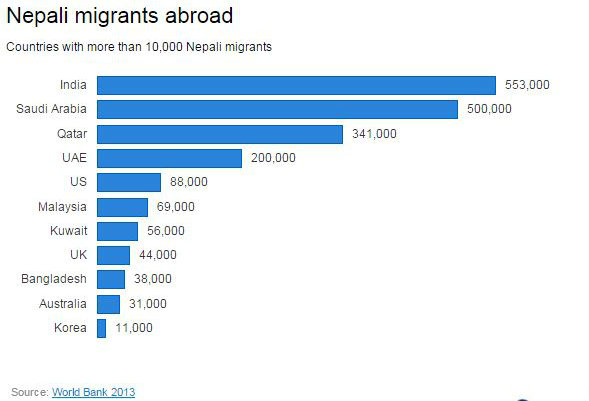
While some attention has focused on the return of Nepalese migrants from Gulf States, little attention has centred on how migration policies and financial institutions (including banks and money transfer operators) can help in the recovery process.

Here are some practical ideas:

  • In the short-term, offer temporary protected status for Nepalese abroad. This can allow Nepalese in stable destination countries to stay and work for an amount of time and send money back to their relations who have been displaced by the quake. With the Nepalese government already struggling to meet relief needs, allowing migrants to stay seems plausible. In fact, reported tensions are likely to worsen if people are forced to return home under such dire conditions.

Migrant-world-bank

  • Restore remittance services and waive transfer cost. Migrants are one of the first responders to natural disasters and they are more likely to send money to relatives who are in need. However, the question arises over the means of transfer when the physical infrastructure has been damaged.

Remittances to Nepal are estimated at $5 billion per annum and remain a crucial part of household livelihoods. Restoring services – and perhaps waiving or reducing the cost of transfer – to affected communities can increase access to finance, thereby enabling recipient households to rebuild their livelihoods with remittances from relatives overseas.

Of course, these ideas are not the silver bullet for the present situation in Nepal; however, it brings to light the lack of disaster preparedness in a country that is earthquake prone, has poorly regulated urbanization and housing – often built with migrant remittances – and that has failed to adhere to building codes as expected in the government-spearheaded National Plan of Action on Safer Buildings.

Helping the government to ensure the implementation of this framework should be a priority in the coming months.

Find out more

Cameron girds up for titanic battles on Scotland and the EU

This post was contributed by Ben Worthy, lecturer in Birkbeck’s Department of Politics. It was originally posted on May 11 at The Conversation

David Cameron’s 2015 election victory is all the more powerful for being almost completely unexpected. But as the euphoria dissipates, the obstacles in his path are coming into focus. Above all, he faces two tricky and complex problems: the promised EU referendum and future arrangements with Scotland (and by extension, the other parts of the UK).

The EU referendum was in large part a gamble to see off UKIP and settle his party, but now he looks likely to do it as soon as possible, perhaps even in 2016, banking on a status quo bias to keep us in. And on Scotland, he has committed to implement further devolution and push through the jointly agreed Smith Commission proposals. In both cases, the devil’s in the detail.

On the EU, lots of the specifics are unclear. We don’t yet know what the question on the referendum ballot might be, or what “reforms” to the EU will convince us to stay – and the coming struggles over them promises to be vicious.

On Scotland, it is about giving the new SNP stronghold “the strongest devolved government in the world” – but there will be a need, as Nicola Sturgeon put it, to discuss these issues in more detail (and ditto for Wales). Devolution may also flow back into the Europe debate – Cameron has already refused a separate EU referendum for Scotland but could he hold that line?

On both these pressing matters, Cameron is up against assorted bodies and people who could make his life harder. They can all be dealt with separately, but if they join forces, they could drain Cameron’s political energy and time – the two things a prime minster can least afford to lose.

Houses divided

Cameron’s majority is 12 (or actually eight or 16, as Colin Talbot points out. This is far better than most expected, but it depends on the solidarity of an increasingly rebellious party.

The trouble for Cameron is that parliamentary rebellion is habit-forming: the more you rebel more likely you are to do it again in the future. And the last parliament was the most rebellious since 1945 (here are its top seven rebellions against him).

This bad news gets worse: the two biggest issues that Conservatives rebelled over were constitutional matters and Europe – the two most urgent problems for the next five years. Party management and discipline will be crucial, but even that may not stave off problems if Cameron’s majority is whittled away over time. Just ask John Major, whose 22-seat advantage in 1992 withered to zero by the end of 1996.

The new block of 56 SNP MPs has limited practical power in the Commons, but its members can still use their electoral dominance and high media profile to keep Scotland high up the agenda. And in the event of a Tory rebellion, or a vanishing majority, the opposition parties’ ability to co-ordinate could determine Cameron’s room for manoeuvre.

Don’t forget the House of Lords

The House of Lords is often overlooked, but its potential power to delay and disrupt a government agenda is great – and growing. As Meg Russell demonstrated, since 1999 the Lords has clearly started to feel more legitimate and more prepared to defeat the government: its members did so 11 times in 2014-2015 and 14 times in 2013-14.

The Conservatives are now heavily outgunned in the House of Lords, with 224 peers facing off against 214 Labour ones, and 101 (presumably livid) Liberal Democrats and 174 cross-benchers.

The Lords will be duty-bound to pass an EU referendum bill due to the Salisbury Convention, which means the Lords have to pass manifesto policies. However, there are plenty of other venues for lawmakers to vent their anger or disrupt the government’s timetable for other parts of its reform programme. Select committees in both the Lords and Commons expressed concerns at the lack of consultation on the Smith proposals, boding ill for the constitutional arguments ahead. Concern in one house triggers worries in the other, so wherever it crops up, Cameron will need to take it seriously.

Outside parliament, it remains to be seen whether the eurosceptic right-wing media will be satisfied with any concessions or reforms Cameron gets from Brussels. It may prefer to give the oxygen of publicity to the SNP (particularly the very media-savvy Salmond) and treat us to a long and fascinating Cameron-vs-Sturgeon battle royale.

Cameron also invoked English nationalism in the election campaign, going so far as to launch an England-only manifesto, but it remains to be seen if he can channel and control the mounting pro-English clamour in the right-wing press over the coming months while simultaneously making concessions to Europe or Scotland.

Circling vultures

Behind Cameron are a number of senior Conservatives with at least semi-public leadership ambitions. He’ll have to manage them with precision. In the almost certain event of an EU referendum, he would have to make a very tough choice: whether to ask all ministers to all support staying in, or as Harold Wilson did in the 1975 referendum, to let everyone temporarily agree to disagree.

Equally, there’s no knowing how Cameron’s discontents and potential rivals might react to new devolution settlements. Perhaps the future leadership contenders are already plotting to court English nationalism for party and media favour.

Cameron’s leadership capital is high for the time being, but with so little room for division, his promise to step down by the 2020 election may come back to haunt him. As he seeks to deal with the “Scottish lion” and slay the EU dragon – or at least negotiate with it – everything could get complicated and intensely political very quickly. And the chances of success (whatever that is) are almost impossible to gauge.

Bilingualism in Malta

Penelope Gardner-ChlorosThis post was contributed by Professor Penelope Gardner-Chloros, from Birkbeck’s Department of Applied Linguistics and Communication.

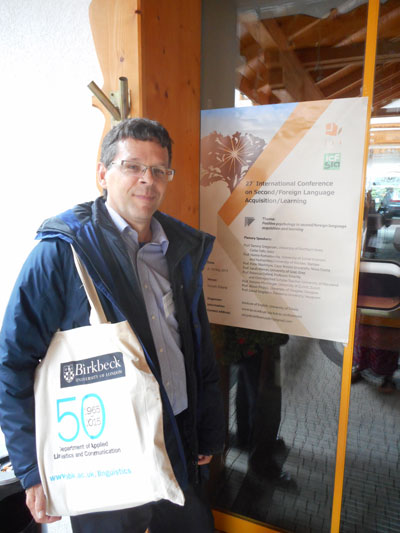
I recently had the pleasant experience of being invited to Malta for the International Conference on Bilingualism. Not having been there before, this provided an excuse to visit the country and to find out a bit more about its fascinating history and linguistic situation. Maltese is the only Semitic language written in the Roman alphabet. It derives from the Arabic spoken in Sicily between the 9th and 12th century, but its lexical stock is largely made up of Italian/Sicilian and other Romance borrowings. As it was under British rule for more than 170 years, gaining independence in 1964, English is a co-official language with Maltese and there are now large numbers of English borrowings. Much of the population is bilingual in Maltese and English.

Maltese postboxThe photograph of a – typically British – Maltese letterbox illustrates the situation. The text in Maltese is made up of Arabic elements, including the days of the week. Blended seamlessly into this are Italian expressions which are equally integrated parts of the language: underneath ‘3pm’ we read about “oggetti ta’ valur”,  “posta registrata” and lower down “festi pubblici” – all very recognizably Italian. English is also represented, being a co-official language, resulting in a code-switched text which represents the various origins and layers of the language, viewed through the lens of officialdom. Bi/trilingual documents as such are commonplace in many countries. But here the admixture of Romance, both entirely traceable and distinct from the Arabic, is reminiscent of so-called ‘mixed languages’: due to specific historical circumstances, a few unusual languages, such as Michif (French and Cree) or Media Lingua (Spanish and Quechua) take their lexis and grammar from different sources.

Given all these circumstances, the contemporary issue of code-switching, where people alternate languages on a daily basis, is a fact of life in Malta. It was also an important focus at the conference. I myself have rarely met a non-linguist who has heard of code-switching; but on visiting a small restaurant in Malta, and explaining to the affable owner that I was there for a Bilingualism conference, she remarked casually that bilingualism was a big issue in Malta – “and”, she continued, “we also do a lot of code-switching”. Having recovered from the shock of finding a normal person who had heard of my specialism, I went back to the conference and listened to a talk by a young researcher who had carried out a linguistic survey among 120 or so Maltese informants. She reported that one sub-group – considered by others to be snobbish or show-offs – code-switched copiously. Her talk gave rise to the most impassioned and vituperative argument I have ever heard at an academic conference – so impassioned, in fact, that I found it difficult to establish the exact basis of the disagreement. Suffice it to say that it was about who code-switched to whom in Malta, why and when. One elderly participant in the discussion, somewhat alarmingly, threatened to have a heart attack on the spot.

The organisers later apologized for their colleagues’ tempestuous reaction and behaviour. But I myself came out strangely energised by the thought that my little corner of academia could give rise to such passions. Malta may be a small country, but it is a – still under-researched – treasure trove for linguists, and it is invigorating to witness a linguistic debate which so clearly carries on into the street.

Other blog posts by Professor Gardner-Chloros

Other blog posts about linguistics:

Emotional rescue: how to stop your employees burning out

This article was contributed by Dr Andreas Liefooghe, Reader in Organizational Psychology, and Dan Vacassin, an alumnus of Birkbeck’s MSc Organizational Behaviour and Director of Indigo Gold.Businessman asleep at his desk on white background

Sometimes it seems as though it’s no longer enough for employees just to turn up for work and do their jobs as well as they can.  Today, many organisations demand varying amounts of what is known as emotional labour, a phenomenon that sits apart from actually doing the job. Emotional labour manifests itself in a number of ways, but here we are referring to a perceived need to ‘Live the brand’ – to strain every sinew in a bid to achieve the cultural utopia envisioned by the leadership team.

This is not healthy. At best, it can leave employees so exhausted by the energy they put into ‘getting their game face on’ that they have little left to do their jobs properly. At worst, we’ve seen it lead to cases of burnout, where the emotional demands placed on individuals have left them no longer able to function.

While many of society’s ills seem nowadays to be subjected to inflated terminology (for instance we no longer seem to have heavy colds, it is always flu) burnout is very real and its effects can be shocking to witness. In our experience, burnout tends to happen not because individuals work hard, but more because they become emotionally immersed in their work, to the detriment of everything else.

This is not to suggest that presenting a strong brand to the customer is a bad thing. Equally, customer-facing employees have a certain responsibility to embody that brand. We are talking instead about a deeper emotional contract demanded of employees, playing to a need to ‘fit in’ which may be a unique human condition.

Alleviating the burden of emotional labour, as with other culture-related issues, must start at the top. Very often, investigating a case of burnout uncovers insecurities among the leadership team, with senior managers finding it hard to judge when an organisation is working at or close to its optimal level and so continue to push relentlessly towards their version of utopia.

As well as the emotional fatigue it causes, the emotional labour around being constantly ‘on message’ can also stifle fresh ideas and creativity, while negating attempts to promote the diversity of the workplace in terms of personality types and behaviours. The whole point of creativity and diversity is that they involve breaking away from perceived notions of the norm; if people feel they must always behave in a certain way in order to get on, then the norm becomes all-pervasive.

We all have a responsibility to learn, to improve and to better ourselves in whatever career we have chosen. So why not let people get on with doing precisely that, instead of focusing on whether they’re sufficiently on message? You might just keep them burning brightly, instead of burning out.

Sherlock Holmes: the man who never lived and will never die

This article was contributed by Mike Berlin, a specialist in the social history of early modern London in Birkbeck’s Department of History, Classics and ArchaeologyBirkbeck is holding a study day on Saturday 14 March to coincide with the Museum of London‘s landmark exhibition on Sherlock Holmes. The afternoon  will feature contributions from Alex Werner, Sherlock Holmes exhibition curator, Dr Nathalie Morris, Senior Curator of Special Collections at the BFI National Archive, and Emeritus Professor John Stokes of King’s College London. 

"The air of London is the sweeter for my presence." Sherlock Holmes in The Final Problem. ©Museum of London

“The air of London is the sweeter for my presence.” Sherlock Holmes in The Final Problem. ©Museum of London

Though the pipe and deerstalker have been replaced by a waxed Belstaff jacket,  new generation of Londoners  continues  to be captivated  of Conan Doyle’s original creation. What was it about the figure of Holmes that holds such fascination in the minds of generations of readers, film goers and now television viewers?

For many people the Holmes stories, originally published in the Strand Magazine with illustrations by Sidney Paget, are synonymous with Victorian London. The atmosphere of back alleys, dense pea soup fogs, hackney cabs and Bradshaw’s railway guides are the epitome of our image of the teeming city, a city of concealment, social mixing and crime.

The original fascination of Conan Doyle’s audience went with a deep-seeded fear of crime.  The world’s largest city in 1900, an imperial capital that brought people and goods together from all corners of the globe, London was the perfect setting for a series of tales that mixed bourgeois morality with fear of the mysterious and foreign. Sir Arthur Conan Doyle used the imperial exoticism of the world’s greatest port, including the swamp adder and baboon of The Adventure of the Speckled Band.

It is no accident that Holmes’ opponents are mostly aliens. For late Victorian Londoners the ‘alien menace’ , associated in the popular imagination with the infamous Whitechapel murders of Jack the Ripper, were a direct threat to the city’s greatness. Conon Doyle perfectly encapsulated a sense of anxiety about the menaces of ‘the city of the dreadful night’. It is an anxiety that is decidedly masculine and middleclass, his eponymous hero allowing the reader to overcome fears of crime via cold forensic logic, disguise and confident elegance.  Holmes and Watson, independent men of science, defeat the forces of unreason and evil with the skills of the Victorian social investigator, the slummer, who is willing to visit the criminal purlieus of the city in the search for truth.

The gas lamps have gone but the fascination remains. How do we account for Holmes’ appeal  ver the last century and beyond. In the 20s and 30s film helped to perpetuate Conan Doyle’s image of London. Different eras have re-created the Holmes that was needed. The detective was enlisted by Hollywood in the fight against the Nazis.  Perhaps our age, with its own anxieties about threats from ‘outsiders’ and desire to master the supposed chaos of the urban experience via the appliance of science helps to explain why Holmes will never die.

‘Cash for access’ scandal: What impact will Miliband’s proposals have on MPs and the public?

Dr Ben WorthyThis article was contributed by Dr Ben Worthy, a lecturer in Birkbeck’s Department of Politics. It was originally published on the LSE’s British Politics and Policy blog.

Jack Straw and Malcolm Rifkind, two senior MPs were snared in a sting by the Telegraph in which they appeared to offer access for cash. The Labour Party leader, Ed Miliband has responded by calling for stringent new limits on MPs extra earnings and work. In this article, Ben Worthy investigates the practicalities of Miliband’s proposals and asks whether they will increase trust in MPs among the public.

In the wake of the latest ‘Cash for Access’ revelation, Ed Miliband has committed to limit MPs’ outside earnings to £10,000 per year and introduce a ban on all second jobs. The Labour party will start tomorrow, using its opposition day to propose a bill on the subject. These proposals fit with a series of steps since the 1990s designed to open up and regulate this area as controversy has grown about extra earnings and work. But how will these latest changes impact on MPs and the public?

In terms of MPs, the two issues are whether the new proposals will be implemented and whether they will work. Implementing a ‘cap’ and (eventual) ban on outside earnings would represent an easy win for a new Labour government in 2015, a symbolic step that would have ‘signalling effect’ for the new government’s attitude towards such behaviour. On a more partisan level, it will hit Conservatives much harder than Labour. Research by the Guardian indicates that this would impact on 63, or 1 in 5, Conservative MPs who currently earn over £63,000 as against only 20, or 1 in 12, Labour MPs. You can see more numbers from the Telegraph here.

However, it all may depend on whether Ed Miliband has the numbers in the new House and what politics exists around the change. As Meg Russell pointed out, a number of things need to align for any reform of Parliament to happen – a mixture of a relevant crisis, political will and the right context. Remember David Cameron’s cutting down of the House of Commons to 600 MPs?

The second question for MPs is whether it will work. The reforms are part of a longer trajectory of change towards regulation and transparency. The danger of is that such change can drive poor activity into hard to reach places, away from publicity and into dark corners. It could also trigger other unwanted debate, such as around what MPs do with their time or, more disturbingly, Members getting a pay rise – new Prime Minister Miliband is not likely to want to propose bumping up salaries to £150,000.

What of the public? The new proposals are designed to help increase trust and put an end to lobbying scandals. One basic question is whether the public will notice. It is claimed that few even know the name of their MP, though recent research has challenged this. The public does support a complete ban on second jobs (see page 6 of this polling) and, as research by Rosie Campbell and Philip Cowley shows, they do not approve of wealthy MPs, objecting to both the ‘sums and the source’, with a particular dislike of directorships. Their experiment concluded that any sum of money earned while an MP, whether above or below the cap, is problematic.

Whether this will then increase public trust is a far bigger and more complex question. It may reduce the space or room for manoeuvre in this one area. However, hopes of ‘improving trust’ over-simplify how we think and process information – the MPs’ expenses scandal ‘confirmed’ to many that MPs were corrupt rather than ‘revealed’ it to them. Voters generally suffer from  a negativity bias and the continual string of ‘cash for…’ revelations are likely to have fed already deeply held views about UK politics. Nor will it end other sources of Parliamentary controversy, from the revolving door to the picking of leaves. So while it may help change behaviour, looking at the graph below, it appears unlikely any one thing can dramatically improve trust in MPs.

Worthy fig 1

Source: Ipsos Mori; House of Commons Library Research

Queer Studies at Birkbeck

Dominic JanesDr Dominic Janes, Reader in History of Art, argues that there is a resurgence of interest in LGBT/Queer Studies in the UK in the context of recent political controversies over same-sex marriage and British values and that Birkbeck is playing a leading role in debate on these issues.

Birkbeck has a strong track-record in generating new ideas in the areas of culture and society, including in relation to understandings of gender and sexuality. My own work in queer visual culture is powerfully rooted in an awareness of changes in popular attitudes over the last several decades. It has taken the best part of fifty years to move from the partial decriminalisation of homosexuality in England and Wales in 1967 to the introduction of same-sex marriage. The politics of visibility was of enormous importance in gay and lesbian liberation because of the understanding of closet secrecy as a structure of oppression. Some of those involved in the ensuing cultural struggles embraced radical forms of queer identity that were based on the assumption of powerfully counter-cultural attitudes to issues such as relationships, commerce and personal presentation. Visibility was a key element of the demands of gay and lesbian rights activists and battles over self-expression on the part both of artists and members of the public in general played a crucial role of the culture wars of the later twentieth century in Britain, as in the United States and elsewhere. The AIDS crisis in particular rendered the question of visible recognition as being of vast importance not merely to people’s identities but to their lives. The fight for respectful representation in the media has lived on in ongoing contestation over memories and histories of these events.

Since the year 2000 a renewed level of academic interest in queer visibility has been accompanied by wider debates in society. Successive liberalisation of laws in the constituent parts of the UK as in many other western countries have led to claims that the rights struggle is now at an end and with it the need for a distinctive and separate queer culture. The first decade of the twenty-first century has seen the rise of a powerful movement for the assimilation of those who regard themselves as gay or lesbian into the core power-structures of society in Britain and in many other countries. Associated with this has been a widely acknowledged growth in consumerism over politics in the gay community. Whether all this has resulted in a queering of mainstream society or a post-queer erasure of activism and creativity is being hotly debated. David Halperin in his book How to be Gay (2012) has argued from the perspective of the United States that ‘as homosexuality has become increasingly public and dignified, the life of queer affect and feeling has become more and more demonized, more and more impossible to express openly, to explore, to celebrate. It has become an embarrassment….’

Dr Janes' book 'Picturing the Closet'

Dr Janes’ book ‘Picturing the Closet’

One thing that this view implies is that there was a golden age of gay culture which is now in eclipse. That stands somewhat at odds with other views that have seen much of the nineteenth and twentieth centuries as dominated by prejudice and closeted self-oppression. In two books that are being published this year I have revisited the worlds of the closeted homosexual in Britain in decades past and asked whether Halperin’s nostalgic tone is justified. In Visions of Queer Martyrdom from John Henry Newman to Derek Jarman (University of Chicago Press, 2015), I examine the development within the nineteenth-century Church of England of a subject position of closeted queer servitude to Christ which allowed a certain degree of scope for the development of aspects of same-sex desire. My next research project, for which I was awarded a British Academy Mid-Career Fellowship, explored the ways in which the closet has functioned as a visual metaphor, and looked at the ways in which ‘homosexuals’ were depicted and visually presented themselves before and after the trials of Oscar Wilde in 1895. The key output from this project is Picturing the Closet: Male Secrecy and Homosexual Visibility in Britain (Oxford University Press, 2015). Together with my many colleagues at Birkbeck who also work in gender and sexuality studies I look forward to continuing the College’s contribution to public debate about the values of openness and tolerance in a pluralistic society.

Where are all the grandparents in modern fiction?

Helen-Harris-Jul-2014-0366-smaller-versionThis post was contributed by Helen Harris (MA Oxon), associate lecturer in creative writing in Birkbeck’s Department of English and Humanities. Her new novel,Sylvia Garland’s Broken Heart is out now from Halban Publishers. This article was originally published on The Guardian‘s books blog.

Grandparents-in-contemporary-literatureConsidering how important grandparents are in many modern families – plugging the gaps and picking up the pieces when the stresses and strains on working parents get too much – isn’t it surprising that we don’t find more of them in contemporary fiction?

There is, of course, no shortage of memorable grandparents in children’s literature, beaming benignly – or occasionally malevolently – from the bookshelves: from the four grandparents in Roald Dahl’s Charlie and the Chocolate Factory, via Grannie Island and Granma Mainland in Mairi Hedderwick’s Katie Morag series to David Walliams’ Gangsta Granny, grandparents seem a far richer source of inspiration than boring old parents.

But look around current adult fiction and there’s little writing about grandparents as grandparents. You can find forever-young baby boomer grandmas falling in love at 60 and novels about spirited older women finding self-fulfilment, but novels about grandparents’ relationships with their grandchildren seem in short supply. One rare exception is Finnish writer and illustrator Tove Jansson’s magical The Summer Book. Jansson (of Moomintroll fame) here turns her shrewd gaze on the interaction between an elderly grandmother and her six-year-old granddaughter, spending the summer together on an island in the Finnish archipelago. The book is beautiful, astute and tells us a lot both about childhood and about old age.

When my novel, Sylvia Garland’s Broken Heart, which examines the relationship between a grandmother and her young grandson, was published at the end of 2014, my expectations were low: I hadn’t published a novel for 20 years, my (excellent) publishers are a small independent house and a number of mainstream commercial publishers had previously rejected the book, telling me that it didn’t fit on their lists. So I was quite unprepared for the extraordinary reactions that began almost as soon as the book came out.

front coverIn Sylvia Garland’s Broken Heart, Sylvia’s bond with her grandson is threatened when his parents split up, driving her to extreme measures. I was invited on to Woman’s Hour on Radio 4, together with Jane Jackson of the Bristol Grandparents Support Group, which helps those denied contact with their grandchildren after family breakdown. I was quite panicked at the thought of my fiction side-by-side with real-life heartbreak. During the programme, I learned that a million British children have no contact at all with their grandparents because of some form of family rift. After our discussion, Woman’s Hour received so many emails from listeners with their own stories that they opened the programme the next day with a family therapist talking about the issues raised.

Sobered, I went about my business (including getting on with my next novel). A couple of weeks later, I was interviewed by a journalist who told me her own story of a family breakup triggering a loss of contact with grandchildren. Then a neighbour who had enjoyed the book told me about the predicament of a close friend, denied contact with her beloved grandchildren after their parents divorced. Real life, it seemed, was starting to outstrip fiction.

Last month I gave a reading at JW3, London’s new Jewish community centre. Grandparents were invited to come along and join a discussion of the themes raised by the book. Although the weather was cold enough to deter a much younger audience, the room was full and one after another the audience opened up with their own experiences. One woman, a grandma to 11 grandchildren, reduced many of us to tears with the desperate story of how her ex-son-in-law had denied her access to his children following the death of the children’s mother, her own daughter.

My humorous look at a warring mother-in-law and daughter-in-law suddenly felt rather light-hearted. It was a relief when another member of the audience spoke up: “You know the bit where Sylvia gives her grandson ice cream even though her daughter-in-law doesn’t allow it? I’ve done that.” There was a ripple of recognition around the room.

Other posts by Helen Harris:

Call me Madame

Penelope Gardner-ChlorosThis post was contributed by Professor Penelope Gardner-Chloros, from Birkbeck’s Department of Applied Linguistics and Communication.

A few days ago, I phoned to arrange a repair to my washing machine. Having got through to the relevant person – a young woman – who could arrange the appointment, I was asked, as question number one, whether I was Miss or Mrs. This question is of course a standard one in this country, where ‘Ms’ has failed to catch on, unlike the position in the United States. As someone who teaches Language and Gender, I am aware that the way you address someone not only reflects the prevalent social structures, but also shapes and perpetuates them. Classifying women from the outset by their marital status is an instance of ‘everyday sexism’, as a certain massively successful web forum is called. Honestly, why should I have to disclose whether I am married or not to someone I have never met and will never meet, just in order to arrange a washing machine repair?

So I gave my standard reply: ‘Ms’. The reply to that was that this was not a title that would allow the relevant form to be completed. Since my (then teenage) son once filled in his title from a drop-down menu as ‘the Right Reverend Monsignor’, it was not clear to me why this form could not offer this third option. Irritated, I said “In that case please use ‘Professor’ “. I don’t like using my ‘rank’ outside academia, but desperate measures were needed. Once again, computer said no. This was an academic title, and so no use on the form. My Chinese horoscope says I am a tree, and trees do not budge. For a few moments it appeared that the washing machine would just have to keep leaking.

To break the deadlock, I launched into my normal little lecture given in such circumstances, about how there was no need for anyone to know my marital status, how this would not be required if I were a man in such a context, and how this was, as another teenager once said, SO unfair. I added that the person taking my details also being a woman, she ought to understand the need for equal treatment.

“Well yes”, she replied, getting tired of this difficult customer, “but it’s been like that ever since ever, so it’s a bit late to change it now”. I pointed out that in other countries, such as France and Germany, they had managed to make the change, and that now in France for official purposes everyone was “Madame” and in Germany everyone was “Frau”, the terms for “Miss” having been abandoned in both countries. I should also have pointed out that the company she was working for, Siemens, was German. On hearing this, her tone changed from one of mild irritation to an interested purr: “Oooh”, she said. “I’d rather like to be called ‘Madame’!”

A mini-triumph for the tree?

Other blog posts by Professor Gardner-Chloros

Other blog posts about linguistics: