Why businesses fail: Financial management

Welcome to the Why businesses fail series. This is the final instalment of the series that delves into the reasons for businesses failing and offering solutions. This series was launched by Lucy Robinson of Birkbeck Futures and Ghazala Zia from Windsor Swan. In this blog, they share why financial planning should be high on the list of priorities for new businesses and start ups.  

Lucy Robinson is the Employability Consultant for Business and Enterprise at Birkbeck Futures. She runs the Pioneer programme for aspiring and early-stage entrepreneurs and hosts an enterprise series on the #FuturesPodcast.

Ghazala Zia is a Venture Capital Advisor at Windsor Swan, a boutique London business advisory firm. She has an extensive legal background and currently specialises in advising start-ups of all stages on funding, strategy and business analysis.

Young businesses often prioritise hiring team members to focus on technology and sales. Obviously, these are very significant elements of the start-up, but neglecting the management of finances is a common reason businesses might fail.

A very common reason for a business failing is running out of money. Frequently, entrepreneurs will burn through cash to the brink and then be left with two to three months’ worth of cash, which is really unattractive to investors. This comes back to investors wanting to secure a return on investment and showing poor financial management makes you high-risk. Instead, having eight to twelve months’ worth of cash indicates that you’ve got time to grow your business and doesn’t come off as desperate.

In the beginning, having access to someone who performs a CFO-type function could be the difference between succeeding and failing. This doesn’t have to be a full-time team member if that’s not feasible, as this is a function that can be outsourced fairly easily. Essentially, this is someone to discuss how you allocate your costs, draw up your financial model, and manage your finances day-to-day for the business. Think about this before you receive funding, as they can also help you plan ahead. Showing investors that you’ve taken this initiative is also a big plus in terms of your trustworthiness.

The misconception is often that we don’t need to hire a CFO or shouldn’t spend money on this, as an accountant can perform the same function. Whilst accountants are great at what they do, their role is more about looking backwards than forwards. In essence, planning ahead financially isn’t exactly their purpose. When looking at the finances for your start-up, it’s speculative and forward-looking – largely making educated guesses. So, you need someone with this skill set, which is more likely to be a financial specialist who’s worked in start-ups before.

Read more from the Why Businesses Fail series:


An MBA with a difference

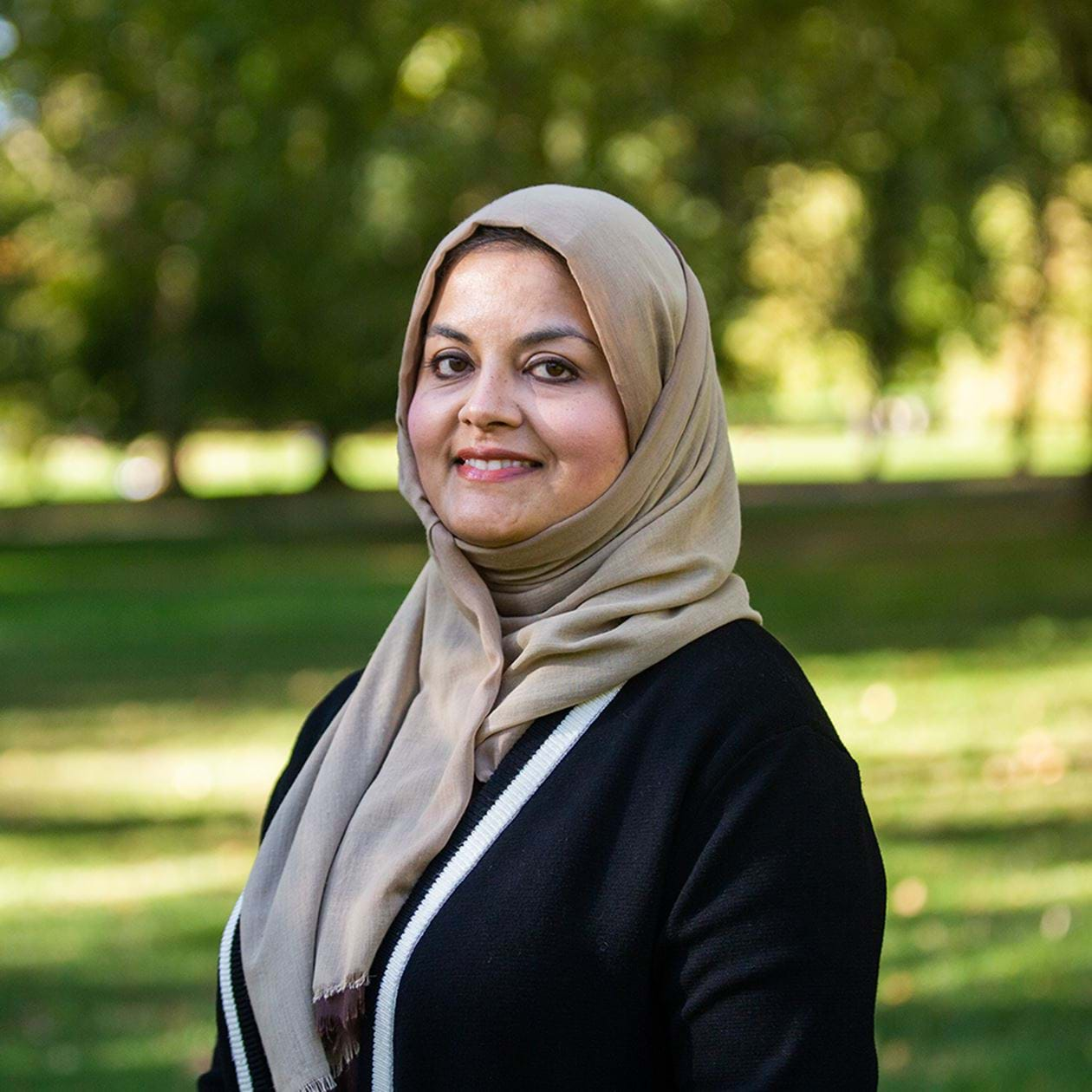
Sammera applied for the Central Saint Martins Birkbeck MBA to build the skills to have a greater impact in the charity sector. Her efforts have been recognised by a scholarship from the Aziz Foundation, who support British Muslims into higher education to better society.

Picture of Sammera

As Head of Development at the British Asian Trust and with over fifteen years’ experience of charity and voluntary work, Sammera speaks with authority when she talks of the need to innovate in the third sector. 

“Innovation and creativity are central to developing products or services in any leading organisation,” she explains, “but in the fast-changing and highly competitive environment in which charities operate, it is essential. There’s also the added challenge of adapting within a strictly regulated and scrutinised environment.” 

Sammera wanted to return to education to consolidate the skills she had learned through her working life. The Central Saint Martins Birkbeck MBA appealed as it provided the opportunity to bring together creative and business disciplines. 

“I didn’t want to do anything too conventional – I wanted to bring in a creative angle,” says Sammera. “The four units of the MBA programme link in with my work, so I can apply what I’m learning in my day to day integrating the business management theories practically. There are elements of the course that require independent investigation and research, while others focus on entrepreneurship, leadership and change.” 

In January 2020, Sammera successfully interviewed for a scholarship from the Aziz Foundation, which will partly cover the costs of the MBA programme. The Aziz Foundation offers Masters scholarships to British Muslims in order to empower one of the most disadvantaged communities in the country to bring positive change to society as a whole. 

For Sammera, the MBA is an opportunity to gain the skills she needs to make an even greater impact: “At the British Asian Trust, I have learned the value of social finance, making sustainable changes for the longer term and helping marginalised communities in South Asia. Beyond this course, I hope to continue to empower the diaspora and wider communities locally and internationally.” 

Dr Pamela Yeow, Programme Director of the MBA, said: “We designed the MBA to equip students with the tools to make positive change. I am delighted that the Aziz Foundation has recognised Sammera’s commitment to the charity sector and that they have seen the potential for her to have an even greater impact with the help of the MBA.” 

Further Information: 

Tap Dancing, Poetry and Black Mascara

Birkbeck PhD student is one of four prize winners at the 2020 International Book and Pamphlet Competition for her collection: ‘Black Mascara (Waterproof)’

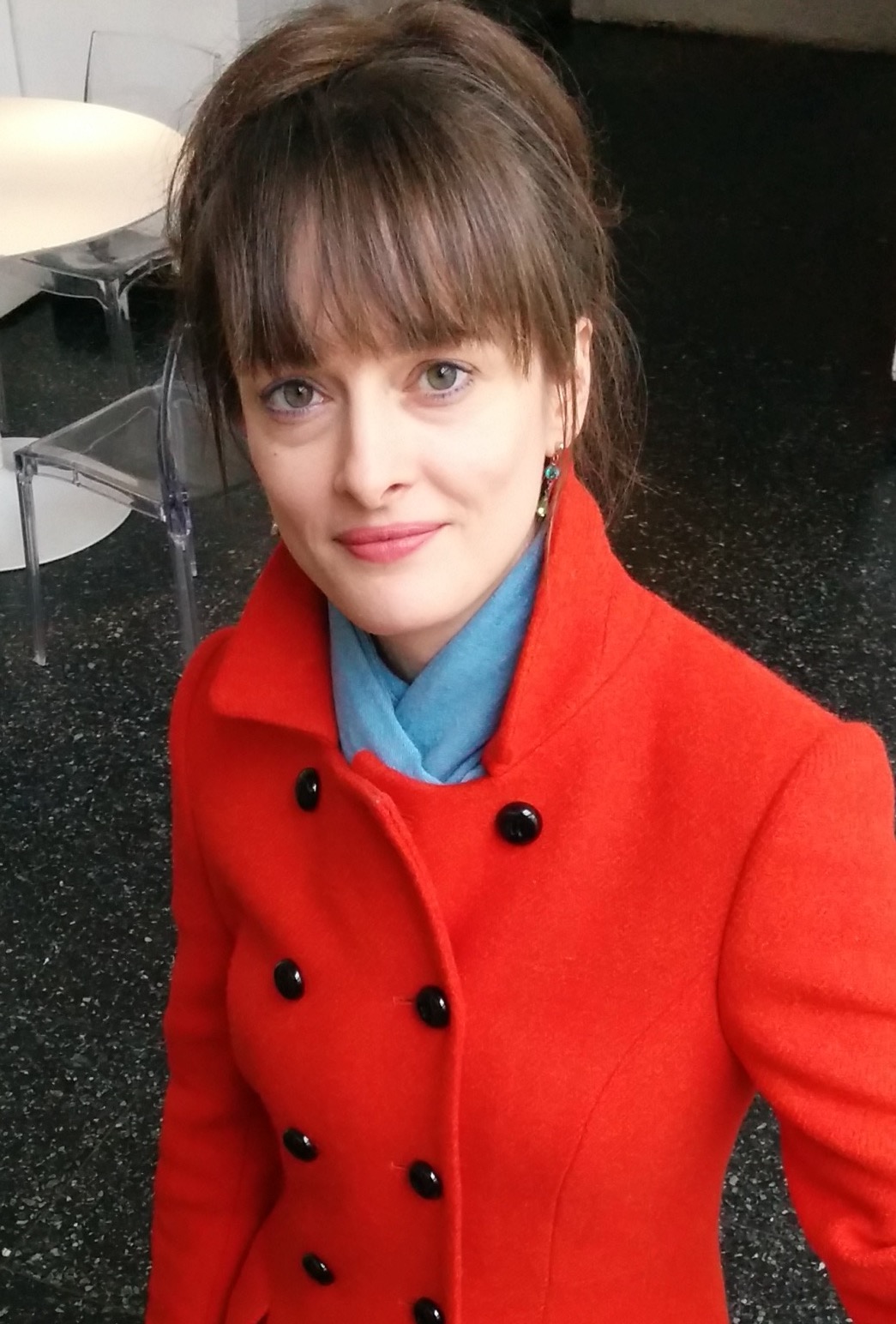
This is a photo of Rosalind Easton

Rosalind Easton

An English teacher for the past 10 years and an English, Theatre and Creative Writing PhD student more recently, Rosalind Easton has spent as many years deconstructing poetry. But it took the interaction with and observations of her young niece to inspire her to write poetry in the first instance. 

Just two and a half years ago, she penned her first poem about the birth of her niece and found other familial influences through her grandmother’s love of literature. She shares that her writing was sporadic- just one or two poems every few months but also notes that “when you get into a rhythm of writing, that’s when you get the lightbulb. That’s why it’s so important to try and write every day.”

Easton was able to source further creative expression through her love of dance; tap dancing, in particular. She points to the correlations and expresses, “The rhythm of my tap dancing comes through in my poetry.”

Having found her rhythm and routine, Easton would spend her mornings before going into work, writing in a local cafe for just under an hour, a process driven by “50% ruthless discipline, 50% pie-in-the-sky dreaming.”

Connections between things is a key component of Easton’s work. She draws the link between poetry and mathematics for its patterns and structures; as well as likening the visual elements of poetry to paintings and sculptures. Throughout her winning collection, objects seem to take on a life of their own with judge, Imtiaz Dharker capturing this most aptly:

Catching sight of a former lover makes my iPhone flicker/ with the ghost of a Nokia brick. All kinds of inanimate things come alive enthusiastically in these poems: the stiletto heel, the music stand, the microphone, a wand with no spells, making every poem a delightful surprise.”

It’s all a far cry from when Easton had worried about her poetry being publishable, acknowledging that she writes long lines; so she was pleasantly surprised when judge, Ian McMillan praised her for this. Indeed, both judges McMillan and Dharker were emphatic in stating the“final choices were unanimous”.

A Book & Pamphlet winners reading will he held at The Wordsworth Trust in Grasmere in Spring 2021, and the four winning pamphlets will be published in Feb 2021. Read more about the competition and winners.

Meet our staff: Professor Almuth McDowall

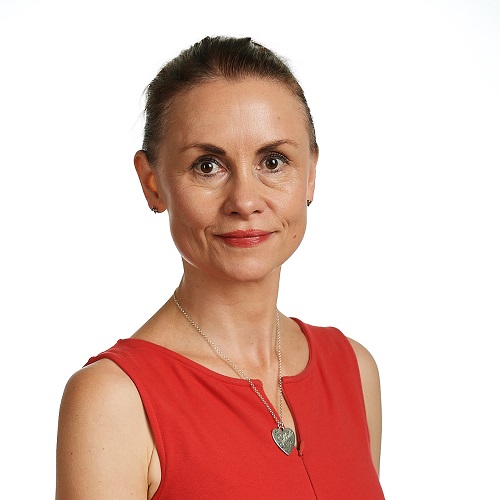
Meet Professor Almuth McDowall, Assistant Dean for Organizational Psychology. We briefly caught up with her to discuss what she enjoys about working at Birkbeck and what she likes to do in her spare time.

I have worked at Birkbeck since 2014, and have been Assistant Dean for Organizational Psychology since 2016. In some ways, it’s been a homecoming after 30 years, as I started my UK academic education here at Birkbeck with training in systemic therapy.

What do I enjoy most about Birkbeck?

I love everything about Birkbeck, as I keep saying and genuinely mean that this is the nicest and most collegial bunch of people I have ever worked with. Our executive team

Head of Department & Senior Lecturer in Organizational Psychology

in BEI has been catching up weekly and sometimes daily, our focus is on supporting each other to plan for the uncertainty ahead; my colleagues in OP have been going the extra mile to support all our students. Human connection matters so much, particularly in these challenging times. Birkbeck students are the best. We salute you. I can’t wait for face to face lectures to begin again. I always make a point of checking in with the group, no matter how large or small and ask how they are doing. Our students make so many sacrifices to join us and learn. Huge respect!

What is most challenging about my job?

Well, let’s put it that way – academics don’t necessarily want to be managed. We relish autonomy and freedom in our work. But let’s face it, there is a job to do which involves common tasks. So coordination and getting joint agreement can be a challenge.

Describe Birkbeck in 3 words

Inspiring, eclectic, connected

What do I enjoy when I am not working?

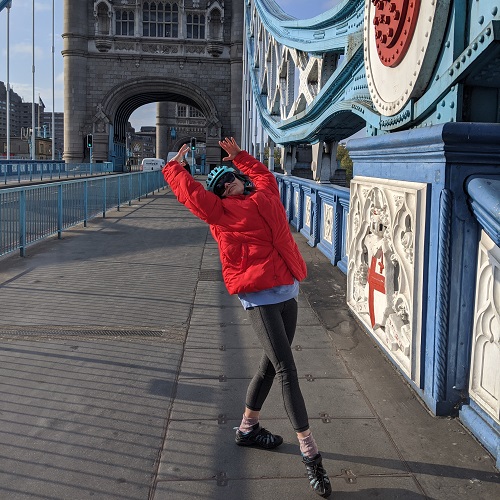
As a former professional dancer, I spend a good part of my salary going to see the arts – classical ballet, modern dance and hard rock in equal measures. I am a regular at the Almuth dancingRoyal Opera House! I still teach dance-based fitness classes – in fact, some at Birkbeck. This helps me feel grounded and also makes me a better lecturer. In dance classes, you always have to be at least two steps ahead mentally. This is good practice to have in any lecture – stops you from ‘mentally cruising’!

Can you tell us about a good book you read, a film you watched or place you visited?

I love London and London parks, we are so lucky. During the lockdown, I have rediscovered rollerblading. I go to Burgess Park just off the Old Kent Road. On sunny days, this is not only ideal for skating around the park but also people watching. Last time I went one person was practising the saxophone (beautiful!), another group doing Salsa, all socially distanced of course, and Canada Geese were having a serious fight in the lake, scaring us all. It’s a really buzzy and very London Park – go and visit.

School of Arts Awarded Three Research Fellowships from the Leverhulme Trust

Senior Lecturer, Dorigen Caldwell, reflects on her award and looks forward to a time she can visit Italy again.

Like most art historians, I have a passion for art, and am happiest wandering around art galleries, cities and churches. It is therefore a privilege to be able to call that work!

this is a photo of a cathedral in Italy

Please tell us about your area of research. I am a Senior Lecturer in Italian Renaissance Art in the History of Art Department at Birkbeck. My area of research is early modern Italy, with a particular emphasis on religious art produced after the Council of Trent (1545-63), where the beliefs and practices of the Catholic Church were discussed and codified, partly in response to the Protestant Reformation. This marked a key moment in debates not only around religion, but also around the visual arts and their role in the propagation of faith.

What inspires you most when it comes to your academic pursuits? Like most art historians, I have a passion for art, and am happiest wandering around art galleries, cities and churches. It is therefore a privilege to be able to call that work! In both teaching and research, I think I am primarily interested in the history of ideas, and in thinking about the use of images within a broader historical and cultural context.

Why have you chosen this particular area of research? The title of my current research project, for which I was awarded the Leverhulme fellowship, is ‘Piety, Patronage and Politics in Early Modern Rome’. The focus of this research is a private chapel in a Roman church that was lavishly decorated at the beginning of the seventeenth century, and includes an altarpiece designed by the celebrated painter, Annibale Caracci. I chose this chapel because it was commissioned by a family of cardinals who came from the Northern Italian city of Trent, where the pivotal Council was held, and which at the time was a German-speaking territory. As such, these cardinals represented the interests of German catholicism in Rome, and their family chapel represents a unique opportunity to examine the relationship between the periphery (Northern Italy/Southern Germany) and the centre (Rome) of the Catholic world at the time, and to explore ideas around images, beliefs and politics at a moment of intense artistic production.

What impact do you envisage from the research? I am due to give papers at conferences in Rome and Dublin over the next year (coronavirus permitting!) and plan to write a book which I hope will disseminate my research to a broad audience beyond the disciplinary boundaries of art history. The Leverhulme Trust will be paying for a replacement post to carry out my Birkbeck duties over the course of the next academic year (apart from my PhD students who I will continue to supervise); and I plan to make two research trips to Italy to visit churches and archives. The award allows me to focus on my research for a year, to (hopefully) travel to Italy, and to get as much of my book written as possible in the time.

And lastly, can you share your sentiments on the significance of the Fellowship? I am incredibly grateful to the Leverhulme Trust for this Fellowship, as it will make all the difference to my research, allowing me to focus on my book project over an extended period of time. I am very excited about this opportunity to devote myself to my research and I look forward to the moment when I can travel to Italy again.

Learn more about the Leverhulme Trust Fellowships.

“I have really relished the intellectual challenge of returning to university after a break.”

When a new role saw Ella moving from practical outdoor work to people management, she applied for the MSc Human Resource Development and Consultancy to build her skills. She reflects on how the course has equipped her for the challenge.

Picture of Ella

I have had a fairly non-traditional career path so far. I worked on farms for many years engaged in therapeutic agriculture, growing vegetables with young adults with learning difficulties and behavioural issues. My passion for people and land now has me working as a senior manager for a small environmental charity which works across the UK planting orchards with urban communities.  

Transitioning from outdoor practical roles to indoor organizational-focused roles threw me into being a line manager, thinking about team dynamics and holding responsibilities across the organisation for recruitment, wellbeing, HR policies and staff development.

The MSc in Human Resource Development and Consultancy at Birkbeck has given me a good grounding in people management and organisational development, with flexibility to deepen my knowledge in areas that have interested me.  

I have really relished the intellectual challenge of returning to university after a break of many years. The course is structured to deepen academic thinking as well as practical knowledge, and that combination means I can bring practical questions from my work into an academic sphere, and I can apply thinking from my Masters directly into my work.  

The support from lecturers and fellow students is phenomenal. I have learned so much not just from lecture and seminar content, but also professors, guest lecturers and fellow students speaking about their work contexts and roles as HR or Organizational Development practitioners. 

I am about to enter my second year, of which a significant part is embarking on a management research project. This differs from a traditional dissertation as it again combines academic rigour and practical organisational focus, as we work with an organisation to address a challenge that it is experiencing as our research problem. I am really looking forward to exploring an area of HR Development in depth, and to try out new research and consultancy skills. 

Further Information: 

Many Days Late and Many Dollars Short: COVID-19 Institutionalised Racism and the Black British Experience

Dr William Ackah, Lecturer in Community and Voluntary Sector studies, reflects on how COVID-19 is disproportionately affecting Black, Asian and other global majority heritages.

I watched my first virtual funeral this week. I and around 80 others joined the 15 or so people who were physically present in Bristol UK to say goodbye to an amazing woman. I first met this woman nearly 20 years ago, when I moved to the city. She was then recovering from a brain tumour operation. My wife and I would give her a ride to our local church and on the way she would tell us stories about her nursing career in Britain and the obstacles she had to overcome as woman of Jamaican heritage to gain recognition in her profession. She would talk with pride about her children making lives for themselves in the UK and in the United States and of her dream that when she was able to drive again, she would buy herself a Jaguar. I never quite believed that she would get the car, but lo and behold eventually she did. She was the quite the character, one of a number of wonderful people in that congregation in St Pauls in the heart of the city.

I fondly remember tasty lunches with people of Indian heritage, playing games with families from Singapore, becoming a godfather to a daughter of Malawian descent, being pastored by a man of white south African descent and praying and fasting with Nigerian descendants, Guyanese, Ghanaians, Jamaicans, Brazilians, Romanians, Croatians, Australians and white and black British. In that small church we weaved an international tapestry that criss-crossed continents, cultures and identities. Doctors mingled with taxi drivers, who talked to cleaners, dentists, lawyers, barbers and cooks. It was a living, breathing community with a network that was global in its reach and connections. The death of one the precious members of that community at this time is a very hard pill to swallow.

The bitterness of death is made even harder by the fact that the precious life of this woman will barely register outside of her immediate community. She alongside so many others will invariably be reduced to a BAME statistic. Night after night via the media and the data machine of the day, complex individuals with amazing stories and profound life experiences are reduced to racialised entities. In this reduction they are robbed of their humanity and their dignity. In life they faced discrimination in death they face denigration by statistics.

The primary data sets that reference the Black British experience primarily tell their/our story in proportion or disproportion to the ‘white’ population. The value of Black lives therefore according to the data only exists in relation to ‘whiteness’.  This invariably leads to them/us becoming a freak side show. Them/us are people that require further research and investigation, as opposed to being human beings that first and foremost need support and protection!

The statistics reveal that people from Black, Asian, and other global majority heritages are dying in some cases at four times, the rate that ‘white’ people are. A question that should be asked is why is this public health disaster only warranting calls for a public enquiry and a Public Health England investigation? We might not know why they/us are more prone to the virus, but we do know without question that they/us are particularly vulnerable so why are they/us not being shielded as a matter of priority? Why are they/us not being placed on automatic furlough?  Why are the circumstances around Black deaths not considered a national health emergency that demands immediate action?

Why oh why yet again after Windrush, Grenfell and so many other countless failings by the authorities of this nation are Black citizens once again left to suffer and die? Time after time like clockwork all we hear are words of regret and the promise of an investigation. Is that really all we are worth? Is this nation pathologically predisposed to continually s…t on its non-white citizens?

When a migrant descendant doctor, nurse, care worker, bus driver, supermarket assistant dies the impact often goes far beyond that of their immediate family. ‘Successful’ migrants and their descendants are often at the apex of complex and unfolding pyramids of influence. Their finances, knowledge and influence support communities and individuals both locally and globally. Where the state is absent here and abroad these women and men are often a vital cog in sustaining families and communities. COVID-19 is fracturing these community structures and the state through its lack of action to protect its ‘global majority’ citizens is adding salt to the wounds.

The country faces challenging times ahead. How we treat minorities and the vulnerable in a time of crisis is a true test of how ‘Great’ a nation we are. Britain’s Black, Asian and other descendant communities with origins from all over the globe have demonstrated once again their courage, loyalty, and integrity to support the nation in its time of need. What will the nation do in return? We need a systematic and comprehensive plan backed by substantial resources to eradicate racialised discrimination from our society. It is ultimately the only way to end the curse of the BAME label and stats with all their marginalising characteristics and connotations. There are many lessons that the nation needs to learn from this life-changing event, but one must be that it is time to end the madness of racialised inequality in this country once and for all.


How my MA work placement helped me kick start my career in the Arts

Birkbeck alumna, Florencia Nannetti de Bella who studied MA History of Art at Birkbeck details how she started her career in the arts, from work placements to freelancing, to now starting a full-time role while working remotely.
Florencia Nannetti de Bella

Florencia Nannetti de Bella

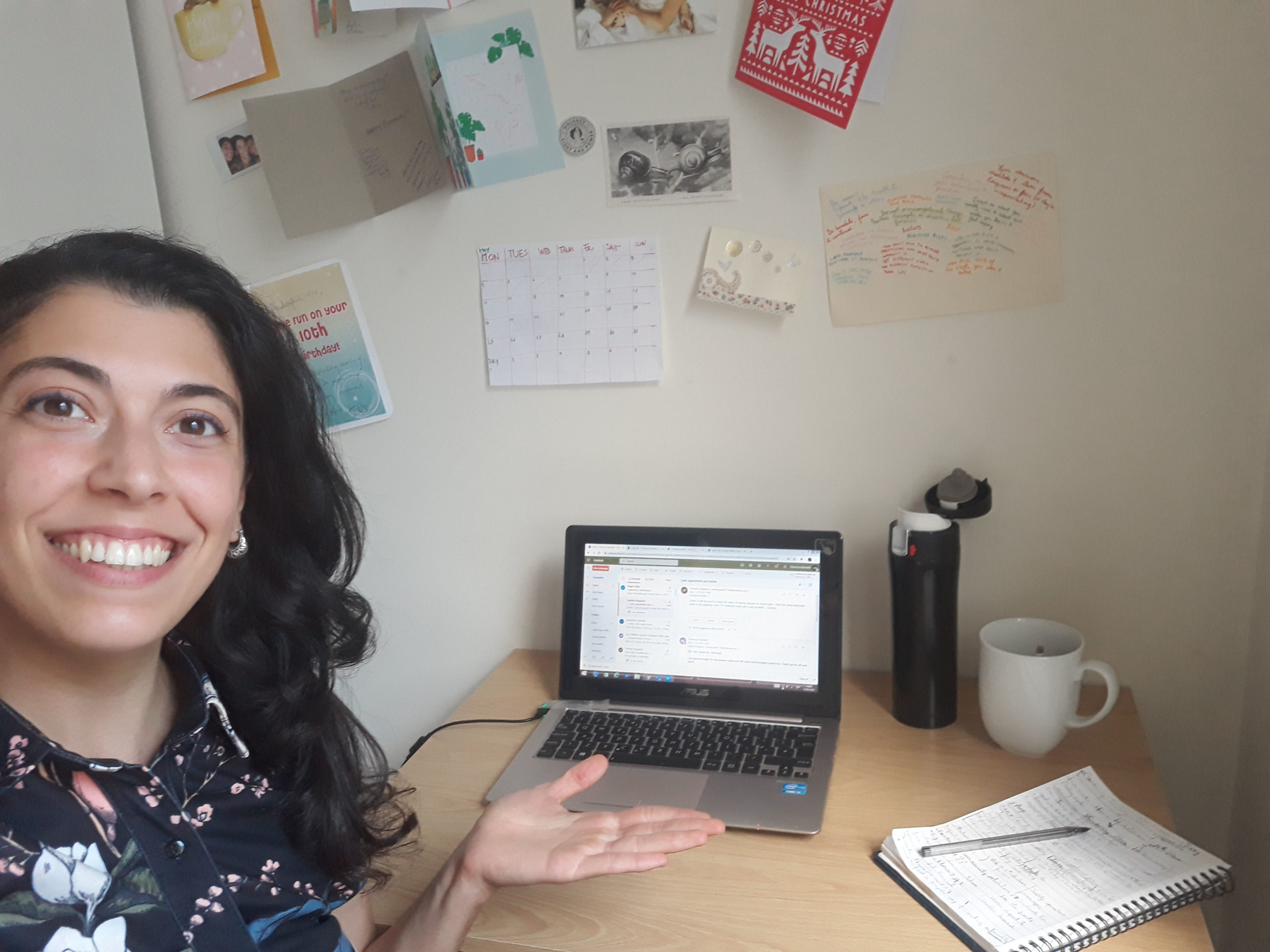
On Monday 20 April, I started a new job as Community and Visitor Engagement Officer at the Museum of Cambridge. This has been, as you can imagine, a very unusual experience, given the circumstances. However, I could not be more thrilled about undertaking this post for many reasons, and I want to tell you about it.

First of all, let me tell you a bit more about how I got here. In 2017, I enrolled on a full-time History of Art MA course at Birkbeck. I had undertaken several courses in Arts Education and Visual Arts before, but this course at Birkbeck compelled me for a particular reason: it offered the opportunity to do a work placement at a cultural institution for 3 months.

At least in my case, I discovered quite quickly that breaking into the arts and culture sector could be difficult without enough experience. And although I had worked extensively as a freelance art facilitator in galleries and schools, it felt like I needed something more solid. So I figured that doing a work placement as part of my studies was a good place to start.

While enrolled on the Work Placement module, I had sessions with the tutor Sarah Thomas and the rest of the students to reflect on my practice. This is not something you usually get to do when you are working or doing a placement outside university, and it added so much to the experience. To have been able to discuss what you’re doing, the challenges you’re facing and the things you learn, added a whole new level of knowledge. In this case, it helped me become a reflective professional, and therefore improve my performance.

I had it very clear in my mind what I wanted to do for my placement: I wanted to be part of an Education Team. There were many more placements related to curation, but I was lucky to find one with the Creative Learning Team at Alexandra Palace.

Anna Gordon, from the Careers Advice Team, was brilliant at helping me with my application and interview. If you haven’t heard of the team, I would recommend you look them up and get in touch with them. In preparation for the work placement, Anna not only provided some great sessions on how to prepare your CV and cover letter, but she also provided 1 to 1 sessions. She carefully went through the application pack with me, and helped me tweak my CV accordingly. She gave me homework on this, for us to review together, and then helped me prepare for my interview.

One of the things that have impacted me the most from these sessions has been how she taught me how to approach an application. And most importantly, she helped me understand the skills that I have that I can offer to employers. This was so empowering and gave me more confidence to apply for the jobs that I really wanted.

I would certainly take this particular time to get in touch with the Birkbeck Careers Advice Team and work on your CV and cover letter. What better time to tackle it? Many new remote posts are appearing, so you might also want to consider that as an option.

It was a tricky time, when I was working, studying, and doing the placement at the same time. It was not easy, but was absolutely do-able. You will have to be extremely organised, planning ahead was key to navigating that period successfully.

The placement lasted three months, and it was great. My manager at Alexandra Palace, Isobel Aptaker, would take me to all her meetings, let me see how she went about doing certain tasks, answer my questions, and discuss challenges of the role, and of working at this venue in particular and others she had worked at. It was very useful, because I could get a real sense of how things are done, and the dynamics of the job. It also gave me a chance to really put to the test whether this was something I wanted as a career or not. A work placement can be a great way to discover if something you thought you liked, is actually what you want. Don’t regret it if you discover it is not.

Increasingly, I would have more and more tasks with a good degree of responsibility within the Ally Pally Learning team, which was good to test my skills and learn new ones. You don’t need to know it all when you undertake a placement, and it is good if your manager can give you challenging tasks that will help you grow, and build your knowledge. This is something you should discuss with the manager and your tutor. After all, you need to make it work for you.

After I graduated, I continued doing freelance work, and kept an eye open for other opportunities. My freelance experience has also been invaluable to expand my skills set and grow my professional network after the placement.

Last July, I got a very nice position as the Education and Training coordinator for a team of energy advisers, at an environmental charity. The experience from my work placement, which I spoke about during my interview, was key to getting this role. On this topic, I would recommend you keep a log of every new job or placement: it will help you keep track of everything you learn and do, so then it’s easier for you to give examples of your skills.

Starting a job in lockdown: why it has been good in many ways

In March this year, I came across this lovely post from the Museum of Cambridge, and just before the quarantine started, I managed to attend my interview. Consequently I was offered the role, which I accepted. The week right after, the country went into lockdown. However, Cambridge City Council, who is funding my position and the projects I will deliver, and the museum, were very keen for me to undertake the post remotely.

Albeit unusual, this has had a lot of positive benefits. Firstly, I could tackle my induction in a record time! I went through a lot of online training modules and documents that usually take a bit longer to go through, as you normally have to do other things around it if you are on site. In addition, since all of our cultural and engagement offer has to be re-arranged to fit the current circumstances, I have had to spend a good deal of time figuring the alternatives out. This is certainly testing and improving my planning skills and my creativity. I have to find alternatives, adapt activities, think of new ways to continue to build community through collections with all these new challenges we are facing. On the down side, I cannot familiarise myself with the collection and the building. However, this is bringing me closer to the wonderful team of volunteers and the Collections team, whom I rely upon to understand the museum’s dynamics.

Something that has always interested me is work within the arts and culture sector, and social issues, which in my opinion, have to involve engaging with local communities. One of the things that worried me the most about a lockdown, was that the voices of those communities, especially minorities, might go unheard again, and that we might lose the sense of connectedness between us. In this new job, I have the chance to try and stop that from happening.

It didn’t happen from one day to the other, but with patience, dedication, and the help of the very talented professionals I have mentioned, I was able to find the job I really wanted.

FURTHER INFORMATION
Birkbeck School of Arts
Birkbeck Futures

Why Businesses Fail: Business Plans & Financial Models

Welcome to the Why businesses fail series. This is the fourth of five blogs that delve into the reasons for businesses failing and offering solutions. This series was launched by Lucy Robinson of Birkbeck Futures and Ghazala Zia from Windsor Swan. In this blog, they share why having a carefully considered business plan is essential to the success of your business.  

Lucy Robinson is the Employability Consultant for Business and Enterprise at Birkbeck Futures. She runs the Pioneer programme for aspiring and early-stage entrepreneurs and hosts an enterprise series on the #FuturesPodcast.

Ghazala Zia is a Venture Capital Advisor at Windsor Swan, a boutique London business advisory firm. She has an extensive legal background, and currently specialises in advising start-ups of all stages on funding, strategy and business analysis.

We all know the importance of a decent pitch deck when it comes to presenting a business idea to investors, but ultimately, they’ll be looking at the detail behind the pitch when making their decisions. Once you’ve started your business and got a few customers, you should be looking at your business plan and preparing it for an investor. This seems early but is the right time because that’s how long it takes to prepare for investment.

Investors might not ask for a business plan straight away, often they’ll request to see this after a few meetings. Entrepreneurs often wait until they’re explicitly asked before creating a business plan, which isn’t setting yourself up for success.

In reality, a business plan is a living, breathing document, not just something you rustle up on request for the purpose of your funding application to an investor. Showing an investor, a rushed, poorly considered, or insufficiently detailed business plan won’t fill them with confidence.

A detailed and carefully considered business plan isn’t just important for impressing investors – it’s one of the most important tools in your arsenal as an entrepreneur, and when used correctly it can be incredibly valuable for planning ahead, making decisions and staying on track.

The business plan should work for the life cycle of the business, which is approximately 3-5 years. Consider the milestones you’ll reach and issues you’ll face within this timeframe. It should be a professionally written document that you and your team refer to time and time again, meaning that everyone is literally on the same page. It’s not static, and should be amended as you go along. This allows you the flexibility to adapt to new circumstances and continue planning ahead.

As well as your business plan, you also need a detailed, well-evidenced and realistic financial model. The first question to answer here is that of why your business needs funding in the first place. Where are you hoping the business will go in the next 3-5 years? What specifically will the funding be spent on? How have you arrived at these costs? How will the meeting of these needs lead to more growth and profit? Specificity is needed here, as investors awarding significant amounts of money will want to know exactly where that money is going, and how it contributes to their return on investment.

You also should be proportionate and realistic about the amount of funding you ask for. There’s no exact rule about how much funding to request, as it ultimately comes down to your planning, but you shouldn’t expect to waltz out of your first investment meeting with one million pounds. It’s speculative at the early stages, but you can come up with a good financial model that’s relevant to the type of investor you’re approaching if you take the time to look at the detail of your business. Seeking the guidance of a financial advisor is a good step to take here, as they’ll know the right questions to ask you.

When it comes to your business plan and financial model, sit down and spend a lot of time on these. This is why investors often prefer to back entrepreneurs who’ve already tried and failed, because they know the steps to take and the questions to ask themselves.

Read more from the Why Businesses Fail series:


“I used my work as a kind of petri dish for everything that I explored in the classroom”

Roscoe Williamson, Creative Strategy Director and Partner at MassiveMusic reflects on how the Central Saint Martins Birkbeck MBA has helped him shape his career path.

Picture of Roscoe

With a twelve-year career in the music industry under his belt, you might be surprised to hear that Roscoe studied Chemistry as an undergraduate. Its hard to know what you want to do with the rest of your life at 18 years old,he explains, Chemistry was a bit of a slog, so I had a real hunger to go back into education later in life, to learn and expand my horizons around topics that genuinely interest me.

Roscoe was keen to develop strategic leadership skills to advance his business, but coming from a creative industry, it was important to find a programme that valued creativity: I was particularly interested in bringing creativity into business and applying design and systems thinking to the corporate world. I was interested in a few courses that took a creative approach to business education, but I chose the Central Saint Martins Birkbeck MBA because it had both the innovative outlook and the solid finance and strategy side.

The MBA focuses on three curriculum units: Provocation and Enquiry; Entrepreneurship in Action; and Effecting Change: Collaboration in Practice. The eighteen-month programme culminates in an extended live project or dissertation. I enjoyed most aspects of the course and the exploratory learning style that was encouraged,explains Roscoe, The whole experience was like tasting a knowledge cake with lots of segments. I left behind those I didnt like so much, while my final research project allowed me to really get into what I liked the taste of.

Roscoes academic dissertation explores how organisations can nurture, scale and grow creativity and innovation. His findings point to ways in which organisational creativity can be led by individual behaviours, teams dynamics and organisational structures. Analysing organisational creativity and innovation from managerial, psychological and sociological perspectives allowed me to identify gaps between academia and practice and understand how to get the best of both,he explains.

Roscoes dissertation is in the final stages, but the changes in his work have been felt already: I wouldnt have enjoyed the course nearly as much if I hadnt been working at the same time. As well as becoming more efficient at managing my time, I used my work as a kind of petri dish for everything that I explored in the classroom. Ive been lucky to have a really supportive business partner who gave me time to devote to the MBA he says he has seen a change in me and the business already. Through the MBA, I got partially interested in strategy and realised strategic thinking is something that we needed more of.

Completing the MBA with a new job title of Creative Strategy Director, it seems that Roscoe has wasted no time in implementing what hes learned to his business. In the future, he plans to create a content hub, where he intends on sharing his leanings to the wider world.

Further Information: