(Art) History Matters

Dr Sarah Thomas, from the Department of History of Art, shares her experience of museum curation in Australia and discusses how we should interrogate the ‘hidden histories’ that underpin current debates. 

In 1993 when working as a curatorial assistant in a public gallery in Sydney I was involved in a project which I’ll never forget. Yamangu Ngaanya. Our Land Our Body was an exhibition of paintings by a group of Aboriginal artists from a remote desert community in Warbuton, Western Australia. The dazzling canvases, derived from ancestral ‘Dreaming’ stories that were traditionally painted onto the body, were accompanied by forty-five Ngaanyatjarra men and women, most of whom had never visited a city in their lives and who had travelled to Sydney by coach over several days and nights. Besides the paintings they also brought with them sixteen tonnes of red sand from their land, which over the course of several days was dispersed over the gallery floor. What had been a standard ‘white cube’ interior was radically transformed into a space for ceremony: over several days and nights separate groups of women and men prepared and performed Dreaming ceremonies, filling the space with traditional song, language, dance, swirling dust, bodies painted in ochre, the smell of smoke and sweat. This was not what an art historical training had prepared me for: ‘performance art’, ‘installation’, and ‘body art’, even ‘painting’, were all wildly inadequate terms for what I observed over the course of that week.

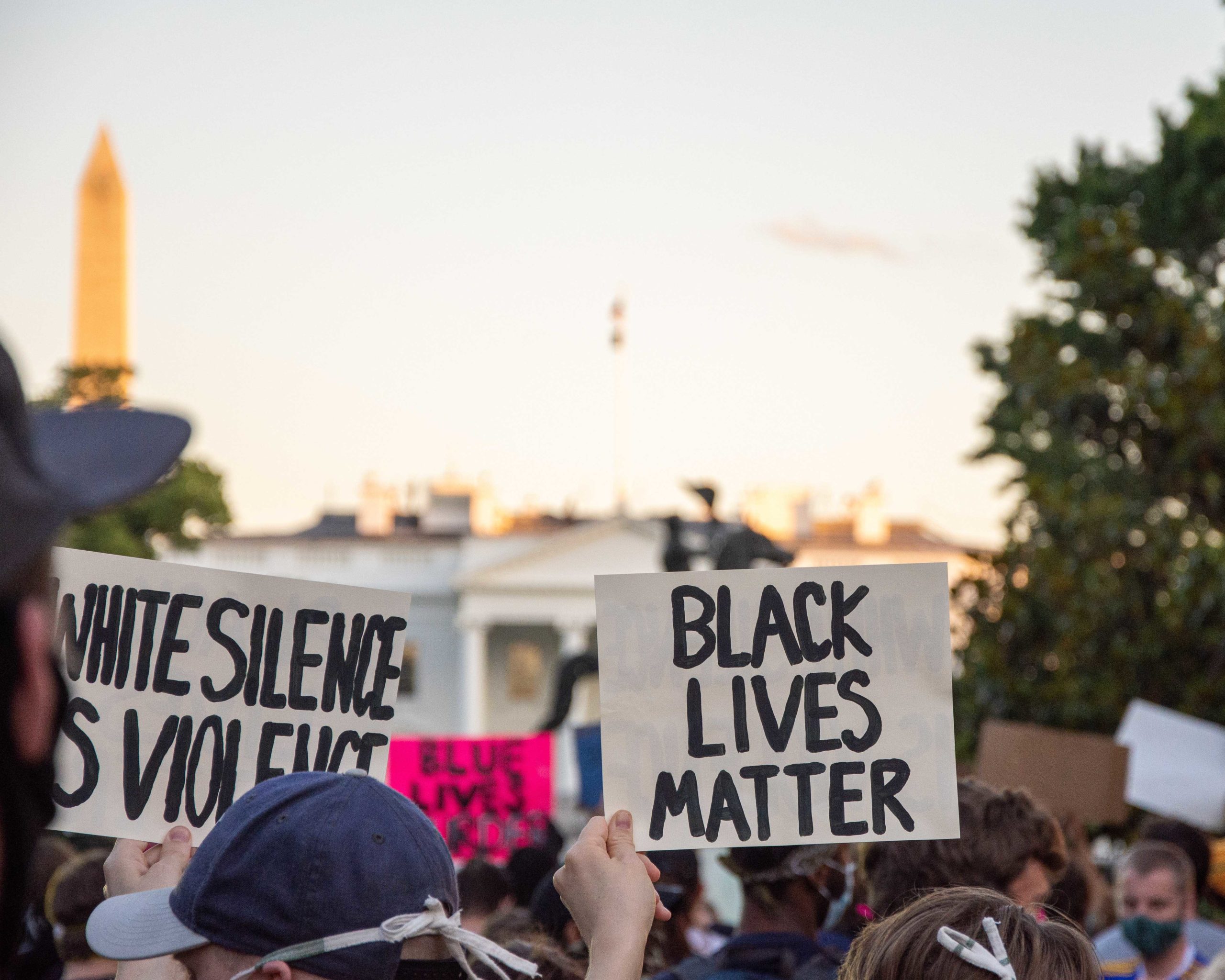
I am reminded of this moment by the global repercussions recently of the Black Lives Matter anti-racism protests. The Australia I grew up in was deeply racist, and it remains so. Sadly, despite years of protest, public and scholarly debate, and a government apology in 2008 for the forced removal of Indigenous children from their families by national and state agencies, Indigenous Australians remain the most incarcerated people on earth. Leading Aboriginal artists have long been highly critical of Australia’s colonial past, and the pervasive hold it has on the present. Daniel Boyd, for example, critiques the nation’s foundational myths by reworking white Australian imagery, from heroic depictions of Captain Cook (statues of whom are currently the subject of heated debate) to encounters between Aboriginal and European settlers. I included Boyd’s painting We Call Them Pirates Out Here (2007) in an exhibition I curated in 2015 called Colonial Afterlives, which brought together the work of contemporary artists from former British colonies including Jamaica, Barbados, Guyana, Canada, New Zealand, as well as Australia.

: Colonial Afterlives exhibition catalogue cover. Image by Christian Thompson, Trinity III, from the Polari series, 2014. Christian Thompson is represented by Sarah Scout Presents (Melbourne) and Michael Reid Gallery (Sydney and Berlin).

Colonial Afterlives exhibition catalogue cover. Image by Christian Thompson, Trinity III, from the Polari series, 2014. Christian Thompson is represented by Sarah Scout Presents (Melbourne) and Michael Reid Gallery (Sydney and Berlin).

Over the past decade, I’ve been researching the European representation of enslaved people in the 18th and 19th centuries across the Caribbean, Brazil and antebellum America (the subject of my book, Witnessing Slavery: Art and Travel in an Age of Abolition). More recently, I’ve been talking to museum professionals and scholars across the UK about how their institutions might publicly acknowledge the cultural legacies of slavery. The work of UCL’s Legacies of British Slave-ownership project has uncovered a wealth of data about slave-owners at the moment of British emancipation in 1833, when a grant of £20 million (40% of Britain’s national budget) was paid in compensation, by British taxpayers to slave owners. My research draws on this work, focussing on the impact of slave-owners as art connoisseurs, collectors and patrons on the early history of British art museums.

There’s no doubt that such ‘hidden histories’ are troubling. The toppling of the statue of slave-trader Edward Colston on 7 June was not simply a spontaneous action born out of collective rage, but one with a long and more complex history of thwarted community attempts to acknowledge publicly Colston’s role in the slave trade. Madge Dresser points out that when the statue was erected in 1895 (over 170 years after the subject’s death), it coincided with the building of monuments which glorified the Confederacy in the United States, and others in Britain and across its Empire, which: ‘similarly extolled the virtues of British imperial figures whose relationship with colonised people of colour ranged from the paternalistic to the genocidal’. Historian Nick Draper is right when he says: ‘Historians need to be realistic about their reach and influence. But for more than 30 years scholars have worked towards an adequate post-colonial account of Britain’s history as a colonising and imperial power.’ He cautions: ‘We have tried to establish an evidence base that can be drawn on by all parties. The hegemonic view of British exceptionalism, its unique commitment to liberty and its glorious imperial past, has been challenged, but it has survived. Had we collectively succeeded, then some of the paths not taken would have been pursued. The binary of leave it alone/tear it down might have been avoided’. There is a sense of disappointment in this statement, as if historians themselves have in some sense failed in their attempts to challenge the status quo. But it is this ‘evidence base’ that is so vital to what we do as art historians as well, and why in our teaching we often speak about ‘authoritative sources’ and the importance of primary archival research.

Australia has a longer history of grappling with its colonial (British) past. As a curator in a big state art museum in the late 1990s, I was part of a generation that began to question the traditional separation in collection displays of ‘Aboriginal art’ and ‘Australian art’, interrupting Euro-centric chronological displays by introducing works of contemporary Indigenous artists, such as Boyd. (European visitors had no doubts about what constituted ‘Australian art’: they headed straight for the Aboriginal art collections.) My first sustained encounter with Aboriginal art and its makers in 1993 was profound, and its complexities and contradictions have stayed with me over the course of my career and feed now into my teaching. In Britain, museums are starting to engage more directly with the deeper implications of empire (see, for example, The Past is Now: Birmingham at the British Empire, 2017), but there is still much work to be done.

Art historians today are attentive to the complexities of social context, and careful to avoid the simplistic dualisms that newspapers, politicians and much social media commentary thrives on. Public statues have garnered attention across the world as lightning rods for heated and often bitter debates about national identities, yet the very fabric of our cities and countryside  – street names, public buildings, museum collections, archives, country houses, to name just a few examples – is steeped in the residue of history. This reminds us that colonial business is unfinished, its legacies are raw; history is now, and it matters.


Sarah Thomas is Lecturer in Museum Studies and History of Art in the Department of History of Art, and Director of the Centre for Museum Cultures. In Autumn term 2020, she will be teaching the seminar ‘Slavery and Its Cultural Legacies’ as part of the MA Museum Cultures and MA History of Art.



“I cannot stress enough how important it is to get women a seat at the table.”

Winner of Best Business Idea at this year’s Pioneer Awards, Hetty Bonney-Mercer shares how she plans to empower women in Ghana with her business, FemInStyle Africa.

Picture of Hetty Bonner Mercer

A great business idea begins when someone identifies a problem that needs solving. Sometimes, these are problems you never knew you had, as the buyers of products like these will testify.

In Hetty Bonney-Mercer’s case, however, the business idea came from a problem she found impossible to ignore. Taking home the Best Business Idea prize at this year’s Pioneer awards, it looks like the judging panel agreed.

FemInStyle Africa is a magazine for women, by women, encouraging them to live their lives to their full potential. The idea for the magazine came from a desire to present an alternative narrative for women in Ghana.

As Hetty explains, “I first had the idea when I was part of a group of women whose gender activism took Ghana by storm in 2017.” The group wanted to flip the script on toxic gender narratives, but they weren’t able to do so without resistance: “The more politicised we became, the more backlash we received. Despite being a population with an equal gender split, the idea of women occupying media spaces was unacceptable.

“In Ghana, the traditional view that the role of women is to keep the home still persists. Just 13% of national politicians are female, and when a woman is given a platform on events such as International Women’s Day, it is always a certain type of narrative being pushed; that keeping a home and a husband is the most important thing, no matter what a woman has achieved. On International Menstrual Hygiene Day, the topic was discussed by an all-male panel!

“My co-founder and I realised that we needed to create a space where we could amplify the voices and experiences of women exclusively. We wanted to change a narrative that is harming future generations of girls.”

Hetty had been working on the early stages of her business idea when she saw an email from Birkbeck about the Pioneer programme.

“I thought that this was the opportunity I needed to develop the business. I sent it to my co-founder and she encouraged me to go for it.

“I gained so much from the programme: I made some really great friends and received incredible support from the speakers and fellow students. It was amazing to be in a room filled with so much passion: everyone there had a problem to solve. Coming from a background in Politics and International Relations, I learned the practicalities of running a business from some amazing female entrepreneurs who spoke on the programme.”

The FemInStyle Africa magazine website is currently under construction and will feature five columns: politics, gender activism, working women, financial advice and travel and style. The target readership is women aged 16-45, although Hetty wants the magazine to be read as widely as possible: “We want sixteen-year-olds to read the politics column or our profile of working women and see women who they’ll aspire to be like. For more mature readers, we want them to read something and see their own experience and values reflected. We want young people to see the possibilities of what could be, despite the societal pressures around them.”

The online magazine is a starting point, but Hetty’s vision for FemInStyle Africa extends much further. “We’ve set ourselves a six-month deadline to produce the magazine in print as well. In Ghana, data is a matter of class. Not everyone can afford to be online. We’re hoping to make the magazine free to reach as many people as we can.”

There are also plans in place to establish a mentoring programme alongside the magazine, providing further opportunities to empower young Ghanaian women. It is a project close to Hetty’s heart: “I cannot stress enough how important it is to get women a seat at the table. We want women to come on this journey with us and see that their futures are not pre-determined.”

Further Information:


The Use of the ‘Useless’: Exploring the Story of Classics at Birkbeck, 1963 – 2003

Jonny Matfin, a PhD candidate of Birkbeck Knowledge, discusses the contemporary development of Classics at Birkbeck. This blog is part of the 200th-anniversary series, marking the founding of the College which we will celebrate in 2023.

The outside of Birkbeck College

Birkbeck College, copyright Birkbeck History Collection.

In a series of compelling critiques of recent government policy on higher education in Britain, the academic Stefan Collini mounts a conceptual defence of the university; through exploring the question of what universities are for, Collini concludes that higher education institutions – that is, places like Birkbeck – ‘embody an alternative set of values’. Such values, it is argued, have been debased by decades of political drives towards managerialism and marketisation – they are not easily captured by audits and reports.

Within this context, the academic subject of classics is key. As Collini observes, Latin and Greek university studies have had a long journey, ‘from being a preparation for clerical or political office, through the centuries in which they served to hallmark a gentleman, and on to their current standing as favoured example of a “useless” subject.’ Ironically, it is this very – inaccurate – verdict that makes classics so vital to historical understanding of changes to British universities since the 1960s: if, as Collini suggests, our higher education system has been seen by others around the world as a canary in the mine, then classics has been – so to speak – the canary’s canary.

Margaret Thatcher at Birkbeck Open Day in 1973

Margaret Thatcher at Birkbeck’s 150th Anniversary Open Day in 1973. Image courtesy of the Birkbeck History Collection.

Birkbeck, like most universities and colleges across Britain, experienced two major periods of change from 1963-2003: the expansion – in response to a booming population – of the 1960s and 1970s, and the moves towards managerialism and marketisation – widely, but not solely, associated with the Conservative Thatcher Government – of the 1980s and 1990s. Classics was one of a number of ‘smaller’ subjects which came under increasing scrutiny within higher education institutions during policy pushes connected to the second of these significant shifts.

Crisis point was reached in 1985 when a government body, the University Grants Committee, launched an inquiry into Latin and Greek teaching and research in UK universities. A subsequent report by the UGC recommended the closure of a number of classics departments nationwide – including that of Birkbeck, forcing its merger with King’s College by 1989-90. Critically, the government audit failed to take account of the unique part-time tuition provided by Birkbeck’s Department of Classics – an academic lifeline for working students wanting to pursue the discipline.

This then, is the crux: if examining the recent history of academic classics in Britain can help us to explore the question of what universities are for, studying the development of the discipline at Birkbeck from 1963-2003 can help us to break new ground – to understand what an institution like this college, providing exceptional part-time tuition, is for. In short, this aspect of the story of the “useless” is extremely useful in a historical sense. Moreover, the revival of Latin and Greek at Birkbeck through a Department of History, Classics and Archaeology – and its continued evening tuition in both disciplines, is no small reason for institutional pride in the present.

Further reading:

Stefan Collini, What Are Universities For? (London; New York: Penguin, 2012).

“It’s crazy to think that an idea I had when I was 21 is now my full-time job.”

Alexander Flint Mitchell took home the prize for Best Business Pitch in June’s Pioneer awards. He reflects on a life-changing year of building his business, Blind Cupid.

Picture of Alexander Flint Mitchell

When Alexander Flint Mitchell enrolled onto Birkbeck’s MSc Business Innovation last September, it was with a view to changing career direction and developing the business idea that had been on his mind for the last five years.

Handing in his notice just one month later, you could say things had moved a little faster than expected. “Looking back on it, that was probably a bit naïve,” Alexander admits, “but if you want to achieve something big, you’ve sometimes got to take a leap into the unknown.”

The motivation for this leap of faith? A little idea for an app called Blind Cupid.

Blind Cupid is a dating app with a difference, using a never-before-used science to match people based on their fundamental values, giving users the chance to see bios and compatibility scores before they reveal pictures to potential matches.

“A lot of dating apps claim to be all about personality,” says Alexander, “but it’s really just a slogan. In their questionnaires, they will ask about polarising issues like politics, which is valid, but simply agreeing on something doesn’t mean that you’re compatible. Take Brexit, for example: people voted Leave on both extremes of the political spectrum. It’s essential to understand the rationale behind the belief.

“The questionnaire that we use for Blind Cupid goes right to basic principles. The greatest feedback we have received so far from users is that they could see the value in the product even from just filling out the questionnaire – before they’d received any matches. When we tested the product, 80% of the test group went on four or more dates with their matches – that’s way higher than anything else in the market.”

Was the concept for the app born out of Alexander’s personal experience? “People ask me that a lot,” he says, “but in reality, the idea just came to me in a lightbulb moment, fully formed. I came up with the concept aged 21, while studying Law and working in the City. I found the reality of being a lawyer very boring and would end up spending most of the day daydreaming about this app. I knew that I was going to do it eventually, but I wanted to do it properly.”

In 2019, Alexander applied for the MSc Business Innovation at Birkbeck, specialising in entrepreneurship. “Studying in the evening meant that I could continue working in the City until the business was up and running,” Alexander explains. “I thought that, worst case scenario, I could find a role in venture capital, but I really wanted to give Blind Cupid a go.

“The course was everything I wanted to learn. One of the early modules, Entrepreneurial Venture Creation, required us to write a business plan. I wrote a business plan for Blind Cupid, and that’s when I decided to quit my job.”

As Alexander worked through the masters and the Pioneer programme, his business and networks grew. “I’ve made some amazing connections and put together a dedicated team – we’d meet at 8am and still be working together at 1am, before we were earning any money to do it, which just shows the commitment we all have to the business.”

Alexander’s Pioneer experience culminated in June’s virtual awards ceremony, where he took home the award for Best Business Pitch. “It was a shame not to be able to do the finale in person, but I was really surprised and pleased by how many people came along to the virtual ceremony. When pitching Blind Cupid to investors, it usually takes a full hour to go into all the detail, so drilling it down to three minutes was a real challenge. I’m thrilled to have won the Best Business Pitch award; it feels like all the hard work is paying off.”

Alexander is currently fundraising for Blind Cupid, with the aim of getting the product on the market within the next three months. Encouragingly, it seems that he’s also hit on an idea that can withstand the current tough economic conditions: “Strangely enough, the dating industry is booming at the moment. Regardless of what’s happening in the economy, people have a natural desire to have someone in their lives romantically, and that doesn’t go away in a recession.

“The decision to do the master’s was a life-changing, life-affirming decision. It’s crazy to think that the idea that I had when I was 21 is now my full-time job.”

Further Information


What are the origins of the Pride March?

In June we celebrate the lives of lesbian, gay, bisexual and transgender communities around the world as part of Pride Month. In this blog, Rebekah Bonaparte, Communications Officer at Birkbeck, explores the radical roots of the annual Pride March.

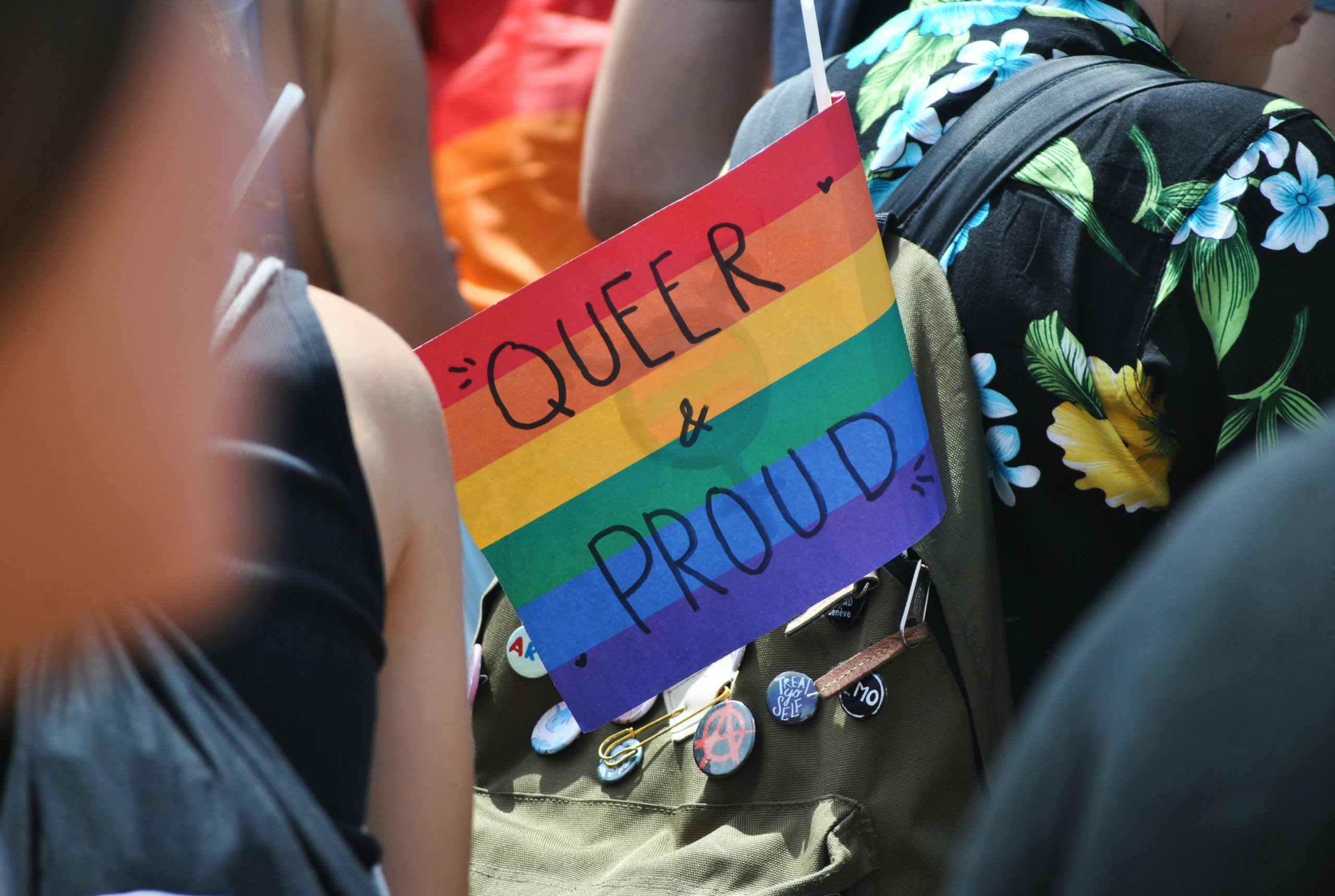
June usually marks Pride Month. The streets of London and many UK towns and cities are adorned with the infamous Pride rainbow, as thousands would usually turn out in celebration of the lesbian, gay, bisexual, transgender and queer (LGBTQ) community.

Many will now be familiar with the rainbow flag that has become increasingly visible throughout the month of June. The Pride logo can be seen on the websites of corporations and organisations as the internationally recognised event has become increasingly mainstream. But what are the origins of the Pride march?

The Stonewall Inn

Although there had been groups campaigning for the rights of the LGBTQ community to be recognised before the 1960s, the Stonewall Uprising is thought of as an important moment in the fight for gay rights in the US and beyond.

The uprising began when New York police officers raided the Stonewall Inn bar on 28 June 1969. Police raids of gay and lesbian bars were commonplace at this time and this instance proved to be the catalyst for an outpouring of fury amongst the LGBTQ+ community who were continually targeted by the police. A lesbian woman, Stormé DeLarverie, who is thought to be one of the first to fight back at Stonewall insisted that the often labelled ‘riots’ was “a rebellion.”

Six days of protests followed the raid on the Stonewall Inn and figures such as Marsha P. Johnson and Sylvia Rivera emerged as leaders of the revitalised movement.

The following year, Christopher Street Liberation Day Umbrella Committee held its first march, initially called ‘The Christopher Street Liberation Day Committee’ to commemorate the Stonewall uprisings and promote cohesion amongst the LGBTQ community. Today, the Stonewall Inn is considered a national landmark and the LGTBQ+ Pride March is held across the world in June.

Pride in London

In 1970 two British activists, Aubrey Walter and Bob Mellor, founded the Gay Liberation Front in a basement of the London School of Economics. Walter and Mellor were said to have been inspired by the Black Panthers as that year they attended the Black Panther’s Revolutionary Peoples’ Convention, but also the various liberation movements that were taking place all over the world. At the time in the UK homosexuality had been partially decriminalised and homophobia was largely accepted.

The Gay Liberation Front in London held its first Pride rally in 1972 on 2 July (the closest Saturday to the Stonewall anniversary) and continued to host annual rallies until it became more of a carnival event in the 1990s. In 1996 it was renamed Lesbian, Gay, Bisexual and Transgender Pride. The march was thought of as a display of solidarity and self-acceptance, but also a vehicle to drive social change and challenge injustice.

The Pride March has been held in London and across the UK since. It is characterised by its carnival spirit, and a safe space for members of the LGBTQ community to assert their identities and achievements. In recent years it has become increasingly mainstream, with corporations and organisations capitalising on the annual celebration and some believe it is has become far removed from its radical roots.

The organisation Pride in London was set up in 2004, and has been arranging the march since. Due to the ongoing pandemic, this month’s march in London was cancelled, but Pride in London have announced that it will be held on 11 September with the theme being, Visibility, Unity and Equality.

Pride remains a visual reminder for the continued struggle for LGBTQ+ rights across the world, a source of hope and jubilation for many.

Further information:

Making Monuments Matter

As the debate about the removal of historical statues rages on, Professor Annie E Coombes reflects on the significance of statues in the discussion and commemoration of history. 

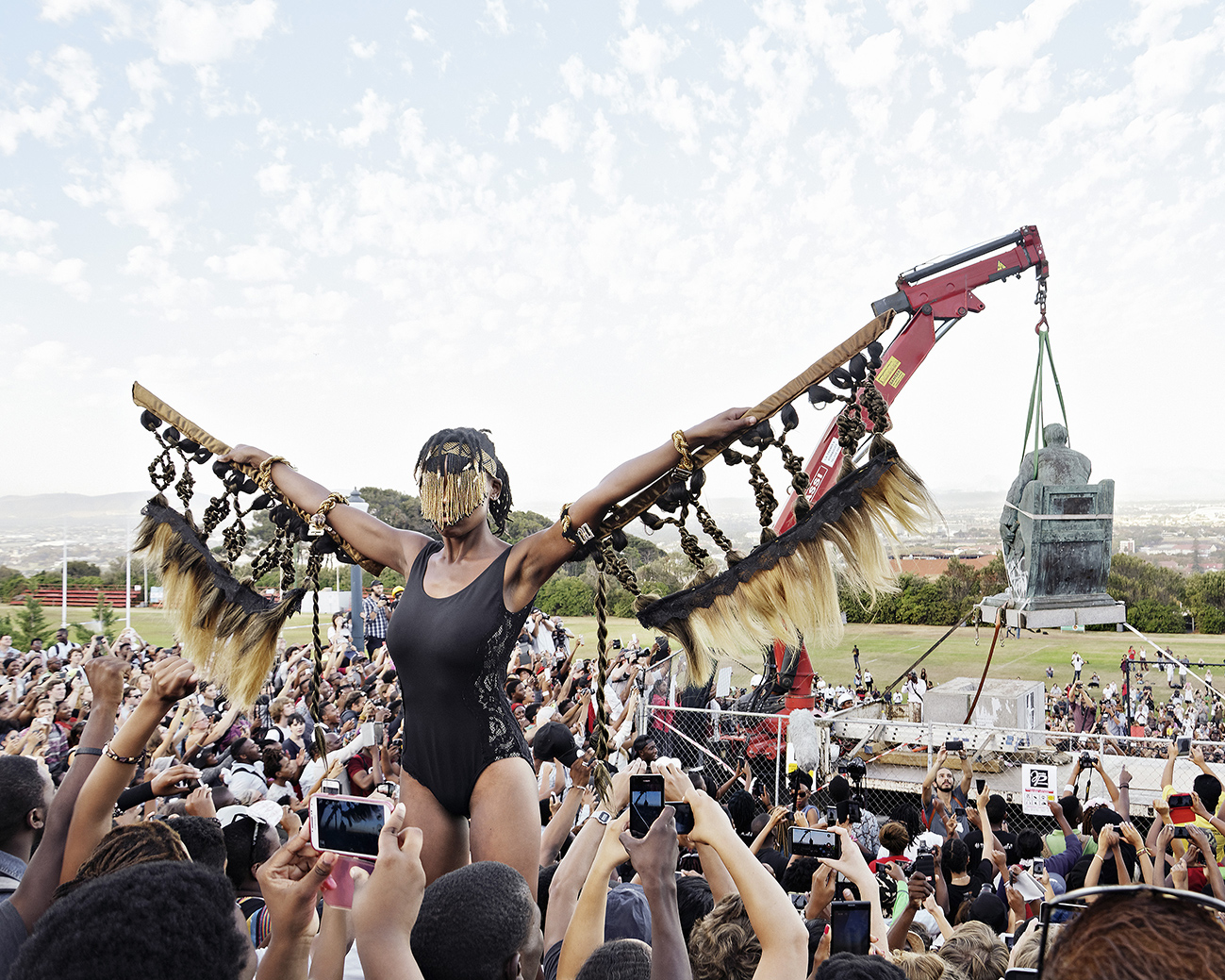
Sethembile Msezane performs 'Chapungu - The Day Rhodes Fell', April 2015.

Sethembile Msezane performs ‘Chapungu – The Day Rhodes Fell’, April 2015.

Since the 2015 call to arms of the #Rhodes Must Fall and #Fees Must Fall campaigns started on South African University campuses in a drive to get universities to finally address the legacy of racial inequalities produced by colonialism and apartheid, the baton has been taken up by other students worldwide. They have demanded that educational institutions address colonial amnesia and actively decolonize the curriculum. Birkbeck and other colleges of the University of London have slowly begun to put some energy behind addressing these demands closer to home, although some of us have always had this at the heart of our research and teaching agendas. The recent protests initiated by Black Lives Matter have reignited awareness of the deep structural legacy of racism in the wake of George Floyd’s hideous murder at the hands of Minneapolis police. The ripple effect around the globe has strengthened the long-repeated calls for legislated action to ensure equal rights and their implementation.

Here in the UK the Black Lives Matter movement has lent support to the voices of Baroness Lawrence of Clarendon OBE and David Lammy MP in their insistence on the necessity of implementing, rather than ignoring (again) the recommendations made in the numerous reports and reviews on racial inequality in Britain (including the 1997 inquiry into Stephen Lawrence’s death, Lammy’s own 2017 review into the treatment of Black, Asian and Minority Ethnic individuals in the justice system and Wendy Williams’ review into the lessons learnt from the discriminatory treatment of the Windrush generation (2018 & 2020).

Municipal statuary has often been the visual centrepiece of these protests. For the past twenty years, I have been fascinated by monuments and their afterlives. The love, hate and ridicule they inspire, and the ways in which even those originally standing for the very worst aspects of human endeavour can become reanimated to generate a rallying cry for the most progressive solidarity. The recent toppling of the much-maligned statue of the Bristol slave trader Edward Colston during a Black Lives Matter protest is a case in point. That activism and energy were able to accomplish in one fell swoop, something that campaigners and academics in Bristol had been working towards for many years – a greater recognition of the ways in which the history of slavery has shaped the city of Bristol and the removal of celebratory monuments (including Colston’s) to the glory of that hideous trade.

Those who criticise the action as the erasure of history, fail to understand that the gesture has actually reignited an awareness of the importance of an understanding of how history shapes our experience of city spaces and either reinforces or excludes a sense of belonging in swathes of the population. In Bristol it has foregrounded the work of Madge Dresser, David Olusoga and others who have produced deep research on the often hidden histories of slavery and colonialism lurking in street names and municipal landmarks. (Dresser, Slavery Obscured: The Social History of an English Provincial Port c. 1698 – 1833, 2001) Perhaps iconoclasm and the deeper histories it draws attention to, can also enable a greater public recognition of the lives and deeds of men and women from BAME and other underrepresented communities. Or as Jared Brock says, writing on the hidden history of the ‘real’ Uncle Tom of the eponymous book – Joseph Henson, an unsung champion of the Underground Railway – “As monuments topple around the globe they leave space for worthier replacements’.

Research I conducted in Kenya at a moment when a new national history was being written in the wake of the unbanning in 2003 of the guerrilla organisation (Mau Mau) that had fought for the creation of an independent Kenya against British colonial rule in the 1950s and 60s, reinforced the potential power of monuments, but also their complicated valencies. In a quest for representativeness and a bid for national unity, following a wave of post-election violence that had rocked the country, local constituencies nationwide were asked to nominate heroes and heroines for national commemoration. While having many beneficial outcomes for some disenfranchised Kenyans, the nationwide competitiveness occasioned by the government ‘Taskforce for National Heroes and Heroines’. ended up reinforcing, rather than diminishing, the perceived and historic ethnic differences that had led to some of the worst post-election violence in Kenya’s history in 2009. ( Coombes, “Monumental Histories: Commemorating Mau Mau with the Statue of Dedan Kimathi”, 2011) But it is also true that the inauguration of these monuments (for example, to the Mau Mau leader, Dedan Kimathi in the heart of downtown Nairobi) provided the occasion for one of the few acknowledgements by the State, of the role of Mau Mau veterans in the creation of an independent Kenya.

On the other hand, perhaps it is worth considering that sometimes ‘disinterest’, can be as powerful a means of countering the hegemonic presumptions of any monument.  In 1994, in the wake of the first democratic elections in South Africa, I began research on the ways in which histories were being re-thought and re-written in the public sphere in relation to different kinds of visual commemorative practice (monuments, memorials and museums). I took a photograph, later used on the cover of my book, History After Apartheid: Visual Culture and Public Memory in a Democratic South Africa (2003). It shows the gigantesque bust of J.G. Strijdom, Prime Minister from 1954 -58 and member of the white supremacist wing of the ruling National Party which established formal apartheid.

At the time the picture was important to me because it showed Black South Africans walking through the square, oblivious to its original significance, to the extent of using the space as an expansion of the entrepreneurial informal economy and setting up market stalls in the shade of Strijdom’s bust. It seemed to encapsulate a complete lack of interest in the overbearing sculpture commemorating a brutal figure in the apartheid regime. I wondered if the act of ignoring the violent history embodied in the monument and the square’s name, could be seen as constituting in and of itself, a form of resistance. In a neat and entirely appropriate twist to this tale, the monument (the head and the surrounding arch) subsequently collapsed, apparently of its own accord ! It has now been renamed Lillian Ngoyi Square after a member of the multi-ethnic crowd of 20,000 women activists, who marched on J.G. Strijdom in the Union Buildings in Pretoria, to present petitions against the extension of the hated Pass Laws to black women in August 1956 – which finally in 2000, gained its own monument commemorating the bravery of the womens’ action, “The Monument to the Women of South Africa”.

Looking back at a moment twenty years ago when monuments were similarly the visual flashpoints at the centre of protest in the UK, what struck me then seems as pertinent in the current statue debate: “… monuments are animated and reanimated only through performance and … performances or rituals focused around a monument are conjunctural. The visibility of a monument is in fact entirely contingent upon the debates concerning the reinterpretation of history that take place at moments of social and political transition. Their significance is consequently constantly being reinvented but always and necessarily in dialogue with their past”. (History After Apartheid, p.12) Thus the knowledge provided by the historian and art historian is absolutely crucial to a more complex understanding of that past and the lived experiences that contribute to its various and often competing interpretations in the present.

If living in Covid times has taught us anything, it is the value of social connectedness, of ‘community’ sought and found in unusual places, of the street as a valuable locus of social interaction. With this in mind, monuments and public memorials could play a critical role in reclaiming those streets and making many who have been disenfranchised and dislocated from British society feel more ‘at home’.

Annie Coombes is Professor of Material and Visual Culture in the Department of Art History and Founding Director of the Peltz Gallery. In Summer term 2021, she will be teaching the MA seminar option ‘Curating Difficult Histories’ as part of the MA Museum Cultures and MA History of Art.
“A good PhD is a finished PhD”: tips for completing your thesis from academics who’ve been there

Struggling to find the motivation to get through the final furlong of your PhD? Professor Almuth McDowall, Head of the Department of Organizational Psychology, shares some top tips to help you finish strong – with many thanks to Rob Briner, Kamal Birdi, Jane Ogden, Gail Kinman, Katrina Pritchard; and Rebecca Whiting for the quote in the title.

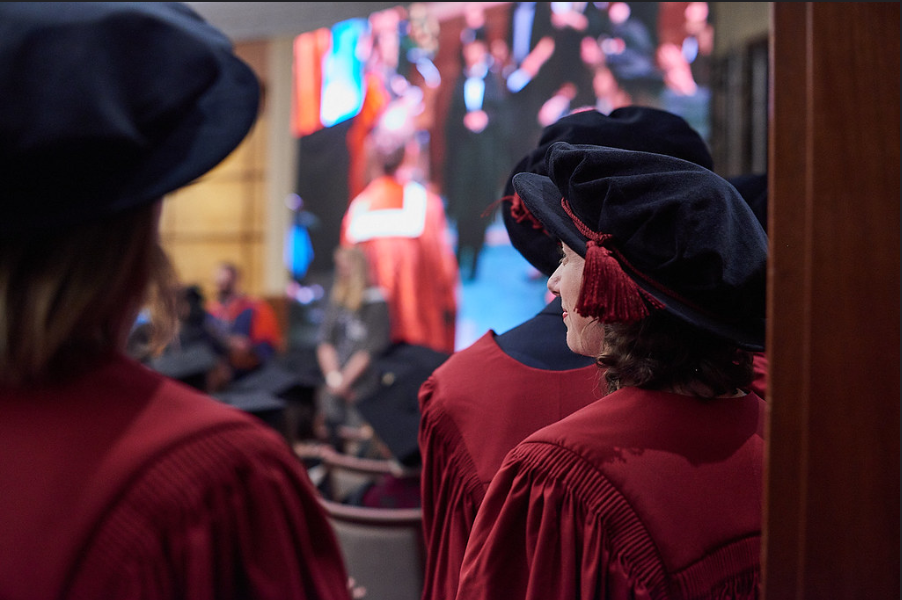
Picture of PhD student graduating

Studying for a PhD and writing the thesis is one of the most challenging undertakings in academic life. One of the difficulties is that there is no blueprint. Each research journey is different. Each thesis is unique. Some of us, and this includes me, probably spent too much time and energy emulating others. Then the realisation dawns that it’s yours and only yours to finish.

Writing the thesis is not a linear journey. There are stops and starts along the way. We start doubting our capacity as writers. We will wonder if our research will ever be good enough. Will people care? Or will they look down on our undertakings? Self doubt tends to creep in.

Motivation is also an issue. On the home stretch, which should be the final energetic lap, many of us get bored with our own words. The end is in sight, but energy levels dip, which often means that procrastination sets in.

What can we do on the final furlong? In no particular order, here are our top tips:

Make yourself a plan and timetable

Month by month at first. Week by week on the final stretch. Share this. Make it accountable. If you miss deadlines and milestones, rethink and learn from why this happened. If you were too ambitious, revise timelines but share this with your supervisor. If slippage happened because you simply didn’t write, reflect on why this happened. Don’t beat yourself up, but recognise that this was a slip and think of strategies to do better next time.

Create a reward system and reward chart

Maybe don’t hit the biscuit tin every time you write 500 words, but think of other treats. A walk in the park? A cup of your favourite tea? Relish and notice the reward. It will feel very satisfying to tick tasks off.

Divide tasks up into ‘intellectual’ and ‘housekeeping’

Some tasks are tough mental work, such as writing a meaningful conclusion. Others are more tedious, such as formatting tables, but these tasks still need to be done. So when you are feeling fresh, do the hard stuff. When you have brain fog, do the simpler tasks. This way, productivity is kept up.

Enough is enough

No thesis is perfect. A take-home of five to six contributions, clearly articulated, is better than a long list.

Divide your attention equally

Don’t fall into the trap of going over and over a certain section, but neglecting other equally important sections of your thesis. Use your chapter structure to ensure that you work across all chapters equally. It’s a common trap to neglect the conclusion. Use your abstract to articulate and shape what your key contributions are.

Chunking is your friend

Don’t think about writing thousands of words, or an entire chapter. Think about writing lots of 500 words. It will feel much more manageable.

Use your submission form to fix the end date

Do this as soon as realistically possible. Seeing the date in print makes it more real and will focus your energies.

Let go of perfection

A perfect thesis is a rare creature. Is this really what it’s all about? Doing doctoral research is an apprenticeship which prepares you for the next chapters of your life. Celebrate what you do well, and don’t mull on your weaker points. Good research is rarely perfect but thought provoking. That’s what it is all about.

Make a plan

Our final tip is not just to read ‘top tips’ but to plan how to put them into action. What are you going to tackle first of the above? Always remember – “a good PhD is a finished PhD”. Perfectionism and ambition are helpful, but should not deter and detract you from the final submission. It’s part of an academic’s life that we worry if our work is good enough, liked, cited and used by audiences. A thesis does not have to be perfect, but needs to document a learning journey.

We wish you well in your writing journey on the ‘final furlong’.

Further Information:

Dear White People

In the wake of the worldwide Black Lives Matters protests Jessica Brooke, Social Media Officer at Birkbeck, offers a view on how White people can begin being anti-racist. 

In light of the recent murder of George Floyd by federal police in Minneapolis and subsequent rioting across the globe, you might find that you are asking yourself some new questions. If you’re White like me, here are some things that we can consider.

Firstly, racism is everywhere and that is a fact. Some of the most harmful racism is the most transparent. I use the word transparent because although it might not be directly visible, (particularly to a White person), such as a murder filmed on video camera, it is always there. And it is there deep in the bones of the structures and institutions within our society.

Here are some statistics that illuminate how racism is functioning in British society today:

  • Job applications in British cities from people with White-sounding names were 74% more likely to receive a positive response than applications from people with an ethnic minority name.1
  • Black British women are five times more likely to die in childbirth compared to White women.2
  • In January 2020, exclusions for racism in primary schools were up by more than 40%.3

These British statistics show areas of British life that are affected daily by racism, and that restrict and disempower Black people from living the same quality of life as White people.

This is why claiming to ‘not see colour’ is racist. To not acknowledge a person’s identity, their history, and the ways in which they are treated in society means not acknowledging that person at all. The first step to overcoming racism is to fully acknowledge and identify it within the structures around us and especially within ourselves.

None of us will get it right every time, and overcoming racism is continuous work. We have to constantly check ourselves and others around us to ensure we’re considering our race and the race of others, and the impact that has on situations. Sometimes, our racism is unconscious. But applying ourselves to make these considerations is the first thing we can do to working towards eliminating it.

And this means acknowledging our privilege as White people. I’m going to say this again because I feel this often gets misconstrued:

Being White is being privileged.

This does not mean that being White means we’re richer, healthier, more supported or successful than every Black person.

What it does mean is that we are free to exist peacefully with no negative consequence of the colour of our skin. We do not fear unemployment, arrest, or deprivation of access to basic needs because of the colour of our skin.

To expand:

  • We do not need to change our names to be invited to a job interview.
  • We are not demanded an explanation of our nationality, our ethnicity, or our religion, due to the colour of our skin.
  • When we go on holiday or move to a new house, we do not need to check whether certain areas are racist towards people of our skin colour.
  • Throughout our lives, we have opened books and turned on the television and always seen people that look like us.
  • When we look to those in power, we will see people with the same colour skin as us.
  • We are able to recognise our identity as accepted and celebrated around us.

If you’re Black, you often do not have these privileges.

If you’ve never had to question whether you’ve been held back by the colour of your skin, then you are privileged.

The first thing we can do as White people is educate ourselves on the privilege that we enjoy, and the struggles of those Black members of our society. To do this, we must reach to existing resources. Black people have struggled physically, mentally and emotionally for long enough. It is now time for us, as White people, to understand this struggle without burdening them even more with the task of educating us.

Here is a list of resources that I have found helpful:

Books:

  • Why I’m No Longer Talking to White People about Race by Reni Eddo-Lodge: this book was the first book I read about race, and it blew my mind. Includes a great chapter about Black Feminism which I thought was useful in ways we think about ‘intersectionality’, as well as a brief but informative chapter on British history.
  • Don’t Touch My Hair by Emma Dabiri, discusses the cultural relevance of Black hair and how it symbolises the subjugation of Black bodies.
  • I’m Not Your Baby Mother by Candice Brathwaite discusses being a Black British mother – from the treatment of Black women in healthcare, to knife crime in London, to moving to rural areas of Britain and the experience of that as a Black family. A humorous and fun read that also educates.
  • Girl, Woman, Other by Bernardine Evaristo is a brilliant work of fiction that plunges you into the lives of 12 different Black women and their experiences in Britain all through the 20th and into the 21st Funny too.
  • Black and British by David Olusoga provides more of an insight into Black British history, helping to understand racism in our country.
  • I listened to Becoming by Michelle Obama on audiobook and would highly recommend consuming it in the same way. She speaks calmly, articulately and firmly about her experiences with racism as a child and then as an adult. Aside from the attention she gives to issues around race, she is just an amazing and inspiring human being and I would recommend this book on that basis too.

Articles/Social Media:

TV:

  • 13th: a documentary on the U.S. prison system, looking at how the country’s history of racial inequality drives the high rate of incarceration in America.
  • When They See Us shows the story of five young men who were unjustifiably charged and sentenced of the crime of assaulting and raping a jogger in Central Park.

References

  1. 2009 research from NatCen Social Research, commissioned by the government.
  2. 2018, MBRRACE-UK, https://www.npeu.ox.ac.uk/downloads/files/mbrrace-uk/reports/MBRRACE-UK%20Maternal%20Report%202018%20-%20Lay%20Summary%20v1.0.pdf
  3. https://www.bbc.co.uk/news/education-50331687

The Family Learning Series

Birkbeck’s Access and Engagement team and Brittney Chere and Jessica Massonnié from Birkbeck’s Centre for the Brain and Cognitive Development, have launched a virtual Family Learning Series for parents and children. The series of videos, ‘The Brain Explained’, are short lessons accompanied by fun activities for impactful family learning.

In February, the Access and Engagement Team along with Jessica Massonnié and Brittney Chere from Birkbeck’s Centre for the Brain and Cognitive Development delivered a workshop for children and parents at Stratford library. Over 10 families joined us for an hour of activities which included making your own neurons and building a brain hat.

With more family workshops planned for the Easter holidays and as Covid-19 shut all public venues, we began thinking about how we could bring our family learning programme online – and this is the result!

Below you’ll find four videos led by Brittney Chere focusing on the brain and including activities that you and your child/children can do at home. These activities are best suited for primary school aged children (Year’s 4-6) and we hope that they can play a role in any home schooling you are doing with your children right now.

The Brain, Explained: Part 1

Now you’re ready to get going- watch this video to start learning about the brain!

Activity 1 resource: Trace the Brain (1)

The Brain, Explained: Part 2


Activity 2 resource: Brain Hats

The Brain, Explained: Part 3

Activity 3 resource: ChatterBox instructions and activity ChatterBox.


The Brain Explained: Part 4

Activity 4 resource: Brain Game Instructions, Brain Game Board, Brain Game Neurons.

Where can I find other learning resources?

If this has sparked your interest as a parent in psychology or the brain, why not take a look at the Centre for the Brain’s virtual coffee mornings where you can hear from researchers about their research. Other Birkbeck events can be found on our events page.

If your child wants to find out more about the brain or how the body works; check out this University of Washington resource which has lots of great activities including these fun experiments you can do at home! This website also has some great science resources.

The importance of frequent handwashing to tackle transmission of COVID-19 and many other infectious diseases

As government’s across the world announce the easing of lockdown measures it is understandable to feel that the threat of COVID-19 has subsided for now. However, it is more important than ever to exercise caution. In this blog, Sanjib Bhakta, Professor of Molecular Microbiology and Biochemistry at Birkbeck reiterates and breaks down the importance of hand washing in the prevention of the spread of the virus.


We have been consistently reminded to wash our hands several times a day, but do we legitimately understand why? I am here to explain to why the Government is urging us to wash our hands with the intent to intrinsically stop the spread of COVID-19 and other, similar infectious diseases.

The novel infective Coronavirus causes a respiratory illness which implies that it is circulated through the virus-laden air-borne particles from sneezes and coughs, if we fail to catch sneezes/coughs in a tissue and carefully discard of it, the virus consequently ends up on surfaces where they can survive. Generally, we may fail to do this due to inconvenience and our predispositions; however, if somebody else touches that contaminated surface, the virus is able to transfer onto their hand and eventually can cause new infection to a susceptible host.

A recent study indicated that people touch their face 23 times an hour on average, the virus on your hands subsequently infects our eyes, mouth or nose when we touch it. Hence, the significance of washing your hands; not only to decrease the chances of you contracting the virus, but to prevent the spread on a global scale. When we come to talk about preventative measures, to decrease the chances of it spreading further, the public have a huge role to play.

Washing your hands on a regular basis ensures a decreased risk of contaminating surfaces and spreading infection. So, we have the basis of the importance of ‘washing’ your hands, but it is paramount that you wash your hands in an accurate manner for optimal efficiency in controlling the spread. Any Coronavirus is contained within a lipid envelope – essentially, a layer of fat. Soap has the ability to break this fat apart. As a result, the virus is unable to infect you and others. Moreover, using the correct handwashing technique mechanically pries off the germs and rinses them away.

Watch a video demonstrating the best way to wash your hands.

This video courtesy to Sreyashi Basu: While the video is demonstrating a good hand washing protocol, in order to save water, you should consider using taps with auto-off sensor or with elbow levers where available.

References: