Tackling online fraud: is it time to take a different approach?

A recent report by Crest Advisory in partnership with Birkbeck and the Police Foundation found that the emotional impact of online fraud for victims is often worse than the financial hit. In this blog Dr Bina Bhardwa, Senior Research Fellow at the Institute for Crime & Justice Policy Research (ICPR) at Birkbeck, drawing on findings from focus groups with the public, shares her vision for how we need a different approach to tackling online fraud.

Online fraud is an everyday ‘trip hazard’ that we have become, or are under pressure to become, better skilled at and (sadly) accustomed to navigating. The volume, sophistication, and constant barrage of fraud risks makes the task of filtering out this ‘background noise’ challenging and, most importantly, makes us ever more reliant on credible and trusted sources of information.

While most members of the public trust messaging from their banks, the occasional ‘fraud awareness’ training at work and household names such as Martin Lewis to keep them informed, much of their knowledge about fraud is derived from experiences shared by friends and family who have been victims of fraud or had near misses, and an avalanche of misinformation. The government’s latest anti-fraud campaign – Stop! Think Fraud – is a step in the right direction, but we know little as yet about its scope to bring about tangible change.

There was a perception among focus group participants we spoke to as part of a wider research project on Tackling Online Fraud that the police did not have the capacity to respond to volume fraud, especially where financial losses were thought of as insignificant and where more ‘serious’ crimes took precedence. This goes some way towards explaining the under-reporting of fraud. Deficiencies in the state’s capacity to protect its citizens from crime, means that responsibility for protecting oneself from online fraud threats rests largely with the individual.

Government fraud strategies, and the recommendations stemming from much of the research on fraud tend to centre, perhaps somewhat predictably, on three staples:

  • more resources – usually aimed at bolstering the numbers and specialisms of investigators,
  • forging and improving public-private partnerships, and
  • better financial education.

Of course, these are important and worthy recommendations. However, what we see less of is how we can beg, borrow, and steal ideas and good practice from other areas of criminal justice, to daringly try something different. Drawing on two examples from the drugs field, I present, here, a case for applying models and methods from elsewhere to tackling online fraud.

Drug safety checking at festivals

Not without contention among the conservative, drug-safety checking services made their debut in the UK in 2018 at the Secret Garden Party and Kendal Calling music festivals, pioneered by The Loop. Since then, the model of drug testing has expanded its reach and support. The operating model is centred on providing non-judgmental, harm reduction advice to members of the public. Substances are voluntarily submitted to The Loop’s chemists who test them and then share risk and safety information with individuals based on the results. A further feature is the dissemination of live-time, in-situ safety information via social media channels, which communicate the risks of, for example, adulterants and high strength substances in circulation at an event.

The key tenets of the drug safety testing model – non-judgmental, led by experts, a feedback loop and the live dissemination of knowledge – could be imported to tackle online fraud. This would not in fact be new to fraud prevention, as it is the premise of Action Fraud Alert. However, the majority of the participants in our public focus groups had not heard of Action Fraud, let alone proactively signed up for alerts. Is this then a case for raising public awareness of Action Fraud or is it a call for a more trusted and effective national system for circulating topical alerts? For example, during the height of the ‘Hi Mum’ impersonation scams, the government – informed by National Fraud Investigation Bureau (NFIB) analysis of reports – could have disseminated alerts and safety messaging to the public, as the equivalent to providing non-judgmental, credible, harm minimisation drug safety advice in live time.

A ‘whole systems approach’ to tackling drug misuse

Catalysed by Dame Carol Black’s independent review of drugs which highlighted the damning impact of years of disinvestment in drug treatment services, the government has invested in rebuilding drug treatment and recovery services, taking a ‘whole of Government’, ‘whole systems approach’. While the government’s latest Drugs Strategy is not without its shortcomings[1], what is key here is shared responsibility for the ‘drug problem’.

Project ADDER (Addiction, Diversion, Disruption, Enforcement, Recovery) is an example of this approach. The £59 million programme involved law enforcement, treatment and recovery services working together in areas with the highest prevalence of Class A (heroin and crack cocaine) drug use and drug-related deaths. An unpublished evaluation of the programme found that the close cooperation between government departments, public sector enforcement services and voluntary sector treatment services, working towards the shared goal of combating drug misuse, produced positive outcomes, such as contributing to an increase in arrests for high harm individuals involved drug supply. Can we not do the same for combating fraud, e.g. taking a ‘whole systems’ approach to tackling high harm fraudsters? Focus group participants recognised that the police alone are largely powerless in the face of the ever-increasing volume and global reach of fraud. The Home Office, Department for Education, Department for Science, Innovation and Technology, Department of Health, and other relevant departments, in conjunction with private and voluntary sector, should work together to disrupt fraud, divert fraudsters who are caught and better understand mechanisms for recovery from the psychological and health harms of fraud. This would be an expansive ‘whole systems approach’ that is held to account and subject to evaluation.

The fact that fraud now makes up over 40% of all crime in England and Wales signals that it’s time for a different approach. However, there’s no need to reinvent the wheel: we can build on evidence of good practice from other areas of criminal justice. As demonstrated here, the drugs field offers a good starting point.

Further information

“It’s time to move, take action and look after our mental health”

With Mental Health Awareness Week 2024 taking place from 13 to 19 May, William Sarenden, BA Philosophy student and Chair of the Birkbeck’s Students’ Union, shares tips for how to improve mental health, especially in the context of this year’s theme of movement.

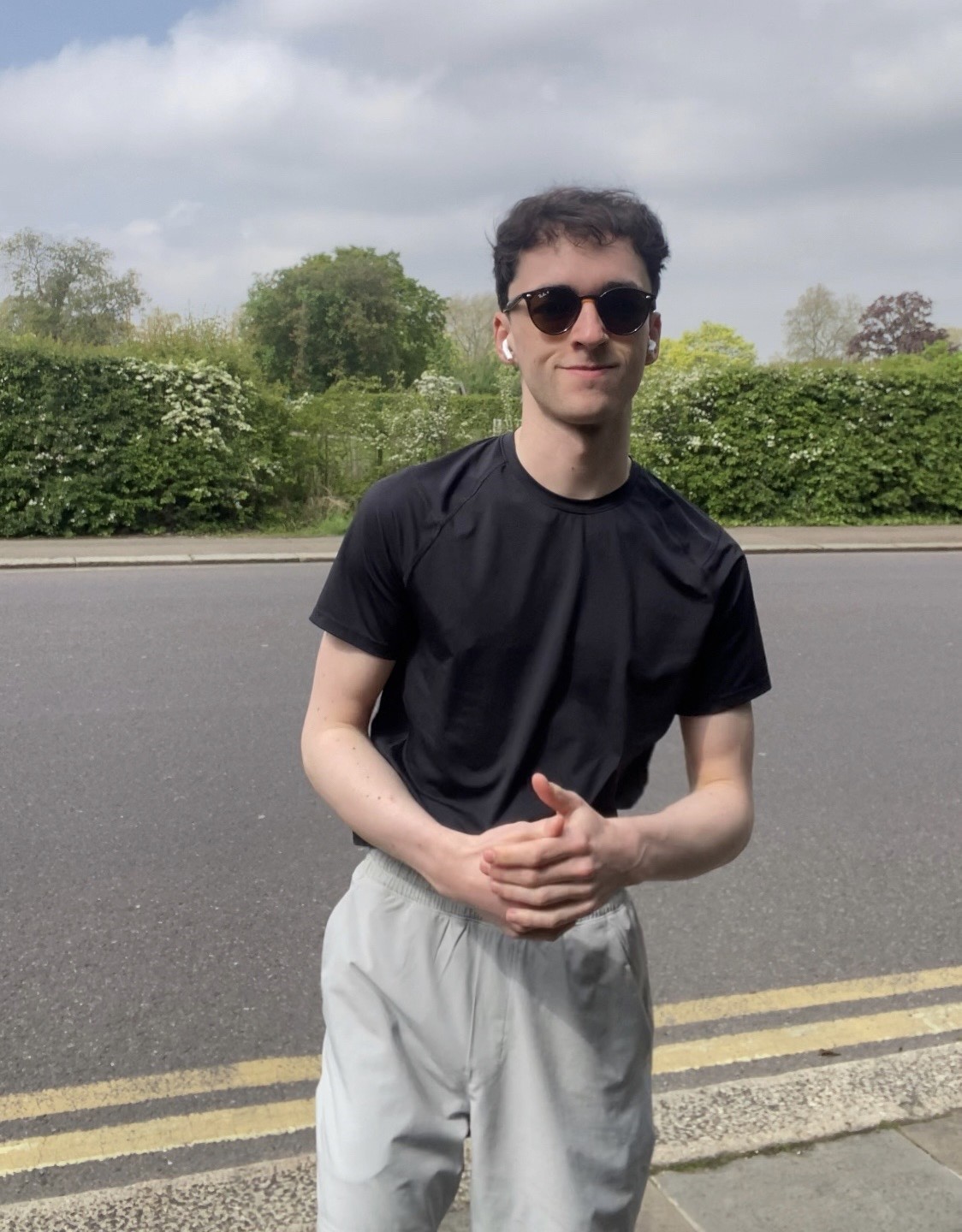
William Sarenden on a run

William Sarenden on a run

It would be an understatement to say that mental health awareness is important. Even in a world that seems increasingly aware of its necessity, there is still much room for improved mental health outcomes and effective strategies in tackling the matter.

Mental Health Awareness Week is a chance for everyone to consider the impact mental health has on their lives. It’s here to show support for those in need as well as educate ourselves on the diverse facets of mental health, and offer avenues for reaching out and providing support.

Commencing on Monday the 13th of May, this year’s theme is “Movement: Moving more for our mental health” which underscores the interconnectedness between our physical activity and mental wellbeing.  With each daily action contributing to our mental health, it approaches the subject in a way we can all relate to and get involved with. This includes viewing mental health in a way that we are able to have a more holistic, accessible, and empowering approach to a healthy wellbeing.

Tackling the issues of stigma surrounding mental health, celebrating the people that support those in need and championing developments in our understanding is at the heart of this week’s meaning. With this all in mind, there are a few key messages highlighted by this year’s theme all of which are important to think about throughout the week:

The link between mental health and movement:
With a plethora of research that showcases the strong link between how our movements impact our mental health, it’s important that we regularly exercise, keep active and find time for ourselves. While having a physical exercise routine, going to the gym, or even heading out on a nice walk has its health benefits, the value that this time has for the mind is sometimes overlooked or not considered. Whether its time away from the constant level of stimulation provided by technology or a simple break away from work, it’s great to prioritise a time that allows you to focus on what will make you more aware of your mental state.

Accessibility and inclusivity:
Mental Health Awareness Week isn’t just about our own individual experience, but the collective experience of our communities. Understanding that we all have different levels of needs is key in supporting both our own and others’ wellbeing. It’s important that we take time to find out our own individual preferences and capabilities, whilst recognising the needs of others that may differ from our own and help in any way we can to better our community.

Prevention of mental health challenges:
In acknowledging the need for movement in our day-to-day life, we start the trend of being able to spend more time focusing on not only supporting existing mental health but playing a critical role in prevention. Prevention can come in many forms and this year’s theme showcases one of the best ways, by simply keeping fit and active.

Empowerment and self-care
Cultivating a positive relationship with our bodies, fostering a sense of balance, and taking ownership of our mental wellbeing is essential in empowering us to achieve what we want in life. It’s all about fulfilling those basic needs first that allow us to then face any of life’s daily challenges. We should always look to embrace movement as a form of self-care as it will not only improve our wellbeing but contributes to a culture that values and supports health and self-care practices.

My own advice to the reader
Discovering personalized methods to nurture our wellbeing lay the foundation for any robust mental health. Personally, I’m someone who loves to stay active, but I’ve learned to balance it with less fast paced moments. Whether it’s a leisurely stroll through one of London’s picturesque parks or a quiet reading session, these activities rejuvenate my spirit and allow for that much needed downtime. Additionally, I’m one of the many people who have a newfound love for running (although I’m still trying to find the right pace) which has been both a challenging yet exhilarating opportunity to discover new ways of working on my mental health. This week we should embrace the unknown by exploring new activities, joining clubs, or experimenting with different workout routines—because true insight into what truly uplifts us only emerges through exploration and experimentation.

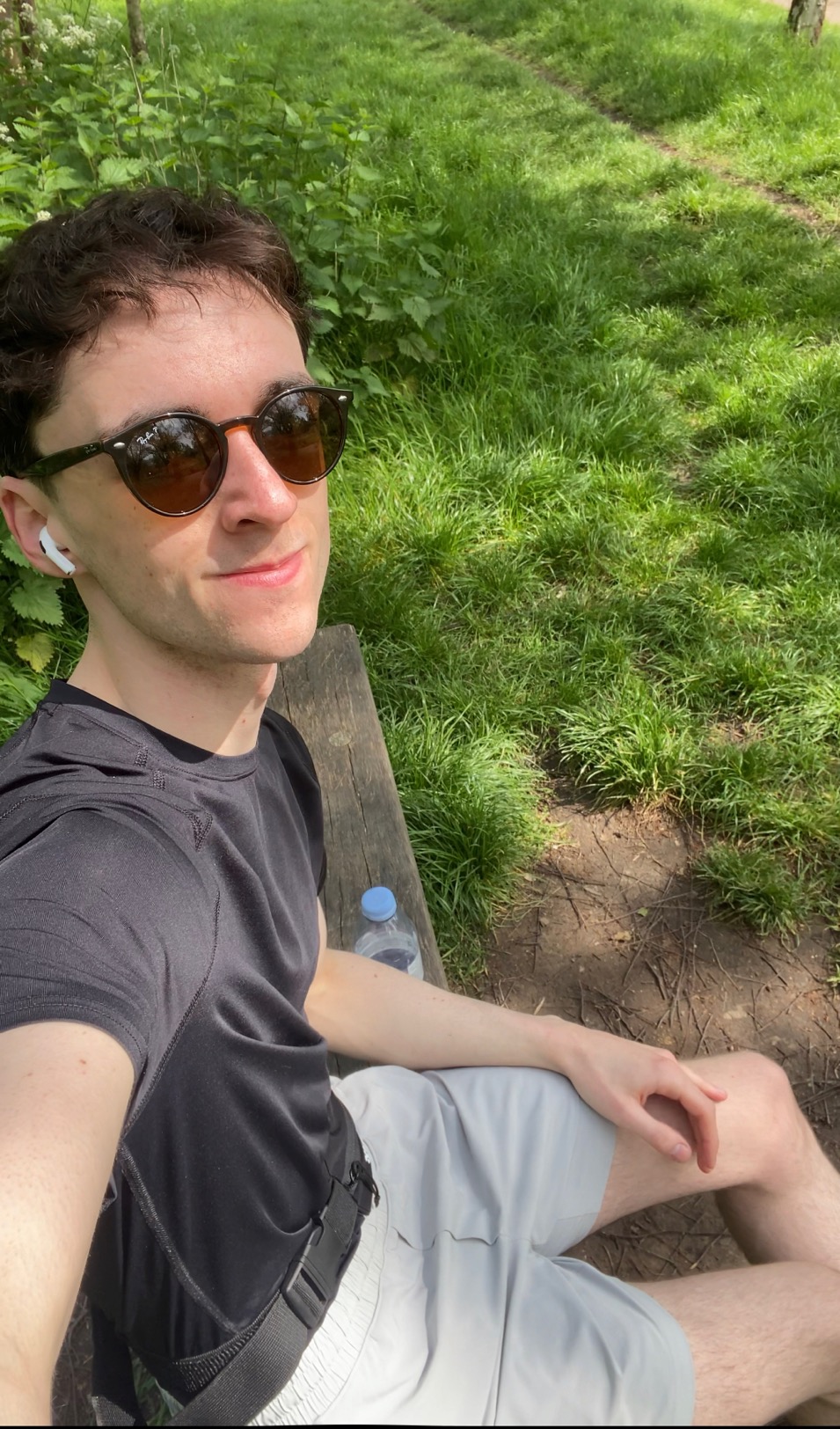
William Sarenden taking a break on a run

William Sarenden taking a break on a run

Creating a better environment for ourselves and others
Building a sense of belonging is the key for many to connect with their mental health. In actively participating in many forms of movement; yoga classes, group exercise, team sport and any community led activity, we allow others to feel more welcomed and give them more opportunities for critical support. Sometimes all it takes is the company of others to help us get moving.

It’s very common for us to forget or neglect the need to look after our own wellbeing, when we all live busy lives and have a lot on our plate. Remember that this week serves as a reminder to take that time out and give ourselves and others the support needed to grow, develop, and live the best lives we can.

Birkbeck’s Wellbeing Service together with the Birkbeck Students’ Union has created a programme of events to mark the week, including mental health hubs where students can access support, a 6 hour walk around London and a film screening of ‘The Boys in the Boat’. Find out more and book onto ticketed events here.

Further information

Dive into literary delights: discover enchanting bookshops near Birkbeck

Sidhant Maharaj, MA Gender and Sexuality Studies student, is a self-confessed bookworm and in this blog reveals beautiful bookshops a short walk away from Birkbeck’s campus.

Sidhant Maharaj

Hey fellow bookworms! Are you like me, finding solace and escape within the pages of a good book? If so, you’re in for a treat! I’m excited to share some hidden gems – cosy bookshops nestled near Birkbeck, waiting for you to explore and get lost in their enchanting aisles.

  1. Waterstones, Gower Street:

Situated right opposite the Student Central building on Malet Street, Waterstones is a book haven. With its inviting ambiance and vast selection of books spanning various genres and interest, it’s a must-visit destination for any book enthusiast. I am not shy in sharing that this is where you will find me most days.

Waterstones, Gower Street

Instagram: https://www.instagram.com/waterstones/

  1. Judd Books, Bloomsbury:

For those seeking academic and second-hand treasures, Judd Books in Bloomsbury is a must-visit. With its extensive collection of used and rare books covering a wide range of subjects, you’re sure to find a gem that piques your interest.

Judd Books, Bloomsbury

Instagram: https://www.instagram.com/juddbooks/

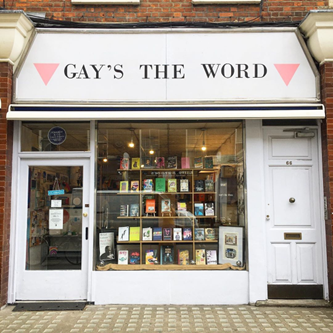
  1. Gay’s The Word, Bloomsbury:

Specializing in LGBTQ+ literature, Gay’s The Word is not just a bookstore – it’s a cultural hub. With its welcoming atmosphere and thoughtfully curated selection, it’s the perfect place to discover diverse voices and narratives.

Gay’s The Word, Bloomsbury

Instagram: https://www.instagram.com/gaysthewordbookshop/

  1. Skoob Books, Russell Square

Another book shop not to miss is Skoob Books near Russell Square. With its labyrinthine layout and shelves overflowing with literary treasure, it’s a paradise for book hunters with both new and second-hand gems.

Skoob Books, Russell Square

Instagram: https://www.instagram.com/skoobbookslondon/?hl=en

  1. Word on the Water, Regent’s Canal:

Ever dreamed of browsing for books on a floating bookstore? Well, dreams do come true at Word on the Water! This charming book barge on Regent’s Canal offers a unique and cosy atmosphere to discover your next literary adventure.

Word on the Water, Regent’s Canal

Instagram: https://www.instagram.com/word.on.the.water/?hl=en-gb

  1. Daunt Books, Marylebone:

If you haven’t already stumbled upon this gem, you’re in for a treat! Daunt Books in Marylebone is a paradise for book lovers. With its stunning Edwardian interior and shelves lined with carefully curated books, it’s easy to get lost in its charm for hours.

Daunt Books, Marylebone

Instagram: https://www.instagram.com/dauntbooks/

As a fellow book lover, I know the joy of stumbling upon a new bookstore and getting lost in its shelves. So, next time you’re on campus at Birkbeck with some free time on your hands, why not embark on a literary adventure and explore one of these delightful bookshops? Trust me, your inner bookworm will thank you!

Further information

How to prepare for a Chevening Scholarship interview

In this blog current Birkbeck Chevening scholars, Ahmed Alaa Yaqoob Maki, MSc Entrepreneurship student from Iraq and MSc Business Innovation students Aslan Saputra from Indonesia and Ramata N’Diaye from Mali, tell us how they tackled the Chevening interviews and give advice to this year’s applicants.

How did you prepare for your Chevening interview?

Ahmed Alaa Yaqoob Maki:

Ahmed Alaa Yaqoob Maki

First of all, congratulations on reaching this stage! To get started, go back to your application and focus on your essays and the key points you highlighted. Be ready to discuss any part of your application in detail, including your career goals, leadership experiences, and how you plan to use the Chevening scholarship to contribute to your home country. Furthermore, prepare to demonstrate your skills in leadership and networking through real examples from your past experiences. Most importantly, be knowledgeable about current events and issues in your country, the UK, and globally, especially those related to your field of study or professional sector.

In addition, you can find lots of mock interview opportunities. Practice with mock interviews to simulate the interview environment. This can help you become more comfortable with speaking about your experiences and achievements confidently. Feedback from these sessions can be invaluable.

Ramata N’Diaye:

Ramata N’Diaye

To prepare for my Chevening interview, I embraced a thorough approach centered around self-reflection, research on the Chevening scholarship, and diligent queries on my Top 3 universities. I immersed myself in understanding the Chevening Scholarship’s core objectives, values, and the attributes they seek in scholars. This foundational knowledge was crucial for tailoring my responses to align with Chevening’s mission.

I then reflected on my personal, academic, and professional experiences, identifying clear examples that demonstrated my leadership qualities, networking abilities, and commitment to positive change.

Recognizing the importance of staying informed, I kept abreast of current global and regional issues, particularly those relevant to my field of interest and my home country. Practicing mock interviews was also a pivotal part of my preparation, allowing me to refine my answers, improve my delivery, and build confidence.

Aslan Saputra:

Aslan Saputra

In my country, several people who had been shortlisted for Chevening formed small groups to be able to practice together and share the latest information about the Chevening application.

When I entered the shortlisted stage, I knew the story I brought to the application attracted the hearts of the Chevening committee, so my task during the interview was to retell it more enthusiastically and in more detail so that my charisma became stronger and more promising.

What advice would you give to this year’s shortlisted candidate on how to ace their interview?

Ramata N’Diaye:

For this year’s shortlisted candidates, my advice is to deeply understand what Chevening stands for and thoughtfully reflect on your journey and aspirations. Articulate your vision clearly, demonstrate how you embody the Chevening values, and be prepared to engage in discussions on current affairs with insight and poise. Remember, authenticity and preparedness are key to acing the Chevening interview.

Aslan Saputra:

My advice is to not bring new stories to the interview. Just elaborate on the essay that you wrote previously, and show your unique and strong character. Don’t be too stiff, and learn how to tell stories that are interesting and fun.

Ahmed Alaa Yaqoob Maki:

When answering questions, consider using the STAR technique (Situation, Task, Action, Result) to structure your responses. This method helps you deliver comprehensive and compelling answers.

Further information


Celebrating the Lunar New Year and Year of the Dragon with friends and colleagues at Birkbeck  

Zhuoxin Han is a second year LLB Law student. In this blog they share their experience of attending the Lunar New Year event held by the university.  The Lunar New Year is the most important festival celebrated by many countries in Asia. The influence of the Spring Festival has been spreading worldwide; for instance, Canada, Australia, New Zealand, South Africa, the UK, and the US have begun to join in this celebration. You may have noticed the huge number of red lanterns and decorations in London’s Chinatown if you happened to pass by recently. Or maybe the red celebration signs on the street -screens, as well as dragon illustrations on newspapers or magazines? The Evening Standard, for instance, printed a super cool red dragon as its cover on 10th Feb. 

The Lunar New Year is associated with old myths and traditional customs. Every family undergoes a thorough cleaning while approaching the new year, meaning they are ready to sweep out bad things or moods and be ready to accept the incoming good fortune. In the past, people would practice calligraphy and write their own versions of couplets; today people tend to purchase ready-made couplets. Another custom is using red paper cut outs and couplets to decorate windows and doors respectively. These pretty ornaments make people feel content and joyful. 

This year, the Lunar New Year event was jointly held by Birkbeck Global Recruitment Team and La Yong Jackson, from the International Student Administration team. As student Ambassadors, Ziyao and I were appointed to assist this event.

Before Birkbeck participants arrived, our team members cleaned and decorated the locations where the celebrations were due to take place in the main Malet Street building, the Canteen on the fifth floor, and the George Birkbeck Bar on the fourth floor. We also managed to create a ‘photo corner’ for guests who wish to take pictures, using our phones or Polaroid instant cameras provided by staff for everyone to use. 

The most popular custom during the Spring Festival must be the Red Pocket! The bright red reminds people of the warmth of family, the way everyone once gathered around, talking at the fireplace. I’ve sometimes wondered if that’s why Santa’s hats are red. 😊  

This year, Birkbeck prepared red pockets containing a free lunch voucher, golden chocolate, plus a delicate Birkbeck College badge for everyone who registered for the celebrations. As an international student, I found myself impressed by all these thoughtful details. It was probably a time-consuming task to prepare, and felt special. I was also impressed by the canteen staff, who had a really busy day, preparing food for both the regular daily menus and also the extra Asian cuisines for our celebrations. Sammie, Yunmeng, Ziyao, and I helped with guest check-in; everyone looked surprised and happy when they received the red pocket. It was nice to witness their genuine smiles. After lunch in the canteen, we moved to the George Birkbeck Bar.

Here we enjoyed three main activities: red paper cutting with traditional calligraphy or painting, voting for the best dresser and finally a quiz with prizes to be won! One girl drew a vivid dragon and received compliments with people taking pictures of her painting, and she even won a prize for it. Another lady who dressed in a traditional long dress with a beautiful pearl necklace won the best-dressed prize. She looked surprised when she received the award and gave a big, charming smile.

The quiz session was exciting; questions were related to customs and special products of different countries. It was a well-balanced quiz that included single choice, multiple choice, and matching. Each question had a strict time limitation which added to the excitement; everyone was holding their breath. When the results were released, I was a bit shocked to realise I had won! To be honest, I had guessed some of my answers! My colleague was searching for the mysterious winner: Han, which is my shortened nickname. She moved through the room super-fast, and I was chasing her, trying to explain that I was the one she was looking for. Finally, she turned around and noticed me chasing her, which made everyone laugh. There were two others who had come in with high scores, so as the three winners we gathered and had our picture taken. After this, lots of students stayed longer to socialize with each other, and we took lots of photos to remember the happy memories!

The Lunar New Year marks the end of the cold, dark winter and celebrates the beginning of a hopeful spring; it is a symbol of the final rest after a busy or tiring year; a chance to reunite with family members and recharge energy. People use this opportunity to catch up with those dear to them, preparing and getting ready for the next following year. This event which created a sense of community and togetherness, really helped capture these feelings.

As a final note from me, I wish you all a happy Lunar New Year! May the Year of the Dragon bring you good fortune! 

龙年吉祥!1 龍年吉祥!2 

Below is a list of well wishes for the lunar new year in a variety of languages, so feel free to spread the well wishes in your own language!

Albanian: Le të sjellë Viti i Drakonit fat për ty!

Arabic: “مهما جلب عام التنين لك من الحظ السعيد!” (mahma jalaba ‘aam altinin lak min alhaz alsaeid)

Bengali: “ড্রাগন বছর তোমার ভাগ্য আনুক!” (Ḍrāgana bôshara tōmāra bhāgya ānuka!)

Bosnian: “Neka godina Zmaja donese sreću tebi!” (same as Croatian)

Croatian: “Neka godina Zmaja donese sreću tebi!”

Czech: “Ať ti Rok Draka přinese štěstí!”

Danish: “Må Drageåret bringe dig held og lykke!”

Dutch: “Moge het Jaar van de Draak je geluk brengen!”

Estonian: “Loota, et Draakoni aasta toob sulle õnne!”

Filipino: “Sana’y magdala ng suwerte sa’yo ang Taon ng Dragon!”

Finnish: “Toivotan sinulle onnea Lohikäärmeen vuonna!”

French: “Que l’Année du Dragon vous apporte bonne chance!”

German: “Möge das Jahr des Drachen Ihnen Glück bringen!”

Greek: “Ας φέρει το Έτος του Δράκου καλή τύχη σε εσένα!” (As férei to Étos tou Drákou kalí týchi se eséna!)

Hebrew: “שנת הדרקון תביא לך מזל טוב!” (Shnat hadrakon tavi lecha mazal tov!)

Hindi: “ड्रैगन का वर्ष आपको शुभकामनाएं लेकर आए!” (ḍragan kā varṣ āpako śubhakāmanāeṁ lekar āe!)

Hungarian: “A Sárkány Éve hozzon neked szerencsét!”

Icelandic: “Má Drakársárinn koma þér heppni!”

Indonesian: “Semoga Tahun Naga membawa keberuntungan bagi Anda!”

Italian: “Che l’Anno del Drago ti porti fortuna!”

Japanese: “龍の年があなたに幸運をもたらしますように!” (Ryū no toshi ga anata ni kōun o motarashimasu yō ni!)

Korean: “용년이 당신에게 행운을 가져다 주기를 바랍니다!” (Yongnyeoni dangsinege haeng-un-eul gajyeoda jugireul barabnida!)

Kurdish: “Salê Şahmaran ji we re şans bidin!”

Latvian: “Lai Drakona Gads atnes tev veiksmi!”

Lithuanian: “Tegul Drakono metai tau atneš laimę!”

Malay: “Semoga Tahun Naga membawa keberuntungan kepada anda!”

Nepali: “ड्र्यागनको वर्ष तपाईंलाई भाग्य ल्याउनुहोस्!” (Ḍr’yāganakō varṣa tapā’īnlā’ī bhāgya lyā’unuhōs!)

Polish: “Niech Rok Smoka przyniesie ci szczęście!”

Portuguese: “Que o Ano do Dragão traga boa sorte para você!”

Romanian: “Anul Dragonului să îți aducă noroc!”

Russian: “Пусть год Дракона принесет вам удачу!”

Serbian: “Neka godina Zmaja donese sreću tebi!” (same as Croatian)

Spanish: “¡Que el Año del Dragón te traiga buena suerte!”

Swahili: “Mwaka wa Joka ulete bahati njema kwako!”

Swedish: “Må Drakens år bringa dig lycka!”

Thai: “ขอให้ปีมังกรนำโชคดีมาหาคุณ!” (kh̄ xih̄ pī mạngkrnăm chŏkh dī mā h̄ā khun!)

Turkish: “Ejderha Yılı size şans getirsin!”

Ukrainian: “Нехай Рік Дракона принесе вам щастя!” (Nekhay Rik Drakona prynese vam shchastya!)

Vietnamese: “Chúc năm Rồng mang lại may mắn cho bạn!”

More Information: 

 

Meet the Chevening Scholar: Felix Hollison

Felix is from Soloman Islands, and studying LLM Pathways (Law and New Technology). Find out more about him, his remarkable path to Birkbeck, and his hopes for the future in the below Q&A.

What is your academic and professional background?

I am a lawyer by profession, and I graduated with a Bachelor of Law (LLB) at the University of the South Pacific (USP) in 2014. From 2015 to 2019, I worked as a Senior Crown Counsel in the Attorney-General’s Chambers in Solomon Islands. I was part of the litigation team within the chambers, and represented the Solomon Islands Government mostly in civil cases in the Magistrates Court, High Court and the Court of Appeal.

I joined the Central Magistrates Court of Solomon Islands in June 2019 as a Principal Magistrate and I still work there. Mostly, I deal with criminal cases such as robbery, burglary, assault related cases, sexual offences, human trafficking, theft offences, domestic violence, public disorder offences and other wide range of criminal offences.

Why did you apply for Chevening?

I applied for Chevening because I think this prestigious scholarship will be the vehicle for me to gain a world-class academic learning in the United Kingdom. It will also be a chance to enhance my leadership credentials, and the qualification will no doubt increase my marketability and employability globally.

What are your long-term plans after studying?

One of my goals is to help develop the jurisprudence of my country through my judgments, assist in law reforms where necessary and help Solomon Islands modernise its laws for the betterment of the country. Should I be given the chance to become a judge in the superior courts in the future, it will be a humble opportunity to be more influential in terms of the development of our jurisprudence.

Why did you choose Birkbeck for your studies?

I selected Birkbeck because it is a renowned university located in the heart of London that has transformed many lives for around 200 years already. More importantly, it provides the LLM with Pathways that I wish to study. It has a strong tradition of research across its departments of Law and Criminology with their internationally distinguished staff. The phenomenal changes that have taken place in technology will transform the way society operates in many ways that will have consequential effects on the law around the globe. My country is susceptible to the adverse effects of technological changes such as the erosion of democracy, climate change, cybercrime, biotechnology, political radicalisation and automation to name some.

Birkbeck is the ideal place to gain the necessary academic and professional knowledge to assist my country navigate through these uncertain times. Modernising my country’s laws to keep abreast with the technological and normative changes is a must, and I wish to be an agent of change in my country.

“The International team at Birkbeck went above and beyond in providing me with support”

Fijian Sidhant Maharaj is currently enrolled on Birkbeck’s MA in Gender and Sexuality Studies. Here, Sidhant shares why choosing Birkbeck was the right decision.

Sidhant Maharaj

I’m an Intersectional Queer Feminist Activist from Fiji with over 8 years’ experience working in the areas of Women, Girls, LGBTQI+ rights, and Youth Empowerment. I’m also a non-binary feminist researcher and work with organizations nationally, regionally and internationally in conducting, designing, and facilitating training programs and policy development.

With multiple international leadership trainings, I continuously advocate for intersectional policies while increasing visibility and amplifying marginalized voices. I currently serve as the East Asia and the Pacific Representative to the Community Solutions Program Alumni Board of more than 630 alumni from over 80 countries. I also served as a Specialist Mentor for the Community Engagement Exchange Program 2023, funded by the US Department of State and supported in its implementation by the International Research & Exchanges Board supporting over 100 youths from over 70 countries. With my work in the region I have also been selected as a UN Women 30 for 2030 youth leader in South East Asia and the Pacific.

Why did you choose Birkbeck?

I chose Birkbeck for my MA in Gender and Sexuality Studies program because I was particularly drawn to how Birkbeck examines current debates around gender and sexuality which incorporate the cutting-edge research of world-leading academics at Birkbeck, who are passionate and engaged in the real world, working towards social justice with activists, policy-makers, academics, and charities and NGOs. Another reason that made me choose Birkbeck over other university offers I had was the people and culture at Birkbeck. Due to some unforeseen circumstances I was quite late in applying to universities but the International team at Birkbeck went above and beyond in providing support to me all the way in Fiji, making the application process seamless. Today being halfway across the world in London I am so glad I chose Birkbeck!

What do you plan to do after your studies at Birkbeck?

After the completion of my MA in Gender and Sexuality Studies, I plan to further my research in Fiji and the Pacific and work more closely with the public and private sector in developing/updating more inclusive and diverse policies that has women and LGBTIQ+ community as safe guarded categories shifting from the gender as binary narrative.

Further information

Changing careers: from working in law to becoming a football agent

Iddi Yassin is one of the 21 Birkbeck 2023 Chevening scholars. In this blog Iddi shares his dreams about the future and the place Birkbeck will play in helping him achieve his goals.

Iddi Yassin

I’m from Tanzania and I’m studying MSc Sport Management at Birkbeck. In 2016, I was admitted to the Tanzania Mainland Bar Association, and I practised law as an Advocate of The High Court of Tanzania.

Chevening as a first step to a new career

I applied for Chevening in 2023 because it’s arguably the most prestigious scholarship programme with remarkable scholars and alumni from different social, economic, and political backgrounds.

My long-term plan is to become a football agent and manage young athletes in Tanzania to fulfil their career ambitions on the global stage. I hope the extensive skills and rich network acquired from my postgraduate studies will help me achieve this.

Why Birkbeck?

I chose Birkbeck due to its great reputation and popularity in the sports industry, as well as its great staff equipped with understanding of management, governance, and regulatory issues within the business of sports. Furthermore, studying in a cosmopolitan and business-oriented capital city such as London will give me exposure to a wide range of sports businesses, football clubs, and football regulatory authorities.

I’m confident that having the opportunity to study this course will help build my skills, competence, and expertise and provide me with a strong foundation as a football agent and sports consultant. I plan to participate fully in various long-term sports programmes including raising awareness to the public, writing articles, and publishing them. This includes being actively engaged and collaborating with the government and other stakeholders in capacity-building programs.

Further information

Meet the Chevening Scholar: Ramata N’Diaye

Ramata N’Diaye is a 2023 Chevening scholar from Mali, passionate about Youth and Women empowerment and social entrepreneurship. Here, she shares her experience applying for the UK government’s prestigious scholarship and what made her choose Birkbeck.
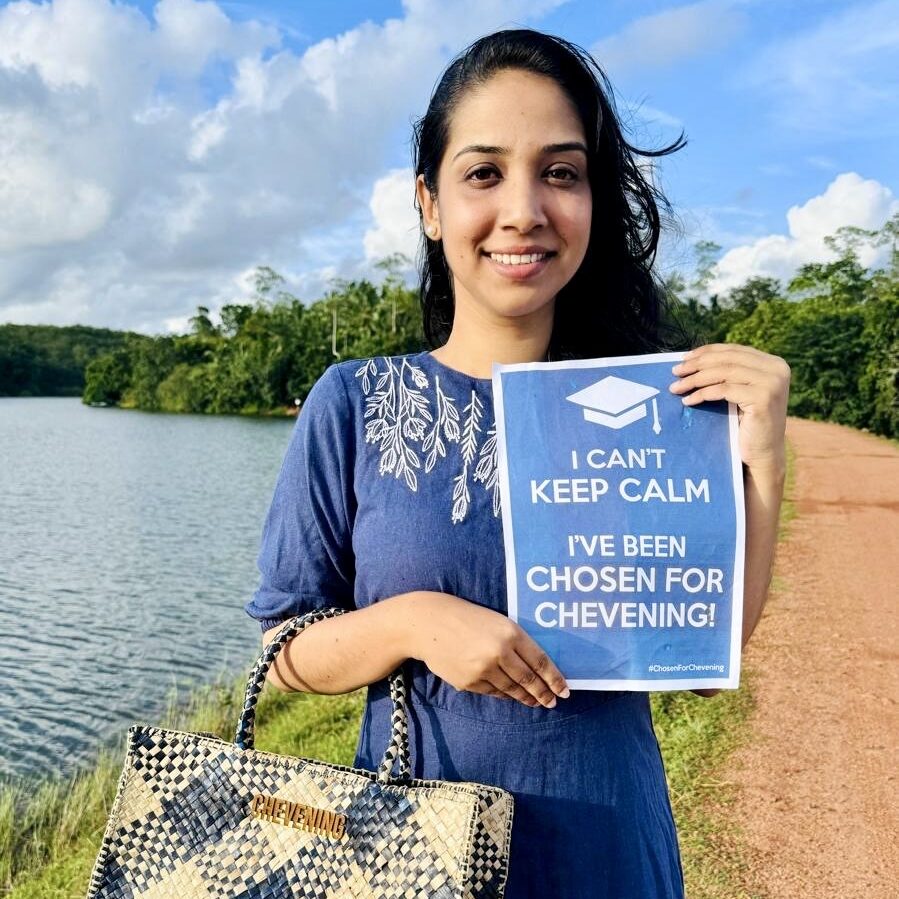
A woman smiles and holds up a sign that reads 'I can't keep calm, I've been chosen for Chevening!'A short tour of my career serving youth and empowering women 

‌Entrepreneurship is a field that I’m very passionate about and been in for many years. As the Associate Director of Programs and Partnerships at Impact Hub, Bamako, I help young people realise their entrepreneurial dreams. I’m able to share my skills through training and coaching sessions held within the framework of various programmes. The programmes include, The Next Economy, which is made possible by the Dutch Ministry of Foreign Affairs; the Women Entrepreneurship and Leadership programme which is supported by the US Embassy; and Road2COP, a project financed by the UK Embassy in Mali that aims to provide an innovative and interactive platform for Young Malians in order to better understand the climate crisis. 

Through my work I have planned, designed and implemented more than 10 impactful programs for over 2000 young people and have helped raise more than 100 million FCFA in financing for local entrepreneurs. I think my experience in management within the the start-up and innovation sector helped with this a lot. Furthermore, in my role of communication Coordinator of the National Council of Business Incubators and Innovation Centres of Mali, I built valuable partnerships with various stakeholders and played a pivotal role in fostering a vibrant entrepreneurial ecosystem, leading me to be a key speaker at the World Bank Group Regional Youth Summit in May 2023. Finally, as women entrepreneurship advocate, I have published several articles on female entrepreneurship in Mali and participated in various forum on the topic as a panelist. 

Education and experience go hand in hand 

I hold a Bachelor’s degree in Organisation Communication from Universiapolis, the international University of Agadir, Morocco, and I graduated from Nottingham Trent University with a Master’s Degree in Media and Globalization in 2017. I hold an Expert Certification in Business Support for Innovative Entrepreneurship from the Afric’Innov community, an investment readiness expertise certification from Investisseurs & Partners and finally a verified certification in Entrepreneurship in Emerging Economies from Harvard University online courses. 

Chevening, entrepreneurship and economic development 

In a country threatened by political, economic and security instabilities like Mali, the private sector and entrepreneurship is the source of about 90% of the job creation and a major share of sources economic growth. It is therefore the locomotive that will help the country emerge and develop. I think it is crucial to support the development of the local private sector and to invest in digital transformation, to create enough attractive and secure income opportunities for young people – especially women. Stable sources of income will mean fewer young people considering the path of Islamic extremism or immigration. For women it opens the door to financial independence, thus reducing gender-based violence. The importance of this matter in a Malian context, stimulated my interest to apply for Chevening. 

I realized that a comprehensive education related to my expertise in entrepreneurship is essential in order to achieve my goals. I believe that gaining education in business development and innovation strategy combined with my experience, will help me acquire the capability to work in an extensive range of senior functional and general management positions across a wide spectrum of business sectors in Mali and the whole region. 

I hope to have a key role in preparing young entrepreneurs through my international Chevening network, education, and career experience. In time, I want this to open up more opportunities for entrepreneurship advancement in Mali.  

Mixing academic pursuits and active entrepreneurship at Birkbeck 

I chose Birkbeck for my studies for several compelling reasons. Firstly, Birkbeck is renowned for its commitment to providing evening classes, allowing working professionals like myself to pursue advanced education without compromising their professional commitments.  

Secondly, Birkbeck has a distinguished reputation for its emphasis on practical and applicable knowledge. The faculty at Birkbeck consists of accomplished professionals and scholars in the field, providing a valuable opportunity for me to learn from experts and gain insights from their practical experiences. 

‌Lastly, I was fortunate to receive valuable insights from my fellow Malian and Chevening scholar, Awa Touré, who studied her master’s degree at Birkbeck. Her firsthand experience and positive recommendations about the academic environment, faculty expertise, and overall atmosphere at Birkbeck played a pivotal role in influencing my decision to choose the university for my own master’s studies.  


Bernard Crick: A Political Education

By Joanna Bourke, Professor Emerita of History, Birkbeck, University of London and author of Birkbeck: 200 Years of Radical Learning (OUP, 2023).

Bernard Crick

Bernard Crick at the Annual George Orwell Memorial Lecture (JSTOR)

Bernard Crick was one of the most distinguished British political scientists of the twentieth century and a self-proclaimed polemicist. He established the Department of Sociology and Politics at Birkbeck in 1972 and was its Chair until he took early retirement in 1984. In those thirteen years, Crick transformed Birkbeck’s intellectual and political character, leaving behind one of the most respected Politics Departments in the country.

Crick was born in 1929 and died in 2008, at the age of 79. He studied Economics at University College, London, before moving to the LSE to complete his doctorate, awarded in 1952 and published in 1958 under the title The American Science of Politics. It was a critique of the behaviourist streak of American politics. Although he taught in many American universities (including Harvard, McGill, and Berkeley in the 1950s), his first permanent academic posts were at the LSE and then the University of Sheffield. In 1972, however, he was appointed to Birkbeck to establish the college’s first Department of Politics and Sociology.

Crick was thrilled to be appointed at Birkbeck. He had been commuting to Sheffield from London for years and was relieved to be back in his home-city. He was also a strong supporter of adult education, believing that it was important for students of sociology and politics to have practical experience in the ‘real world’. One of his early messages after arriving at Birkbeck was to inform prospective applicants that ‘candidates from a first degree into which they came straight from school will not usually be considered’! He also thought that adult students improved the entire learning experience. Crick always argued that a university ‘should be a creative sharing, not a departmentalisation of learning’, as he put it in Political Thoughts and Polemics (1990).

For Crick, politics was ‘ethics done in public’. This aphorism was another way of saying that he was an enthusiastic advocate of the unity of theory and practice. This was why, during his editorship of The Political Quarterly, he made it into a leading forum for debate about political theory as well as practice. The entire raison d’être of academic politics was to forge an engaged citizenry. Indeed, the fate of democracy lay with people’s civic literacy, which is why Crick was dismayed by the profound political ignorance of most Britons.

Not surprisingly, Crick was a pragmatist. ‘Real’ politics was messy. It had to deal with the vast diversity of competing and conflicting interests, as well as being unpredictable, which is one reason Crick argued against the ‘scientistic’ behaviourism of many North American schools of political thought. His emphasis was on politics-and-society, rather than political science, with its emphasis on abstracted data rather than social values and meaning. Effective politics involved negotiating, compromising, and seeking consensus. In other words, the world of politics was about reconciling differences. As Crick wrote in 1971, political science had to be ‘aware of the inextricable relationship of theory to practice and hence the need for political relevance’. He quipped that ‘the world may not need political science… but political science needs to be relevant to the world to be profound as a discipline’.

Crick refused to identify with doctrinaire partisans of either the Left or Right but contended in In Defence of Politics that political scientists should ‘argue only for relevance’, retaining an ‘independent-minded critical engagement’ rather than an ‘uncritical commitment or loyalty to party’. When he was asked by one Derbyshire miner who had read his books, ‘Ay, I gets all that; but does thee not believe in anything, Professor lad?’, Crick responded by saying, ‘I am a democratic socialist’. Probably more tellingly, however, is the story that Crick was delighted when one interviewer called him an ‘extremist at the centre’.

The book for which Crick was most proud was his biography of George Orwell, published in 1980. It was the first major study of Orwell and was a best-seller. Crick donated royalties from the hardback version of this book to establish the George Orwell Memorial Trust. He also founded the annual Birkbeck Orwell Lecture and Orwell Prize for political writing. He could frequently be heard reciting Orwell’s famous aphorism: ‘What I have most wanted to do… is to make political writing into an art’.

Crick was an individualist. He was not a ‘team-player’; nor was he a particularly effective administrator, although he was a keen advocate for early career scholars he admired. Labour politician David Blunkett, who studied under Crick, put it well when he called Crick a ‘character…. a one-off’. During his tenure at Birkbeck, Crick promoted the highest scholarship and teaching. The Department he created in 1972 continues to flourish and to ensure that political writing is relevant and rigorous, as well as an art.