A day in the life of a commuter

Valentina Vlasich, BA Film and Media with Foundation Year student, commutes from Milton Keynes for her work and lectures at Birkbeck. In this blog, she offers advice to other students commuting and explains why living outside of London is the perfect solution for her.

Valentina Vlasich

Commuting to university, a total nightmare according to some. A waste of time according to others. But living in the heart of London can be expensive, so many of us don’t have any other option but to commute. The issue, I believe, is that there are many misconceptions about commuting. For instance, that you can’t have a social life, that you must spend hours on a train or that you won´t have a true university experience if you do it. All of this, according to my experience, is not true. So let me give you some tips on how to make the best use of your day and money, and show you what a typical day looks like for me, a commuter in my first year of university.

My day starts in Milton Keynes. I try to get up as early as possible to fit in my workout routine and get ready. If I have the time in the morning I also catch up on lectures and take notes for my next class. When the time comes to go to the train station, I cycle there which takes me 10 minutes, and I usually take the train at noon, which gets me to London in about 40 minutes. A great tip for commuters who take the train is to check out the National Rail Railcards, which reduce your travel costs by a substantial amount. For example, I bought the railcard for 16 to 25-year-olds, which cost £70 and it saves me a third on rail fares for the next three years. Another hack is to get on trains that are off-peak or super-off-peak because they are cheaper, you can check this out on the Trainline website. When I arrive at Euston Station it’s only a 10-minute walk to my work which is at Birkbeck. After that, I usually have about two to three hours before my classes begin at 6pm.

So, what do I do in my spare time in London? Well, a lot of things, but my top recommendations, which aren’t far away from Birkbeck, are the following: the British Museum, which is just around the corner; Chinatown, which is a great area to enjoy a variety of food; and, if you don’t mind a little walk, Southbank has a great vintage book market that I love. Sometimes, when I have a lot of time to spare, I plan my day and visit a Picturehouse cinema or a theatre in Soho with a friend. And for those lazy days, I just grab a coffee and sit in Russell Square reading a book (it’s also a good park to have an outside workout). After that, I head to my classes.

Most of my classes are three hours long, so when I finish it’s already dark outside. Sometimes I head straight to Euston Station and go home, other times I stay for a while in London and go to a pub with my friends. There are also many nightclubs in London to check out. However, when it is one of those days when I go home earlier, I tend to take advantage of my time on the train and complete homework.

As you can see, commuting isn’t the end of the world. It even helps me make the most out of London because not living there makes it more exciting to visit. It also forces me to have a more established routine and helps me make the most out of my day. Therefore, from one student to another, I wouldn’t worry too much about commuting, it is part of the experience. Just enjoy your years at university and make the most out of every situation.

Further information

10 recipes to try this Diwali that are not curry

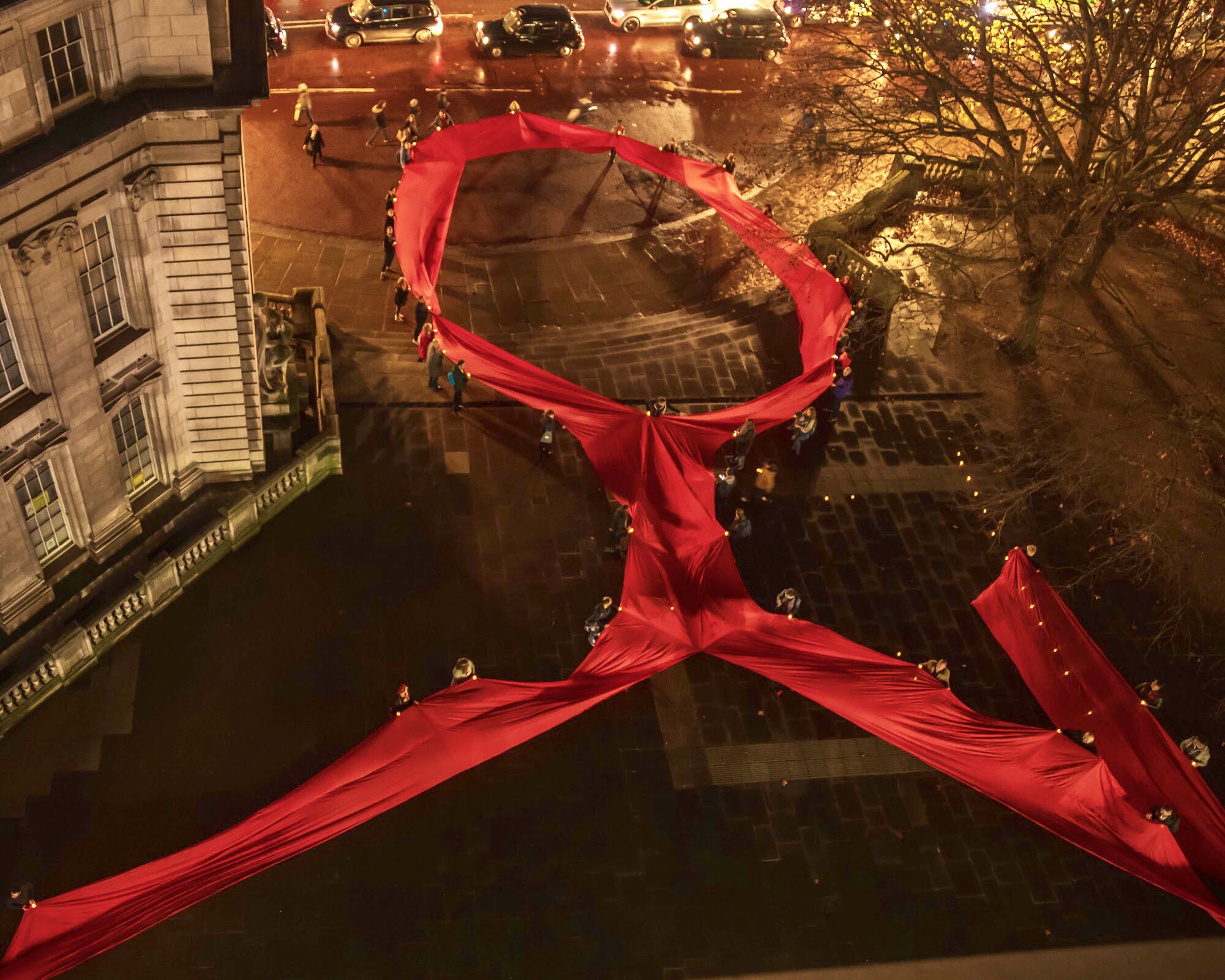
Today (November 4) is Diwali or Deepavali, a religious Indian festival of light that celebrates victory of light over darkness, good over evil, and knowledge over ignorance. This celebration comes from the legend of Lord Rama, who was deprived of his kingdom and sent into exile for 14 years. Rama eventually defeats the evil spirit Ravana and returns to his home. Diwali honours this triumphant return and is celebrated by Hindus, Sikhs, Jains and some Buddhists all over the world. Here, Birkbeck final-year Marketing student, Shweta Menon shares the festival’s culinary delights.

UG Marketing student Shweta Menon

Shweta Menon

Diwali has distinctive celebrations across India and in more recent times around the world. However, lip-smacking vibrant foods, a variety of Indian sweets and the combined play of colours and fireworks remain a constant. Growing up I would see my grandmother prepare an array of snack and sweets for Diwali. There were some traditional items like murukku (crispy rice stick), sheera (semolina pudding), rava laddoo (sweet semolina balls) and some innovative ones.

If you, like me, are away from home this Diwali or want to put on your chef’s hat to try some Indian delicacies, here are some recipes for you:

  1. Murukku

Murukku

Murukku is a traditional South Indian deep fried snack recipe made with rice flour, urad dal and spices. Chakri is like Murukku, but the ingredients slightly differ They are savoury and crispy.

  1. Shankarpali

shankarpali

Shankarpali, sweet diamond cuts, is a crispy sweet snack made with flour, ghee and sugar. These can last you for a good week or two.

3.Gulab Jamun

gulab jamun

Gulab Jamun is a classic Indian sweet made with ghee, milk solids and cardamom powder.

  1. Rava Ladoo (Sweet Semolina Balls)

rava ladoo

Rava Ladoo is yet another classic indian sweet made with semolina, ghee and sugar.

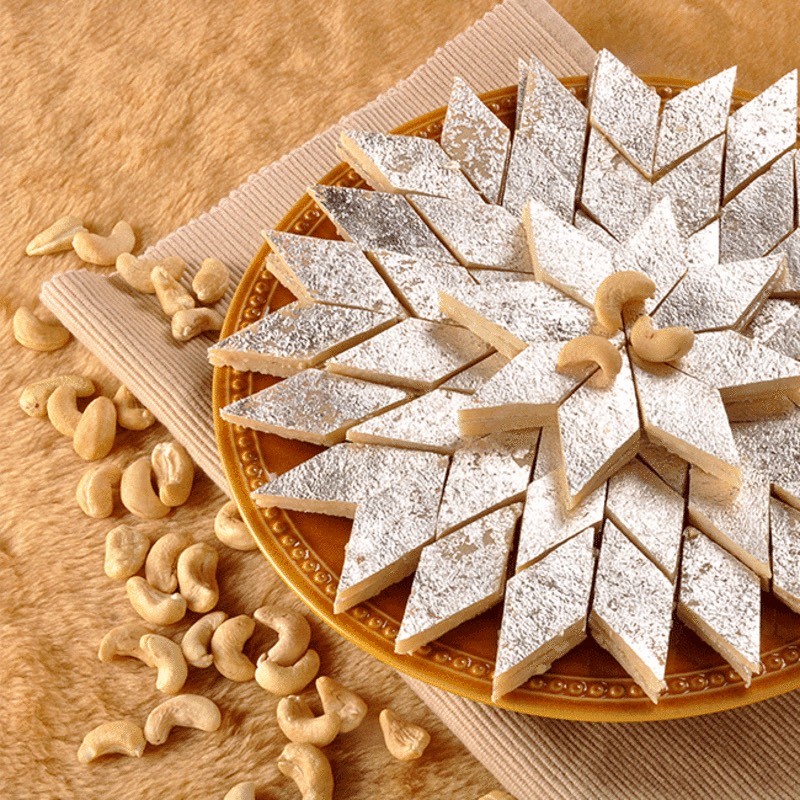
5.Kaju Katli

kaju katli

Kaju Katli is popular Indian sweet made with cashew nuts, sugar and cardamom powder. Kaju, in Hindi, means cashew and katli refers to thin slices.

  1. Aloo Tikki Chaat

aloo tikka chaat

Aloo Tikki Chaat is a famous Indian street food made of spiced fried potato patties served with yogurt, pomegranate and chutneys.

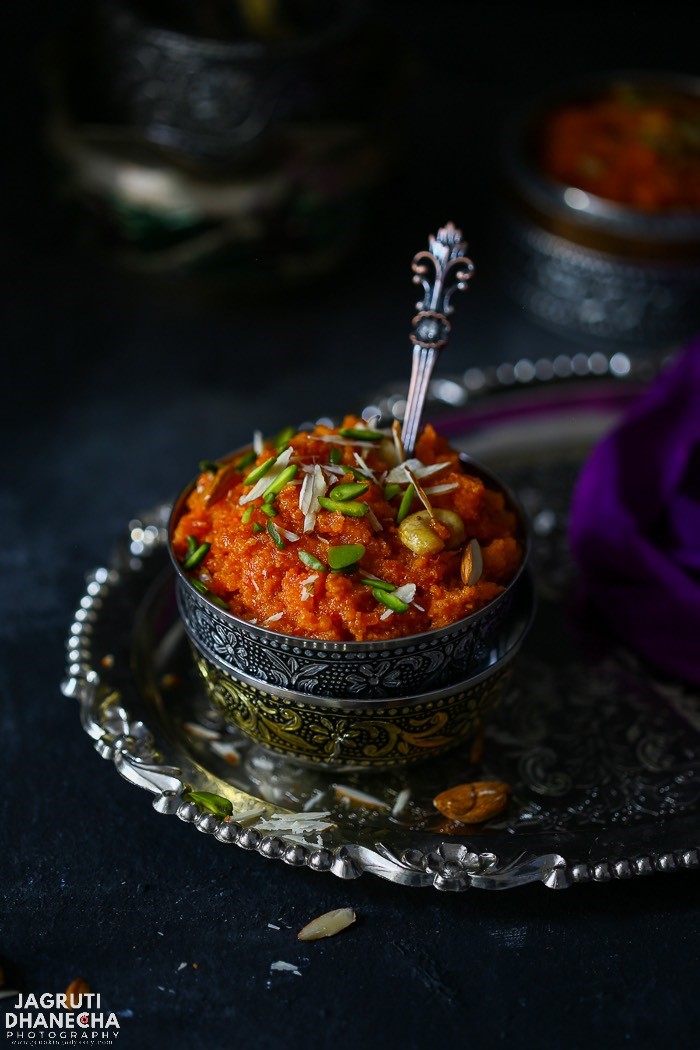
  1. Carrot Halwa

carrot halwa

Carrot Halwa, natively known as Gajar Halwa, is a sweet carrot pudding made in the winter months when carrots are in abundance .

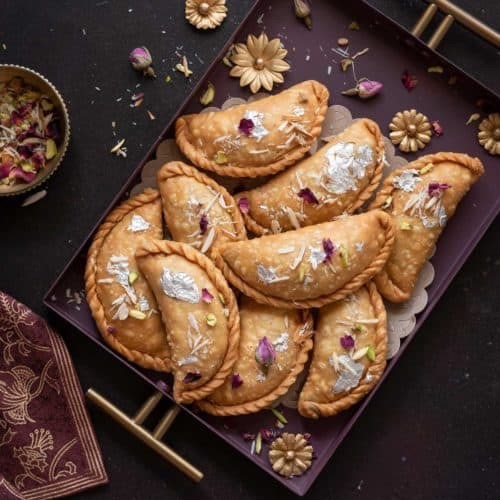
  1. Gujiya

gujiya

Gujiyas are scrumptious sweet fried dumplings. The filling of the dumpling is a delightful combination of dry fruits and milk solids.

  1. Besan Ladoo (Sweet Gram Flour Balls)

besan ladoo

Besan Ladoo is a staple Diwali sweet made with roasted gram flour, ghee and sugar. They only take as much as 15 minutes to make and are absolutely finger-licking.

  1. Turmeric Cumin Margarita

turmeric cumin margarita

This bright coloured Margarita with its smoky notes is the perfect cocktail for the festival of lights

What does Bandhi Chhor Divas mean to you?

On 4 November, Sikh people around the world will observe the Day of Liberation: Bandhi Chhor Divas. With the celebrations often coinciding with Diwali, the Festival of Light, celebrated by Hindus and more widely recognised around the world, the annual Sikh festival holds a special place for the community, with distinct personal observations on its significance. Here, Bayparvah Kaur Gehdu, Birkbeck PhD student, shares some of these.

Bandhi Chhor Divas, in English and traditional Sikh spelling

credit: Bayparvah Kaur Gehdu

Reflections on Bandhi Chhor Divas, the ‘Day of Liberation’

“Bandhi Chor Divas is not about light for Sikhs, it’s about self-reflection and seva (service), a reminder of our commitment to stand for social justice as forged by our Guru Sahibaan.”- Jasmeet Kaur (she/her), Secondary Education professional, writer, and disabilities advocate.

“[It] is a reminder, to me, of our responsibility, as Sikhs, to fight oppressive systems- ALL systems of oppression in a spirit of solidarity, but one that is understood and driven by our history, our faith, our gurbani (speech), and our radical/revolutionary love.”- Sharanjit Kaur (she/her), PhD (cand.) UBC, History, Sessional Instructor of History, UFV and co-curator Sikh Heritage Museum, National Historic Site Gur Sikh Temple, Abbotsford, B.C.

“For me, Bandhi Chhor Divas is a reminder of our continued struggles and how they are interconnected with critical and compassionate approaches to social change. Together, we can stand against those stripping others of their humanity and we can walk side by side, or open space for those who have had their humanity taken from them. Together, we can take steps towards liberation.”- Shuranjeet Singh (he/him), PhD candidate and mental health advocate.

“Bandhi Chorr Divas is celebrated on the same day as Diwali, the Festival of Lights, and is sometimes also interpreted as a day commemorating the existential journey from darkness to light. However, Bandhi Chorr goes way beyond this literal symbolism, and for me, it symbolises the fight for justice. It symbolises the need to take a stance against injustices and having the moral and spiritual strength to defy oppressors. Guru Hargobind Sahib Ji waived the opportunity to his own freedom while the 52 rajahs imprisoned with him were not granted theirs. This incident is a graphic depiction of being defiant against oppressors. Currently, the farmers of Punjab are battling the same injustices, and Bandhi Chorr Divas takes on renewed significance about the fight for justice.” – Dr Gursharan Kalsi, Research Manager, King’s College London.

“Bandhi Chorr Divas happens to fall on the same day as Diwali. Every year when Diwali comes around people exchange greetings and wish each other well there is less mention of the festival Sikhs celebrate, known as ‘Bandhi Chhor Divas’. I remember at a very young age I learned the story of what the significance was of the day. The story of Bandhi Chorr Divas, to me, represents freedom over oppression. After being released, Guru Ji went to Amritsar to celebrate Diwali and that, to me, represents what Sikhi is primarily about: Unity.” – Amandeep Kaur Bhurjee (she/her), student and mental health advocate.

“My interpretation of Bandhi Chhor Divas falls into two areas. Firstly I think it was about the guruji giving the 52 rajas salvation from literally being released from imprisonment at that actual time in history. But secondly it might also be perceived that by being led by guruji, we seek freedom from our own metaphorical imprisonment from being within darkness and not knowing, to be enlightened from the knowledge, learned and gained.”- Kulvir Singh (he/him), Learning Design Officer, Warwick University.

“Bandhi Chhor Divas means the day of liberation. Guru Hargobind Sahib liberated 52 soldiers from prison to freedom. For me, Bandhi Chhor Divas signifies that Guru Sahib is there to liberate us from our internal and external fears and vices. It also teaches us to accept hukam and place our trust in Guru Sahib’s hand.  Guru Sahib had an option to just leave the prison alone, yet he decided to free the other kings, teaching us an important lesson about selfless sewa.”- Sarbjot Kaur (she/her), audit and risk management professional and disabilities advocate.

“This is what Bandhi Chhor means to me: The key message is the focus on the ‘inner light’ and not the external representation we are used to seeing. This is something that’s pure and eternal. The guru dispels this darkness of ignorance and ego with this light of understanding. As a result we realise ourselves, everything around us and the oneness of the creator god- Waheguru. – Taree Singh Bhogal (he/him), IT support engineer.

“From the outside, we see this part of Sikh history as our Guru Ji made prisoner to the Mughal empire, later being released. However, this is not the case. In reality our Guru Ji is the one who frees us and releases us from bondage. So, for this reason any of the Sikh Gurus could never be imprisoned. The display we see is Guru Hargobind Sahib Ji had a reason to enter that prison of their own free will. Guru Ji went there to help those who needed saving. This is a lesson for Sikhs and those who believe in the Sikh Gurus, that when we are in trouble and need help our Guru Ji is always there to stand with us and help free us from the many forms of prisons we are trapped in.”- Vickramjit Singh, Business Intelligence Developer.

What is Sikhi (Sikhism)?

An image depicting the true essence of Sikhi- Oneness, with the number 1 written in Gurmukhi script and One written in English script underneath. The writing is centred in the middle of a orange circle.

An image depicting the true essence of Sikhi- Oneness, with the number 1 written in Gurmukhi script and One written in English script underneath.

Sikhi (the authentic term for Sikhism), is the ‘revealed path of Enlightenment’ as taught by the Gurus from 1469 to 17081. The Sikh Gurus were ‘revered as spiritual teachers, as warriors, poets, emancipators, and as sovereign rulers2. Sikhi is fundamentally based on the premise of Oneness; humans are all equal as there is ‘no religion and God has no chosen people’1 (ref Top Ten Questions about Sikhi 2021; Singh, S. (2021). SatGuru Bandi Chhorr Hai — National Sikh Youth Federation).


Background to Bandhi Chhor Divas/Day of Liberation

According to tradition, the long imprisoned Guru Hargobind Sahib Ji, the sixth Sikh Guru, was released from Gwalior, India, taking with him 52 Rajas, also political prisoners.

The Emperor Jahangir said that those who clung to the Guru’s coat would be able to go free. This was meant to limit the number of prisoners who could be released. However, Guru Hargobind (Guruji/Guru Ji) had a coat made with 52 tassels attached to it so that all of the princes could leave prison with him. This act of defiance demonstrated the concept of ‘Oneness’: how we are all equal and interconnected with our struggles, pain, and oppression but also in our love and joy.

On Bandhi Chhor Divas, Sikhs celebrate the freedom and human rights associated with this history. While the day often falls on the same day as Diwali, they are two distinct festivals with the Day of Liberation falling days before, on occasion.

“If you’re considering a career change, I would say go for it – shifting your focus can reignite motivation”

Simon Hayes, Birkbeck Politics PhD student, recently successfully defended his PhD thesis and has since been offered his dream job. In this blog, Simon reveals how undergoing a career change in his early thirties, from being an audio engineer in London to completing a PhD in Politics at Birkbeck, was the best decision he could have made.

Simon Hayes

What was your path to Birkbeck? Why did you undergo a career change from being an audio engineer to studying global politics?

My path to Birkbeck began after a move to London from Canada in 2002 – the initial purpose for this relocation was the aspiration to work as an audio engineer in the music industry. Eventually, I managed to land a job at Mayfair Recording Studios near Camden Town where I stayed for six years. This was an incredible experience: not only was the studio host to the rising talent of that time, but many of the bands and artists I had grown up with would also frequent. By 2009, falling music industry budgets saw Mayfair (and other studios like it) close for good. After a stint of freelance work and a string of unpleasant temporary employments, I decided to focus my energy onto another pursuit.

The idea of studying did not cross my mind: I was 32, I had not been to university, and I was uncertain about whether I could perform in an academic environment. However, whilst travelling to work one day, I saw a tube advertisement for Birkbeck. I went to an open day and decided to study global politics and international relations; shortly after, I met with the programme convener who helped shed light not only on life at Birkbeck, but also the possible educational pathways I could pursue.

I was relieved to find out that Birkbeck offered Certificate of Higher Education programmes and that I did not need to commit to a whole degree; in fact, I did not even need to complete the certificate because the option of taking individual modules was also available. This is exactly what I did: my first module was ‘The Study of Politics’ – an introductory course which, in addition to covering basic concepts such as ‘the state’; ‘sovereignty’ and ‘the international’, also taught us key skills including efficient note taking, essay structure and writing a bibliography. While this served as a necessary first step that would facilitate my future learning, the experience felt revelatory: it wasn’t just that I was learning new things, but it was changing how I thought and viewed the world.

From thereon in I was hooked, I enrolled on further modules in order to complete the certificate and after doing so, went on to complete the full degree graduating with a first-class honours three years later. After spending twelve months completing a Master’s in global politics at the London School of Economics, I returned to Birkbeck in 2017 where I have recently successfully defended my PhD thesis.

What are your main hobbies and passions in life? Where does your interest in global politics and human rights come from?

Although my main hobby and passion in life has been music, the events that took place in the first decade of the 2000s (e.g. September 11 attacks, the war on terror, the Iraq War and the financial crash of 2008) really began to spark my interest in global politics. Throughout my studies, these interests intensified not only because I was engaged with theories and concepts that helped explain these global dynamics; but also because I was sharing this experience with a diverse group of Birkbeck students, some of whom were able to offer first-hand accounts of the issues and places being discussed; for example, Rohingya refugees, individuals from Kosovo who had fled in the 1990s, and former members of the Peshmerga.

As time went on, my research interests became more concentrated, primarily as a result of a module I took on European integration. Here, I developed an enthusiasm for the study of regional and global institutions (e.g. the EU and the UN); I would later fuse this with my passion for workers’ rights to form the basis of my PhD thesis which assessed the impact of the International Labour Organization (ILO).

What are your aspirations for the future? What would you say to people thinking about a career change?

I am interested in research positions within organisations that have a social welfare focus – primarily governmental or public institutions either at the local, national or international levels. I have recently been offered employment with a local authority as an analyst looking at the socio-economic factors driving health outcomes. This will, I imagine, be a challenging role with the potential to make some positive difference and as such, is an exciting opportunity and one that I owe in part to the Talent team at Birkbeck Futures – a service which assists students in their career development.

When contemplating life changing decisions like a career change, especially when it is later in life, it is normal to feel apprehensive and to worry about all of the reasons why it might be too much of a risk. But if you are feeling as though things are stagnating and thinking of such a move, I would say go for it – shifting focus can reignite motivation, especially if it is something you feel passionate towards. This in-turn helps produce the outcomes you are aiming for whether they are career oriented or for reasons of self-development.

I feel Birkbeck is an incredibly important institution that can facilitate this process for individuals in varied and even challenging circumstances. I am grateful to have had the Birkbeck experience and thankful that such an institution exists, I hope to stay connected to it for years to come.

Further Information

How to get the most out of your time at Birkbeck: advice from BEI prize-winners

The School of Business, Economics and Informatics’ 2021 undergraduate prize-winners share their tips for managing workload, making connections and getting the most out of a Birkbeck degree.

This week, Birkbeck’s undergraduate class of 2021 will be celebrating their achievements at virtual graduation ceremonies with the Vice-Chancellor, Professor David Latchman, the President of Birkbeck, Baroness Joan Bakewell and of course their lecturers, friends and family.

Students who have performed exceptionally well in the School of Business, Economics and Informatics will be presented with awards at the Undergraduate Prizegiving Ceremony on Tuesday evening.

Graduation might seem a long way off if you joined Birkbeck this year, but one thing we’ve learned from our prize-winners is that early preparation is key to succeeding in final exams and giving you the chance to make the most of everything on offer during your time with us.

Read on for our graduates’ top tips on how to get the absolute best out of your Birkbeck experience.

How to get ahead in your studies: can-do attitudes and consistency

“Have a positive ‘I can do this’ attitude and work hard towards your goals. Remember to focus on what is best for you in the long run, instead of what feels easy or right in the moment.” Jaunius, Best Overall Final Year Student (BSc Economics and Business)

When it comes to getting the most out of your studies, getting in the right mindset is a great place to start. Why not try building focus with meditation, or writing down your goals somewhere that you’ll see every day, to remind you what you’re working towards?

“Be consistent with your studies! Stay on top of the module content as much as you can, it really is an advantage for your assignment and exam preparation.” – Steffi, Fiona Atkins Prize: Best Continuing BSc student (Department of Economics, Mathematics and Statistics)

“Try to go beyond memorising the key points illustrated in lecture notes and reading material by testing your understanding of theories and concepts regularly. Taking just a little extra time each week to revisit a key point is an excellent way to get to grips with a topic, pinpoint focus areas to discuss with your lecturers and ultimately ease the pressure when it comes to exam preparation later on.”– Simon, Best Project (Department of Economics, Mathematics and Statistics)

Carving out some focus time to check understanding is a great way to stay on top of your studies and identify any areas for support. Are there any quiet periods in your week where you could set some time aside to consolidate?

“My advice would be to make sure you reach out to your personal tutor if you start falling behind, they are there to help! I would also recommend electing the dissertation/project module as it is a useful way to build independent research skills.”– Sean, Best Final Year Student (Financial Economics)

Your personal tutor is your first port of call if you need help in managing your studies or other support. You can find their contact details in My Birkbeck under ‘Academic Support’. If you do not have an assigned personal tutor, get in touch and we can help.

Taking care of yourself during your studies

“Make a point to incorporate holistic habits into your daily life, so that you not only work and study but also exercise, eat fruit and vegetables, walk, meditate, tidy your space etc. All things become easier and more achievable when you are mentally and physically healthy. Listen to your body and make your health a priority.” – Joana, Benedetta Ciaccia Memorial Prize: Best final year student on the Foundation Programme (Department of Computer Science and Information Systems)

Relax and focus on enjoying your subject.  Don’t try too hard to understand any tricky new material. Just give yourself time and if you let thoughts and ideas tick over in the background then anything you don’t understand will gradually become clearer and more simple.” – Alice, Mehdi Prize: Best Performance in Mathematics

Taking some time out from studying gives your brain a chance to process what you’ve learned. If you’re looking for some accountability to stay active, or for a fun way to take a break from the library, check out the sports clubs and societies on offer through Birkbeck Students’ Union.

Know what support is available

“Take the time to map out where to find academic support. It’s about detailing the resources that would keep you optimal. For example, know the name of your personal tutor, you’ll need them for the occasional academic and emotional support. Sign up to studiosity for study help and LinkedIn learning for self-directed learning.” – Sabina, Best Overall Student (Department of Organizational Psychology)

“Ensure that you make the most of the resources available to you, whether that be the additional reading material provided for lectures or the Birkbeck library. Additionally, don’t be afraid to seek clarification/ask questions – this will allow you to develop your understanding!” – Charlotte, Best Overall Student (Business)

Our support services are there to be used, so if you need any help or advice on anything from academic work, to finance, to managing stress, don’t hesitate to reach out. Find out more about the support available in the School of Business, Economics and Informatics on our website.

Build your professional network and your support network

“Birkbeck provides endless opportunities for students to explore their interests and build a strong network of people with similar passions. Use your time at Birkbeck to connect with other students, exchange ideas, views and knowledge. Don’t be afraid to try a new activity, join a club or society. Explore your interests and enjoy your time at the university along the way!” – Venita, Derek Scott Memorial Prize: Best performance by Non-finalists (Department of Economics, Mathematics and Statistics)

Your university experience is about so much more than your degree. Take the time to get involved in the Students’ Union, join us for an event and soak up all that your time at Birkbeck has to offer.

And to those students who are graduating today and tomorrow – congratulations! We hope you will stay in touch with Birkbeck and we will be cheering you on with whatever you decide to do next.

Horns and a tail – Satan’s ticket to stardom?

Tom Graham, English and Humanities PhD student, is researching the long and complex genealogy of Satan as it relates to contemporary culture and politics. In this blog, Tom looks at how Satan’s horns and tail may have helped him go mainstream.

If you fancy dressing up this Halloween, you can order these devilish accoutrements on Amazon:

Wearing a bow tie is not particularly associated with the Devil, but sporting horns and a reptilian tail most certainly is. Why?

We might assume that the reptilian aspect connects us directly to Genesis where the serpent first tempted Eve to eat the forbidden fruit. But in fact, Genesis does not at all equate the serpent with Satan or anything demonic. It’s just a talking snake that thinks Eve should be a little disobedient. Why does it think this and where did it learn to talk? Genesis doesn’t tell us, but in the second century the Christian philosopher Justin Martyr cleared up the mystery a little by identifying the snake as Satan himself. Over a thousand years later, Martin Luther ascribed to the Satan-snake a definite motive: having been thrown out of Heaven, he was seeking revenge by spoiling God’s ultimate creation, through introducing sin into humankind.

There is, then, a long association of the Devil with snakes. But what about horns? From the earliest centuries of Christianity right through to the Middle Ages, images of pagan gods were adapted and converted into images of the Devil. This process included importing attributes such as horns. In this representation of the Celtic god Cernunnos, we find both horns (his name literally means “the horned one”) and a very fine snake:

Cernunnos was a god of wild things and wild places, the very opposite of culture and human civilization. Thus, his uncivilized traits leant themselves to Satan, the arch enemy of the divine order of creation. The snake, having become permanently linked in the Christian imagination to one of Satan’s many guises, could be readily incorporated into the Devil’s anatomy as a reptilian tail. As for the horns, they remind us that Satan, like Cernunnos, might choose to adopt a seemingly human appearance, but that’s just for show; at heart, he remains a wild thing; uncivilized, unpredictable and dangerous.

What we see playing out here in the long process of development undergone by the form and image of Satan, is a strong sense of Satan moving fluidly between human and animal forms – or, as is often the case, settling on an uneasy mixture of the two.

William Blake depicts the Devil as a human/animal hybrid

For St Anthony, who was subject to prolonged and repeated attacks by demonic forces when he lived as a hermit, the Devil took not only the form of a serpent but also (amongst other things) a seductive woman. Freudians will at once pounce on the coming together of phallic and libidinal imagery, but since St Anthony died precisely 1,500 years before Freud was born, we must be mindful of psychological readings that belong to an earlier period in history. What we can say, however, is that the Devil’s ability to freely mix-and-match human and animal attributes allows him to slip readily from the elite heights of theology to the common currency of folklore. This is because folklorists who seek to categorize types of folk tales have discovered that no meaningful system of classification can be established in terms of the characters of the stories; exactly the same story can be told with human or animal protagonists since, in folklore (as in demonology), the two are freely interchangeable.[1] Satan, with his inter-species shape-shifting between human and animal, fits right into this pattern.

I believe that although Satanic attributes such as horns and tail were developed by Christian philosophers – i.e. by an intellectual elite – the fluidity of human/animal attributes allowed the conceptualization of Satan to enter more freely into the popular imagination – as we see today when horns and tails are sold online as Halloween novelties. These horns and tail have, I argue, played a part in saving the Devil from languishing in dusty theological obscurity by helping him achieve vitality and renewal in the narrative structures of folklore, native storytelling, and popular culture.

The Devil – instant “brand recognition” across eight hundred years of reinvention and reformatting

[1] Simon J. Bronner (ed.) (2007) The Meaning of Folklore, USA: Utah State University Press, p.103.

Further information


The Exorcist movie: who is the demon?

In this blog, Tom Graham, English and Humanities PhD student, examines the movie, The Exorcist, and delves into the meaning behind the demonic possession of 12-year-old Regan.

If you haven’t seen the classic 1973 movie The Exorcist (and if not, why not?), then SPOILER ALERT. The film centres around the demonic possession of a 12-year-old girl called Regan. During the course of her possession, she speaks in multiple demonic voices, levitates, famously vomits impossible quantities of green goo at the exorcising priests, and – just as famously – slowly rotates her head a full 360º.

The demonic possession of a 12-year-old girl called Regan in movie, The Exorcist

Dramatic as it is in the movie, the head-spinning scene has often been criticized for straining credibility since, by all the laws of human anatomy, Regan’s neck would break and her head would fall off. Which, of course, it doesn’t.

But I believe the head-spinning scene can be justified if we more fully identify the nature of the demon that has possessed Regan.

So, who is the demon? The film never names him, but his identity is in no doubt. In the opening scenes, we see an archaeological site in Iraq, where Father Merrin – the priest who will later lead the rite of exorcism on Regan – has an ominous encounter with the statue of an ancient Mesopotamian demon. Later, the image of this same statue will briefly appear thousands of miles away in the US during the exorcism itself. The implication is clear: this statue represents the demonic entity that has possessed Regan.

The statue depicts Pazuzu, perhaps the most fearsome of all the ancient Sumerian demons. He was associated (as were most demons at this time) with disease and illness. It is not quite accurate to say that the Sumerians believed that demons cause illness as such; rather, they regarded the symptoms of disease as the physical manifestation of the demon. Nausea, skin rashes, fever, aches and pains, swellings, tumours – these things were regarded as the actual embodiment and reality of the demon itself. A sufferer could describe a demon as “clothing itself” in his or her body in the form of disease.[1]

In keeping with Pazuzu’s Sumerian origins, then, we can consider Regan’s symptoms as the physical manifestations of as aspects of the demon. Indeed, there is a moment in the film when, after a long period of increasingly severe symptoms of possession, Regan’s voice and personality are both suddenly completely replaced by those of the demon. This moment is marked by Regan’s eyes turning white and (perhaps in anticipation of the later head-spinning) her throat swelling unnaturally.

But we might now say that, in Sumerian terms, these are not Regan’s eyes and throat anymore. They are Pazuzu’s eyes and throat, just as the personality and voice that were once Regan’s are now the personality and voice of Pazuzu. After all, the demon does not cause the symptoms of possession, the demon is the symptoms of possession.

So, if we continue to follow this line of thought, we can say that it is not Regan’s head that turns 360º but Pazuzu’s. We can’t complain that Regan’s neck would break because it isn’t Regan’s neck at all. It (more or less) looks like Regan’s neck and head, and after she is freed from the state of possession they will once again belong to her – but at that moment both the head and the neck are in fact Pazuzu’s. A human cannot, of course, spin her head right round, but evidently a demon can, and what we are witnessing is a demon spinning its head, not a human. By such logic, the head-spinning scene may be regarded as credible (at least, credible in the world of a film that posits the possibility of demonic possession).

“Possession”, then, must not be thought of here as some sort of spiritual hijacking, whereby one’s soul is overpowered by invading entities who take control of the body until driven out again by exorcism. Rather, we should think of it as a state wherein the human body becomes the malleable clay by which a demonic entity brings itself into physical existence. A lump of clay on a potter’s wheel both is and is not the pot that can be made from it. The lump and the pot are both the same stuff and substance, and yet they are different entities, not least because the pot has qualities (such as holding water) that the lump of clay does not. Similarly, during possession, human and demon both consist of the same stuff and substance, and yet the demonic manifestation has qualities – such as head-spinning – that the lump of human clay does not.

Further information

[1] From Ludlul bel nemeqi, written circa 1500 BCE, Mesopotamia.


How do we experience Satan?

Tom Graham, English and Humanities PhD student, is researching the long and complex genealogy of Satan and the history of Satanic evil. In this blog, Tom delves into how Satan is conceptualised.

Tom Graham

Exploring the genealogy of Satan requires me to pore over a great many theological and philosophical treatises on the subjects of demons, hell, the nature of evil, and so on. What emerges from this line of study are many different intellectually conceptualized images of Satan. But intellectually conceptualizing Satan strips him of the gut-punching terror and dark, dangerous glamour that so defines him. We cannot merely know what Satan is, we must feel what Satan is, otherwise he loses that which makes him what he is.

In contrast, then, to the intellectually conceptualized Satan of theology and philosophy, I am also concerned with the viscerally experienced Satan that we find in folklore, in the common imagination, in pop culture, and perhaps even in nightmares and fears about the dark. This is Satan as he extravagantly appears in movies, in video games, in various sub-genres of rock music, and perhaps even in the knowingly ironic ceremonies and iconography of modern-day Satanic temples.

I see this viscerally experienced Satan beautifully manifested in those cruel (but admittedly sometimes funny) YouTube pranks where an unsuspecting dupe is encouraged to play (or rather, believe that they are playing) a simple computer game whereby they must guide a dot through a maze without touching the walls; the victim’s face draws closer to the screen as they concentrate intently upon the game – and then, after a few silent minutes, there is a terrible scream and the mutilated face of the demonically possessed child in The Exorcist suddenly fills the screen. The victim’s reaction – which can be extreme and result in genuine tears and trauma – embodies what I am talking about when I describe a viscerally experienced Satan. Maybe those poor duped YouTube victims show us how we really ought to react to the concept of ultimate evil – not by conceptualizing it in theological and philosophical terms, but by screaming and hurling ourselves out of our chair.

And yet, at the same time, this viscerally experienced Satan has in no small part been formed and developed by the intellectual conceptualizations of the very theologians and philosophers who (I believe) fail to capture and express the emotionally experienced aspect of Satan that is (I also believe) essential to his nature. There is, then, an intriguing and complex dialectic relationship at work between the “intellectual Satan” and the “visceral Satan”.

Further information

Halloween: a Horror Story of Unnecessary Consumerism?

And we thought the costumes were the scariest thing about Halloween! Dr Amy R Hackley, Senior Lecturer in Marketing in Birkbeck’s Department of Management explores the dark side of holiday consumerism.

As Halloween approaches, are you considering buying a pumpkin or two, and perhaps a plastic broom, make up or a horror mask for the kids to take trick or treating? Or even some Halloween-themed nightwear, or a special chocolate treat for yourself? Halloween consumption is on a rising trend: according to www.statistica.com, UK consumers are spending more than twice as much money on Halloween as we did in 2013, and an estimated 25% of us will buy a pumpkin, at a cost of around £30,000,000 (yes, that’s £30 million). Total Halloween related spending is estimated at almost half a billion pounds sterling annually. Last year, British supermarket chain Waitrose reported its biggest ever Halloween sales bonanza, with sales up by 62% on the previous year[i]. This year, in the home of Halloween consumption, the USA, pre-Halloween chocolate and confectionary sales have reached $324[ii] million, up by 48% comparing to the same period in 2020, with American consumers spending a stunning $10 billion every year on Halloween. But why do we spend such extraordinary sums on trivial items to mark an ancient Celtic death festival?

Halloween originated as the pagan festival of Samhain, part of the ancient Celtic religion in Britain and other parts of Europe. The Celts believed that on the 31st October the barrier between the world of humans and the world of spirits dissolves to allow ghosts to wander amongst us on earth. The festival was needed to scare away the bad spirits, and to remember the dead. Turnips were used to carve lanterns rather than pumpkins, and ‘guising’ (going from house to house in masks and costumes) was practised. Under the influence of Christianity, the day became known as All Hallows’ Eve or All Saint’s Eve. There are versions of this festival practiced around the world. For example, the Día de los Muertos or Day of the Dead in Mexico is celebrated in the 2017 Disney movie Coco, and across East Asia there are many versions of ghost festivals practiced, such as paper burning rituals of ancestor worship, the Hungry Ghost festivals in Singapore and the ‘Pee Ta Khon’ festival in Dan-sai district, Loei province, Thailand. All these ritual practices are marked by consumption of various kinds, of food, goods and services. Halloween gained its popularity in America when 19th century Irish immigrants brought it with them, and the influence of American TV shows, books and movies, made Halloween more and more popular in the 20th Century.

From an academic perspective, consumption is a rich site of ritual practices, and death-related ritual is one of the most powerful. Death rituals re-enact our symbolic connection with our existence. They give us opportunities to re-tell tell stories about life and death, and to connect with the spirit world from which we are separated. They help the living to move away from the brute fact of death towards an acceptance of death as a kind of continuity of life. In a way, Halloween and other ritual practices help the living to celebrate life, by ritualising death.

Of course, the spiritual side of death rituals is very well-hidden in today’s deeply commercialised consumer festival of Halloween. Although a lot of consumption is essential to the practice of death rituals, we really do not need to eat so much chocolate or to buy so many horror costumes. It is, really, a horror of wasteful consumption. Halloween costumes and decorations are made from cheap plastic and synthetic materials which are not so good for our environment. It was recorded that consumers created 2,000 tonnes of plastic waste by discarding Halloween costumes[iii], and an estimated 8 million pumpkins (or 18,000 tonnes of edible pumpkin flesh) are heading for the bin as consumers do not eat it[iv] But, when we are young, Halloween is an opportunity to party and have fun dressing up, trick or treating, eating a lot of chocolate and candy and, when we are older, perhaps drinking a lot of alcohol. What’s not to love? Most supermarkets have their own dedicated range of branded Halloween products because the event is a huge opportunity to make money by selling us overpriced stuff we do not need.

Halloween remains one of the world’s oldest holidays and death festivals, and in its many forms around the world it retains a rich cultural significance in human society. As the contemporary American author Andrew Delbanco notes in his book ‘The death of Satan: how Americans have lost the sense of evil’, he suggests that as we have lost touch with the idea of evil, we seem to need more vivid representations of it. The commercialisation of Halloween in the Western world helps us to affirm our sense of self and social identity and to reconcile us to the inevitability of death by making it seem like a harmless children’s cartoon. Yet, lurking beneath the millions of pounds worth of fake blood, carved pumpkins and discarded plastic witch hats, is a real horror story of reckless and unsustainable consumption.

[i] https://waitrose.pressarea.com/pressrelease/details/78/NEWS_13/12558 accessed 21/10.2021

[ii]  “New Data Shows 2021 Halloween Chocolate and Candy Sales Are Up” Yahoo News Monday 18th October 2021 https://finance.yahoo.com/news/data-shows-2021-halloween-chocolate-173600801.html accessed 21/10/2021

[iii] https://www.telegraph.co.uk/news/2019/10/17/halloween-2019-costumes-will-create-2000-tonnes-plastic-waste/ (paywall)

[iv] https://www.theguardian.com/environment/2019/oct/23/pumpkin-waste-uk-halloween-lanterns

In their own words: Tips from our Cheveners (references)

We’ve asked our 2020 Cheveners to share their experience applying for the prestigious UK government scholarship. In this blog, we highlight their tips and advice about obtaining references as part of the selection process. “My advice to the Chevening future applicants is to be realistic and genuine to select referees that (you) know very well and have engaged with on professional levels, be it in academia, at work, or people you have collaborated with on certain projects. Select people who know your capabilities and believe that you have the potential. People who inspire you to inspire others, encourage and motivate you to be successful, and make a difference in your community.” Menessia Diergaardt, Namibia “I would advise future applicants to choose people with whom they have a strong professional and/or academic relationship. Someone whom you can trust to speak on your behalf confidently and with objectivity.” Bongani Njalo, South Africa “Since I have been working for 10 years and my work was related to the course of my studies, I chose two of my supervisors as referees. They were an important influence in my career, and they watched me grow from a young inexperienced student to a confident young professional and I appreciate their evaluation of my journey. I would advise applicants to choose people that really know them and have worked with them closely so they can give you a thoughtful opinion of your character rather than a general note. And it’s also a nice letter to read while you apply for the scholarship that you may be anxious about.” Eva Shimaj, Albania “My mentor and my MSc dissertation supervisor were my referees. Both knew of my aspiration at the early stages of the Chevening application and supported the application idea. I approached my mentor because they were aware of my personal strengths and career aspirations and my supervisor because they knew of my academic strengths and zeal to learn. My advice for applicants is to be strategic in their referee selection. Pick people who have seen your strengths and have had experience with you professionally and academically, preferably also someone in a senior role.” Nozipho Nomzana Mziyako, Eswatini “I knew my referees in a professional capacity however, we had engaged in several academic activities before as part of our professional relationship. I selected them because I maintained a close relationship with them at the moment, also they are both entrepreneurs developing their businesses in a non-ideal environment, so they are driven, motivated and capable people whose opinions and experience I respect and value. Also, I had the chance to work closely with them while they were making significant progress in their businesses, so they know my abilities and qualities as a collaborator and employee. Future applicants can make better use of their references if they choose people that are close to them and somehow share their interests or vision in life. I considered my references as a guide for what I wanted to achieve in the future because of their attitudes, capabilities and motivations.” Yoandra Rodriguez Betancourt, Cuba “You may want to include a brief description of your motivation to apply, what you wish to achieve with the degree and how it relates to your common interests, and most importantly why you think she/he would be a great fit to comment on your suitability. It is about engaging your referee. You may want to get in touch with more than one referee to make sure that by February you can at least get the formal approval of two referees.” Zina Diari, Tunisia You have submitted your Chevening application, what’s next? “I stayed in touch with the referees, still through our networking, email, phone calls and sometimes meeting up over a cup of coffee to update them about my Chevening journey and asking them advice on different aspects, professional, personal, and self-development. My referees have been very supportive and encouraging, hence we are still in contact, they check up on me and my academic progression.” Menessia Diergaardt, Namibia “Keep in contact after submitting the application. As soon as required, I let them know, when I had received the email from Chevening and let them know that they needed to send the reference. Later on, I would call from time to time to ensure that they send it on time.” Randolphe Severin N’Guessan, Cote d’Ivoire “When I got selected for an interview, I followed up with a detailed email where I listed the responsibilities I carried out under (my referee’s) supervision, that she could draw upon to develop my reference letter. Keep in mind that referees are generally academics or managers who come across several similar requests to act as a referee. It is important to highlight the period of time in which you have collaborated. I also shared the Chevening guidelines for writing a reference letter and kept on active communication with my referee during the process.” Zina Diari, Tunisia “I stayed in touch with my referees through social media and phone calls. Since they formed part of my network of professionals, it was easier to reach out to them. Future applicants should create a network of professionals who understand their ambitions, character, and ethics. This ensures that you are easily referenced and supported objectively.” Freemen Pasurai, Zimbabwe. Further information: Blog post by Catherine Charpentier, International Marketing and Recruitment Officer (Africa)