Decoupling coal from India must keep climate justice in mind

MSc Politics, Philosophy and Economics student Sonia Joshi argues that the western approach to
addressing climate change is far from equal.

COP26 ended with more of a whimper than a bang. Last minute changes proposed by India and backed by other coal-emitting countries requesting the ‘phase out of unabated coal power’ to be changed to ‘phase down’ were considered a dilution of already wavering commitments. The International Energy Agency recently reported that in 2021 the world consumed more coal-fired electricity than ever before. India is the second largest global emitter of CO2 from coal whilst also suffering from the ravages of climate change, including a high susceptibility to deadly flooding, famines and air pollution.

As one of the biggest polluters and a country most at risk from the fallout of climate change, should and could India be doing more to phase out coal? The answer depends on how you frame the question.

Graph showing biggest coal CO2 emitters.

India has been hit hard after a COVID-19 induced recession with an additional 75 million people in poverty; cheap energy is essential for its recovery. India along with other emerging nations argue that the Global North’s rise in economic prosperity has been accelerated by its extraction and consumption of fossil fuels for over 200 years; according to a recent study, since 1850 in fair share terms the G8 countries (USA, EU28, Japan and Canada) have overshot their ‘carbon budget’, being responsible for 85% of aggregate carbon emissions despite only accounting for 12% of the global population.

Graph showing biggest CO2 emitters.

In contrast, India is in credit of 90 billion tonnes of CO2 or 34% of the total credit. When accounting for CO2 emissions per capita, the impact of wealthy nations on atmospheric CO2 is even more striking; Qatar takes the top spot, USA drops to 14th place and India falls to 134th. India’s per capita energy use is in fact extremely low; approximately one third of the global average, and one tenth of the USA average.

For now, India needs coal to help keep electricity flowing in an already resource-constricted population. Coal is necessary for 70% of its current electricity generation, with the State-owned Coal India Limited employing 21 million people. Despite this, a significant percentage of the 1.4 billion population still has no access to electricity. Fair share matters if the atmospheric commons have a finite capacity for CO2. With this calculation in mind, one could argue that members of the G8 such as the USA, one of the highest gross and per capita emitters, should be doing more to decelerate coal usage to buy time for other emerging nations to transition.

India is clear it needs to phase out coal; grass roots movements and labour organisations, including the 2 million strong National Hawkers Federation, regularly highlight the impacts of pollution on India’s cities and consistently call for a transition to renewable energy. However, a rapid decoupling from coal would not only leave millions in the dark but also create huge swathes of unemployment creating a political and humanitarian crisis.
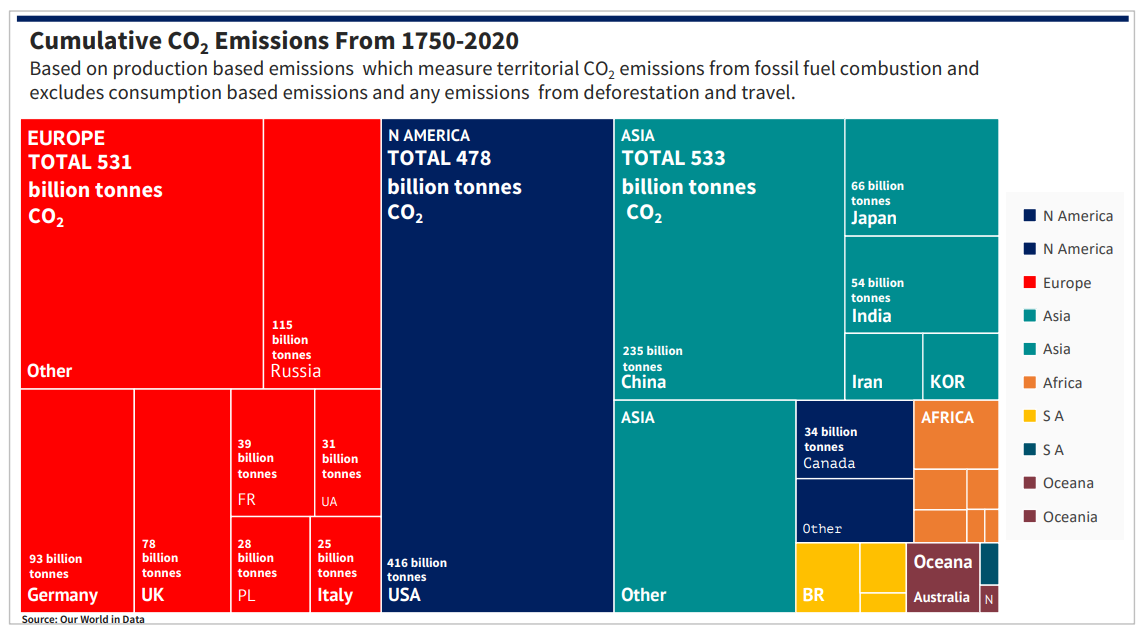
Chart showing cumulative CO2 emissions 1750 - 2020.

An understanding of India’s predicament helps to shed light on how much progress was made by India in COP26 and how much more is needed. India’s government has pledged to reduce the carbon intensity of its economy by 45% and obtain half of its energy requirements from renewable sources by 2030. For India to participate in a green transition, it will need funding to help economic diversification, investment in improving efficient coal use, green technologies and distribution of infrastructure to roll out renewables such as solar panels. Industry restructuring could provide alternative, sustainable and ecological opportunities for employment outside of fossil fuel intensive industries, helping the economy and the people decouple from climate disasters.

Further Information

Why World Wetlands Day is now being officially observed by the United Nations

Wednesday 2 February 2022 marked the first official observance of World Wetlands Day. In this blog, Dr Dale Mineshima-Lowe, Lecturer and Acting Programme Director of MSc Environment and Sustainability, explains the significance of the day and how it’s raising awareness of biodiversity, climate mitigation/adaption, and the global environment.  

Wetland in Korea

Wednesday 2 February marked the first official observance of World Wetlands Day, adopted by the UN General Assembly in August 2021.  February 2 was chosen as the date to mark the anniversary of the Convention on Wetlands (also known as the Ramsar Convention on Wetlands), adopted as an international treaty back in 1971. 

Since 1997, the 1971 Convention has been celebrated annually as ‘World Wetlands Day’, as a means of raising awareness about how global wetlands are critical ecosystems that contribute to various global environmental and sustainability issues. The 2021 UN Resolution has now adopted this day officially as an internationally observed day. This additional recognition, it is hoped, will highlight the issue within public discourse, raise concern for the issue, and mobilise political will and commitment (national and international) for resources towards wetlands protection, restoration, and preservation.  

‘Wetlands’, broadly defined, covers a multitude of water ecosystems – natural and human-made, including both freshwater and marine-coastal ecosystems – such as mangroves and other coastal areas, coral reefs, tidal flats, estuaries, swamps and marshes, rivers, lakes, and underground aquifers. This year’s theme of ‘Wetlands Action for People and Nature’, explains how wetlands are ecosystems that contribute to biodiversity, climate mitigation and adaptation strategies. Its focus on the inter-relationship between nature and people is meant to serve as a ‘call to action’ – dedicating human, financial and political resources to protection and restoration efforts.  

According to the Ramsar Convention on Wetlands – Global Wetland: Special Edition 2021 report, global wetlands deterioration is widespread, impacted by climate change – with changing weather patterns creating more risk of droughts and flooding – causing ecosystem damage and degradation. While the report identified the negative impacts on wetlands, it also recognised wetlands as important for their role as part of climate mitigation and adaption strategies. It highlighted that wetland ecosystems can be both solution and problem dependent on how they are managed – as power source carbon sinks if undisturbed and maintained, or a source of greenhouse gases if allowed to degrade. This is where the report, along with the call to action of this year’s World Wetlands Day theme, calls for the need to enhance coordination and integration across different sectors – wetland management, agriculture, and urban development amongst others for instance. It highlights the need not only for international agreements and national strategies, but the commitment of vital resources to actualise the agreements in the short and long-terms.   

Further information  

Birkbeck students celebrate LGBT+ History Month: Allies are Welcome!

As the experiences and achievements of the lesbian, gay, bisexual and transgender + community are observed throughout February, MSc International Marketing Student, Wojciech Zaluski, looks at progress and speaks to Birkbeck LGBTQ+ officer Megan Massey and MSc Marketing student Daniel Knight to ask for their viewpoint on matters, including a look at the role that university life plays in supporting them.

Photo of two people touching hands to represent LGBT+ History Month

In recent years the situation of people who identify as lesbian, gay, bisexual, transgender and queer + (LGBTQ+) has improved a lot in the UK. In 2014 same-sex marriage was officially allowed. Since 2020 we have also seen a successful roll-out of PrEP, available for free through the NHS, a drug that is key to reducing HIV transmissions. If you live in London, you will be aware how strongly the city promotes and supports tolerance towards the LGBTQ+ community. Everywhere you go you can spot awareness campaigns promoting inclusivity and acceptance.

London is also the host of the annual Pride festival, put on hold during the Covid-19 pandemic. Each year thousands of Londoners (2019 Pride attracted over 1.5 million people) and visitors cheer all day in a parade where they can embrace their non-heteronormative identity in public. The city, during this period, becomes filled with events, parties and gatherings focused on and appreciating love in its different forms. And yes, London Pride is coming back to London in 2022!

We are also seeing, more and more, how the corporate world has become vocal in its appreciation for the LGBTQ+ community. For example McKinsey & Company is promoting their initiative “Proud Leaders Europe,” “created to support talented individuals from across Europe, who self-identify as members of the LGBTQ+ community”.

Q&A with Megan Massey, Birkbeck LGBTQ+ officer

What is the function of a LGBTQ+ officer at Birkbeck?
The goal of all elected Liberation Officers is to improve the student experience at Birkbeck, with a LGBTQ+ (lesbian, gay, bisexual, transgender, queer+) officer focusing their efforts on advocating for LGBTQ+ students, representing them in meetings with the College, and helping to foster a community.

What kind of events can LGBTQ+ students expect at Birkbeck?
Events range from hangouts and film screenings to pub crawls and museum visits.  Of course, for the LGBTQ+ network, Pride is also an important event in the calendar. Hopefully Birkbeck students will be able to walk at London Pride once again in 2022!

Why do you think universities should provide a program for LGBTQ+ students? Do you think that we live in a post-heteronormative world?
Higher education should be for everybody, and so it is important that universities provide resources that reflect this. The fact that we do not yet live in a post-heteronormative world means that LGBTQ+ students, and other marginalised students, face barriers that they will have to overcome in order to have access to higher education.

What barriers and challenges does the LGBTQ+ community still face? How can the academic world answer those problems?
There are many barriers and challenges faced by the LGBTQ+ community, and attitudes to LGBTQ+ people vary across the globe. There are many countries which still criminalise consensual gay sex and relationships, meaning that LGBTQ+ people face imprisonment. In countries like the UK, where same-sex marriage has been legal since 2014, there is still work to be done to improve the legal standing of LGBTQ+ people. For example, the UK government does not legally recognise non-binary identities.

Aside from the law, LGBTQ+ people in every country still face social challenges and are at risk of experiencing violence and persecution. The academic world can seek to educate around LGBTQ+ topics, but does not have all the answers. Many LGBTQ+ people, especially those most at risk, will not have access to discussions that take place in universities, despite the fact that their voices are deeply important to the conversation. In order for the academic world to do a better job of advocating for LGBTQ+ people, they need to place an emphasis on accessibility.

From your experience, meeting LGBTQ+ students at Birkbeck, what did you learn that surprised you? What kind of support do you think they need? Did those meetings change you?  Where do you find strength and motivation to be actively engaging in helping and educating the student community about the problems of the LGBTQ+ community? 
I was surprised by how many students have been unsure whether or not they are welcome in the LGBTQ+ community. I think that is one aspect where many students need support, in feeling that they are welcome and accepted in the academic space. As an LGBTQ+ person myself, it is a privilege to be able to help the student community in any way. I feel grateful to the students who have had the courage to reach out to me with their questions or concerns.

London is a very diverse city with official city support for Pride and other campaigns promoting tolerance and inclusivity, similarly we are seeing the corporate world embracing LGBTQ+ inclusivity. Do you think that LGBTQ+ people are safe in London? If not, why do you think so?
This is a difficult question due to the interpretation of ‘safe’, but I do think that LGBTQ+ people are safe in London, to a certain extent. London is a fairly safe city, the whole world considered, and so LGBTQ+ people living here may feel safer than they would elsewhere. However, since LGBTQ+ are, as a marginalised group, at a higher risk of experiencing discrimination and hate crimes, personal safety is something that most queer people have to be very aware of.

In addition to this, since LGBTQ+ people are more likely to experience poverty and homelessness, this is a factor which must be considered. Likewise, it is impossible to ignore the relevance of race (and other identity factors) in discussions of safety. For this reason, a more in-depth, intersectional approach would be needed to adequately address the question of whether or not LGBTQ+ people are safe in London (or, indeed, if anybody is ‘safe’ anywhere).

What do you advise LGBTQ+ students who need psychological help? Do you know where they can seek support and help?
Birkbeck’s Mental Health Advisory Service provides a range of help for students. More information can be found here.

Outside of university, if a student (or anyone) is dealing with life-ending thoughts and needs urgent care, they can go to Accident and Emergency, or contact their local crisis team. If they need to talk to somebody over the phone or online, on a one-off basis, there are several charities which provide this service. If they are looking for therapy or counselling, they can self-refer through their GP to be put on a waiting list for a free NHS service.

What would you advise for people who don’t identify as queer or LGBTQ+ and would want to learn more to understand problems and issues that their LGBTQ+ students face?
There is a great deal that a person can learn online, but of course it’s great to speak to LGBTQ+ people in person too—allies are welcome to join the LGBTQ+ Network!

Interview with Daniel Knight, MSc Marketing student

Do you see any difference between how LGBTQ+ issues were addressed when you were studying to get your undergraduate degree and now at Birkbeck?
I did my undergraduate studies between 2004 and 2007. And there wasn’t much of a LGBTQ+ society then. I wasn’t very active in the community, I’d only just come out, so I was working out how to interact with the people around me. It was not easy to find and connect with other LGBTQ+ students. Thankfully, there is more of a presence now at Birkbeck than in the past.

I was interested to see what it looks like at Birkbeck… if it’s more visible and easier to connect. I visited the Freshers’ Fair to find out. As a result, I joined the Birkbeck LGBTQ+ online group. I think social presence is very important.

Do you feel the UK has moved forward in terms of acceptance, tolerance, and inclusivity of LGBTQ+ people in recent years? If not, why do you think that is?
I think the UK is more inclusive and accepting. I experienced very little homophobia in my life. That may relate to the fact that I am not flamboyant and it’s not obvious that I am gay.  That may be why. People in my life were always very accepting and inclusive and they wanted to know about my relationships. I think it became more acceptable to talk about your relationships. I am also aware I am working in healthcare, surrounded by professional people. It may be very different for people working in a different kind of environment. My experience may not be someone else’s.

I’d say as a teenager, when I was in secondary school, I don’t think it was accepted. I think that in the UK there was a switch into the pro-movement, probably in the early 2000, before you got into 2010. When I was at secondary school I wouldn’t have come out, I wouldn’t have felt comfortable doing that, whereas now, I believe teenagers do feel comfortable, and obviously that’s great in that regard, that the desire to come out would now be more positively received than before.

With reference to my work environment, if I experienced homophobia in my office, it would be taken very seriously, and the person would certainly be investigated, but I work for the healthcare regulator, they take equality and diversity seriously.

Did you experience homophobia in your life or work life? What would you advise to LGBTQ+ students who are starting their career in that regard; how to handle homophobia at work or in their personal life?
I think, for them, it should be easier. We are in a different place now- homophobia isn’t accepted. If there is an experience like that, they should look for their HR department, or if it’s a university there is a department that deals with that. I think there are support structures in place now that enable people to feel supported. If they experience homophobia, they should be able to raise it, people will help them. This would not have been the case in the past. My advice would be to talk to people in the organisation who can support you. And look for that support, look for like-minded people, join the LGBTQ+ society at Birkbeck, and you’ll find a lot of like-minded people, and allies as well. Don’t put up with homophobia in any form.

In your own company do you observe that there is a will to create a safe environment for the LGBTQ+ community? Or is it a non-issue?
As part of the new EDI (Equality, Diversity, Inclusion) strategy they have created lots of different groups, among them an LGBTQ+ group, within our organisation. People can go there and talk about their experience and if there is anything that is not quite right in the organisation.

Were you able to make any connections with the LGBTQ+ community at Birkbeck? How do you think universities should address inclusivity and the safety of LGBTQ+ students
Being part of the LGBTQ+ group is important, and for that group to be able to discuss policies with the university on how they can support Birkbeck communities. If the university can demonstrate the changes that have been achieved, that is a good way to show that there is progress for the LGBTQ+ community. They could also do more in terms of events and lectures, I suppose to express different views in the community. Just to show it is taken seriously, you could put information in the weekly bulletins from Birkbeck, to have inclusion there about what has been done, for people to be involved more and find out more. The main thing would be that they have support in place should people have issues, making clear what they can do if they have issues, regarding LGBTQ+ issues.

Further Information

Burnout: what is it and what can managers do to prevent it?

Dr Halley Pontes standing in front of a building, smiling.Dr Halley Pontes, Lecturer in Organizational Psychology,
explains why we are all burnt out and what managers can do to support employee wellbeing.

Since the beginning of the COVID-19 pandemic, people’s lives have been profoundly transformed, particularly in relation to how they go about their work. With many restrictions in place to mitigate the spread of the virus, people found themselves in a different setting where often times working from home means ‘living at work’ due to the increasingly blurred lines between work and home life. To further compound this issue, such unprecedented changes brought about high levels of uncertainty and psychiatric disorders (e.g., depression, anxiety, stress, and insomnia), all contributing to decreased levels of wellbeing (Liu et al., 2021). In the UK, about 822,000 workers suffered from work-related stress, depression, or anxiety in 2020/21, with an estimated 54% of these workers reporting that these symptoms were either caused or made worse by the pandemic (Health and Safety Executive, 2021).

During these unprecedented times, an increasingly prominent problem is the increased risk of ‘burnout’ among employees. According to the World Health Organisation (WHO), burnout is a syndrome that results from chronic workplace stress that employees are not able to effectively manage. Burnout comprises the following three main dimensions:

  1. feelings of energy depletion or exhaustion’
  2. increased mental distance from one’s job, or feelings of negativism or cynicism related to one’s job’
  3. a sense of ineffectiveness and lack of accomplishment’.

Burnout is particularly relevant to organisations and teams as it refers specifically to the occupational context. As such, managers have the responsibility to promote employee mental health and wellbeing by understanding the issue of burnout while proactively adopting solutions that may help mitigate its risks, especially during periods of greater vulnerability such as during the pandemic.

How to recognise the key signs of burnout in your team

According to Mental Health UK, in March 2021, 1 in 5 UK workers felt ‘unable’ to cope with pressure and stress levels at work. Because burnout can drastically impair a person’s wellbeing, it is important to identify its key symptoms as early as possible. To this end, attentive managers and leaders should look out for the following common signs of burnout among their team members:

  • Feeling tired or drained most of the time
  • Feeling helpless, trapped, and/or defeated
  • Feeling detached or alone in the world
  • A cynical or negative outlook
  • Self-doubt
  • Procrastinating and taking longer to get tasks done
  • Feeling overwhelmed.

A study conducted by Ericson-Lidman and Strandberg (2007) investigating co-workers’ perceptions of signs preceding a burnout episode found that the following signs are observed prior to their colleagues experiencing burnout:

  • Struggling to manage alone (e.g., stretching to do things well alone)
  • Showing self-sacrifice (e.g., pushing to the limit)
  • Struggling to achieve unattainable goals (e.g., appearing weighed down by heavy demands)
  • Becoming distanced and isolated (e.g., withdrawing from co-workers/work)
  • Showing signs of falling apart (e.g., sleep disturbances).

What can managers do to prevent burnout?

Although most of the time the onus for reducing burnout risk is on the side of the employee, managers can do several things to help in terms of burnout prevention and mitigation. First and foremost, it is important to communicate with employees in a clear way about the support that might be available in the organisation for work-related stress, while educating them about how they can recognise and manage high levels of stress and decreasing wellbeing before things become too unmanageable. In addition to adequate communication, managers can encourage the adoption of several habits that can foster wellbeing and potentially reduce burnout:

  • Allowing regular breaks: this is key to helping employees get much-needed recovery time so that they do not push themselves to their breaking point.
  • Developing a wellbeing mind: every person is different, as such, employees will experience stress differently. Here, managers should get to know how employees think about wellbeing so that they can help them better cope with challenging times.
  • Fulfilling social needs: developing strong social ties is key to improving mental health. Managers should challenge employees to connect with each other in several ways and facilitate regular online and/or in-person events that promotes social cohesion and social support.
  • Developing a sense of purpose: helping employees identify their purpose is paramount. Managers should connect employees’ roles to the mission and values of the organisation, reinforcing the idea that every role matters.

For leaders or individuals in managing positions, try the following practical tips to support your team members:

  1. Empower the team to switch off when they’re not at work (e.g. agreeing not to send emails or messages outside working hours and being clear that colleagues are not expected to respond in their free time).
  2. Set the team a challenge to see if they can take a break outside each day. This is particularly important for getting natural light in the UK in the winter months, even if it’s just a 10-minute walk around the block.
  3. Encourage the team to use their annual leave entitlement (ensuring that the team has robust handover and cover arrangements so people feel reassured to take time off with confidence that their colleagues will handle anything urgent).

Further Information


It’s only a matter of time before Boris Johnson resigns

Dr Ben Worthy, Senior Lecturer in Politics, analyses the fate of Boris Johnson, UK Prime Minister, following the allegations of illegal parties taking place in 10 Downing Street during the COVID-19 pandemic. 

Boris Johnson is in trouble. Quite how much trouble is a matter of dispute. Amid the ever-unfolding ‘Partygate’ scandal are two questions which are central to his future: a moral question of if he should go, and the more political one of whether he will. 

In terms of whether he should go, the answer from the public is a clear yes. A recent YouGov poll found that 63% of Britons think the Prime Minister should resign. Conservative party members are themselves deeply divided 

The Gray report itself, the report that isn’t a report but an ‘update’, pointed that way too. It was a masterpiece of saying a lot with a little. Even the title ‘Investigation into alleged gatherings on government premises during Covid restrictions: Update’ sounded ominous. It was very brief, but damning in what it did say, with a rather brilliant tone of measured moral disappointment:  

 “At least some of the gatherings in question represent a serious failure to observe not just the high standards expected of those working at the heart of Government but also of the standards expected of the entire British population at the time.” 

It went on to speak of multiple failures:  

“There were failures of leadership and judgment by different parts of No 10 and the Cabinet Office at different times. Some of the events should not have been allowed to take place. Other events should not have been allowed to develop as they did.” 

Perhaps it’s my reading of it, but if I wanted to say ‘the Prime Minister should resign’ without saying it, that’s what I would write.  

And what about the rules? The Ministerial Code, with an enthusiastic preface by Boris Johnson, states in section 1.3 C that:  

‘It is of paramount importance that Ministers give accurate and truthful information to Parliament, correcting any inadvertent error at the earliest opportunity. Ministers who knowingly mislead Parliament will be expected to offer their resignation to the Prime Minister.’ 

Johnson stated on the 8th December 2021 in the House of Commons that “I have been repeatedly assured since these allegations emerged that there was no party and that no Covid rules were broken”. This sits rather uneasily with claims he was present at an Abba-themed party in his flat.  Everything hinges on the words ‘knowingly’ and then whether Johnson would do as ‘expected’. In a system reliant on ‘good chaps’ rather than rigid rules, much depends on if Johnson would be one. I leave it to you.  

This takes us to the question of whether he will leave. There’s a great deal we don’t know, and the politics seem to swing almost daily. At the time of writing only 11 Conservative MPs have called for Johnson to go but, less reassuringly, many more have criticised him. As for how many letters are now with the Conservative Private Members’ Committee, only Sir Graham Brady knows. David Bowie once said that “tomorrow belongs to those who can hear it coming”. The problem for Conservative MPs is that they can hear one future with Boris Johnson and one without. 

Those MPs who support him claim that he will bounce back by changing himself or his policies. It is possible but unlikely. In personality terms, the behaviour took him to Downing Street, so it is very unlikely he is willing, or even able, to change. In policy terms, the much-waited for Wikipedia inspired ‘Levelling Up’ White Paper, which some thought could help re-launch him, seems to offer a spectacular front cover, many mayors but no money. The front cover of the ‘Benefits of Brexit’ paper seemed to say ‘that ship has sailed’ 

For Conservative MPs who are less convinced, the major unknown is the Alice in Wonderland question: how deep does the hole they are falling down go? The number of parties keeps on growing. The Metropolitan Police have 300 photos and 500 documents containing who knows what. Here the Gray report was again, a perfect trap and a perfect example of the Streisand effect, where you draw attention to something by trying to hide it. Gray’s brief report simply flagged up how much more there was to know.   

Taking a step back, I would argue that, beyond the daily speculation of letters and white papers, Johnson will go. He will go because his fundamentals are bad and worsening. Johnson is now a vote loser, even if he was never actually a real vote winner. His polling numbers are worse where it matters, and focus groups indicate his magic voter coalition is falling apart. The Conservative Party’s fate is now tied to him, and he is descending rapidly.   

Yet, amid all the noise and unhappiness, the same day that four staff walked out the door of Downing Street, we missed the most important resignation in British politics 

Further information 

My experiences of a year abroad as one of the last Erasmus students in the UK

Johanna Frank is on a year abroad studying BA Film and Media as part of the Erasmus programme. In this blog, Johanna shares how she is finding her year abroad and living in student halls.

Johanna Frank

When the application period at my home university, the Leuphana University Lüneburg in Germany, opened for the Erasmus programme, I jumped at the opportunity to study in Birkbeck’s Department of Film, Media and Cultural Studies. I knew a number of people who had been on the Erasmus programme, and no matter who I asked, their answer was always the same: the exchange was the best experience they’d ever had – intercultural exchange, a new city, new country, more people than you could count and a whole new way of experiencing studying.

I was happy when I found out I had been accepted onto the programme, and now here I am, one of the last Erasmus students in the UK, as with Brexit, the UK government pulled out of the Erasmus programme. The UK government has since created the Turing Scheme, a replacement for the Erasmus programme, which provides funding for international opportunities in education and training across the world.

It’s been interesting comparing the UK to Germany; the academic system in the UK is not that different to Germany. But evening studies are very new for me and as an early bird I’m still struggling a bit to find the energy to contribute to the seminars. It is another experience! During the day, I mostly discover London and the area around my student halls. I got a membership in the local gym, found a job at a small coffee shop around the corner and see my friends every day. I’m part of the Birkbeck badminton team, which is a lot of fun. I also got a Student Art Pass which makes it possible to enter a lot of exhibitions and museums for free and in my remaining time on my year abroad I plan to discover as much as possible.

This term, I am looking forward to the modules ‘Principles of Layout and Design’ and ‘Gender and Sexuality in Cinema’. I am especially curious for the latter! At my home university, I am taking modules to receive the Gender Diversity Certificate. The certificate is one of the elective profiles at the university. It is for students wanting to commit their complementary studies to learn in-depth about one certain topic. Gender studies, equality and feminism are not only at my university an important and present topic, the whole city, Lüneburg, is super open and questions patriarchal structures. I’m taking the seminars on a voluntary basis as I’m really interested in the history and recent developments of feminism. Coming to London, it was weird at first, as I didn’t feel the same spirit of “let’s change the system”. But that is why I’m even more excited for the module, just to see how other students think and how present the topic is in their daily lives.

Further information

Happy Chinese New Year: The Year of the Tiger, Hope and Aspiration

Third Year Philosophy student, Irena Donkova reflects on the Lunar New Year, the symbolism of the animals within the Chinese zodiac and the traditions associated with the festival.

photo of tiger symbolising chinese new year 2022

On 1 February many people around the world will welcome the year of the Water Tiger, according to the Chinese zodiac. The Chinese New Year, also known as the Lunar New Year, begins with the rising of the second new moon after the winter solstice which usually occurs between 21 January and 20 February. This year, the New Year celebrations, referred to as the Spring Festival, start from New Year’s Eve on 31 January 2022 and last 16 days until the Lantern Festival on 15 February. The festival is celebrated in China, with significant celebrations in South Korea, Vietnam, Singapore; and by the Chinese communities in Malaysia, Indonesia and many other countries besides.

According to tradition, every street and home is decorated in red which is believed to bring wealth and good fortune. Beautiful floral arrangements and fruit trees adorn towns and villages and people gather with family and friends to honour the celebrations. Traditional rituals and customs include ancestral worship, taking part in traditional dances, parades, firework shows and preparing festive food and treats. The final day of the celebrations is marked by people letting paper lanterns off into the sky.

photo of chinese lanterns

Unlike western astrology, the Chinese zodiac signs are represented by 12 animals forming a 12-year cycle. Each zodiac cycle is part of a bigger 60-year cycle and is governed by one of five elements: metal, water, wood, fire and earth. The current 60-year cycle began in 1984 and will end in 2043. For example, 2010 was the year of the Metal Tiger and 2034 will be the year of the Wood Tiger. The zodiac is based on an old folk tale going back to ancient China, where there was no zodiac and no measurement of time. To find a way to measure time, the Jade Emperor invited all the animals in the kingdom to take part in a Great Race and announced that the first 12 animals to cross the Holy River wouldl have a year of the zodiac named after them.

According to the most common version of the Great Race, the opportunistic Rat asked the Ox for help to carry him across the river. When the Ox approached the other bank, the Rat leapt over the Ox onto the bank and finished first in the race. The good Ox finished second, followed by the powerful Tiger. Then came the Rabbit who was helped to cross the river by the Dragon. Due to his kindness in helping others, the glorious Dragon finished fifth. The Snake who was curled around the horse hoof crossed the finish line before the Horse and took sixth place, while the Horse finished seventh. Then, on a raft arrived the Goat, the Monkey and the Rooster, each of which were assigned eighth, ninth and tenth place. Finally, the Dog arrived, followed by the Pig. The 12 finalists became patrons of the 12 zodiac years.

According to Chinese astrology, a person born in a particular year and the year itself carry the traits of the patron animal which have both positive and negative sides.

photo of animals of the chinese zodiac

Rat (1924, 1936, 1948, 1960, 1972, 1984, 1996, 2008, 2020, 2032)
Rats are considered smart, optimistic and enthusiastic, but they can also be rude and hard-hearted.

Ox (1925, 1937, 1949, 1961, 1973, 1985, 1997, 2009, 2021, 2033)
The Ox is friendly, loyal and hardworking, but can appear stubborn and judgemental.

Tiger (1926, 1938, 1950, 1962, 1974, 1986, 1998, 2010, 2022, 2034)
Tigers are regarded as brave, powerful, strong-willed, energetic and adventurous, but on the negative side can be cold, irritable, cruel and aggressive.

Rabbit (1927, 1939, 1951, 1963, 1975, 1987, 1999, 2011, 2023, 2035)
Rabbits are seen as kind, family-oriented, compassionate and peaceful, but this can also make them too passive, cautious and reserved.

Dragon (1928, 1940, 1952, 1964, 1976, 1988, 2000, 2012, 2024, 2036)
The glorious Dragons are considered to be natural leaders, courageous and charismatic, but also arrogant and impatient.

Snake (1929, 1941, 1953, 1965, 1977, 1989, 2001, 2013, 2025, 2037)
Snakes are regarded as being wise and intuitive, but also vain and manipulative.

Horse (1930, 1942, 1954, 1966, 1978, 1990, 2002, 2014, 2026, 2038)
The Horse is honest, active and enthusiastic, but can be self-centred and short-tempered.

Goat (1931, 1943, 1955, 1967, 1979, 1991, 2003, 2015, 2027, 2039)
Goats are stable, intelligent and creative, but on the negative side, they can be pessimistic, moody and weak-willed.

Monkey (1932, 1944, 1956, 1968, 1980, 1992, 2004, 2016, 2028, 2040)
Monkeys are intelligent, curious and sociable, but can be too competitive, impatient and opportunistic.

Rooster (1933, 1945, 1957, 1969, 1981, 1993, 2005, 2017, 2029, 2041)
The Rooster is considered independent, smart and active, but can also be frivolous and egoistic.

Dog (1934, 1946, 1958, 1970, 1982, 1994, 2006, 2018, 2030, 2042)
Dogs are regarded as loyal, honest, brave and responsible, but they can be conservative, sensitive and stubborn.

Pig (1935, 1947, 1959, 1971, 1983, 1995, 2007, 2019, 2031, 2043)
The pig is considered lucky, generous, diligent and compassionate, but their weaknesses can manifest in them being greedy, self-indulgent and emotional.

As those observing the festival wave goodbye to the year of the Ox, on 1 February 2022 they enter the year of the Water Tiger with hope and aspiration. According to Chinese superstition, 2022 promises to be a dynamic, passionate and tumultuous year full of surprises.

The year’s element is water which has a creative and inspirational influence on events. It can bring prosperity to those open to adventure, but it can be overwhelming and unpredictable. To be successful in 2022 people are encouraged to be cautious, flexible and ready to embrace change.

Wishing all who are celebrating in our community and beyond, a very Happy Lunar New Year!

Life on campus as an international student

Final year undergraduate Marketing student, Shweta Menon shares how moving to a new country and starting her course at Birkbeck was both exciting and intimidating; and tells the experience of student life on and around campus.

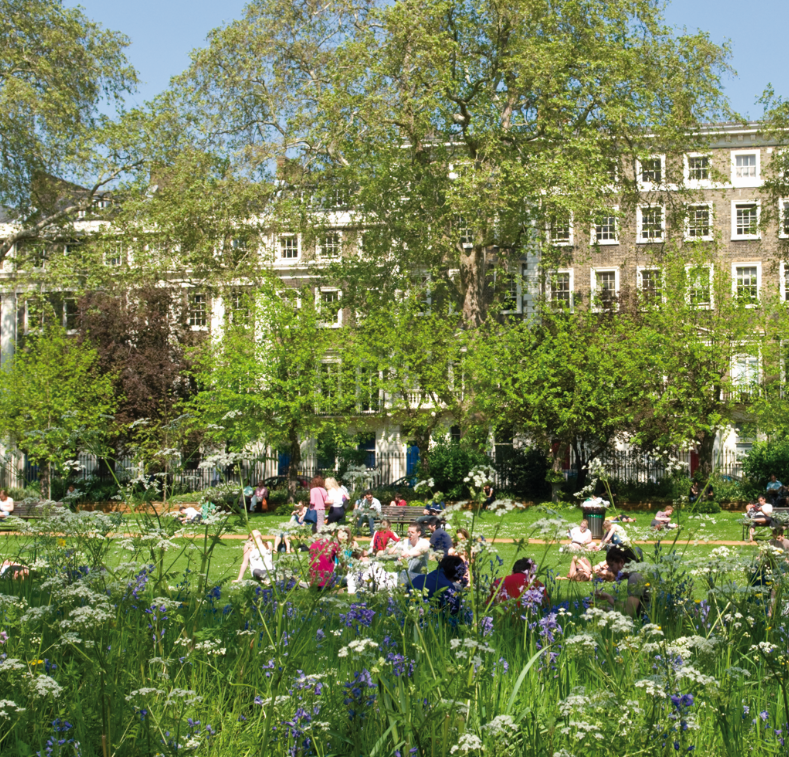
Gordon Square

While selecting universities, I had no doubt I wanted to join Birkbeck. The opportunity to get the daytime to myself, to work and volunteer, all whilst earning a degree was music to my ears. However, like any student moving away from home for the first time I was quite nervous for my big leap. Nevertheless, having come to Birkbeck I was quickly able to make friends at our induction evening and explore the many million things London has to offer.

In the beginning it never quite occurred to me that there were so many hidden gems on Birkbeck’s campus itself. Along with amazing student services, career hubs and excellent transport links, Birkbeck’s campus offers beautiful study spaces to work and chill with your friends. Here are some of my favourite things to do on campus:

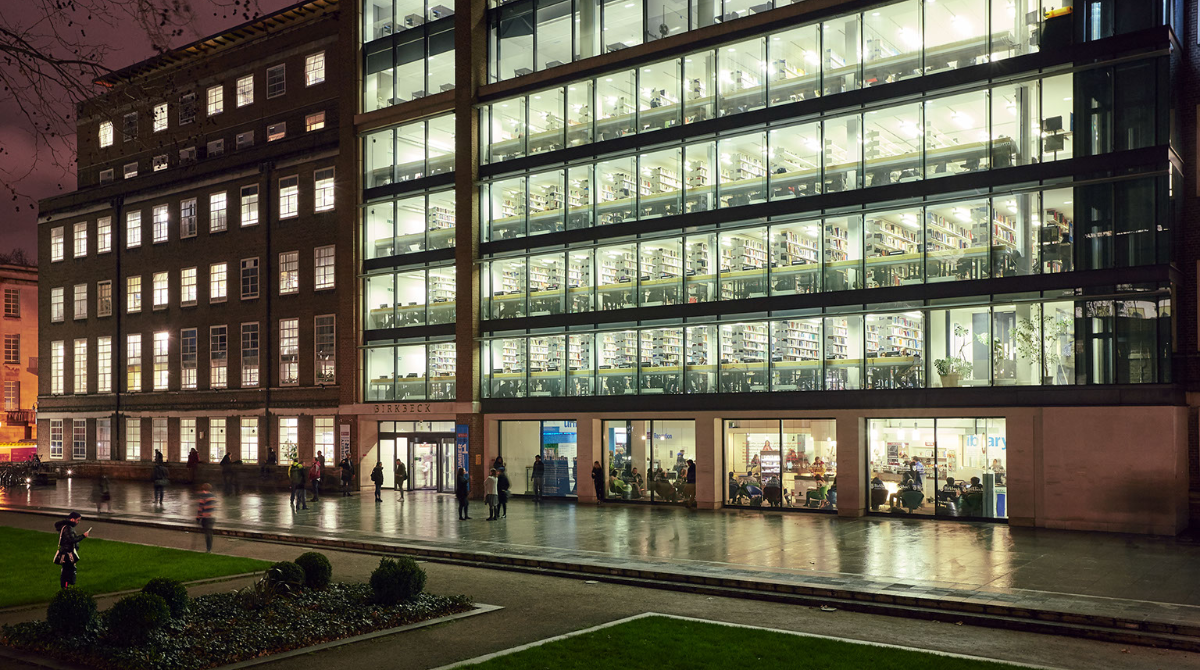
  1. Birkbeck Library : One of my favourite places to put my thinking cap on is the Library . The five-floor library offers a variety of study and work environments allowing you to find your perfect space. You are able to book study spaces for group studying as well as individual studying which are so convenient when you have to work on a group project or just want a room to yourself to be able to fully concentrate. These rooms also have a tele-conferencing screen which enables you to have conferences or attend your online lectures on a big screen.
  2. The Farmers Market: Birkbeck is home to the Bloomsbury farmers market which takes place every Tuesday and Thursday between 2.00-7.00pm and offers you an array of world foods. Everything at the market either comes straight from the farm or contains local, sustainable ingredients. So if, like me, you want some proper home-tasting food, the farmers market is your place to be!
  3. Birkbeck Bar and Cafe: Going out in London can burn a massive hole in your pocket and as students, the hole gets much bigger for us! The bar and cafe is one of my favourite places to unwind and catch up with my friends after lectures or randomly during the week. Not only are the drinks cost efficient but the food at Perch Cafe is lip-smacking.
  4. British Museum: The British Museum is only a two minute walk from Birkbeck campus and is free to enter! I absolutely love visiting the museum and every time I visit, I discover and learn something new from the previous time. They usually have some exhibition going on and interesting facts and objects from around the world.
  5. Squares and Gardens: Birkbeck is surrounded by gardens and squares like Russell Square Garden, Tavistock Square, Gordon Square, among others. These are beautiful to sit down in and unwind from the chaos of the city and get some fresh air. In the summertime Russell Square hosts festivals and pop-ups filled with music, food and drinks. I particularly love visiting the Garden Kiosk in Gordon Square and devouring their homemade cakes.
  6. Students’ Union and Societies: Being an international student, the Students’ Union has helped immensely for me to make friends, learn new skills and explore the city. The Students’ Unions hosts a variety of activities throughout the year such as sporting activities, social activities , upskilling activities, movie screenings among others. They also provide a wide range of societies so no matter where you are from you are sure to feel at home.

Six Ways to Beat the Winter Blues

By Shweta Menon, final year undergraduate Marketing student 

Photo of Shweta Menon

With the dark nights of winter, a lot of us experience our mood getting gloomier. This feeling is so common that there’s even a name for it: ‘winter blues’.

Many people may only experience a mild version of winter blues while others can have a more severe type of depression known as Seasonal Affective Disorder (SAD). The lack of sunlight due to shorter days disturbs our body clock and hormone levels, which affects our mood and compels us to hit the snooze button a million times. If, like most people, you can’t cozy up under the duvet til the sun comes out, try these tips to beat the winter blues.

  1. Get loads of sunlight: Push yourself to go outdoors and soak in the little bit of daylight that’s available even if it’s cold outside. Exposing yourself to daylight helps improve your serotonin levels. And if like most of us you are occupied during the day hours with work, studies and other activities get yourself a SAD lamp or sunlight lamp to stimulate daylight. Also, if you are stuck indoors because of work or other commitments try and sit close to a window to help you get that extra dose of sunshine.
  2. Eat yourself happy: While the cold, dark weather may tempt you to indulge in a hot bowl of mac and cheese everyday it is important to remember to eat well. Sugar and carbohydrates may make you feel happy and satisfied in the moment but eventually will lead to your blood sugar crashing. So why not make yourself a nice warm bowl of winter vegetable soup or chilli to warm up your day?
  3. Get active: Sitting at home binging your favourite Netflix programmes under your blanket might seem relaxing but will end up making you feel bluer than you already are in the long run. Research shows that exercising helps your body to release the feel-good hormone serotonin. Even if it’s just a 10 minute yoga routine or a short walk in the park do get yourself moving. Not only does this improve your mood but also helps you maintain a healthy waistline.
  4. Listen to happy music: Swap your winter ballads for something more peppy and fun. The music you listen to has an impact on your mood. Why not put on some Lizzo for your next commute to work or university?
  5. Schedule something to look forward to in your calendar: January can feel like the longest month of the year! So instead of slogging through it, schedule some time to meet your friends and family, check out the exhibition you wanted to go to or the latest movie that’s out in the theatre. This can help give you something to look forward to and feel happy about despite the cold, miserable weather outside.
  6. Be kind to yourself: When feeling blue and down it can be hard to find motivation to do any of the above things. One day you might be motivated to exercise or meet friends while on other days you might just want to curl up on your couch and watch telly, and both are 100% okay to do. It is important to not go hard on yourself and listen to your body and mind and take things at your pace.

While you can’t make the season any brighter or warmer you can definitely do little things to give you a fuzzy, warm feeling inside 🙂

10 Reasons to Study in the Department of Economics, Mathematics and Statistics

1. Our students benefit from nearly 200 years’ experience in teaching and research 

We’re celebrating 50 years of the Department of Economics, Mathematics and Statistics this year, but Birkbeck’s world-class economics and mathematics training began as early as 1826. 

2. With academics who are working on some of society’s biggest problems 

From the ageing population to atmospheric pollution and the economic argument for the four-day week. 

3. We’re one of the few departments to combine Mathematics, Statistics and Economics all in one place 

From the most abstract mathematics to applied economics and statistical data science, our interdisciplinary department is a great place to experiment with new ideas. 

4. When you study with us, you’ll join a close-knit community of learners 

Whether teaching is delivered online or face-to-face, our commitment to the student experience remains the same and we’re so proud of what our students achieve. 

5. And go on to join some of the UK’s highest-earning alumni 

Our graduates in economics and mathematics earn 29% and 33% more than the British average for graduates of these programmes. 

6. Maybe that’s because we’re in the business of training some of the nation’s top economists 

The Bank of England, HM Treasury and HSBC are just some of the organisations that our students go on to work for. 

7. Our academic support equips you with the tools to meet your goals 

As well as a dedicated tutor to build quantitative skills, you’ll have access to support on essay-writing, time management and finding your feet at university. 

8. With a flexible study model that will give you a head start on your career 

Whether you’re looking to immerse yourself full-time in your degree, or gain the academic skills to progress in your career, we have a study option that will help you get there. 

9. Our Bloomsbury campus is a stone’s throw away from the City of London and the Alan Turing Institute – the UK’s national institute for data science and artificial intelligence. 

Our central location makes juggling commitments or looking for work experience more manageable. 

10. And we’ll continue to push the boundaries of our field 

In 2020, our Professor Sarah Hart became the first female Gresham Professor of Geometry in the position’s 423-year history. What will your contribution be?