Changing the stories we tell about creativity

Jamie Hannon graduated with distinction in MSc Management with Business Innovation from Birkbeck’s School of Business, Economics and Informatics. Working for the Barbican and Culture Mile Learning during his studies, Jamie put theory into practice and interrogated practice with theory, linking the creative arts with skills in innovation to create the Fusion Futures skills and employability programme.

Photo credit: Christian Cassiel – Copyright: Museum of London

Creativity and the arts are recognised for their contribution to innovation. Yet, space for creativity is often sidelined by business and education. Even those working in arts and culture play into this narrative that creativity exists as a separate ‘nice-to-have’. This comfortable status quo has a lot to do with how we evaluate and talk about our arts and culture initiatives.

In 2020, I was lucky that my organisation was in a position to retain its workforce. It allowed me some creative space to develop a new learning programme based on the provocation ‘how can we best prepare young people for the as-yet-unknown jobs of the future’.  To really interrogate the possibilities, I drew upon my arts background and my burgeoning knowledge of innovation as part of my studies towards an MSc Management with Business Innovation at Birkbeck.

Knowledge sharing as a tactic against future challenges

Influenced by the academic discourse, a possible solution started to emerge.  Skills in knowledge sharing might be the only ones relevant when future jobs are unknown. Knowledge sharing – the donating and collecting of information that is then utilised by the receiving individual as knowledge – is considered a key behaviour within innovation-led learning organisations. This was sounding like a promising direction to take the programme in.

Of course, it made sense to me that knowledge sharing as a learning tactic could be deployed against future challenges. But would the young participants understand this? Participants likely wouldn’t articulate it in clear academic terms.  So, how were the programme outcomes going to be measured?  I had spent a lot of time on the programme and had promised its stakeholders a full and extensive evaluation. The choice of possible quantitative and qualitative methods was, for a while, disabling.

I had to stop and cut myself some slack, as they say. I had to strip back my thinking to the level of an individual taking part. In order to evaluate the programme, what did I need to know from the young students?  Were they aware that they had experienced knowledge sharing in the workshop?

Picturing the experience

My logic was this: participants might not be able to fully articulate their experience of knowledge sharing, but they would give away clues about how they understood their experience through linguistic pictures in their responses. We often use linguistic pictures to create an understanding of something.  (For example, ‘feeling down’ provokes an understanding of a person’s mood in a picture form – we imagine a person looking down or lacking energy so therefore sitting down.)  So, I decided to conduct loosely structured interviews that allowed participants the space to fully describe their experience in their natural vocabulary.

Revealing something hidden

“I was showing my creative mind”, one said.  “There was more to it”, “I saw the meaning behind their picture”, others said.  “I delved deep into my soul”.  “I could really see”.

A common linguistic picture appeared, the experience of revealing something to others or having something revealed to them. Although the young students had not used the words share, give, or take, they were describing how they were giving information about themselves to others and then receiving information from others in return.  The donating and collecting of knowledge had been experienced, and interestingly, it was at the level of identity.

The role of identity in knowledge sharing

The artist facilitators instinctively started with teamwork activities that explored identities. One artist’s exercise was to take a polaroid of how the student saw themselves, then a second of how they thought others saw them. Each picture was an agent for discussion and became an indirect and less pressurised way to share.

I realised that before sharing complex information and before utilising it as knowledge towards challenges, participants were sharing who they were with each other.  They had been supporting each other to share their authentic selves, which created a shared psychological safety within which the rest of the workshop activities could be conducted.

This was an important revelation for me. Returning to the academic discourse, I found that identity and self-concept are linked to a person’s understanding of their own knowledge and abilities and whether they feel comfortable to share; a self-confidence to offer a contribution and a humbleness to know how others can contribute.

Empowered with these findings, I can talk about this new programme and its impact on innovation. I can say that through understanding who they are and what knowledge, insights and experiences they bring to the group, participants have practised knowledge sharing. They feel open and confident to take part in collaboration and collective problem solving.

Tailoring the learning experience

For the degree, I achieved distinction and received an award of academic excellence. But it wasn’t all hard work. I enjoyed the experience because I took the advice given to me in a Birkbeck dissertation seminar. Their recommendation was to investigate a topic that was of interest to me; that I could apply to my career or other ambitions, and that I would feel proud and empowered to know more about. This advice, coupled with the course’s flexible approach to module selection meant that I tailored my learning to me and my ambitions.

At work, the story I now tell about my new learning programme, Fusion Futures, is that it is more than ‘nice-to-have’ – it’s fundamental to innovation!

Further information

21 tips on how to become a successful researcher

Last week, the Research Excellence Framework (REF) results were announced, with the majority of Birkbeck’s research (83%) being confirmed as world-leading and internationally excellent. Professor Jean-Marc Dewaele, Professor of Applied Linguistics and Multilingualism, shares his wisdom on how to become a successful researcher.  

Professor Jean-Marc Dewaele, Professor of Applied Linguistics and Multilingualism

Having been active in academia for more than 30 years, I realise that I have reached the pinnacle of my career in applied linguistics and multilingualism research. I’ve always been passionate about research and teaching, and I am lucky enough to work in an institution that allows me to focus on both.  

Close to 30 of my former PhD students have made their way into academia and the wider world, and when we meet occasionally, we reflect on what it takes to become a successful researcher and how to climb the slippery career ladder.  The first thing is undoubtedly luck: with health, work, relationships. None of those should suffer in the drive to become successful. By “successful”, I mean good quantity and quality of research output, resulting in citations and invitations to present one’s work and ideas at workshops, panels and conferences.  It can also involve becoming part of international professional organisations, editorial boards, and spending time encouraging and guiding younger researchers.  Of course, it is impossible to know in advance whether one will become successful.  I would say that it is a mind-set. Think positively!   

Practical advice also helps, which is why I’ve come up with these 21 tips on how to become a successful researcher. There is one caveat: if the drive to success undermines happiness, it is not worth it. It is definitely better to be a happy person rather than an unhappy -even successful- researcher. It is really a matter of balance. 

  • Be happy and curious, creative and courageous, regulate your emotions. 
  • Have your finger on the pulse of your field: Where is it heading? What are the exciting new developments (theoretical, epistemological and methodological)? How can you contribute to these new developments by adding something distinctive? Can you end up shaping the field? 
  • Establish what your unique selling points are: What are your strengths and what makes your research distinctive? Why should anyone care about what you have to say? 
  • Find your own unique academic voice: you’re not a robot, you need to stand out from the crowd – while still fitting in the community. 
  • Research is not a competition as there are no ‘winners’. It’s a collaborative enterprise: helping others means you will get help too if you ask for it. 
  • Be optimistic, resilient, humble, ambitious, conscientious, honest, excited, enthusiastic. 
  • Accept that all research requires a huge investment in effort and time – often much more than expected. 
  • Realise that while reviewers are often constructive in their comments on your work, some can also be mean and hostile: don’t let them rattle you. Build a mental shield to protect yourself when things get nasty (also at conferences) and don’t lose your cool. 
  • Visualise your name in print under the title of a new paper in an excellent journal. 
  • Build up a network of fellow researchers from a wide range of ages and experience, be visible, sociable, friendly and trustworthy. 
  • Organise panels on your topic and major conferences, then turn the contributions into a special issue for a good journal. Plant a flag, invite people to join you, use humour to dissipate tension. 
  • Realise that even the best and most experienced researchers don’t produce gold on the first attempt: rework papers endlessly until they reach the publication threshold. Pay attention to detail. Don’t be overly discouraged by rejections. Experienced researchers are able to benefit maximally from feedback, with the resulting publication being many times better than the original one. 
  • Realise that more time spent in front of the computer does not guarantee better quality work. 
  • Go walking and do physical activities that take your mind off academic work (music, dancing, sports…) 
  • Go to conferences to present your work in progress and check how it is received and what feedback you get. 
  • Offer to collaborate with fellow researchers if you feel your skills could complement theirs in reaching a common objective. 
  • Try to write (and present) better. 
  • Be generous in giving credit to people who influenced and helped you. 
  • Be able to switch off being a researcher sometimes, talk about something else, and listen to others’ views on arts and politics and life. 
  • Never submit a paper straight after finishing it: go for a walk first and think about every word and every reference and anything you may have forgotten to include or things that forgot to remove. A good night’s sleep before a final re-reading is also recommended. 
  • Disseminate your findings beyond academia and see whether your research may have practical implications that could boost social justice and equity. 

Further information 

Meet The Finalists | Pioneer 1.0 Programme 2022

Meet the early-stage entrepreneurs who will be pitching live at this year’s Pitch & Awards evening, competing for Best Business Idea and Best Business Pitch.

We are excited to introduce this year’s Pioneer 1.0 finalists who have been shortlisted to pitch their business ideas live in June in front of an esteemed judging panel and invited audience.

After two turbulent years which transitioned the Pitch & Awards evening to a virtual event, we are delighted to be back in the room to celebrate the fifth year of the programme.

Over the last five years, the Pioneer 1.0 programme has supported over 500 budding entrepreneurs at Birkbeck and continues to champion ambitious students and recent graduates who have innovative ideas that will make a difference.

Since kicking off in November 2021, participants have taken part in seven monthly workshops to develop the skills and knowledge to succeed in business, learning from a range of entrepreneurs, industry experts and each other to turn their ideas into reality.

The six finalists are in with a chance of winning either the Best Business Idea or Best Business Pitch award, each worth a £1500 cash prize to support their business, along with a bespoke package of mentoring, coaching and promotion.

This year, over 100 students and recent graduates have participated in the programme and their achievements will be celebrated at the pitch and awards evening on Tuesday 14 June at BMA House in Bloomsbury.

Meet the Finalists

Portrait of Annabel Ola looking into camera.


Annabel Ola

  • MSc Culinary Innovation Management
  • Business: BEKIRI

BEKIRI exists to expand the boundaries of modern luxury patisserie. The fusion classic recipes and African ingredients will offer a new dimension of cultural discovery and appreciation for customers.


Ella Snell smiling for the camera.


Ella Snell

  • MA Philosophy
  • Business: Art School+

Art School+ is a service which connects early-career and underserved artists with unique paid commissions. It further aids both artists and organisations by providing bespoke training and 360 support.


Picture of Kacey Ibirọ̀gbà

Kacey Ibirogbà

  • Bachelor of Law
  • Business: Kọ silẹ

Kọ silẹ (koh-see-leh) is a compounded social bookmarking platform, simplified and designed with the adaptability of restoring structured balance into every aspect of our lives.


Picture of Sonja

Sonja Bacinski

  • FDSc Computing/Information Technology/Web Development
  • Business: Zolibri

Zolibri is an online platform that finds, validates and brings together the best of ethical & eco-friendly cosmetics from numerous online shops so you can find them all in one place.


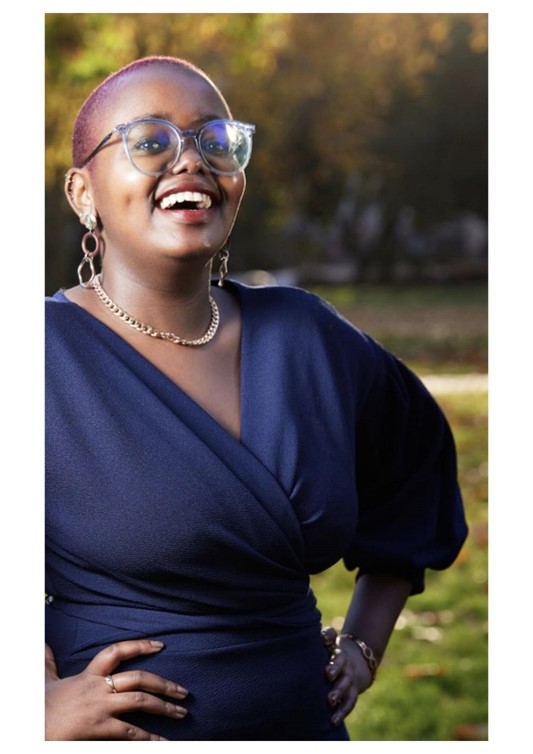
Picture of Susan Christine Wachera smiling


Susan Christine Wachera

  • MSc Organisational Psychology
  • Business: Black Talanta

Black Talanta is democratising access to equitable high-skilled employment by pairing internships with black heritage students and recent graduates enabling them to make an informed career decision about the professional pathways that best suit them.


Picture of Wunmi


Wunmi Adebowale

  • MSc Coaching Psychology
  • Business: The Whole Woman Initiative

The Whole Woman Initiative is the social cause working to end domestic violence against women in Nigeria by providing psycho-social support and building a safe space community.


Further Information

Chasing Chevening Dreams

Paraguayan Maureen Montania Ramirez, an MSc Health and Clinical Psychological Sciences student at Birkbeck, tells us about her experience applying for the Chevening scholarship.

pic of maureen montania ramirez

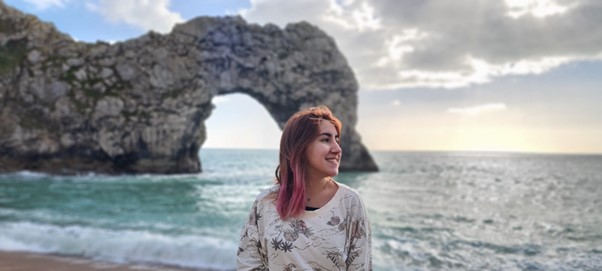
Maureen Montania Ramirez at Durdle Door

When I decided to apply to Chevening I was at a point in my career where the training resources in my country were no longer sufficient for the dreams and goals I had in my head. I wanted to bring something different to my country and I felt that the only way would be to study in a first world country with the best universities in psychological research, that was for me the UK.

When I took this decision, I received immediate support from my boss who is also a born dreamer who had left the country for training and knew very well the longing I felt at that moment. She offered me her unconditional support and became my sole mentor from start to finish. This was the first and only time I applied to Chevening, I didn’t have high hopes of getting the scholarship because I knew thousands of stories of people who didn’t make it until the third attempt, or never. These were people I respected a lot and considered excellent professionals, so I said “I’m going to try, to at least gain experience and make it the third time”.

My mentor helped me to reflect in my essays who I am, what I dream of, how I move in this life and what I see on the other side of the horizon as a leader and social fighter. With her help, I was able to put all this into words, thanks to which I received the first great joy: the mail of being pre-selected for the interview. It had been a long time since I had felt so much hope, I started to believe in myself, that I could make it. I could already see myself at my university, making friends, learning in a lab and gaining thousands of experiences.

I feel that being charged with so much hope was the key to performing well in the interview. It’s worth noting that in March, when I was interviewed, I was going through one of the worst times of my life. My father was hospitalised for covid with his life hanging by a thread. I barely had a head to think. However, I knew that my dad, more than anyone else, believed that I could make it. A mixture of homage and hope led me to be energised and carry on a 40-minute interview that felt like 15 minutes to me. I had so many things to say, one idea led to another and I answered the questions with words that flowed on their own. The strength that moment gave me has no name. To this day I remember how complete I felt after the interview, when everything else in my life was falling apart.

Immediately afterwards I called my dad to tell him. It was a unique moment that I treasure to this day.

pic of Maureen Ramirez and family

Maureen and family

Shortly thereafter my dad returned home. The recovery was slow and challenging, but steady. Little by little he regained the light in his face, I did not leave his side for a second. So it was that when I received the mail saying that I had finally been selected, he was by my side. We jumped with emotion, we hugged, we cried, we screamed. I felt more alive than ever. I thanked him and my mom for everything they gave me, for having raised me with wings to always fly wherever I want, because without them I am nothing.

Maureen Ramirez holding the Paraguayan flag

Maureen proudly displaying the Paraguayan flag

Months after the preparation of papers, suitcases and emotions, I had to say goodbye to my family at the airport, with a huge smile, hugging my Paraguayan flag and raising my arms high as if to take off once again, with the support of my pillars in this life. It filled me with joy to see my father’s face full of life, completely back, next to my mother and my brother. I boarded the plane with a suitcase full of dreams and hopes.

pic of Maureen Ramirez on first day in UK

Maureen’s first day in the UK

Today, almost a year after that interview, I still feel I have to pinch myself to remember where I am. What was a dream yesterday is now a constant reality. My life here is wonderful. Every day I learn something new- academically and socially, I discover new friends, new places, new lives. I am immensely happy and grateful. Chevening gave me everything and more than I expected. It transformed me.

Further information:

In their own words: Tips from our Chevening scholars (Interview – part 2)

We’ve asked Birkbeck’s 2021 Cheveners to share their experience applying for the prestigious UK government scholarship. In this second instalment of the series we hear from Chevening scholars from Africa, Europe and Latin-America.

pic of handshake

“It is very important to be sure of oneself, to be convinced of what one has written in the essays and to know how to defend the ideas behind them. You should not focus on memorising information but on being genuine, you know why you are applying, you just have to defend that and show that you have a good profile. It is also not essential to be too formal, sometimes that makes us act robotically, just be yourself.”- Maureen Magali Montania Ramirez, Paraguay

pic of maureen montania ramirez

Maureen Montania Ramirez

“The preparation for my Chevening interview was centred around the project I had submitted in the Chevening application. This involved working on how I would orally and convincingly showcase myself and my project as worthy of the Chevening award. Of course, I also worked on the tips which were provided on the Chevening website and social media, but my focus was on my personal story as a Chevening candidate. In other words, I put enough thought and work into how I would present my project and myself during the interview as an authentic personal story, and not as a copy of someone’s else. Hence, I think that this is vital to acing the Chevening interview.

Think about what makes you unique as a Chevening candidate and about what makes your story original. This implies having a clear vision of why you applied in the first place and of what you aspire to achieve with your master’s degree. And if this vision is not clear in your mind yet, this is where you need to start the preparation. I believe that if you can communicate this vision clearly and convincingly during your interview, you will be able to answer the other points related to it, such as your leadership skills, your ability to function in the academic and cultural environment in the UK, and your short- and long-term goals.”Rachid Meftah, Morocco

“For an interview, I would advise you to tell only about 1-2 the most successful examples of leadership and networking from the many good examples you certainly have, and describe them in more detail. It is better to use the STAR method for this. It is especially important for the commission to see exactly how you show your qualities in challenging situations, and not that you often had to face problems.

I would also advise you to be sincere in the interview and remember your highest goal, for which you apply for Chevening. Remember what you want to achieve thanks to the scholarship, and dedicate your entire story to this general idea.

Try to follow a clear structure of the story and not go into unnecessary details. Do not go away from your thoughts to the side and do not engage in third-party reasoning and explanation of the context. At the same time, try to describe your own contribution and your motivation in as much detail as possible.”Emma Terchenko, Russia

pic of Emma Terchenko

Emma Terchenko

“I read all the blogs written by Chevening and also by other Chevening alumni. I prepared an answer for every possible question trying to always convey my passion for making a change in my country and my leadership and networking skills. After, I asked my family and friends to listen to my answers and to give me feedback. Finally, I practiced as if I was in a real interview with other candidates from different countries.
My advice would be to prepare and practice to the point where the answers come to you in a natural way. You will be nervous on the day of the interview but knowing that you have rehearsed your answers will make you feel comfortable even if they ask you something you were not prepared for.”- Virginia Nuñez, Guatemala

Further information:

“Not all Deaf people know sign language and not all sign languages are the same”

Psychology student, Silvia Janickova discusses how inclusivity and accessibility have got considerably better but there is still a long way to go.

a pic of Silvia Janickova

Silvia Janickova

1. What are your thoughts on the significance of popular culture, especially film, in representing the experiences of deaf and hearing-impaired people?

One thing I would like to see more of is the representation of Deaf and hearing people interacting more with each other. CODA (the Oscar-winning film) and other films with Deaf or hard-of-hearing characters often portray hearing and Deaf communities as largely separate entities with the conflict revolving around the gap between them. I feel this is not reflective of the life richness that goes way beyond deafness versus “hearingness”.

2. What is the biggest misconception people have about people from the deaf community?

One of the misconceptions is that we are excellent lipreaders. In reality, lipreading is hard and largely a guesswork. Face masks during the pandemic have made the already precarious lipreading art even trickier.

There is also a gap between how many Deaf and hard-of-hearing people perceive themselves and how we are perceived by the society. Deafness is often seen as a “deficit” or impairment, but for us, the real issue is communication barriers and lack of inclusive environment.

Another misconception is that all Deaf people know sign language and all sign languages are same. For example, when doing my BSL courses in London, BSL used in Manchester had such a different accent that at times it felt like a whole new language for me!

3. Do you feel things have got better for deaf people, when it comes to understanding and inclusivity?

I think inclusivity and accessibility have got considerably better compared to even just a decade ago. That said, there is still a long way to go.

For example, and related to the film theme, cinema screenings often come unsubtitled so we cannot go and see the films we would like to watch.

Deaf people are also underrepresented in professional roles and there are persisting barriers in the job market.

Social events can be also difficult. In the end of the day, we are all humans and above all, we all want to feel that we belong. Many of us have learnt to be great pretenders and nod and smile at the right places. Simple things such as facing us, speaking clearly and typing things when it gets too noisy around can make a big difference.

4. What’s your own personal experience as someone who is deaf?

As a Deaf person who grew up entirely in the hearing world, finding way both to the hearing and the Deaf communities as an adult has been a journey for me. It has often been difficult, but it has also enabled me to meet many amazing people, both Deaf and hearing, and gain and wealth of experiences. Ultimately, all of this has shaped who I am, as a solution-seeker and a lifelong learner, not only in the academic sense, but also in terms of always learning something new about myself and other people.

5. What support have you received from Birkbeck?

As a substitute for spoken aspects of lectures, I use captioning or transcription and electronic note-taking. Studying as a Deaf student can be harder, since DSA (governmental funding scheme for communication support) only covers partial expenses for Deaf students. The pandemic has brought increased accessibility due to widespread use of automatic subtitles, but also additional challenges. However, the Psychology Department, where I study, and my disability team have been absolutely fantastic and really went extra mile to ensure the great studying experience for me.

The diversity of the student body has been also very attractive for me as a Deaf mature student. I am now in my final year and loved my Birkbeck experience so much that I am hoping to continue here for my Masters.

Further information:

“British Sign Language is receiving far more recognition”

Ari Laughlin, Psychology student, offers a perspective as a Deaf student, including praise for Birkbeck’s “high quality” and “versatile” disability services.

Pic of Ari Laughlin

Ari Laughlin

– How does popular culture, especially film, represent the experiences of deaf and hearing-impaired people?

I think that popular culture is extremely significant for representing the experiences of D/deaf and hearing-impaired people, especially since most hearing people have never met or have had to interact with a d/Deaf, Hard-of-Hearing or hearing-impaired person before. Popular culture forms a significant gateway for learning about groups of people. “A Silent Voice” is a very accurate representation of many deaf people’s experiences because it demonstrates how little sign languages are generally known by the public, and shows how Shoko Nishimiya, the deaf character, struggles to hear in most situations with just her hearing aids and needs Japanese Sign Language to be fully immersed in social interactions.

– Can you share the biggest misconception people have about people from the deaf community?

That there is only one, singular Deaf community with one sign language and culture across the globe when there are thousands of Deaf communities with their own individual cultures, sign languages and regional dialects. These communities and sign languages, particularly those from other countries in the Anglosphere, are often misperceived as belonging to American Deaf cultures, which, on the other hand, receive a lot of media and pop culture coverage. In contrast, British Sign Language and British Deaf cultures receive little representation and coverage. Rose Ayling-Ellis’ appearance on “Strictly Come Dancing” is probably the most exposure British Sign Language and British Deaf cultures have had so far in popular culture and in the media.

– Do you feel things have got better for deaf people when it comes to understanding and inclusivity?

For British d/Deaf people, yes and no. Yes, since British Sign Language is receiving far more recognition today than it was before and Deaf psychology – particularly the clinical, counselling and neuroscience fields – is gaining traction and breaking barriers for d/Deaf people. However, schools for the d/Deaf across the UK are shutting down and more d/Deaf children are having to attend mainstream schools. Deaf education is still highly stigmatised and most d/Deaf children, including those with cochlear implants, struggle significantly in mainstream schools where they cannot hear their teachers and classmates or may not even understand English itself. Teachers of the Deaf, who use British Sign Language, form bridges to the curriculum for d/Deaf children because English is largely inaccessible for many of these children since they cannot hear it. British Sign Language is fully accessible to d/Deaf children and acts as a steppingstone for the acquisition of English skills. D/deaf children often cannot have this highly specialist support in mainstream schools and many have very poor English receptive and comprehension skills because of this.

– What’s your own personal experience as someone who is hearing-impaired?

I can only really speak as a deaf person who was brought up as oral with exposure to Deaf cultures and British Sign Language much later in life. Although I had to attend mainstream schools – which I struggled significantly in – I was lucky enough to be able to eventually attend a school for the d/Deaf and largely receive the support that I needed. Regarding Deaf communities, my own experiences have varied vastly. Despite having experienced awful racism from some Deaf people about my partial East Asian heritage, many others have taken me under their wing to teach me British Sign Language and their cultures. I think that that is down to the general lack of accessibility, which pushes Deaf communities and d/Deaf people to the very edge of society and consequently shuts them off from the wider world. I was also very fortunate to be able to receive psychological therapies from Deaf clinical psychology services, which are very scarce throughout the UK.

– What support have you received from Birkbeck?

I have received specialist electronic note taking for the d/Deaf and live captioning support. This support meant that I could transfer very easily to online learning and that the pandemic had no negative impacts on my studies. Seminars and lectures became far more accessible and inclusive for me. The disability support that I have received from Birkbeck has been the highest quality and the most versatile for my needs so far. I cannot further express how phenomenal Birkbeck’s Psychology Department, Disability and Dyslexia Service and Mental Health services have been throughout my studies.

Further information:

Five things you may not know about Ramadan

Ramadan is the ninth month in the Islamic calendar and one of the holiest months of the year for Muslims. This year around two billion Muslims, including Alumna and Barrister Hauwa Shehu, are observing it. Muslims follow the lunar calendar, therefore the start and end of Ramadan changes each year depending on the sighting of the moon. The end of Ramadan is marked by a celebration called Eid Ul Fitr. In honour of this special month, Hauwa shares five things that you may not know about Ramadan. 

photo of Hauwa Shehu

Hauwa Shehu

  1. Purpose of Ramadan

Although many people associate Ramadan as being the month in which Muslims fast for around 30 days, from sunrise to sunset, many are unaware that this is not the main purpose. The main purpose is to attain something which in Arabic we call “Taqwa” and can be translated into English as being “God-consciousness” (Surah Al-Baqarah –  Quran 2:183). During Ramadan, Muslims make every effort to do good deeds and actions that would be pleasing to God and abstain from bad things. And we try to think of God, who we refer to as Allah, our creator, in everything that we do.

  1. Fasting exemptions – not everyone fasts

There are many exemptions for people who may not be able to fast, therefore you shouldn’t assume that every Muslim is fasting during Ramadan.  Examples of reasons why some Muslims do not fast include if they have a health condition, are elderly, pregnant, breastfeeding, travelling or menstruating. Despite this, they are able to observe the holy month in many other ways, e.g. by praying, reading the Quran, giving charity, supporting their family and community, and avoiding things like gossiping, telling lies or speaking / thinking badly of others.

  1. Month Quran revealed – Laylatul Qadr

The Quran was revealed to Prophet Muhammed (PBUH) during the month of Ramadan. In particular, Muslims believe it was revealed during the last 10 nights, on a night known as “Laylatul Qadr”- “the night of decree” (Surah Al-Qadr – Quran 97:1). A night in which Allah decides everyone’s fate for the coming year. In light of this, Muslims increase in acts of worship and good deeds more so at this time, as the Quran tells us that any actions and deeds carried out on this night are greater than if you did them for 1000 months.

  1. Health benefits of Ramadan

For those who do not have any pre-existing medical conditions, fasting has been medically proven to have a number of health benefits including improved blood pressure, metabolism and brain function. It also benefits mental health and wellbeing. Psychologists state that any action undertaken consistently for 30 days becomes a habit. Therefore by engaging in positive behaviours throughout Ramadan, Muslims also benefit psychologically and try to maintain the positive habits throughout the year.

  1. Zakat Ul -Fitr

A big part of Ramadan is charity. Muslims try to increase their charitable giving during this time. Zakat Ul Fitr is a charitable donation of food that all Muslims who can afford it, must give. It amounts to approximately £5 and reminds all Muslims to think of and have compassion for those less privileged than them.

Supporting Muslim friends, peers and colleagues

  1. Share celebratory greetings

Wish them ‘Ramadan Mubarak’ at any time throughout the month. At the end, during Eid, you can use the phrase ‘Eid Mubarak’.

  1. Join in with a fast-a-thon

Many non-Muslims choose to fast for 1 day during Ramadan. Either from sunrise to sunset or simply by missing lunch. The idea is to give an idea of what it is like to fast and try and abstain from bad or negative thoughts/ actions for a period of time. Money saved from not having lunch that day can be donated to charity

  1. Attend an Iftar

Iftar is the name for the meal in which Muslims break their fast. There are many iftars taking place around the country. You can check online on sites like Eventbrite or ask at your local mosque. But the biggest public Iftars are run by Ramadan Tent Project –  Open Iftar. Take a look, and join one of the events for delicious free food and heart warming company.

  1. Work flexibly

Many Muslims engage in prayers late into the night (Taraweeh) and wake up very early to eat before sunrise (suhoor), so consider avoiding extremely early starts if working with Muslim peers and colleagues. It is also common for some people who are fasting to get tired later in the day, therefore it is considerate to avoid scheduling meetings or deadlines in the later part of the day.

  1. Check in

Check in on Muslim contacts during this time. Never make assumptions about how someone is observing Ramadan. The best thing to do is ask questions when unsure.


References and Further Reading

https://www.muslimaid.org/media-centre/blog/the-benefits-of-fasting/

https://quran.com

https://www.islamic-relief.org.uk/about-us/what-we-do/zakat/zakat-ul-fitr/

https://www.healthline.com/nutrition/fasting-benefits

https://britishima.org/ramadan/compendium/

https://mcb.org.uk/resources/ramadan/

https://www.zakat.org/valid-exemptions-for-not-fasting-ramadan

Easter traditions from around the world

As Christians prepare to mark the resurrection of Jesus Christ on Easter Sunday, with many going to Church and attending Easter egg hunts, a number of countries around the world will celebrate without a single chocolate egg in sight! Here, we round up our top five Easter traditions unique to the country and region, along with their historical significance. 

people making a giant omelette

Giant omelette-making tradition in Southern France.
Credit: TIME magazine/Remy Gabalda—AFP/Getty Images

  1. In Mexico, on Holy Saturday, it’s typical for locals to re-enact the burning of Judas by burning an effigy, part of a weekend of rituals thought to rid oneself of evil. Close to two million people will crowd the streets to watch one of Latin America’s most elaborate re-enactments of Christ’s crucifixion in the Iztapalapa neighbourhood of Mexico City. Intended as a deeply religious experience and held on Good Friday, the Passion Play, like others seen around the world, depicts Jesus’s suffering and death. The tradition began in the nineteenth century to rejoice the end of a cholera epidemic.

  2. Like other islands in the Caribbean region, Barbados has held onto the tradition of kite-flying to celebrate Easter. Families come out to compete in competitions and festivals with the most elaborate, colourful designs and incredible skills vying for the attention of spectators and prize-givers. The vibrant displays will showcase every imaginable shape going, from the traditional quadrilateral to boxes, rectangles and more elaborate polygons. Some aim to outdo others with gigantic contraptions requiring five to ten people to launch the kite and heavy-duty twine to keep it intact. The spectacular flight of the kites is said to represent the resurrection of Christ.

  3. In the village of Bessières, in southwest France, eggs are neither boiled and painted nor made out of chocolate. Instead, villagers there opt for the more arduous task of making a giant omelette from 15,000 eggs, to be served with bread to villagers. The origins of this incredible task, which requires 50 volunteers to make and nearly two hours to crack the eggs, is said to date back to the time of Napoleon Bonaparte. It’s recorded that he had enjoyed an omelette so much that he asked that locals collect all the eggs in the village and cook a massive version for his army.

  4. Home to over 350 million Christians, Africa’s Easter celebrations involve lots of traditional, communal activities, stemming from its rich history and contribution to Christianity, from Early 2nd century AD when Pope Saint Victor, the first bishop of Rome born in the Roman Province of Africa (North), decreed that Easter be universally celebrated on a Sunday. For Nigeria’s Christian population, palm branches decorate homes from Palm Sunday to Easter Sunday and the Igbo people perform a distinctive masquerade dance, with young men wearing colourful costumes to celebrate their ancestral spirits.

  5. The island of Marinduque, Philippines hosts the Moriones Festival during Holy Week, with women and men impersonating ‘moriones’ (Roman soldiers), inspired by Longinus, a Roman executioner of Christ. They don masks, helmets, and gladiator-inspired garb and wander the streets to pull pranks and scare children. According to legend, Longinus was blind, and was cured when a drop of Christ’s blood fell in his eye during the crucifixion. This specific tale is often re-enacted during the festival.

    Further Information 

The PhD experience: becoming an independent researcher

Seongil Han has recently completed his PhD in financial data analytics with FinTech in the Department of Computer Science and Information Systems. He shares his Birkbeck experience.

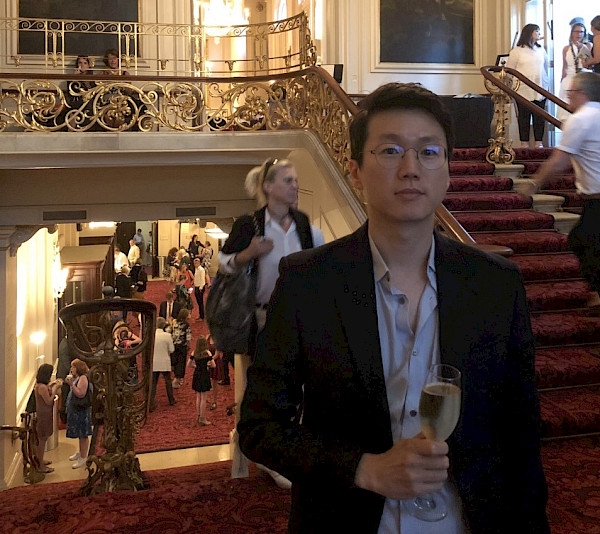
Seongil at the theatre in London

Why did you choose Birkbeck for your PhD?

Birkbeck has an excellent reputation for research. Furthermore, the Department of Computer Science and Information Systems is one of the oldest computing departments in the UK and worldwide. Because of this long academic background as well as the excellent reputation, I chose Birkbeck to broaden my research experience for PhD.

What were some of the highlights of studying in the Department of Computer Science and Information Systems?

The department provided a world-leading research lab (Birkbeck Institute for Data Analytics, BIDA) for data science with domain expertise in both theoretical and applied computer science. In addition, the research of BIDA is focused on interdisciplinary research. This environment enriched the quality of my interdisciplinary research as well as research experience.

Could you explain your PhD research for a non-expert?

My work is focused on financial data analytics using AI-based modelling within FinTech. In particular, I conducted the research with the primary objective of improving the explainable aspect as well as predictive performance of credit scoring systems, utilising big data-driven analytics and machine/deep learning techniques.

How has the PhD supported your future career?

I am currently an Analytics Manager (Data Scientist) in the AI & Big Data Analytics Team in LG Display Co. (Headquarters, South Korea). The interdisciplinary research experience based on AI-based modelling and data science for PhD broadened my academic background (MSc Financial Mathematics, BSc Mathematics, King’s College London) to the role of data scientist in the real-world, solving problems driven by digital transformational (DX) industrial environments.

What advice would you give to someone considering a PhD or just starting out on this journey?

The system of learning and researching for PhD at Birkbeck encourages a free and open exchange of views and ideas between supervisors, experts and students as well as providing students with great guidance and support. Please feel free to discuss any points about your research with your colleagues! Then you will be trained as an independent researcher.

Further Information