Category Archives: Uncategorized

Edith ‘Biddy’ Lanchester, “new woman” and socialist

To commemorate the College’s bicentenary in 2023, we’re showcasing 200 ‘Birkbeck Effects’ which capture the incredible stories of our vibrant and diverse community, highlighting their achievements and impact on the world. 
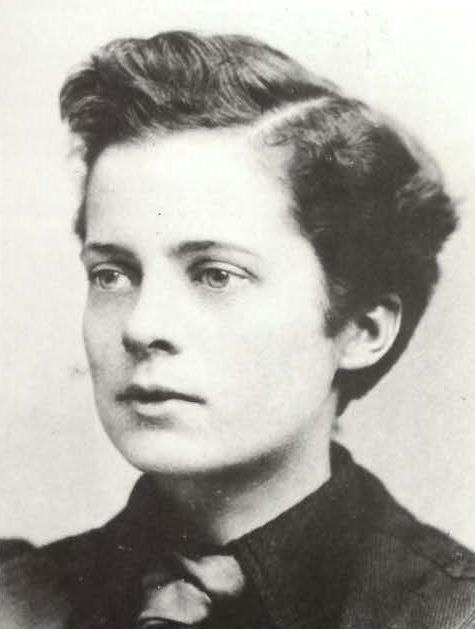
Edith Lanchester

Edith Lanchester was a socialist campaigner and a strong feminist voice in women’s history, born into a wealthy middle-class family, but insistent on challenging many of the oppressive elements of her time.

She was educated at home and at the then Birkbeck Institute in science subjects, with her family intending for her to become a teacher. However, at 24 she fell in love with a working-class clerk, James Sullivan, announcing that she would move in with him.

Her parents accused “The Birkbeck” as well as membership of the Socialist Democratic Federation for having “unhinged her mind”; and when she argued that marriage would take away her independence, her father and brothers had her committed to the Priory insane asylum.

Her local MP, John Burns, secured her release after four days and the whole affair became a scandal, sparking debates about the state of marriage in society. Her false detention reinforced her views and Lanchester remained a prominent warrior for women’s rights and freedoms: she waved the suffragette’s green, white, and purple flag in Trafalgar Square and was even imprisoned for her role in a protest.

Abi Daré, Novelist

To commemorate the College’s bicentenary in 2023, we’re showcasing 200 ‘Birkbeck Effects’ which capture the incredible stories of our vibrant and diverse community, highlighting their achievements and impact on the world. 

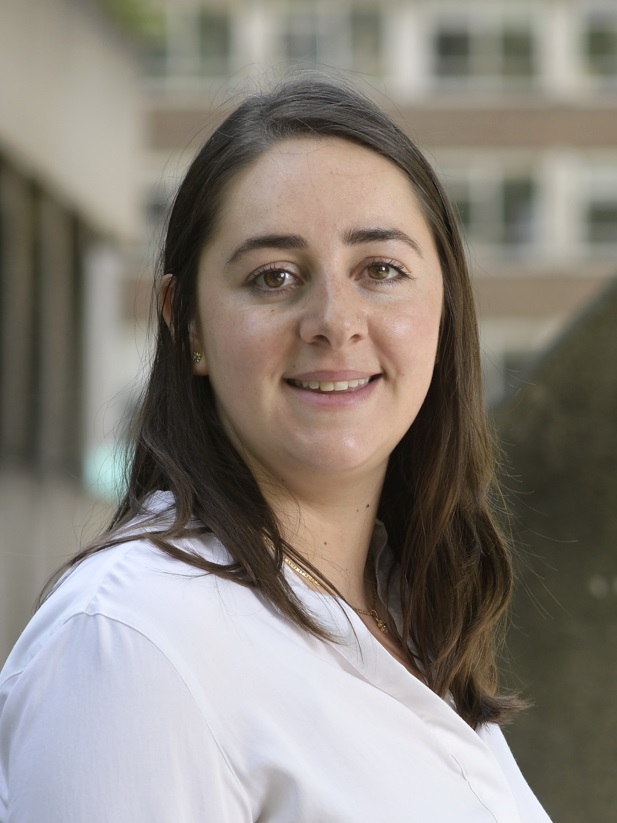
Abi Daré

Abi is a Nigerian-born award-winning novelist who received critical acclaim for her first novel, The Girl With the Louding Voice. The book won the Bath Novel Award for unpublished manuscripts back in 2018 and went on to become a New York Times bestseller.

She graduated with a Master’s in Creative Writing from Birkbeck, of which she has said: “I needed to sit with people like myself, like minds who had an interest in writing. I wanted to do something serious with it. So that’s where I started my publishing journey from. The book was part of my thesis.” She has also credited her supervisor, Julia Bell with encouraging her to enter writing competitions.

In 2021, Abi was one of the twenty-four essay contributors for You Are Not Going Back: An essay from the collection, Of This Our Country, which offers an honest depiction, told by Nigerians themselves, of the culture and traditions of their Nigerian identity. She now works in project management for an academic publisher.

Durdana Ansari OBE – first Muslim woman captain of the British Royal Navy

To commemorate the College’s bicentenary in 2023, we’re showcasing 200 ‘Birkbeck Effects’ which capture the incredible stories of our vibrant and diverse community, highlighting their achievements and impact on the world. 

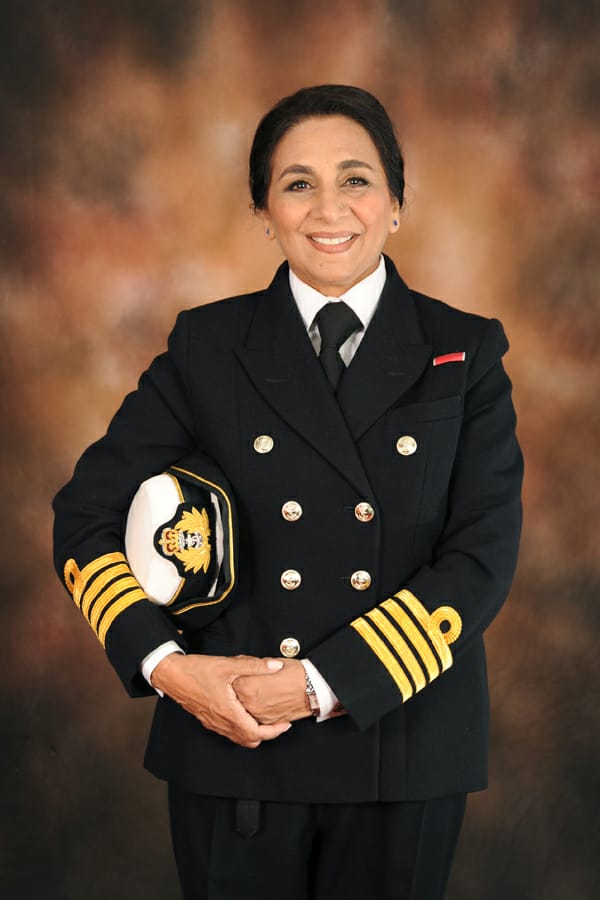
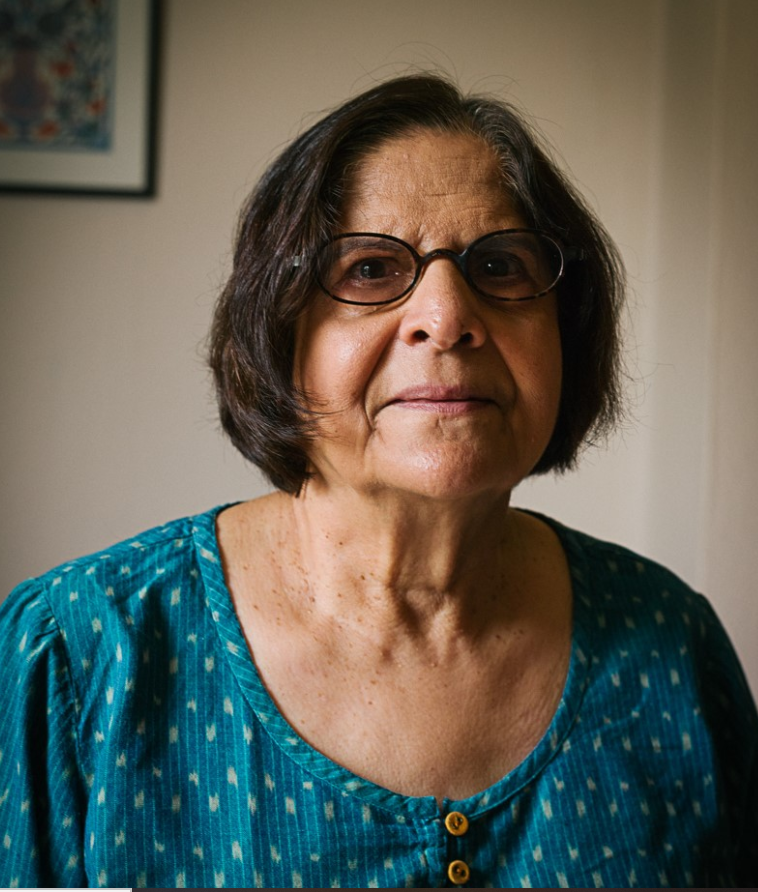
Durdana Ansari

Durdana is an entrepreneur and activist and the first Muslim woman appointed as Honorary Captain of the British Royal Navy. She is a former charity director and journalist at the BBC World Service and received her degree in media and journalism from Birkbeck.

Durdana established The Pearl Foundation to teach English, reading, writing and computer skills to British-Muslim women, as well as integrate these women into wider society by building self-confidence and enhancing their quality of life. Her work with ‘The Pearl Education Foundation’ and the ‘Ethnic Minorities Foundation’ led to the recruitment of approximately 9000 students and 700 volunteers.

She was awarded ‘Order of the British Empire’ (OBE) in 2012 and is currently working on her autobiography to share her experiences and inspire the next generation: “I want the world to know how a woman from a developing country managed to follow her passions and achieve her goals.”

Rosalind Franklin – chemist and X-ray crystallographer

To commemorate the College’s bicentenary in 2023, we’re showcasing 200 ‘Birkbeck Effects’ which capture the incredible stories of our vibrant and diverse community, highlighting their achievements and impact on the world. 


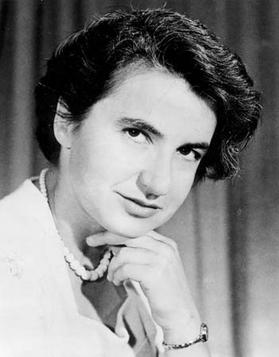
Rosalind Franklin

Rosalind Franklin was a chemist and expert in crystallography who first photographed DNA to reveal its double-helix shape uncovering the mystery behind how life is passed down from generation to generation. Her commitment to the highest standards of scientific research is said to have brought “lasting benefit to mankind.”

Before that, her research specialty was coal and she was at the forefront of techniques in X-ray crystallography, which had only been used to investigate a limited range of matter by the early 1950s.

While James Watson and Francis Crick famously got the credit for ‘discovering’ the structure of DNA, it is generally accepted that Franklin’s research was more advanced. They admitted, after her death, that Franklin’s data had been crucial in proving their hypothesis.

Franklin was one of the few female chemists in the world at this time, moving from King’s College London to Birkbeck in 1953. She commented that the atmosphere at Birkbeck was friendlier, but the lab conditions were less favourable.

Emma “Ma” Francis – canteen worker throughout World War II

To commemorate the College’s bicentenary in 2023, we’re showcasing 200 ‘Birkbeck Effects’ which capture the incredible stories of our vibrant and diverse community, highlighting their achievements and impact on the world. 

Emma 'Ma' Francis with her husband

“Ma” Francis was one of Birkbeck’s unsung heroes, an essential worker during the second world war who made a considerable contribution to sustaining university life.

She joined Birkbeck’s Fetter Lane premises in 1896 as a canteen worker, and left fifty years later, aged eighty. When bombs dropped in the vicinity, she was “unruffled,” calmly handing out mugs of coffee and “sardines on toast, with fried tomatoes twopence extra.”

On 11 May 1941, incendiary bombs started falling on the College. Ma Francis made her way to the College’s kitchen. A “policeman in Fetter Lane tried to stop me,” she later recalled, who told her “Can’t go down there, Ma!” She abruptly retorted, “Impudence. Young man … I’ve got my work to do – you can’t stop me.” And work she did. Although the building next to Birkbeck was a “raging inferno,” Ma Francis made coffee for everyone on a Primus stove and then served 150 people for lunch. She was heard muttering, “Lucky I cooked the joints yesterday!”

Lena May Chivers (Baroness Jeger) – president of Birkbeck Students’ Union and Labour peer

To commemorate the College’s bicentenary in 2023, we’re showcasing 200 ‘Birkbeck Effects’ which capture the incredible stories of our vibrant and diverse community, highlighting their achievements and impact on the world. 

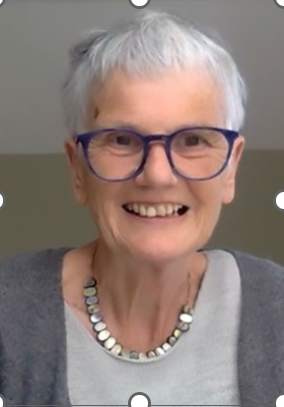
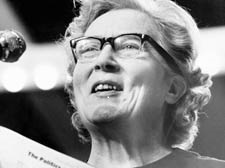
Baroness Lena Chivers

Lena May Chivers, (later known as the Labour peer, Baroness Jeger) was a journalist and politician, well known for her role in the right to equal pay and other advocacy work.

Lena was a fervent socialist, feminist, and supporter of the Greek Cypriot community in the UK after Harold Macmillan’s government refused Cyprus’ right to self-determination. She was also a strong supporter of the NHS and a champion for women’s rights. From 1979 to 1980, she was chairperson of the Labour party and was the first peer to take the chair at the Labour party conference, at Blackpool, in 1980.

Lena completed a degree in English and French at Birkbeck and served as President of the Students’ Union.

75 years of the world’s first stored program computer

Dr Roger Johnson, Fellow of Birkbeck College and Emeritus Reader in Computer Science, reflects on the world’s first stored program computer as created and demonstrated by Professor Andrew Booth and Kathleen Booth (née Britten) 75 years ago.

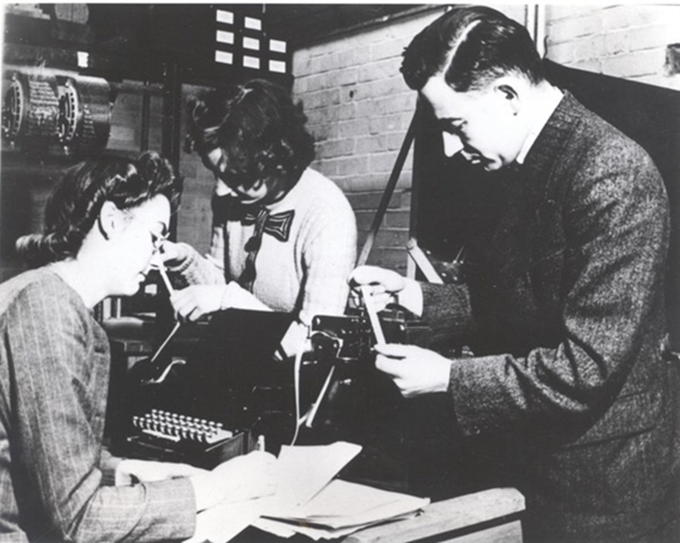
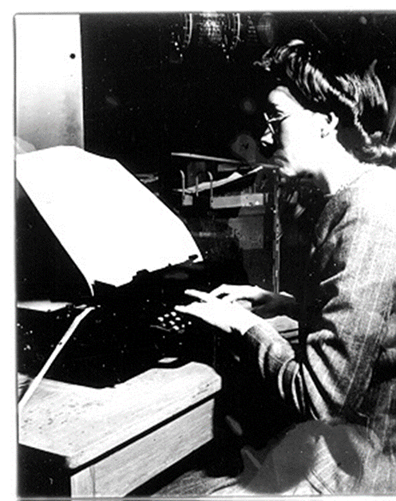
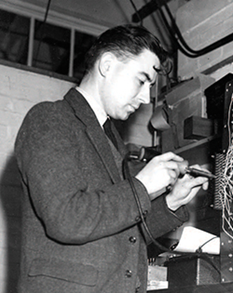
Kathleen Booth, Miss Xenia Sweeting and Andrew Booth in the lab during the construction of the ARC.

At the heart of the modern computer is a memory that holds both the program to be run and the data to be processed. The first successful demonstration of the modern computer was by two members of staff from Birkbeck College: Andrew and Kathleen Booth.

Starting in the late summer of 1947, they designed and then built a computer which they called ARC (Automatic Relay Computer). The first public demonstration of the computer was on May 12th 1948 – exactly 75 years ago.

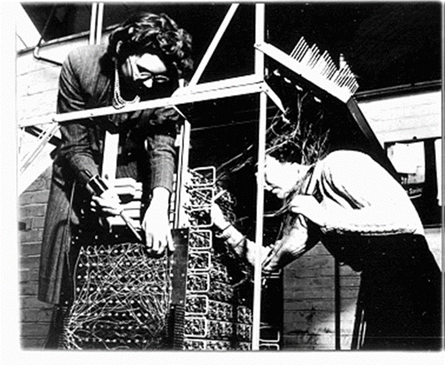
Kathleen Booth and Xenia Sweeting working on ARC.

Kathleen and Andrew Booth shared the task of building the computer helped by one research assistant, Xenia Sweeting.

In accounts of her work, Kathleen Booth, who wrote the first program, recounted: “We demonstrated the generation and printing of a table of the squares of the natural numbers 0-255 in the scale of 10”.

Kathleen Booth at the keyboard preparing a program for ARC

Technically, the computer’s memory was a brass drum with an oxide coating which could store in total 256 words each of 21 bits revolving at 3000 revolutions per minute. By modern standards, this is absolutely tiny, but was significant for the time. The computer was also very slow by today’s standards because the logic of the computer was built using relays.

Andrew Booth working on the selenium diode function table of ARC

However, from this first basic computer have developed the massively powerful modern computers which can run programs of a complexity which few even dreamt of in those early days.

Further Information:

Lillian Penson – scholar and university administrator

To commemorate the College’s bicentenary in 2023, we’re showcasing 200 ‘Birkbeck Effects’ which capture the incredible stories of our vibrant and diverse community, highlighting their achievements and impact on the world. 

Lillian Penson

The University of London’s first PhD recipient of any gender, Lillian Penson went on to forge a stellar career in higher education that smashed gender stereotypes, being the first female professor of history and first female university vice-chancellor in the UK. She spoke eloquently on the need to offer university education for “virtually all comers” with no restriction based on religion, race or sex.

Born in Islington in 1896, Penson was a brilliant student of history at “The Birkbeck”. After a stint at the wartime Ministry of National Service and in the war trade intelligence department, Penson returned to her studies and completed her PhD. Only one-fifth of history PhD students were female at the time. She was a lecturer at Birkbeck for nine years until she left for a Chair in Modern History at Bedford College for Women.

Her leadership responsibilities in education expanded from managing the history department at Bedford College to the top position of Vice-Chancellor of the University of London, the first woman in that post. She was appointed a DBE in 1951.

Isaac Rosenberg – artist and poet

To commemorate the College’s bicentenary in 2023, we’re showcasing 200 ‘Birkbeck Effects’ which capture the incredible stories of our vibrant and diverse community, highlighting their achievements and impact on the world. 

Isaac Rosenberg

Isaac is heralded as one of the greatest of the war poets, reflecting on the horrors of conflict through art and poetry. As an art student at Birkbeck, Isaac won the College’s Mason Prize; though his art career was brought to an abrupt ending when he was killed at the age of twenty-seven while serving in the First World War.

From the trenches on 28 March 1918, just four days before his death, he reflected that “during our little interlude of rest from the line I managed to do a bit of sketching – somebody had colours – and they werent [sic] so bad. I don’t think I have forgotten my art after all.”

Isaac left school at the age of fourteen years but went on to study at Birkbeck in the evenings. Today, he is known for his posthumously published war poems. In one, entitled Dead Man’s Dump, Rosenberg describes, “The wheels lurched over sprawling dead…their bones crunched. They lie there huddled, friend and foemen…Man born of man and born of woman, And shells go crying over them, From night till night and now.”

In the foreword to these poems, fellow English war poet and soldier, Siegfried Sassoon noted how Rosenberg’s poems encapsulated the “hateful and repellent, unforgettable and inescapable” realities of life in the frontlines.

George Birkbeck – physician, philanthropist, founder of the London Mechanics Institute

To commemorate the College’s bicentenary in 2023, we’re showcasing 200 ‘Birkbeck Effects’ which capture the incredible stories of our vibrant and diverse community, highlighting their achievements and impact on the world. 

Born into a Quaker family in North Yorkshire, George trained as a doctor at Edinburgh and founded the London Mechanics Institute in 1823, when thousands gathered on the Strand to hear his ground-breaking speech on “the universal blessings of knowledge.”

His interest in the education of working men started when he wanted a particular machine to be made for his classes in natural philosophy and chemistry which he taught at the Anderson Institution, Glasgow in 1799. At the institution, he started a course of lectures on science, to which artisans were admitted for a low fee.

A pioneer in adult education, George had been struck by the ignorance of the basics of engineering and by the hunger for knowledge from workmen at a workshop visit and promptly opened his classes to mechanics, offering classes on Saturday evenings.

The success of the London institution led to the establishment of similar vocational training schools all over Britain, some of which developed into technical colleges.