Category Archives: Business and Law

Why I chose to study Law with a Foundation year

Rebecca Wills, an aspiring barrister, decided to study Law at Birkbeck with a foundation year to get the best possible preparation for the LLB. Having her lectures and seminars in the evening has meant she’s been able to get a head start on her career by volunteering at a magistrates’ court during the day.

The law is the foundation in everything that we do and it is immersed into many disciplines. This is what attracted me to study law.Also, as an aspiring barrister, I want to make a difference inside and outside the courtroom.

I believe if I didn’t study law, I would remain ignorant to a lot of issues that are going on in the world when it comes to human rights abuses, alongside the historical significance behind the creation of the law itself and other moral issues. Once you know and understand the law it can protect and provide you with many advantages. When I graduate, I hope to have a successful career in law as a barrister or solicitor’s advocate.

“Studying in the evening suits my independent learning style.”

I was inspired to study at Birkbeck after my telephone interview with Professor Bill Bowring. I decided to enrol because it is a university based on critical theory and analysis, which I believe I excel in. Because lectures and seminars take place in the evening, I am able to volunteer at a magistrate’s court during the daytime. I also find evening study suits my independent learning style. I love to study during the daytime and feel I am more productive when it comes to self-learning during these hours. I read once that the human brain can absorb most information during the first three hours after waking up and the last three hours before we go to our bed which fits in with how I study and learn.

I wanted to ensure that studying and taking on a career in law was the right decision for me.  After having a conversation with my sixth form head of year, the foundation year option seemed like the best course of action to take to ensure I obtained the right skills and best preparation for the LLB. I knew that studying law required a lot of reading; however I didn’t know much else about it. I thought taking the foundation year would best equip and prepare me for advancing onto the LLB.

Prior to embarking on the foundation year course, I prepared myself by attending Birkbeck workshops on note-taking, critical thinking, critical writing, critical reading, critical listening etc.

The School of Law, Birkbeck

 “The foundation year was challenging, but it made me more open minded in the way that I evaluate situations. It provided a useful transition between A-level and degree-level study.”

The foundation year was challenging and required a lot of hard work. Nonetheless, it was useful and insightful. The literature was not always easy to read, particularly when reading lengthy cases with complex vocabulary. Of course, in order to understand all the readings, it was essential to define all terms and read actively and critically. As a result, time-management became a really important skill that I honed in on.

The year provided a useful transition between A levels and degree-level study, because the course itself moulded and enabled me to adapt to different teaching styles. The course challenged my moral compass on multiple issues when it came to life and death situations, where the defendant was seen to be in the wrong. It made me more open minded in the way that I evaluate situations.  It prepared me for the workload that I would undertake for the first year of the LLB as I gained insight into the level of work required at university level. It increased my awareness of the importance of independent study.

To other students thinking about taking the law foundation year, I would say:

  • Utilise this time as practice for the LLB.
  • Take the course seriously – don’t underestimate it as being easy because it’s a foundation course.
  • Make use of the feedback given from lecturers after doing assessments.
  • Always ensure that you email the lecturers and keep in communication with them.
  • Take action after reading the feedback.
  • Never be afraid to ask questions if you don’t understand something or you want to confirm your Answer to a question is correct or accurate – no question is stupid.

“You need to proactively engage with the law, by going beyond the reading list.”

Do not rely on the lectures too much, you must become an independent learner and get used to the idea of trying to become the teacher of the subject yourself. The lecturers provide students with an outline during lectures and guidance on how to navigate legal resources and materials. However, they are not there to do your work for you. It is vital that you immerse yourself within the subject. This means attending every lecture and seminar even if you think it’s of no significance to you. This also involves proactively engaging with the law, by going beyond the reading list and further reading list, as well as answering all homework and seminar questions in detail.

Try to find your own way of working. Time-manage yourself, and work hard at being the best version of yourself as everyone learns at a different pace. You must believe that you can do it, and you must always aim for the highest possible grade.

Life in London as an international student

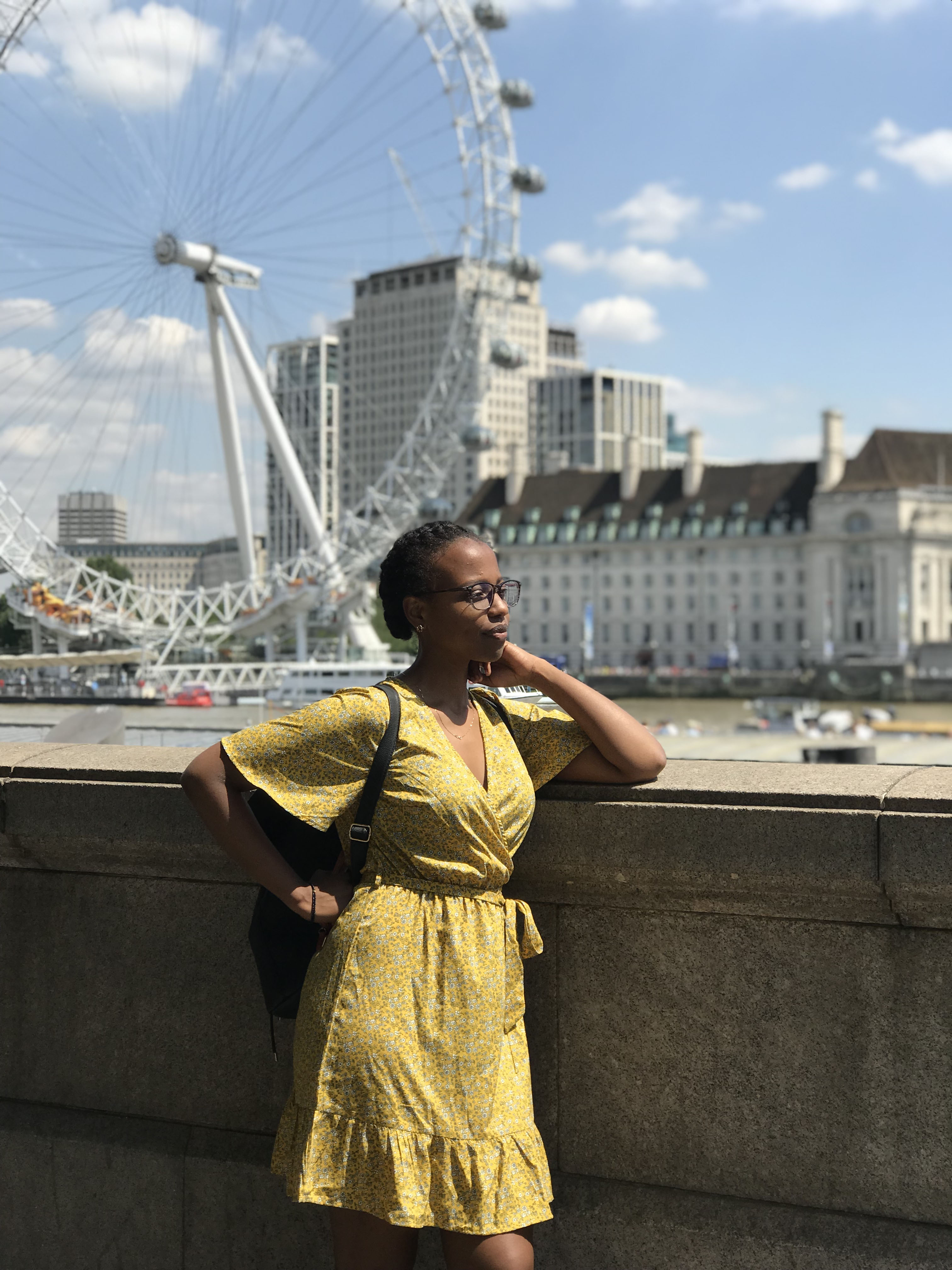
We catch up with Yvette Shumbusho, an MSc Marketing Communications student from Rwanda, who in a December blog post talked about settling in London as an international student. As the academic year draws to a close Yvette reflects on what she enjoys most about living in the capital.

London has been home for the past ten months, and I have easily integrated into the diverse culture. This fast-paced, metropolitan city lives up to the hype for many reasons, its culture, food and entertainment, to name a few

The diversity found in London puts it at an advantage compared to many cities in the world. There are a number of food markets that I have been able to visit such as Maltby Street Market and more in various parts of London. I have eaten some of the best meals in these places, freshly made and satisfying overall.

You don’t have to worry about gaining a few pounds because there are so many gyms around the city – there are three different gyms within a radius of 0.3 miles of where I reside! This is surely motivation to keep fit but even if you’re not fond of gyms and exercise classes, walking around alone can help you get in a quick workout. I walk almost everywhere and now that it’s nice and warm (on some days), I walk a lot more than I normally would. I have come to realise that Londoners like to power walk everywhere.

Between juggling school assignments and regular everyday activities, it is a real challenge to get time off and explore, but I have managed to visit a number of places including the London Aquarium. I was a few inches away from a family of sharks, which was exciting as I had never been so close to them. I’ve also visited a number of parks, some unintentionally as I strolled to school or back home, which got me thinking how beautiful it is that London has so many green spaces; it makes walking and general living that much better.

Before I complete my course, there is still a number of places I need to visit within the city and even outside of London but all in all; my experience has been one to remember. I will surely miss this place.

Further information: 

Life as a Legal Studies student at Birkbeck

Amma Donkor completed the Legal Studies certificate of higher education at Birkbeck last year, and has since commenced on the LLB course. She explains how returning to studying after a break has helped with her career as well as enhancing her worldview, confidence and well-being. 

I enrolled on the Certificate in Legal Method course (now known as Legal Studies) in 2016 as I wanted a change from my previous role in TV sales at the BBC. I also figured that it would be a great opportunity to gain useful skills that would complement my new role within the Rights Department at Channel 4. I wasn’t interested in pursuing a Law degree at that time, but little did I know that once I began the course, I would fall in love with the subject and progress even further!

It had taken a good few years to summon the courage to pursue this journey. As a mature student, the prospect of returning to education after many years was a daunting prospect because my previous experience of education had been disappointing. To add to that, only a month after enrolling on the course, my dad passed away suddenly; this was a year after losing my mum back in 2015 so I decided to defer for a year.

However, determined to complete the course, I enrolled again the following year and was offered a place to start in October 2017. Like all Certificate courses, the duration is a year-long and took place over three terms and a few Saturday’s so there were four modules that we studied. There were two options to take the course either on one evening a week or one day a week. As I work full-time, I opted for the evening classes.

There were twelve of us in the class which included a wide mix of people. We are all at various stages of our lives; some straight out of six form college whilst the rest of us were combining full-time work with study. Everyone in the class was friendly and supportive throughout the year and we established a WhatsApp group early in the course, where we shared information and tips to help us through the course.

The course was an introduction to the study of Law and the modules provided an understanding of the foundation of the English legal system, practical skills such as mooting and advocacy and even attending a courtroom, legal reasoning where we learnt how judges used various skills to adjudicate on seminal cases, as well as learning about salient areas of English law such as Human Rights and the European Union. There were eight assignments set throughout the year and we received lots of assistance from our tutor and from the various study skills workshops that were available to assist us with legal writing. The combination of studying in the evening whilst working, although tiring at first, was the only option for me to return to education and so, after a few months, it became like second nature. Very early on in the course it began to dawn on us how prevalent the subject of Law featured in all aspects of society.

I knew that previously, I had been pretty lackadaisical about studying. However, as a mature student I didn’t want to waste such an opportunity again and began to apply myself. As a result, I received good grades in all my assignments.

The teaching on the course was excellent and I personally believe that was the reason why I flourished on the course. Our tutor was also a part-time barrister, so we received a first-hand account of what it was like to practise law and how the legal process works. Her passion and dedication to ensure that we all did well on the course inspired most of us to do just that. My tutor also encouraged me to continue with my education and to enrol on the LLB Law course.

Consequently, I’ve just completed the first year of the LLB Law course here at Birkbeck, University of London. The first year was more demanding than the Certificate course as we studied three modules simultaneously throughout the year which took place over three evenings a week. However, it was encouraging to discover cases or concepts that we had been introduced to in the Certificate course being developed further on the LLB course. And because of this, I was able to keep up with the volume and the pace of study.

I’ve also noticed that concepts such as Human Rights, Constitutionalism and Parliamentary Sovereignty are a lot more plausible when watching or reading the news since returning to education and my confidence and well-being has increased considerably. I’m still not sure whether I want to practise as a solicitor or even a barrister or even at all, but I am looking forward to the year of study ahead and to successfully completing the LLB!

Birkbeck students launch Mammalo – the new “Uber” for on-demand services.

Former Birkbeck students teamed up to start Mammalo – a startup that connects London’s population to hundreds of verified industry professionals.  

Maxime van den Berg, former MSc Management with Business Strategy and the Environment student, and Andrea Armanni were just as eager as many students here at Birkbeck to start their own company. During their studies, they found the time to plan and implement a brand new idea known today as Mammalo.

As a quick introduction, Mammalo is an online marketplace to quickly search and book any professional services. Conversely, if you have any skills that you want to make money out of, you can create a personal profile and list your skill in order to get exposure to people looking for your service.

According to Andrea, “Mammalo is truly a revolutionary platform that we would like to scale globally someday. Until then we are focusing on the expansion here in London and the rest of the UK.”

Starting a business is tough, and Maxime and Andrea recognise the importance of having others to support them on their start-up journey. They are getting involved with Birkbeck’s Enterprise Pathways to give back to fellow Birkbeck students and encourage them to support each other as much as possible. As we learned from them, to be able to start a business you only really need three things:

  1. An idea
  2. A plan
  3. The knowhow

An idea is only 10% of the solution; the execution will determine your success. Carefully consider your business model and competition. Failing to plan is planning to fail, after all.

Lastly, knowhow encompasses what you have learned in university, in the workplace and in life. You need to have some basic knowledge to get a company physically started. If you don’t have this knowledge, be curious! There is always room to learn to do what you cannot today.

Maxime mentioned “The thrill of not knowing what will happen but putting in as much effort as possible to make the best come true is what got us started and keeps us going. Not only are we solving an issue for everyone in London but we also get to build the solution from the ground up.”

This is an example of a success story in which students have used the knowledge they have gained to pursue a dream of starting their own company.

So, if you have some time feel free to check out the platform on www.mammalo.com and signup today! They can use all the feedback they can get and would hugely appreciate your thoughts.

Maxime will be coming to Birkbeck to share his start-up story soon – look out for the event details when they go live here.

Why even a soft Brexit gives the oil oligarchs what they want

Dr Frederick Guy, Senior Lecturer in Management, explains how Britain’s decision to leave the European Union will hamper efforts to combat climate change and bolster the power of Putin and other major fossil fuel exporters.

Putin – whose name I use here as shorthand for the entire oligarchy of not just Russia but all major fossil fuel exporters – wants to prevent the emergence of international institutions which would be able to bring climate change under control. That is because the control of climate change would require destroying the oil and gas business, and with it his wealth and power.

To this end, two of the central objectives of the oil oligarchs have been the installation of a US government which is hostile to international cooperation in general and cooperation on climate in particular; and the fragmentation of the European Union. Trump, and Brexit; more broadly, a science-denying Republican party, and resurgent nationalism in every European country and region.

Even soft Brexit will be enough for Putin
I will explain below why these two political objectives, in the US and in the EU, are necessary – and, unfortunately, probably sufficient – for Putin’s ends. But first let me just say that, for Putin’s purposes, any Brexit will do, Hard, No Deal … or the softest of soft, as long as Britain withdraws from the political institutions of the EU.

In Britain, where anti-Brexit arguments have focused on the damage to the UK economy and the threat to peace in Ireland, a very soft Brexit is alluring: some kind of Norway ++ which keeps the UK essentially in both the Single Market and the Customs Union, but removes it from the political institutions of the EU. In British politics such an outcome would of course be a sorry face-saving compromise, letting politicians claim to have left the EU while retaining the economic advantages of membership (at some considerable cost in the form of lost voice in making the economic rules). For Putin, though, it would be a great victory, because what threatens Putin is a coherent West- and Central European voice on climate policy. The more he can fragment the EU – through the withdrawal of a big actor like Britain, and the discord which follows – the better off he is.

We can’t know how large a factor Putin has been in the political successes of Trump and Brexit. Obviously, there’s a lot more behind the surge of nationalism around the world than such plutocratic manipulation. Yet propaganda does work – ask Goebbels, ask Maddison Avenue, ask any company or political party that invests in public relations or advertising. And just the fact that Putin has made such obvious efforts to influence domestic politics in so many countries, raises the question of why he would do so.

Geopolitics in the anthropocene
I am writing here about the power of the oligarchs of oil: about the politics of plutocracy, and also about geo-politics.

The oligarchs of oil are just one segment of the larger plutocracy which afflicts our age. The oil oligarchs present us with a different set of problems than other oligarchs, however; our diagnosis of these problems is hindered if we think of plutocracy, or of capitalism, as one undifferentiated thing.

The other most prominent members of the plutocratic class have fortunes based on locking down parts of the digitized network economy (Amazon, Google, Microsoft,  privatized telephone networks, and so on), or on the extravagant protections now offered intellectual property (notable in pharma, biotechnology, and certain profitable corners of publishing). We might add to this list fortunes from the world of finance, but finance needs something to finance, and it is the monopoly sectors of the “real” economy – both in natural resources like oil and in information resources – which nourish finance. So let us speak simply of oil oligarchs and information oligarchs.

The two groups of oligarchs have a common interest in preventing the public from taking away their unearned hoards of wealth. The information oligarchs fear laws that would restore both our digital networks and our funds of accumulated knowledge to their proper state as a commons without monopolist tollgates – in short, that we will make their products free. The fossil fuel oligarchs fear that we will simply stop using their products. If justice ever comes for the information oligarchs it will be a piecemeal and prolonged set of battles, leaving the principals humbled but probably well heeled. The oil oligarchs, on the other hand, have their backs against the wall: they know that the health of the biosphere requires that their euthanasia – to borrow a technical economic term from Keynes – comes soon.

We can also think of what Putin and his ilk do in terms of state power – they act not merely as wealthy and influential individuals but as rulers – and thus of geo-politics. At first blush, we might think in terms of traditional Great Power or superpower rivalries. Putin’s politics, however, are about oil. And the geo-politics of oil is no longer primarily about control of the oil supply, but about the right to keep selling it. Any effective climate policy will sharply reduce demand for fossil fuels, which will mean, even if it is not all left in the ground, that both the quantity sold and the price will fall – shredding colossal oil fortunes.

If it seems far-fetched to reduce the policy objectives of a large state, once a superpower and still possessed of a huge nuclear arsenal, to permission to sell a single product, just look at the dependence of Russia on fuel (oil, gas, coal) exports. In 2017 – the latest year for which the World Bank provides these figures – Russia’s net exports of fuel amounted to 13% of GDP – an astonishing level for a country of that size. The only countries with higher levels of dependence on oil exports are states, like the Gulf monarchies, which produce little else (see Figure 1). Leaving the oil in the ground would not destroy Russia – if anything, it would free the country from the influence of oil, which entrenches corruption and despotism, and crowds out most other economic initiative – but it would destroy Russia’s oligarchy.
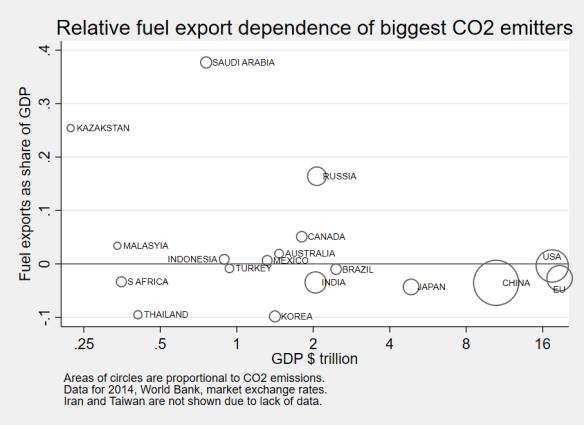
Figure 1

This is why the interests of the Russian state and the House of Saud, despite their quarrel over dominance in Syria and the Gulf, align at the global level: they need to block the emergence of institutions of international governance capable of dealing with the problem of climate change.

Governing climate change
The governance problem is well known: eliminating greenhouse gas emissions requires deep changes to our material way of life; attendant social changes; and vast investments in new clean technologies and clean infrastructure. Moreover, we have dallied so long that, in order to have any realistic hope of preventing very dangerous climate change, we need to decarbonize fast (Figure 2) – meaning that the process will be more expensive, more socially disruptive, and more politically difficult than it would have been had action been taken when the problem was first understood some decades ago.
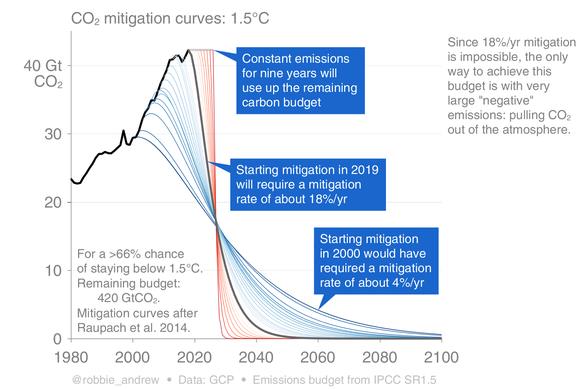
Figure 2. Past delays mean that rapid decarbonization is necessary for climate stabilization. Graph from http://folk.uio.no/roberan

What nation will undertake such changes without the assurance that other nations will do so as well? Technically, this is what we call a “collective action problem”, a prisoner’s dilemma game with many players, blown up to the global level. Agreements are made – in Porto Alegre, Kyoto, Copenhagen and Paris – but there is nobody to enforce them, and greenhouse gasses continue to accumulate.

Dealing with climate change of course requires action at every level, from the global down to individual and community choices about how to live and what to consume. But without an overall grip on the collective action problem between countries, there won’t be effective national policies in most countries. And without effective national policies, the efforts of individuals and local communities will be weakened by the knowledge that others are taking no action, and so will not add up to enough.

For the past quarter century we have had climate agreements which have no teeth. There is no prospect of having an actual global government to enforce the agreements. How, then, do collective action problems get solved at a global level? Some say it only happens in periods of history when single hegemonic power – notably, Britain from the defeat of Napoleon until the mid-1800s, and the USA in the decades after World War II – had the weight to enforce international rules of trade and finance (rules used, of course, to the hegemon’s advantage); the same might serve for rules about greenhouse gas emissions, but there is no single dominant world power to play that role today.

Our best hope – is it shocking that it has come to a point where this is something more to hope for than to fear? – is that a small number of very large powers would act in concert as leaders, and enforcers, of international agreements to cut greenhouse gasses. The method of enforcement could be a combination of threatened withdrawal of access to export markets, and conditions placed on foreign investment.

What countries could exercise such power? In Figure 3a I plot the GDP and the greenhouse gas emissions of the world’s 25 largest economies – again, treating the EU as one country. Note that I have used ratio (logarithmic) scales, so the differences between the larger and smaller countries are compressed on the graph, but even so three big ones stand out in both GDP and emissions: China, the USA, and the EU. Big as they are, if these three giant economies decarbonized, it would not be enough to stop global warming. But all other countries depend on access to these three big markets, and investment from them. Individually, none is globally hegemonic; together, they could fill that role.
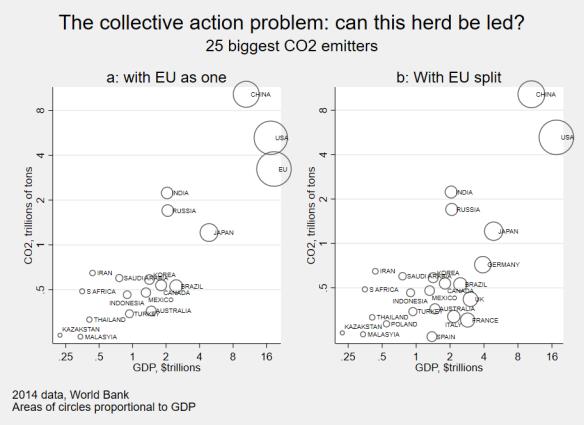
Figure 3

Figure 3b plots the same information, but with the EU split up. This leaves the US, China, and then a large mass of mid-sized emitters: six of the 25 biggest CO2 emitters are members of the EU. It is within in the mass of mid-size CO2 emitters that the collective action problem becomes overwhelming, each saying “after you”, each proposing actions that will shift costs to others. It is a recipe for non-action, for fatal delay, and that is why Putin needs to make the EU ineffective as a political unit. If you add to that the effective side-lining of the USA – its de facto alliance with Putin and the House of Saud – this configuration leaves no plausible leader, no plausible enforcer, for climate policy.

It may seem a faint hope any of that those three powers – China, the EU, and the USA – will actually choose to take decisive action to reduce greenhouse gas emissions. Perhaps it is, but other hopes are fainter still. And, if it were really such a far-fetched possibility, I do not think that the petro-powers, together with fossil fuel interests in the industrial countries themselves, would be doing so much to prevent it. Their support for both Trump and Brexit – any Brexit – is a central part of that effort to prevent the US and EU from taking decisive action on climate change.

What this should say to you if you are looking forward to any sort of Brexit, whether it be the ice bath of No Deal or the warm shower of Norway++, is that Putin will thank you for it, and that your great grandchildren, if they are among humanity’s survivors, will curse you.

The importance of attending Law firm Open Days

Oliver Chinyere, LLM Qualifying Law student, gives an insight into the Open Days on offer at Law firms for students considering legal careers. 

For those interested in entering the legal profession as solicitors after studying at Birkbeck, an Open Day gives law students an opportunity to peek inside what their future may hold. Open Days offer exceptional advantages by giving students an intimate look at the firm’s office, employees and culture. In November, I was fortunate enough to attend Accept, Clifford Chance’s LGBT-focused Open Day.

For any student seeking a training contract, it’s important that you attend an Open Day at whatever firm you’re interested in to meet and hear directly from existing employees. Although I wasn’t able to stay for the full slate of programming, I found the event incredibly beneficial for several reasons. Not only was I able to meet and network directly with people from a similar background to myself but was able to secure tips which will prove handy during the application process should I choose to proceed. Clifford Chance’s recruitment team actually ran a session full of helpful tips on how to make your application stand out.

For anyone embarking on a new career and entering a new workplace, understanding the office culture is critical to determining whether or not you see a space for yourself there. In addition to hearing from existing employees who convey what led them to the firm, we heard from alumni who had moved on from the firm to other roles. A good indication of any potential place of employment is the number of former employees who still speak highly of their experience and how it influenced the next steps in their career!

Another benefit is the ability to poke and prod and really dig beneath the surface. At Accept, we were able to hear directly from Regional Managing Partner, Michael Bates and ask him questions. In fact, I would argue that one of the chief benefits of attending Open Days is your ability to be candid, ask questions and gather the information you need to make your decision! Becoming a lawyer is all about elucidating the facts so it’s excellent practice.

In summary, attending Open Days are a great way to see what your future job and company may entail. It’s an opportunity every Birkbeck law student interested in pursuing a career as a solicitor should aim to embark on, especially if you plan on applying for a training contract. If you’re looking for more resources, LawCareers.net provides a helpful timeline of events tailored to ‘non-law’ students (or those looking for a career change). They also provide a helpful list of training contract deadlines.

Life in London as an international student

Yvette Shumbusho, an MSc Marketing Communication student from Rwanda, talks about arriving in London as an international student and what had made her feel so at home.

I arrived at Gatwick Airport on 15 September 2018, two weeks before the start of my MSc Marketing Communication at Birkbeck. The weather was chilly, serving as a reminder that I was no longer home in Kigali, Rwanda or even close by. The drive to my accommodation for the next year was longer than I had expected, I reached late in the evening, evidently postponing the sightseeing for the next day.

The following morning, I was awakened by the rays of sunlight from my window complementing my excitement of being in a new city. I got ready to explore as much of London as I could, starting off by shopping. No matter where you are from, shopping is a universal activity. There are a number of brands from the UK that I was especially excited to visit and purchase from. That same day I was taught how to use public transport and there were many similarities to the system back home. For instance, an Oyster card is comparable to that of Rwandan Tap and Go cards. Just as I was about to purchase one, I was informed about the Student Oyster card, reducing my monthly expenses!

The major cities of the world – New York, Milan, Rome, Paris – are known to be expensive and London is no exception. I was advised to look for sales and only shop then and, given that summer was coming to an end, there were quite a few around. For the next two weeks, I purchased all the necessities for my home and warm clothing for the upcoming winter period. The most thrilling part of this experience was visiting Oxford Street. It can be overwhelming for a newcomer but it was also exciting. I went to the cinema, shopped some more, ate oriental cuisines that were quite affordable compared to those back home. I felt right at home by the time I began classes – I adjusted so easily and most of the credit goes to London’s element of diversity.

There are a number of nationalities residing in London, and with each there is a piece of culture that has been embedded in that of the British. I was so accustomed to eating particular foods back home that I was afraid I wouldn’t be able to find it here. That is until I visited a market in Dalston, which consists of the spices and dishes from many countries in Africa – I have been grocery shopping there ever since. Honestly, London is a city that almost everyone can get used to, it’s a wonderful place!

There are many things I am yet to do, such as visit Hyde Park (for Winter Wonderland!), catch shows (The Lion King) and explore the museums. Given the continued advancements in technology, I’m kept up to date with events and fun activities to enjoy via an app called Visit London. In addition, the International Community as Birkbeck organises events that add on to the beauty of London and give you a sense of it all at a student-friendly price.

Further information:

Birkbeck Library website redesign; or, my adventures in a digital transformation project

Elizabeth E. Charles, Assistant Director of Library Services, discusses the redesign of the library website. 

Today, we have launched a brand-new Birkbeck Library website, with completely revamped content, navigation and design.

The Library website has been redesigned on two previous occasions: we changed the landing page, but the content remained the same, which is like repainting your front door and landscaping the front garden, but doing nothing to the interior of the house! I hasten to add that this occurred because, every time the opportunity arose, we just didn’t have the time and it was too close to the start of another academic year.

This time, we asked Naomi Bain, the College’s user experience (UX) expert, to undertake some UX testing with Library website users. This told us some things that we already suspected or knew – there was too much text on the Library website, and it was difficult to find information – but, we also learned that the layout was confusing, alongside a number of other issues.

We knew that the main Birkbeck site had been redesigned and restructured and we liked some of the features, as did our users; so, I contacted Jane Van de Ban, Web Content Manager in External Relations, with a list of the things we would like changed on the Library website. As the Library site is the second most popular section of the entire Birkbeck website (after the online prospectus), Jane suggested that, rather than simply update our existing site, it would be worth integrating it into the new design. She asked us whether we would be prepared to undertake this as a collaborative effort. The Library web editors agreed that this would be a good opportunity to refresh our website, so we said yes!

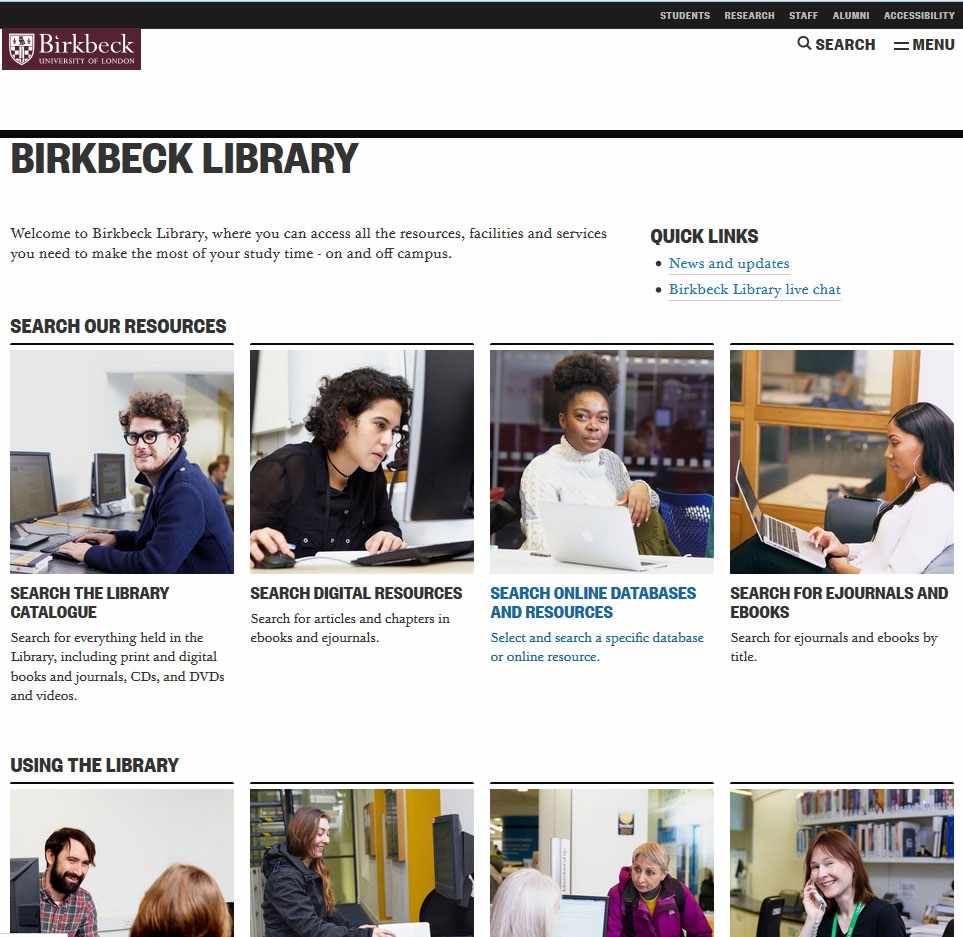
The redesigned library website

Getting ready

Jane supplied us with a content audit and looked at traffic to the Library website in the past year. This showed us that a large proportion of the Library site was not being used, and it also told us which content was most popular with our web visitors. Jane presented us with a collaborative spreadsheet, listing all the content areas, and her advice on what to do in relation to each area. After the initial emotional reaction, we reviewed the comments and suggestions and either agreed with them or explained why we disagreed with her assessment.

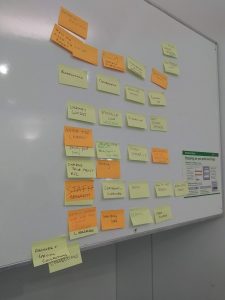
The next step was to come up with a new structure for the Library website. We were invited to a Library web workshop and, using post-it notes and sharpies, we wrote down the most common queries that we get from our users (one query per post-it note). Then we stuck them on the wall, and grouped and sorted them. We then filled in the gaps and took pictures of the grouped post-it notes for future reference. This then became the basis of the Library redesign, alongside the initial, annotated content audit.

Jane then set up a project on Trello – a collaborative project tool – with a list of tasks, organised into columns like ‘To do’, ‘Doing’, ‘To review’ and ‘Done’.

The project

Given the importance of this project to our web visitors, Jane wanted to complete the improvements as quickly as possible and asked if a member of Library staff could be seconded to the project. I volunteered, as I felt I was best placed to answer queries. So, for one day a week, starting in early April, I was scheduled to work on the website.  As homework, I had to familiarise myself with Birkbeck’s Style Guide and tone of voice guidelines, as well as other support materials provided in the digital standards section of the website. I also attended a bespoke training session, run by the External Relations web content team, then prepared to set to work.

Using the Trello project board, I chose the content areas I wanted to work on (everyone works from the same board, which means that there is no duplication of work), and my job was – for each content area – to answer the queries that came out of the Library web meeting, find all of the pages on the live Library site that related to them, then review the content and rewrite it, to meet the digital standards and to reduce the amount of text.

My first task: getting membership under control

I decided to start with our membership information. My challenge was to convert 55 separate pages to one page. Working with Ben Winyard, Senior Content Editor in External Relations, who gave me one-to-one training and advice, I rewrote and changed the formatting to match the house style, then experimented with how the information is presented.

Jane then reviewed the new page and wrote a detailed report on the format, the tone of voice, grammar and house style – I felt I had received a C+, ‘Could do better’ mark! I worked through Jane’s detailed report, addressing each point raised and making changes as necessary. This was helpful because it meant I could then review other pages to ensure the same issues didn’t crop up.

The new membership page was then moved to Ben’s list on Trello, to check that it met the requirements for the Birkbeck tone of voice and the use of plain English and active voice. He cut the text even further while ensuring that the content flowed. Then, the page was given back to me, to check that nothing crucial was missing, giving me another chance to suggest other edits.

This process meant that I received a crash course in writing for the web from a team of experienced content editors, working collaboratively, using live content. It is all well and good to read guidance notes, but quite another thing to implement them and keep to the task!

Improvements

Rewriting content wasn’t the only improvement we made to the Library site. We also improved navigation and findability of content:

  • We didn’t duplicate information that already existed elsewhere – we linked to it.
  • Forms to suggest new books for the Library and for staff to request teaching materials were converted into Apex forms and located either in My Birkbeck for Staff or in My Birkbeck for Students. So, Library users do not have to retype personal information that we already hold about them.
  • We also made huge improvements to navigation in two key areas of content:
    • Angela Ashby, Digital Editor in External Relations, reorganised the navigation for past exam papers, which had included a separate web page for each department for each year of exams – amounting to more than 200 pages. Angela cut the navigation down to 26 pages – one for each department.
    • I compressed 232 web pages listings our for databases and online resources into just one page. This was made easier by deciding to move extensive help guide information for each database into a document, which will eventually become a support manual for Library staff on the helpdesk.

Keeping Library staff updated

This has been the first opportunity I have had to fully examine the content of the existing Library website and to undertake a root-and-branch review. I focused on thinking always of what our users want/will be looking for and trying to ensure that they can visit a web page, scan it, easily find what they need, and move on. Helping users to find the resources they need without adding additional layers of unnecessary content was very important. When in doubt, I would look at the website traffic figures, the feedback from the UX testing, and the post-it notes.

After all that work had been done, the slimmed-down website was shown to Library staff and to students who attended a Student-Library Partnership meeting. The response was very positive: obviously, we were on the right track.

Creating the wayfinding page

The wayfinding, or landing, page was the last component of the project. We had more post-it-note sessions with groups of Library staff to consult with them. This enabled us to come up with an initial layout, based on a top-task analysis, to inform the order in which signpost tiles appear.

Then, I built the wayfinding page. We decided to use new photos taken last year, focusing on images of our students using the Library.

Redirects

Before we could go live with the new website, we had to create a comprehensive list of redirects, to ensure visitors following old links ended up on new content. This was a huge task, which ended with 1700 redirects (and, wouldn’t you know, I also got to help with that, too).

Looking forward

We have already requested UX testing to ensure that we have not overlooked anything, to pick up on any issues, and to provide evidence to make informed decisions on any further changes/tweaks to the Library website before the beginning of the 2018–19 academic year.

Conclusion

It has been a challenging and stimulating experience. But, I have learnt a great deal from the External Relations web content team and I can honestly say, I now understand what is required to write for the web in a consistent and engaging fashion. I’ve also learned the importance of optimisation for search and paying consideration to where our users would expect to find the information they are looking for. I also know the whole of the Library website intimately, and I will continue to learn and retain my newly acquired skills, through continuous practice and actively reviewing the content on our website.

My thanks to Jane, Ben, Angela, Emlyn, Steve, Naomi, John and Outi and the Library Web Group and the Library staff for their support and for providing feedback at the drop of a hat.

2018 World Cup Q&A with Ben Mackriell, Head of OptaPro

OptaPro is a sub-division of Opta, focused on supporting professional clubs with analytics, for example match analyses, players’ and team performance, and scouting reports. Birkbeck spoke to Ben Mackriell, Head of OptaPro, about the 2018 World Cup games and football in a digital world.

Birkbeck and OptaPro have joined forces to deliver a Football Analytics module in 2019.

Overheard in a pub during a World Cup game: “Technology is killing football; it is a sport by humans for humans, and humans err.” How would you respond to this statement about the beautiful game, in an era of big data and digital technology?

This is understandable – ultimately, football is a game played by people, and people make majority of the key decisions.  I would say that data and technology are additional strands of information to players, coaches, analysts, and managers, in the same way a scouting report or physio assessment would be considered. With data, there is a challenge to ensure that what is produced is tactically relevant and can help inform decision-making. “How will this information help me win?” is a key question that should always be asked when conducting, producing, or presenting data-driven analysis.

People talk about the “World Cup champion’s curse” – what does OptaPro’s data analysis say about this? Does it exist, and if so, what are the factors involved?

We must remember that a World Cup is played over a very small number of games – a winning team will play seven matches. In such a small sample, random events that can affect the score may happen, and the impact is magnified because of the small sample, as well as there being hardly enough time to revert to underlying form.

Take Germany for example – despite their performances, they still created enough high-quality chances that would often see them win the matches they lost (Their expected goals (xG) totalled 5.59 – the highest in their group). While there are of course many factors that contribute to their early exit, in such a small sample it is possible that these chances could have gone in and this narrative would not exist.

The world cup can potentially affect a player’s reputation and value. How are clubs using data from the World Cup in their player targeting and acquisition strategies?

This is something clubs are extremely careful about, and this particular landscape has very much changed over recent tournaments. The World Cup is useful in that it provides a unique scenario for players to showcase their talent, and that can be valuable. However, tournament football brings such a small sample that it can be extremely difficult to draw any firm conclusions. Clubs would be considering this information of course, but they would also look beyond World Cup performance to investigate how a player has performed over a longer period.

What kind of information are football clubs most interested in receiving, and how has Opta’s research helped coaches and football teams?

Every football club is different. Some will be in the early stages of the journey with data, and others will have full analysis teams across different age groups.

A good example of the information clubs might look for is consistency. 99% of clubs cannot simply scout every player in South America – it is too expensive and too time consuming. A consistent dataset provides a club with player information which they know they can compare with more familiar players. This comes down to consistent definitions when we collect data, ensuring that a right winger in Brazil can be accurately compared with a right winger from the J-League.

This year, we saw the introduction of video assistant referees (VAR), which fans continue to discuss. Does OptaPro have any data on player performance following VAR decisions? For example, does VAR slow the game down or potentially increase the risk of injuries?

It is still very early days with VAR, and more research needs to be done in this area. It is an interesting question to understand how breaks in play may impact performance. A lot of work is being done across VAR to ensure delays are minimal, and I think that this is a trend we will see continue.

What makes Opta unique, compared to other organisations providing performance data?

Opta data has been part of the football conversation for years – be it through OptaJoe on Twitter, or data appearing on Match of the Day, or more recently, Monday Night Football. The detail of this data – every ball touch is collected live – is what makes Opta data unique. Having to capture this information to this level of accuracy in real time is certainly not easy, and in a fast-moving media and professional football world, live collection is essential.

Regarding OptaPro, it is all about how we apply this data. We’ve built bespoke tools that are tailored for professional clubs, allowing them to apply this data to inform their decision-making across performance analysis, recruitment, and even with their strategic planning, where teams will be using data to help bring through academy players, for succession planning with squads, and for recruiting managers.

How might someone interested in a career in sports analytics get involved?

There are many ways for people to get involved. In recent years, we’ve seen people enter the industry through presenting at our OptaPro Analytics Forum – an event that allows amateur analysts the opportunity to present detailed analysis to the professional football industry. The key is to not only understand how to work with data and maximise its impact, but also to understand how the game is played and what coaches are looking for in the information, which is arguably more crucial.

Spotlight on: Bio-business

Current and former students of Birkbeck’s MSc Bio-business discuss how the course, which focuses on entrepreneurship and business in the bioscience industry, has impacted their lives and careers.

Sophie DeFries, Bio-business alumna: I obtained my BSc from St Andrews in Cell/Molecular Biology then went on to receive an MSc from London School of Hygiene and Tropical Medicine in Medical Microbiology. My post-university work experience has been in market research and consulting in the healthcare industry. I began at a market research agency in the oncology business unit solving pharmaceutical client brand strategy needs. Currently, I work for a marketing and sales management consultancy where client projects have a wide scope of therapy areas, drugs, and business objectives.

I was drawn to Bio-business because it’s meant I’ve been able to transition between laboratory-based sciences to commercial/business world of science and healthcare. It’s been useful for figuring out what specifically in the bio-business industry is appealing to me. The number one benefit, I would say, is that the course connected a great group of like-minded, smart, and driven classmates, and London is a perfect city to study in – international and diverse, lots of jobs and networks, and a fun atmosphere.

Developing my business skills has been very useful for working in consulting and understanding business jargon. The fact that the course has a connection between business and science has allowed me to analyse the biotech and pharma market independently and with confidence.

Alba Ruzafa Martín, Bio-business student: I studied Biology back home in Madrid and after working in a lab for one year I decided that “lab-life” wasn’t for me. Then I decided that industry would be an interesting path to follow, so I started to look for a master’s and I found Bio-business at Birkbeck. For me, it was the perfect option. Not only because of the modules on offer but also because I needed (and still do need) to work full time.

For the first year and a half of the master’s I was a sales assistant, but the experience and knowledge I gained through the course has enabled me to get an internship in Imperial Innovations at Imperial College London, where I have been working for the last almost five months.

The best thing about studying in London for me is the number of different people you get to know. You learn something new every day, you can go to a new place every time you go out. I am not going to lie to you, the city is freaking expensive and sometimes it gets a bit hard. But for me, it has been totally worth it.

Igor Smyriov, Bio-business alumnus: I had been looking for a master’s degree in business with a focus on biotech and life science for more than two years before I found the MSc Bio-business at Birkbeck. It had everything I was looking for: the option to study part-time in the evening, the central London location, and a huge variety of modules to study.

I was surprised to find so many highly regarded industry professionals, as well as Birkbeck academics, involved in delivering the modules and have opportunities to network with them.

The opportunity to learn entrepreneurial business skills in the life sciences sector was essential to my choice to study Bio-business. My degree has made me much more confident in understanding the business area of the subject. I was offered a few opportunities to join start-ups as a business advisor, and now have secured a role as a manager, so I have left my lab role.

London is a hub for all-around development and all industries. All world leading companies have offices in London or around it. You have the opportunity to meet and establish good relationships with international professionals coming to London for conferences or meetings.  And because Birkbeck students study in the evenings, you can be involved in daily London life.

Romina Durigon, Bio-business student: I was drawn to Bio-business by the desire to gain a deeper knowledge of the biotech and pharma sectors while networking and connecting with some of the most important companies and not-for-profit organisations in the UK.

I also wanted to understand how innovation shapes science and technology or vice-versa, as well as to study entrepreneurship finance, entrepreneurship innovation and management. This program is enabling me to write a business plan, to learn more about venture capitalist firms, investments, and other major factors impacting the growth or the failure of a business.

Studying both life sciences and business skills has enabled me to explore with more awareness of the various market opportunities and thus thinking more carefully about my next job. Dr Renos Savva, the Director of MSc Bio-Business knows and understands entrepreneurship very well and very often advises us about entrepreneurial skills and attitude. His knowledge together with his previous entrepreneurial biotech experience and advice are among the most important assets of this master’s. I would highly recommend the master’s if you are entrepreneurial or want to be an entrepreneur.

Bio-business students have the opportunities to know about the latest innovative technologies used in academia, biotech and pharma sectors. They have the chance to apply for internships in various companies and thus learn new skills while studying for their master.  More importantly, students will have the opportunity to liaise with the speakers invited to give a seminar and attend career track events where they can connect directly with employers and entrepreneurs.

The master’s has helped me to create a larger network and build new relationships with people that otherwise I would not be able to be in contact with or meet. By liaising with them I have the opportunity to discuss jobs’ opportunities, ask for advice or connect with someone else working in the sector that I most interested in.

Find out more and apply to study MSc Bio-business at Birkbeck.