Category Archives: Business and Law

“I have really relished the intellectual challenge of returning to university after a break.”

When a new role saw Ella moving from practical outdoor work to people management, she applied for the MSc Human Resource Development and Consultancy to build her skills. She reflects on how the course has equipped her for the challenge.

Picture of Ella

I have had a fairly non-traditional career path so far. I worked on farms for many years engaged in therapeutic agriculture, growing vegetables with young adults with learning difficulties and behavioural issues. My passion for people and land now has me working as a senior manager for a small environmental charity which works across the UK planting orchards with urban communities.  

Transitioning from outdoor practical roles to indoor organizational-focused roles threw me into being a line manager, thinking about team dynamics and holding responsibilities across the organisation for recruitment, wellbeing, HR policies and staff development.

The MSc in Human Resource Development and Consultancy at Birkbeck has given me a good grounding in people management and organisational development, with flexibility to deepen my knowledge in areas that have interested me.  

I have really relished the intellectual challenge of returning to university after a break of many years. The course is structured to deepen academic thinking as well as practical knowledge, and that combination means I can bring practical questions from my work into an academic sphere, and I can apply thinking from my Masters directly into my work.  

The support from lecturers and fellow students is phenomenal. I have learned so much not just from lecture and seminar content, but also professors, guest lecturers and fellow students speaking about their work contexts and roles as HR or Organizational Development practitioners. 

I am about to enter my second year, of which a significant part is embarking on a management research project. This differs from a traditional dissertation as it again combines academic rigour and practical organisational focus, as we work with an organisation to address a challenge that it is experiencing as our research problem. I am really looking forward to exploring an area of HR Development in depth, and to try out new research and consultancy skills. 

Further Information: 

“I used my work as a kind of petri dish for everything that I explored in the classroom”

Roscoe Williamson, Creative Strategy Director and Partner at MassiveMusic reflects on how the Central Saint Martins Birkbeck MBA has helped him shape his career path.

Picture of Roscoe

With a twelve-year career in the music industry under his belt, you might be surprised to hear that Roscoe studied Chemistry as an undergraduate. Its hard to know what you want to do with the rest of your life at 18 years old,he explains, Chemistry was a bit of a slog, so I had a real hunger to go back into education later in life, to learn and expand my horizons around topics that genuinely interest me.

Roscoe was keen to develop strategic leadership skills to advance his business, but coming from a creative industry, it was important to find a programme that valued creativity: I was particularly interested in bringing creativity into business and applying design and systems thinking to the corporate world. I was interested in a few courses that took a creative approach to business education, but I chose the Central Saint Martins Birkbeck MBA because it had both the innovative outlook and the solid finance and strategy side.

The MBA focuses on three curriculum units: Provocation and Enquiry; Entrepreneurship in Action; and Effecting Change: Collaboration in Practice. The eighteen-month programme culminates in an extended live project or dissertation. I enjoyed most aspects of the course and the exploratory learning style that was encouraged,explains Roscoe, The whole experience was like tasting a knowledge cake with lots of segments. I left behind those I didnt like so much, while my final research project allowed me to really get into what I liked the taste of.

Roscoes academic dissertation explores how organisations can nurture, scale and grow creativity and innovation. His findings point to ways in which organisational creativity can be led by individual behaviours, teams dynamics and organisational structures. Analysing organisational creativity and innovation from managerial, psychological and sociological perspectives allowed me to identify gaps between academia and practice and understand how to get the best of both,he explains.

Roscoes dissertation is in the final stages, but the changes in his work have been felt already: I wouldnt have enjoyed the course nearly as much if I hadnt been working at the same time. As well as becoming more efficient at managing my time, I used my work as a kind of petri dish for everything that I explored in the classroom. Ive been lucky to have a really supportive business partner who gave me time to devote to the MBA he says he has seen a change in me and the business already. Through the MBA, I got partially interested in strategy and realised strategic thinking is something that we needed more of.

Completing the MBA with a new job title of Creative Strategy Director, it seems that Roscoe has wasted no time in implementing what hes learned to his business. In the future, he plans to create a content hub, where he intends on sharing his leanings to the wider world.

Further Information:

Pioneer Programme 2020: Meet the Finalists 

Meet the entrepreneurs in the running for the Best Business Pitch and Best Business Idea awards. Winners will be announced at a virtual ceremony in June. 

Picture of a lightbulb
As the government, businesses and individuals adapt to a “new normal” in the wake of COVID-19, the case for innovative thinking in the workplace has never been clearer. With this in mind, we’re delighted to introduce this year’s Pioneer Programme finalists.

Pioneer is an extra-curricular course for Birkbeck students looking to develop the knowledge and skills to excel as an entrepreneur. Over seven Saturday sessions, participants learn from a range of entrepreneurs, industry experts and each other to build the skills needed to develop their business idea or scale up an existing business. 

Representing the best entrepreneurial minds in Birkbeck, the finalists are in with a chance of winning either the Best Business Pitch or Best Business Idea award, each worth a £1000 cash prize to support their business, along with a bespoke package of mentoring, coaching and promotion. 

Participants’ achievements will be celebrated at a virtual awards ceremony on Thursday 18 June, with a panel of five independent judges, themselves entrepreneurs and industry leaders in start-ups and innovation. 

Meet the Finalists
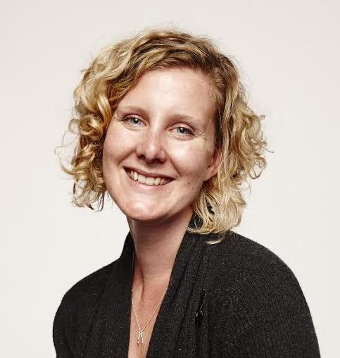
Jody Halstead

Jody Halstead
MSc Management with Business Strategy and the Environment
Business: Circular Surrey 

My business, Circular Surrey, is a platform for local business leaders who want to transition to a low carbon circular economy. 

Research shows that more localised solutions are needed in order to make the shift to a low carbon circular economy. Alongside this, business owners and leaders often don’t have the resources to fully apply their time and need some additional support. 

The Purpose of Circular Surrey is to provide clear and tangible support for local businesses to enable them to shift to more sustainable business models and practices whilst continuing to power Surrey’s economy.

 

Alexander Flint Mitchell

Alexander Flint Mitchell 
MSc Business Innovation (specialising in Entrepreneurship) 
Business: Blind Cupid 

Blind Cupid is for people who want lasting love and are frustrated by the time and money wasted dating incompatible people. Blind Cupid offers fast, fail-safe matchmaking. Unlike eHarmony and Hinge, our product matches users with people who share the same values and fundamental way of thinking via a never-before-used science. This creates a fast-track to lasting love. Far from the superficiality of Tinder, profile compatibility is scored and bios are seen before a user chooses which of their matches to reveal photos to. This leads to better dating decision-making. 

You can take Blind Cupid’s ‘Sense of Life’ Questionnaire today and get a very informative report about who you fundamentally are as a person.

I am currently fundraising for Blind Cupid and the product should be on the market within the next three months. 

 

Picture of James Shepherd

James Shepherd 
MSc Cognitive Neuroscience and Neuropsychology 
Business: Smart Therapy Tools  

Smart Therapy Tools aims to modernise psychological therapy treatment by providing both therapists and service users with an interactive and engaging smart phone app.  

Cognitive Behavioural Therapy (CBT), a therapy based on a structured understanding of how mental health issues maintain themselves, is at the forefront of modern mental health treatments and the NHS alone aims to treat over 1.5 million people a year with this approach. To improve the experience of this therapy, I have developed a prototype smartphone app which brings important techniques away from static pen and paper approaches into a more engaging and dynamic domain.

In the future, I aim to put data science at the heart of the app by using statistical modelling to learn from user inputs. As the app is used more often, more information from the heart of the service user/therapist collaboration can be utilised to help understand the complexity of mental health problems and inform new treatments.

 

Picture of Kevin Tsai
Kevin Tsai 
MSc Innovation and Entrepreneurship 
Business: Anywhere Bear 

Anywhere Bear is a vision born from my passion for travelling. However, I have come to realise how damaging air travel is for the environment – even a short haul flight from London to Edinburgh contributes more CO2 to the atmosphere then an individual’s average annual emissions. 

My wife and I recently took a holiday around Italy without flying and we loved the experience of travelling around by train.  We then looked at other holidays around Europe but found it difficult to plan without flying. There is no one go-to site that we trust and find easy to use for our needs, hence the decision to pursue the idea of a travel platform specialising in helping holiday makers to plan and book their holiday around Europe without flying. We want to build a fun and engaged community of people who will enjoy sharing their travel stories and be able to challenge and inspire their network to join them as they go flight free.  

Due to COVID-19we’ve had to rethink our strategy, as we foresee travel being impacted by this pandemic.  We’re now going to be providing travel inspiration to places around the UK.  We plan to partner with eco-hotels and restaurants and build a platform to allow people to still enjoy their holidays with a minimal carbon footprint.  

Our plan is still at the ideation stage so watch this space as we reinvent the way people holiday!

 

Picture of Hetty Bonney-MercerHetty Bonney-Mercer 
BA Global Politics and International Relations 
Business: FemInStyle Africa 

In the near future, representation of women in Ghana’s politics will be higher, women in Africa will be more financially independent, women who have broken the glass ceiling in their respective fields will be the norm instead of the exception, solo female travel will be safer and gender activism will have reached new heights. 

Because in 2019, two gender activists decided that there weren’t enough publications in the country that really focused on amplifying women’s voices exclusively and in a positive way and decided to do something about it. 

FemInStyle Africa is a magazine for women by women which aims to encourage women to live their full potential. We have five columns dedicated to politics, gender activism, profiling working women, financial advice and travel and style: always written with women as the central focus. FemInStyle Africa aims to mobilise women to bring about lasting changes in the fight for gender equality. 

We are currently building our website, recruiting writers, and finalising our marketing plan with a view to launching in Q3 2020. We welcome you to be a part of our journey.


picture of Mukesh Bhatt

Mukesh Bhatt 
PhD Law 
Business: inSTEAD – integrating Space Technologies into the lives of the Elderly and Disabled 

 The inSTEAD project wants to re-purpose, re-innovate and re-invigorate space technologies, which can be used to help the elderly and disabled. Over 700 astronauts in space and returning to Earth are supported by a multi-billion-dollar industry, prototyping and patenting health support and rehabilitation mechanisms. The astronauts suffer from the same health problems as the elderly and disabled on Earth, and yet solutions for the latter are priced beyond their reach. However, anything used by astronauts can also be used by the elderly and disabled because each is human. 

Encouraged by the Birkbeck Pioneer programme, the International Space University and the European Space Agency at its Noordwijk business incubation centre, inSTEAD (AbleSpace Paradigms) aims to translate the hardware and psychological technologies and methods used for astronauts into a form suitable for the support and rehabilitation of the elderly and disabled on Earth. 

The inSTEAD project includes in its mission both commercial and philanthropic aims and objectives for high social impact and making the best use of opportunities for collaboration with national space, technology and development agencies and initiatives. It requires a team of dedicated and impassioned personnel to help make it a success. If you wish to become involved please contact Mukesh. 

Further Information: 
I’m not looking for a career in accountancy, engineering or anything that needs Maths. Why do I need to think about my numeracy skills?

It’s National Numeracy Day 2020 on the 13 May and Birkbeck Futures takes a look at why numeracy skills are important no matter what career you choose.

Picture of dominoes

Many jobs that we typically don’t think involve numbers usually require some level of numeracy.

Being numerate means that you can confidently and effectively use mathematics to meet the everyday demands of life.

You may not be asked to solve complex equations, but you could be required to complete tasks that involve numeracy skills. For example, if you’re in Human Resources, you may be asked to provide a report on gender diversity figures. Similarly, if you’re in the Arts, you may need to put together a budget for an exhibition. Both of these require some level of numeracy.

The OECD reports that there is a direct relationship between wage distribution and numeracy skills. The better your numeracy skills, the greater your earning potential.

Why?

Because all those things you learnt in Maths help build the skills employers are looking for.

Employers aren’t just looking for technical skills and subject knowledge when they recruit someone. They need you to have employability skills – transferable skills that enable you to do the job successfully. For example:

Digital Skills

Digital skills are required in at least 82% of online advertised jobs across the UK.* We live in the digital age and as a result, we deal with more numerical data that we ever have before. You need good numeracy skills to be able to work with computers, otherwise you’re unable enter the right data or identify if the answer is in the right area.

Problem Solving

Problem solving skills are vital to any graduate level job. Maths is all about solving problems; take working out an equation for example. You need to pick out the important parts of the problem and then work out the knowledge required to solve it. This skill is transferable to solving any problem, mathematical or not.

Communication

When studying Maths, or working with numbers, you will have developed your ability to assimilate and communicate information in a clear and concise way. Everything we do in the workplace is a result of and requires communication of some kind.

Employers are increasingly using numeracy tests as part of recruitment processes.

As numeracy is such an important skill for employers, many use numerical reasoning tests as part of their recruitment processes. These types of assessments measure your ability to interpret, analyse and draw logical conclusions based on numerical data presented in graphs and tables.

Students can find out more about these tests and have a practice on the online Careers Portal (accessed through your My Birkbeck Profile).

But what if I’m not good with numbers?

We all have areas of ability that we feel more confident in than others. You might not think that you’re good with numbers because of experiences with Maths in school, for example. But chances are you’re much more competent than you think.

Our level of confidence often impacts our ability to take on new challenges or face up to things we may usually avoid doing. To reiterate the problem-solving example above, when we don’t know something, we can find out how to do it. Embrace your numeric abilities and enhance your skills to help boost your confidence in this area.

Birkbeck is supporting National Numeracy Day for the first time this year. Join the conversation on Twitter or see if you can build your everyday Maths confidence by taking the challenge.

Get in contact with Birkbeck Futures at employability@bbk.ac.uk or follow us on our social channels:

*Source: “No longer optional: Employer demands for digital skills” report – June 2019

Back to normal? The government is underestimating the scale of change for workers.

As the UK government looks for a path out of lockdown, Professor Almuth McDowall considers the psychological impact of transitioning to a new normal.

Picture of people waiting for the tube in London

On Sunday afternoon, we were on our way back from a socially distanced walk with three moderately enthusiastic teenagers when the phone rang. BBC Radio London asked if I was happy to discuss the Transport Secretary’s announcement that the government was considering a phased approach to businesses reopening their doors. The suggestion is to put a number of safety measures in place to safeguard individuals from getting infected, but also minimise pressures on transport and infrastructure.

For employers, the key propositions are to minimise the number of workers using any equipment, to stagger work start and finish times and to maximise home working. The idea is also to encourage people to engage in more active commuting, including cycling and walking.

Many organisations have of course been open and operational throughout the crisis, including our now much appreciated local shops, which have introduced social distancing measures such as limiting numbers allowed in at a time and protective screens.

But will the transition back to the workplace be as easy as some might suggest while extra precautionary measures are implemented?

When quizzed on the radio, I took a rather cautious and even cynical view. Quite frankly, I do not think that the implications of what will be a gigantic organisational change exercise have been properly thought through.

First, let’s think about infrastructure constraints. Many returning workers have children who, we hope, will return to normal nursery and/or school hours sometime soon. This would make it difficult for all workers to shift start and finish times, as there will be practical issues such as school pick up times to work around. Transport will also be a challenge for this reason, given that peak demand is also due to children travelling to and from school. 

Furthermore, not everyone lives in cycling or walking distance from their place of work, quite the contrary. Surely, we also must avoid a scenario where more people are taking to their cars and driving alone, as we are already witnessing in our neighbourhood, to avoid public transport. 

Let’s also think about who will and needs to return to work. There will be workers who are scared about returning. There are also people who will not be able to return, at least not for the foreseeable future, because they are vulnerable, or someone in their family is. 

On the other hand, there are people who are desperate to return, because they currently live and work in crammed conditions, or because they live in areas with insufficient connectivity.  

Each business has to start with a detailed analysis of how a phased return to a mix of onsite and virtual working will play out in practice and accommodate individual needs and preferences. This is not a quick solution, but takes time, skill and effort. 

Research tells us that to make virtual working effective, particularly during times of crisis and uncertainty, managers and leaders need to take an individual approach to help people feel secure and build up trust and effective ways of working. Again, this is no quick fix. 

Some organisations are getting this intuitively right, others not exactly. One of the keys is a combination of communication and clarification of expectations and roles. This will become much harder as businesses are required to adjust and manage a staged transition to open their doors again. If we are not careful, businesses will spend all their energies on managing logistics, rather than concentrating on the core business to keep their customers happy and deliver a good service.

The literature on organisational change firmly agrees on one issue. Change is hard and stressful, even where it is for the better. Humans are hardwired not to like it. This is why times are tough at the moment. Acknowledging this, and our own vulnerability is an important step to manage sustainable change. My fear is that the UK government is considering too complex a range of practical measures without due acknowledgement of the physiological impact on people. It’s time for a rethink.

Further Information: 

Managing staff who are working from home: business as usual?

Professor Gail Kinman, Professor Almuth McDowall and Dr Kevin Teoh from Birkbeck’s Department of Organizational Psychology share tips on how to manage staff who are working from home.

Empty office

Steps to manage the Covid-19 virus mean that working from home is now mandatory for many people. This will help contain the virus, but such a major shift in working practices will not be easy. Some employees will be working from home for the first time and may struggle to accommodate to their new environment. It may also pose challenges for managers who are required to ensure ‘business as usual’ but have little experience of managing people who work remotely.

The skills required to manage staff during these challenging times are quite different than those needed face to face. Below, we provide some guidance on how to manage remote workers effectively.

Set expectations from the outset signalling support and understanding

The move to remote working will make communication more challenging and you will have less insight into what staff are doing each day. The first step for any organisation is to communicate with all workers affected, setting out clearly the support you are offering, how you will communicate with them and the expectations you have for their performance.

In the current special circumstances, this may mean waving goodbye to previous management practices such as mandatory core hours and operating a flexible “work when you can, as much as you can” policy. Some workers will have challenging circumstances and may have little time or energy for uninterrupted home working. It is important to acknowledge these challenges from the outset and keeping conversation streams open will help you become aware of any changes in people’s circumstances. Also provide clear information on who staff can turn to for advice and support and issue regular updates.

A settling in period is crucial

Staff will need some time to process the change, access the necessary equipment and systems, establish channels of communication and negotiate and adjust work tasks. Do not make assumptions that people who work at home will be more productive as they have more flexibility and their commuting time is eliminated. People will typically take a lot longer to do things and be unable to work to full capacity, especially during the early days of home working. Keep reassuring your staff that you do not expect them to be as productive as usual – maybe the best that you can do in the short term is to identify priorities and work out how best to meet them. Ensure that you have a mechanism for staff to feed back on how things are working out for them. Double check also that appropriate hardware and software is in place. For instance, there are reports already that some organisations are running out of virtual protected network (VPN) licenses.

Be sensitive to role stress

People experience role overload when they are expected to fulfil multiple roles simultaneously without the resources to do so. Resources can be time, energy or attention. Role conflict occurs where fulfilling the demands of one role (e.g. work) is incompatible with meeting those of another (e.g. caring for children). Understandably, both role overload and conflict can be distracting and impair wellbeing and productivity.

Staff will have to dedicate considerable time and energy to craft a balance between their work demands and domestic responsibilities. They are also likely to be anxious about obtaining household provisions and need to monitor the health of themselves and their family members.

Build trust and avoid micromanaging

Building trust between you and your team is crucial. Jointly negotiated goals will help your staff feel engaged, productive and motivated. Deadlines can be set but, as discussed above, flexibility will be required as personal circumstances are likely to be subject to change. Bear in mind that the communication process should be two-way. It is important for managers to check in with staff to monitor their progress and their mental health, but your direct reports also have a responsibility to provide you with updates. Managers are unlikely to have the time to set up cumbersome and intrusive reporting processes, but avoid bombarding people with unnecessary requests, forms, procedures and guidelines.

Use meetings sparingly

Tools such as Skype and Zoom make organising meetings for remote workers straightforward but be aware that online meetings can be time-consuming. Ensuring that all staff members have an input is also challenging. Try not to organise meetings over lunchtime to ensure that staff have a break and are able to prepare meals for children. Send out clear meeting etiquette guidelines. Ensure that meetings are never booked backtoback, as they can become very draining. A shared diary will help mitigate this.

Be aware of the risks of being ‘always on’

Discourage staff from working long hours even if they are willing to do so, as they will be less effective and more vulnerable to health problems. Encourage people to have regular breaks away from their workstation throughout the day. As well as stopping work physically, staff should switch off psychologically to replenish their energies and to enable them to meet their domestic responsibilities. Role model the behaviour you expect from them, such as making it clear that there are times that you are not available, are resting or are meeting your other responsibilities.

Be aware of people’s personal circumstances and conscious of the challenges they are facing

What caring responsibilities do your direct reports have? Are they home-schooling? Do they have the necessary equipment and a quiet working environment? Some people may have access to a dedicated office, while others have to work on a kitchen table, a bedroom or the sofa. Encourage people to take steps to create boundaries (both physical and psychological) and avoid distractions wherever possible but accept that this will sometimes be inevitable. Children will interrupt meetings, dogs will bark and internet connections will inevitably fail.

Treat your staff as individuals

Your staff will experience the change to remote working in different ways. Some may feel anxious, while others will relish the challenge and break from routine. You will find that some people will need more support than others, so you could offer them short goal-setting meetings at the start of each day and a catch up at the end. Others, however, might find this intrusive and prefer to be left alone to get on with it. Be aware that some people will be prone to over-working and may need encouragement to switch off. Asking staff to share with you any difficulties they may be experiencing will help you gain insight into their individual circumstances, needs and preferences.

Encourage socialising and bonding

Working at home can be isolating; this will be a particular problem where staff are largely confined to their homes. Loneliness can reduce motivation and productivity and increase the risk of stress, anxiety and depression. It is important therefore for people to maintain social bonds and feel part of the team. Take some time before a meeting for people to share something personal. Encourage other social bonding opportunities such as ‘virtual coffee time’, a video chat over lunch, or a joint exercise session. Continue to celebrate people’s birthdays or other special occasions. Be creative – one manager we recently spoke to distributed a mini ‘pub quiz’ to help relieve the pressure and encourage team bonding.

Be kind, compassionate and respectful

Show genuine concern for people’s wellbeing and understanding of their personal circumstances. Provide praise and positive feedback so that people know their efforts are recognised and provide affirmation of confidence in your team. You can encourage staff to be open about any difficulties they are experiencing by disclosing that you too are struggling at times. People’s home environments are now their workspaces, but they should not feel that the organisation has moved in with them. It is important, therefore, that communication is measured and considerate.

What about your own wellbeing?

It is equally important that you show the same kindness and compassion to yourself. Expectations of managers are high, and many are now responsible for keeping the business afloat while endeavouring to support their staff through a major transition. Recognise that these are unusual times and it will be a learning experience for everyone.

Further Information:

How to set up your home working space to support mental and physical health

Dr Rachel Lewis, Registered Occupational Psychologist and Senior Lecturer in Organizational Psychology shares her tips for creating a safe and productive work or study environment at home.

Home office

Image credit: Desky

The coronavirus pandemic and ongoing lockdown have meant dramatic shifts in the way we work, much of which is beyond our control. Many of us are now working from home, sharing study space with housemates or family members and juggling childcare and other responsibilities into the mix. 

One thing we can take control of, however, is how we set up our workspace to support mental and physical health during this challenging time. The tips in this blog will help you to create an effective workspace, plan manageable routines and mitigate some of the stress that comes with adapting to a new way of work. 

Step 1: Choose your workspace 

As we continue to work remotely, it may be tempting to gravitate to your duvet or sofa and work in comfort, but doing so makes it difficult to manage the boundary between work and other areas of your life. 

Ideally, your workspace should be a separate area of your home that you can go to and leave as if you were going to work, whether that’s an office, desk or seat at your dining room table. This prevents disruption to the rest of your home and helps you psychologically to feel ready for work in that space. 

Step 2: Give your environment some love 

It’s amazing the difference that a few small touches can make to your work environment. Do you have access to natural light? Do you have a plant that could provide you with a more natural environment? While we’re in a state of uncertainty about how long lockdown could last, it’s important to create a space where you feel comfortable working. 

Think also about how to set up your desk to support your posture – could you put a few books under your laptop, or place a cushion behind your back, to help sit in a way that won’t lead to back or neck pain? Physical and mental health are closely linked, so by taking care to avoid aches and pains, you’ll be helping your mind too. 

Finally, scan the area to make sure it’s safe – are there any stray laptop wires that could be trip hazards to you or a family member, for example? 

Step 3: Define your working hours 

Without the physical boundaries that come from commuting to work, it’s tempting to just work around the clock. To ensure you take time to rest and recuperate, set (and stick to) a time to finish work each day. This time may have changed from your usual hours to accommodate other commitments – you could specify your new working hours in your email signature, so people know when you will be available. 

If possible, try to use separate devices for work and leisure – if you have been provided with a laptop or phone line for work, turn these off at the end of your working day to avoid the temptation to keep connected. 

Step 4: Be kind to yourself 

The situation we’re living through represents a significant period of readjustment, so don’t be too hard on yourself if working from home still feels alien. Set yourself goals, but be prepared for those to flex sometimes. Be kind to yourself, be kind to others and let’s help each other through until we meet in person again. 

Further Information: 

“I chose Birkbeck for its multicultural community and its evening courses.”

Francis Olie, from Abuja in Nigeria, talks about embarking on his MSc Information Systems and Management at Birkbeck and settling into London life as an international student.

Francis Olie

Francis Olie

I grew up in Nigeria (Abuja F.C.T.) and completed my education, up to my first degree (BSc. In Computer Science) at Baze University. I worked at the Nigerian Institute of Science Laboratory Technology as a Computer Analyst before arriving in London on the 13th of October 2019.

Studying abroad for the first time is a very important step forward for anyone, so I had to make sure my university of choice was right on the first attempt. I contacted an Education agent for advice and guidance. The agency was mainly responsible for recommending me for a scholarship at Birkbeck. Ultimately, I chose Birkbeck for its multicultural community and its evening courses.View from Eleanor Rosa HouseView from Eleanor Rosa House

Travelling to London was hectic as I did not know if I would be able to make the arrival deadline, but I did. It was also my first time abroad as an International student and as a first- time international traveller. My sister who is established in London made it very easy to get my residence hall (Eleanor Rosa House). I love my accommodation; I wish it had a gym though or an indoor basketball court. London is a well-connected city and quite busy. I had help from my sister navigating public transport (Trains and Buses). I adapted to it in three weeks’ time.  Londoners are always in a hurry, to where only God knows.

Stratford

Stratford Town Centre

The cost of living is quite high since I live in Stratford (London), close to Stratford International train station. The cost of transportation is a little expensive, but that depends if you pay monthly and the number of zones you travel to. I pay for a Zone 1 to Zone 3 travelcard for £135 a month. Overall, London is an expensive city but it has lots to offer (stadiums, food, cinemas, libraries, cafes, malls).

Unfortunately, I arrived late and could not attend the orientation or the festival or the Fresher’s Fayre. It was a bit difficult to find the location of the university but starting my classes was easy once I visited Student Services for guidance. Due to my late arrival, it took a while to get my student card ready, which delayed my access to the library but a temporary card was provided. 

I did make use of the student support to access the digital skills awareness, but have not had the time to make use of the library tours and the Birkbeck career services. There have been several extra-curricular activities on and off-campus, three of which I attended. An insight to starting life as an English premier league coach, safety in London as an international student (hosted by real police officer) and another for dealing with culture shock.

I haven’t had the time to join the Student Union. However, I do appreciate some of the work the Student Union do, they really go the extra mile to create events for students. God bless them.

The most challenging aspect of life in the UK would be the high rent fees (about £940 per month) as I live close to the city centre. The baked bread is quite tasteless compared to the bread back home, as a student who has to move quickly sometimes, breakfast can be unsatisfying.

The public transport is quite efficient and well organized, you can rely on it almost 24/7. The evening classes at Birkbeck are really awesome, gives room for other activities. I looked forward to completing my studies and moving onward with my life. I strongly advice anyone from Nigeria to be financially ready, have an open mind and be quick to adapt and learn every day.

Growing up in a less privileged society has not only offered financial and academic challenges, but has also helped me realise the value of a college education. My educational pursuits would not be possible without the generous scholarship from Birkbeck.

Further information:

A ‘merged season’ solution for the Premier League post-coronavirus could be the best for all

Dr Richard Evans is a sports economist and an Associate Research Fellow at the Birkbeck Sports Business Centre with a focus on football finance. He discusses a potential solution to catch up the football season post-coronavirus.

It appears from the media that there is an understandable impatience, verging on panic, on the part of the FA and the Premier League to get the remaining games of the 2019/20 season played.  Clearly this would overcome commercial threats, in particular from the broadcast rights holders, and negate problems with player contracts if the season is extended.  However, even if the authorities in the UK go ahead with their preferred solution without alignment with UEFA for international competitions, it may be in the commercial interests of the Premier League to take a longer term view.

If, as seems likely, the coronavirus pandemic has not passed by the scheduled start of next season the effect on that season (and possibly future seasons) will also need to be considered. At present it appears that either this is not being considered or it is assumed that, at that point, new contracts would be negotiated and things would carry on from there as normal.

Consider the (quite likely) possibility that the point when football could continue as normal is not the convenient start of a scheduled season. Perhaps some new competition could be introduced to fill the gap until another season started. But perhaps that period could provide a window for the remaining games from this season to be played. For example, if games could resume sometime before March next year the current and next seasons could be merged into a 2019/21 season and ‘the narrative’ (as the Premier League likes to call it) could be continued to a sporting conclusion. This ‘merged season’ scenario would preserve the integrity of the competition for the Premier League and the fans and thereby be more attractive and consequently lead to a more advantageous commercial resolution with broadcasters, sponsors and players.


“By the time I finished university, I had four years’ worth of tech experience.”

BSc Computing student Trixi reflects on how combining work with part-time study at Birkbeck helped her get ahead in the tech industry.

Trixi, BSc Computing student

Why did you decide to study BSc Computing?  

I have always enjoyed problem-solving and I was curious about programming. When I asked my developer friends what their day-to-day involved, it sounded like something I wanted to try, even though I did not consider myself a computer nerd.

Why did you choose Birkbeck? 

I didn’t want to give up working full-time and Birkbeck had the option of doing evening studies. This alone really helped me make the decision, but I’d also heard good things about Birkbeck.

What aspects of the course have you most enjoyed?  

I enjoyed the learning, meeting people of similar ages and interests and the challenging assignments. I learnt that I am able to do things I thought I couldn’t possibly do before.

How has studying at Birkbeck impacted your future career plans?

I was really keen to get into the tech world as soon as it was feasible and for my studies and work to relate and feed into each other. The kind of assignments we were given helped me interview for jobs and I got my first tech job after one year of studying.

By the time I finished university, I had four years’ worth of tech experience. It helped me understand what part of technology I enjoyed the most and it feels like there will always be a job for me.

What advice would you give to a student thinking of applying for this course?  

Just apply. Start the process. If you have already considered the idea at least twice there is a likelihood that in 3-5 years you will be thinking the same. If you start now you will thank yourself later.

Further information: