On 29 June 2026, the Birkbeck School of Natural Sciences hosted Birkbeck alumna Professor Nicola Spence CBE, Chief Plant Health Officer and Deputy Director for Plant and Bee Health at the Department for Environment, Food and Rural Affairs (Defra). In this blog, Birkbeck alumni, Sudipto Das and Michael McGrath reflect on her visit to Birkbeck.
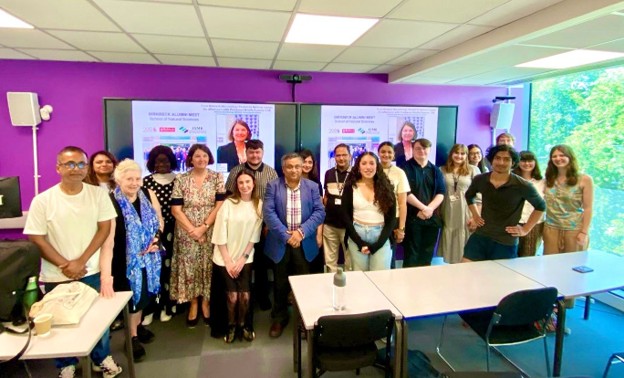
Some visits stay with you long after the room has emptied. Professor Nicola Spence CBE’s return to the School of Natural Sciences was one of those occasions.
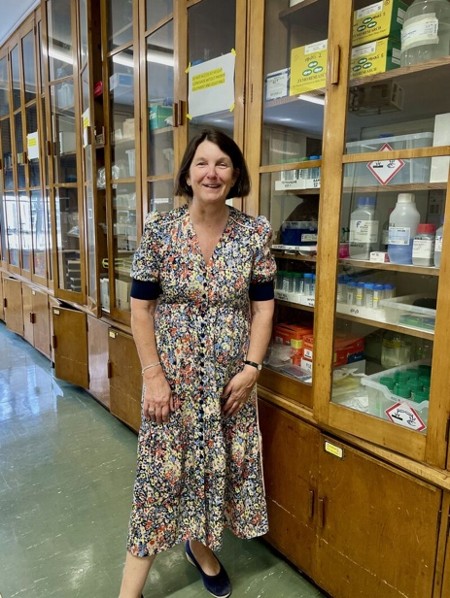
It was a genuine pleasure to welcome Nicola back to Birkbeck, and especially moving to see her revisit the laboratory where she had carried out part of her MSc Microbiology research project. The afternoon brought together current students, PhD researchers, postdoctoral scientists, alumni and academic colleagues, all eager to hear from a scientist whose career has been shaped by curiosity, integrity and an unwavering commitment to public service.
Welcoming Professor Spence, Professor Sanjib Bhakta reflected on his 20 years at Birkbeck and the enduring dedication, resilience and ambition of its students. He described the event as an important opportunity to bring together current students, alumni and colleagues to reconnect, exchange experiences and strengthen the institution’s growing home and international community. Acknowledging the students and alumni who had helped organise the event, he expressed his hope that it would become the first of many occasions celebrating the lifelong connections fostered at Birkbeck.
Professor Spence spoke with warmth and honesty about the journey that led her to one of the UK’s most influential scientific leadership roles. She reflected on her early ambition to study marine biology and how her interests gradually evolved towards plant virology, plant pathology and horticulture. Her career has taken her through leading scientific organisations, including Horticulture Research International and the Food and Environment Research Agency, where she later served as Chief Scientist. She also shared experiences from international projects in Kenya, working on viral diseases affecting vegetable crops, reminding us that plant health is a global challenge requiring international collaboration.
For many in the audience, one of the most inspiring moments came as she reflected on her time at Birkbeck. She spoke with genuine affection about her MSc in Microbiology and the research project that deepened her interest in plant pathology and laid the foundations for her future career. She went on to complete her doctoral research on Common Bean Mosaic Virus at the University of Birmingham before taking on leadership at Science City York, where she championed collaboration between universities, industry and government to drive innovation and strengthen the regional bioeconomy.
One of the most compelling parts of the afternoon was Professor Spence’s account of Britain’s ash dieback outbreak. Her reflections offered a powerful example of how rigorous scientific evidence can shape national policy and legislation when responding to major environmental challenges. Throughout her talk, she emphasised that protecting plant health is fundamental to biodiversity, food security, environmental sustainability and climate resilience. She also highlighted that science delivers its greatest impact when supported by strong partnerships across academia, industry and government, and when scientific evidence is communicated clearly and openly to society.
For students and early-career researchers, her reflections on leadership were particularly inspiring. She spoke about the importance of integrity, collaboration, clear communication and the confidence to make evidence-informed decisions in complex and uncertain situations. Professor Bhakta echoed these messages, emphasising that these qualities are essential for the next generation of scientific leaders. Together, their reflections offered a timely reminder that leadership is defined not simply by expertise, but by responsibility, generosity and a commitment to helping others succeed.
Looking to the future, Professor Spence shared an optimistic vision for plant health in Great Britain. From strengthening national biosecurity and building more sustainable supply chains to investing in scientific capability and increasing public appreciation of healthy plants, her outlook was both ambitious and practical. Her vision demonstrated how science, innovation and partnership will continue to play a vital role in addressing future environmental challenges.
The afternoon concluded with an engaging question-and-answer session followed by a reception, where conversations continued well beyond the formal programme. Yet it was the spirit of the event that left the greatest impression. Professor Spence’s achievements are exceptional, but it was her warmth, humility and generosity in sharing her experiences that made the occasion truly memorable. She reminded us that scientific excellence, collaborative leadership and evidence-based policymaking are not simply aspirations; they are essential foundations for creating a healthier, more sustainable and more resilient future.
Organised by the students and alumni of the School of Natural Sciences, this inspiring event celebrated the enduring strength of the Birkbeck community. It demonstrated how reconnecting with distinguished alumni can inspire current students, strengthen professional networks and encourage the next generation of scientists to pursue careers that make a meaningful difference to society.
Further information
• Study MSc Microbiology at Birkbeck