Tag Archives: Birkbeck 200

200th Anniversary: Alison Stamps – Alumna and Quality Development Manager

Alison Stamps graduated in 2007 with a BA Film and Media and now works as a Quality Development Manager with the University of Exeter. She spoke of her experience for Birkbeck’s Part-time Matters campaign in 2013:

“In my early 30s someone told me about Birkbeck, and the experience changed who I am. I took my BA Film and Media over a period of 6 years, going to class between two and three times a week after work. I worked full-time throughout the part-time degree and had to defer my second year to care for my sick mother.

I passed my degree with first class honours, having never written an essay or taken lecture notes before my first class at Birkbeck. My degree gave me confidence and opened doors professionally and I could wax lyrical about Birkbeck and what it did for me. It changed my outlook on life and gave me goals and ambition.

To in any way diminish the part-time study opportunities for potential students within the UK would be potentially catastrophic to a body of students/future students that have so much to give our economy.”
200th Anniversary Birkbeck Effects: Alfred Russel Wallace – natural historian  

Alfred Russel Wallace was an explorer, collector, naturalist, geographer, anthropologist, political commentator and a Birkbeck alum.

He conceived the revolutionary idea of evolution by natural selection entirely independently of Charles Darwin, though Darwin and his The Origin of Species would overshadow Wallace and it has usually been Darwin’s name alone associated with the theory of evolution by natural selection.

Charles Darwin was impressed with how much Wallace’s theory of natural selection matched his own: ‘He could not have made a better short abstract! Even his terms now stand as heads of my chapters!’


Unlike Darwin, however, Wallace was a spiritualist and believed that natural selection could not explain the human intellect, and that the human spirit persisted after death.

200th Anniversary Birkbeck Effect: Alexandra Cardenas – Head of public affairs at Starling Bank and former Law Society chief of staff

Alex Pitchford is a solicitor of England and Wales, Head of corporate affairs (London & East of England) at Barclays Bank.

She specializes in financial services, technology policy and government affairs. Earlier in her career, Alex was a human rights lawyer in Colombia, where she’s originally from, and held senior roles in UK charities.

Alex is also a trustee for the Uganda Child Development Fund.

200th Anniversary Birkbeck Effect: Alex Gerard – Executive director of Tiyeni

After a diverse career involving shark conservation, primate rehabilitation, arts management and more, Alex Gerard began working with Malawian agricultural charity Tiyeni in 2022 to support their mission of eradicating food poverty across Africa.

Alex initially specialised in underwater camerawork while studying for his BA in Photography in Plymouth. He became fascinated with marine science and ecology and then spent the next decade training as a shark behaviourist in Australia and specialising in marine husbandry for aquariums in the UK. But it was in 2010, while site managing a primate protection education centre in Nigeria, that Alex was inspired to return to study and enrolled in Birkbeck’s MSc in Environmental Management.

Tiyeni has trained over 80,000 farmers in ‘zero-tech’ Deep Bed Farming methods that improve soil quality, and thereby crop yield and crop quality. The Malawian Ministry for Agriculture recently certified Tiyeni’s method as the most effective farming technique available in Malawi.

200th Anniversary Birkbeck Effect: Aaron Klug – Biophysicist, chemist and Nobel Laureate

Nobel prize winner Aaron Klug’s research achievements have had a profound impact on the understanding of diseases including Cancer, Polio and Alzheimer’s, with the Lithuanian-born British scientist’s discovery of modular proteins called zinc fingers, inspiring their synthetic design in targeting various conditions.

A research fellowship at Birkbeck, in 1953, and collaboration on vital research with virologist, Rosalind Franklin into proteins and viruses, led to a great advancement in the knowledge of the structure of the Tobacco mosaic virus, the first pathogen to be identified as a virus. That same year, he became director of the Virus Structure Research Group at Birkbeck.

In 1982, Klug was awarded the Nobel Prize in Chemistry for his investigations of the three-dimensional structure of viruses and other particles and for the development of crystallographic electron microscopy.

200th Anniversary Birkbeck Effect: Tom Blundell – Biologist and former professor of biochemistry

Blundell is a Birkbeck Fellow and former Head of the Department of Crystallography (1978).

In 2017 he received the acclaimed Ewald Prize, the most prestigious available in the field of Crystallography, only given once every three years for outstanding contributions to the discipline.

The prize was given to Blundell in recognition of his worldwide leadership in crystallographic innovation, especially at the interface with life sciences. He is perhaps most well-known for his part in determining the structure of insulin with Dorothy Hodgkin and for co-founding Astex, a biotechnology company focused on the discovery and development of drugs in oncology.

Blundell’s contributions were recognized by a knighthood in 1997.

200th Anniversary Birkbeck Effect: Mark Johnson – founder of CBCD and BabyLab

Mark Johnson is a pioneering professor of developmental cognitive neuroscience and co-founder of the Birkbeck Centre for Brain and Cognitive Development (CBCD). He has had a wide-ranging impact on the understanding of early brain and behavioral development in infancy and childhood.

Through over 360 papers and 10 books, Mark has explored how specialized functions in the brain emerge and expanded the knowledge of the development of many aspects of basic cognition.

Mark came to Birkbeck in 1997 and founded the Babylab as the first research lab in the CBCD. The CBCD rapidly grew to become a world-leading multi-approach, multi-lab, internationally admired centre for methodological and theoretical innovation in developmental cognitive neuroscience research.

Mark has also trained and mentored generations of developmental researchers whilst at Birkbeck, winning the Association of Psychological Sciences Mentor award in 2019.

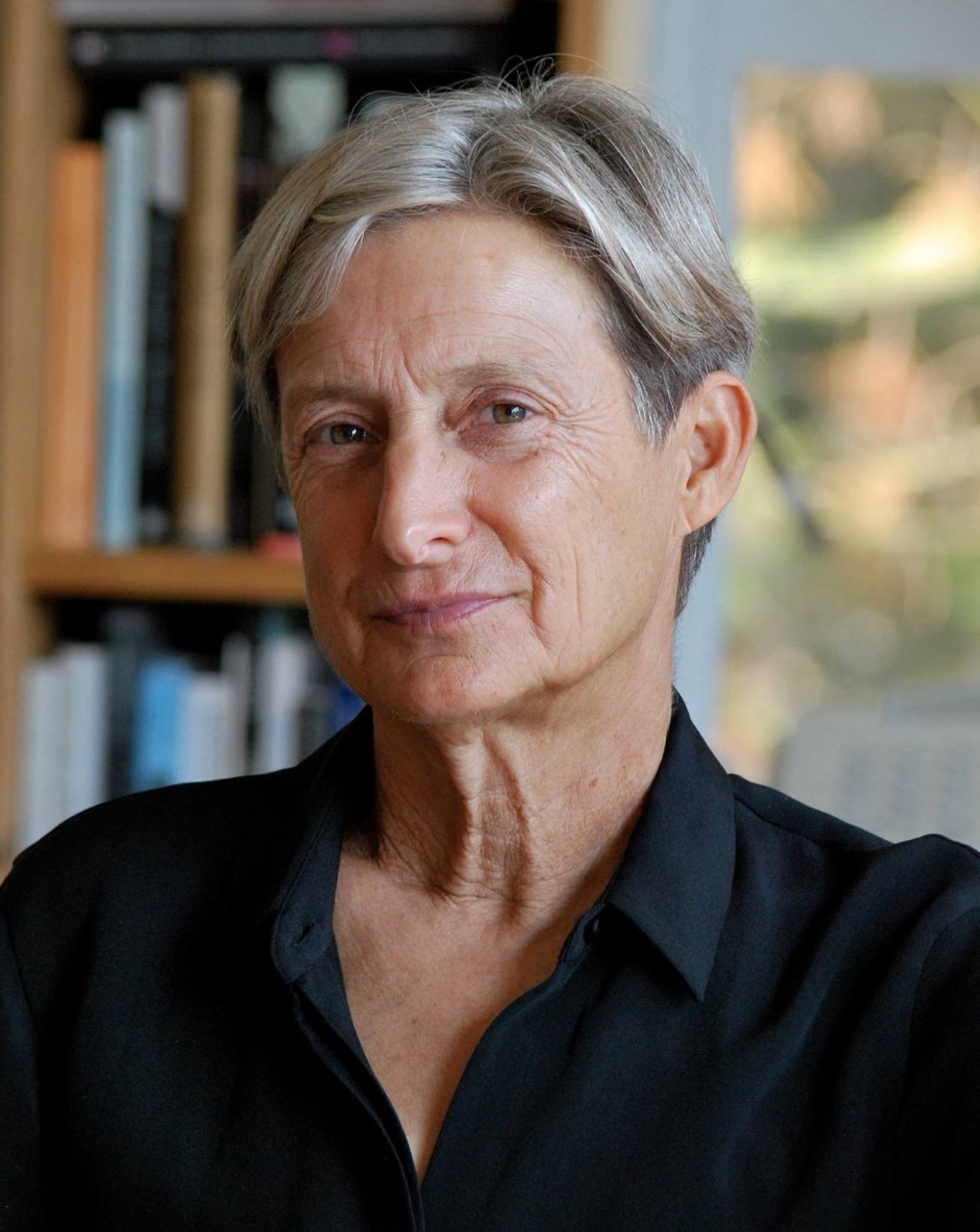
Judith Butler – gender and feminist theorist 

To commemorate the College’s bicentenary in 2023, we’re showcasing 200 ‘Birkbeck Effects’ which capture the incredible stories of our vibrant and diverse community, highlighting their achievements and impact on the world. 

pic of Judith Butler

Judith Butler is  a world-famous theorist and activist for gender, feminism and race equality. They were made a Fellow of Birkbeck in 2021 and have been active in the departments of psychosocial studies, law and the Birkbeck Institute of the Humanities.  

Raised by Jewish parents in the state of Ohio, USA, they studied philosophy before writing their most influential book, Gender Trouble: Feminism and the Subversion of Identity, at just 33. The book, published in 1990, outlined the beginnings of their work on gender performativity and is now a seminal text for students and scholars in the arts, humanities and social sciences.  

The recipient of many awards and accolades, such as the Adorno prize and the Yale University Brudner Prize for lifetime achievement in gay and lesbian studies, Judith continues to advocate for social justice not just for LGBTQ+ communities but for diverse marginalized groups such as Palestinian Liberation and for racial equality. 

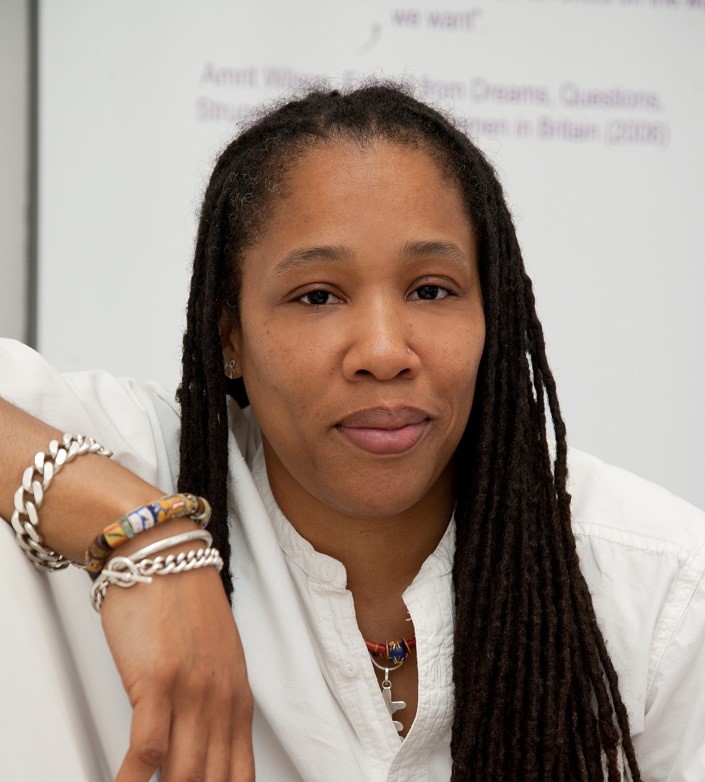
Marai Larasi – anti-violence campaigner and Fellow of Birkbeck 

To commemorate the College’s bicentenary in 2023, we’re showcasing 200 ‘Birkbeck Effects’ which capture the incredible stories of our vibrant and diverse community, highlighting their achievements and impact on the world. 

pic of Marai Lasai

Marai is an activist and campaigner and is known for her campaigns against racialised and gendered violence.  

A graduate of Birkbeck’s MA in Culture, Diaspora and Ethnicity, she has volunteered for Hackney Women’s Aid, was executive director of Imkaan, an organisation dedicated to addressing violence against Black and racially minoritised girls and women, and she was joint chair of the End Violence Against Women Coalition. 

Born in London to Jamaican parents, she was inspired by the work of political activist and scholar, Angela Davis which addressed the intersectional identities of being female, Black and queer.  

Marai is a Fellow of Birkbeck and has also been awarded an MBE for her campaigning and activism. She was named one of the world’s 100 Most Influential People in Gender Policy and is one of the most influential LGBTQ people in the political and activist space. She was also voted one of the 100 Great Black Britons in 2020. 

Albert Gregorio Hines – Economist and first black professor at Birkbeck 

To commemorate the College’s bicentenary in 2023, we’re showcasing 200 ‘Birkbeck Effects’ which capture the incredible stories of our vibrant and diverse community, highlighting their achievements and impact on the world. 

Jamaican-born economist Albert (‘Bertie’) Gregorio Hines was instrumental in setting up Birkbeck’s first Economics department in the 1970s and had a career which ranged from a job in the Jamaican civil service to a Chair in Economics at Birkbeck. He was also an active proponent of black arts and culture. 

Albert moved to the UK from Jamaica in the 1950s to explore opportunities, studying at the London School of Economics and going on to lecture in political economy at University College, London. In 1968, at the incredibly young age of 32 years, he was appointed Professor of Economics at Durham University. Three years later, he joined Birkbeck. 

An advocate for racial and social equity, Hines chaired the Minority Group Arts, from 1974, to encourage the arts within minority communities, ‘thereby enrich[ing] the cultural life of the entire community’. Minority Group Arts was also responsible for conducting the ‘first comprehensive and independent study of arts activities’ amongst Bangladeshis, Chinese, Cypriots, East and Central Europeans, Indians, Pakistanis, West Indians, and Africans living in the UK. Although he was a Professor of Economics, Hines did not restrict his anti-racism activism to issues of economics and employment and was an active proponent of the Black arts and culture as important sites of resistance.  

In 1975, he gave evidence to the Select Committee on Race Relations and Immigration where he was grilled about conflicts within minority communities and calmly replied, “We have learned that there are things that divide us and things that unite us, and on this particular issue we see the things that unite us as being more important than the things that divide us.”