Tag Archives: antibiotic resistance

Behind the Bench: Tackling Antibiotic Resistance 

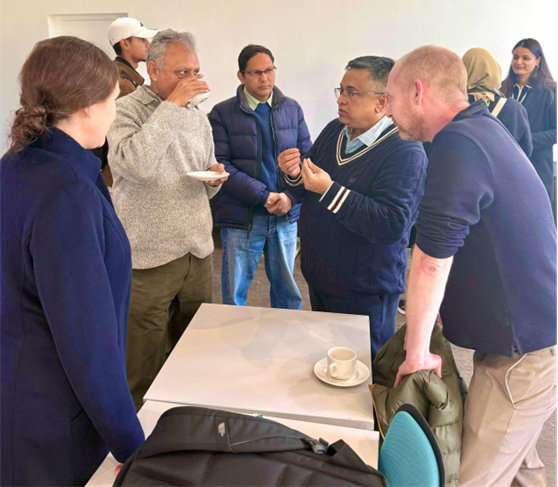
Dr Ankita Nag, an MRC-funded postdoctoral researcher at Birkbeck’s Mycobacteria Research Laboratory (ISMB-MRL) and a member of UCL-TB, highlights the key takeaways from a recent research outreach and public awareness event on antimicrobial resistance hosted at Birkbeck.

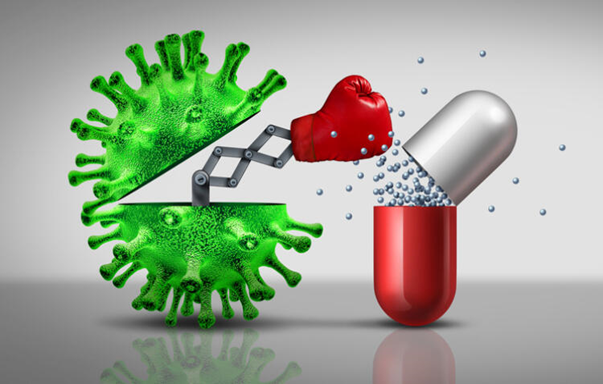
Antibiotic resistance is one of the biggest challenges the world is facing today. Overuse and misuse of antibiotics have led to the rapid emergence of resistance among microorganisms, rendering previously treatable infections potentially untreatable.  

Data from the UK Health Security Agency (UKHSA) shows the appearance of 1,775 cases of antimicrobial resistance, with nearly 400 of them being resistant to antibiotics. Since 2019, an increase of 13.1% in the occurrence of antibiotic resistance has been reported. This alarming increase in spread and emergence of resistance has been predicted to claim nearly 39 million lives by 2050.  

Thus, the urgent need of the hour lies in understanding how to overcome the scary situation where we are left with no antibiotics to treat potentially life-threatening infections. 
Source: NPS Medicinewise

To understand the impact of antibiotic resistance and to tackle its spread and emergence, an event titled Behind the Bench: Tackling Antibiotic Resistance took place at Birkbeck on 21st November 2025.  

Held as part of the World Antimicrobial Awareness Week (WAAW, 2025) and led by Professor Sanjib Bhakta’s research group in Birkbeck’s School of Natural SciencesBehind the Bench was held both online and in-person, allowing participants from across the globe to attend. The event addressed some of the pressing issues related to antibiotic resistance and offered valuable insights into novel strategies that can be harnessed to combat the overuse of antibiotics in healthcare and the spread of antibiotic resistance.  
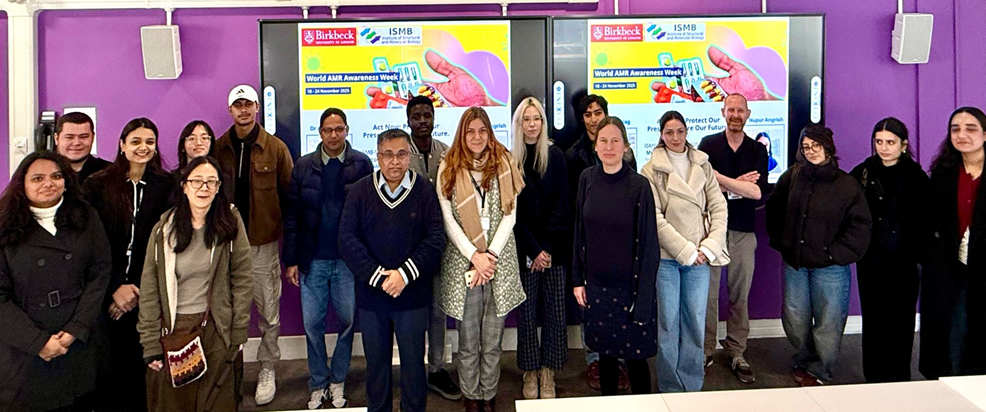
World Antimicrobial Awareness Week at Birkbeck, University of London (WAAW 2025)

Proceedings kicked off with an insightful speech from Professor Lucy Mazdon, Deputy Vice Chancellor of Research, Innovation, and Knowledge Exchange at Birkbeck. She emphasised the crucial importance of raising awareness about antibiotic resistance in society and finding effective solutions to prevent its spread. This was followed by a speech by Professor Katherine Thompson, Head of Natural Sciences at Birkbeck, who highlighted Birkbeck’s leading investigative research on understanding and tackling antimicrobial resistance and advised on the careful use of antibiotics, as microbes evolve rapidly and contribute to the spread of resistance. 

The next part of the event consisted of an interactive Mentimeter quiz conducted by Professor Bhakta, where the audience was given a questionnaire related to the topic of antibiotic resistance and asked to share their perspective on addressing this global crisis. This activity reinforced the understanding of the rise of antibiotic resistance in the audience. 
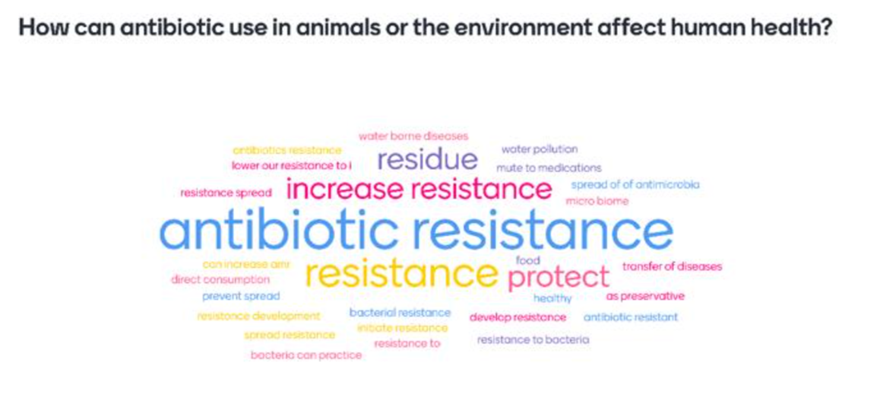
One of the questions asked at the Mentimeter quiz

This was followed by a taster lecture by Professor Bhakta where he addressed the molecular mechanisms through which a bacterium can become resistant to different antibiotics. He further introduced his research on understanding the spread and rise of antibiotic resistance in tuberculosis (TB), one of the deadliest diseases on earth. He also highlighted the novel drug discovery approaches undertaken by his lab, uncovering the mechanisms of resistance related to TB. The talk also highlighted a collaborative partnership with researchers globally to tackle the problem of antibiotic resistance in TB.  
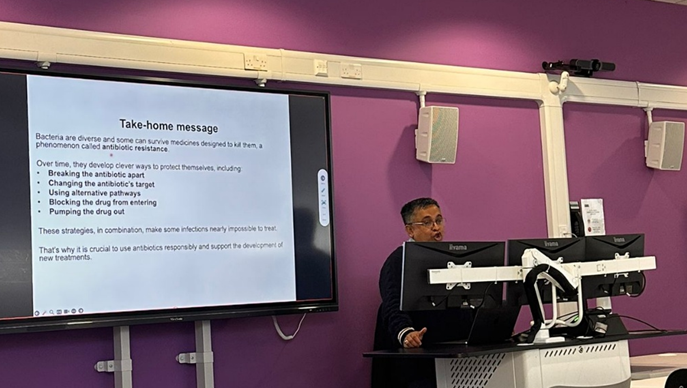
Taster lecture by Professor Sanjib Bhakta
Glimpse from WAAW 2025, Birkbeck

The lecture was followed by poster presentations from members of Professor Bhakta’s lab (ISMB-MRL Research group), where they showcased the research activities performed by the lab. These also highlighted the major initiatives taken by the group to fight against the rising drug resistance in tuberculosis.  
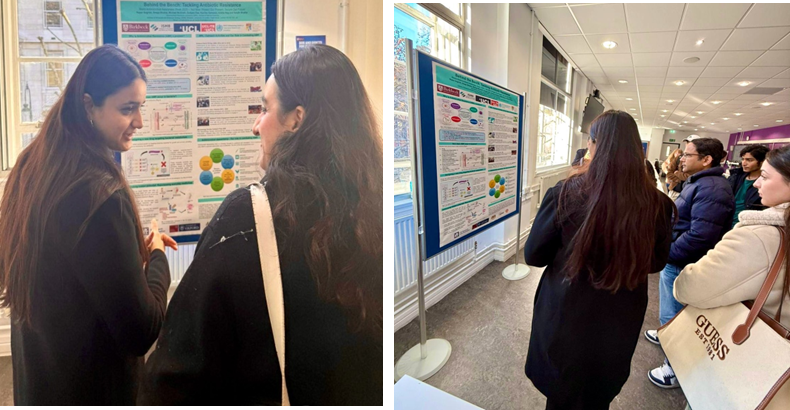
Poster presentation at WAAW 2025, showcasing the research activities carried out in the ISMB-MRL lab

Later for those present in-person at the event, a guided lab tour was organized by the ISMB-MRL Research group. During this, participants were shown a non-pathogenic mycobacterial cell as seen under a microscope, after acid-fast staining, a technique frequently used in differentiating mycobacteria from other bacteria. They were also given a demonstration of how molecular biology-based assays, such as PCR, can assist in detecting antibiotic resistance. Throughout this segment of the event, there was a sense of fascination and excitement among the participants as the research of identifying the causes and mechanisms and tackling the emerging issue of antibiotic resistance came to life through practical examples.  

A guided lab tour arranged for the participants of WAAW 2025 at the ISMB-MRL lab, Birkbeck

 “As a final year Biomedicine undergraduate, I found this session very valuable. This event enhanced my understanding of AMR.” 
-WAAW 2025 Attendee 

Overall, the event was a success in generating curiosity, empowering the future generation in embarking on novel and innovative ideas, and seeking a solution to eradicate the burden of antibiotic resistance. An important takeaway message is that a thoughtful and vigilant approach to using the “last-resort antibiotics” can help save millions of lives and preserve the effectiveness of antimicrobials for future generations. 

For any further queries about the event or the research taking place on this topic, please contact Professor Sanjib Bhakta.  

More information
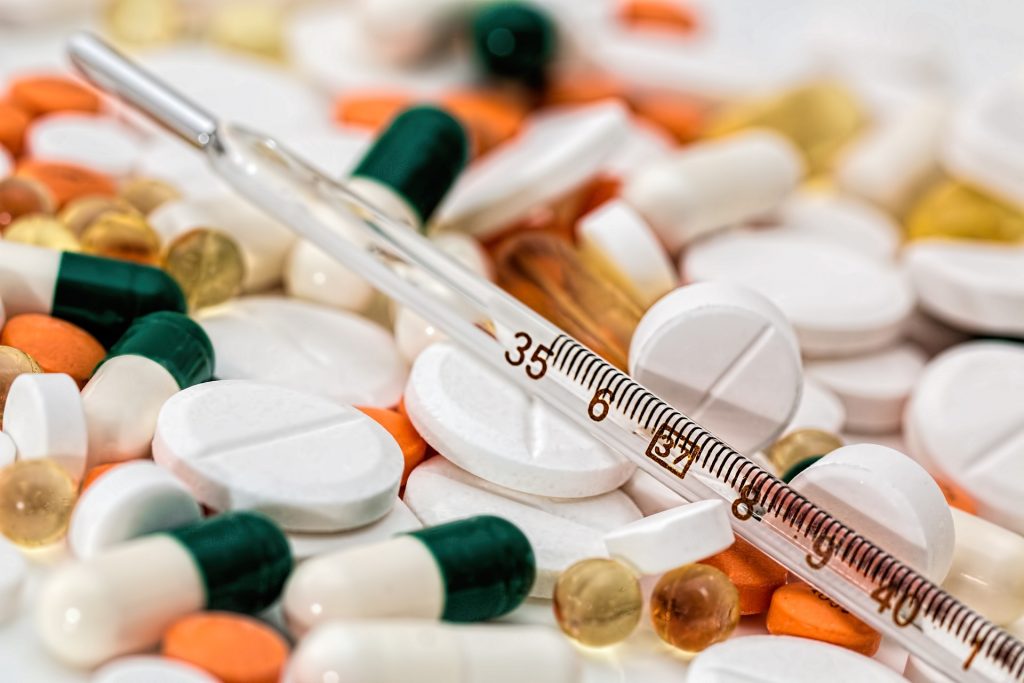
Antibiotics: victims of their own success

This article was written by Liam Tom Martin and Arundhati Maitra from the ISMB-Mycobacteria Research laboratory, Institute of Structural and Molecular Biology, Department of Biological Sciences, Birkbeck. Birkbeck Science Week runs from 3-6 April 2017.

antibioticsSince the development of penicillin as a treatment for bacterial infections in the 1940s, antibiotics have played an integral role in modern medicine. Beyond their obvious utility in treating serious diseases like tuberculosis and pneumonia, antibiotics have facilitated a vast array of modern surgical treatments. Without them, major procedures from organ transplants to hip replacements and cancer chemotherapy would carry too great a risk of infection to be feasible. Antibiotics have become so deeply woven into the fabric of modern life that a future without them borders on the unimaginable.

Over the past few decades, strains of bacteria have emerged which are resistant to most, if not all, of the antibiotics in our current arsenal. Coupled with a near total halt in the development of new antimicrobial therapeutics, the rising tide of antibiotic resistance threatens to compromise the very bedrock of modern medicine. If those foundations were to crumble, it would usher in an era in which minor infections can develop into chronic and potentially fatal illnesses; an era in which surgical interventions and immunosuppressive chemotherapies are simply not possible.

The most recent World Health Organisation (WHO) report states that 480,000 people each year develop multi-drug resistant tuberculosis (MDR-TB), while strains of gonorrhoea which are resistant to all available antibiotics have been observed in 10 countries, including the UK. Methicillin-resistant Staphylococcus aureus (MRSA) also continues to cause potentially deadly infections in hospitals, putting significant strain on healthcare resources. The UK government report into antimicrobial resistance, chaired by Lord Jim O’Neill predicted that if antimicrobial resistance were to continue to rise around the world, we could see as many as 10 million more deaths annually, with a total economic cost of $100 trillion. The majority of this burden would likely fall on low- to middle-income countries. This threat has grown to such a proportion that recently, the United Nations General Assembly (UNGA) met to discuss the steps which could be taken by global organisations including the WHO, the World Bank, the Food and Agriculture Organisation of the United Nations (FAO) and the World Organisation for Animal Health (OIE) to help to slow the spread of antibiotic resistance and to incentivise the development of novel antimicrobial drugs.

Antibiotics, it seems, have been victims of their own success. Their effectiveness and convenience have led to a ubiquity which provides a wealth of opportunities for development of antibiotic resistance; an issue exacerbated by misuse and overuse in mankind, animal farming and agriculture. The conditions which accelerate the development of resistance, however, are just one side of the coin. The emergence of new antibiotics onto the market has slowed to a glacial place over the last 20 to 30 years, as pharmaceutical companies have diverted their focus onto other areas. This move has been driven primarily by the limited profitability and steep challenges in developing new antibiotics with novel mechanisms of action. There is a sense that all of the low hanging fruit were picked during the golden age of antibiotic discovery in the 1940s and 50s, and that new classes of antibiotic are becoming harder and harder to come by.

As we have come to expect antibiotics to be inexpensive, pharmaceutical companies must sell them at low cost or lose out to the generics market. The short treatment times required to cure most infections also present little opportunity for pharmaceutical companies to recoup their billion dollar investments in research and development, while the rapid emergence of resistance following deployment of a drug can quickly stifle demand. The result is that pharmaceutical and biotechnology companies preferentially invest in treatments for chronic conditions which require long-term treatments and thus generate a more reliable revenue stream. Essential research into novel antimicrobials is thus left by the wayside. This market failure is exacerbated by conservation programs which discourage the use of newly discovered antibiotics until resistance has developed to the standard treatments, as well as by variable regulations which create uncertainty in the market.

On positive notes, there are a number of initiatives providing funding for further research in academia, promoting collaboration between academia and industry and incentivising industry investment into antibiotic research. These include the Fleming Fund, £195 million collaboration between the UK government, the Wellcome Trust, the Bill and Melinda Gates Foundation and the Institut Pasteur International Network, among others. The UK government is also involved in a variety of other funds aimed at tackled antibiotic resistance, such as the Ross Fund and the Global AMR Innovation Fund, which are collaborations with the Bill and Melinda Gates Foundation and the Chinese government, respectively.

The past 5 years have seen the emergence of the first new antibiotics for decades. Bedaquillin was approved as part of a second-line combination therapy for use against multiple drug resistant tuberculosis (MDR-TB) in 2012, following an accelerated approval process lasting just six months. There are currently numerous other novel antibiotics at some stage in the development pipeline, including Teixobactin, a promising candidate which has been found to have broad antibacterial activity while acting through a novel mechanism which may slow or prevent the development of resistance. A collaborative effort between Sequella Inc. and members of the National Institute of Infectious Diseases in the USA, and Janssen Infectious Diseases in Belgium, has led to the development of the antibiotic SQ109. This is testament to the ability of private-public partnerships in spreading the risk of drug development and incentivising biotechnology companies to proceed with research into novel antibiotics.

A number of academic institutions, bolstered by increased funding from government bodies, are beginning to undertake significant research into means by which to tackle antimicrobial resistance. At the University of Birmingham Institute of Microbiology and Infection, critical research is being conducted into understanding the transmission and mechanisms of antibiotic resistance, under the direction of Professor Ian Henderson and Professor Laura Piddock. In the Bloomsbury area, the London School of Hygiene and Tropical Medicine have recently opened their Centre for Antimicrobial Resistance, which will include sociological research alongside traditional lab-based research in order to understand the spread of antimicrobial resistance on a large scale. Just a stones-throw from the London School, the Mycobacteria Research Lab lead by Dr Sanjib Bhakta at the Institute of Structural and Molecular Biology, Birkbeck College, University of London, are investigating new means to tackle antibiotic resistance tuberculosis, including a “drug repositioning” approach, by which drugs which are currently on the market for the treatment of a separate ailment may be repurposed to act as antibiotics in the fight against MDR-TB.

Science Week 2017: Microbes in the Real World

Date: Monday 3 April

Talk by Sophie Downes – ‘The Interactions Between Fungi and Heritage Buildings’
Clore Management Centre B01, 5:30-6:30pm

Screening of the film Resistance followed by panel discussion: ‘Tackling antibiotic resistance and the rise of superbugs
Speakers: Dr Sanjib Bhakta, Dr Jane Nicklin, Professor Nick Keep and Arundhati Maitra
43 Gordon Square Cinema, 7:00-9:00pm

“Antibiotics were first mass-produced in the 1940s and their ability to fight and kill bacteria revolutionized medicine and profoundly impacted everything from agriculture to war. After less than 80 years, however, these miracle drugs are failing. Resistant infections kill hundreds of thousands of people around the world each year and there are now dozens of so-called Superbugs each with its own challenges and costs. How did this happen? Using microscopic footage, harrowing personal stories, and expert insights RESISTANCE clarifies the problem of antibiotic resistance, how we got to this point, and what we can do to turn the tide.”