Tag Archives: 200th Anniversary

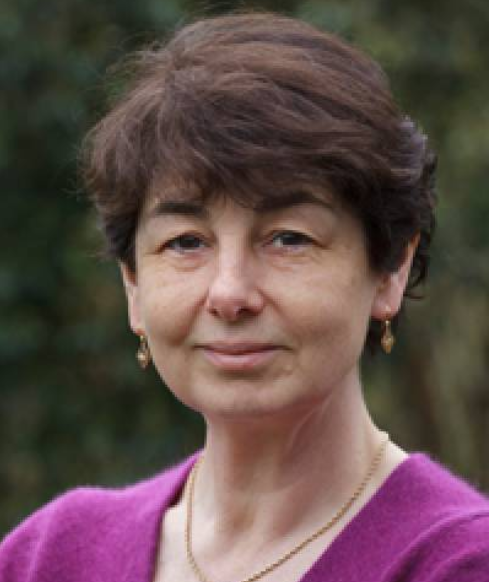
Gillian Bates – Professor of molecular neuroscience 

To commemorate the College’s bicentenary in 2023, we’re showcasing 200 ‘Birkbeck Effects’ which capture the incredible stories of our vibrant and diverse community, highlighting their achievements and impact on the world. 

Gillian Bates

Gillian Bates is a Professor of Molecular Neuroscience and a co-discoverer of the causes of Huntington’s disease, a late-onset brain disorder that leads to uncontrolled movements, emotional problems and cognitive difficulties.   

She completed her postgraduate study in MSc in Biomolecular Organisation at Birkbeck where she was awarded a Master of Science degree in 1984. 

Her interest in human genetics, and the possibilities of identifying the mutations causing genetic diseases, led her to work as a research assistant in 1983, where she then carried out her PhD on the molecular genetics of cystic fibrosis. In 1987, she continued her research as a postdoctoral fellow to work on Huntington’s disease. 

In 1998, she was awarded the Royal Society Glaxo Wellcome Award jointly with Stephen Davies, for the discovery of the cause of Huntington’s Disease. She was elected to the Academy of Medical Sciences in 1999, the European Molecular Biology Organisation in 2002 and the Royal Society in 2007. 

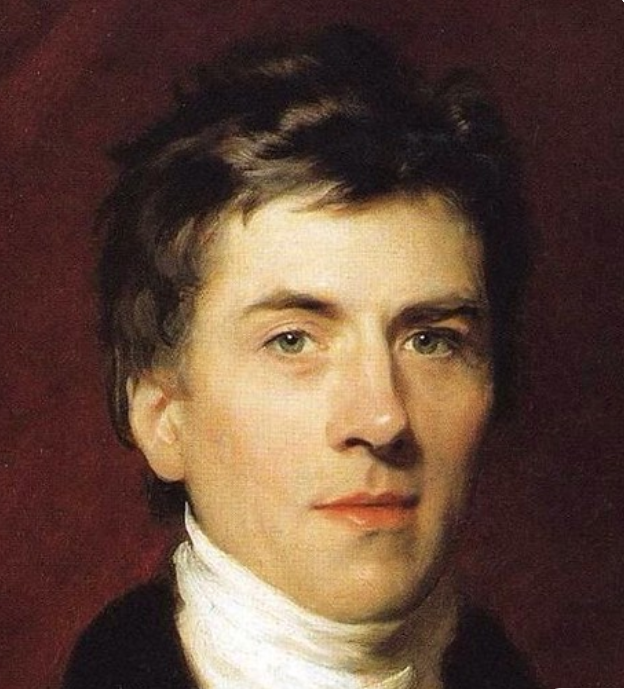
Henry Brougham – Lawyer, Lord Chancellor and defender of London Mechanics’ Institute 

To commemorate the College’s bicentenary in 2023, we’re showcasing 200 ‘Birkbeck Effects’ which capture the incredible stories of our vibrant and diverse community, highlighting their achievements and impact on the world. 

Henry Brougham

Brougham was a British statesman and was the London Mechanics’ Institute’s leading orator, playing a significant role in its establishment and survival. In 1826, he founded the Society for the Diffusion of Useful Knowledge which published information to people who were unable to obtain formal teaching or who preferred self-education.   

His book on education became the ‘Bible’ for everyone involved in educating working people.  He argued that only “tyrants “and other “bad rulers” should be terrified by “the progress of knowledge among the mass of mankind”.  

In Parliament, Brougham was a tireless champion of workers’ education and believed that mass education was essential for political reform.  He also played a prominent role in passing the 1832 Reform Act, which introduced major changes to the electoral systems of England and Wales, and the 1833 Slavery Abolition Act. 

Brougham holds the House of Commons record for non-stop speaking in 1828 when he spoke for six hours on law reform. 

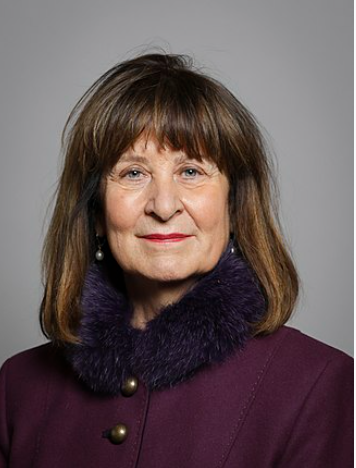
Helena Kennedy KC – human rights lawyer and civil liberties advocate 

To commemorate the College’s bicentenary in 2023, we’re showcasing 200 ‘Birkbeck Effects’ which capture the incredible stories of our vibrant and diverse community, highlighting their achievements and impact on the world. 

Helena Kennedy

Helena Kennedy KC is one of the UK’s most distinguished lawyers and has spent her professional life advocating for the least represented in society, championing civil liberties and promoting human rights.  

Baroness Kennedy of the Shaws was elevated to the House of Lords as a peer in 1997 and has acted in many of the most prominent British criminal cases of the last 30 years, including the Brighton bombing attack on the British cabinet, the Guildford Four Appeal and the Michael Bettany espionage case.  

As chair of the Further Education Commission into Widening Participation, she produced the seminal Learning Works 1997 (aka the Kennedy Report), which led to changes in government policy in further education and has been hailed as a turning point in efforts to close the education divide in the UK. 

Baroness Kennedy was made a Fellow of Birkbeck since 2021 and was commended during her oration for sharing Birkbeck’s ethos of promoting higher education for everyone, and not only the privileged few. In 2023, she participated in King Charles and Queen Camilla’s coronation at Westminster Abbey, carrying the Queen Consort’s Rod with Dove.  

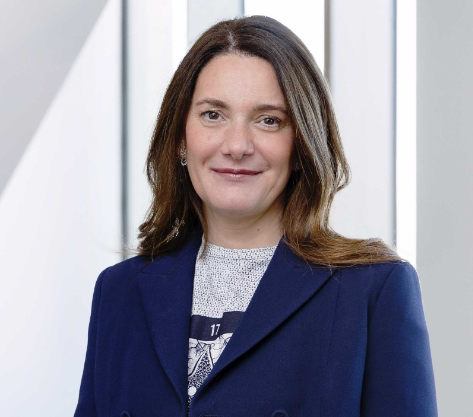
Geraldine Sundstrom – Pimco managing director 

To commemorate the College’s bicentenary in 2023, we’re showcasing 200 ‘Birkbeck Effects’ which capture the incredible stories of our vibrant and diverse community, highlighting their achievements and impact on the world. 

Geraldine Sundstrom

Geraldine Sundstrom is a managing director and portfolio manager at investment management firm PIMCO, the world’s biggest bond fund manager and a passionate advocate for increasing the visibility and empowerment of women in finance and committed to building a portfolio of investments that support a green recovery.     

She is a prominent figure in the hedge fund industry and was formerly a partner and portfolio manager at Brevan Howard Asset Management LLP, where she was responsible for leading the Emerging Markets Strategies Fund, which invests in interest rates, currencies and bonds. With over twenty years investment experience, Geraldine has also held positions at Moore Capital and Citigroup.  

She has been referred to as “The Hedgefund Superstar”, by the London Evening Standard and “the most prominent woman in the famously secretive world of hedge funds” by The Times. Geraldine has said that she follows the motto of “winning by not losing” when it comes to managing investor portfolios. 

Geraldine graduated with an MSc in Finance from Birkbeck in 1998 and in 2010 received the 100 Women in Hedge Funds European Industry Leadership Award. 

James Lovelock – Chemist, environmentalist and Gaia hypothesis theorist

To commemorate the College’s bicentenary in 2023, we’re showcasing 200 ‘Birkbeck Effects’ which capture the incredible stories of our vibrant and diverse community, highlighting their achievements and impact on the world. 

James Lovelock

James Lovelock is best known as the originator of the Gaia hypothesis, the idea that the Earth is a self-regulating system, with that evidence forming Gaia theory. Among his numerous and notable inventions are the electron capture detector, making possible the detection of ozone-damaging CFC gases, and the microwave oven.  

James studied chemistry at Birkbeck College, just before the start of the Second World War, and in 2008 was made a Fellow of the College. He was brought up a Quaker and indoctrinated with the notion that God is a still, small voice within. 

He was viewed as one of the UK’s most respected independent scientists and never officially retired, taking daily two-to-three-mile walks until his later years, and publishing his book Novacene, an argument for the emergence of a new age from existing artificial intelligence systems, just before his hundredth birthday. 

James died in 2022, on the day of his 103rd birthday and, besides his scientific achievements, will be remembered as an environmentalist with his research highlighting some of the most recent environmental issues such as the destruction of the ozone layer and global warming.

Helen Sharman – British scientist and astronaut 

To commemorate the College’s bicentenary in 2023, we’re showcasing 200 ‘Birkbeck Effects’ which capture the incredible stories of our vibrant and diverse community, highlighting their achievements and impact on the world. 

Helen Sharman

Helen, a scientist and astronaut, is renowned for being the first British person in space and the first woman to visit the Mir space station. She excelled at science, being the only girl in her class to take physics and chemistry and was awarded a PhD in chemistry at Birkbeck in 1987.  

Two years after completing her studies at Birkbeck, Helen responded to a radio advert asking for applicants to be the first British space explorer. She was selected on the basis of her strong scientific background and capacity for learning foreign languages. Her eight-day mission to the Mir space station, in 1991 at the age of just twenty-seven, involved medical and agricultural experiments, photographing the British Isles and a radio hookup with British schoolchildren.  

She has served as a role model for many young people, which has resulted in numerous schools naming houses and buildings after her as well as holding annual Sharman science events. 

Helen is now president of the Institute of Science and Technology and has written two books, including a children’s book, The Space Place. She was appointed an Officer of the Order of the British Empire (OBE), the year following her space mission. 

Eric Hobsbawm – Professor of history

To commemorate the College’s bicentenary in 2023, we’re showcasing 200 ‘Birkbeck Effects’ which capture the incredible stories of our vibrant and diverse community, highlighting their achievements and impact on the world. 

Eric Hobsbawm

Eric was one of the world’s leading historians, appointed to Birkbeck’s Department of History in 1947 and served as its President from 2012 until his death at the age of 95.  

He was born in Alexandria, Egypt and came to London as a schoolboy via Vienna and Berlin. As an historian, he was as comfortable writing about society in the Middle Ages as he was talking about twenty-first century culture. Through his writings, the lives of working people, including bandits, factory workers, and trade unionists, were brought into historical focus.   

Eric wrote extensively on many subjects as one of Britain’s most prominent historians and also wrote a regular column about jazz for the New Statesman under the pseudonym Francis Newton, taken from the name of Billie Holiday’s communist trumpet player, Frankie Newton. He had become interested in jazz during the 1930s when it was frowned upon by the Communist Party. 

He was a lifelong Marxist and interpreted for Che Guevara. He even hosted members of the Colombian revolutionary armed forces group, FARC in Birkbeck’s cafeteria. 

Lena May Chivers (Baroness Jeger) – president of Birkbeck Students’ Union and Labour peer

To commemorate the College’s bicentenary in 2023, we’re showcasing 200 ‘Birkbeck Effects’ which capture the incredible stories of our vibrant and diverse community, highlighting their achievements and impact on the world. 

Baroness Lena Chivers

Lena May Chivers, (later known as the Labour peer, Baroness Jeger) was a journalist and politician, well known for her role in the right to equal pay and other advocacy work.

Lena was a fervent socialist, feminist, and supporter of the Greek Cypriot community in the UK after Harold Macmillan’s government refused Cyprus’ right to self-determination. She was also a strong supporter of the NHS and a champion for women’s rights. From 1979 to 1980, she was chairperson of the Labour party and was the first peer to take the chair at the Labour party conference, at Blackpool, in 1980.

Lena completed a degree in English and French at Birkbeck and served as President of the Students’ Union.

Birkbeck and the dubious dealings of Francis H. Fowler

In this blog, Ciarán O’Donohue an MPhil/PhD student in the Department of History, Classics and Archaeology, shares the story of the development of a new Birkbeck building in the nineteenth century. This blog is part of our 200th anniversary series.

New building of Birkbeck Institute 1800s

New building of the Birkbeck Institute. ‘Bream’s building, Chancery Lane’

Once the decision had finally been made in 1879 for the Birkbeck Literary and Scientific Institution to fly the nest and leave its original home in Southampton Buildings, Chancery Lane, it took years for the necessary funds to be raised. Rather than move to another existing building and “make do”, Birkbeck’s executive committee was dead set on commissioning a new one. Fund raising was slow. Scarred by the struggles of the mid-nineteenth century, where mounting debts had threatened the Institution with collapse, the Committee set about taking public subscriptions to reduce the costs.

Nevertheless, the risk had to be taken. Birkbeck could remain in its home no longer. A new building, the Committee asserted, was essential to ‘the prosperity and development of the Institution.’ The revival of its fortunes under the leadership of George Norris was such that, by 1879, new applicants were having to be turned down. There simply was not enough room.

Perhaps this explains the expediency with which an architect was selected to build Norris’s dreams. Intriguingly, the Committee decided not to request tenders from architects. Birkbeck’s future was entrusted to one man, Francis Hayman Fowler. Fowler was an internationally famous and reputable theatre architect. Hailed as a “pillar” of the Metropolitan Board of Works (MBW), the forerunner to the London County Council, he had been an important figure in London politics for twenty years.

With his reputation taken into consideration, his selection out of the blue seems above board. It then merely seems incongruous that the Committee asked eighteen different vendors to tender for the job of constructing Fowler’s edifice. Besides, they could not take any risks. After taking into consideration the various pros and cons of each – and making especial note that they were selecting a builder based on a number of factors, not merely who was cheapest – a Mr. Cates was awarded the contract.

During the Committee’s next meeting, the contract was suddenly and inexplicably presented to Messrs. Nightingale. No clarification was forthcoming. A solitary clue remained, however. Amidst the notes of the meeting, a special note was made thanking Fowler ‘for his attendance and explanations.’ These breadcrumbs seemingly amount to nothing, until we look deeper into Francis Hayman Fowler’s conduct.

As Breams Buildings, the Institution’s new home, was being designed and built, the Royal Institute of British Architects was starting to doubt the legitimacy of the Board’s conduct. Three presidents used their inaugural addresses to cast doubt on the legitimacy of the MBW’s processes, in 1879, 1881, and again in 1883. Singled out for particular admonishment were the Building Acts Committee and the theatre subcommittee, of which Fowler was one of only five members. Specifically, other architects suspected Fowler and other members of the MBW of abusing their position in order to gain contracts, or exact payment for advice and services which would then guarantee that projects met final approval with the Board.

Three years after Breams Buildings was completed in 1885, the rumours surrounding Fowler and a number of other architects on the MBW reached a fever pitch. The Financial Times interviewed a number of disgruntled London architects, and boldly declared that the “facts are no secret.” A scandal erupted off the back of the article. Parliament took up the issue. Almost immediately, a Royal Commission was set up to investigate the Board for corruption, and Lord Herschell was appointed its chairman.

What it found was a shock to a great many people. Fowler’s reputation was such ‘that the Commission was genuinely surprised’ that the allegations were true. Fowler certainly was using his positions to exact payments in expectation of serving external interests on the board. Fowler was forced to resign but refused to ‘admit that he had behaved reprehensibly.’

How does all this relate to Birkbeck, you might be asking? Let’s go further down the rabbit hole. Another member of the Board, John Rüntz was also implicated. Only because he was not an architect, the Commission did not find him to be corrupt per se. Nevertheless, Rüntz and Fowler, the Commission asserted, were part of an ‘inner ring’ which exerted control over the affairs of the MBW.

Rüntz had extremely close ties to Birkbeck, spanning several decades. Originally a cabinet maker, he started attending the institution in the 1840s.  By 1848, he had been appointed Master of the Birkbeck school. By 1852, Francis Ravenscroft had co-opted Rüntz onto the board of the Birkbeck Bank. This relationship with Ravenscroft would have brought him in very close range of the Executive Committee, of which Ravenscroft was a dedicated, important (and honest) member. By 1860, Rüntz was a trustee of the Bank. 1868 saw Fowler elected to the Board of Works, and Rüntz became Chairman of the bank’s board.

The close relationship between the two men, and Rüntz’s extensive connections with Birkbeck, may have set the scene for Fowler’s introduction to the Committee at the very least. In such situations, both men would profit, as Fowler would pay for other MBW members for introductions. This is one course of events that may explain the peculiar decision to award Fowler the commission, with no prior interaction and no alternative tenders by other architects. Alternatively, it could all be entirely speculative, creating false links between the dots.

Either way, it is also important to consider the historical context even of dubious dealings. As historian David Owen conceded, architects were one of a number of occupations that were undergoing a gradual process of professionalisation in the Victorian era. An important yet fractious facet of this transformation was the establishment of agreed standards of ethics. Fowler’s case is evidence of this process. Debates were still ongoing concerning what was permissible in obtaining commissions, how to distinguish a justifiable use of connexions, and precisely what constituted a corrupt use of special influence. This is a potent reason for why Fowler might have refused to concede any wrongdoing: he sincerely felt he had acted reasonably. If architects themselves had differing opinions of the basic standards of fairness, furthermore, how were those commissioning work to decide what was honest or not?

Seemingly, although this scandal put an end to Fowler’s political career, it did not put an end to his scheming. Theatre magnate Sefton Parry commissioned Fowler to build the Avenue Theatre in 1882. With inside knowledge from the MBW, who owned the land, Parry financed the theatre with the express intention of having it requisitioned by the South Eastern Railway. Subsequently, he would receive a payout for the value of the theatre; that is, more than he spent on construction. His plan came to nothing. Then, in 1905, something suspicious occurred. Allegedly, the Avenue needed renovation. Parry commissioned Fowler once more. Before the opening night, part of Charing Cross Station collapsed onto the theatre, leaving only its original façade! Parry got his payday after all.


“Marriage or Career?”: The Times and Tribulations of Dr. Turnadge

Dr Isabel Turnadge,née Soar was a Birkbeck alumni who championed women’s right to vote and work after marriage in the 1920s. As part of the College’s 200th-anniversary celebrations Ciarán O’Donohue, PhD candidate in the Department of History, Classics and Archaeology recalls the origins and trajectory of Dr Turnadge’s activism. 

Dr Isabel Turnadge

Dr. Isabel Turnadge, née Soar, with her son, Peter James. Becoming a parent will be a turning point for anyone, but perhaps for none more so than Isabel.

Only five PhDs in the sciences were awarded by the University of London in 1921. These were the first people ever to hold the distinction. Among them was botanist Isabel Soar, who had toiled tirelessly every weekday evening after work for five years at Birkbeck College.

Soar was in many ways the archetypal Birkbeckian, engaged as she was in full-time work and part-time study. The daughter of a stationer and a book-seller, Soar was a bright child: a ‘keen student of science, and particularly fond of botany’. After her own schooling, she pursued a career in teaching, taking up her first post as a science teacher in Ipswich in 1907.

Within six short years, she found herself in the daunting position of lecturing to trainee teachers in London at Stockwell Training College: an impressive achievement for one so young. Yet, Soar was not satisfied. Perhaps inspired by the experience of teaching others, Soar was determined to deepen her own knowledge. So, working full-time in the week, Soar began evening classes in botany at Birkbeck.

All her work was crammed into long weekdays. She made ‘it a point never to study on Saturdays, Sundays or other holidays’ and was a fervent believer that there was ‘a time for work and a time for play.’ In 1916, after three years of intense study, dedication and sacrifice, Soar achieved her Bachelor of Science in Botany, with first-class honours. The Middlesex County Times highlighted Soar as ‘an outstanding example of the rewards which await industry and determination.’

Still, Soar’s thirst for knowledge remained unquenched. Immediately after the completion of her bachelor’s she began to pursue original botanical research. Her trademark abundance of determination and its seemingly inexhaustible wellspring ensured she persevered for five long years. In June 1921, Soar’s Ph.D. thesis was approved, and she became the second Birkbeck student to achieve the title of Doctor. Bearing the title, The Structure and Function of the Endodermis in the Leaves of the Abietineae, it was of substantial interest to contemporary botanists. Before the end of 1922, an abridgement was published in The New Phytologist and she was elected a Fellow of the Linnean Society.

Meanwhile, her professional life was also reaching new heights. In this same year, she was appointed headmistress of Twickenham County School for Girls by Middlesex County Council. For her work, she was to be awarded an extremely generous commencing salary of £600 per annum. And her run of good fortune was not over yet.

On Saturday 4 August 1923, Soar married Charles James Turnadge. Turnadge was a member of the Aristotelian Society, and was sometime editor of South Place Magazine, the organ of the South Place Ethical Society. Soar took her husband’s name, and they soon departed on their ‘ostentatious’ honeymoon: a six-week motor tour of Devon, Cornwall, Somerset, and Wales.

Life seemed to be going well for Isabel Soar: academically, professionally, and personally. Unfortunately, it was not to last. In November 1926, in what should have been a happy time in her life, Soar, now Dr. Turnadge, was in the newspapers again.

In May 1926, she gave birth to Peter James Turnadge. As a result, she was fired. The Twickenham Higher Education Committee beseeched the Middlesex Education Committee to terminate her employment. They argued that ‘the responsibilities of motherhood are incompatible with her school duties.’

The Chair, and Twickenham’s Mayor, Dr. J. Leeson, defended his actions to the press: ‘with characteristic male impertinence,’ according to the feminist weekly Vote. He asserted that he had warned her, spluttering that it ‘was against my advice that Dr. Turnadge, holding the position she did, ever married… We pay her a good salary, and we want her undivided interests.’

Turnadge’s argument that her being a mother would be an asset to her work was given short shrift. In an interview with the Middlesex County Times, she explained that she was ‘even bold enough to hold the view that, as a mother, I might be better qualified to teach. May not maternal sympathy… be something of a help in training the young?’ She even later argued that ‘single women are not normal, they are emotionally starved.’ Accordingly, large numbers of single women teachers posed ‘a grave menace to the pupils.’  She made the further point that it was ‘absurd to pretend that it would be impossible for me to make adequate arrangements for Peter’ during the day, given her salary. This, similarly, did nothing to move the Committee from its position either.

Her arguments fell on deaf ears. Charles’s birth was the pretence they had been searching for since the wedding. Middlesex Education Committee had a policy that the marriage of an elementary school teacher would void their contract and terminate their employment. At the time of Soar’s wedding, however, this did not cover the marriage of secondary school teachers. The loophole was promptly closed afterwards, and although they could not act retrospectively, Soar became an exception in a fragile position, with a hostile employer.

Turnadge’s case added fuel to a debate which was already raging about the state’s employment of married women. Clearly, not everyone was in favour. Upon hearing of Turnadge’s dismissal, author James Money Kyrle Lupton sent his opinions into the West London Observer. ‘This position ought to be held in all cases by a single woman, who can devote all their time to the position,’ Lupton opined, continuing that besides a ‘married woman with any family cannot do her duty to the school and her home at the same time – this is self-evident.’

Others were appalled by the decision. Bernard Shaw quipped that ‘Twickenham is not very far from the river, and the sooner the people of Twickenham put their Higher Education Committee in the river, the better.’ Vote declared the incident ‘sufficient indication of the necessity for further vindication of the important principle of the freedom of the married woman.’

As for Dr. Turnadge herself, the bar imposed on married women teachers became the next target of her fiery determination and indefatigable work ethic. On 7 February 1927, Turnadge delivered a lecture entitled “Marriage or Career?” to the Six Point Group, a feminist organisation founded by Lady Rhondda in 1921. In Turnadge’s lecture, she decried the ‘present position of women’ as ‘most unsatisfactory, because we are not chattels, yet we are not regarded as responsible individuals who should be allowed to choose our own paths in life.’ For her, this was an issue of state interference in private life, and along undeniably unequal lines. Some women wanted ‘to continue their work after marriage, and I do not see why anyone should interfere with them,’ she asserted. It was not the work of education authorities to regulate household economies. If they were economically minded, she stressed, they would realise the folly of expending public money on teaching scholarships, only then to dismiss married women outright.

By March, she was honoured at Vote’s annual spring sale, by giving the opening address whilst rubbing shoulders with veteran campaigners such as the president, Emmeline Pethick-Lawrence. Her focus had crystallised on equal suffrage, for both married and single women.

Her points were direct, brimming with a scientist’s rationality. A woman and her life must no more be interfered with than a man. Anything less than equality would rob the nation of talent. Women should be given the same rights of individual determination.  Her conviction was that possessing the vote at 21 was of the highest importance. This is when women were entering their professions, she determined, and so most needed the power to influence policy. Evidently, her experiences had left their mark on her, and she was determined no other woman should suffer the same fate.

When the Equal Franchise Act was passed a few months later in July 1928, the achievement of policy change through the exercise of the vote was in sight. For many women, their objectives had been achieved, their battles over. Lady Rhondda, a suffragette and life-long feminist, recalled some years later ‘that when, in 1928, the vote came on equal terms, one felt free to drop the business.’ For her at least, it ‘was a blessed relief to feel that one had not got to trouble with things of that sort anymore.’

As indomitable as ever, Turnadge’s years of campaigning were only just beginning. As the international organiser for the Six Point Group, we last catch a glimpse of her busy organising a conference in Geneva to lobby for an Equal Rights Treaty. With the confidence equality was well on the way in Britain, her sights were set on the League of Nations.

Today, Birkbeck awards over 100 PhDs a year; quite the difference to a century ago. Yet, it seems that Birkbeck’s students retain the same qualities. Isabel worked consistently, with perseverance and dedication, to follow her passion. She took her fate into her own hands, sacrificing her evenings to better her prospects. And although she faced it in spades, adversity never triumphed over her. She cannot help but remind us of our peers and colleagues in these current days of difficulty, and thankfully Isabel’s virtues seem set to live on in Birkbeckians for another hundred years.