Author Archives: K Best

Pride is a time for celebration, protest and solidarity

As we mark Pride Month and extend our support for the rights and inclusion of LGBTQ+ people worldwide, Sarah Lamble, Reader in Criminology and Queer Theory, writes on the recent backlash against LGBTQ+ rights and the need for international solidarity.
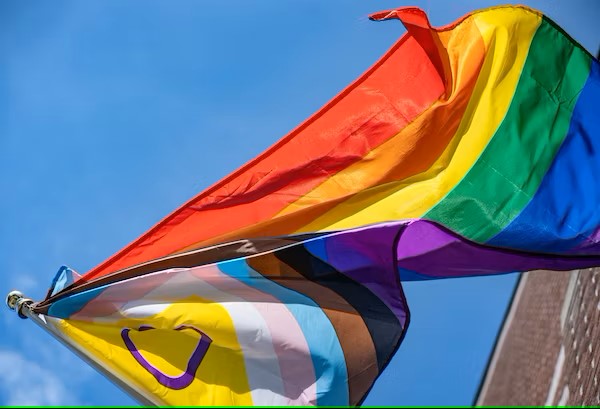
photo of a Pride flag

June is a month of celebration and pride for LGBTQ+ communities, both in Britain and around the world. For many, Pride Month is an important time to reflect on the struggles and achievements of LGBTQ+ communities. Amidst the glittery street parties and marches, the community events and rainbow-emblazoned festivities, it is an opportunity to gather in both queer joy and protest.  As many will know, the origins of Pride Month can be traced back to historic events in June 1969—the uprising at the Stonewall Inn in New York City by working class queers of colour, drag queens, sex workers, and street folk who resisted ongoing police violence and brutality.

While much has changed since then, many of the fundamental problems persist, particularly for those in the LGBTQ+ community facing intersecting forms of economic and social insecurity. Many of the same groups within our communities that were most targeted back then, remain acutely vulnerable to violence, harassment, and discrimination today. In Britain and around the world, LGBTQ+ people are still disproportionately targeted by policing and imprisonment; face high risk of homelessness; persistent discrimination in employment and health care; and are subject to heightened risks of violence, mental health distress and even death because of systemic inequalities.

We are currently seeing a growing backlash against LGBTQ+ rights at home and abroad. Many have raised alarms about the rise of far-right anti-LGBTQ+ and anti-migrant groups across Europe, the anti-homosexuality bill recently passed in Uganda, and the attacks against LGBTQ+ rights in the USA. In fact, so many anti-LGBTQ+ bills have been proposed across US state legislators, that community organisers recently declared an LGBTQ+ state of emergency.

In Britain, LGBTQ+ communities are also facing increasing threat. In a recent country visit to the UK, the UN Independent Expert on protection against violence and discrimination based on sexual orientation and gender identity, Victor Madrigal-Borloz, expressed deep concern about increasing hostilities against LGBTQ+ people. Highlighting rising incidents of harassment and threats of violence against LGBTQ+ people in the UK, Mr Madrigal-Borloz attributed this backlash, in part, to a relentlessly hostile media and the ‘the toxic nature of public debate surrounding sexual orientation and gender identity’. There is much work needed to address this, yet we are moving in the wrong direction. Most recently, British MPs formally considered proposals to amend the Equality Act 2010 that would seriously erode the hard-won rights and protections currently afforded to trans and gender diverse people.

Now, perhaps more than ever, it is necessary to remember that pride is political and the need for cross-movement and international solidarity is paramount. Although our struggles may differ across contexts, we have a shared interest in joining together to combat systemic discrimination and ensure equality and freedom for all LGBTQ+ people.

Further Information:

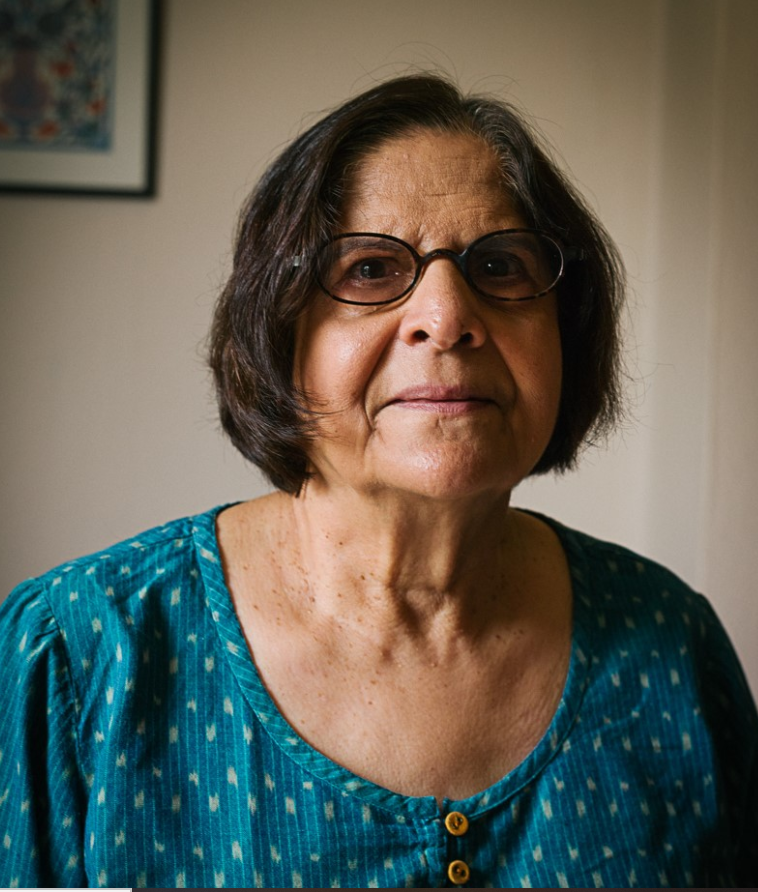
Avtar Brah, founder of Southall Black Sisters

To commemorate the College’s bicentenary in 2023, we’re showcasing 200 ‘Birkbeck Effects’ which capture the incredible stories of our vibrant and diverse community, highlighting their achievements and impact on the world. 

Avtar Brah

Avtar was a Professor of Sociology at Birkbeck; a specialist in race, gender and ethnic identity issues and was awarded an MBE in 2001 in recognition of her research.

Born in India, raised in Uganda, and made stateless by the anti-Asian policies of Idi Amin in the 1970s, she was made a refugee overnight and forced to extend her stay in the UK into a long-term residence.

She attended a thousands-strong demonstration organised by women’s collective Southall Black Sisters against the National Front in the mid-1970s which gathered national media attention and resulted in hundreds of demonstrators being arrested.

Avtar lectured and researched at Birkbeck for over twenty years from 1985 until her retirement from professorship. Her most seminal works are Cartographies of Diaspora, which takes a feminist, post-structuralist lens to analysing ‘difference’ and ‘diversity,’ and Hybridity and Its Discontents, exploring the history of ‘hybridity’ across multiple continents.

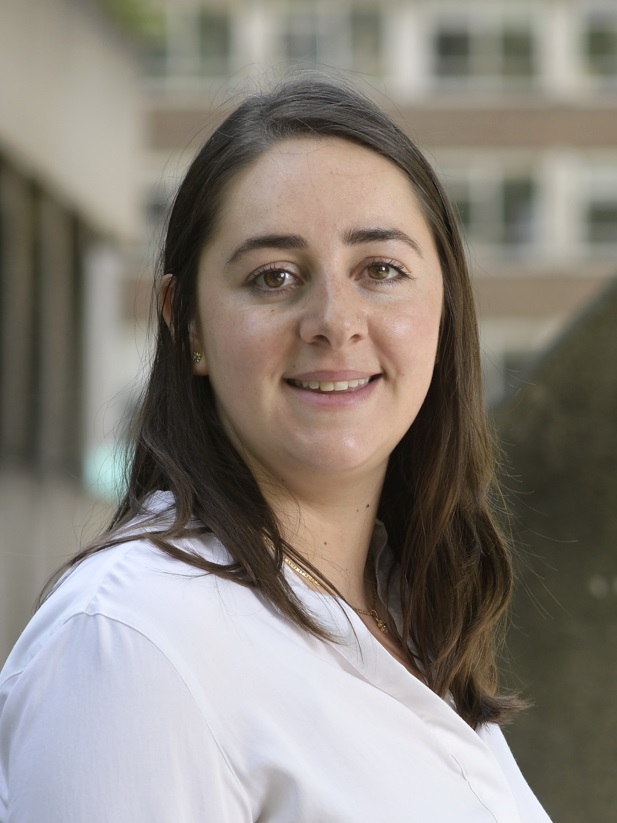
Isabelle Habib – Access and Engagement Access Manager

To commemorate the College’s bicentenary in 2023, we’re showcasing 200 ‘Birkbeck Effects’ which capture the incredible stories of our vibrant and diverse community, highlighting their achievements and impact on the world. 

Isabelle Habib

As Access Manager (Forced Migrants), Isabelle’s work is key to Birkbeck’s commitment to its founding principle of supporting adults who would not otherwise be able to access education.

Isabelle engages with, inspires and supports forced migrants and asylum seekers to access education through Birkbeck’s award-winning, donor-funded Compass Project, which dramatically improves the lives of some of the most vulnerable and marginalised people in the UK. She joined Birkbeck following time as a volunteer supporting forced migrants. She says Compass is a vital way to “resist the negative rhetoric on migration.”

Her work contributes to Birkbeck’s recognition as a University of Sanctuary, the first higher education institution in London to be awarded this status, in 2021, for its work to provide safety, solidarity and empowerment to people seeking sanctuary.

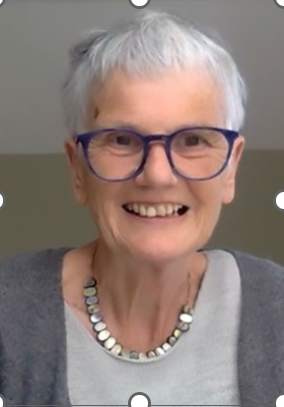
Elaine Hawkins, programme director of Higher Education Introductory Studies

To commemorate the College’s bicentenary in 2023, we’re showcasing 200 ‘Birkbeck Effects’ which capture the incredible stories of our vibrant and diverse community, highlighting their achievements and impact on the world. 

Elaine Hawkins

Elaine Hawkins was Programme Director of Birkbeck’s Certificate in Higher Education Introductory Studies from 2003-2012, which helps to get people back into studying who might lack the required entry qualifications or who need a course to help them prepare for degree-level study.

In addition to pathways in the arts, humanities and social sciences, Elaine developed new modules in nursing and business and established agreements with degree programmes across Birkbeck to enable students to progress within the College to continue with evening study.

Thanks to her drive and enthusiasm, the programme grew from around 30 students in 2003 to over 450, running in eight different centres across London. Some classes were delivered in Sure Start centres which tapped into the aspirations of women in hard-to-reach communities and this initiative won the Times Higher Education award for Widening Participation in 2008.

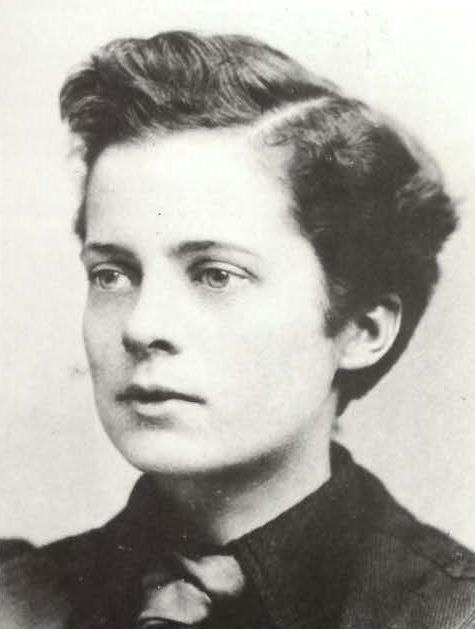
Edith ‘Biddy’ Lanchester, “new woman” and socialist

To commemorate the College’s bicentenary in 2023, we’re showcasing 200 ‘Birkbeck Effects’ which capture the incredible stories of our vibrant and diverse community, highlighting their achievements and impact on the world. 

Edith Lanchester

Edith Lanchester was a socialist campaigner and a strong feminist voice in women’s history, born into a wealthy middle-class family, but insistent on challenging many of the oppressive elements of her time.

She was educated at home and at the then Birkbeck Institute in science subjects, with her family intending for her to become a teacher. However, at 24 she fell in love with a working-class clerk, James Sullivan, announcing that she would move in with him.

Her parents accused “The Birkbeck” as well as membership of the Socialist Democratic Federation for having “unhinged her mind”; and when she argued that marriage would take away her independence, her father and brothers had her committed to the Priory insane asylum.

Her local MP, John Burns, secured her release after four days and the whole affair became a scandal, sparking debates about the state of marriage in society. Her false detention reinforced her views and Lanchester remained a prominent warrior for women’s rights and freedoms: she waved the suffragette’s green, white, and purple flag in Trafalgar Square and was even imprisoned for her role in a protest.

Abi Daré, Novelist

To commemorate the College’s bicentenary in 2023, we’re showcasing 200 ‘Birkbeck Effects’ which capture the incredible stories of our vibrant and diverse community, highlighting their achievements and impact on the world. 

Abi Daré

Abi is a Nigerian-born award-winning novelist who received critical acclaim for her first novel, The Girl With the Louding Voice. The book won the Bath Novel Award for unpublished manuscripts back in 2018 and went on to become a New York Times bestseller.

She graduated with a Master’s in Creative Writing from Birkbeck, of which she has said: “I needed to sit with people like myself, like minds who had an interest in writing. I wanted to do something serious with it. So that’s where I started my publishing journey from. The book was part of my thesis.” She has also credited her supervisor, Julia Bell with encouraging her to enter writing competitions.

In 2021, Abi was one of the twenty-four essay contributors for You Are Not Going Back: An essay from the collection, Of This Our Country, which offers an honest depiction, told by Nigerians themselves, of the culture and traditions of their Nigerian identity. She now works in project management for an academic publisher.

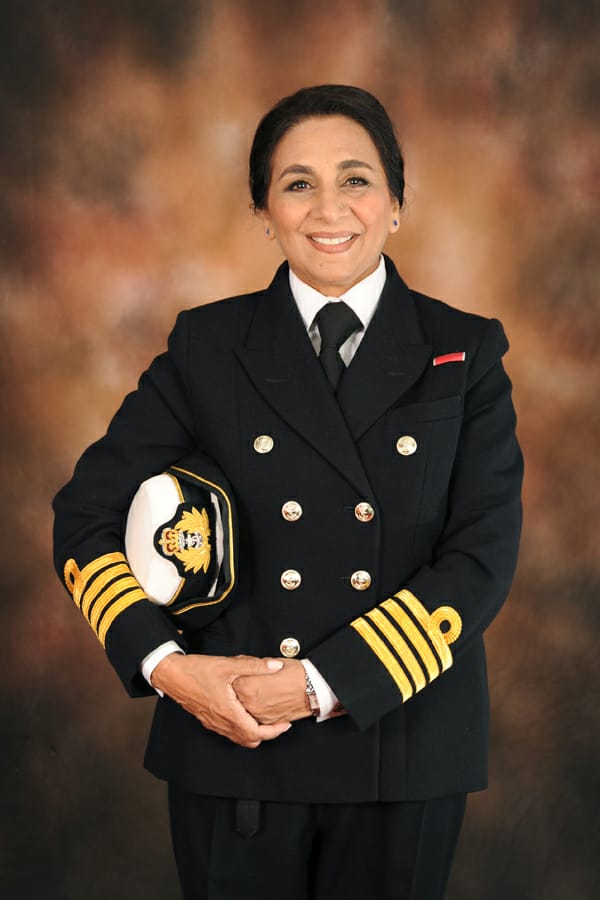
Durdana Ansari OBE – first Muslim woman captain of the British Royal Navy

To commemorate the College’s bicentenary in 2023, we’re showcasing 200 ‘Birkbeck Effects’ which capture the incredible stories of our vibrant and diverse community, highlighting their achievements and impact on the world. 

Durdana Ansari

Durdana is an entrepreneur and activist and the first Muslim woman appointed as Honorary Captain of the British Royal Navy. She is a former charity director and journalist at the BBC World Service and received her degree in media and journalism from Birkbeck.

Durdana established The Pearl Foundation to teach English, reading, writing and computer skills to British-Muslim women, as well as integrate these women into wider society by building self-confidence and enhancing their quality of life. Her work with ‘The Pearl Education Foundation’ and the ‘Ethnic Minorities Foundation’ led to the recruitment of approximately 9000 students and 700 volunteers.

She was awarded ‘Order of the British Empire’ (OBE) in 2012 and is currently working on her autobiography to share her experiences and inspire the next generation: “I want the world to know how a woman from a developing country managed to follow her passions and achieve her goals.”

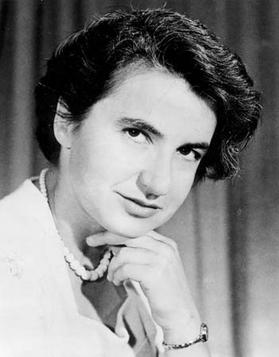
Rosalind Franklin – chemist and X-ray crystallographer

To commemorate the College’s bicentenary in 2023, we’re showcasing 200 ‘Birkbeck Effects’ which capture the incredible stories of our vibrant and diverse community, highlighting their achievements and impact on the world. 


Rosalind Franklin

Rosalind Franklin was a chemist and expert in crystallography who first photographed DNA to reveal its double-helix shape uncovering the mystery behind how life is passed down from generation to generation. Her commitment to the highest standards of scientific research is said to have brought “lasting benefit to mankind.”

Before that, her research specialty was coal and she was at the forefront of techniques in X-ray crystallography, which had only been used to investigate a limited range of matter by the early 1950s.

While James Watson and Francis Crick famously got the credit for ‘discovering’ the structure of DNA, it is generally accepted that Franklin’s research was more advanced. They admitted, after her death, that Franklin’s data had been crucial in proving their hypothesis.

Franklin was one of the few female chemists in the world at this time, moving from King’s College London to Birkbeck in 1953. She commented that the atmosphere at Birkbeck was friendlier, but the lab conditions were less favourable.

Emma “Ma” Francis – canteen worker throughout World War II

To commemorate the College’s bicentenary in 2023, we’re showcasing 200 ‘Birkbeck Effects’ which capture the incredible stories of our vibrant and diverse community, highlighting their achievements and impact on the world. 

Emma 'Ma' Francis with her husband

“Ma” Francis was one of Birkbeck’s unsung heroes, an essential worker during the second world war who made a considerable contribution to sustaining university life.

She joined Birkbeck’s Fetter Lane premises in 1896 as a canteen worker, and left fifty years later, aged eighty. When bombs dropped in the vicinity, she was “unruffled,” calmly handing out mugs of coffee and “sardines on toast, with fried tomatoes twopence extra.”

On 11 May 1941, incendiary bombs started falling on the College. Ma Francis made her way to the College’s kitchen. A “policeman in Fetter Lane tried to stop me,” she later recalled, who told her “Can’t go down there, Ma!” She abruptly retorted, “Impudence. Young man … I’ve got my work to do – you can’t stop me.” And work she did. Although the building next to Birkbeck was a “raging inferno,” Ma Francis made coffee for everyone on a Primus stove and then served 150 people for lunch. She was heard muttering, “Lucky I cooked the joints yesterday!”

Lena May Chivers (Baroness Jeger) – president of Birkbeck Students’ Union and Labour peer

To commemorate the College’s bicentenary in 2023, we’re showcasing 200 ‘Birkbeck Effects’ which capture the incredible stories of our vibrant and diverse community, highlighting their achievements and impact on the world. 

Baroness Lena Chivers

Lena May Chivers, (later known as the Labour peer, Baroness Jeger) was a journalist and politician, well known for her role in the right to equal pay and other advocacy work.

Lena was a fervent socialist, feminist, and supporter of the Greek Cypriot community in the UK after Harold Macmillan’s government refused Cyprus’ right to self-determination. She was also a strong supporter of the NHS and a champion for women’s rights. From 1979 to 1980, she was chairperson of the Labour party and was the first peer to take the chair at the Labour party conference, at Blackpool, in 1980.

Lena completed a degree in English and French at Birkbeck and served as President of the Students’ Union.