At a recent Q&A organised by the Birkbeck International team, Current Chevening Scholars shared their experiences of preparing for the all-important interview step in the selection process for the prestigious UK Foreign and Commonwealth Office scholarship.
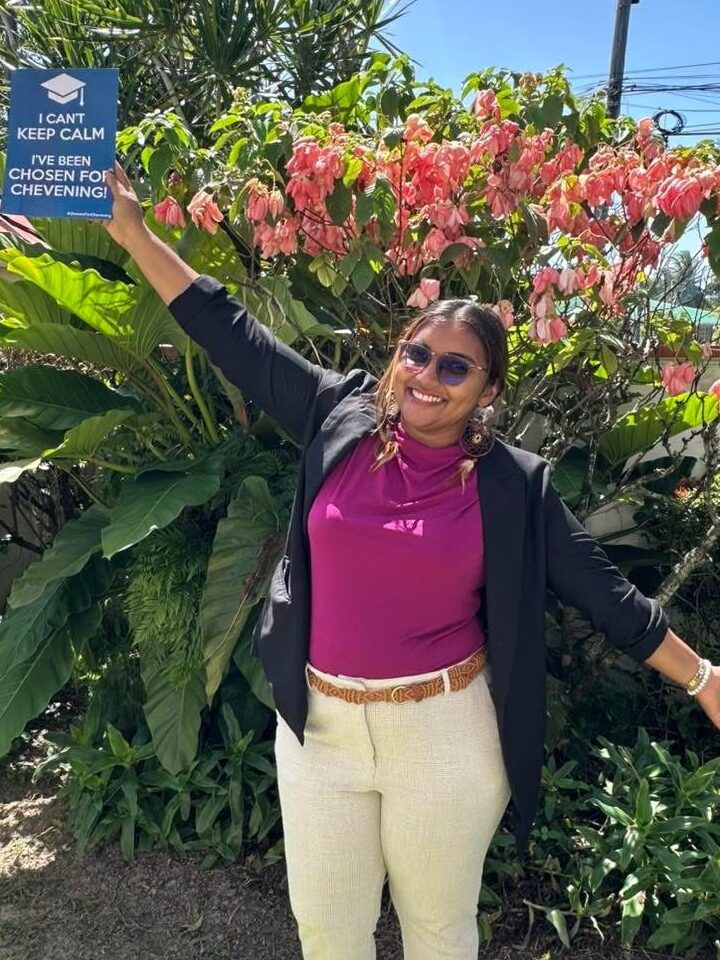
Maria Annaliza Fraser, Guyana, MSc International Relations
When did you learn you had been selected for a Chevening interview?
I got my notice on Valentine’s Day last year! There were several dates across March to select from. I remember selecting the 20 or the 21 of March, so I could have a month to prepare.
How did you choose your time-slot?
When I found out I had an interview, I called a previous Chevener who is a friend – he was more excited than I was at that point – and he advised I took a few days to decide on an interview slot that worked with my schedule.
I took a slot at 8am, as if you know Georgetown, you know how miserable parking is!
What tips you can share with future applicants?
Practice with mock interviews with friends. I reached out to a previous scholar, who supported me throughout the journey.
Go back to your essays, as the panel will refer to your answers about leadership, networking, education and career plans.
This next tip might seem overwhelming, but I decided “I’m going to answer very confidently, very boldly, and be truthful and honest”. And I did that. It’s worth doing!
Don’t hold back from talking about your motivation. For example, I was a bit nervous because my background is Marine Sciences and this is my second Master’s, so I explained this path isn’t about making a complete switch, it’s just about merging a gap.
When it came to providing examples of facing resistance or difficulties, draw on both personal and professional examples. I drew on my experience working on the gas energy project in Guyana, and bringing stakeholders from opposite sides together – which also covered networking!
I would also say, make sure you have a question you can ask at the end, when the panel invite you to. I asked about the Chevening alumni community and how I could get involved with it after the scholarship.
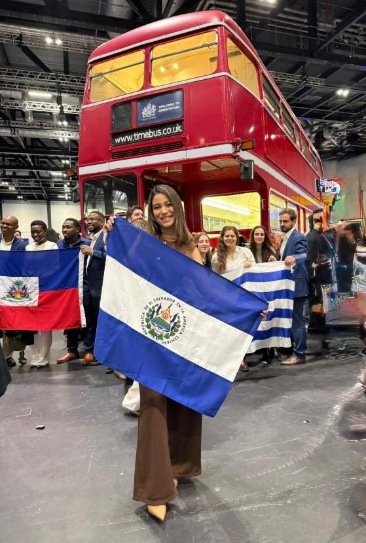
Fabiola Andrea Leon, El Salvador, MSc Public Policy and Management
When did you learn you had been selected for a Chevening interview?
I think it was three weeks before the interview, I booked it right away and got a place on the second day of interviews. I prioritised booking at the beginning of the day, as I feared the panel can be tired after seeing many people. But I think, even if you are interviewed at the end of the day, you can also make an impact. If you come in with a good story, I think the panel is going to be captivated anyway.
How did you prepare for the interview?
Based on my application essays I prepared to tell my story and structured this as a pyramid. I wrote down what I have done at the bottom and what I want to achieve at the top. I was genuinely proud of different projects that I was working so I wanted to incorporate it into this story.
I practiced a lot. I had mock interviews with people that I knew. I got feedback about things like speaking too fast,
I joined applicant groups on Facebook and LinkedIn, watched videos on YouTube. I also connected with a previous Birkbeck scholar, Marko, and gained a lot from his experience and advice.
I also prepared for general questions, such as challenges I have faced. My answer was divided into two; projects led at work, and my experience studying in China at 18 and how I adapted to living in a different country and learning a new language. I highly suggest for applicants to think about the challenges that they have faced in life, as well as professionally.
Sekulu Nyekha, India, MSc Social Research
When did you learn you had been selected for the interview?
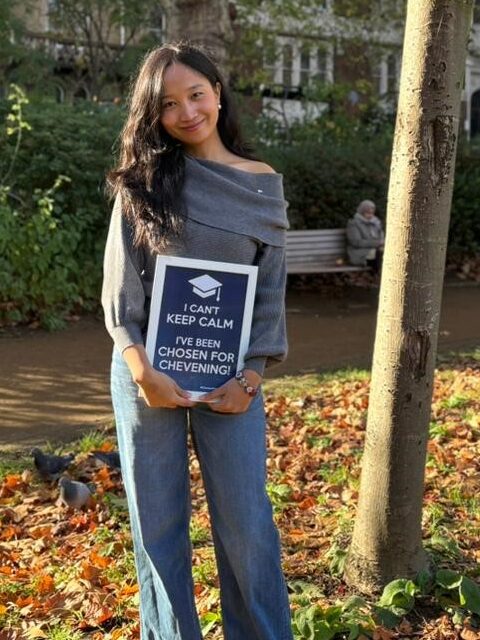
I got the e-mail in the night. It was on Valentine’s Day too, like Maria. I remember being really excited, but I didn’t want to rush booking the slot. However, when I went to book an interview from the selection available, the earlier dates were the only dates which were left. I picked March 4, which was one of the earliest dates of interviews!
Was your interview online or in person?
It was online for me. I think it’s because India is so diverse and big, so it made sense for it to be done online.
How did you prepare?
I’d always been confident about interviews, but right before the Chevening interview, I messed one up really badly and that taught me a lesson. I decided I was not going to be overconfident this time – I would seriously prepare. I had mock interviews with as many people were willing to help.
I also practiced timing my responses, speaking for two, three or five minutes. This came very handy during the interview as I was told I had two minutes to answer each question. At that point I knew exactly how to structure my answers within the time allocated.
What tips you can share with future applicants?
Focus on what you wrote in your application essay, but don’t let that be your only focus! I saw my interview as a continuation of my essay. I referred to it, but I added more details, mentioned additional leadership positions and new projects I’d worked on since I originally applying.
I also wanted both my essay and interview to come under one theme, seeing all my answers as part of one trajectory. Something like this can help a lot with memorability and coherency!
For the networking question I mentioned how many people I worked directly with. I also mentioned my relation with Sishu, a previous Birkbeck Chevening scholar and friend, who I had been in touch with for insight. I think it also showed that I am excited to be part of the Chevening community.
Tholang Mathopa, South Africa, MA AI, Ethics and Society
How many times did you apply to Chevening before you got selected?
I actually applied twice. In 2024, I had admission to a university I hadn’t listed on my application. This time around I made sure my listed universities matched and I gave it another shot. And it shows you shouldn’t ever give up on yourself. You must always try and try and try and try again until you get it right.
Was your interview online or in person?
It was online. At the beginning of the interview I was told I had about two minutes per question. The allocated interview slot was forty-five minutes, but we didn’t use it all.
What tips you can share with future applicants?
You should already be building on your trajectory, start working on the goals you actually want to achieve. It makes applying for the Chevening and answering interview questions so much easier.
Make sure you document what you work on, your achievements, no matter how small you think this is. Don’t hesitate to share these on social media. It doesn’t have to be perfect, in fact the grittier it is, the better. We get to see the humanity behind what you’re doing.
You need to be able to elaborate on your career plan after Chevening, mid and long term. This is where your real story comes to play. For example, you may have been working on a plan for some time- and Chevening is going to enable you to achieve this. You should be able to say this is what I’m going to do from year one after finishing, all the way up to year ten. The panel wants to know your vision and how the scholarship is going to help you reach your objectives.